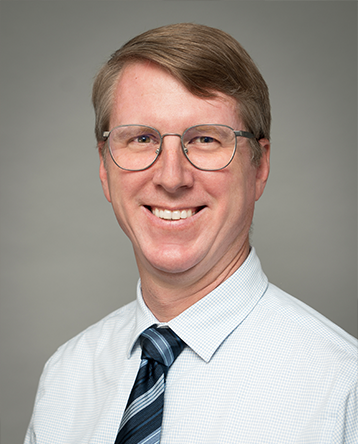
Liesbeth Enneking is Professor of Corporate Responsibility and Sustainability at Erasmus School of Law (Erasmus University Rotterdam). She obtained her PhD in 2012 for research on civil litigation's role in corporate accountability for human rights and environmental violations. Her work focuses on legal frameworks for responsible business conduct in global value chains. Active legal expert in CSR debates Consulted for European Commission, Dutch ministries, NWO, and AXA Research Fund Current ancillary roles: Monitoring Committee for Dutch Insurance Sector's IRBC Agreement (since 2018), Dutch NCP for OECD Guidelines (since 2021), ABP Pension Fund CSR Committee (since 2022) Her research spans transnational litigation, private international law, and tort law applications to corporate accountability. Key projects include foreign direct liability cases, Shell Nigeria litigation, and EU sustainability directive implementation. Recent publications emphasize integrated compliance strategies and judicial remedies for host country communities. Scientific recognition includes: Rotating Professorship at University of Leuven (2015-2016) Utrecht University Focus program grants (2010-2012) 'Scriptie uit de la' prize (2007) Enneking has held positions at Utrecht Center for Accountability and Liability Law (2013-2017) and contributes to multidisciplinary research projects. She analyzes intersections between psychology and legal decision-making, particularly in evidence evaluation and liability determination.
Dr. Nafis Alam is a Professor and Head of the School of Business at Monash University Malaysia. With over 20 years in higher education, he has held leadership roles at institutions including the Henley Business School Malaysia, University of Reading Malaysia, and Asia Pacific University. His expertise spans FinTech, financial regulation, and Islamic finance, with over 50 peer-reviewed publications and nine co-authored books. He actively engages with global industry and policy, contributing to reports by the Cambridge Centre for Alternative Finance (CCAF). Awards include the Global Islamic Finance Award's 'Upcoming Personality' (2016) and Monash University's Vice-Chancellor Medal (2016). Education: PhD in Banking and Finance (Monash University), MBA (Multimedia University), and Economics (Patna University). He holds a Postgraduate Certificate in Higher Education (PGCHE) from the University of Nottingham and is a Senior Fellow of the Higher Education Academy (SFHEA). Research focuses on FinTech regulation, digital currencies, AI ethics, and Islamic finance innovation. Recent projects include Malaysia's consumer credit framework and blockchain in energy legal systems. Media contributions include commentaries on cryptocurrency, fiscal reforms, and ESG evaluations. Key Supervision Areas: FinTech, Financial Regulation, Technology Adoption Grants/Projects: Active roles in 2023-2026 projects on legal frameworks for blockchain and consumer credit Labs/Teams: Collaborations with global institutions like CCAF and industry partners in Southeast Asia. Advocates for market-driven education programs and adult learning strategies.
Dr. Caroline Howe is an Associate Professor in Environmental Social Science at Imperial College London , affiliated with the Centre for Environmental Policy under the Faculty of Natural Sciences . She serves as Vice President of the British Ecological Society and Deputy Programme Director for Imperial’s MSc in Environmental Technology. Dr. Howe co-founded Imperial College’s Network of Excellence in Women’s Health and contributes to the Global Development Hub as an Advisory Board Member. Research Focus: Interdisciplinary exploration of people-nature relationships, equity and justice in biodiversity and ecosystem services, urban health, and sustainable development. Labs: Leads the Transdisciplinary Centre for Nature and People (TCNP) , a global team advancing nature-based solutions. Scientific Contributions: Key author on IPBES assessments and ESPA textbook. Her work spans climate mitigation, sustainable food systems, and postcolonial narratives in conservation. Scientific Awards: Athena SWAN Bronze (departmental leadership). Education and Advocacy: Champions gender/diversity through EDI initiatives and co-leads the MSc in Environmental Technology program.
Henrik Haller is an Associate Professor at Mid Sweden University, affiliated with the Department of Natural Sciences, Design and Sustainable Development (NDH). His work integrates environmental science with practical applications in tropical regions, particularly focusing on land use, soil remediation, and sustainable food systems. Academic Title: Doctor of Philosophy Location: Östersund, Sweden Key Research Areas: Multifunctional land use, bioremediation, agroforestry, and sustainable development in the Global South Haller's research emphasizes transforming environmental challenges into opportunities. His work includes: Bioremediation of heavy-metal-contaminated soils using amaranth plants Urban agriculture potential in Swedish cities Life cycle assessments of cold-weather aquaponic systems Waste valorization strategies for contaminated lignocellulose sediments Universal design approaches to zero-waste communities Industrial symbiosis for local food systems He has ongoing projects in urban farming, wastewater resource recovery, and sustainable behavior transformation. His publications span topics from fungal metal tolerance to policy challenges in environmental governance.
A/Pr Steven Goh is an Associate Professor in Mechanical and Mechatronic Engineering at the University of Southern Queensland (USQ), affiliated with the School of Engineering. He holds advanced degrees including a DEng from USQ and is a Fellow of Engineers Australia. His research focuses on engineering education, practice, management, and biomedical engineering. He has received notable awards such as the 2015 Australian Government OLT Citation for Outstanding Contribution to Student Learning and multiple USQ accolades. Education: BEng(Hons) in Manufacturing & Materials (UQ), MBA (Deakin), MProfAcc (USQ), DEng (USQ), and a Diploma in Company Directorship (AICD). Research Interests: Engineering education innovation, sustainable energy systems, and biomedical applications. He actively contributes to professional bodies like the Australasian Association of Engineering Education and serves as Editor (Strategic) for the Australian Journal of Mechanical Engineering. Awards: Multiple teaching excellence awards from USQ (2008-2010) and the 2015 national OLT Citation. Advising/Grants: Not explicitly detailed in text; his roles include supervising students and leading research projects on engineering education and asset management. Labs/Teams: Associated with the Centre for Future Materials and Centre for Health Research at USQ.
Erin Bell is a Professor in the Department of Civil and Environmental Engineering at the University of New Hampshire . She holds a Ph.D. in Structural Engineering from Tufts University and has extensive experience in structural health monitoring, finite element modeling, and infrastructure sustainability. B.C.E., Georgia Institute of Technology M.S., Civil Engineering, Tufts University Ph.D., Structural Engineering, Tufts University Her research focuses on structural health monitoring, bridge condition assessment, and integrating AI techniques like artificial neural networks and deep reinforcement learning for infrastructure asset management. Recent work includes equitable maintenance strategies for aging bridges in flood-prone zones and tidal energy conversion for sustainable bridge monitoring systems. Key trends in her publications include the application of machine learning to structural analysis, finite element model calibration, and climate change adaptation in transportation infrastructure. She has led projects on deep reinforcement learning for bridge scour maintenance, modal-based uncertainty quantification, and multi-scale modeling of steel bridges. Grants and Collaborations : Erin Bell has secured funding from the National Science Foundation (NSF) , US Department of Energy (DOE) , and New Hampshire Department of Transportation . Notable projects include the Living Bridge initiative for tidal energy-powered smart infrastructure and statewide data exchange systems for bridge condition assessment.
Xuhui Lee is the Sara Shallenberger Brown Professor of Climate Science at Yale University's School of the Environment. He maintains offices at Kroon Hall (195 Prospect Street) and laboratory facilities at the Class of 1954 Environmental Science Center (21 Sachem Street, Room 300) in New Haven, Connecticut. Professor Lee is an active researcher and educator specializing in the interactions between the terrestrial biosphere, atmosphere, and anthropogenic drivers, with particular expertise in boundary-layer meteorology and climate science. He is currently on leave for the Fall 2025 semester but continues to accept doctoral students. Professor Lee received his B.S.C. and M.S.C. from Nanjing Institute of Meteorology in China, followed by a Ph.D. from the University of British Columbia. His academic journey has positioned him as a leading expert in climate science, particularly in the areas of land-atmosphere interactions and urban climate systems. Professor Lee's research focuses on boundary-layer meteorology, micrometeorological instrumentation, remote sensing, and carbon cycle science. His work examines biophysical effects of land use on the climate system, greenhouse gas fluxes in terrestrial environments (including forests, cropland, and lakes), isotopic tracers in carbon dioxide and water vapor cycling, and urban climate adaptation and mitigation strategies. His lab employs diverse methodologies including field observations (eddy covariance, optical isotope instruments, and greenhouse gas analyzers), mathematical models (land surface models, large-eddy simulation, WRF, and earth system models), and environmental remote sensing (satellites and drones). The Lee Lab investigates phenomena across multiple scales from micro (urban greenspaces) to global (land wet-bulb temperature, historical deforestation). Analysis of Professor Lee's recent publications reveals a strong focus on urban climate systems, greenhouse gas emissions, and land-atmosphere interactions. His 2024-2025 work demonstrates increasing application of advanced remote sensing technologies and machine learning approaches to climate problems, with significant attention to urban heat islands, methane and CO2 emissions monitoring, and the impacts of land use change on climate systems. His research shows a clear trajectory toward more sophisticated integration of observational data with modeling approaches to address critical climate challenges. Sara Shallenberger Brown Professor of Climate Science (named professorship) Professor Lee actively mentors doctoral students and has established the Lee Lab as a hub for climate research at Yale. His lab group conducts field observations, mathematical modeling, and remote sensing analysis to advance understanding of climate systems. The lab's research infrastructure supports investigations from micro-scale urban environments to global climate patterns, with particular emphasis on urban heat mitigation and greenhouse gas monitoring. The Lee Lab at Yale, located in Room 300 of the Class of 1954 Environmental Science Center, serves as the primary research facility for Professor Lee's team. The lab deploys an array of research methodologies including field observations with eddy covariance systems and optical isotope instruments, mathematical modeling using land surface models and earth system models, and environmental remote sensing with satellites and drones. The lab's research spans multiple spatial scales from micro (urban greenspaces) to global (land wet-bulb temperature patterns), addressing critical questions about climate change impacts and mitigation strategies.
Cindy Lee Van Dover is a deep-sea biologist and the Harvey W Smith Distinguished Professor of Biological Oceanography at Duke University. She serves as Chair of Duke's Division of Marine Science and Conservation and Director of the Duke University Marine Laboratory in Beaufort, N.C. Her research focuses on chemosynthetic ecosystems, biodiversity, and deep-sea policy frameworks. Ph.D. in Biological Oceanography, MIT/Woods Hole Oceanographic Institution (1989) M.A. in Ecology, UCLA (1985) B.S. in Biological Oceanography, Rutgers University (1977) Van Dover's work spans deep-sea ecology, hydrothermal vent biodiversity, and environmental policy. She investigates gene flow in vent invertebrates, ecological impacts of deep-sea mining, and conservation strategies for chemosynthetic ecosystems. Her research integrates field programs using submersibles and telepresence technologies to study vent connectivity and microbial roles in extreme environments. Her scientific leadership includes 80+ peer-reviewed publications and roles as Chief Scientist in NSF- and NOAA-sponsored expeditions. She pioneered studies on geothermal light at vents and deep-sea symbiosis, with recent work on dual symbiotic relationships in vent snails and methane seep ecology. Virginia Outstanding Scientist (2006) Fulbright Scholar (France 2004) Fellow, American Association for the Advancement of Science Mines Medal for Leadership and Innovation NSF Career Awardee Van Dover's grants include NSF EAGER funding for deep-submergence science leadership and Pew Charitable Trusts' support for deep-sea mining impact assessments. She leads interdisciplinary initiatives like Science and Art at the Moment of Discovery , integrating artists into marine research expeditions. Her outreach includes authoring two books: Deep-Ocean Journeys for public audiences and The Ecology of Deep-Sea Hydrothermal Vents as the first textbook in the field. Her work has been featured in Science News , Discover Magazine , and National Public Radio .
Christopher P. Higgins serves as Professor and AMAX Distinguished Chair in the Department of Civil and Environmental Engineering at the Colorado School of Mines, a position he attained in 2025 following his 2022 designation as University Distinguished Professor. Joining Mines in 2009, he leads critical research on environmental contaminants with emphasis on poly- and perfluoroalkyl substances (PFASs) in natural and engineered systems. His educational foundation includes: PhD in Civil and Environmental Engineering from Stanford University (2007) MS in Civil and Environmental Engineering from Stanford University (2002) AB in Chemistry from Harvard University (1998) Dr. Higgins' research program investigates chemical fate and transport mechanisms, particularly PFAS movement through soils and water, human exposure pathways, and remediation technologies. His work integrates field studies, laboratory experiments, and mathematical modeling to address: PFAS leaching dynamics in vadose zones Advanced treatment methods for contaminated media Exposure assessment via water, food, and indoor environments Environmental risk characterization at contaminated sites His recent publications demonstrate increasing focus on analytical method development, source identification, and destruction technologies for ultrashort-chain PFAS compounds. Notable recognitions include: ASCE Huber Prize for Civil Engineering Research (2019) SERDP Environmental Restoration Project of the Year (2020) Honorary Professorship at The University of Queensland, Australia His research program has secured substantial funding from NSF, NIH, EPA, USDA, and DoD, supporting interdisciplinary collaborations and graduate student mentorship. Current initiatives emphasize translating laboratory findings to field applications through partnerships with regulatory agencies and industry stakeholders. Dr. Higgins directs the Center for Environmental Risk Assessment and co-leads the PFAS@Mines Initiative, which coordinates campus-wide research on PFAS contamination through integrated experimental, computational, and policy-focused approaches.
Juliet Schor is a Professor of Sociology at Boston College, specializing in work, consumption, and environmental sustainability. She holds a Ph.D. in Economics from the University of Massachusetts Amherst and previously taught at Harvard University for 17 years. Her research focuses on consumer culture, sustainable economies, and the four-day workweek trials. She has authored influential books like The Overworked American and The Overspent American , which shaped national debates on work-life balance and consumerism. Education: B.A., Wesleyan University; Ph.D., University of Massachusetts Amherst. Research interests include: Consumer society and political consumption Environmental degradation and sustainability transitions Sustainable sharing economies and platform cooperativism Work-hour reduction and carbon emissions Recent work analyzes global four-day workweek trials, funded by 4 Day Week Global. Collaborations include studies on Airbnb’s environmental impact and platform labor dynamics. Her research bridges academia, policy, and activism. Awards: ASA Public Understanding of Sociology Award (2014) Herman Daly Award (2011) Leontief Prize (2006) Guggenheim Fellowship Grants and advising: Member of MacArthur Foundation’s Connected Learning Network; leads PhD student collaborations (e.g., After the Gig ). Organized the Summer Institute in New Economics. Labs/Initiatives: Co-founder of the Center for a New American Dream; chairs the Better Future Project (climate justice). Active in global sustainability networks like 4 Day Week Global.
Dr Elias Boukrami is an Associate Professor in Banking and Finance and Director (Content) of Business, Finance and Entrepreneurship at Regent’s University London. He specializes in post-Keynesian financial economics, focusing on demand-driven economic output and Business Models Innovation , particularly in financial services. As a leader in curriculum design, he integrated advanced financial technology, simulations, and experiential learning into Regent’s Finance programs. Education: PhD in Empirical Finance (Manchester Graduate Business School), MSc in Financial Services Management (University of Surrey), PGCHE (University of Westminster), BSc in Business and Finance (Ecole Supérieure de Commerce). His research spans Financial Technology , ESG Investment , and Ethical Finance , with over 30 publications including peer-reviewed journals, books, and conference papers. Recent work examines blockchain in Sukuk markets, dual financial systems regulation, and digital transformation in SMEs. He has supervised over 15 PhD theses and serves as Associate Editor for the Journal of Islamic Marketing . Scientific Awards: 2014 Trustees’ Prize for Outstanding Service to Regent’s University London 2018 Double Award: Excellence in Teaching and Learning & Leadership and Management Dr Boukrami acts as external examiner for institutions like Cranfield Business School and University of Bradford, and is a Visiting Professor at University of Lyon 3 IAE France. He has secured grants such as £14,750 from the Algerian Department of Higher Education for research on financial bubbles' impact on the global economy and holds professional affiliations including Fellow of the Higher Education Academy and Chartered Management Institute .
Bob Kopp is a Professor at Rutgers University's Department of Earth & Planetary Sciences and Co-Director of the University Office of Climate Action. He leads the NSF-funded Megalopolitan Coastal Transformation Hub (MACH), focusing on climate risk management in the Northeast U.S. and advancing understanding of coastal climate interactions. He co-directs the Climate Impact Lab, a multidisciplinary collaboration assessing climate economic risks. His research spans climate uncertainty, sea-level dynamics, and climate policy, with leadership roles in IPCC assessments and U.S. National Climate Assessments. Education: Ph.D. in Geobiology from Caltech (2000s) and B.S. in Geophysical Sciences from the University of Chicago. Prior to Rutgers, he served as AAAS Science & Technology Policy Fellow at the U.S. Department of Energy and postdoctoral researcher at Princeton University. Affiliations include Rutgers Climate Institute, Energy Institute, and graduate programs in Atmospheric Sciences, Geological Sciences, Oceanography, Statistics, and Planning & Public Policy. Research interests emphasize climate change impacts, sea-level projections, and policy integration. Key contributions include frameworks for probabilistic sea-level assessments (e.g., PaleoSTeHM) and adaptive strategies for coastal resilience. His work bridges scientific analysis with actionable policy, emphasizing stakeholder engagement in megaregions like the New York–Philadelphia urban corridor. Grants include NSF-funded projects totaling millions, supporting interdisciplinary climate solutions. Awards: Not explicitly listed, but recognized for leadership in IPCC and U.S. climate reports. Grants: Includes NSF support for MACH and Climate Impact Lab. Labs/Teams: Directs MACH, Climate Impact Lab, and collaborates with Rutgers' EOAS and Climate Institute.
Erik Bjørnager Dam is a Professor in the Machine Learning section at the Department of Computer Science, University of Copenhagen (UCPH). His research spans theoretical foundations of machine learning to practical applications in medical data analysis, sustainability, and materials science. His key research interests include: Small-scale and resource-efficient deep learning Medical image analysis and segmentation Sustainable and environmentally conscious AI development Graph neural networks for materials science Resource-constrained AI systems Professor Dam's recent publications demonstrate a strong focus on making AI more accessible and sustainable while maintaining high performance standards. His work on 'Performance Per Resource Unit' metrics addresses critical challenges in deploying AI in resource-limited environments, particularly in healthcare applications. His research bridges theoretical machine learning with practical implementations across multiple domains. His notable professional activities include: Co-founding Cerebriu A/S (since 2018) Co-founding Biomediq A/S (since 2008) Delivering lectures on AI's role in green transition (April 24, 2023) Media contributions on deep learning applications in plant research (September 13, 2018) With 74 documented research outputs, Professor Dam maintains an active research profile with significant contributions in 2023-2025 across medical imaging, sustainable AI, and materials science applications.
Dr. Andrea M. Brown is an Associate Professor in the Department of Political Science at Wilfrid Laurier University's Faculty of Arts. Her research focuses on urban food security, governance in East Africa (Uganda, Kenya, Tanzania), migration dynamics, and co-productive governance models. She examines how policy frameworks address urban poverty, women's political inclusion, and informal settlement challenges in African cities. Her work emphasizes participatory governance approaches and their implications for marginalized urban populations. Notable projects include analyses of Uganda's urban policies, refugee food security in Kampala, and women's rights in African urban contexts. Dr. Brown’s research bridges political theory, development studies, and urban sociology to address pressing challenges in African urbanization. She teaches courses on African politics, urban governance, and development studies. Her office is located in DAWB 4-128, with weekly office hours on Mondays 1:30-2:30pm. She speaks English professionally and is actively involved in mentoring students exploring urban development and African governance topics.
Peter Adams is a Professor in the Civil and Environmental Engineering and Engineering and Public Policy Departments at Carnegie Mellon University. His research focuses on aerosol microphysics, climate change impacts on air quality, and environmental policy. He holds an affiliated faculty position in the Chemical Engineering department and is associated with the Center for Atmospheric Particle Studies. Education: B.S. in Chemical Engineering (summa cum laude), Cornell University (1996) M.S. in Chemical Engineering, California Institute of Technology (1998) Ph.D. in Chemical Engineering, California Institute of Technology (2001) Research emphasizes development of chemical transport models, atmospheric ammonia dynamics, and climate-resilient technologies. His work bridges engineering, policy, and public health, addressing particulate matter formation and its societal impacts. Awards & Grants: Recipient of the Sheldon K. Friedlander Award and Hertz Foundation Fellowship. Supported by EPA, NSF, NASA, DoE, and DoD grants. Served as Visiting Senior Research Scientist at NASA Goddard and Fulbright grantee at Italy’s Institute of Atmospheric Sciences. Advising & Labs: Mentor to PhD student Medinat Akindele. Active in the Center for Atmospheric Particle Studies (CAPS) and has contributed to UN Sustainable Development Goals through Afretec initiatives. Media & Policy Engagement: Advised the EPA on air quality standards, contributed to Allegheny County Health Department committees, and was featured in Pittsburgh Post-Gazette and Phys.org articles on air quality and fire smoke risks.