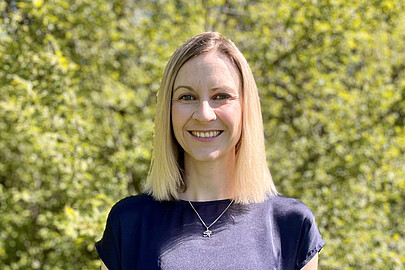
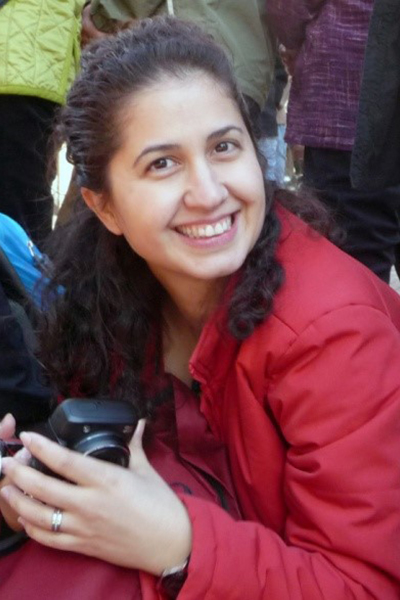
Prof. Dr. Nadja Kabisch is a leading academic at the Institute of Earth System Sciences within the Faculty of Natural Sciences at Leibniz University Hannover. Her work bridges landscape ecology , population geography , and health geography , focusing on nature-based solutions for urban challenges like climate change, demographic shifts, and environmental justice. She employs digital methods for ecosystem service analysis and urban climate resilience. Her research explores the health impacts of urban green spaces , environmental justice in global change contexts, and systematic approaches to human-environment interactions. Recent studies analyze allergenic pollen dynamics , microclimate regulation , and 15-minute city models for climate-resilient urbanism. As Deputy Management of her institute and a member of multiple committees (e.g., M.Sc. Landscape Sciences Selection Committee ), she shapes academic governance and curriculum. Her collaborations span institutions like Springer and Edward Elgar Publishing, with peer-reviewed articles in journals such as Nature Reviews Biodiversity and Landscape and Urban Planning .
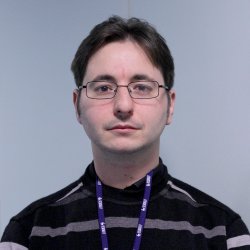
Professor Göran Broström works at the Department of Marine Sciences at the University of Gothenburg . His research focuses on physical oceanography, marine turbulence, tidal energy systems, and biophysical processes in marine ecosystems. Current research themes include methane emissions from ocean infrastructure, turbulence in tidal flows, and wave-current interactions He utilizes advanced numerical modeling (e.g., Large Eddy Simulation, Bayesian inversion) and field observations Recent publications emphasize climate impacts (methane plumes), tidal energy innovations, and marine ecological connectivity His work appears in high-impact journals like Nature , Molecular Ecology , and Frontiers in Marine Science . Collaborative projects span oceanographic modeling, environmental monitoring, and marine renewable energy. No specific student advising information appears in the provided text.
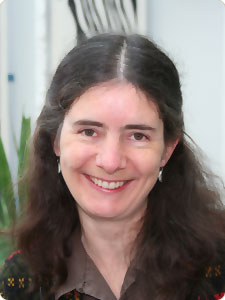
Hans Christopher Bernstein is a Professor at the Norwegian Fisheries College, UiT The Arctic University of Norway, and affiliated with the Arctic Centre for Sustainable Energy (ARC). His research focuses on biotechnology, microbial ecology, synthetic biology, and microalgal carbon capture and utilization. University: UiT The Arctic University of Norway School: Norwegian Fisheries College Research Group: Microalgae & Microbiomes Research Centers: Arctic Centre for Sustainable Energy (ARC) Bernstein’s work explores the intersection of biotechnology and microbial ecology, particularly in synthetic biology applications for carbon capture. His research includes modeling microbial processes, studying lipidome plasticity in Arctic diatoms, and developing engineered genetic circuits for microbial consortia. Key trends in his publications involve marine microbiome dynamics, cold seep ecosystems, and daylight-driven carbon exchange in structured microbial communities. Recent articles highlight advancements in microalgal biotechnology for industrial carbon capture, synthetic genetic circuits, and spatiotemporal metabolic network models. His work spans both theoretical modeling (e.g., neighbor-dependent interaction inference) and applied biotechnological solutions (e.g., EcoFABS fabricated ecosystems).
Atakan Aral serves as an Associate Professor at the Faculty of Computer Science, University of Vienna, where he leads research in edge computing, distributed systems, and environmental monitoring applications. His work focuses on developing efficient and resilient computing systems for environmental applications, with particular emphasis on neuromorphic edge AI and the cloud-edge continuum. He maintains an active teaching schedule offering courses in Distributed Systems Engineering, Cloud Computing, and Practical Software Courses with Bachelor's Thesis work across multiple semesters through 2025. Dr. Aral's research interests span several critical areas in modern computing including edge computing architectures, federated learning approaches, neuromorphic computing for environmental monitoring, and resilient systems design. His work addresses fundamental challenges in resource-constrained environments, particularly focusing on latency-sensitive applications and energy-efficient computation. The interdisciplinary nature of his research bridges theoretical computer science with practical environmental applications, developing systems that can operate effectively in remote or resource-limited settings. Analysis of his recent publication trajectory reveals a clear evolution from foundational cloud computing research toward increasingly specialized edge intelligence systems. Early work focused on resource allocation and scheduling in cloud environments, while his current research emphasizes neuromorphic approaches for sustainable environmental monitoring. His publications demonstrate growing interdisciplinary collaboration, particularly with environmental scientists, and increasing focus on practical implementations of theoretical concepts in real-world monitoring systems. Dr. Aral leads significant research projects including TROCI (Towards Resilient Operation of Critical Infrastructure), an ongoing initiative, and SWAIN (Sustainable Watershed Management Through IoT-Driven AI), which ran from February 2021 to February 2024. His work spans multiple dimensions of computing systems, from hardware-aware algorithms to application-level implementations, with consistent contributions to major conferences and journals in distributed systems and edge computing. He is an active member of the Scientific Computing research group at the University of Vienna, working from Room 6.49 at Währinger Straße 29. His research environment includes collaboration with the Environment and Climate Research Hub, reflecting the interdisciplinary nature of his work that bridges computer science with environmental applications. His publications indicate strong international collaboration across European institutions and research groups.
Dr. Courtney Quinn is an Assistant Professor of Sustainability Science at Furman University. She joined the faculty in 2024 and has been teaching since 2013, focusing on fostering intellectually challenging yet joyful classroom environments. Her research explores leadership in sustainability, food systems, place attachment, and critical thinking development. She co-founded the Sustainability Leadership Initiative (SLI) in 2021, a program uniting business and conservation leaders for cross-sectoral dialogue and experiential learning. Education: Ph.D. in Leadership Studies, University of Nebraska-Lincoln M.S. in Human Dimensions of Natural Resources, University of Nebraska-Lincoln B.A. in Environmental Policy, Drake University Dr. Quinn’s work bridges theory and practice, emphasizing sustainability futures, coupled human-natural systems, and resilience modeling. Her recent articles address topics like local food networks, pandemic-driven sustainability thinking, and climate policy implementation. The SLI program highlights her commitment to translating academic insights into actionable leadership strategies for real-world environmental challenges. Her research spans agriculture, environmental governance, and education, with a focus on fostering ethical decision-making and community engagement. She advises students on projects related to food systems, climate resilience, and farmer-land relationships.
Ji Hwan Park is an Assistant Professor in the School of Interactive Games and Media at RIT's Golisano College of Computing and Information Sciences (GCCIS). He holds a PhD from Stony Brook University under Prof. Arie Kaufman. His research focuses on accessible data visualization, digital twins, human-AI collaboration, and VR/AR applications. Notable contributions include developing tools for ADHD-friendly visualizations and interactive protein motif identification. He has received funding from the Department of Defense for biomedical research and earned an Honorable Mention at CHI 2024. Current teaching includes courses on game design and advanced algorithms. Research activities span medical imaging analytics (e.g., CMed framework for crowd-sourced diagnostics), climate modeling through Bayesian deep learning, and creative visualization techniques like Graphoto. His work bridges technical innovation with human-centered design principles, particularly in healthcare and neurodivergent accessibility contexts.
Dr. Umberto Montanaro is a Senior Lecturer in Autonomous Systems and Control Engineering at the University of Surrey's School of Mechanical Engineering Sciences, within the Centre for Automotive Engineering. He holds PhDs in Control Engineering (2009) and Mechanical Engineering (2016) from the University of Naples Federico II, Italy. His research focuses on adaptive control algorithms for automotive and mechatronic systems, including vehicle platooning, autonomous driving, and nonlinear control strategies. He has authored over 60 peer-reviewed publications and led projects like the Innovate UK-funded GPR for Localisation (2018–2019) and the EPSRC/JLR-funded CARMA initiative (2016–2021). His work spans control of multiagent systems, optimal control, and enhanced model reference adaptive control (MRAC) applications. Dr. Montanaro has supervised multiple PhD and MEng students, including co-supervision of Shilp Dixit's research on autonomous overtaking. Research Interests: Adaptive Control, Autonomous Vehicles, Vehicle Platooning, Nonlinear Systems, Model Reference Adaptive Control Grants: CARMA (EPSRC/JLR), GPR Localisation (Innovate UK) Teaching: Control and Dynamics (ENG3611), Engine Speed Control labs Labs/Teams: Active in automotive control systems and connected autonomous vehicle research
Theo Hofman is an Associate Professor and Program Director in the Mechanical Engineering Department at Eindhoven University of Technology (TU/e). He specializes in integrated design methods for complex engineering systems, focusing on powertrain systems for automotive, maritime, and aerospace applications. His work emphasizes computational design synthesis, machine learning, and model-based optimization. Education: Hofman holds an MSc (1999) and PhD (2007) in Mechanical Engineering from TU/e. He has held roles at Thales Cryogenics and Drivetrain Innovations before joining TU/e. He also served as an Invited Professor at ETH Zurich and Université Polytechnique Hauts-de-France. Research Interests: His research spans hybrid electric vehicles, powertrain design, energy management systems, and sustainable transportation. Key areas include automated design tools, thermal management, and co-design of plant and control systems. Applications include electric trucks, ships, and aircraft. Articles Trends: His recent publications (2021–2025) emphasize electric vehicle infrastructure optimization, battery systems, and control strategies. Key themes include energy efficiency, thermal management, and co-design methodologies for automotive and mobility systems. Scientific Awards: IEEE VPPC 2024 Best Paper Award. Advising & Grants: He has supervised over 104 MSc, 14 PDEng, and 10 PhD students. Active projects include the 'Green Transport Delta' initiative (2021–2024) and Bosch Transmission collaborations. His courses include 'Electric and Hybrid Vehicle Powertrain Design' and 'Automotive Systems Engineering Project.' Labs/Teams: He leads the Group Hofman and collaborates with the MEGEVH (France) and TU/e’s EAISI Mobility initiative. His work contributes to UN Sustainable Development Goals related to affordable and clean energy, industry innovation, and climate action.
Professor Paul A. Raschky is affiliated with the Department of Economics at Monash University , where he also directs the SoDa Labs and co-founded the KASPR Datahaus PTY LTD and IP Observatory . His academic focus spans Political Economy , Environmental Economics , Insurance Economics , and Development Economics , with a specialization in natural hazards and data science applications. Education: PhD (University of Innsbruck, 2008), with a postdoctoral research visit at the Wharton School . Research: Explores intersections of disaster risk , governance , and economic development , leveraging machine learning and big data . Recent Publications: Focus on generative AI productivity , ethnic favoritism , disaster insurance , and conflict economics . Awards: Recipient of the ABDC Award for Innovation and Excellence in Research (2022) and Dean’s Excellence in Research Award (2016) . Projects: Leads initiatives on internet suppression in Myanmar , news media availability , and AI-driven policy insights in South-East Asia and the Pacific. Future Work: Will be on sabbatical in 2025 , likely expanding on AI applications and disaster resilience .
Maarten Kroesen is an Associate Professor in the Transport and Logistics group at Delft University of Technology's Faculty of Technology, Policy and Management. His research focuses on travel behavior analysis, sustainable transport, and quantitative methods. He earned his PhD cum laude in 2011 with work on aircraft noise annoyance and has since shifted to mobility patterns and policy analysis. Kroesen teaches courses on statistics, data analysis, and travel behavior research, and has received multiple awards including the Best Teacher of the Year (2016) and Henk Sol Award (2011). His work bridges behavioral theory with policy implications, emphasizing longitudinal panel data methods. Education: PhD (cum laude) in Transport Policy and Management (TU Delft, 2011), MSc in Systems Engineering (TU Delft) Research Interests: Travel behavior dynamics, sustainable mobility transitions, latent class models, accessibility disparities Awards: Over six major accolades, including best thesis and innovation awards Expertise: Policy advising on aviation, transport equity, and behavioral modeling Recent work explores emerging time-use patterns, zero-emission flight impacts, and bidirectional effects between accessibility and travel behavior. He actively contributes to Dutch policy discussions on aviation and transport infrastructure.
Mary Lou Zeeman is the R. Wells Johnson Professor of Mathematics at Bowdoin College, specializing in geometric dynamical systems, mathematical biology, and climate modeling. Her work bridges theoretical mathematics with real-world applications in ecology, sustainability, and neuroendocrinology. Education: PhD in Mathematics from the University of California, Berkeley; MA and BA in Mathematics from the University of Oxford. Research focuses on population dynamics, resilience in ecosystems, and interdisciplinary approaches to sustainability. She co-leads initiatives like the Mathematics and Climate Research Network (MCRN) and contributed to the Mathematics of Planet Earth (MPE) 2013 initiative. Her teaching includes Biomathematics (MATH 1758/BIOL 1175) and Multivariate Calculus (MATH 1800). Key contributions include modeling hormone oscillations in the menstrual cycle, climate change impacts, and fisheries management policies. Her work emphasizes decision-support frameworks for environmental challenges. Grants and collaborations span NSF-funded projects on computational sustainability and climate change research, reflecting her commitment to applied interdisciplinary science.
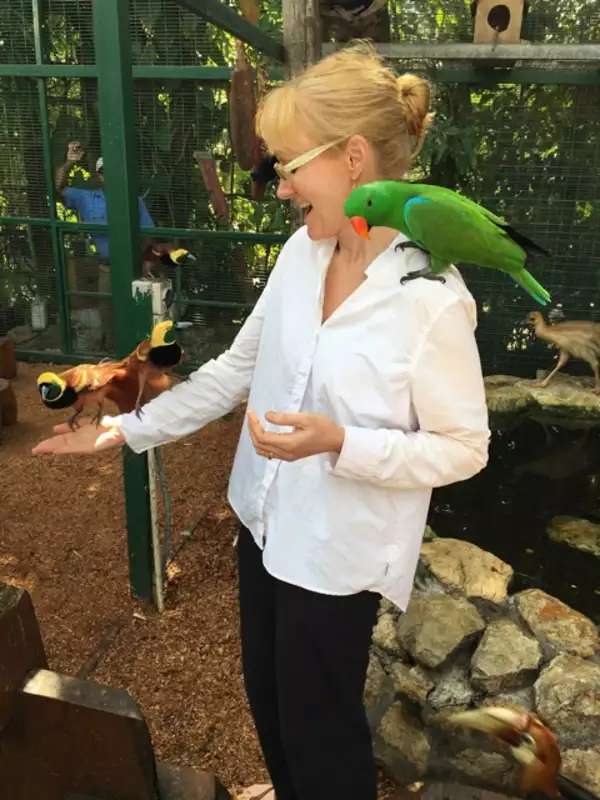
Paige West is The Claire Tow Professor of Anthropology at Barnard College and a faculty member at Columbia University. She directs Columbia's Climate School Transdisciplinary Research Lab. Her work focuses on environmental conservation, Indigenous sovereignty in Melanesia, and climate change adaptation. She earned her Ph.D. in cultural and environmental anthropology from Rutgers University, with earlier degrees from Wofford College and the University of Georgia. Dr. West has conducted over 100 months of fieldwork in Papua New Guinea, collaborating with Indigenous communities to revitalize socio-ecological systems. Her research bridges anthropology with political ecology, examining linkages between environmental policy and international development. Key interests include Indigenous knowledge systems, conservation inequities, and commodity cultures. Director: Columbia University Climate School Transdisciplinary Research Lab Co-founder: PNG Institute of Biological Research and Roviana Solwara Skul Anthropological Director: Ailan Awareness NGO Award-winning author of three books, she founded the journal *Environment and Society: Advances in Research*. Her 2016 book *Dispossession and the Environment* won the Columbia University Distinguished Book Award. Current projects include a Guggenheim-funded book on climate change and kinship. Notable recognitions include Guggenheim Fellowship, Phi Beta Kappa Lecturer (2017-2018), and designation as one of 2021's 50 people changing the world by The Explorers Club. Her work integrates academic research with applied conservation initiatives, emphasizing Indigenous-led methodologies.
Meltem ŞENOL BALABAN is an Associate Professor in the Department of City and Regional Planning at Middle East Technical University (METU), Ankara, Turkey. She holds a dual PhD in City and Regional Planning (METU, 2009) and Urban Engineering (University of Tokyo, 2012). Her academic career includes roles as Director of METU Disaster Management Implementation and Research Center (since 2018), Minor Program Coordinator, and Board Member of the Applied Ethic Research Center. She specializes in disaster risk management, urban resilience planning, GIS-based modeling for evacuation/shelter optimization, and climate change adaptation in urban contexts. Her research focuses on flood risk mitigation in riverine cities, institutional frameworks for cultural heritage protection (e.g., UNESCO sites), and earthquake resilience strategies. Notable projects include developing Turkey's provincial risk reduction guidelines, a climate change risk assessment framework (CRAFT) for cultural heritage, and international cooperation initiatives like the UK-funded CRAFT and NET projects. She has authored over 40 peer-reviewed publications and supervised 10+ theses. Key contributions include GIS-based evacuation models for Istanbul, comparative studies of UK/Japan/Turkey disaster policies, and post-disaster resilience assessments. Awards include JICA Scholarship (2009-2012), ProVention Research Grant (2007-2008), and multiple international recognitions for her work on urban risk reduction. Her teaching portfolio includes courses on GIS in planning, disaster management principles, and urban resilience strategies.
Lara Buchak is a Professor of Philosophy at Princeton University, where she returned after 12 years at UC Berkeley. Her work bridges decision theory, ethics, epistemology, and the philosophy of religion. She holds a Ph.D. from Princeton (2009). Her research focuses on risk analysis in decision-making, ethical implications of risk attitudes (e.g., climate policy, biomedical ethics), and the rationality of faith. Notable contributions include her 2013 book *Risk and Rationality*, which argues that diverse risk preferences can be rational. Current projects explore faith as commitment despite counterevidence and the role of worst-case arguments in ethics. Her recent articles emphasize normative theories beyond expected utility, applications of decision theory to climate and biomedical ethics, and philosophical analyses of faith and tradition. She has also engaged with free will, group decision-making, and religious definitions. Buchak’s work intersects formal philosophy with practical ethics, offering frameworks to address complex societal challenges through rigorous theoretical foundations.
Dr. Renske Hijbeek is an Associate Professor at the Plant Production Systems group of Wageningen University & Research. Her research focuses on nutrient management in arable farming systems, emphasizing soil fertility improvement through organic waste recycling, legume cultivation, and minimizing environmental impacts like greenhouse gas emissions. She teaches courses including 'The Carbon Dilemma - A Soil Perspective' and 'Analysing Sustainability of Farming Systems'. Key projects include the GRA Benchmarking Nutrient Circularity and EDF Soil Carbon Sequestration initiatives. Her work integrates agronomy with ecological principles to achieve sustainable agricultural practices globally. Research Contributions: Dr. Hijbeek's projects address nutrient circularity, soil carbon dynamics, and organic amendment efficiency across temperate and tropical regions. Recent work explores dietary impacts on nitrogen fertilizer dependency and systemic redesign of food production systems. Collaborations: Active in international collaborations like the Global Crop Nutrient Removal Database and the CATCH-C Legumes project in Tanzania. Her interdisciplinary approach bridges crop science, environmental management, and policy analysis.