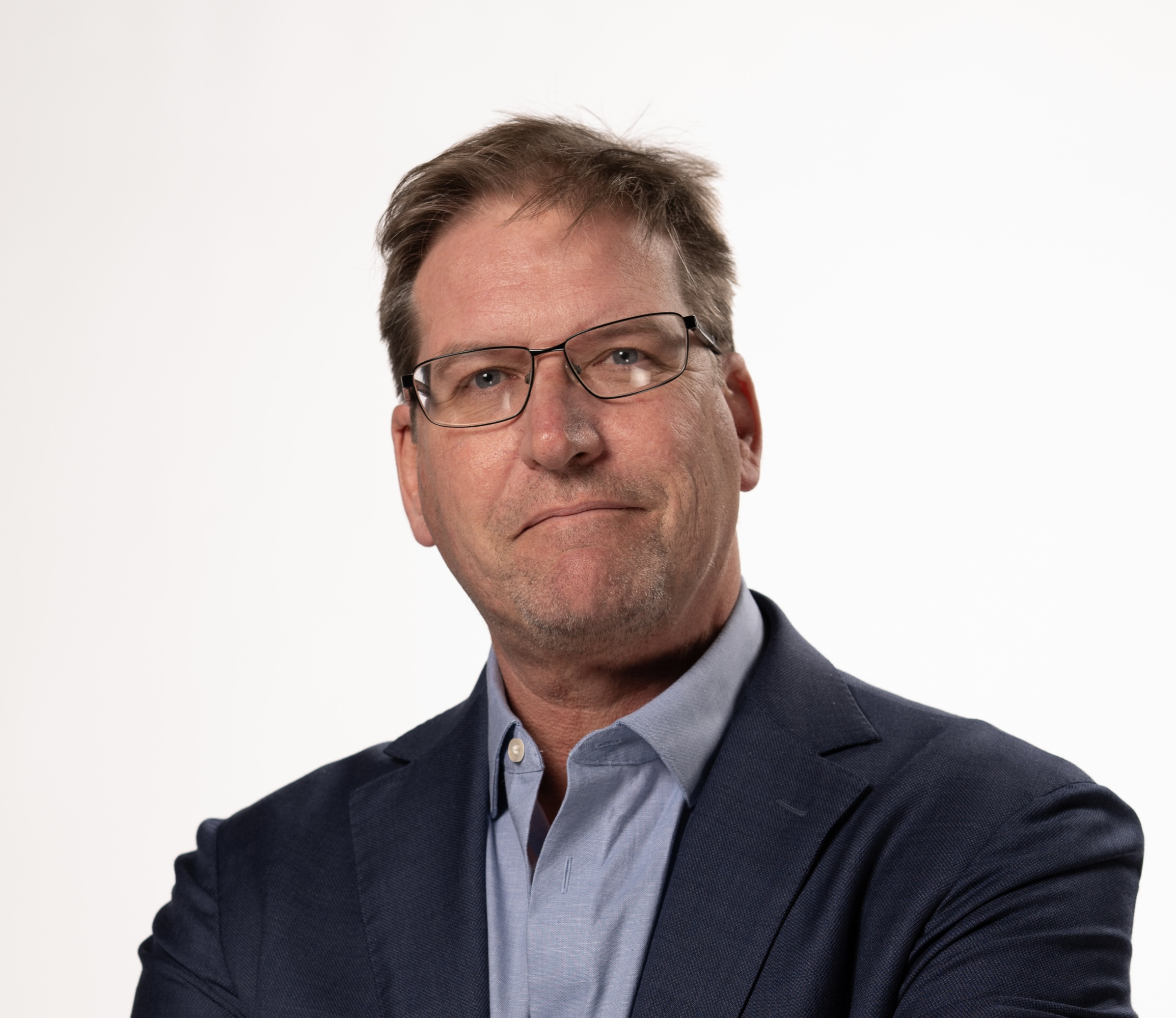
Dr. Gavin Mount is a researcher at UNSW Canberra , specializing in non-traditional security studies , ethnic conflict , and the sociopolitical implications of emerging technologies . His work bridges theoretical analysis with practical applications in conflict transformation and defense studies. Research Focus: Global politics of ethnic conflict, hybrid peace/war frameworks, and socio-political impacts of drone technology. Teaching: Courses like Ethnic Conflict in World Politics and Law, Force and Legitimacy , with a focus on military education and strategic studies. Publications: Recent work includes contributions to Thinking Swarms (2025) and Hybridity on the Ground in Peacebuilding and Development (2018). Grants: Leads the Curricula Integration of Student Wellbeing Resources project under HERDSA. Key Themes across his research include the intersection of technology and conflict, evolving defense paradigms, and pedagogical innovations in security studies.
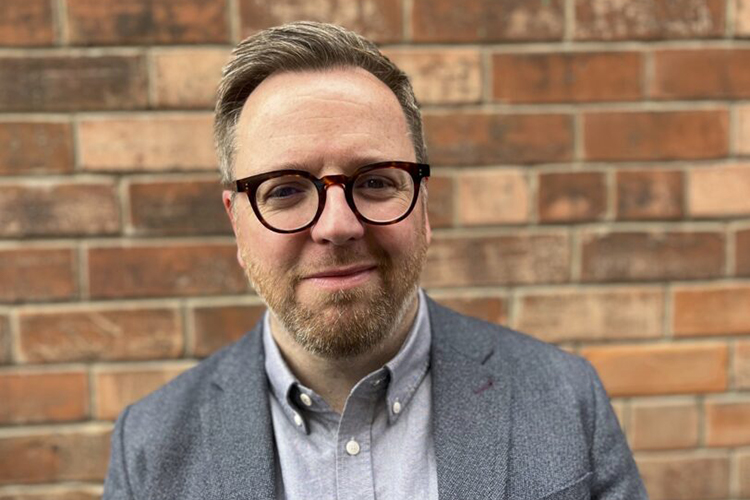
Professor Mark Scott is a Full Professor of Planning and Dean of the School of Architecture, Planning and Environmental Policy at University College Dublin (UCD), where he has served since 2002. He is a leading scholar in rural planning and environmental policy with over 25 years of academic experience. His leadership roles include Dean (2020-2025), Head of School, and various subject leadership positions within UCD. Mark Scott earned his BSc, Diploma in Town Planning, and PhD in Environmental Planning from Queen's University Belfast. Prior to joining UCD, he worked at the University of Ulster and Queen's University Belfast, and also had planning practice experience. He has held visiting appointments at the University of Pisa and the University of New South Wales. His research focuses on the environmental and sustainability dimensions of spatial planning theory and practice, with specific expertise in rural planning, land-use governance, climate action, green infrastructure, and natural and built heritage. Professor Scott has published extensively in these areas with over 150 journal articles and book chapters, and has authored several influential books including 'Rural Planning Futures' (2025) and 'Postcapitalist Countrysides' (2025). His work demonstrates a strong focus on contemporary challenges in rural planning, climate adaptation, and sustainable development, bridging theoretical frameworks with practical policy applications. Professor Scott has received significant recognition for his contributions to the field: Elected Fellow of the Academy of Social Sciences (2024) Fellow of the Regional Studies Association Shortlisted for the Patsy Healey Award for Academic Excellence (2025) With research funding totaling approximately €6 million from various national and international sources, Professor Scott actively engages with policy and practice. He serves on the Board of the Heritage Council (2023-present), chairs the Historic Monuments Council in Northern Ireland (2025-30), and has advised numerous governmental bodies including Oireachtas Committees, the UK House of Lords, and the OECD. His leadership extends to editorial roles, having served as editor of Planning Theory & Practice (2008-2015 & 2018-2024) and currently on the editorial board of Town Planning Review. Professor Scott leads several significant research initiatives including the Wildfire Resilient Cultural Heritage project (funded by JPI Climate and JPI Cultural Heritage), CO-Bioecon (funded by Department of Agriculture, Food & Marine), and the Rural Planning in the 2020s project (funded by the Royal Town Planning Institute).
Dr. Jessica A Eisma is an Assistant Professor of Water Resources in the Department of Civil Engineering at the University of Texas at Arlington. Her research focuses on urban and dryland hydrology, remote sensing, machine learning, citizen science, and climate change adaptation. She holds a PhD from Purdue University (2020) and prior degrees from Purdue and Michigan State University. Her work emphasizes community-centered solutions for flood resilience and green infrastructure planning in vulnerable areas. Education: PhD, Civil Engineering, Purdue University, 2020 MS, Civil Engineering, Purdue University, 2015 BS, Civil Engineering, Michigan State University, 2012 Research Interests: Urban hydrology and climate impacts on rainfall patterns Remote sensing applications for water resource management Machine learning in hydrological modeling Citizen science for environmental data collection Green infrastructure design for flood mitigation Recent Article Trends: Dr. Eisma’s recent work addresses urbanization effects on extreme rainfall, UAV-based thermal mapping of micro-urban heat islands, and equity-focused green infrastructure planning. Her publications often bridge technical innovation and community-driven solutions for climate resilience. Awards: 2024: Faculty/Staff Graduating Student Impact Reception (UTA) 2023: Emerging Leaders Award (Purdue CEG SAC) 2020: Magoon Award for Excellence in Teaching (Purdue College of Engineering) 2015: NSF Graduate Research Fellowship Advising & Grants: Advises 3 PhD students and multiple undergrad researchers Principal Investigator on grants totaling over $1M from NOAA, NSF, and others Focus areas: Houston flood resilience, Texas urban stormwater systems Lab & Teams: Leads the SEUSI Lab, dedicated to socio-environmental solutions in urban sustainability and infrastructure. Collaborates with national and international partners on water security and climate adaptation projects.
Zach Shahn is an Assistant Professor in the Department of Epidemiology and Biostatistics at the CUNY School of Public Health. He holds a PhD in Statistics from Columbia University and a BA in Mathematics from Stanford University. His research focuses on causal inference methods applied to healthcare data, particularly time-varying treatment effects and critical care applications. He has conducted postdoctoral work at Harvard School of Public Health and previously worked at IBM Research in Healthcare and Life Sciences. Education: PhD in Statistics and Probability, Columbia University BA in Mathematics, Stanford University Research interests include developing causal inference frameworks for evaluating treatment efficacy in dynamic healthcare settings, with a focus on critical care outcomes and methodological innovations. Recent work explores applications of causal diagrams, instrumental variables, and machine learning in healthcare decision-making. His studies often involve large-scale healthcare datasets to assess interventions' real-world impacts. Key trends in his articles include advancements in causal effect estimation under complex treatment regimes, bias analysis in observational studies, and methodological contributions to difference-in-differences and N-of-1 trial designs. His work bridges statistical theory with practical healthcare challenges, emphasizing reproducibility and policy relevance. No scientific awards are listed, though his contributions to causal inference methodologies are notable in academic circles. He has advised on healthcare data projects and published extensively without explicitly listed grants. His professional network includes collaborations with institutions like Harvard and IBM. He is affiliated with CUNY's public health programs and actively engages in academic discourse via Twitter and LinkedIn. His lab or team details are not explicitly mentioned in available materials.
Dr. Hyun Kyoung Ro is an Associate Professor in the Department of Counseling and Higher Education at the University of North Texas, affiliated with the College of Education. She previously served as a faculty member at Bowling Green State University and worked as a Research Designer and Analyst at Carnegie Mellon University’s Office of Institutional Research and Analysis. Ph.D. in Higher Education, The Pennsylvania State University (minor in Educational Psychology—Applied Measurement) M.A. and B.A., Korea University Her research centers on gender and racial equity in STEM education , learning experiences of marginalized students , and critical quantitative research and assessment . She employs rigorous methodologies to examine systemic inequities and institutional practices affecting underrepresented populations in higher education. Dr. Ro's recent publications span top-tier journals such as Journal of Engineering Education , The Review of Higher Education , and Research in Higher Education , reflecting a strong focus on equity, policy, and assessment in STEM and higher education contexts. Her work consistently emphasizes intersectionality, data justice, and institutional reform. She has received significant external funding, including: National Science Foundation ADVANCE Adaptation Track grant for gender equity on campus AccessLex Institute/Association for Institutional Research grant on law school access and enrollment among women of color Collectively, these grants total $1.1 million, supporting her leadership in advancing equity through research and institutional change. While no formal list of advisees or awards is provided, her role as a leading author and grant recipient highlights her active mentorship and scholarly leadership. Dr. Ro has not indicated any lab or research team affiliations in the provided text, but her research profile suggests collaboration with institutional research units and equity-focused initiatives.
Prof. Hens Runhaar is a Full Professor of Sustainable Food System Governance at Utrecht University's Copernicus Institute of Sustainable Development. His research focuses on reconciling food production with biodiversity recovery, environmental sustainability, and health through innovative governance frameworks. He emphasizes connectivity issues in food systems, such as disconnects between production and environmental conditions, and advocates for transformative practices like agroecology and nature-inclusive agriculture. Key roles include chairing the Board of Examiners for Sustainable Development and membership in Future Food Utrecht. His projects include NWO-funded initiatives like COMBINED (grassland biodiversity) and REWIRE (circular agricultural missions). He actively engages in policy dialogues, such as advising BirdLife Netherlands and contributing to the Dutch Biodiversity Council. Research highlights systemic barriers to sustainability transitions in agriculture, with recent work analyzing dairy farming and farmer collectives. His outreach includes media appearances on nitrogen policy, nature restoration, and sustainable food systems. Professional memberships span international networks like Earth System Governance and the Wageningen School of Social Sciences.
Remko Van Hoek serves as Professor of Practice in the Department of Supply Chain Management at the Sam M. Walton College of Business, University of Arkansas. He teaches Sourcing and Procurement courses across undergraduate, master's, and doctoral programs. Prior to joining the University of Arkansas, Dr. Van Hoek held academic positions in Europe and served as a visiting professor at Cranfield School of Management, complemented by extensive industry experience as a supply chain and procurement executive at global corporations including Nike, PwC, and The Walt Disney Company. He currently serves on the Council of Supply Chain Management Professionals (CSCMP) Board of Directors and acts as executive director of the CSCMP Supply Chain Hall of Fame hosted by the Walton College. Dr. Van Hoek's research centers on digital transformation in procurement and supply chain management, with particular focus on blockchain implementation, artificial intelligence applications, and sustainable sourcing practices. His work investigates how emerging technologies reshape procurement processes, supplier relationship management, and risk mitigation strategies. He explores innovative approaches to supplier diversity programs, ethical sourcing frameworks, and the strategic evolution of procurement from cost reduction to value creation. His research consistently bridges academic theory with industry practice through case studies from major corporations, developing actionable frameworks for practitioners facing digital disruption and sustainability challenges. Analysis of his 15 most recent publications (2023-2025) reveals dominant themes in AI-driven supply chain risk prevention, blockchain implementation for transparency, and sustainable supplier engagement. His work demonstrates consistent industry collaboration, drawing from case studies at Walmart, Moet Hennessy, and Bayer to address post-pandemic resilience challenges. A significant portion examines procurement's strategic evolution beyond transactional functions, with recurring emphasis on ethical considerations in digital transformation and the practical implementation barriers for emerging technologies in global supply networks. As a Professor of Practice, Dr. Van Hoek integrates executive-level industry experience into curriculum development and student mentorship. His industry-engaged teaching model includes guest lecturer programs connecting students with supply chain practitioners, as evidenced by his co-authored work on integrating industry insights into supply chain education. While specific grant funding details are not publicly documented, his leadership in the CSCMP Supply Chain Hall of Fame demonstrates commitment to professional development and industry-academia knowledge transfer. Dr. Van Hoek directs the CSCMP Supply Chain Hall of Fame initiative, which documents transformative contributions to supply chain management through interviews with industry pioneers and historical case studies. This platform serves as both an educational resource for Walton College students and a professional development tool for supply chain practitioners globally. The Hall of Fame preserves critical industry knowledge while highlighting contemporary innovations in supply chain strategy and technology implementation.
Dalibor Radovanović is a researcher at Singidunum University , affiliated with the Faculty of Business Informatics . His work spans cybersecurity, blockchain technologies, and their applications in business and IoT systems. Education: Doctoral Dissertation (2016, Singidunum University) Master's & Basic Studies (Faculty of Business Informatics) Secondary Education: ETŠ Nikola Tesla Research Interests include: Security frameworks for IoT and blockchain integration Smart card and wireless network vulnerabilities E-governance and corporate IT audit methodologies Machine learning applications in cybersecurity Environmental performance optimization in agribusiness Publication Trends reveal a focus on blockchain (2022), cybersecurity (2009-2022), and IT governance (2010-2017). His work bridges theoretical analysis with practical implementations in Serbia's digital economy. Collaborations with scholars like Marko Šarac and Saša Adamović highlight interdisciplinary approaches to securing financial systems, educational institutions, and industrial IoT applications.
Habib Ullah is an Associate Professor in Data Science at the Norwegian University of Life Sciences (NMBU), Norway, where he conducts research at the intersection of computer vision and machine learning. He is affiliated with the Institute of Data Science under the Faculty of Science and Technology. He has previously held academic positions at COMSATS University Islamabad, Pakistan, and the University of Ha'il, Saudi Arabia, and served as a postdoctoral researcher at The Arctic University of Norway. Educational Background: PhD in Information and Communication Technology (Computer Vision), University of Trento, Italy (2011–2015) MSc in Electronics and Computer Engineering, Hanyang University, South Korea (2007–2009) BSc in Computer Systems Engineering, NWFP University of Engineering and Technology, Pakistan (2002–2006) Habib Ullah's research is primarily focused on computer vision and machine learning, with applications in aquaculture, agriculture, and human behavior analysis. He investigates underwater fish feeding sounds using audio classification, develops zero-shot learning models for recognizing unseen classes, and applies deep learning to detect stress in salmon via skin dot patterns. He also explores AI-driven controlled environment agriculture, leveraging sensors and automation for optimal crop growth. His work emphasizes practical AI solutions for real-world challenges in environmental and biological domains. The recent publications highlight a strong trend in leveraging deep learning for zero-shot and semi-supervised learning, particularly in computer vision tasks such as sea ice classification, crowd anomaly detection, and agricultural monitoring. His research spans remote sensing, biomedical signal processing, and human activity recognition, demonstrating interdisciplinary versatility. The keywords reflect a focus on robust feature representation, knowledge transfer, and model generalization. Scientific Awards and Funding: Industrial PhD grant 'Advancing Controlled Environment Agriculture AI' from The Research Council of Norway (Project number 354125, 2 million NOK, 2024) Team member (Coordinator-Participant) in the Battery Cell Assembly Twin (BatCAT) project funded by Horizon Europe (7 mEuro, 2023–2027) Development of an AI-Based Image Analysis System for Monitoring Plant Status (Funding: 1.8 mNOK, starting 2025) Habib Ullah actively supervises PhD projects and contributes to academic service through editorial and organizational roles. He has served as an Associate Editor for IEEE Access, Guest Editor for MDPI Remote Sensing, and Editor of the Springer book Machine Learning Techniques and Sensor Applications for Human Emotion, Activity Recognition, and Support (ML-SHEARS) . He has also been a Track Chair and Program Committee Member for several international conferences, reflecting his leadership in the academic community. His research is supported by significant grants and collaborative projects, indicating strong institutional and international engagement. He is involved in multiple research teams and projects, including the BatCAT project on battery manufacturing and AI applications in controlled environment agriculture with RIFT LABS AS. His lab work integrates deep learning, sensor fusion, and data analytics for environmental and biological monitoring systems.
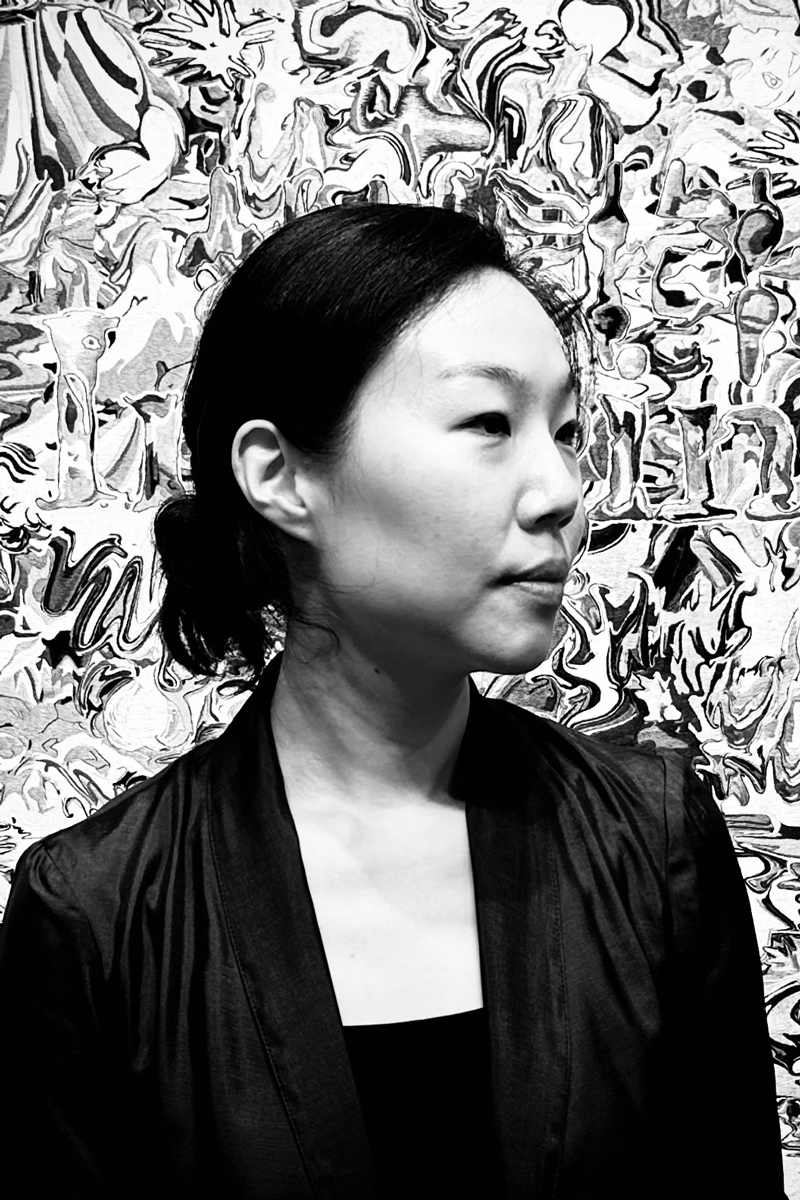
Sohl Lee serves as Associate Professor in the Department of Art History and Criticism at Stony Brook University, specializing in Contemporary East Asian Art and Visual Culture, Critical Theory and Globalization, and Curatorial Studies. Holding a Ph.D. from the University of Rochester since 2014, she contributes significantly to the academic community through teaching and research. Her educational background features: Ph.D. in Visual and Cultural Studies from the University of Rochester (2014) Professor Lee's research explores modern and contemporary East Asian art through interdisciplinary lenses including aesthetics of politics, activist art, vernacular modernism, postcolonial theory, and historiography. Her scholarship appears in prominent journals such as Yishu: Journal for Contemporary Chinese Art , Art Journal , and InVisible Culture , establishing her as a leading voice in global art discourse. Her publication trajectory reveals consistent engagement with democracy, ecological consciousness, and Cold War legacies across East Asian contexts. Key thematic threads include the intersection of art and political movements, ecological thinking in Korean contemporary art, and visual representations of national division—demonstrating how artistic practices navigate complex socio-political landscapes. Dr. Lee's scholarly contributions have been recognized through competitive fellowships: Social Sciences Research Council Fellowship Korea Foundation Fellowship Susan B. Anthony Institute of Gender and Women Studies Fellowship She actively shapes student learning through undergraduate courses including 'Art and the City,' 'Modern and Contemporary Korean Art,' and 'Social Engagement and Publicness in East Asia.' Her curatorial practice extends academic work into public spheres through exhibitions mounted in both the United States and South Korea, bridging theoretical frameworks with tangible cultural production.
Dr. Jennifer Katz serves as an Associate Professor in the Department of Educational and Counselling Psychology, and Special Education (ECPS) at the University of British Columbia's Faculty of Education. She joined UBC in July 2016 after previously holding an Associate Professor position in Inclusive Education at the University of Manitoba. Renowned for creating the Three Block Model of Universal Design for Learning (UDL), her framework is now implemented across Canadian school divisions to advance inclusive educational practices. Dr. Katz's research centers on inclusive education K-12 , social and emotional learning (SEL) , and mental health promotion in schools . Her work integrates the Three Block Model of UDL to address diverse student needs while emphasizing indigenous perspectives through extensive collaboration with First Nation elders and communities in Manitoba, Alberta, and Quebec. This intersectional approach reimagines inclusive education through reconciliation frameworks and culturally responsive practices. Analysis of her recent publications reveals consistent focus on mental health literacy programs for students with developmental disabilities, UDL's impact on academic achievement and teacher efficacy, and the integration of Indigenous knowledge systems. Her research bridges theory and practice through classroom-based interventions, cluster-randomized trials, and transformative learning frameworks that prioritize student well-being and social inclusion. Scientific Awards: No scientific awards were documented in the provided sources. Advising and Grants: While specific graduate students and research grants aren't detailed in the text, Dr. Katz's extensive publication record and community partnerships indicate active research leadership. Her work with school divisions across Canada suggests significant program implementation funding, though grant specifics remain unreported. Labs and Teams: Dr. Katz maintains critical partnerships with First Nation communities, embedding Indigenous knowledge into educational frameworks. Her Three Block Model implementation involves multi-school division collaborations nationwide, creating practitioner-researcher networks focused on inclusive classroom transformation.
Robert Swinney is the Senior Associate Dean for Executive MBA and Quantitative Management Programs and a Professor of Operations Management at Duke University's Fuqua School of Business. He specializes in strategic supply chain operations, consumer behavior dynamics, and platform management. His research explores sustainability, risk mitigation, and ethical practices within complex supply networks. Education: Bachelor of Science in Astronomy, California Institute of Technology PhD in Operations Management, Wharton School, University of Pennsylvania Prior Role: Associate Professor at Stanford University Graduate School of Business Research Interests: His work addresses operational implications of consumer behavior, start-up and platform operations, supply chain resilience, and ethical sourcing strategies. He emphasizes practical applications in healthcare, food delivery systems, and digital content platforms. Editorial Contributions: Currently serves as Department Editor at Manufacturing & Service Operations Management , with prior roles at Management Science and Production & Operations Management . Advising & Grants: No specific grants or advising roles explicitly listed in provided text.
Gregory Paradis is an Assistant Professor in the Department of Forest Resources Management at the University of British Columbia (UBC) Faculty of Forestry. His research focuses on sustainable forest management, integrating operations research, mathematical optimization, and systems modeling to address complex interactions between ecosystems, industries, and society. He works with the FRESH Lab and collaborates with the Integrated Remote Sensing Studio, emphasizing ecological and economic integration in forest planning. Sustainable Forest Management Operations Research Forest Economics Data Science Risk Assessment GIS-based Methods His research spans forest inventory optimization, climate change adaptation strategies, wildfire risk modeling, and decision support systems for invasive species. He develops computational frameworks to enhance wood supply planning, carbon management, and ecological resilience. Recent work includes machine learning applications for fire safety in timber structures and automated road planning tools for wildlife conservation. Paradis’s publications highlight trends in applying optimization methods to sustainable forestry, with a focus on biodiversity, climate adaptation, and value chain innovation. He advocates for interdisciplinary approaches that bridge silviculture, industrial engineering, and data science to tackle emerging challenges in forest ecosystems. As an educator, he seeks motivated students with quantitative and creative problem-solving skills. His lab collaborates on remote sensing integration, risk assessment models, and policy-relevant forest management strategies, ensuring plans account for uncertainties like insect infestations or windthrow events.
Anil Madhavapeddy serves as Professor of Planetary Computing at the University of Cambridge's Department of Computer Science and Technology and directs the Cambridge Centre for Carbon Credits (4C). A Fellow of Pembroke College, he integrates systems research with environmental conservation through the Computer Laboratory's Environment and Energy Group. His career spans industry leadership (NetApp, Citrix, Intel), academic appointments (Cambridge, Imperial, UCLA), and entrepreneurial ventures (XenSource, Unikernel Systems, Docker). Madhavapeddy earned his PhD at Cambridge's Computer Laboratory in 2006. His research bridges computational systems and planetary-scale environmental challenges, with deep expertise in open-source development (OCaml, Xen, Docker, OpenBSD) and technology strategy advising for organizations including Zededa, Tezos Foundation, and Tarides. His work centers on environmental computing and climate informatics, leveraging distributed systems and functional programming to develop sensing infrastructure for conservation. Recent projects focus on carbon credit systems, AI-driven biodiversity monitoring, and sustainable computing architectures that minimize ecological footprints while maximizing analytical capability. Analysis of his 2025 publications reveals a concentrated effort on AI-integrated conservation tools, privacy-preserving carbon accounting, and energy-efficient computing. Key themes include spatial networking for ecological data, LLM-enhanced evidence retrieval in conservation science, and novel metrics for extinction risk assessment—demonstrating computational innovation applied to urgent planetary boundaries. No scientific awards were documented in the source material. Madhavapeddy advises multiple technology firms on strategic development while leading the Cambridge Centre for Carbon Credits, though specific grant funding details remain unreported. He actively contributes to the Environment and Energy Group at Cambridge's Computer Laboratory and directs the interdisciplinary Cambridge Centre for Carbon Credits (4C). His open-source leadership spans critical infrastructure projects including OCaml, Xen, and Docker, fostering collaborative development communities that underpin modern cloud and container technologies.
Aura Istrate is a Lecturer/Assistant Professor in Urban Planning & Sustainable Urbanism at the School of Architecture, Planning and Environmental Policy at University College Dublin (UCD). With an international background spanning multiple continents, she conducts interdisciplinary research on sustainable urban development, focusing on active mobility, nature-based solutions, and climate-neutral cities. She teaches GIS and urban planning modules while coordinating several significant research projects across European and Asian contexts. University College Dublin, School of Architecture, Planning and Environmental Policy Primary Coordinator of C-NEWTRAL (Horizon MSCA-DN 2024-2028) Co-Leader of REALLOCATE (Horizon Europe project 2023-2027) Principal Investigator for BIODIVERSA+ projects (NatureScape and NBS4AQUAMISSION) Educated at the University of Architecture and Urban Planning 'Ion Mincu' in Bucharest (BA and MA) and the University of Liverpool (PhD), Dr. Istrate further enhanced her teaching credentials with a Professional Certificate in University Teaching & Learning from UCD. Her academic journey reflects a strong foundation in architectural and urban planning principles combined with specialized expertise in sustainable urbanism. Dr. Istrate's research focuses on smart and sustainable urbanism, particularly examining active mobility, livable streets, green public spaces, and nature-based solutions in urban planning. Her work employs participatory, geospatial, and mixed methods to inform smart communities and the transition to climate-neutral cities. She has practical international experience in urban design and planning, with ongoing collaborations spanning European and Asian countries, currently teaching and researching across cultures in UCD and UCD's International Colleges (CDIC). Her recent publications reveal a strong focus on street vitality, urban heat adaptation, and nature-based solutions. The research demonstrates methodological diversity combining quantitative spatial analysis with qualitative community engagement approaches. Her work spans multiple geographic contexts, with particular expertise in Chinese urban environments and European cities, showing how urban planning concepts need to be contextualized for different cultural settings. The articles consistently address climate adaptation challenges through innovative approaches like urban nature games and fine-grained street classification systems. Dr. Istrate serves as a PhD thesis supervisor and is actively involved in major research initiatives including C-NEWTRAL (as Primary Coordinator), REALLOCATE (as Co-Leader), and BIODIVERSA+ projects (as PI for NatureScape and NBS4AQUAMISSION). Her grant portfolio includes Horizon Europe projects and other significant funding that supports interdisciplinary research on climate-neutral urban development. She has coordinated multiple teaching modules including Planning Design & Development, GIS & Planning, Intro to Spatial Planning, and Local Planning Studio. She leads international research collaborations and maintains active partnerships across various European and Asian countries. Her work bridges academic research with practical urban planning applications, particularly through her focus on research-by-design approaches and participatory methods that engage communities in the planning process. She has served as a lecturer, tutor, or teaching assistant across departments of Architecture, Planning, Environmental Studies, Global Studies, and Human Geography in Ireland, the UK, Czechia, Sweden, China, and Romania since 2010.