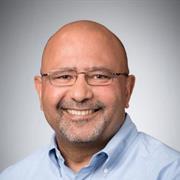
Dwight Houweling is an Associate Professor in the Department of Civil, Geological and Mining Engineering at Polytechnique Montréal . His expertise focuses on environmental engineering and wastewater treatment , particularly in nutrient removal, biological processes, and modeling. B.Sc. in Civil Engineering (Queen’s University) Ph.D. in Civil Engineering (Polytechnique Montréal) Industrial Postdoctoral Fellow at EnviroSim Assoc. Ltd. Research interests include municipal/industrial wastewater treatment , phosphorus/nitrogen removal , biofilm systems , mechanistic modeling , and sludge densification . His work bridges activated sludge optimization , membrane-aerated biofilms , and green wastewater solutions . Recent publications emphasize modeling frameworks for nature-based solutions , biofilm technology in retrofitting plants , and sludge characterization in lagoons . He collaborates with institutions like EnviroSim Assoc. Ltd. and contributes to the Laboratoire de génie de l'environnement (LGE) at Polytechnique Montréal.
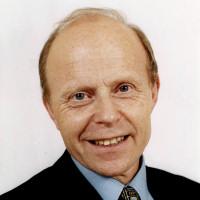
Professor Andrew Johnson at the University of Bath is a leading researcher in materials chemistry for energy applications , specializing in precursor design for advanced thin film growth techniques including Chemical Vapour Deposition (CVD) and Atomic Layer Deposition (ALD) . His work spans sustainable technologies, graphene science, and nanoparticle synthesis, with a focus on enabling next-generation electronics and climate solutions. Department of Chemistry, University of Bath Centre for Sustainable Chemical Technologies (CSCT) Institute of Sustainability and Climate Change Collaborations with University of Leeds, University of California Davis, and industry partners like Pragmatic Printing Research Interests: Development of volatile, non-toxic molecular precursors for metals/oxides ALD/CVD of metastable materials (e.g., SnO, α-Fe2O3) Carborane chemistry for early transition metals and lanthanides Surface engineering for automotive lubricant alternatives Photoanodes for solar water splitting Flexible electronics with sustainable materials Collaborations & Grants: Funded by EPSRC and Innovate UK , with projects on low-power flexible electronics and complementary semiconductor systems. Collaborates with physics, chemical engineering, and industry partners for mechanical property testing and device fabrication.
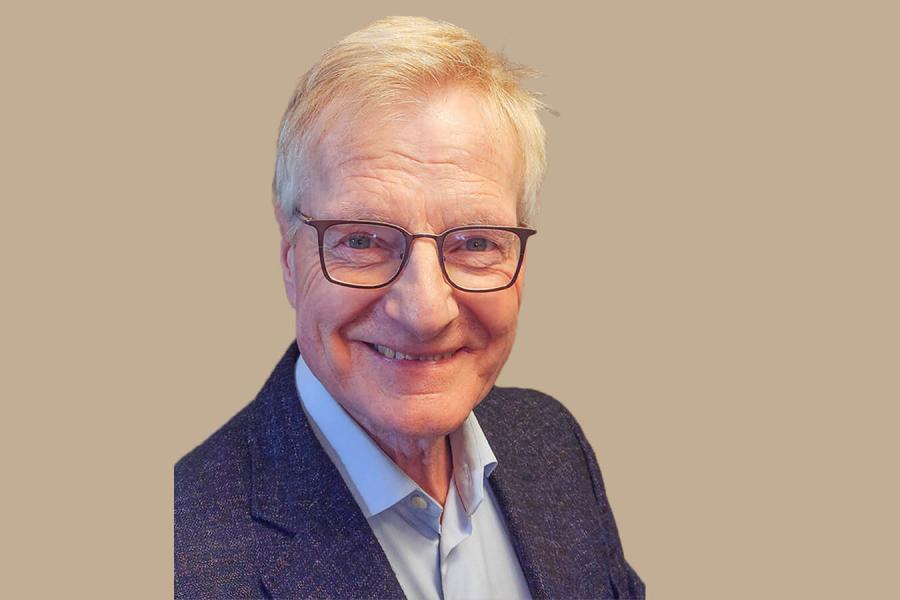
Ridha Khedri is a Professor in the Department of Computing and Software at McMaster University . His research spans formal methods in software engineering, cybersecurity, information security ontology, network segmentation, and covert channels analysis. Full Professor since 2000 Contact: khedri@mcmaster.ca Research Interests : Prof. Khedri develops algebraic frameworks for software security, with recent work on network segmentation , ontology engineering , and covert channel detection . His interdisciplinary efforts include hybrid machine learning-ontology models for environmental predictions (e.g., river ice breakup) and digital twin healthcare systems . Article Trends : His 15 most recent works (2016-2025) focus on network security , knowledge representation , and formal verification . Notable trends include automated security testing , ontology modularization , and multi-context reasoning systems . Teaching : He has taught courses like Software Design (CAS 703), Discrete Mathematics (SFWRENG 2DM3), and Algebraic Methods in Software Engineering (CAS 738) since 2017.
Lavagnon Ika is a Full Professor of Project Management at the Telfer School of Management, University of Ottawa. He serves as MSc Program Director for both Management and Health Systems Programs and is the Founding Director of the Major Projects Observatory. With a joint doctoral program background from Université du Québec (UQAM) and affiliations with institutions in France, Australia, China, Benin, Senegal, South Africa, and Ghana, he bridges global research and practice in project management. BAC C (Collège Père-Aupiais) B.B.A. (Institut National d'Économie) BAC G2 (National Examination) M.Sc. (UQO) Ph.D. (UQAM) His research focuses on major infrastructure delivery, project behavior, risk management, and tackling grand challenges like climate change through projects. He is recognized as a world leader in global development project management, particularly for World Bank and Global Affairs Canada-funded initiatives in Africa. Professor Ika has authored over 65 peer-reviewed papers and co-authored a book on fuzzy projects (McGraw-Hill, 2023). His work appears in top journals like International Journal of Project Management and World Development , with over 5,280 Google Scholar citations and 173,000 ResearchGate reads. He serves as Associate Editor for the International Journal of Project Management . IPMA Global Research Award (2017, 2022) Emerald Outstanding Paper Award (2017) Telfer Established Researcher Award (2021) Finalist - UK APM Research Paper of the Year (2023) He has supervised over 70 graduate students globally and contributed to policy-making as a World Bank Fellow (2021) and Carnegie African Diaspora Fellow (2022). His advisory roles include SSHRC, FQRSC, and PMI grant adjudication committees. Current funded projects total over $296,500, including SSHRC grants and industry partnerships. As an Extraordinary Professor at the University of Pretoria and contributor to Cambridge University Press' upcoming Handbook on Project Behavior , he advances cross-disciplinary collaboration. His teaching spans B.Com to PhD levels across five continents, with consulting clients like Transport Canada and the African Capacity Building Foundation.
Neil Lawrence is the inaugural DeepMind Professor of Machine Learning at the University of Cambridge's Department of Computer Science and Technology. He also holds positions as a Senior AI Fellow at The Alan Turing Institute and a Visiting Professor of Machine Learning at the University of Sheffield. After three years as Director of Machine Learning at Amazon, Lawrence recently returned to academia, bringing extensive industry experience to his academic work. Lawrence's research focuses on the intersection of machine learning with the physical world, particularly in uncertainty quantification and end-to-end solutions for real-world applications. His work was initially inspired by deploying machine learning systems in African contexts, where comprehensive solutions are often required. His technical expertise spans over two decades in machine learning methods, with a growing interest in public understanding of machine learning, policy decisions, and data governance implications. His recent publications reveal a diverse research portfolio spanning climate science, healthcare applications, systems engineering for AI deployment, data governance, and theoretical machine learning. Lawrence's work demonstrates a consistent theme of bridging theoretical machine learning with practical applications across multiple domains, with particular attention to uncertainty quantification and the societal implications of AI systems. Lawrence serves on the board of the AISTATS conference and the ELLIS Foundation, and acts as the founding and series editor for the Proceedings of Machine Learning Research. He is also the co-host of the Talking Machines podcast, demonstrating his commitment to public engagement with machine learning concepts. At Cambridge, Lawrence teaches Advanced Data Science (Part II) and Machine Learning and the Physical World (MPhil ACS, Part III), contributing to both undergraduate and postgraduate education in computer science. His work with the Accelerate Programme for Scientific Discovery and the Data Trusts Initiative positions him at the forefront of developing frameworks for responsible and effective AI deployment in scientific and societal contexts.
Julien Chanal is a researcher at the Faculty of Psychology and Educational Sciences, University of Geneva, specializing in Methodology and Data Analysis (MAD group). His work bridges educational psychology, motivation theory, and neuropsychology through empirical studies on self-determination, physical activity, and cognitive function. Primary affiliation: University of Geneva Research focus: Motivation and executive function assessment Key areas: Physical education, materialism effects, neuropsychological testing His research spans two decades, producing 38 publications with over 19,000 views. Recent projects examine motivation multidimensionality (2025), aerobic fitness-cognition links (2024), and neural correlates of materialism (2018). Despite extensive publication history, specific student names remain unspecified. Methodological innovations include epoch-length analysis in physical education (2015), self-concept modeling (2009), and neuropsychological norm establishment in Cameroon (2009). His work remains actively cited across disciplines, though no scientific awards are explicitly documented in available sources.
David Miller , Professor of Political Theory at the University of Oxford, is affiliated with the Department of Politics and International Relations and the Faculty of Philosophy. He was trained in philosophy at Cambridge and politics at Oxford, later joining Nuffield College as an Official Fellow in 1979. His work uniquely bridges political philosophy and empirical social science. Research Focus : Justice (social and global), democratic theory, nationality, citizenship, multiculturalism, and immigration ethics. Awards : 2020 Lifetime Achievement Award by the European Consortium for Political Research (ECPR). Collaborations : Co-edited works with Christine Straehle, Alice Baderin, and Lea Ypi; current projects include climate-induced migration ethics and meritocracy debates. Students : Supervises doctoral candidates like Henrik Dahlquist, Rufaida Al-Hashmi, and Clare Cai. Recent Publications emphasize immigration control, global justice, and the intersection of political philosophy with empirical evidence. His 2024 works include analyses of involuntary displacement and Kantian immigration ethics, while 2023 saw debates on municipal immigration authority and political equality. Scientific Awards 2020 ECPR Lifetime Achievement Award Advising : Mentors students in political theory and related areas, including B.Phil and M.St candidates. Teams & Labs : Collaborates with the Blavatnik School of Government, focusing on foundational public policy components.
Timo Hytönen is a Professor in the Department of Agricultural Sciences at the University of Helsinki's Faculty of Agriculture and Forestry. He holds a Docentship in the same department and is an integral member of the Viikki Plant Science Centre (ViPS). His academic leadership extends to supervising doctoral students across three major programs: Sustainable Use of Renewable Natural Resources, Integrative Life Science, and Plant Sciences. Additionally, he maintains an external position as Principal Research Scientist at NIAB EMR in Genetic Genomics & Breeding since November 2018. Professor Hytönen's research interests span plant genetics, molecular biology, and crop production sciences with a specialized focus on berry crops, particularly strawberries. His work investigates fundamental plant processes including flowering time regulation, environmental adaptation mechanisms, fruit development, and disease resistance. His research integrates genomic, transcriptomic, and epigenetic approaches to understand how plants respond and adapt to environmental challenges. His extensive publication record (88 publications) reveals a strong focus on woodland strawberry (Fragaria vesca) as a model system for studying economically important traits in berry crops. Recent work demonstrates expertise in QTL mapping, genome-wide association studies, circadian rhythm adaptation, and the genetic basis of climate adaptation. His research shows consistent emphasis on translating basic science into practical applications for crop improvement. Professor Hytönen leads significant research projects including 'Mansikan vihreä vallankumous' (Strawberry Green Revolution) funded by the Academy of Finland and 'ASTROS: How meristems guide plant reproductive development' supported by the Jane and Aatos Erkko Foundation. He is also a Principal Investigator in the Viikki Plant Science Centre (ViPS), a major collaborative research infrastructure. His academic service includes extensive peer review activities (37 manuscript reviews), hosting academic visitors (32 instances), and participation in numerous conferences and seminars. He has provided guidance to graduate students and supervised doctoral candidates, contributing significantly to the training of next-generation plant scientists.
Ranjana Mehta serves as Professor in the Department of Industrial and Systems Engineering at the University of Wisconsin-Madison and Affiliate Faculty in the BerbeeWalsh Department of Emergency Medicine, directing the NeuroErgonomics Laboratory while co-directing the Texas A&M Ergonomics Center and holding faculty fellowships at the Center for Population Health and Aging and Center for Remote Health Technologies and Systems. Her academic background includes: PhD in Industrial & Systems Engineering from Virginia Tech MS in Industrial Engineering from University at Buffalo BE in Production Engineering from University of Mumbai, India Mehta pioneers neuroergonomic approaches to study human performance under fatigue and stress in safety-critical environments, developing closed-loop human augmentation technologies for emergency response, space exploration, and oil/gas operations. Her work integrates adaptive AR/VR interfaces, wearable systems, human-robotic interactions, and brain-computer interfaces to enhance human-technology partnerships through user-centered design. Analysis of her recent publications reveals strong emphasis on fatigue detection in offshore workers, trust dynamics in human-robot collaboration, and sex-specific neural adaptations to exoskeletons. Her research spans human factors engineering, neuroscience, and industrial engineering, employing multimodal physiological metrics to address real-world safety challenges across high-risk industries. Her scientific recognition includes: 2024 Virginia Tech, ISE Distinguished Alumni 2023 Human Factors and Ergonomics Society, Fellow 2022 IISE Award for Technical Innovation in Industrial Engineering 2022 NASA ideas* Fellow 2022 NASEM Gulf Research Early Career Research Fellow 2022 The Human Factors Prize 2021 Virginia Tech, ISE Emerging Leaders Award 2021 Texas A&M Presidential Impact Fellow 2020 TEES Engineering Genesis Award 2020 Virginia Tech Engineering Outstanding Recent Alumni Award 2019 HFE Woman of the Year 2017 William C. Howell Young Investigator Award Her research receives funding from multiple federal agencies and industry partners supporting neuroergonomic solutions for worker safety. She mentors graduate students through ISyE 699/790/890/990 research courses and PSYCH 859 special topics, focusing on human factors engineering applications in emergency response and healthcare systems. Mehta leads interdisciplinary teams across the NeuroErgonomics Laboratory and Texas A&M Ergonomics Center, integrating engineering, neuroscience, and emergency medicine expertise to develop real-time fatigue monitoring systems and adaptive interfaces for high-stakes occupational environments.
Martin Entz is a Professor at the University of Manitoba in the Department of Plant Science , where he holds the Jarislowsky Chair in Natural Systems Agriculture for Climate Solutions . He leads the Natural Systems Agriculture Research Group , collaborating with farmers, breeders, and international partners. Education: BSc, MSc (University of Manitoba), PhD (University of Saskatchewan) Research Interests include: Agroecology Organic and Conservation Agriculture Natural Systems Mimicry Farmer-Participatory Plant Breeding Crop-Livestock Integration Climate-Smart Soils His publications focus on participatory breeding, legume intensification, soil health, and climate resilience. Key projects include the Glenlea Long-Term Organic-Conventional Study and collaborations in East Africa with the Canadian Food Grains Bank. Scientific Recognition : Fellow, Canadian Society of Agronomy Jarislowsky Chair (2023) Advising has shaped over 50 graduate and 150 undergraduate students. His lab includes Michelle Carkner (PhD), Sasha Loewen (PhD), and MSc students Laetitia Mukungu , Andrew Enns , and Sophia Partyka . Collaborations span institutions like the Land Institute , Agriculture and Agri-Food Canada , and the University of Guelph .
Professor Geoffrey Morgan is an epidemiologist and environmental health expert at the University of Sydney , affiliated with the School of Public Health and University Centre for Rural Health . With over 30 years of experience, he investigates environmental risk factors for health, particularly air pollution, heat, and climate-related hazards. He leads the NHMRC Centre for Clean Air Research Excellence and co-leads the Bushfires, Air Pollution and Extreme Events Theme in the HEAL network. His research has directly informed Australian ambient air quality standards and guided state-level air pollution control policies. Key areas include Environmental epidemiology Exposure assessment Climate change health impacts Health burden projections Recent publications (2025–2024) focus on wildfire smoke effects, temperature-related cardiovascular and mental health risks, PM2.5 mortality, and climate-driven infectious disease patterns. These studies span Australia, Singapore, and global contexts, emphasizing policy translation through health impact assessments. Professor Morgan teaches Environmental Health (PUBH5121) and Environmental Epidemiology (PH5125) in the University of Sydney's Master of Public Health program. He supervises PhD and MPhil students in environmental epidemiology.
Jane Frankenberger is a Professor in the Department of Agricultural & Biological Engineering at Purdue University, specializing in environmental and natural resources engineering. She holds a B.A. in Physics from St. Olaf College, an M.S. in Agricultural Engineering from the University of Minnesota, and a Ph.D. from Cornell University. Her career includes eight years working in Africa (DRC and Senegal) and roles at the U.S. EPA and USDA. Currently, she serves as the Extension Water Quality Coordinator, leading projects on watershed management, drinking water protection, and TMDL compliance. Her research focuses on agricultural drainage, water quality, and climate change adaptation in drained landscapes. She teaches a graduate course on GIS applications and has contributed to over 100 peer-reviewed articles, emphasizing nutrient reduction strategies and drainage management. Education: B.A. Physics, St. Olaf College M.S. Agricultural Engineering, University of Minnesota Ph.D. Agricultural & Biological Engineering, Cornell University Key Roles: Extension Water Quality Coordinator Lead of water quality projects in Indiana Author of extension publications on watershed management Research Interests: Her work addresses watershed management, conservation drainage practices, and climate resilience in agricultural systems. She develops models to assess the effectiveness of conservation practices and integrates geospatial tools for decision-making. Recent studies focus on nitrate dynamics in tile-drained systems and climate change impacts on crop yields. Publications highlight trends in drainage water management, nutrient load reduction, and interdisciplinary approaches to sustainable agriculture. Her work bridges engineering, ecology, and policy to improve water resource management at local and global scales. Grants and collaborations include USDA-NIFA projects on transforming drainage research and international initiatives in Peru and Colombia. She emphasizes stakeholder engagement through workshops and outreach programs to enhance community-driven water management solutions.
Professor A. Rashad Abdel-Khalik holds the V.K. Zimmerman Professorship in International Accounting at the University of Illinois Urbana-Champaign's Gies College of Business. Specializing in accountancy, his work focuses on financial derivatives, auditing practices, and corporate governance. His research frequently examines cases of financial mismanagement, particularly involving interest rate swaps and institutional debt crises. Notable studies include analyses of Enron's accounting fraud, municipal financial collapses, and banking practices affecting public institutions. Abdel-Khalik's research interests revolve around faithful financial reporting, fair value accounting, and the ethical implications of complex financial instruments. He has critiqued regulatory frameworks enabling risky financial practices, advocating for stronger oversight in derivative usage and transparency in financial disclosures. His work bridges academic inquiry and real-world policy, addressing systemic vulnerabilities in public and corporate finance. His publications span decades, with a recent emphasis on contemporary crises like Asian stock exchange shutdowns and sustainability-linked financial instruments. Though no awards are explicitly listed, his extensive scholarly output underscores contributions to accounting education and policy. He currently teaches at Gies College, contributing to both graduate and doctoral programs in accountancy.
Professor Muttucumaru Sivakumar is a faculty member at the University of Wollongong (UOW), holding the rank of Professor and serving as Academic Program Director for Environmental Engineering (ENVE) within the School of Civil, Mining, Environmental and Architectural Engineering. He has been with UOW since 1984, progressing through roles such as Lecturer, Senior Lecturer, and Associate Professor before becoming a full Professor in 2025. His academic career includes visiting positions at institutions worldwide, including the University of Minnesota, University of Heidelberg, and Indian Institutes of Technology. Education: He earned a BSc Eng from the University of Peradeniya (Sri Lanka, 1970–1974), an MEng from the Asian Institute of Technology (Thailand, 1976), and a PhD from the University of Newcastle (Australia, 1977–1981). Research Interests: His work focuses on water quality modeling of coastal reservoirs, sediment transport, membrane distillation for wastewater treatment, and environmental hydraulics. Current projects include coastal reservoir development for Jakarta, solar-powered desalination, and wastewater-based epidemiology for pathogen monitoring. Grants: Key funding includes the KONEKSI grant for Jakarta’s coastal reservoir development (2023–2024) and internal grants for geopolymer research and anaerobic co-digestion. He also secured equipment grants for nanopore sequencing platforms and low-vacuum electron microscopy. Advising & Students: He has supervised over 15 HDR completions since 1990, including notable PhD graduates such as San Rathviboon (2011) and Debashis Raha (2006). Current students focus on topics like methane control in wastewater systems and coastal reservoir sediment transport. Labs & Teams: His research groups collaborate on interdisciplinary projects involving water resource management, environmental engineering, and sustainable infrastructure development. He leads initiatives in the International Association for Coastal Reservoir Research (IACRR).
Professor David Richardson is Professor of Microbial Biochemistry at the University of East Anglia's School of Biological Sciences (Faculty of Science). His research examines respiratory processes in anaerobic bacteria from environmental and human systems. His work focuses on bacterial electron transfer mechanisms, nitrogen cycle biochemistry, and microbe-mineral interactions. Research has significant implications for environmental science, biotechnology, and climate change mitigation. Notable contributions include unraveling denitrification pathways and extracellular electron transfer systems. Professor Richardson has received the Society for General Microbiology Fleming Medal and Royal Society Wolfson Merit Fellowship. He previously served on the Biotechnology and Biological Sciences Research Council and held administrative roles including Vice-Chancellor at UEA. His laboratory investigates respiratory flexibility in bacteria, developing applications in wastewater treatment, bioenergy, and biosensor technologies. Current projects examine iron-driven anaerobic ammonium oxidation and epigenetic control of nitrous oxide emissions.