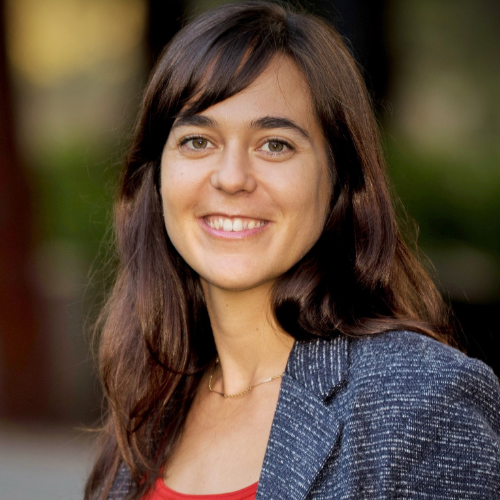
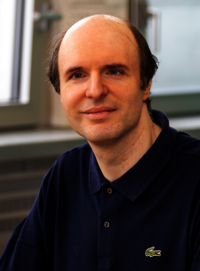
Dustin Tingley is a Professor of Government at Harvard University and holds a joint appointment at the Harvard Kennedy School of Public Policy . He serves as Interim Vice Provost for Advances in Learning and directs the Data Science and Technology Group and the Harvard Initiative on Learning and Teaching . He earned a PhD in Politics from Princeton and a BA in political science and math from the University of Rochester. Key Roles : Deputy Vice Provost (past), Chair of Harvard's Standing Committee on Climate Education Research Focus : Climate change politics, data science, causal inference, and international political economy His recent work explores the political economy of climate transitions , public opinion on carbon policies , and machine learning applications in social sciences . He co-founded ABLConnect , a repository for active learning pedagogy, and organized conferences on causal mechanisms , teaching with AI , and equitable classrooms . Awards : Gladys M. Kammerer Award (2015) for co-authored book Sailing the Water’s Edge Notable Publications : Uncertain Futures: How to Unlock the Climate Impasse (2023, with Alex Gazmararian) The Political Economy of the Clean Energy Transition (2025)
Mei-Po Kwan is a distinguished academic holding multiple roles at The Chinese University of Hong Kong (CUHK). She serves as the Head of Chung Chi College, Choh-Ming Li Professor of Geography and Resource Management, Director of the Institute of Space and Earth Information Science, and Professor at The Jockey Club School of Public Health and Primary Care. Her research focuses on geospatial health, urban mobility, environmental health, and innovative GIS methods, emphasizing individual-level environmental exposure and social disparities. Education: Ph.D. Geography, University of California, Santa Barbara (1994) M.A. Urban Planning, University of California, Los Angeles (1989) B.SoSci. Geography, The Chinese University of Hong Kong (1985) Research Interests: Dr. Kwan’s work bridges health, transport, and environmental geography, leveraging cutting-edge GIS and mixed-methods approaches. Key themes include: Uncertain Geographic Context Problem (UGCoP) and Neighborhood Effect Averaging Problem (NEAP) GIS-based analysis of greenspace, air/noise pollution, and mobility Geospatial AI and real-time sensing technologies Health disparities in urban environments Grants & Awards: She has secured over $68 million in research funding, including recent grants from the Hong Kong Research Grants Council and Innovation and Technology Commission. Notable awards include Fellowships from the American Association of Geographers, Royal Geographical Society, and multiple Highly Cited Researcher recognitions (2019, 2021). Professional Service: Editor of Annals of the American Association of American Geographers , founder of the International Geospatial Health Research Network, and member of prestigious editorial boards and advisory councils. Labs & Teams: Leads the Institute of Space and Earth Information Science and collaborates on projects like the 15-minute city framework, carbon monitoring systems, and geospatial health analytics.
Saurabh Amin is a Professor in the Department of Civil and Environmental Engineering at the Massachusetts Institute of Technology (MIT), where he also serves as the Edmund K. Turner Professor and Undergraduate Officer. He is a Principal Investigator at the Laboratory of Information and Decision Systems and holds affiliations with the Operations Research Center and the Center for Computational Science and Engineering. His educational background includes: B.Tech. 2002, Indian Institute of Technology (IIT) Roorkee M.S. 2004, University of Texas (UT) Austin Ph.D. 2011, University of California (UC) Berkeley Saurabh Amin's research focuses on the design and control of infrastructure systems using game theory and optimization in networks. His work spans three main areas: resilient network control, information systems and incentive design, and optimal resource allocation in large-scale infrastructure systems. By concentrating on critical infrastructure domains including highway transportation, electric power distribution, and urban water networks, his research develops innovative theory and tools to enhance system performance against both stochastic and adversarial disruptions. His approach involves modeling cyber-physical interactions in infrastructures to assess vulnerabilities, developing detection and response tools for failures at various scales, and designing economic incentive schemes that improve aggregate public good while accounting for dependencies and private information among strategic entities. Amin's work bridges mathematical systems theory with practical civil engineering applications, creating a rigorous theoretical foundation for infrastructure resilience that addresses diverse failure mechanisms from natural disasters to deliberate malicious actions. His recent publications demonstrate a strong focus on decarbonization of energy systems, resilient infrastructure planning under climate uncertainty, optimization methods for complex networked systems, and game-theoretic approaches to sustainable infrastructure management. His work increasingly integrates artificial intelligence and machine learning techniques with traditional control theory to address contemporary challenges in infrastructure resilience and sustainability. The research shows a clear trajectory toward addressing climate change impacts on infrastructure systems while maintaining economic efficiency and operational reliability. Professor Amin has received numerous prestigious awards and honors: Common Ground Excellence in Teaching Award, 2025 HSCC Test-of-Time Award, 2024 MIT CEE, Distinguished Service and Leadership Award, 2023 Samuel M. Seegal Prize (SoE) – inspiring students in pursuing and achieving excellence, 2022 Earll M. Murman for Excellence in Undergraduate Advising, 2022 C3.ai Digital Transformation Institute Research Award, 2020 MIT, Ole Madsen Mentoring Award, 2020 MIT, Energy Initiative Research Award, 2020 National Academy of Engineering, China-America Frontiers of Engineering Symposium speaker, 2019 MIT, Robert N. Noyce Career Development Professor, 2015-2018 Google Faculty Research Award, 2015 National Science Foundation CAREER Award, 2015 Siebel Energy Institute Research Award, 2015 MIT, Solomon Buchsbaum AT&T Research Fund Award, 2012 Professor Amin has been actively involved in significant research projects including the C3.ai DTI project on Causal Reasoning for Real-Time Attack Identification in Cyber-Physical Systems and another on Learning in Routing Games for Sustainable Electromobility. He serves as the chief scientist on multi-institutional NSF grants, including the $9 million Foundations of Resilient Cyber-Physical Systems (CPS) project. His teaching portfolio includes courses such as 1.008 Engineering for a Sustainable World, 1.104 Sensing and Intelligent Systems, 1.020 Engineering Sustainability: Analysis and Design, and 1.208 Resilient Networks. As Undergraduate Officer, he plays a key role in shaping the educational experience for civil and environmental engineering students at MIT. Professor Amin leads the Resilient Infrastructure Networks Lab at MIT, where his team develops theoretical foundations and practical tools for infrastructure resilience. The lab focuses on the intersection of control theory, game theory, and optimization applied to cyber-physical infrastructure systems. Current research directions include pandemic-resilient urban mobility and hurricane-resilient smart grid operations, reflecting the lab's commitment to addressing pressing societal challenges through rigorous systems engineering approaches.
Karen Hulme is a Professor at the University of Essex's Essex Law School, where she has been affiliated since 2001. She holds a PhD from Essex (2002), an LL.M. in Public International Law from Nottingham (1996), an LL.B. from Nottingham (1995), and a Postgraduate Certificate in Higher Education Practice (2006). Her research focuses on the intersection of environmental law, armed conflict, and human rights, with particular emphasis on climate change governance, biodiversity conservation, and remediation of conflict-related environmental damage. Her scholarly work explores environmental protection mechanisms during military operations, human rights frameworks for ecological governance, and legal responses to emerging threats like fracking and marine litter. She collaborates extensively with NGOs including the Conflict and Environment Observatory (CEOBS) and chairs the IUCN WCEL Specialist Group on Peace, Security and Conflict. Professor Hulme's publications demonstrate sustained focus on developing legal frameworks for environmental protection in conflict zones, with recent work addressing energy justice and planetary crises. She received the American Society of International Law's Francis Lieber Prize (2004) for her book War Torn Environment: Interpreting the Legal Threshold . Current PhD Students: Enitan Adetutu Lawson Charles Williams Junior Mensah Research Grants: Reimagining Food Systems (ESRC, 2024) Implementing ILC Principles on Environmental Protection in Conflict (ESRC IAA, 2022) Litter Law Strategy (CPRE, 2016)
Joakim Nivre is a Professor at Uppsala University's Department of Linguistics and Philology. He is a leading researcher in computational linguistics, with a focus on dependency parsing, Universal Dependencies (UD) framework development, and multilingual NLP applications. His recent work explores LLMs in climate change discourse analysis, pharmacovigilance explainability, and historical text processing. Key research areas: Dependency parsing theory, Universal Dependencies standardization, LLM evaluation Collaborations: SweSAT-1.0 benchmark development, ClimateEval project, PARSEME integration His 2025-2023 publications demonstrate expertise in explainable AI for healthcare, synthetic data generation for idioms, and multilingual benchmark design. Notably, he co-developed SweSAT-1.0 to evaluate Swedish LLMs and contributed to typology-informed UD revisions. Despite extensive work in NLP, no scientific awards are mentioned in available texts.
Dr. Jason Monios is a Senior Professor of Maritime Logistics at Kedge Business School in Marseille, France, specializing in operations, supply chain, and information management. His work focuses on the intersection of maritime transport, logistics, and environmental sustainability. Professor Monios' research spans three primary domains: Maritime Transport: Focusing on port system evolution, collaboration in port hinterlands, port governance and policy, and institutional frameworks Multimodal Transport: Examining multimodal corridors, dry ports, development of multimodal terminals, and urban logistics strategies Sustainability: Addressing maritime sustainability, decarbonization policies, green ports, climate change adaptation, and electric/autonomous vehicle integration His recent publications (2022-2025) demonstrate a strong focus on climate change adaptation in port governance, decarbonization of maritime transport, and innovative logistics solutions like urban consolidation centers. His work increasingly examines the intersection of environmental policy, technological innovation, and institutional frameworks in global shipping and logistics. Notable awards and recognitions include: Ranked in the top 2% of logistics researchers worldwide by Stanford/Elsevier (2021 and 2022) Research on climate change adaptation cited in the IPCC report (2022) Professor Monios has led research projects with a total budget exceeding €1 million and has supervised numerous doctoral theses. His work extends beyond academia through collaborations with national and regional transport authorities and technical reports for international organizations including UNCTAD, UN-ECLAC, and the World Bank.
Iain Stewart is Professor of Geoscience Communication at the University of Plymouth, holding the UNESCO Chair in Geoscience and Society. He directs research at the Sustainable Earth Institute and serves as Communications Lead for the UKRI Tomorrow's Cities initiative targeting disaster risk reduction in urban environments. His research bridges Earth science and societal concerns through three key areas: 1) Geoscience communication strategies for complex issues like climate change and energy, 2) Cultural responses to geohazards using film and gaming technologies, and 3) Public perceptions of geological resources and subsurface environments. His work applies cognitive and social science frameworks to geoscience communication challenges. Stewart maintains an extensive public engagement profile through BBC television documentaries including 'Earth: The Power of the Planet' and as science consultant for 'Seven Worlds, One Planet'. He serves as President of the Royal Scottish Geographical Society and Devon Wildlife Trust while advocating for geoscience education globally. His research has been recognized with numerous international awards including an MBE and honors from the Geological Society of America and American Geophysical Union.
Rachid Cherkaoui is a Senior Scientist at École polytechnique fédérale de Lausanne (EPFL), affiliated with the School of Engineering, specifically within the Department of Electrical Engineering. He is actively associated with research units SEL-ENS, EDEY-ENS, and DESL, contributing to the Distributed Electrical Systems Laboratory (DESL). His work focuses on advanced power system optimization, smart grids, and energy market modeling. Ph.D. in Electrical Engineering, EPFL, 1992 M.S. in Electrical Engineering, EPFL, 1983 Dr. Cherkaoui's research interests include electrical power and distribution systems, distributed generation, energy storage, electricity market deregulation, and power system vulnerability mitigation. His work bridges theoretical modeling and real-world applications, particularly in flexibility provision, grid resilience, and market integration of renewable energy. His recent publications (2020–2025) reflect a strong focus on smart grid technologies, energy storage integration, and market mechanisms. Key themes include optimal dispatch of hybrid systems, TSO-DSO coordination, frequency control, and stochastic optimization under uncertainty. His work is frequently published in top-tier journals such as IEEE Transactions on Power Systems and IEEE Transactions on Smart Grid. ABB Swiss Award '83 Senior Member, IEEE Member, CIGRE Task Forces C5-2 IEEE Swiss Chapter Officer since 2005 Dr. Cherkaoui actively supervises doctoral students and collaborates extensively with researchers like Mario Paolone. He has contributed to numerous projects funded by industry, CTI/Innosuisse, and Horizon 2020. His research includes experimental validation and real-time control systems, particularly in hydropower and battery storage applications. He is also involved in national and international energy strategy discussions, including Switzerland's path to carbon neutrality.
Thomas Hale is Professor in Public Policy (Global Public Policy) at the Blavatnik School of Government, University of Oxford, and Director of the Master of Public Policy. His research tackles transnational governance challenges, emphasizing climate change, global health, and economic interdependence. He holds a PhD in Politics from Princeton University, a master's in Global Politics from the London School of Economics, and an AB in Public Policy from Princeton. His research explores the evolution of political institutions to address globalization, with foci on: Climate governance mechanisms like the Paris Agreement and net-zero transitions Global health policy, including pandemic response tracking Transnational commercial disputes and cooperation frameworks His recent publications (2022-2024) predominantly analyze climate policy effectiveness, net-zero accountability, pandemic governance, and geopolitical energy shifts. Trends show consistent emphasis on institutional design, multi-stakeholder action, and data-driven policy assessment across environmental and health crises. He leads major initiatives including the Oxford COVID-19 Government Response Tracker and co-leads the Net Zero Tracker and Climate Policy Hub , collaborating with global policymakers to translate research into governance frameworks.
Lara J. Cushing is an Associate Professor of Environmental Health Sciences at UCLA's Fielding School of Public Health, holding the Jonathan and Karin Fielding Presidential Chair in Health Equity. Her work centers on environmental justice, health disparities, and climate change impacts, with emphasis on racial equity in exposure to environmental hazards. Her educational background includes a PhD in Energy & Resources Group, MPH in Epidemiology, and BS in Molecular Environmental Biology, all from UC Berkeley. Dr. Cushing's research investigates how structural racism manifests in environmental health through historical redlining, oil and gas infrastructure siting, drinking water contamination, and climate vulnerability. She employs mixed-method epidemiological and geospatial approaches to study impacts on pregnant women and infants, focusing on urban greenspace, extreme heat, and sea level rise. Her community-engaged methodology partners with frontline organizations to ensure research directly informs environmental justice advocacy. Analysis of her recent publications reveals three dominant trends: (1) Historical discrimination's enduring impact on current environmental hazards, (2) Health consequences of fossil fuel infrastructure on marginalized communities, and (3) Methodological innovations in measuring cumulative environmental and social stressors. Her work spans climate adaptation, drinking water justice, and air pollution epidemiology with consistent focus on racial health disparities. Her significant honors include: Contributing Author to the IPCC Fourth Assessment Robert & Patricia Switzer Foundation Environmental Fellowship JPB Environmental Health Fellowship at Harvard Chan School Dr. Cushing maintains active community partnerships that shape her research agenda and policy recommendations, particularly through UCLA's Center for Healthy Climate Solutions and Kaiser Permanente Center for Health Equity. Her work bridges academic rigor with community-driven solutions for environmental health equity. She leads interdisciplinary collaborations examining climate-water-health intersections, with current projects focusing on Permian Basin emissions, urban heat vulnerability, and drinking water justice in California frontline communities.
Jesse Jenkins is an Assistant Professor at Princeton University, jointly appointed in the Department of Mechanical and Aerospace Engineering and the Andlinger Center for Energy and Environment, with courtesy affiliations in the School of Public and International Affairs and the High Meadows Environmental Institute. He leads the Princeton ZERO Lab and specializes in macro-scale energy systems engineering. Education: PhD and SM – Massachusetts Institute of Technology (MIT) Postdoctoral Fellow – Harvard Kennedy School and Harvard University Center for the Environment Research Interests: Jenkins focuses on the transition to zero-carbon energy systems . His work spans the integration of distributed energy resources, optimization of national and sub-national energy systems, and the role of electricity in economy-wide decarbonization. He applies advanced modeling techniques to inform policy and planning decisions. Publications Focus: His recent work emphasizes the intersection of decarbonization strategies and nature-based climate solutions , exploring how ecosystem-based interventions can complement technological pathways to net-zero emissions. These publications underscore the importance of policy frameworks and risk assessments in scaling sustainable climate interventions. Labs & Teams: Jenkins leads the Princeton ZERO Lab (Zero-carbon Energy systems Research and Optimization Laboratory) , which develops and applies optimization-based models to evaluate low-carbon energy technologies and support policy decisions in transitioning to net-zero emissions systems.
Dr. Kevin P. Gallagher is a Professor of Global Development Policy at Boston University (BU) and Director of the Global Development Policy Center (GDP Center). He focuses on economic development, trade/investment policy, international environmental policy, and Latin America. His research emphasizes global financial governance, climate resilience, and equitable development. Education includes a BA from Northeastern University, and MA and PhD from Tufts University. He has held visiting/adjunct roles at institutions like Johns Hopkins SAIS, Fletcher School, and Tsinghua University. Research interests center on reforming Bretton Woods institutions, China’s global development finance, and climate policy integration into IMF frameworks. He co-authored influential books such as The Case for a New Bretton Woods and The China Triangle . Recent work addresses debt sustainability in developing countries, climate transition risks, and innovative financing mechanisms like Sustainable Future Bonds. He advises global bodies like the UN Committee for Development Policy and chairs task forces on green transitions and China competition. Key contributions include advocating for IMF surcharge reforms, evaluating climate risks in energy projects, and analyzing China’s overseas development finance impacts on biodiversity and socio-ecological systems.
Philippe Hamman is a Professor of Sociology and Director of the Institute of Urban Planning and Regional Development (IUAR) at the Faculty of Social Sciences, University of Strasbourg. He leads the Master’s program in City and Environment and holds significant leadership roles, including Scientific Assessor and President of the Faculty Scientific Commission since 2016. He is the holder of the Jean Monnet Chair 'GoInUSE' and the Chaire MAKErS on agricultural methanization in Europe, reflecting his central role in sustainability research. His research focuses on urban and regional sustainability, energy transitions, cross-border cooperation in the Upper Rhine region, environmental governance, and socio-ecological issues. He leads major projects funded by Interreg, CNRS, and ADEME, often in trinational collaborations with Germany and Switzerland. His work bridges sociology, environmental studies, and policy analysis. His recent publications explore citizen energy cooperatives as commons, urban sustainability governance, agricultural methanization, and the social dimensions of environmental issues such as tick-borne diseases and pandemic-era urban planning. The articles reflect a consistent focus on sustainability transitions, territorial governance, and citizen participation, with a strong comparative and interdisciplinary approach, particularly between France and Germany. Scientific Assessor, Faculty of Social Sciences, University of Strasbourg (since 2016) President, Faculty Scientific Commission (since 2016) Member, Council of the Faculty of Social Sciences (2016–2026) President, Committee of Experts, Faculty of Social Sciences (2019–2024), then IUAR (2025–2028) Expert for ANR, ANRT, HCERES, INRAE, and multiple European research funds Member of editorial boards for Espaces et sociétés , Revue de l’Allemagne et des Pays de langue allemande , and others He supervises doctoral students Aude Dziebowski and Romane Joly and teaches courses in urban sociology, sustainable development, and the sociology of urban projects. He is deeply embedded in academic service, peer review, and the editorial direction of research journals and book series. His laboratory, SAGE (UMR 7363), is a key hub for interdisciplinary research on societies, actors, and governance in Europe, where he co-leads research axis 3 on urban and environmental issues.
Ben Amor is a Full Professor in the Department of Civil Engineering at the Faculty of Engineering, Université de Sherbrooke, where he serves as Director and Founder of the CIRMIB (Integrated Research Center on Sustainable Materials, Infrastructure and Buildings) and Director of Sustainable Development for the Faculty of Engineering. Previously, he held associate professor positions at Université Laval and Université de Sherbrooke. His research focuses on Life Cycle Assessment (LCA) methodologies applied to sustainable construction, circular economy implementation in building sectors, and building decarbonization strategies. He has pioneered regionalized LCA approaches for Arctic regions and developed frameworks for carbon budgeting in building sectors. His work bridges environmental science with practical engineering solutions for sustainable infrastructure. His recent publications reveal strong trends in building decarbonization pathways, material circularity in construction, and the integration of biogenic carbon accounting. He emphasizes both technological solutions and behavioral change strategies for achieving net-zero emissions in the built environment. ACLCA 2018 Life Cycle Assessment Leadership Award Life Cycle Academy Awards 2019 (two awards) Quebec Public Administration Excellence Prize 2023 for Scientific Collaboration Multiple university teaching awards including the Jacques-Bazinet Merit Award Professor Amor leads significant research grants totaling over $20 million, including NSERC Alliance grants for sustainable building materials and a $2 million Research Chair on Net Zero Strategies and Life Cycle Assessment. He directs the CIRMIB research center and the LIRIDE (Interdisciplinary Research Laboratory in Sustainable Engineering and Eco-design), supervising multiple doctoral candidates. His work includes developing LCA tools for Quebec's construction industry and advising government bodies on sustainable procurement policies.
Sarah Green is a Professor at the University of Helsinki's Faculty of Social Sciences, Department of Social and Cultural Anthropology. Her research focuses on the anthropology of borders, livestock and microbial movements, and Mediterranean and Balkan regional dynamics. She has led projects such as "Crosslocations in the Mediterranean" and "Opening Pandora’s Box: Assessing The Risks of Permafrost Thaw" , exploring environmental and health intersections. As Editor-in-Chief of Social Anthropology , she has shaped academic discourse. Her recent work examines zoonotic disease control and nonhuman animal migration. She advises doctoral theses on topics ranging from Roma policy to digital intimacy in Egypt. Affiliated with Helsinki One Health, she bridges social and medical sciences. Education: Not explicitly detailed in texts, but her academic roles imply advanced anthropological training. Research Projects: Includes "InterEarth RESET" (climate change), "Trade, Transit and Travel in the Mediterranean" , and "EastBordNet" . Grants: Recipient of University profiling funding and Research Council of Finland grants. Her theoretical contributions include "Crosslocations" theory, analyzing spatial entanglements. She frequently participates in conferences like the American Anthropological Association meetings and contributes to editorial boards. Recent publications address border entanglements, postmodern gender theory, and Mediterranean geopolitics.