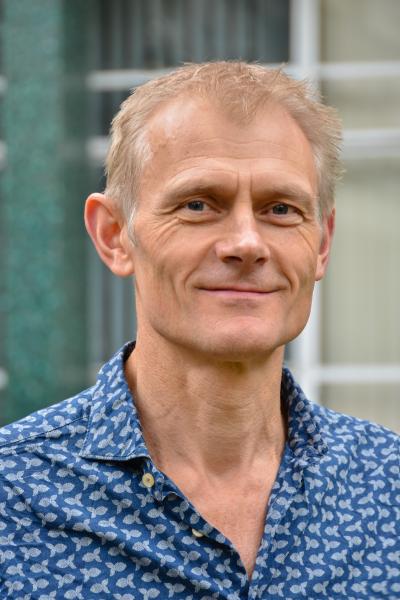
Mohammad Fazlhashemi is a Professor of Islamic Theology and Philosophy at Uppsala University's Department of Theology (Systematic Theology). His work bridges Islamic intellectual traditions with contemporary issues like democracy, environmental ethics, and interreligious dialogue. Current affiliations: Uppsala University, Faculty of Theology Key research areas: Islamic political philosophy, ecotheology, gender in Islam, and theological responses to modernity Email: mohammad.fazlhashemi@teol.uu.se Recent publications highlight trends in Islamic ecoethics (e.g., Islamic Ecotheology , 2025), critical analysis of classical texts (e.g., Critical-constructive interpretation of Islamic documents , 2024), and political theology (e.g., Justifying political decisions through theological arguments , 2016). His scholarship often engages comparative frameworks, as seen in works like Occidentalism (2005) and Shiʿite Salafism? (2022). Mohammad Fazlhashemi's impact spans both academic and public discourse, with contributions to debates on Islam and modernity in outlets like Expressen and Svenska Dagbladet . His co-authored book Visdomens hus: Muslimska idévärldar 600 - 2000 (2017) demonstrates his interest in Islamic intellectual history across eras.
Maria Wolrath-Söderberg is an Associate Professor at Södertörn University, Department of Culture and Learning. She specializes in how people reason about climate change through rhetorical analysis and behavioral studies. Focus on climate change and sustainability communication Department of Culture and Learning, Södertörn University Research on legitimization processes for climate inaction Contributions to environmental humanities and policy debates Research Interests: Her work explores the gap between climate knowledge and action, examining how individuals and organizations justify climate-harmful behavior through concepts like personal climate accounts. She investigates rhetorical strategies for promoting sustainable transformation in higher education. Recent Publications: Analyzed climate delay reasoning (2023), studied academic air travel justification (2022), examined fear and conscience in travel decisions (2021), and challenged the flight shame narrative through knowledge-based solutions (2019). Her research applies Aristotle's topos theory to modern sustainability challenges. Academic Contributions: Led the Higher Education Pedagogy Unit for a decade, now focusing on teaching methods for societal challenges. Her 2012 thesis on topos theory provides a framework for handling multidimensional environmental dilemmas through critical thinking development.
Julia Nordblad is a Senior Lecturer/Associate Professor at the Department of History of Science and Ideas, Uppsala University. Her work bridges environmental intellectual history, conceptual history, and political thought, focusing on the temporal dimensions of ecological crises and the evolution of concepts like biodiversity and ecosystem services. Education: PhD in Intellectual History, University of Gothenburg (2013) Visiting Positions: Sciences Po (2018), EHESS (2015), Columbia University (2009–2010), University of Copenhagen (2023) Her research employs conceptual history to analyze political temporalities , long-termism , and environmental concepts in debates since the 1970s. Recent projects explore the political history of biodiversity and ecological economics as political thought . Her publications synthesize environmental history , economic thought , and temporal governance . Scientific Awards: Kurt Aspelin Foundation Grant (2017) Clio Award (2014) Övralid Foundation Kate Bang Award (2013) Per Nyström Award (2013) Julia has secured grants for her work and contributed to public discourse through radio essays on Swedish national radio. Her scholarship emphasizes rethinking political futures and historical dimensions of environmental policy .
Anders Themnér is an Associate Professor at the Department of Peace and Conflict Research within the Faculty of Social Sciences at Uppsala University. His academic work focuses on peacebuilding, conflict resolution, and post-conflict reconstruction with particular expertise in African contexts. He has developed significant research on disarmament, demobilization and reintegration (DDR) of ex-combatants, communal mediation, post-civil war democratization, organized student violence, and transitional justice. Themnér's research interests center on the complex dynamics of post-conflict societies, particularly how informal networks persist after civil wars and impact peacebuilding efforts. His work examines warlord democrats, ex-military networks, and the challenges of building legitimate governance in societies emerging from conflict. He has conducted extensive field research in the Democratic Republic of Congo, Liberia, Republic of Congo, and Sierra Leone, employing qualitative methods, ethnographic research techniques, and social network analysis. His recent publications reveal a consistent focus on the micro-dynamics of peacebuilding, particularly the role of informal networks and brokers in post-conflict settings. Themnér's work frequently analyzes how ex-combatants and former commanders navigate post-war political landscapes, with particular attention to how these dynamics affect democratization processes and security outcomes in African contexts. His research combines theoretical innovation with rigorous empirical analysis based on extensive fieldwork. Themnér serves as principal investigator for multiple research projects funded by the Swedish Research Council and Swedish International Development Cooperation Agency. His current projects include 'Universities at Risk: Explaining Organized Student Violence at African Universities' and 'Communities at Risk: Mediation as a Tool to Defuse Ethnic Tensions in Post-War Liberia and Beyond,' both running from 2023-2025. He collaborates with researchers including Hanne Fjelde, Emma Elfversson, and others across various projects examining peacebuilding challenges in post-conflict societies. His methodological expertise in qualitative field research, particularly in challenging environments, has contributed significantly to understanding the nuanced realities of peace processes beyond official narratives. Themnér's work bridges theoretical debates in political science with practical insights for peacebuilding practitioners working in conflict-affected regions.
Nina Cyrén Wormbs is a Professor in the Division of History of Science, Technology and Environment at KTH Royal Institute of Technology, Sweden. She serves as Vice Dean of the Digital Futures Faculty and has held leadership roles such as Head of Division and Head of Department at KTH. Her research focuses on the history of technology, environmental policy, and Arctic studies, with notable contributions to climate change communication and remote sensing technologies. She leads projects on climate delay mechanisms and societal responses to environmental challenges through interdisciplinary approaches. Key Affiliations: Digital Futures Research Center (KTH collaboration with Stockholm University and RISE) Academic Leadership: Vice Dean, member of KTH Faculty Council, and former board member of the Nobel Museum Research Themes: Climate policy, Arctic futures, technological commons, and the societal impact of digital technologies Her work bridges historical analysis and contemporary issues, examining how technological systems shape environmental governance. Recent projects include oral history studies of Swedish space activities and analyses of climate change denial mechanisms. She actively engages in public discourse through media contributions and societal committees, advocating for evidence-based policy and sustainable practices. Grants & Projects: Recipient of VR grants (Swedish Research Council) for studies on the electromagnetic spectrum and Arctic environmental assessments. Collaborates with institutions like the Swedish Polar Research Secretariat and the European Space Agency. Teaching: Responsible for courses on climate crises, energy systems, and the history of science/technology. Integrates environmental humanities perspectives into engineering education.
Kevin Anderson is a Professor of Energy and Climate Change at the University of Manchester, affiliated with the School of Mechanical, Aerospace and Civil Engineering and the Department of Civil Engineering and Management. He served as Deputy Director of the Tyndall Centre for Climate Change Research and held the Zennström Visiting Professorship in Climate Change Leadership at Uppsala University (2016–2018). Anderson is a chartered engineer and Fellow of the Institution of Mechanical Engineers, with a decade of industrial experience in the petrochemical sector. His research focuses on bridging climate science and policy, emphasizing carbon budgets, emission pathways, and the socioeconomic dimensions of decarbonization. He has advised governments across tiers, including the UK Prime Minister’s office and the EU Parliament, and contributed to the UK’s Climate Change Act. His work highlights the urgency of aligning political rhetoric with emission reduction realities, arguing that current trajectories risk surpassing critical climate thresholds like 2°C. Anderson collaborates on projects such as the Transport & Mobility initiative and the GCRF DAMS 2.0 program, addressing infrastructure resilience and sustainable energy transitions. Education: Holds BSc, MSc, and PhD degrees (exact disciplines not specified). Labs/Teams: Tyndall Centre, Climate Change Leadership (Uppsala), Greenstone Carbon Management. Grants/Projects: Includes RACER (Emission Reductions), DAMS 2.0 (Water-Energy-Environment Systems), and Tyndall Manchester (Climate Research). Anderson’s scientific impact is recognized through awards like the 2019 Making a Difference Award. He actively engages in public discourse, offering critiques on fossil fuel dependency and advocating for systemic societal reforms to address climate change.
Leif Dahlberg is Professor at Kungliga Tekniska Högskolan (KTH) in the Division of Media Technology and Interaction Design and Associate professor (Docent) in Comparative Literature at Stockholm University. He earned his PhD in Comparative Literature from Stockholm University and Yale University, following previous positions as senior lecturer of Comparative Literature at Linköping University and Stockholm University. Dahlberg has held significant leadership roles including director of the doctoral programme Mediated Communication at KTH, director of the masters program Media Management at KTH, and co-developer of the doctoral programme Art, Technology, Design (KTH & Konstfack). His academic reach extends internationally through visiting positions at Beijing Daxue (Peking University), Birkbeck College (University of London), and Södertörn University College. His research spans multiple disciplines with key interests in Media Studies, Intercultural Communication, Critical Theory, Climate Activism, Law and Humanities, and Narratology. Dahlberg's current research focuses on climate activism and climate dis/information, examining movements like Extinction Rebellion Sweden through the lens of artivism and protest communication. His scholarly work bridges historical literary traditions with contemporary media and political issues, exploring German Romanticism, European Modernism, and the intersection of law with cultural production. Dahlberg's publication record reveals a consistent pattern of interdisciplinary inquiry, with recent work increasingly addressing climate change communication while maintaining connections to his foundational scholarship on legal discourse, literary theory, and media history. His research demonstrates how cultural forms from historical literature to contemporary protest art serve as sites for political engagement and social critique, particularly in the context of ecological crisis. "Look at the happy bear here!" : The use of artivism in Extinction Rebellion Sweden (2023) "The Language of Late Fossil Capital" (2023) "Hope Dies – Action Begins" : Civil disobedience and peaceful direct action within Swedish climate activism (2023) "Any group that adheres to Extinction Rebellion's demands and ten principles is permitted to do an action in its name" (2022) "Court Interpreting as Emotional Work" (2017) Dahlberg actively contributes to academic education through courses including Communication and Information, Digitalisation and Sustainable Societal Transformation, Human Perception for Information Technology, and Intercultural Communication. He serves as examiner for multiple degree projects at KTH, particularly in Computer Science and Communication, ICT Innovation, and Media Technology. His teaching practice reflects his research interests, connecting theoretical frameworks with practical applications in media and communication. His academic work has established innovative pathways for understanding how cultural production intersects with political action, legal frameworks, and technological development. Dahlberg's scholarship demonstrates the application of critical theory to contemporary issues, particularly in the context of climate activism and digital media landscapes, making significant contributions to interdisciplinary academic discourse.
Per Ledin is a Professor at Södertörn University, specializing in Culture and Education. His research focuses on multimodal analysis, critical discourse studies, and the sociocultural impact of digital systems. He critically examines how visual and textual communication shapes organizational practices, consumer behavior, and educational environments. Ledin’s work frequently addresses neoliberal influences in institutional structures and branding strategies, particularly through studies of corporate entities like IKEA and Oatly. He has contributed to theoretical frameworks in multimodal discourse analysis, emphasizing the materiality of texts and visual semiotics. His research interests include the semiotics of administrative systems, the role of social media in knowledge dissemination, and the evolution of text genres across historical periods. Ledin has published extensively on topics such as performance management discourse, digital administrative systems, and the interplay between consumer choices and environmental activism. Notably, Ledin’s studies investigate how management diagrams and corporate branding recontextualize social practices, often critiquing the technologization of culture. His work bridges linguistic theory with sociocultural critique, addressing contemporary issues like misinformation on social platforms and the performative aspects of organizational communication.
Annette Löf is a Researcher affiliated with Umeå University's Faculty of Arts, previously part of the Centre for Sami Research (closed in 2019). Her work focuses on Indigenous governance, climate adaptation, and natural resource management, particularly in the context of Sami reindeer herding communities. She holds a PhD in Political Science (2014) from Umeå University, where her thesis analyzed governance challenges in reindeer husbandry. Research Interests: Dr. Löf specializes in the intersection of Indigenous rights and environmental governance. Her work examines how state policies impact traditional livelihoods, with a focus on reindeer herding communities in Sweden and the Arctic region. Key themes include adaptive governance, stakeholder vs. rights-holder frameworks, and the political dimensions of climate adaptation. Publications: Her recent work critiques governance frameworks that marginalize Indigenous communities, advocating for rights-based approaches. Notable contributions include analyses of reindeer herding governance in Sweden and Finland, climate adaptation barriers faced by Indigenous groups, and the role of participatory policy-making in resolving resource conflicts. Grants & Collaborations: Her research is supported by projects focusing on climate change impacts and Arctic governance. She collaborates with international organizations like AMAP and contributes to policy dialogues through op-eds in Swedish media. Labs/Teams: Formerly part of the Centre for Sami Research, she continues to engage with Sámi communities and interdisciplinary teams addressing Indigenous environmental justice issues.
Sol Agin is a Senior Lecturer in Media and Communication at Karlstad University, Sweden, specializing in climate change communication, science communication, and environmental social movements. They are affiliated with the Geomedia research group and hold a doctoral degree from Karlstad University, focusing on how linguistic choices influence public response to environmental advocacy. Education: Bachelor’s and Master’s degrees in Global Media Studies (Karlstad University), supplementary studies in Rhetorics (Uppsala University), Developmental Studies, and African/Latin American History (various Swedish institutions). Research emphasizes aligning communication strategies with actionable goals in environmental movements, particularly through the Communicative Action Repertoire Alignment (CARA) model. Recent work critiques geographic and theoretical biases in climate communication scholarship and explores protest behavior across Europe. Publications span theoretical frameworks, methodological critiques, and empirical studies on climate advocacy. Awards include the SIDA Minor Field Studies scholarship. Teaching spans 15 courses including Media and Society, Strategic Communication, Research Methods, and Digital Analysis. Guest lectures in Climate Change Communication (CCGA08/RHG310). Professional experience includes UNHCR information dissemination work, with ongoing focus on climate impacts in developing nations.
Frida Buhre is an Assistant Professor at the Department of Literature and Rhetoric within the Faculty of Arts at Uppsala University. She serves as Co-Founder and Chair of the International Rhetoric Workshop (IRW) and has established herself as a prominent scholar at the intersection of rhetoric, climate politics, and temporal theory. Dr. Buhre completed her Ph.D. in Rhetoric in 2019 with her dissertation "Speaking Other Times: Hannah Arendt and the Temporality of Politics." She previously served as a Postdoctoral Researcher at Linköping University (2020-2022) and was a Guest researcher at Northwestern University's Rhetoric and Public Culture program in 2013. Her research explores how contemporary rhetoric of climate change employs imaginaries of time, with particular focus on anachronisms in political discourse. She investigates the politics of memory, eternal principles, progress narratives, and the actuality of the present, engaging in dialogue with Hannah Arendt's political philosophy. Her work extends to indigenous rhetoric, climate justice, and just transition frameworks, with special attention to youth mobilization movements like Fridays for Future. Dr. Buhre examines how children and youth climate activists utilize or challenge dominant childhood figurations in climate change discourses through visual rhetoric on platforms like Instagram. Analysis of Dr. Buhre's recent publications reveals a consistent focus on temporal dimensions of climate politics, youth representation in environmental governance, and rhetorical strategies of climate justice movements. Her work bridges rhetorical theory with practical political engagement, particularly examining how temporal frameworks shape understandings of justice in climate transitions. She demonstrates particular expertise in analyzing visual rhetoric and discursive strategies employed by youth climate activists across multiple platforms and contexts. Dr. Buhre has been actively involved in several significant research projects including "Youth Climate and Environmental Mobilisation in Swedish Politics," "The Times of a Just Transition," and "Youth Representation in Global Politics: Climate, Migration and Health Governance Compared." She also participated in the TV and Radio gameshow Retorikmatchen, demonstrating her commitment to public engagement with rhetorical concepts. As Co-Founder and Chair of the International Rhetoric Workshop (IRW), Dr. Buhre has established an important platform for international scholarly exchange in rhetorical studies. Her work on "The materiality of youth representation at climate summits" examines how physical and institutional barriers affect young people's participation in climate governance. She collaborates extensively with researchers across disciplines, particularly in projects examining youth climate justice activism and temporal dimensions of environmental politics.
Paula Henrikson is Professor of Literature at the Department of Literature and Rhetoric, Uppsala University, and serves as Deputy Dean at the Faculty of Arts with special responsibility for research and PhD studies. Her academic career spans prestigious research fellowships including positions funded by the Swedish Research Council, Knut and Alice Wallenberg Foundation, and Riksbankens Jubileumsfond. PhD (2004) Docent (2009) Research Fellow at Swedish Academy (2009-2013) Pro Futura Scientia Fellow (2014-2018) Henrikson's research focuses on literature from the eighteenth century to the present, with particular expertise in romanticism, poetry, drama, ecocriticism, environmental humanities, travel literature, textual criticism, philology, book history, and media history. Her current projects include a book on ecocriticism and contemporary Swedish poetry and research on transnational dimensions of early nineteenth-century literature, particularly Swedish philhellenism, classical reception, and intellectual networks. Her recent publications demonstrate a consistent focus on Nordic literary traditions, classical reception, and the intersections between environmental thought and literary production. The works span from detailed textual studies of specific authors like Stagnelius and Almqvist to broader theoretical examinations of temporalities in travel writing and contemporary poetic forms. Prizes from the Swedish Academy Prizes from the Royal Swedish Academy of Letters, History and Antiquities Prizes from the Royal Society of Humanities in Uppsala As Deputy Dean for research and PhD studies, Henrikson plays a significant role in academic administration while maintaining an active research profile. She has held multiple research fellowships at prestigious institutions including the Swedish Collegium for Advanced Study and Lichtenberg-Kolleg in Göttingen. Her editorial work on critical editions and scholarly collections demonstrates her commitment to advancing textual scholarship. Henrikson serves in leadership roles including Chair of the Swedish Society for Belles-Lettres (SVS) and membership on the Steering Committee of the Uppsala University Graduate School in Sustainability Studies (GRASS), reflecting her engagement with both traditional literary scholarship and contemporary interdisciplinary concerns.
Joacim Sprung is a Senior Lecturer at Lund University's Department of Arts and Cultural Sciences, with dual appointments in the Division of Art History and Visual Studies and the Division of Fashion Studies. He has been actively teaching and researching at Lund University since at least 2012, coordinating the International Master's Program in Visual Culture from 2013-2023 and serving as Chairman of the Ester Almqvist Foundation from 2015-2017. Dr. Sprung completed his doctoral dissertation titled "Image Atlas, Contemplation, and Reproduction: Aby Warburg's Mnemosyne Atlas and the Visualization of Art History around 1800/1900" at the University of Copenhagen. His academic work reflects deep engagement with European art historical traditions and methodologies. He has served as an external examiner for Copenhagen University, Aarhus University, and the Royal Academy of Fine Art in Denmark. His research primarily focuses on art historiography, methodology, aesthetics, and visuality from the 1500s to the present. Key research areas include: Picture frames and Swedish frame manufacturers around 1800/1900 Aby Warburg's Mnemosyne Atlas and its significance for art historical methodology The influence of evolutionary biology on art historical thinking (1800/1900) Popularization of art history through television (1960s-1980s) Visual culture of educational settings German Art History and its connections to Darwin and racial biology Visual Ecocriticism and representations of climate change Analysis of Dr. Sprung's publication record reveals a consistent scholarly trajectory centered on Warburgian studies, with particular emphasis on the Mnemosyne Atlas as both historical artifact and methodological tool. His work demonstrates increasing interdisciplinary reach, connecting art history with media studies, evolutionary biology, and visual education. Recent publications show growing engagement with national mythologies and visual culture in the interwar period, particularly through his involvement with the "Myths of Nations. The Clash of Futures. 1914-1945" exhibition at the Deutsches Historisches Museum in Berlin. Among his academic recognitions is the Stipendie Gyllenstiernska Krapperupsstiftelsen award received in 2017. His research has been supported through multiple collaborative projects including the "Visual Ecocriticism" post-doctoral project (2012) and the ongoing "Atmospheric Aesthetics in American Postminimalism" project. As an educator, Dr. Sprung has taught numerous courses including KOVK03 (Art History and Visual Studies), KOVN14 (Visual Culture: Body and Image), KOVN16 (Methodology in Visual Culture Studies), and several fashion studies courses. He has supervised Master's students through the International Master's Program in Visual Culture and has been actively involved in academic service including external examinations and editorial boards. Dr. Sprung is actively engaged with multiple research networks at Lund University, including the research node for aesthetic studies and the research node for analog culture studies, contributing to interdisciplinary scholarly communities focused on visual culture, aesthetic theory, and historical methodology.
Johan Nordensvärd is a Senior Lecturer and Docent at Linköping University, affiliated with the Department of Management and Engineering (IEI) and the Division of Political Science. His research focuses on the intersection of environmental politics, international development, and social policy, particularly addressing sustainability challenges in energy and climate policy. He leads the Sustainable Energy Transformations in Aviation (SETA) project, exploring socio-technical transitions toward low-carbon aviation. Nordensvärd has held roles in strategic research groups, including the University of Southampton's Clean Carbon initiative and the International Center for Ecohydraulics Research. His work bridges academic research with policy impact, emphasizing the social dimensions of low-carbon development. Notable contributions include monographs on social challenges in sustainable development and edited volumes on low-carbon energy transitions. Recent publications address pandemic governance, river management, and climate policy frameworks. Nordensvärd collaborates with institutions like KTH Royal Institute of Technology and has advised projects funded by Volkswagen Stiftung and the Swedish Central Bank. Key research themes include: 1) Energy policy and climate mitigation, 2) Socio-technical innovation, 3) Crisis management and civil society roles, and 4) Global environmental governance. His interdisciplinary approach integrates political science with environmental and technological analysis. Grants and projects include leadership in the SETA initiative (2020–2024) and participation in studies on Chinese hydropower dams and EU-China-India technology trajectories. Nordensvärd’s work highlights the need for systemic societal shifts to achieve ecological sustainability, beyond technological fixes.
Joakim Kulin is an Associate Professor of Sociology at Umeå University's Department of Sociology. His research focuses on public beliefs, attitudes, and behaviors related to environmental and climate issues, with emphasis on the intersection of right-wing populism, political trust, and policy acceptance. He is affiliated with the Climate and Environmental Sociology and Political Sociology research groups. Key research areas include the impact of nationalist ideologies on climate policy opposition, the role of political institutions in shaping environmental attitudes, and the relationship between pandemic behaviors and well-being. He leads or participates in research projects such as 'In Search of Decoupling' (2021-2026) and 'Political trust and the environment' (2020-2022). Education: PhD in Sociology (university details not specified in text) Affiliations: Department of Sociology, Umeå University Recent Focus: Cross-national studies on environmental policy acceptance, pandemic behavioral responses, and far-right political influences His work frequently examines how political trust mediates environmental behavior, with notable contributions to understanding climate whataboutism and emissions blame-shifting tactics by populist movements. Grants & Projects: In Search of Decoupling (2021-2026) Political trust and the environment (2020-2022) Climate change and citizens' environmental engagement (2019-2021)