
Oleksandr Kapranov is an Associate Professor of English at NLA University College's Teacher Education program. His work intersects discourse analysis, climate change communication, and English language teaching (ELT), with a focus on sustainable development education and intercultural communication. Research areas include political speeches (e.g., Keir Starmer, Rishi Sunak), corporate disclosures (Bank of England, Vedanta Resources), and media framing (Greenpeace branches, King Charles III). Key pedagogical interests: digital competence, beginner EFL training, and discourse markers in academic writing. His recent publications analyze climate change discourse through syntactic structures, metonymy, modality, and evidentiality, emphasizing institutional and political narratives. While no formal awards are listed, his work spans interdisciplinary collaborations with NGOs, governments, and universities.
جستجوی استاد راهنمای دانشگاهی
برای مسیر پژوهشیتان، استاد راهنما، استاد دانشگاه و پژوهشگر مناسب را پیدا کنید و با آنها ارتباط بگیرید.
نمایش ۱-۱۵ از ۶۸۹ استاد راهنما
اطلاعات پروفایلها از صفحات عمومی دانشگاهها گرفته شده و ممکن است بهروز نباشد.
Habib Ullahمشاهده پروفایل
دانشیار
Habib Ullah is an Associate Professor in Data Science at the Norwegian University of Life Sciences (NMBU), Norway, where he conducts research at the intersection of computer vision and machine learning. He is affiliated with the Institute of Data Science under the Faculty of Science and Technology. He has previously held academic positions at COMSATS University Islamabad, Pakistan, and the University of Ha'il, Saudi Arabia, and served as a postdoctoral researcher at The Arctic University of Norway. Educational Background: PhD in Information and Communication Technology (Computer Vision), University of Trento, Italy (2011–2015) MSc in Electronics and Computer Engineering, Hanyang University, South Korea (2007–2009) BSc in Computer Systems Engineering, NWFP University of Engineering and Technology, Pakistan (2002–2006) Habib Ullah's research is primarily focused on computer vision and machine learning, with applications in aquaculture, agriculture, and human behavior analysis. He investigates underwater fish feeding sounds using audio classification, develops zero-shot learning models for recognizing unseen classes, and applies deep learning to detect stress in salmon via skin dot patterns. He also explores AI-driven controlled environment agriculture, leveraging sensors and automation for optimal crop growth. His work emphasizes practical AI solutions for real-world challenges in environmental and biological domains. The recent publications highlight a strong trend in leveraging deep learning for zero-shot and semi-supervised learning, particularly in computer vision tasks such as sea ice classification, crowd anomaly detection, and agricultural monitoring. His research spans remote sensing, biomedical signal processing, and human activity recognition, demonstrating interdisciplinary versatility. The keywords reflect a focus on robust feature representation, knowledge transfer, and model generalization. Scientific Awards and Funding: Industrial PhD grant 'Advancing Controlled Environment Agriculture AI' from The Research Council of Norway (Project number 354125, 2 million NOK, 2024) Team member (Coordinator-Participant) in the Battery Cell Assembly Twin (BatCAT) project funded by Horizon Europe (7 mEuro, 2023–2027) Development of an AI-Based Image Analysis System for Monitoring Plant Status (Funding: 1.8 mNOK, starting 2025) Habib Ullah actively supervises PhD projects and contributes to academic service through editorial and organizational roles. He has served as an Associate Editor for IEEE Access, Guest Editor for MDPI Remote Sensing, and Editor of the Springer book Machine Learning Techniques and Sensor Applications for Human Emotion, Activity Recognition, and Support (ML-SHEARS) . He has also been a Track Chair and Program Committee Member for several international conferences, reflecting his leadership in the academic community. His research is supported by significant grants and collaborative projects, indicating strong institutional and international engagement. He is involved in multiple research teams and projects, including the BatCAT project on battery manufacturing and AI applications in controlled environment agriculture with RIFT LABS AS. His lab work integrates deep learning, sensor fusion, and data analytics for environmental and biological monitoring systems.
- Computer Vision
- Machine Learning
- Deep Learning
- +۷ مورد دیگر
Hans Christopher Bernstein is a Professor at the Norwegian Fisheries College, UiT The Arctic University of Norway, and affiliated with the Arctic Centre for Sustainable Energy (ARC). His research focuses on biotechnology, microbial ecology, synthetic biology, and microalgal carbon capture and utilization. University: UiT The Arctic University of Norway School: Norwegian Fisheries College Research Group: Microalgae & Microbiomes Research Centers: Arctic Centre for Sustainable Energy (ARC) Bernstein’s work explores the intersection of biotechnology and microbial ecology, particularly in synthetic biology applications for carbon capture. His research includes modeling microbial processes, studying lipidome plasticity in Arctic diatoms, and developing engineered genetic circuits for microbial consortia. Key trends in his publications involve marine microbiome dynamics, cold seep ecosystems, and daylight-driven carbon exchange in structured microbial communities. Recent articles highlight advancements in microalgal biotechnology for industrial carbon capture, synthetic genetic circuits, and spatiotemporal metabolic network models. His work spans both theoretical modeling (e.g., neighbor-dependent interaction inference) and applied biotechnological solutions (e.g., EcoFABS fabricated ecosystems).
- Biotechnology
- Microbial Ecology
- Synthetic Biology
- +۳ مورد دیگر
Britt Kramvig is a Professor at the School of Business and Economics , part of the Faculty of Biosciences, Fisheries and Economics (BFE) at UiT The Arctic University of Norway. Her research intersects decolonization , Indigenous (Sámi) studies, and creative industries , with a focus on storytelling, archive decolonization, and Arctic land-seascapes. She coordinates PhD studies in Tourism and Northern Studies and teaches courses on qualitative methods, climate change impacts on tourism, and knowledge co-production. Research Interests: Kramvig explores the decolonial potential of Indigenous archives , creative industries as decolonial praxis , and Arctic environmental humanities . Her work emphasizes ontology over epistemology , art-science collaborations (e.g., Dark Ecology, BAT), and indigenous survivance in tourism and cultural policy. She actively disrupts appropriation processes in Arctic landscapes through pluriversal storytelling. Key Collaborations: Kramvig contributes to international projects like Surviving the Unthinkable and The New Sámi Renaissance , advocating for indigenous data sovereignty and decolonial research ethics . She leads interdisciplinary efforts to integrate Sámi epistemologies into environmental science and policymaking. Recent Publications: Her 2023-2025 works address Arctic decolonization , indigenous archival practices , and co-creation in tourism , often published in journals like Environmental Research Letters and GeoHumanities . Notable topics include counter-mapping , indigenous survivance , and collaborative listening in Arctic soundscapes. Academic Affiliations: Member of the Norwegian Scientific Academy for Polar Research and the Indigenous Voices research group at UiT. She participates in the OKTA - Sami Art and Friction-Filled Communities on Festivals project.

Katrine Eldegard is a Professor at the Norwegian University of Life Sciences (NMBU), Faculty of Environmental Sciences and Natural Resource Management (MINA), Department of Ecology and Natural Resource Management (INA). She leads BatLab Norway and contributes extensively to national and international conservation science policy. Institution: Norwegian University of Life Sciences School: Faculty of Environmental Sciences and Natural Resource Management Department: Department of Ecology and Natural Resource Management Position: Professor Her research centers on understanding how human activities and land use affect natural ecosystems and species across taxa and spatial scales. She specializes in the behavioral, population, and community-level responses of mammals, birds, and insects to anthropogenic pressures such as energy infrastructure, transport networks, and forestry. A major focus is on bat ecology and conservation, pollination dynamics, and biodiversity monitoring in boreal and agricultural landscapes. Her recent publications reveal strong trends in climate change impacts on bat morphology and distribution, pollinator-plant interactions under environmental change, and the ecological consequences of infrastructure development. These works integrate field ecology with advanced modeling and policy-relevant assessments. She has played leading roles in key scientific committees: Chair, Mammal Committee, Norwegian Red List for Species (2021) Chair, Mammal Committee, Norwegian Alien Species List (2023) Member, Norwegian Scientific Committee for Food and Environment (VKM), CITES Expert Panel Norway’s representative, UNEP/Eurobats Advisory Committee Eldegard has supervised numerous research projects and collaborated with government agencies and private partners on applied ecology. She teaches courses including NATF200 Vern og forvaltning av norsk natur and the upcoming NATF300 Conservation Science. Her work is supported by extensive fieldwork, interdisciplinary collaboration, and integration of ecological theory with practical conservation. She leads BatLab Norway, a research group dedicated to advancing knowledge on bat ecology, behavior, and conservation through innovative methods including telemetry, acoustic monitoring, and landscape analysis.
Edgar Hertwich is a Professor of Industrial Ecology at the Department of Energy and Process Engineering, Faculty of Engineering, Norwegian University of Science and Technology (NTNU). He is on partial leave from NTNU, serving as a Senior Researcher at the International Institute for Applied Systems Analysis (IIASA) in Austria and as a partner in the environmental data company XIO Sustainability Analytics. His work bridges academic research and practical applications for climate mitigation. Current affiliations: NTNU (Professor), IIASA (Senior Researcher), XIO Sustainability Analytics (Partner) Previous roles: Professor at Yale University (2015-2019), Fellow at Yale (2019-2022), Professor at NTNU (2003-2015) Hertwich's research focuses on industrial ecology, examining material flows in economic systems to advance climate protection and sustainable development. His work spans machinery, buildings, urban form, and food supply systems, employing life cycle analysis, cross-flow analysis, and economic modeling. He contributes to global policy frameworks like the UN's Circular Economy Action Plan and EU Climate Council reports. Recent projects include CIRCOMOD (Circular Economy Modeling for Climate Mitigation) and RAINFOREST (knowledge co-production for biodiversity). He has been recognized with NTNU's Prize for Research and Artistic Activity (2023) for his contributions. Scientific Awards NTNU's Prize for Research and Artistic Activity (2023) Editorial Roles Environmental Science & Technology Journal of Industrial Ecology Journal of Economic Structures As a thought leader in industrial ecology, Hertwich connects technical insights to policy, emphasizing material efficiency and resource allocation. His work influences EU climate strategies and global environmental assessments.
Reidar Staupeمشاهده پروفایل
دانشیار
Reidar Staupe is an Associate Professor in Public Safety at the Department of Technology and Security, UiT The Arctic University of Norway. He previously held a Marie Skłodowska-Curie Individual Fellowship (2020-2022) at Roskilde University, Denmark. Research Interests: His work bridges civil security, disaster risk reduction, and anticipatory governance. Key themes include: Temporalities of crisis perception and response Cultural/political impacts of disaster declarations Creeping crises (AMR, climate change) Disaster terminology evolution Wind power development conflicts Polycrisis dynamics Publication Trends: Recent articles (2022-2025) explore the interplay between societal security, slow-onset disasters, and interdisciplinary collaboration. His work appears in journals like Time & Society , Policy & Politics , and International Journal of Disaster Risk Reduction , with forthcoming books on doomscrolling and global crisis cooperation. Scientific Awards: Marie Skłodowska-Curie Individual Fellowship Teaching: Courses include SVF-3202 Crisis Management SVF-3616 Crisis and Disaster Management His research group The Grey Zone – Secure Societies examines security narratives in crisis contexts.
Terje Andreas Eikemo is a Professor at the Department of Sociology and Political Science , Norwegian University of Science and Technology (NTNU) , and Head of the CHAIN research center . His work focuses on the intersection of social inequality , public health , and global policy , emphasizing how socioeconomic factors like education , income , and welfare systems influence mortality , chronic diseases , and mental health . He combines theories from sociology , epidemiology , and medicine to address health disparities across diverse contexts, including pandemics , climate change , and migration . 2009: Prize for Young Researchers in the Humanities 2010: SINTEF Prize for Outstanding Research 2014: NTNU Star Program Eikemo has published extensively in top journals like The Lancet and BMJ Open , with research themes spanning social determinants of health , policy interventions , and global health equity . His work includes GBD studies , European Social Survey analyses , and refugee health assessments. He serves as Editor-in-Chief of the Scandinavian Journal of Public Health and collaborates with international bodies like WHO and UNESCO .
- Social Inequality
- Public Health
- Global Health
- +۱۲ مورد دیگر
Nicola Paltrinieri is a Professor of Risk Assessment at the Department of Mechanical and Industrial Engineering, NTNU (Norway), and an Adjunct Professor at the University of Bologna (Italy). His expertise spans risk assessment, hydrogen technologies, process safety, and data-driven safety management. He holds Chartered Engineer and Chartered Scientist certifications and has served on editorial boards for journals like Safety Science and Journal of Risk Research . Education: PhD in Environmental, Safety and Chemical Engineering (University of Bologna, 2012) Master’s in Chemical and Process Engineering (University of Bologna, 2008) Research Interests: Focuses on hydrogen infrastructure safety, Natech accident analysis, risk-based inspection strategies, and AI integration in safety systems. His work emphasizes sustainable energy transitions and mitigating risks in emerging technologies like hydrogen. Key Projects (2022-2026): H2Glass : Decarbonizing glass and aluminum sectors via hydrogen HyInHeat : Hydrogen technologies for industrial heating HYDROGENi : Norwegian research center for hydrogen/ammonia Awards: Onsager Fellowship (2016–2021) Frank Lees Medal (2012) for safety-related publications Grants & Leadership: Head of NTNU Energy Team Hydrogen, coordinator for EU-funded projects like SUSHy , and active in international risk committees (e.g., EFCE, ESRA). His work bridges academia and industry, with over 8 PhD examinations supervised. Labs/Teams: Leads the NTNU Energy Team Hydrogen and collaborates on initiatives like SH2IFT-2 for safe hydrogen fuel handling. His research group focuses on AI-driven risk analysis and hydrogen infrastructure resilience.
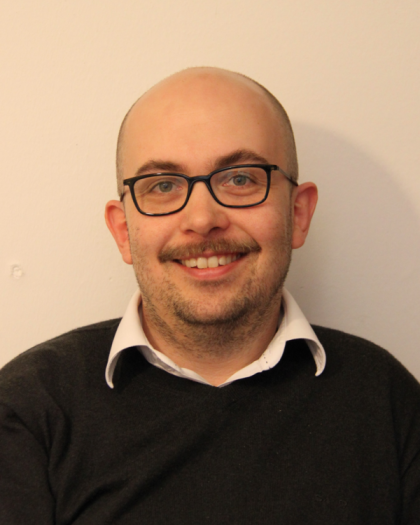
Øyvind Gjerstad is an Associate Professor of French Linguistics in the Department of Foreign Languages at the University of Bergen. His academic work focuses on the intersection of language, narrative, and climate change discourse, with particular emphasis on comparative analyses between French and Norwegian contexts. As a core member of the LINGCLIM research group (Language, Climate and Lifestyle), he contributes to interdisciplinary investigations of how linguistic structures shape public understanding of environmental issues. Gjerstad's research interests center on linguistic polyphony, narrative analysis, and discourse structures as applied to climate communication. His work examines how narratives about climate change are constructed linguistically, how different voices are represented in climate discourse, and how narrative frameworks influence public perception and willingness to act. He has developed methodological approaches that combine narrative analysis with polyphonic theory to reveal complex storylines in climate-related texts, particularly focusing on how negation, reported speech, and rhetorical devices function in climate communication. His publication record demonstrates consistent scholarly output examining climate narratives across various text genres including political documents, media coverage, and public surveys. Recent work has increasingly focused on the combination of narrative and polyphonic analysis ('polynarrativity') to uncover intersecting storylines in climate discourse. His research spans both descriptive analyses of existing narratives and explorations of how normative narratives might be constructed to motivate climate action. Gjerstad has supervised graduate students, including Taran Marie Hoel Stabell's Master's thesis on French temporal prepositions. His research has been supported by funding from the Research Council of Norway (projects 220654 and 301103), indicating sustained institutional support for his work on climate discourse analysis. He actively participates in academic conferences across Europe, presenting his findings to both linguistics and climate studies audiences. As part of the LINGCLIM research group, Gjerstad collaborates closely with Kjersti Fløttum and other colleagues on projects examining how language shapes climate perceptions and actions. His work bridges theoretical linguistics with practical applications in climate communication, contributing to interdisciplinary efforts to understand and address the climate crisis through the lens of language and narrative.
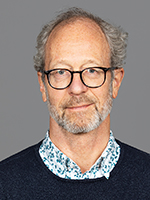
Rune Svarverud is a Professor at the Department of Culture, Religion, Asian and Middle Eastern Studies, Faculty of Arts, University of Oslo. His research spans two major periods in Chinese history: early Chinese philosophy (pre-Qin to Han dynasties) and modern China (post-Opium War cultural encounters). Key research areas include conceptual history, environmental history, political philosophy, and cross-cultural translation studies. Permanent employee since 2004 Head of Department since 2021 Former PhD committee member and research leader (2007-2014) Active in international collaborations with Fudan, Nanjing, Kansai, and Zhejiang Universities His academic work focuses on: History of concepts and textual analysis in Chinese thought Environmental history and terminology evolution in modern China Qing dynasty legal and political philosophy Translation of Western knowledge into Chinese Interactions between Chinese and Western modernity Individualism in 20th-century Chinese society Recent publications examine environmental terminology, cross-cultural scientific translation, and conceptual frameworks in Qing reform. His interdisciplinary approach connects philosophy, law, and environmental studies through historical analysis. Co-edited works on standard languages and cultural communication Contributor to ACTA ORIENTALIA and PNAS Recipient of multiple research grants for Transsustain project
- Chinese Language
- Chinese History
- History of Ideas
- +۵ مورد دیگر
Knut Axel Jacobsen is a Professor of the Study of Religion at the University of Bergen's Department of Archaeology, History, Cultural Studies and Religion. His work focuses on Hinduism, Yoga, Sāṃkhya philosophy, and religious pluralism in South Asia. He has extensively researched Hindu diaspora communities in Europe, pilgrimage traditions, and the intersection of religion with digital technologies. Research Interests: Jacobsen’s research explores core themes such as Sāṃkhya-Yoga philosophy, Hindu ritual practices (e.g., pilgrimage, procession rituals), and the adaptation of South Asian religions in transnational contexts. His recent work analyzes ethical responses to ecological crises through Sāṃkhya frameworks and investigates the digital transformation of religious practices. Publications Trends: His articles from 2024–2025 highlight interdisciplinary approaches, combining philosophy with environmental ethics, digital religion, and historical studies of religious figures like Kapila. He consistently addresses themes of religious pluralism, diaspora identity formation, and the material culture of South Asian traditions. Academic Contributions: Jacobsen has authored monographs on Hindu pilgrimage (e.g., Pilgrimage in the Hindu Tradition ) and Sāṃkhya-Yoga in modern contexts. He co-edited volumes like Brill’s Encyclopedia of Sikhism and Young Sikhs in a Global World , showcasing his role in shaping scholarly discourse on South Asian religions. Labs/Teams: While no specific lab is mentioned, his collaborations in edited volumes and international conferences reflect his engagement with academic networks in religious studies, digital humanities, and diaspora research.
- Hinduism
- Yoga studies
- Sāṃkhya philosophy
- +۶ مورد دیگر
Bernt-Erik Sæther is a Professor in population ecology at the Department of Biology, Norwegian University of Science and Technology (NTNU), and Director of the Centre for Biodiversity Dynamics (CBD), a Norwegian Centre of Excellence (SFF). His research focuses on integrating ecological and evolutionary processes, particularly in population and community dynamics. He has led major field projects on species like the house sparrow and elk, emphasizing stochastic influences on evolutionary change and population resilience. Education and Background: Sæther has held roles including Professor II at NTNU (20% since 1996), Senior Scientific Advisor at the Norwegian Institute for Nature Research (NINA), and researcher positions at the Directorate for Nature Management and Game Research institutes. His academic journey spans over four decades, with a PhD and early research in wildlife ecology. Research Interests: His work bridges population dynamics, climate change impacts, and conservation strategies. Key areas include density dependence, metapopulation dynamics, and eco-evolutionary feedbacks. He investigates how environmental stochasticity and human activities (e.g., harvesting) affect population stability and biodiversity. Awards and Recognition: He has received the Møbius Prize (2013) for outstanding research, an ERC Advanced Grant (2011–2016), and membership in prestigious academies like the Norwegian Academy of Science and Letters. His contributions to conservation science and ecological modeling are globally recognized. Professional Roles: Sæther chairs the Swedish Research Committee in Wildlife Research and serves on steering boards for environmental research initiatives like NORKLIMA and MISTRA. He advocates for sustainable land-use policies and improved biodiversity monitoring in Norway. Publications: Over 200 peer-reviewed articles, including seminal works on metapopulation ecology, climate-driven demographic shifts, and the evolutionary implications of stochastic processes. Recent studies highlight the effects of harvesting on population fluctuations and the role of telomeres in life-history strategies.

Chiara Arnavasمشاهده پروفایل
پژوهشگر
Chiara Arnavas is a Doctoral Research Fellow and PhD candidate in Environmental Humanities at the University of Oslo, affiliated with the Faculty of Humanities. Her research explores the intersection of criminal political economies and political ecologies, focusing on South Asian criminal networks, land mafia dynamics, and their connections to climate change, urban development, and social inequalities. Her dissertation, Coerced into Mafia. Crime and Muslim Criminalization in India , investigates the experiences of land mafiosi and Muslim farmers in Kolkata, West Bengal, examining how they navigate risks, discrimination, and opportunities within mafia networks. Research Themes: Land dispossession, caste and gender inequalities, environmental anthropology, political ecology. Regional Focus: India (West Bengal), South Asia, and Italy. Her work integrates interdisciplinary approaches to analyze how criminal networks operate within broader socio-ecological systems, particularly in contexts of environmental degradation and urbanization. Despite no listed publications or awards in Cristin, her research contributes critical insights into marginalized communities' agency within criminalized economies.
Festo Kayimaمشاهده پروفایل
دانشیار
Festo Kayima is an Associate Professor in Chemistry Didactics at the Department of Teacher Education, Faculty of Social and Educational Sciences, Norwegian University of Science and Technology (NTNU). His research focuses on science teacher education, classroom knowledge, and pedagogical strategies in chemistry. Doctorate in Chemistry Education (2018, University of Bergen) Master’s in Science Education (2020, NTNU) Kayima’s research projects include developing science teacher trainees’ professional knowledge through reflective practice, enhancing scientific literacy, and integrating sustainability into chemistry education. He leads the Erasmus+ project STEMkey (2020–2023), emphasizing graduate attributes and key skills for educators. His recent publications (2025) with Springer explore pedagogical themes like chemical knowledge, outdoor teaching, and technology integration. These works align with broad keywords such as Science Education, Curriculum Development, and Experiential Learning, with subfields spanning digital tools, sustainability, and misconceptions in chemistry. Co-supervised Kristine Fjelldal Sunde’s thesis on teacher questioning in labs He contributes to research groups Naturfaglig Literacy i Skole og Lærerutdanning and ScienceHumanities , bridging interdisciplinary approaches in education. His teaching includes courses like Science as a School Subject (MGLU4211) and Teacher Education: Teaching Chemistry (PPU4626).