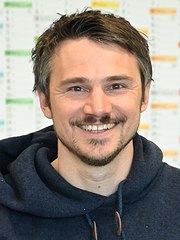
Dr James Herbert-Read is an Associate Professor and Whitten Lecturer in Marine Biology at the Department of Zoology, University of Cambridge. He serves as Deputy Head of Department (Postgraduate Education) and leads the Marine Behavioural Ecology Group. His research focuses on understanding how animals, particularly marine organisms, collect and process information from their environments to make behavioral decisions, with emphasis on social interactions, adaptation mechanisms, and ecological constraints. His group employs theoretical frameworks, controlled experiments, and quantitative field studies to investigate behavioral diversity in marine species. Key themes include collective behavior, predator-prey dynamics, camouflage strategies, and the impacts of environmental stressors on animal decision-making. Recent publications highlight work on lionfish vocalization mechanisms, cuttlefish camouflage, citizen science applications in marine research, and behavioral responses to visual and acoustic noise. Scientific awards and affiliations include: Whitten Lecturer in Marine Biology Associate Professor, University of Cambridge He has supervised research projects on topics such as: Social attraction in invasive fish species Evolution of coordinated movement Neurophysiological basis for leadership in shoals Maternal effects on offspring exploration
Gabrielle Hodge is a Senior Lecturer in Sign Language Linguistics at the University of Edinburgh's School of Philosophy, Psychology and Language Sciences. A deaf researcher, she specializes in sociolinguistics related to deaf communities, sign languages, and multimodal communication. Her work incorporates corpus linguistics, applied linguistics, and semiotics methodologies. Education: PhD in Linguistics (Macquarie University, 2014), BA (Hons) in Linguistics (La Trobe University, 2008). Teaching includes undergraduate and postgraduate courses in sign language linguistics and sociolinguistics. She chairs the University BSL Plan Implementation Group (2024-2030) and actively supervises PhD and MSc students in deaf community research. Research focuses on accessibility, sign language corpus methods, and inclusive language theory. Notable projects include the Accessibility & Inclusion Toolkit for deaf Australians and Signing to Know & Survive , exploring deaf communication resilience. She develops training for educators and interpreters, emphasizing direct access without relay systems. Key contributions include advancing corpus-driven sign language research, analyzing deaf professionals' trust in interpreters, and creating climate change resilience resources in Auslan. Her work challenges traditional linguistic frameworks to better incorporate deaf perspectives and embodied communication practices.
Dr. Abdelhak Bentaleb is an Assistant Professor in the Department of Computer Science and Software Engineering at Concordia University and founder/director of the IN2GM Lab. His research focuses on optimizing networked multimedia systems using machine learning, with emphasis on video streaming, edge computing, and 5G/6G networks. He holds a PhD from the National University of Singapore (awarded SIGMM and DASH-IF Best Thesis prizes) and completed a postdoctoral fellowship there. Education: PhD in Computer Science, National University of Singapore (2019) Postdoctoral Research Fellowship, National University of Singapore (2019-2022) Research Interests: AI-driven video streaming optimization, low-latency media delivery, network protocols, immersive media technologies, and IoT systems. Current projects explore end-to-end AI-enabled systems for QoE optimization in video delivery using reinforcement learning and deep learning techniques. Awards: SIGMM Award for Outstanding PhD Thesis DASH Industry Forum Best PhD Dissertation Award Multiple DASH-IF Excellence Awards His work includes over 50 publications in top venues (e.g., ACM MMSys, IEEE INFOCOM, USNIX NSDI) and 3 patents. The IN2GM Lab focuses on applied AI/ML solutions for networked systems challenges.
Casey J. Borman is a Continuing Lecturer in the Accounting Department at the Anderson School of Management, University of California, Los Angeles (UCLA), teaching financial statement analysis while leveraging over two decades of real-world investment experience from his hedge fund management background and legal career. Education: MBA, 2003, UCLA Anderson School of Management (awarded Robert A. Rogers Fellowship in Accounting) J.D., 2001, Loyola Law School (awarded First Honors in several classes) B.A., 1996, Claremont McKenna College (cum laude) Research and Professional Focus: Borman's expertise spans Business Law, Entrepreneurship, Estate Planning, Financial Accounting, Financial Advisory Services, Financial Statement Analysis, Mergers and Acquisitions, Personal Finance, and Taxes. He integrates institutional asset management experience—particularly in alternatives—with legal insights to analyze complex investments, advising high-net-worth clients through his firm Borman Capital while contextualizing financial instruments for students. Professional Recognition: Robert A. Rogers Fellowship in Accounting (UCLA Anderson) First Honors in multiple law school courses (Loyola Law School) Professional Ventures: Founded Borman Capital to manage family investments, overseeing diversified portfolios of commercial/residential real estate and liquid assets while conducting due diligence on unique opportunities including angel investments and estate planning solutions for affluent clients.
Juergen Dingel is a Professor in the School of Computing at Queen's University, Canada. He joined the faculty in 2000 and holds a PhD in Computer Science from Carnegie Mellon University (1999). His research focuses on software modeling, model-driven engineering, formal methods, and formal verification, with applications in real-time systems and embedded systems. He leads the Modeling and Analysis in Software Engineering (MASE) research group. Education: PhD in Computer Science, Carnegie Mellon University (1999) M.Sc. in Pure and Applied Logic, Berlin University of Technology (1994) M.Sc. in Computer Science, Berlin University of Technology (1992) Research Interests: Model-driven engineering and transformation Formal specification and verification Automated testing and debugging Real-time and embedded systems Service composition and distributed systems His work emphasizes practical tools like Papyrus-RT and MDebugger , integrating formal methods into software development. Grants & Collaborations: Funded by NSERC, OCE, and industry partners (IBM, GM, Ericsson) Focus on automotive systems, IoT, and safety-critical applications Service: Editorial board member for SoSyM , STTT , and JOT Former chair of the MODELS Steering Committee (2016–2018) PC co-chair for MODELS 2014 and FMOODS/FORTE 2011 Labs & Teams: Leads the MASE group, which develops open-source tools for model-driven engineering. Collaborates with industry on automotive and IoT projects.
J. Eric Bickel is a Professor at The University of Texas at Austin, serving as Director of the Operations Research & Industrial Engineering (ORIE) and Engineering Management programs. He holds a courtesy appointment in the Department of Petroleum and Geosystems Engineering and directs the Center for Engineering & Decision Analytics (CEDA). His academic background includes a PhD and MS in Engineering-Economic Systems from Stanford University and a BS in Mechanical Engineering from New Mexico State University. His research focuses on decision analysis under uncertainty, addressing topics like probabilistic modeling, climate engineering, risk management, and applications in sports and energy sectors. His work has been featured in major media including The New York Times and Wall Street Journal , and his climate engineering research was endorsed by Nobel Laureates as a top climate change response strategy. Professor Bickel has extensive industry experience, having previously served as Senior Engagement Manager and Co-Director of Client Education at Strategic Decisions Group (SDG), where he remains on the Board of Directors. His consulting spans oil/gas, energy trading, and financial services sectors. He has received recognition as a Fellow of the Society of Decision Professionals and contributed to the Copenhagen Consensus on Climate Project. His teaching extends to executive education through Texas Executive Education and McCombs School of Business. Research highlights include novel methods for probabilistic dependence modeling, value-of-information analysis in shale reservoirs, and critiques of risk assessment tools like heat maps. His climate engineering work emphasizes economically viable solar radiation management strategies.
Ying-Yi Chih is a Professor of Project Management at the Research School of Management, Australian National University (ANU) , and serves as the Associate Dean (Students and Industry Experience) for the College of Business and Economics. Her research focuses on project management, public-private partnerships (PPPs), value co-creation in projects, and employee well-being in project-based environments like the construction industry. She has published extensively in journals such as International Journal of Project Management and Journal of Construction Engineering and Management , with funding from government and industry sources. Education: PhD in Project Management Research Interests include: Infrastructure Project Planning and Management Public-Private Partnerships (PPPs) Value Co-Creation in Professional Services Employee Psychological Well-being and Performance Management Recent Publications highlight trends in green innovation, crisis resilience, leadership dynamics, and technology adoption in construction and project management. Her work bridges theoretical frameworks with practical applications in the AEC (Architecture, Engineering, Construction) industry and public sector projects. Editorial Roles: Associate Editor for Journal of Management in Engineering and Editorial Board member for Journal of Vocational Behavior . Research Projects have explored value co-creation, international development projects, and performance management in multi-project environments, with collaborations across Australia, Taiwan, Vietnam, and the Philippines.
Orly Linovski is an Associate Professor in the Department of City Planning at the University of Manitoba’s Faculty of Architecture. Her work bridges professional planning practice, political processes, and urban space, emphasizing equity and justice. She holds a PhD from UCLA and advanced degrees from the University of Toronto and McGill University. Education: PhD (Urban Planning), University of California, Los Angeles M.Sc. (Urban Planning), University of Toronto B.A. (Geography/Urban Systems), McGill University Research focuses on transportation equity, private sector consulting roles, and municipal governance. Notable themes include equity in transit planning, professional practice dynamics in publicly traded firms, and participatory engagement strategies. Her work has been funded by SSHRC, MITACS, and the Centre for Professional and Applied Ethics. Teaching includes courses like Transportation and Urban Form (ARCG 7080) and Planning Research Methods (CITY 7020). She supervises students exploring transportation equity, professional planning practice, or privatization in planning, particularly with GIS or qualitative methods. Grants and Awards: Her research has been supported by SSHRC, MITACS, and other institutions. Collaborations include projects like the SSHRC-funded study on transit equity for marginalized groups in Canada. Labs/Teams: Active in the Manitoba Professional Planners Institute and as a Registered Professional Planner. Engaged in community-based research through partnerships highlighted in her SSHRC-funded projects.
Cristian Danescu-Niculescu-Mizil is an Associate Professor at the Department of Information Science , Cornell University . His research focuses on computational frameworks for social behavior analysis through large-scale natural language data , particularly in online communities and crisis counseling contexts. Recipient of WWW Best Paper Award (2013) and Yahoo! Key Scientific Challenges Award Co-developer of ConvoKit , a comprehensive conversational analysis toolkit Principal investigator in NLP for mental health , antisocial behavior detection , and linguistic coordination studies His work spans computational social science and human-centered AI , with recent publications in EMNLP 2025 , ACL 2025 , and CSCW 2025 focusing on conversation dynamics modeling , pivotal moment detection , and talk-time equity analysis . He has advised multiple PhD students who became faculty at Harvey Mudd , University of Michigan , and Thompson Reuters . Key scientific contributions : 2013 : WWW Best Paper - Power dynamics through linguistic coordination 2016 : IJCAI NLP & Journalism Best Paper - Gender bias quantification 2017 : ICWSM Best Paper - Trolling behavior analysis He teaches NLP and Social Interaction (INFO/CS 6742) and Language and Information (INFO/CS 4300) , with teaching resources including the Politeness Web App and ConvoWizard interactive tool featured in NPR's Weekend Edition . His work has been covered by New Scientist , NBC Today Show , and New York Times .
Jan Borchers is a full professor of computer science and head of the Media Computing Group, an endowed Chair in the Computer Science Department at RWTH Aachen University. He serves as deputy member of the Faculty Council for Mathematics, Computer Science and Natural Sciences (2024-2026) and previously headed the Computer Science Department's Examination Board from 2015 until February 2025. Borchers established his research group in 2003, pioneering modern HCI academic research and teaching in Germany, and opened Germany's first Fab Lab in 2009. Borchers received his PhD 'summa cum laude' in computer science from Darmstadt University of Technology in 2000. Before joining RWTH Aachen, he held faculty positions at Stanford University and ETH Zurich. His PhD thesis, 'A Pattern Approach to Interaction Design,' became the first book to bring design patterns to HCI. His research focuses on Human-Computer Interaction with particular interest in new user interfaces for soft robotics, textile user interfaces, 3D printing and personal fabrication, augmented reality, wearable and tangible computing, interfaces for software development, deceptive patterns, and interactive guides and exhibits. He is a member of ACM, SIGCHI, SIGCHI Germany, and GI, and introduced the Interactivity format to the CHI conference in 2005. Recent publications reveal a strong emphasis on deceptive patterns/dark patterns in UI design, textile interfaces, and the impact of generative AI on creative teamwork. His work spans from fundamental research in interaction techniques to practical applications in smart homes, accessibility, and children's interfaces, with a consistent focus on usability and user-centered design. IDC 2025 Best Work in Progress: 'If They Have No Choice, They'll Accept!' CHI'25 Student Games Competition Winner: 'The Deceptive Dungeon' RWTH-Wissenschaftsnacht 2024 Best Science Slam: 'Usability: 4 Prinzipien guter User Interfaces' Multiple CHI/UIST Honorable Mentions and Best Paper awards spanning two decades Author of influential books including 'A Pattern Approach to Interaction Design' and 'Arduino In A Nutshell' Borchers has provided extensive consulting, training, and user interface design services to major clients including AirBus, Apple, ARD, Bayer, Children's Museum Boston, Daimler, Handelsblatt, OTIS, Scout24, TEDx, and Deutsche Telekom. He actively organizes the Computer Science Department's weekly Faculty Lunch since 2003 and coordinates the department's public relations and web presence since 2010. He leads the Media Computing Group, which has become a leading German lab in terms of archival publications at CHI, the top international conference in HCI. Since March 2025, he serves as faculty patron for TechLabs Aachen, a student initiative providing practical digital skills training.
Anna Maria Oberländer is Assistant Professor for Information Systems and Digital Transformation at the University of Bayreuth's Faculty of Law and Economics. She also serves as Deputy Academic Director of the Research Center Finance & Information Management and holds a leading position at Fraunhofer FIT's Branch Business & Information Systems Engineering, where she co-heads a research group and manages the Digital Innovation Lab as one of its co-founders. Dr. Oberländer earned her Master of Science with honors from the Elite Graduate Program Finance & Information Management at the University of Technology Munich and the University of Augsburg in 2015, including a research visit at Queensland University of Technology. She was accepted into the 16th class of the Bavarian EliteAcademy, receiving leadership training across Germany, Belgium, China, and Vietnam. Prior to academia, she worked as a strategy consultant at McKinsey & Company from 2015 to 2018, supporting clients in Advanced Industries and Financial Services with digital transformations. She completed her dissertation at the University of Bayreuth's Law and Economics Faculty in 2020. Her research focuses on understanding and designing digital transformation and innovation from established companies' perspectives. She examines digital transformation processes and patterns, the relationship between organizational digital transformation and digital ecosystems, organizational ambidexterity, resource-based digital opportunities for incumbents, and the socio-technical and economic impacts of IoT and AI technologies. Her work spans theoretical frameworks like the OCO (Orientation, Cooperation, Orchestration) Theory for understanding digital ecosystems' influence on transformation. Dr. Oberländer's recent publications reveal a strong trend toward integrated digital-sustainability research (twin transformation), AI strategy and implementation, digital ecosystem dynamics, and industry-specific digital innovation. Her work bridges theoretical frameworks with practical applications across diverse sectors including public administration, manufacturing, and smart cities. She has developed capability maturity models for twin transformation and explored semantic search adoption in SMEs. Science Award 2020 from Universitätsverein Bayreuth e.V. With extensive industry experience at Siemens, Siemens Financial Services, Allianz, and McKinsey & Company, Dr. Oberländer brings practical insights to her academic work. Her Fraunhofer FIT role connects her research to real-world applications through the Digital Innovation Lab. She has led collaborative research projects across multiple industries, including the print industry's sustainability potential with AI, dairy industry digital innovation, and public administration digitalization. Dr. Oberländer co-heads a research group at Fraunhofer FIT and manages the Digital Innovation Lab, which serves as a hub for collaborative research between academia and industry. Her work with the Research Center Finance & Information Management facilitates interdisciplinary collaboration across finance and information systems domains.
Dr. Donald Osborn is an Assistant Professor and Program Director of the Graduate Addictions Counseling Division at Indiana Wesleyan University. With over three decades of experience, he serves as a licensed clinical addictions counselor, mental health professional, and ordained minister in the Christian Church/Church of Christ. His career spans roles as a Psychiatric Case Manager, Clinical Supervisor, and Medical Administrative Officer in community mental health and government sectors. Education includes a PhD in Guidance and Psychological Services (Indiana State University, 2013), Master of Arts in Theology (Saint Mary-of-the-Woods College, 1987), and a Bachelor of Arts in Christian Ministries (Lincoln Christian University, 1979). He holds certifications as a National Board Certified Counselor and Master Addiction Counselor. Research interests focus on ethics in behavioral sciences, integration of psychology and theology, addictions education, clinical supervision, and licensure standards. He has authored articles on addiction policy, curriculum development, and professional practice. Notable leadership roles include National President of NAADAC and Chair of the Indiana Behavioral Health Licensure Board. Professional Memberships: NAADAC, ACA, AAMFT, ACES Awards: Senior Fulbright Scholar in Addictions Presentations: Over 20 national and international talks on addiction counseling, licensure, and clinical supervision (2006–2016). Dr. Osborn’s work bridges clinical practice, education, and policy, emphasizing ethical standards and professional development in addiction counseling.
Marianna Adgemian serves as an Adjunct Professor in the Communication Studies Department at the University of San Francisco. She holds a trilingual fluency in English, Portuguese, Spanish, and Italian, enabling global communication across diverse sectors. Her professional background spans prominent communication firms including WPP, Omnicom, Dentsu International, Burson Cohn & Wolfe, and Archetype, alongside corporate roles at entities like Access Brand Communication and the University of San Francisco's Integrated Communications division. Education: MA in Professional & Strategic Communication, University of San Francisco (2021) BA in Communication Studies, San Francisco State University (2018) Research & Teaching Focus: Professor Adgemian emphasizes practical application of public relations principles through critical thinking, real-world case studies, and hands-on exercises. Her expertise centers on crisis communication, media relations, and strategic corporate messaging across technology, consumer, government, academic, and financial industries. Professional Experience Highlights: Served clients such as Meta (Facebook), Visa, Amazon, Bank of America, Walmart, FedEx, Cisco, Samsung, and Boston Consulting Group Managed global campaigns in NA, EMEA, LATAM, and APAC regions Prior roles include Senior Account Executive (Access Brand Communication), Associate Manager of Media Relations (Dentsu International), and Content Manager (University of San Francisco) Language Proficiency: Fluent in English, Portuguese, Spanish, and Italian
Prof. Dr. Janick Edinger is a Professor of Distributed Operating Systems at the Department of Informatics, Faculty of Mathematics, Informatics and Natural Sciences, University of Hamburg, Germany. He leads a research group focused on distributed, context-aware, and adaptive computing systems, with a strong emphasis on edge computing, computation offloading, and assistive technologies. Education: PhD in Computer Science, University of Mannheim Studies at National Taiwan University Studies at University of Alberta, Canada Research stays at University of British Columbia, Hong Kong Polytechnic University, and Georgia State University, USA His research explores how edge computing and computation offloading can enable efficient, privacy-preserving processing of sensor and video data close to their sources, particularly in dynamic environments. He investigates the integration of autonomous and heterogeneous systems—such as drone fleets and mobile devices—into scalable middleware platforms for real-time monitoring and decision-making in logistics and industrial operations. His work also emphasizes societal impact, contributing to accessible routing, adaptive interfaces, and crowd-sourced mapping. The recent publications reflect a strong trend in edge computing, federated learning, privacy-preserving analytics, and assistive technologies. Topics include WebAssembly-based offloading, emotion prediction via eye tracking, real-time traffic detection, and predictive maintenance in Industry 4.0, showcasing a blend of foundational systems research and applied human-centered computing. Scientific Awards: PerCom 2021 Mark Weiser Best Paper Award Best Paper Award at IEEE PerCom 2021 for 'Voltaire: Precise Energy-Aware Code Offloading Decisions with Machine Learning' Prof. Edinger actively advises students and leads research projects involving grants and collaborations. His team includes PhD candidates and researchers working on middleware, edge systems, and context-aware applications. He has served on conference program committees, such as shadow PC member for EuroSys 2021, and publishes in top venues including IPDPS, PerCom, CHIIR, and COMPSAC. Labs and Teams: He leads the Distributed Operating Systems research group at the University of Hamburg, where he mentors students and collaborates on projects involving edge computing, IoT, and adaptive systems.
Dongwook Yoon is an Associate Professor at the Department of Computer Science , University of British Columbia , and serves as Director of the SOCIUS Lab . He actively contributes to research in Human-Computer Interaction, Human-AI Interaction, and Virtual/Augmented Reality as a member of the Designing for People (DFP) and CAIDA research clusters. Education : PhD in Computer Science from Cornell University (2017), MS (2009) and BS (2007) in Computer Science from Seoul National University Research Focus : Designing socio-technical systems that bridge the gap between technology and human social processes, with innovations in AR/VR, multimodal interaction, and inclusive design Article Trends show his work spans: Temporal and bichronous learning environments AI self-clones and ethical implications Income inequality in virtual platforms Enhanced multimodal collaboration in VR Eyes-reduced interfaces for situational impairments Speculative participatory design for gig economy challenges Scientific Awards include: Google Academic Research Award (2024) Best Paper Award at CHI 2024 High Impact Award in Educational Technology (2024) CHCCS/SCDHM Graphics Interface Early Career Award (2023) Multiple Honorable Mentions at CHI, DIS, and CSCW Students & Collaborators range from active PhD candidates (Anika Sayara, Yuri Kim) to notable alumni (Thitaree Tanprasert, Ashish Chopra) across his SOCIUS Lab projects. His research receives funding from NSERC , KIST , Adobe , Microsoft , and Google grants.