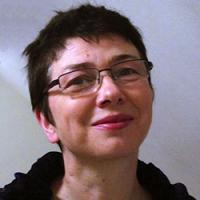
Dr. Brigitte Steger is a Senior Lecturer in Modern Japanese Studies at the University of Cambridge, where she serves as a Fellow in Asian and Middle Eastern Studies at Downing College. She teaches modern Japanese society courses and directs graduate affairs while serving as Secretary of the Degree Committee. MA, MPhil, PhD in Japanese Studies (University of Vienna) Visiting researcher at multiple Japanese universities Co-founder of Cambridge Creative Circular Plastics Centre sub-project Her research focuses on cultural anthropology of Japanese daily life, particularly sleep practices (inemuri), gender dynamics in urban spaces, disaster response rituals, and cleanliness/waste practices. She conceptualizes sleep as socio-cultural performance and examines temporal practices in premodern Japan. Recent publications analyze Heian-era sleep patterns, 2011 tsunami shelter hygiene, and plastic consumption in consumer societies. She leads international research on historical timekeeping and contemporary waste practices. Her edited volumes explore Japanese gender diversity, including 'herbivore boys' and manga girl culture. Scientific awards: Bank Austria Prize (2002) Vorarlberg Science Award (2005) University of Cambridge weekly research contributor She supervises graduate research projects and serves on the European Association for Japanese Studies and Japan Anthropology Workshop councils. Her 2025-26 sabbatical focuses on completing Heian-period sleep research.
Kathleen M. Brown is the David Boies Professor of History at the University of Pennsylvania's School of Arts & Sciences, specializing in gender and race in early America and the Atlantic World. She teaches a wide range of undergraduate and graduate courses on comparative slavery, colonial America, history of the body, race and sex in early America, and Atlantic history. Her educational background includes a Ph.D. (1990) and M.A. (1985) from the University of Wisconsin-Madison and a B.A. (1981) from Wesleyan University. Brown has been instrumental in the Penn & Slavery project since 2017 as the project's lead faculty historian. Brown's research focuses on the intersections of gender, race, and power in colonial contexts, with particular attention to bodily integrity, cleanliness practices, and the medical and legal dimensions of slavery and abolition. Her work demonstrates how bodily experiences were central to understanding power dynamics in early America and how racial categories were constructed through gendered frameworks. Her publications reveal consistent scholarly engagement with how bodies—particularly female bodies and Black bodies—were sites of political struggle, medical inquiry, and cultural meaning-making in the early Atlantic world. The trajectory of her work shows an evolution from examining colonial Virginia's gendered power structures to analyzing transatlantic abolitionist movements through the lens of bodily politics. Dunning Prize of the American Historical Association (for Good Wives, Nasty Wenches, and Anxious Patriarchs) Organization of American Historians' Lawrence Levine Book Prize for cultural history (for Foul Bodies) Society of the History of the Early American Republic Book Prize (for Foul Bodies) Guggenheim Fellowship (2015-2016) Brown has received significant research support through fellowships from the Omohundro Institute for Early American Studies, the American Antiquarian Society, the National Endowment for the Humanities, and the Bunting Institute at Radcliffe College. She serves as Co-Editor of the Early American Studies monograph series and is affiliated with Penn GSWS, the Center for Research in Feminist Queer and Transgender Studies, Africana Studies, and History and Sociology of Science.
Stephanie Newell is George M. Bodman Professor of English at Yale University, specializing in West African print cultures and colonial media history. Her research examines African-owned newspapers, local publishing practices, and literary creativity in colonial contexts. Newell's work has been recognized with the 2024 Gustav Ranis International Prize for her book on West African newsprint literature. Research explores: African newspaper cultures and readerships Anonymous publishing practices Urban representations in colonial media Postcolonial literary histories Publications include award-winning analyses of West African print ecosystems and cultural histories of urban life in Lagos. She teaches courses on postcolonial world literatures and African urban cultures. Current project 'Mapping Literary Lagos' investigates creative writing about metropolitan Lagos in collaboration with University of Lagos scholars.
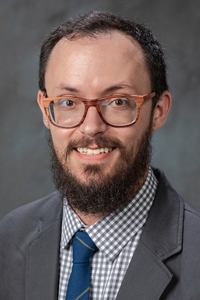
Dr. Jeremy Williams is an Assistant Professor of Biblical + Theological Studies at Northwestern College. He holds dual Ph.D. and M.A. degrees in Near Eastern Languages and Cultures from UCLA, alongside engineering degrees from Wheaton College and Illinois Institute of Technology. His interdisciplinary background bridges ancient Near Eastern studies, biblical archaeology, and theological education. Education: Ph.D./M.A. UCLA (Near Eastern Languages & Cultures), M.A.T.S. Portland Seminary, B.A. Wheaton College (Religion), B.S. Illinois Tech (Engineering) His research focuses on integrating 3D modeling techniques with archaeological inquiry, particularly in ancient fortifications like Jaffa's Egyptian gate. He examines performative language in Ugaritic texts and explores socio-economic dynamics in biblical narratives like 2 Chronicles 2. His work bridges textual exegesis with material culture analysis. Dr. Williams has presented at major conferences such as the Society of Biblical Literature meetings, focusing on topics like ancient writing systems and cultic practices. His publications span encyclopedic entries, journal articles, and digital archaeology projects. Awards: UCLA Graduate Research Mentorship, Biblical Archaeology Society Scholarship He has served in multiple teaching roles including UCLA's NELC department and adjunct professorships. His current focus includes leveraging digital humanities for biblical archaeology and mentoring students in interdisciplinary approaches.
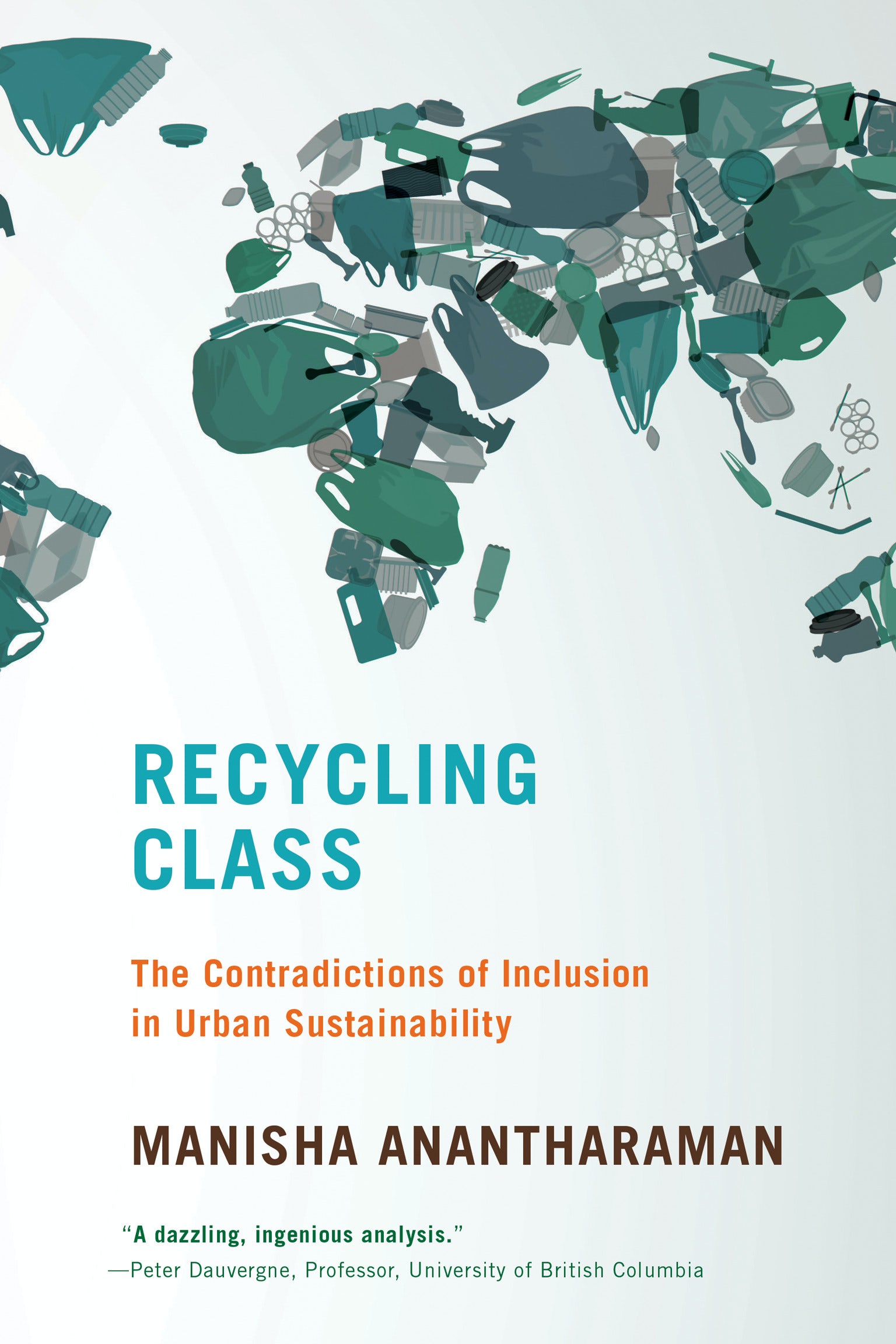
Manisha Anantharaman is an Assistant Professor at the Center for the Sociology of Organizations (CSO), Sciences Po in Paris, where she joined in January 2024. She was previously an Associate Professor at Saint Mary’s College of California in the Global Studies and Environmental Studies programs. Her research lies at the intersection of sociology, environmental studies, and political ecology, with a focus on the socio-cultural and political dynamics of ecological transitions in the Global South. PhD, Environmental Science, Policy and Management, University of California, Berkeley (2015) MA, Integrative Bio-sciences, University of Oxford (2008), Inlaks Scholar Alba Viotto Visiting Professorship, University of Geneva (2019) Her research critically examines how economic ideologies, socio-cultural identities, and power relations shape sustainability practices and environmentalism, particularly focusing on intersectional inequalities of race, class, caste, and gender. She is the author of the book Recycling Class (MIT Press, 2024), which presents an ethnographic study of waste labor and middle-class environmentalism in Bengaluru, India, critiquing 'performative environmentalism' and the limitations of inclusion without structural reform. Her work spans themes of circular economy, informal labor, green public spaces, digital infrastructures of consumption, and sustainable well-being. Her recent publications reflect a strong trend in critical sustainability, analyzing everyday practices, urban green spaces, and the politics of consumption through feminist, postcolonial, and intersectional lenses. She employs ethnographic and community-based methodologies to understand how marginalized communities navigate environmental transitions and assert their rights. Pandemic Pedagogic Excellence Award (2021) Inlaks Scholar (2008) Alba Viotto Visiting Professorship, University of Geneva (2019) Anantharaman is actively engaged in advising and research grants. She is a co-Principal Investigator on a €1.3 million Belmont Forum project studying digitalization and sustainable consumption across five countries. She also serves as an Associate Editor for Elementa: Science of the Anthropocene and Consumption and Society . Her policy work includes collaborations with Chatham House and UNEP, where she contributes to reports on circular economy and consumption, emphasizing marginalized perspectives. She teaches courses in Environmental Justice, Environmental Sociology, and Qualitative Methods at Sciences Po, and has extensive teaching experience at institutions like UC Berkeley and the University of Geneva. She is a key member of the Center for the Sociology of Organizations at Sciences Po, participating in seminars on ecological sense and social-ecological transitions. Her research projects involve collaboration with scholars from Sweden, Norway, Turkey, and Japan, as well as engagement with municipal governments, civil society, and digital designers through design workshops. She is currently launching a comparative study on informal work in the circular economy across Asian and African cities.
Paulin Tay Straughan is a Full-time Faculty member and Professor of Sociology (Practice) at Singapore Management University's School of Social Sciences. She also serves as Dean of Students and Director of the Centre for Research on Successful Aging (ROSA). Additionally, she is an Urban Fellow at the SMU Urban Institute. Education: BA (1985) from National University of Singapore; MA (1988) and PhD (1991) from University of Virginia, USA. Research focuses on family dynamics (marriage/parenthood, fertility), medical sociology (obesity, preventive health), work-life balance, and successful aging. As Principal Investigator, she secured over S$10 million in grants from MOE, MOH, MSF, and AI Singapore (2018–2022). Media engagements include discussions on public cleanliness (2017), fertility trends (2018), and aging perceptions (2020). Previously served as Nominated MP (2009–2011), advocating for work-life balance policies. Teaching includes Research Methods in Sociology and Medical Sociology courses.
Yiqiang Zhou is a Professor of Mathematics at the Department of Mathematics and Statistics , Faculty of Science , Memorial University of Newfoundland. He holds a PhD from the University of British Columbia (2007), an M.Sc. from Beijing Normal University (200?), and a B.Sc. from Hunan Normal University (200?). His research focuses on ring theory and module theory , with notable contributions to the study of morphic rings, clean rings, and module properties. Recent work explores concepts like hypercyclic rings, nil-clean properties, and generalized fine rings. Teaching includes courses such as Math 2050 (Linear Algebra) and Math 4320 (Abstract Algebra) , with teaching materials available online. His extensive publication record spans over 60 articles in journals like Journal of Algebra and Journal of Pure and Applied Algebra , reflecting expertise in algebraic structures and their applications. Notable collaborations include work with Nicholson, Camillo, and others. His research also intersects with categorical module properties and Morita contexts. Research interests emphasize structural properties of rings and modules, including clean elements, ring cleanliness, and idempotent structures. His work often bridges theoretical algebra with practical module classifications, contributing foundational insights into noncommutative algebra.
Anselm Wagner has been a full professor and head of the Institute for Architectural Theory, Art and Cultural Studies at Graz University of Technology (TU Graz) since March 2010. He concurrently serves as coordinator of the KUWI Graz doctoral programme and dean of studies of the Doctoral School at the Faculty of Architecture, TU Graz. Affiliated with numerous advisory boards—including the Graz Old Town Expert Commission, the City of Graz Advisory Board for Art in Public Space, the Centre for Intermediality Studies at the University of Graz, and the Critical Studies in Architecture board at Goethe University Frankfurt—he is an influential figure in Austrian architectural academia and cultural policy. Education & Early Career 1965: Born in Salzburg, Austria. Studies: Art history, philosophy and classical archaeology at the Universities of Salzburg and Munich. 1991: Diploma thesis on Romanesque architecture in South Tyrol. 2002: Doctoral dissertation on the history of the Salzburg Art Association. 1988-1996: Freelance art critic, exhibition curator, and co-founder/director of Galerie 5020 Salzburg. 1996-2009: Teaching positions and visiting professorships at universities in Vienna, Salzburg, Linz, Graz, and Minneapolis. Research Interests Professor Wagner’s work is anchored in critical architectural theory and the history and theory of contemporary architecture and art . He examines the institutional and scientific histories that shape architectural discourse, with a particular focus on purity and dirt as aesthetic categories of modernity . His FWF-funded projects have investigated Buddhist architecture in the Western Himalayas and solar design knowledge via the Sun Houses of Konrad Frey . Additional strands include cross-epochal image studies and cultural analyses that bridge medieval iconography with present-day spatial practices. Publications & Editorial Work Since 2012 he edits the book series architektur und analyse (jovis, Berlin) and has acted as chief editor of GAM Graz Architecture Magazine . His 2019 co-edited volume Architekturführer Graz (456 pp.) offers an authoritative guide to the city’s architectural heritage. Recent theoretical essays explore neoliberal spatial logics, the politics of heritage, and the semiotics of modernist absence. Grants & Projects FWF Project “Buddhist Architecture in the Western Himalayas: Architectural Research in Dolpo/Nepal” (2018-2021) FWF Project “The Sun Houses of Konrad Frey: Environmental Research and Solar Design Knowledge” (2016-2019) Coordinator, KUWI Graz doctoral programme Dean of Studies, Doctoral School, Faculty of Architecture, TU Graz Advisory & Professional Service Wagner sits on the scientific advisory boards of the Linzer Beiträge zur Kunstwissenschaft und Philosophie, the Centre for Intermediality Studies (CIMIG) at the University of Graz, and the Critical Studies in Architecture network at Goethe University Frankfurt. He is a member of the International Association of Art Critics (AICA) and has served on municipal commissions for art in public space and historic-town conservation.
Dr. Sujata Sirsat serves as an Associate Professor at the University of Houston’s Conrad N. Hilton College of Global Hospitality Leadership, where she addresses critical food safety and public health challenges across hospitality, agricultural, and retail sectors. Her academic credentials include: B.S. in Life Sciences from Mumbai University M.S. in Biotechnology from Texas A&M University Ph.D. in Poultry Science from the University of Arkansas Dr. Sirsat's research centers on food safety disparities , food insecurity , and microbiological risk assessment , with innovative work in low-literacy training toolkits and environmental pathogen monitoring. She integrates molecular biology and public health frameworks to develop practical interventions for farmers' markets, hotels, and domestic kitchens, emphasizing vulnerable populations. Analysis of her 2022-2025 publications reveals consistent focus on pathogen persistence mechanisms (using bacteriophage surrogates), cross-contamination dynamics in hospitality settings, and data-driven food safety monitoring through consumer reviews and hydroponic systems. Her work bridges laboratory microbiology with real-world applications in retail and agricultural operations. While securing over $3 million in competitive grants from the U.S. Department of Agriculture and Texas Department of Agriculture, no specific scientific awards or medals were documented in the source material. Her funded research enhances food safety practices across retail, restaurants, and small farms, with active teaching in undergraduate Food Safety/Foodservice Management and doctoral Grant Writing courses. Current contact details confirm ongoing institutional engagement: email sasirsat@uh.edu, phone 713-743-2624, office S230.
Hanna-Riitta Kymäläinen serves as a Senior University Lecturer at the Department of Agricultural Sciences within the Faculty of Agriculture and Forestry at the University of Helsinki. She holds a Docentship in Agrotechnology and is affiliated with the Teachers' Academy. With over 263 publications and 29 research projects to her name, she maintains an active research profile spanning agricultural education, gender studies in forestry, animal welfare technologies, and AI integration in agricultural curricula. DrSc Agr&For (2004) LicSc (MML) (2002) MSc (M.M.M.) (1992) Associate Professor (2007) Pedagogical studies (87.5 credits, 1992-2021) Specialist Qualification in Management (40 credits, 2006) Vocational Teacher qualification (AmO, 2017) Dr. Kymäläinen's research focuses on educational development in agricultural sciences, with particular emphasis on gender dynamics in forestry and agricultural sectors, animal welfare technologies, and the integration of artificial intelligence in agricultural education. Her work bridges practical agricultural applications with pedagogical innovation, addressing contemporary challenges in sustainable agriculture and educational technology. Her recent publications demonstrate a clear trend toward integrating digital technologies with traditional agricultural education, examining gender differences in technology adoption, and investigating workplace conditions in forest sectors. This reflects her commitment to addressing both educational modernization and social aspects within agricultural and forestry professions. Principal Investigator for MetsäNaiset project (2025-2026) on forest sector workplace well-being Participant in MOTI project on agricultural student motivations (2022-present) Participant in ASKE project on BSc student expertise development (2021-present) Participant in TUKI project on BSc thesis writing processes (2021-present) Participant in Ecological building materials project (2007-present) Dr. Kymäläinen actively contributes to academic discourse through peer review activities for journals including Scientific Reports, Oilseeds and fats, crops and lipids, and Academia Materials Science. She regularly presents at conferences and engages with media on topics related to agricultural education reform, cleanliness standards in workplaces, and AI's role in higher education. Her work with students spans thesis supervision and pedagogical leadership in curriculum development.
Dr. Alexander M Aiken is a faculty member at the London School of Hygiene & Tropical Medicine , affiliated with the Antimicrobial Resistance Centre (AMR) and the Department of Infectious Disease Epidemiology & International Health . His research focuses on antimicrobial resistance , infection control , and public health interventions in low-resource settings across sub-Saharan Africa. His work includes multi-country studies on hospital-acquired infections , antibiotic stewardship , and environmental hygiene , such as the EWASH Trial in Nigeria and MBIRA Study collaborations. Key methodologies include cross-sectional surveys , cluster randomised trials , and systematic reviews . Recent publications analyze invasive Enterobacterales in African hospitals, disinfectant efficacy in low-resource units, and antibiotic prophylaxis practices. Collaborations span institutions in Kenya, Tanzania, South Africa, and the UK.
Zayd Ayers Dohrn is a Professor at Northwestern University's School of Communication, where he serves as Director of the MFA in Writing for Screen and Stage within the Department of Radio/Television/Film. His faculty position places him at the intersection of academic instruction and creative practice in contemporary media production. Dohrn's research and creative interests span playwriting, screenwriting, television writing, podcasting, and digital media creation. His work consistently engages with political themes, American identity, and the intersections of personal and public life. His creative output demonstrates a commitment to exploring contemporary social issues through dramatic forms. Dohrn's recent creative output shows a progression from traditional theatre toward multi-platform storytelling, with increasing emphasis on audio formats and screen-based media. His work demonstrates consistent engagement with American political history, family dynamics, and the evolving landscape of media production. Columbia-DuPont Journalism Award, 2024 Gold Medal at the New York Festival Radio Awards, 2023 Best Audio Storytelling at Tribeca Film Festival, 2023 Horton Foote New American Play Prize, 2016 Clarence Simon Award for Outstanding Teaching and Mentoring, 2013 Dohrn maintains an active mentorship role through his directorship of Northwestern's MFA program while simultaneously developing major media projects with Netflix, FilmNation, and Peacock. His career bridges academic instruction with professional creative practice in multiple media formats.
Professor UĞUR AYDIN is affiliated with Gaziantep University Faculty of Dentistry in the Department of Clinical Sciences . He has held various academic positions since 2016 including Professor (2023–), Associate Professor (2017–2023), and Assistant Professor (2011–2017). His education includes a Medical Specialization in Endodontics (2016–2020) from Ondokuz Mayis University Institute of Health Sciences and a Türkiye Licence in Dentistry (2016–2020) from Marmara University Faculty of Dentistry . His research interests focus on Endodontics with emphasis on Laser Applications , Root Canal Biofilm Removal , and Dental Material Evaluation . His work explores Cyclic Fatigue Resistance of Instruments , Smear Layer Elimination , and Dentinal Crack Formation during endodontic procedures. He has supervised 25+ theses at dental specialization, master’s, and PhD levels. His grants include 7 national research projects supported by TÜBİTAK and Higher Education Institutions, such as projects on Laser Dentistry , Photodynamic Therapy , and Apical Pressure Dynamics . He has co-authored 28 scientific articles and 1 book chapter on Endodontic Radiology .
Tan Q. Nguyen, MD is a Clinical Professor in the Department of Family Medicine at the UCI School of Medicine and Director of Family Medicine Medical Education. He holds board certification in Family Medicine and practices at UC Irvine Family Health Centers in Anaheim, Santa Ana, and Orange. His clinical interests focus on asthma in Vietnamese-American children, care for underserved communities, and pediatric/adolescent care. Education: MD from Michigan State University Residency: UC Irvine Medical Center Dr. Nguyen’s research integrates medical humanities with clinical practice, exploring how creativity and arts enhance patient-physician relationships and job satisfaction. He is fluent in Vietnamese, Spanish, and English, reflecting his commitment to culturally competent care. Recognitions include multiple Physicians of Excellence Awards from the Orange County Medical Association. His academic leadership includes directing medical education programs and mentoring future clinicians. Patient reviews highlight his compassionate bedside manner and dedication to thorough care, with many praising his professional expertise and the cleanliness of facilities.
Eric Hamerman, Ph.D., is a Professor and Chair of the Marketing Department at the LaPenta School of Business, Iona University. He also serves as the Marketing Internship Coordinator. His expertise lies in consumer behavior, with a focus on disgust sensitivity, volunteerism, and sustainable consumption. Dr. Hamerman holds a Ph.D. from Columbia University and an MBA in Marketing from the University of North Carolina–Chapel Hill. His research spans topics such as entomophagy (insect-based foods), food waste reduction strategies, and the role of generative AI in education. He has published widely in journals like Journal of Consumer Research and Personality & Social Psychology Bulletin . Notable contributions include examining the psychological underpinnings of consumer decisions related to kosher foods, food cleanliness perceptions, and the implementation of campus food pantries. Dr. Hamerman teaches courses such as Sustainable Marketing, Marketing Communications, and Principles of Marketing, emphasizing practical applications and ethical considerations. His work bridges academic research with real-world challenges, particularly in sustainability and social responsibility. While no formal grants or awards are listed, his publications reflect consistent engagement with timely issues in consumer behavior and marketing strategy.