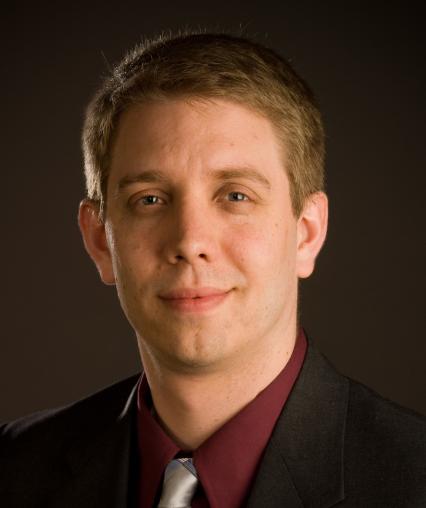
Dr. Dustin Crowther is an Associate Professor in the Department of Second Language Studies at the University of Hawaii at Manoa. He holds a PhD from Michigan State University and currently serves as Director of the Center for Academic Spoken English (CASE), an initiative supporting non-native English speakers in academic oral communication. His primary research focuses on second language speech comprehensibility, global Englishes pedagogy, and listener perception dynamics. Dr. Crowther has held editorial roles for TESOL Quarterly (2019-2024) and will become Editor of the Journal of Second Language Pronunciation in 2025. Dr. Crowther's expertise includes L2 pronunciation instruction, program development in SLA, and methodological practices in second language research. He co-authored Shaping Learners' Pronunciation: Teaching the Connected Speech of North American English (2022) and co-edited Investigating World Englishes: Research Methodology and Practical Applications (2019). His research appears in top-tier journals like Applied Linguistics , Language Learning , and TESOL Quarterly . Education: PhD, Michigan State University Professional Roles: Editor ( Journal of Second Language Pronunciation ), Director (CASE), Affiliate Faculty in Linguistics His work bridges SLA research with pedagogical applications, emphasizing global Englishes' role in multilingual academic contexts. Dr. Crowther collaborates with international scholars through the CASE initiative and has developed innovative assessment methodologies for L2 speaking tasks.
Piet Desmet is a full professor at KU Leuven's Faculty of Arts, serving as vice rector of KU Leuven, Kulak Kortrijk Campus, and academic director of the Office of the Academic Director, Bruges Campus. He leads multiple research divisions including itec and its Language and Technology subdivision, and is a member of Leuven.AI - KU Leuven Institute for Artificial Intelligence. As general coordinator of itec and academic director of the imec smart education research program, he oversees significant research initiatives spanning multiple campuses. Desmet's research focuses on the intersection of language learning and technology, with particular expertise in Second Language Acquisition and Technology, Computer-assisted Language Learning (including AI-based chatbots), Learning Analytics, and Language Technology and Corpus Linguistics. His work explores intelligent feedback systems, linguistic complexity prediction, adaptive testing, and natural language processing applications for educational contexts. His research spans theoretical linguistic frameworks to practical educational implementations, with a strong emphasis on empirical validation of technological interventions in language learning. Analysis of Desmet's recent publications reveals a strong trajectory toward integrating artificial intelligence with language education, particularly through conversational AI and learning analytics. His work increasingly focuses on chatbot-assisted language learning, adaptive assessment systems powered by large language models, and the application of computational linguistics to educational problems. The publications demonstrate a consistent methodological approach combining theoretical linguistics with empirical educational research, often employing eye-tracking, ERP studies, and learning analytics to evaluate effectiveness. Desmet actively supervises numerous PhD students and leads multiple major research projects including Smart Education at Schools (2025-2026), Enhancing EFL Learners' Speaking Ability through Chatbot-Assisted Dynamic Assessment Powered by LLMs (2024-2028), and the Flanders Ed Tech Hub (2022-2025). His research portfolio demonstrates significant funding success across multiple national and international initiatives focused on educational technology and language learning. As head of itec (an imec research team at KU Leuven), Desmet leads a substantial research ecosystem focused on smart education technologies. The itec team collaborates extensively with Leuven.AI and the KU Leuven Educational Research Institute (LIVO), creating a multidisciplinary environment that bridges computational linguistics, educational psychology, and artificial intelligence. Recent initiatives include the 'AI in Education' online training course and the network for Edtech and Learntech in Flanders.
Dr. Masato Kikuchi is an Associate Professor of Japanese in the School of Modern Languages at Georgia Tech. He holds a PhD from the University of Pittsburgh (1995), an M.S. in Intercultural Communication (1982), and a B.A. from International Christian University (1979). His research focuses on instructional technologies for language acquisition, particularly leveraging virtual worlds like Second Life for immersive Japanese learning. He has developed platforms such as the 'Sky Platform at EduNation III,' exploring 3D visualization for grammar concepts and comparative studies on 3D vs. 2D language learning tools. Dr. Kikuchi teaches advanced and intermediate Japanese courses, specializing in CALL (Computer-Assisted Language Learning), technical translation, and intercultural communication. His work emphasizes integrating technology into language education, including courseware design for online and hybrid learning environments. Recent projects include software for virtual world-based communicative practice and research on NMT (Neural Machine Translation) as a pedagogical tool. His publications span conference proceedings, courseware development, and software tools like the 'Understanding Written Japanese' CD-ROM series. He actively presents on topics such as virtual world design, information gap exercises, and Japanese course design. His research aligns with Georgia Tech’s focus on STEM-integrated language education and international collaborations.
Zabitgil Gülseren, Özlem is an academic at Istanbul Sabahattin Zaim University specializing in English Language Teaching (ELT) and Second Language Acquisition . Her work focuses on integrating technology into language instruction, analyzing learner anxiety, and evaluating pedagogical methods. Research Themes : Technology-enhanced learning, vocabulary acquisition, formative assessment. Key Collaborations : Co-authored studies with Sıla Selver Akar, Enes Atay, and others. Article Trends : Recent works (2024) examine authentic video-based vocabulary instruction, while 2022–2020 studies explore online collaborative writing, digital storytelling, and formative assessment practices. Earlier works (2015–2019) analyze anxiety, gender factors in strategy use, and classical teaching methods. Advising and Grants : Supervised research on topics like digital tools in ELT and L1 usage in classrooms. No specific grant details provided in the text.
Corey Brady is an Associate Professor at the Department of Teaching & Learning and Associate Dean for Research and Outreach at Southern Methodist University's Simmons School of Education and Human Development. He holds a Ph.D. in Mathematics Education from the University of Massachusetts, Dartmouth, alongside degrees in English Literature (MA) and Pure Mathematics (MS). Dr. Brady's research focuses on mathematical and computational modeling from a constructionist perspective, emphasizing collective learning and STEAM activity . His work includes design-based research on block-based programming environments and embodied participatory simulations. Recent publications (2023-2021) span journals like Frontiers in Education , Science Education , and Educational Studies in Mathematics , with sub-fields ranging from geometric transformations to disaster preparedness systems. He has received recognition including the Outstanding Paper Award at ICLS 2023 and Best Paper at ICLS 2020 . Previously, he held faculty roles at Vanderbilt and Northwestern Universities, led educational technology development at Texas Instruments, and taught at middle school to community college levels. His interdisciplinary approach bridges mathematics, computer science, and affective learning.
Tamara Moore is a Professor of Engineering Education at Purdue University, holding the title of Purdue University Faculty Scholar . She is affiliated with the School of Engineering Education , part of Purdue's College of Engineering. Her research focuses on integrating engineering principles into K-12 and higher education curricula to enhance STEM learning through computational thinking, systems thinking, and interdisciplinary approaches. Education: Ph.D., Engineering Education, Purdue University M.S.Ed., Mathematics Education, Purdue University B.S.E., Interdisciplinary Engineering, Purdue University B.S., Mathematics with minor in Mathematics Education, Purdue University Research Interests: Dr. Moore investigates how engineering methodologies (e.g., design thinking, systems analysis) can be used to improve mathematics and science education at all levels. She develops curricula and professional development programs for teachers, emphasizing STEM integration through projects like the STEM Road Map and Engineering Design-Based Curricula . Her work explores computational thinking in early childhood, microelectronics education, and the use of evidence-based reasoning in student projects. Key Contributions: Authored the STEM Road Map framework for K-12 integrated education Developed curricula like Turn the Lights On! and Mineral Mayhem Conducted studies on microelectronics awareness and systems thinking in synthetic biology Advocated for inclusive computational thinking education in early childhood Awards: Purdue University Faculty Scholar (current) Lab & Teams: Her research is conducted from the WANG 3514 Lab , focusing on teacher professional development, student learning trajectories, and curriculum design. Collaborates with interdisciplinary teams on NSF-funded projects like EngrTEAMS: Engineering to Transform the Education of Analysis, Measurement, and Science .
Dr. Andy Bown is a Lecturer in Languages and TESOL at the University of Tasmania's Faculty of Education. He holds a PhD from Macquarie University (2015) and has over 30 years of experience in language education across Thailand, France, the UAE, and Australia. His research focuses on educational technology, second language acquisition, and culturally diverse learning contexts. He currently coordinates courses like EPR215 and EMT609, and supervises PhD candidates exploring technology's role in language learning. Education: PhD, 'Using a virtual learning environment for the development of L2 academic reading' (Macquarie University, 2015) MEd, 'The usefulness of guided feedback in a web-based IELTS reading programme for Arab learners' (University of Manchester, 2004) BA (Hons) in French and Linguistics (University of York, 1992) Research Interests: Dr. Bown specializes in Computer-Assisted Language Learning (CALL), mobile-assisted language learning, and second language reading strategies. His work emphasizes technology's role in linguistically diverse classrooms, particularly in developing countries. Recent projects include studies on social media for vocabulary development and culturally responsive pedagogy. Grants & Engagements: UTAS representative on the Modern Language Teachers’ Association of Tasmania Led the 'Early Language Learning' case study ($5,000 grant, 2017) Co-lead of the LinguaLab research group Labs/Teams: Co-leads the LinguaLab, a collaborative space exploring language education innovations.
Dr. Christopher S. Hlas is a Professor of Mathematics Education at the University of Wisconsin-Eau Claire within the College of Arts and Sciences Department of Mathematics. With a doctorate from the University of Iowa, he specializes in mathematics pedagogy, technology integration, and cross-disciplinary connections between math and foreign languages. Ph.D. in Mathematics Education (University of Iowa, 2005) B.S. in Mathematics and Computer Science (University of Iowa, 2001) His research focuses on teaching through problem solving , student motivation , and technology-enhanced mathematics instruction . He has developed innovative formative assessment probes and conducted extensive studies on homework design, flow theory, and creativity in K-12 education through grants like the ESEA Title II Mathematics and Science Partnerships. His work spans curriculum development, professional development for teachers, and mathematical modeling. Recent publications highlight his exploration of creativity assessment in language education and the application of game mechanics to classroom engagement. He serves as an AP Calculus Reader and Table Leader, while maintaining active roles in the Wisconsin Mathematics Council and National Council of Teachers of Mathematics. Bilingual education initiatives GeoGebra integration in geometry instruction Formative assessment frameworks Game-based learning strategies Scientific Awards CARE Award (2015) ACTFL Research Priority Grant (2010) Multiple teaching scholarships UWEC student-nominated award (2007) Outstanding teaching assistant recognition (2004) Mentoring over a dozen student research projects and securing more than $4 million in federal and state grant funding, Dr. Hlas has supervised numerous collaborative research initiatives. He maintains open-source educational tools like interactive Pascal's Triangle and rational functions resources at math.hlasnet.com while serving on multiple university committees and grant review panels.
Joseph G. Allen is an Associate Professor at Harvard T.H. Chan School of Public Health, where he directs the Harvard Healthy Buildings Program and serves as Deputy Director of the Harvard Education and Research Center for Occupational Safety & Health . He holds leadership roles in major public health initiatives including as Commissioner for The Lancet COVID-19 Commission and Scientific Advisor to the White House (2022-2024). His work bridges environmental health, building science, and public policy to advance human health in indoor environments. Education: D.Sc. in Exposure Assessment, Environmental Epidemiology & Biostatistics – Boston University MPH in Environmental Health – Boston University BS in Biology – Boston College Certified Industrial Hygienist (CIH) Research Focus: Dr. Allen's work centers on indoor environmental quality and its impact on human health. His research examines: 1) Airborne pathogen transmission mitigation strategies, 2) Chemical exposure pathways in built environments, 3) Climate-resilient building design, and 4) Global health equity in environmental interventions. His studies employ field measurements, computational modeling, and epidemiological approaches to develop evidence-based building standards. Publications: His recent 15 publications demonstrate consistent focus on air quality interventions, chemical exposure assessment, and health-focused building design. Key themes include pandemic-responsive ventilation standards, PFAS contamination mitigation, global health equity in environmental interventions, and technological innovations in exposure monitoring. His work appears in both scientific journals and policy-oriented outlets like Harvard Business Review. Awards & Leadership: Scientific Advisor to White House & Massachusetts Governor Chair of Lancet COVID-19 Task Force for Safe Work/Schools/Travel Co-Chair of Harvard Sustainability Committee's 2050 Subcommittee Program Direction: As Director of the Harvard Healthy Buildings Program, Dr. Allen leads interdisciplinary research translating building science into public health practice. The program collaborates with governments and industries worldwide to implement health-focused building standards and exposure reduction strategies.
Weina Li Chen serves as a Clinical Assistant Professor within the Education Division of Pepperdine University's Graduate School of Education and Psychology, teaching courses in the Master of Arts in Teaching English to Speakers of Other Languages (MA TESOL) and Master of Science in Leadership programs. With approximately ten years of teaching experience across diverse educational settings, she brings practitioner expertise to her academic role while maintaining active engagement in professional development and program design. Her academic credentials include: Ph.D. from Pepperdine University M.A. from Pepperdine University M.A. from University of York, England B.A. from Heilongjiang University, China Dr. Chen's research focuses on educational technologies and innovative learning design , with specialized expertise in online/hybrid learning environments, world language acquisition (particularly English as a Second Language), and teacher leadership development. She investigates how digital tools can enhance student engagement, social presence, and language proficiency through practical applications. Her work bridges academic research with classroom implementation, frequently resulting in practitioner workshops and conference presentations that translate theoretical concepts into actionable teaching strategies for language educators. Analysis of her 14 publications (2019-2023) reveals consistent emphasis on technology-mediated language learning. She explores platforms like Flip, Canva, and WeChat to create interactive communities and support speaking practice, with recurring themes including social-emotional learning integration and digital storytelling. Her research demonstrates a practitioner-scholar approach, targeting both pre-service and in-service teachers through workshops that address real-world classroom challenges in language education. As an educational leader, Dr. Chen founded and served as president of CABE Mandarin, an organization promoting Mandarin language education. She has designed multiple language programs for schools and universities, demonstrating commitment to expanding language learning opportunities. While specific grant funding details and student advisee names are not documented in available materials, her conference presentations and program development initiatives indicate active community engagement and professional contribution to the fields of TESOL and educational technology.
Robert Woore is an Associate Professor in Applied Linguistics and Course Director of the MSc in Applied Linguistics and Second Language Acquisition (ALSLA) at the University of Oxford's Department of Education. He holds multiple advanced degrees from Oxford, including a DPhil in Applied Linguistics, and previously taught secondary school languages and outdoor education before joining academia in 2007. His research focuses on instructed foreign language learning, particularly in school settings, with emphases on reading strategies, phonological decoding, phonics teaching, and teacher professional development. He actively investigates the teaching of Languages Other Than English (LOTE), including Chinese and Arabic, alongside European languages like French and German. Woore teaches on the PGCE, MSc ALSLA, and doctoral programs. He leads funded projects such as the Qatar Foundation-supported studies on Arabic as an additional language and the Nuffield Foundation’s FLEUR project on L2 reading. His work bridges research and classroom practice, emphasizing evidence-based pedagogy and curriculum reform. Key grants include leadership roles in the Nuffield Foundation’s FLEUR initiative (2016–2018) and Qatar Foundation’s Arabic as Additional Language review (2022–2025). He collaborates widely, co-authoring influential books like Debates in Second Language Education and contributing to policy-relevant studies on language education outcomes.
Mark Hoover is an Associate Research Scientist and Intermittent Lecturer at the University of Michigan's Marsal Family School of Education, Department of Mathematics Education. His work focuses on disrupting systemic educational inequities through mathematics teaching and teacher professionalization, emphasizing social justice and ethical pedagogy. He draws inspiration from civil rights activist Robert Moses and education researcher Deborah Ball, whose collaborations are highlighted in his research. Hoover has held roles in both research and teaching, contributing to the development of practice-based approaches to studying teaching demands and advocating for curricula that promote civic participation. His research bridges mathematics content and pedagogy, exploring how teaching practices can address historical injustices embedded in educational systems. Research Interests: Equity in STEM education, mathematical knowledge for teaching (MKT), teacher professionalization, curriculum development, assessment design, and the intersection of mathematics education with social justice movements. He critiques oppressive educational standards and accountability systems while investigating how teaching can be reimagined to center justice. His work also explores the role of mathematicians in shaping mathematics education and the importance of tasks for assessing teaching proficiency. His scholarly output reflects a sustained engagement with equity and justice, analyzing classroom practices and teacher education through critical frameworks. Recent publications emphasize collaborative research initiatives (e.g., TWG19) and the moral dimensions of pedagogy. Grants: Recipient of the Communicating Mathematically Across Difference in the Work of Teaching Award (2018-2025). Advising: No formal advisees listed in provided materials, but his work supports professional learning communities across disciplines. Hoover is affiliated with the Connected Mathematics Project, contributing to curriculum development and its impact assessment. His contributions span both research and practical teaching, aiming to create inclusive and just educational environments.
Dmitrii Pastushenkov is a Teaching Professor in the Department of Slavic Languages and Literatures at Harvard University, specializing in the Russian language program. He holds a Ph.D. in Second Language Studies from Michigan State University (2022), an M.A. in Teaching English as a Second Language from Kent State University (2017), and dual M.A. degrees in Russian Translation and Business Administration, also from Kent State (2015). His research focuses on instructed second language acquisition, bridging theory and practice in language education, and the application of psychological theories to literary analysis. He has contributed to journals like The Modern Language Journal and co-edited a Routledge volume on assessment in Russian language classes. His work explores gamification, language immersion programs, and the use of technology in education, including game-based learning and assessment methodologies. Prior to Harvard, Dmitrii taught at Michigan State University, California State University, Northridge, and Kent State University, where he held graduate assistantships and participated in STARTALK programs. He has served as a research assistant at Middlebury College’s Kathryn Wasserman Davis School of Russian, gaining insights into immersive language education. His interdisciplinary research also includes analyzing Russian state media’s portrayal of opposition leaders and examining dystopian narratives in Dmitry Glukhovsky’s novels through psychological frameworks. Pastushenkov’s teaching philosophy emphasizes practical application of research, with a focus on enhancing language learning through innovative pedagogical strategies. His publications address topics such as vocabulary acquisition via gamification, task-based instruction, and the role of individual differences in language learning outcomes. He actively contributes to educational initiatives that integrate cultural and linguistic studies across disciplines.
Paul Rosen is an Associate Professor at the University of Utah, affiliated with the Scientific Computing and Imaging Institute and the Kahlert School of Computing. He holds a Ph.D. in Computer Science from Purdue University (2010). Prior to his current role, he was an Assistant/Associate Professor at the University of South Florida (2015–2022) and a Research Assistant Professor at the University of Utah's SCI Institute (2010–2015). Research Focus: Rosen specializes in topology-based visualization techniques, with emphasis on network visualization, uncertainty quantification, and perceptual studies. His work bridges computational methods with human perception, aiming to enhance data understanding through effective visual design. Awards & Recognition: National Science Foundation CAREER Award (2019) Best Paper Awards at PacificVis 2016, IVAPP 2016, and multiple other conferences Honorable Mentions for IEEE VIS and VAST Challenge submissions Leadership: As General Chair of IEEE VIS 2024, Rosen led the planning for this flagship visualization conference, emphasizing community-driven design and in-person collaboration. Education Contributions: His research includes pedagogical innovations, such as predictive modeling for student feedback and peer review analysis in visual literacy courses.
Assoc. Prof. Hana Vančová, PhD., is a dedicated academic at Trnava University's Faculty of Education, where she has served as an Associate Professor in the Department of English Language and Literature since 2013 (promoted from Assistant Professor following her 2022 habilitation). Currently Deputy Head of Department for Education, she oversees curriculum development and serves as study advisor for single-subject and combined English language teacher education programs at bachelor's, master's, and doctoral levels. Her institutional commitment spans over a decade with full-time employment since 2013. Education: 2004–2009: Master of Arts (Mgr.) in English Language and Literature – Slovak Language and Literature, Faculty of Education, Trnava University 2009–2012: Doctor of Philosophy (PhD.) in Pedagogy, Faculty of Education, Trnava University 2019: Professional Development: "Teaching languages in the digital era: the best apps, web platforms and ICT solutions for learning languages", Institute for Training, Employability and Mobile Learning Hana Vančová's scholarly work centers on English pronunciation pedagogy , with pioneering research in technology-enhanced instruction . Her primary domains include phonetics and phonology , lexicology , and digital language learning tools , investigating how AI, mobile applications, and multimedia resources optimize pronunciation acquisition. She bridges theoretical linguistics with practical classroom applications through ergonomic educational design, emphasizing learner-centered methodologies that address sociolinguistic factors like accent identity and intelligibility. Her habilitation thesis established her as a key innovator in pronunciation technology. Analysis of Vančová's publication trajectory (2014-2024) reveals a decisive shift from foundational studies on Slovak learners' pronunciation errors toward cutting-edge research on AI-driven pronunciation training. Her recent work explores karaoke-based methods and ethical AI implementation in CALL (Computer-Assisted Language Learning), highlighting human-AI interaction dynamics. The consistent thread is her commitment to making pronunciation instruction accessible through technological innovation, with publications increasingly addressing inclusivity, ethical considerations, and ergonomic design in digital language learning environments. While no specific scientific awards are documented beyond her academic promotion, Vančová's habilitation procedure—evaluated by an international committee including scholars from Poland, Czech Republic, and Slovakia—represents significant scholarly recognition. Her work has received 36 citations (14 foreign, 22 domestic) as of 2021. As study advisor for English language teacher training programs, Vančová mentors students across bachelor's, master's, and doctoral studies, guiding curriculum development for profile subjects in phonetics, lexicology, and digital language education. She maintains structured consultation hours (Wednesdays 10:00-11:30, study advising 11:30-13:00 via MS Teams) and demonstrates sustained research productivity through monographs, textbooks, and peer-reviewed articles. Though specific grant funding isn't detailed, her habilitation thesis exemplifies capacity for substantial scholarly projects with practical pedagogical impact. No dedicated laboratories or formal research teams are documented; Vančová's academic activities operate within the Department of English Language and Literature framework, focusing on individual research initiatives and departmental leadership in educational technology integration.