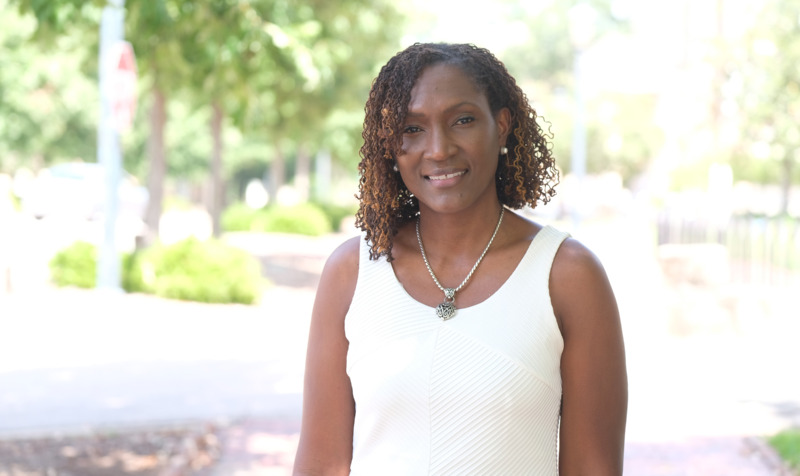
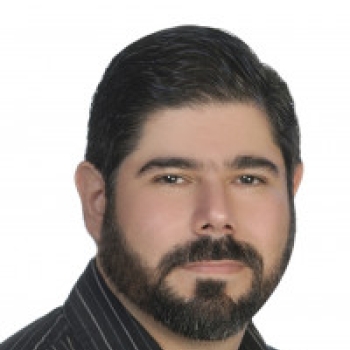
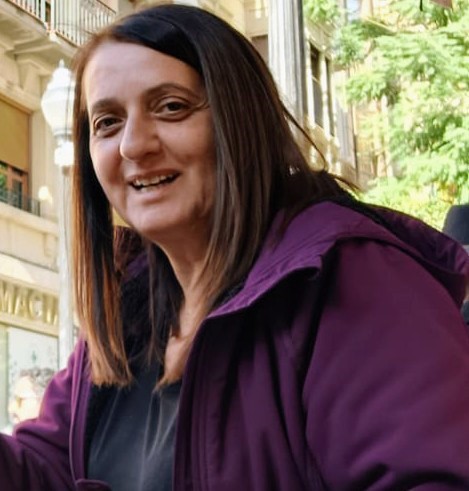
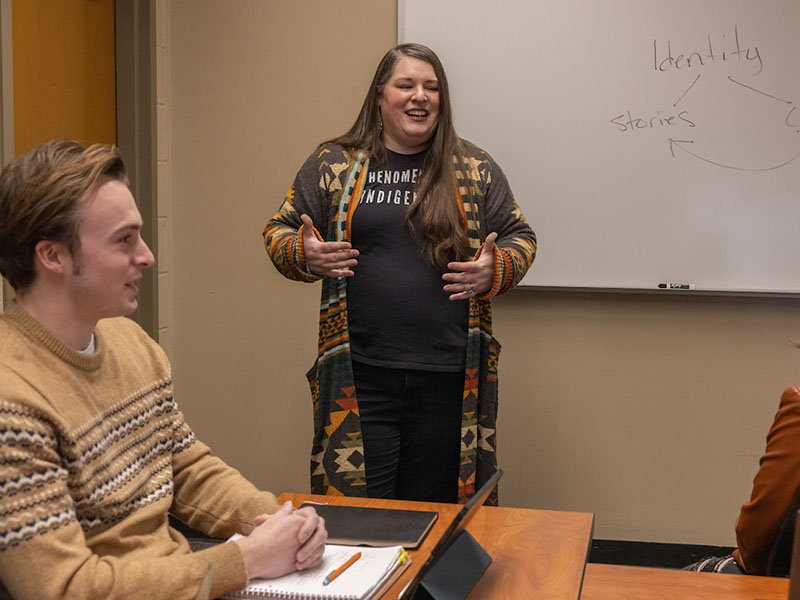
Dionne Cross Francis is the Joseph R. Neikirk Term Professor at the UNC School of Education, affiliated with the Culture, Curriculum, and Teacher Education (CCTE) and Learning Sciences and Psychological Studies (LSPS) programs. Her work bridges mathematics education, educational psychology, and teacher education, focusing on contextual and teacher-specific factors influencing instructional practices and professional development design. Education: Ph.D., 2007 – University of Georgia, Educational Psychology M.A., 2004 – Wake Forest University, Education B.A., 1997 – University of West Indies, Mathematics Her research interests include teacher identity development, equity in STEM, holistic professional development, and the role of emotions in teaching. She explores how systemic and individual factors impact teacher effectiveness, particularly for marginalized educators and students. Recent publications emphasize culturally responsive teaching, digital simulations in teacher training, and intersectional identities in education. Her work highlights innovative methods like counterstorytelling to disrupt inequitable practices in educational psychology research. Labs/Teams: Active in the CCTE and LSPS programs, collaborating on initiatives such as equity-focused STEM curricula and teacher wellbeing interventions.
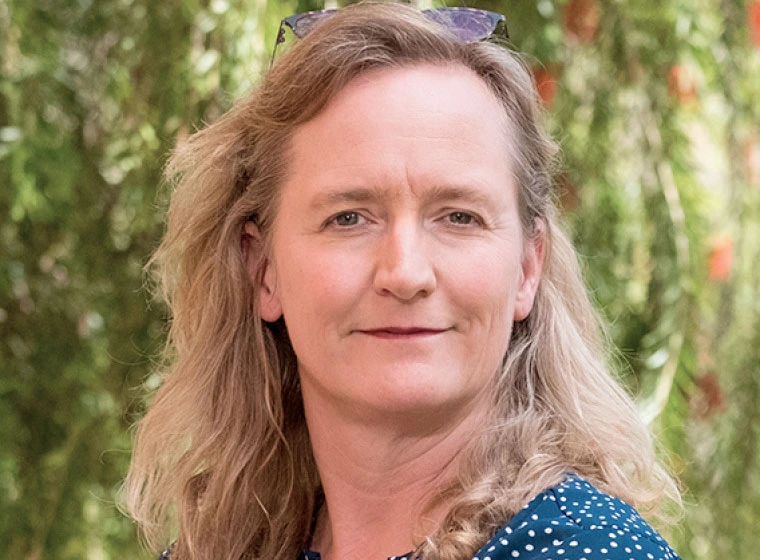
Professor Matt Bower is a leading academic in educational technology at Macquarie University's School of Education. Specialising in technology-enhanced learning, his work explores AI, AR, VR, and other tools to improve cognitive and collaborative learning. He has published over 100 peer-reviewed articles, led over 30 funded projects (totaling $3M+), and advised educational policymakers. His research spans teacher education, computing education, and learning design frameworks. Notable contributions include the Design of Technology-Enhanced Learning textbook (2018 AECT Award winner) and leadership in the Australian Technologies Teacher Educators Network (2019–2024). Research interests include AI in education, blended synchronous learning, and the impact of emerging technologies like wearable devices and generative AI on pedagogy. He collaborates with industry and education sectors to develop innovative learning solutions. Awards include the 2021 Australian Teaching Excellence Award and multiple Macquarie Vice-Chancellor awards. Current projects focus on screen use in education, teacher attitudes toward AI, and post-pandemic learning strategies. Professional activities include roles on ACARA’s Technologies Panel and NSW Educational Standards Authority committees. His work bridges research and practice, emphasizing teacher training and policy engagement. Projects like the ChatGPT survey and analyses of remote learning during the pandemic highlight his focus on real-world educational challenges.
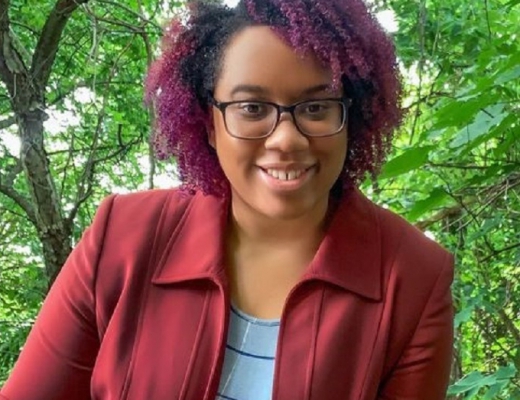
Dr. Angela E.B. Stewart is an Assistant Professor in the Department of Informatics and Networked Systems at the University of Pittsburgh's School of Computing and Information, with a joint appointment in the Learning Research and Development Center. She holds a PhD in Computer Science from the University of Colorado Boulder (2020) and a Bachelor of Software Engineering from Auburn University (2015). Her research focuses on computing education equity, culturally-responsive technology, and social computing. She designs technologies to support marginalized groups, particularly Black girls in transformative AI design, applying culturally-responsive frameworks to foster agency in education. Dr. Stewart's work bridges learning sciences, AI, and human-computer interaction. She analyzes multimodal data (e.g., speech, gaze, collaboration patterns) to understand student social/cognitive states in STEM learning. Notable contributions include the CPSCoach feedback system for collaborative problem-solving and the Black Girls' Computing Classroom initiative. She emphasizes equitable design in CHI and AI ethics education, advocating for allyship in tech spaces. Education: PhD in Computer Science, University of Colorado Boulder (2020) Bachelor of Software Engineering, Auburn University (2015) Publications highlight her focus on collaborative learning analytics, culturally-responsive computing, and ethical AI education. She was honored as a 2021-2022 Emerging Scholar by the International Society of the Learning Sciences. Current projects explore participatory AI design with marginalized voices and scalable equity frameworks in social computing education.
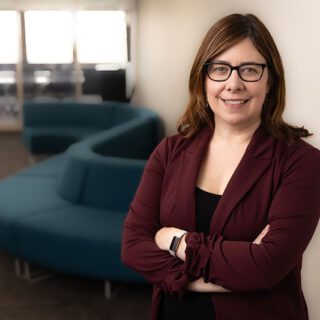
Melissa A. Barnett is a Professor in the Department of Human Development and Family Science at the University of Arizona, holding the Norton Endowed Chair in Fathers, Parenting and Families. She serves as Director of the Frances McClelland Institute for Children, Youth & Families and is affiliated with the Norton School of Human Ecology. Her research focuses on leveraging family strengths in marginalized communities to improve child development outcomes, particularly through understanding caregiver relationships, poverty impacts, and contextual influences on parenting. She directs the Barnett Research Lab and has led projects funded by the Administration for Children and Families. Her teaching includes courses on research methods, fatherhood, child development, and family policy. Current projects examine childcare access equity in Arizona, Early Head Start relationship quality, and grandparent involvement in low-income families. Barnett’s work emphasizes culturally informed interventions and policy development to support vulnerable families. She collaborates with researchers like Madeleine DeBlois and Loriena Yancura on multigenerational family dynamics and contextual stressors. Her research spans topics such as grandparent-grandchild relationships, intergenerational support systems, and the role of cultural values in buffering psychological distress. She has contributed to understanding how socioeconomic factors and family structures affect child development and parenting behaviors across diverse populations, including Mexican-origin families and rural communities.
Marta Klesath is an Associate Teaching Professor in the Department of Biological Sciences at North Carolina State University, affiliated with the College of Sciences. She is based in David Clark Labs 118 and part of the Biology Faculty Human Biology group. Her work focuses on advancing educational technologies in life sciences, particularly virtual learning environments and distance education. She holds a central role in student advising through the BioSci Student Services office, supporting over 3,000 undergraduates. Her research explores innovative teaching methodologies including V-learning (virtual learning through 3D environments), serious games, and hybrid learning models. Key areas of investigation include student engagement in online platforms, the efficacy of virtual labs, and generational learning patterns of millennials. She has contributed to frameworks like Tri-Hybrid Learning and the Virtual Interactive Biology Experience (VIBE) assignment format. Her publications emphasize evaluating virtual world effectiveness, presence theory in online courses, and the psycho-cognitive aspects of learning. While no specific awards are noted, her work has shaped modern distance education approaches through over a dozen peer-reviewed articles since 2008, with a focus on bridging traditional science education with digital innovation.
Catherine Brooks serves as Professor and Interim Dean of the College of Information Science at the University of Arizona, having previously held leadership roles as associate director (2016-2018) and director (2019-2023). She founded the Center for Digital Society and Data Studies, establishing herself as a key institutional leader in digital society research. Her academic foundation includes a PhD from the University of California, positioning her at the intersection of communication theory and information science. Research Interests Dr. Brooks investigates day-to-day language use in social contexts with emphasis on instructional communication technologies , online collaboration dynamics , and language-identity relationships . Her work examines how digital environments facilitate co-construction of knowledge, relationships, and identities while exploring science communication challenges. This inherently interdisciplinary research bridges communication studies, information science, and sociology through mixed-methods approaches. Publication Trends Recent scholarship reveals evolving focus from classroom communication (2018) to contemporary societal-technological intersections. Her 2022-2024 work increasingly addresses environmental media narratives (Arizona mining, energy transition), emerging technology ethics (quantum computing, deepfakes), and digital governance (student data privacy, algorithmic bias), demonstrating responsive engagement with urgent socio-technical dilemmas. Research Infrastructure As founder of the Center for Digital Society and Data Studies, she cultivates interdisciplinary collaboration examining digital technology's societal impact. This hub supports research on media discourse, data ethics, and communication innovation while connecting academic work with public discourse through outlets like Scientific American and Wired.
Dr. Mike Wilton is an Associate Teaching Professor and Associate Dean of the Division of Undergraduate Education at the University of California, Santa Barbara (UCSB), within the Department of Molecular, Cellular, and Developmental Biology. He holds a BS in Biology from Queen's University and a PhD in Cell and Systems Biology from the University of Toronto. His postdoctoral work at the University of Calgary focused on bacterial virulence strategies in Pseudomonas aeruginosa. His research spans two key areas: microbiology (bacterial pathogenesis and host immune interactions) and biology education, emphasizing peer mentorship and active learning. He investigates how educational interventions like structured curricula and peer mentorship impact student success, retention, and identity formation in STEM fields. Notably, his work has shown that peer-mentored programs improve academic performance and persistence, particularly for underrepresented groups. Dr. Wilton’s microbiology publications explore mechanisms by which bacteria evade immune responses, including studies on Pseudomonas aeruginosa’s defense against neutrophil extracellular traps and type VI secretion systems. His educational research has informed scalable interventions to enhance inclusivity and diversity in undergraduate STEM education. His advising and grants focus on implementing evidence-based practices to foster student engagement and equity. Collaborations extend to interdisciplinary teams in both microbiology and education research, though specific grant details are not detailed here.
Adam D. Hoffman is an English Lecturer at Arizona State University's Writing Programs since 2014, specializing in Composition, Literature, and Honors courses. He holds a Ph.D. in English Literature (expected 2025, ASU), M.A. in English Literature (2011, Northern Arizona University), and B.A. in Religious Studies with Philosophy minor (2008, University of Arizona). His research focuses on Environmental Humanities, 20th-21st century American Literature, Animal Studies, and Critical Theory, with a dissertation exploring biopolitics and capitalism's impact on animal marketing. Key Research Areas: Environmental Criticism, Animal Ethics, Technocapitalism in Science Fiction, Medieval/Renaissance Literary Analysis Teaching Contributions: Over a decade instructing First-Year Composition courses, emphasizing rhetoric and interdisciplinary connections. Engagement: Volunteered as Faculty Sponsor for student organizations (Adventure Devils, Sunrise ASU) and literary reviews (H-Net, Oxford UP), balancing scholarly rigor with community outreach. His presentations at conferences like SCRAL (2019) and Southwest English Symposium (2016) highlight work on animal symbolism, dystopian narratives, and pedagogical challenges in digital classrooms. Hoffman advocates a 'head-heart-hand' approach, integrating knowledge with ethical action and practical application.
Heather Bachman, PhD, is a Professor of Health & Human Development and Associate Dean of Research at the University of Pittsburgh's School of Education. Her research focuses on early academic and social development, particularly in low-income families and children. She examines family and classroom processes, policy impacts, and home environments influencing math and spatial skills. Bachman leads federally funded projects, including the NSF-funded Parents Promoting Early Learning (PPEL) initiative and a longitudinal study on toddler math development. Her work integrates quantitative and qualitative methods, analyzing large datasets like the NICHD Study and ECLS-K cohorts. Research interests include early math education, screen time effects, spatial talk, and socioeconomic disparities. Her recent studies explore how parental interactions and home environments shape child outcomes. Bachman collaborates with community organizations and uses mixed-methods approaches to bridge research and practice. She has been funded by NICHD, NSF, Spencer Foundation, and others. Her grants include an NSF project launching in 2024 to follow toddler samples into elementary grades. While no explicit awards are listed, her extensive grants highlight her impactful contributions. Advising and grants emphasize policy-relevant research and community partnerships. She is affiliated with the Learning Research & Development Center (LRDC) and contributes to educational initiatives addressing early childhood equity.
Xavier Ochoa is an Assistant Professor of Learning Analytics and Doctoral Program Coordinator at the Steinhardt School of Culture, Education, and Human Development, New York University. He holds a Ph.D. in Engineering (Computer Sciences) from the University of Leuven, Belgium (2008), an M.Sc. in Applied Computer Sciences from Vrije Universiteit Brussels (2002), and a B.S. in Computer Science from ESPOL, Ecuador (2000). His research focuses on Multimodal Learning Analytics, blending AI, sensors, and educational practices to enhance learning environments. He leads the Augment-Ed research group and has held roles such as Vice-President of SoLAR and Editor-in-Chief of the Journal of Learning Analytics. His academic career includes over a decade at ESPOL, where he directed the Information Technology Center and TEA research group. Awards include Best Researcher (2012, 2018), Best Professor (2013), and IEEE’s Best Researcher in Computer Science (2014). His work emphasizes tools for self-reflection, decision-making, and 21st-century skill development in education. Education: Ph.D. (2008, KU Leuven), M.Sc. (2002, VUB), B.S. (2000, ESPOL) Labs/Teams: Augment-Ed Research Group, Former Lead of TEA Group Key Contributions: RAP system for oral presentation feedback, OpenOPAF open-source tool, CrossMMLA initiatives Xavier’s research bridges education and technology, with publications in journals like the Journal of Learning Analytics and conferences such as LAK. His work addresses challenges in collaborative learning, feedback systems, and scalability of learning analytics tools.
Diana Turk is an Associate Professor of Teaching and Learning at New York University's Steinhardt School of Culture, Education, and Human Development. She serves as Director of Teacher Education, overseeing initiatives that emphasize anti-racist, culturally sustaining practices. With a PhD and MA in American Studies from the University of Maryland, her work focuses on equitable pedagogy, urban education, and preparing teachers to serve diverse student populations. Her research interests include civic engagement, project-based learning in history education, and systemic equity in teacher training. She co-directs the NYU Teacher Residency program, which won the 2024 AACTE Multicultural Education Award for its commitment to antiracism and justice-centered education. Teaching includes courses like 'Adolescent Learners in Urban Contexts,' emphasizing differentiated instruction for diverse learners. She has authored/co-authored numerous books and articles on history education, teacher training, and social justice pedagogy. Her work consistently bridges theory and practice to create inclusive learning environments.
Kathryn B. Chval serves as Dean of the University of Illinois Chicago (UIC) College of Education and holds the rank of Professor of Mathematics Education. Her 32-year career spans leadership roles at institutions including the University of Missouri and the National Science Foundation (NSF). She specializes in teacher preparation for multilingual learners, curriculum standards, and systemic educational change. Chval has secured over $20 million in research funding, leading projects such as the Center for the Study of Mathematics Curriculum and initiatives focused on alternative teacher certification models. Education: Earned graduate degrees at UIC while working on NSF-funded curriculum projects. Leadership Roles: Former Joanne H. Hook Dean’s Chair in Educational Renewal at MU; Acting Section Head at NSF; Chair of NCTM Research Committee. Her research emphasizes equitable mathematics education for linguistically diverse students, with over 70 publications. Chval pioneered the Grand Challenges in Mathematics Education initiative to unify interdisciplinary research efforts. She has held executive roles in organizations like AERA and the National Academies of Sciences, focusing on STEM equity for English learners. Awards: NSF Early Career Award (2005), TODOS Equity Leadership Award (2018), and multiple recognitions for administrative excellence. Chval’s grants include collaborative studies on parent-child-teacher partnerships in math and systemic reforms for under-resourced schools. She directs the UIC College of Education’s strategic initiatives in diversity, global engagement, and academic program innovation.
Mariana Gonzalez Boluda is a Lecturer in Spanish Language at the Department of Languages and Cultures, School of Literature and Languages, University of Reading, UK. She brings over two decades of international teaching experience from France, Jamaica, the USA, and the UK, and is actively engaged in pedagogical innovation and research in applied linguistics. Educational Background: PhD in Applied Linguistics, University of Las Palmas de Gran Canaria, Spain MEd in Open and Distance Education Learning, UNED, Spain DEA in Development of Multimedia and New Methodologies in Foreign Language Teaching, UNED, Spain BA in Hispanic Philology, University of Murcia, Spain Her research centers on enhancing language education through critical and multimodal approaches. She investigates how digital tools, film, and hybrid learning environments can develop intercultural competence, writing skills, and student autonomy. Her work emphasizes sustainability, inclusivity, and social justice in Spanish language teaching, particularly through decolonizing curricula and integrating gender-inclusive language. She actively promotes learner engagement via collaborative and project-based methods. Her recent publications and conference presentations reveal a strong thematic trend toward digital innovation, critical pedagogy, and social inclusion in language education. She frequently explores the use of blogs, wikis, social media, and virtual platforms to support language acquisition and autonomy, especially in multilingual and international contexts. Her scholarship bridges theory and practice, aiming to transform traditional language classrooms into dynamic, equitable, and socially aware learning spaces. Professional Affiliations and Networks: Member, ELE UK Member, ASELE Member, FILTA Special Interest Group (SIG) Member: SIG ELE UK on 'Decolonisation of Spanish Language Teaching' SIG AULC on 'Pedagogical Approaches to Language Variation' ReN Learner Autonomy, AILA DIM-EDU Pedagogies, Innovation y Multimedia Mariana Gonzalez Boluda is a Fellow of the Higher Education Academy, affirming her commitment to excellence in teaching. She teaches advanced Spanish language modules (SP2L3/4, SP3L3/4) and integrates her research directly into her pedagogy. She has no listed grants or advisees in the provided text, but her leadership in educational research networks and conference contributions highlights her active role in shaping contemporary language teaching practices. Labs and Teams: She contributes to collaborative academic initiatives through her involvement in international research networks and special interest groups focused on learner autonomy, multimedia pedagogy, and inclusive language teaching. These networks function as distributed research teams advancing innovation in language education across borders.
Emily Legg is an Associate Professor in the Department of English at Miami University, College of Arts and Science. A citizen of the Cherokee Nation, she integrates Indigenous epistemologies into her research and teaching, focusing on decolonizing methodologies, storytelling, and intercultural rhetorics. She is deeply committed to relational, reciprocal, and community-based pedagogy. Her research centers on Indigenous rhetorical practices, particularly Cherokee storytelling as a decolonial and materialist research method. She applies these methodologies to archival recovery, digital writing, and professional communication. Her work challenges hierarchical academic structures and promotes inclusivity, equity, and cultural recognition in writing studies. She teaches courses such as Digital Rhetorics, Visual Rhetorics, Intercultural Rhetorics, and Professional Writing at both undergraduate and graduate levels. Emily Legg's publications reflect a strong trajectory in Indigenous and cultural rhetorics, with a focus on historical recovery, decolonial theory, and interdisciplinary collaboration. Her recent and forthcoming works engage with Cherokee educational history, posthuman praxis, and Indigenous UX design, demonstrating a consistent commitment to centering Indigenous voices in rhetoric and composition. Ph.D., English, Purdue University, 2016 M.A., Rhetoric and Composition, Purdue University, 2011 B.A., Literary and Cultural Studies, University of Oklahoma, 2005 She has published in leading journals such as College Composition and Communication and Composition Studies , and her book Stories of our Living Ephemera is forthcoming with Utah State Press. She collaborates with scholars like Adam Strantz and Patricia Sullivan on projects that bridge technical communication and Indigenous knowledge systems. Emily is also developing future research on Cherokee women writers, matriarchal practices, and traditional crafts as rhetorical acts. Emily Legg advises students in rhetoric and composition and fosters inclusive classroom environments where students co-construct knowledge. While no formal list of advisees is provided, her mentorship is evident in her pedagogical philosophy and collaborative scholarship. She is actively involved in curriculum development that centers marginalized voices and promotes participatory learning. She is affiliated with research communities focused on Indigenous methodologies and digital rhetorics, and her work contributes to broader conversations in composition studies, technical communication, and decolonial scholarship. Though not explicitly mentioned, her projects imply engagement with community-based research teams and interdisciplinary networks.
Ruthmae Sears is a Professor of Mathematics Education at the University of South Florida with a joint appointment in the Department of Teaching and Learning (College of Education) and College of Arts and Sciences. She serves as Associate Director of the Coalition for Science Literacy and coordinates USF's mathematics education degree programs while leading $7.5M+ in research initiatives focused on equitable STEM education. Her educational background includes: PhD in Mathematics Education, University of Missouri (2012) MA in Mathematics Education, Indiana University (2006) BEd in Secondary Mathematics Education, The College of the Bahamas (2002) AA in General Studies, The College of the Bahamas (2001) Dr. Sears' research centers on equity-driven curriculum development, examining how reasoning and proof skills evolve in secondary mathematics through clinical experiences and technology integration. Her work addresses systemic barriers in K-20 STEM education, particularly during pandemic disruptions, with emphasis on creating inclusive learning environments that center marginalized voices. Current projects focus on transforming teacher preparation through improvement science and mechatronics integration. Analysis of her 15 most recent publications reveals consistent focus on equity in clinical teacher training (68%), pandemic-responsive pedagogy (20%), and geometry reasoning development (12%). Her work increasingly incorporates interdisciplinary approaches, connecting mathematics education with social justice frameworks and technological innovation. Her scientific recognition includes: AAAS Fellow (2021) - First Black USF recipient USF Outstanding Faculty Award (2022) Mathematically Gifted and Black Honoree (2023) Griffith Leadership Society Spirit of Martha Award (2023) FAMTE Mathematics Teacher Educator of the Year (2016) As principal investigator for NSF-funded initiatives including the $7.5M Noyce Master Teacher Fellows program, Dr. Sears has transformed STEM curriculum across 12 Florida schools. She chairs the Network of STEM Education Centers Annual Meeting and previously served as NCTM journal associate editor, establishing partnerships with Bahamian institutions like the PACE Foundation to build schools for teen mothers. Her leadership extends to national networks including the Accelerated Systemic Change Network and AAAS-ARISE, where she develops infrastructure for emergency remote clinical experiences while advocating for teachers of color through pipeline initiatives documented in her 2021 publication 'Reimagining the STEM Education Pipeline.'