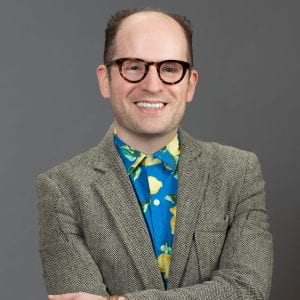
Dr. John Hastings is a Professor in the Department of Computer Science at Dakota State University, part of the Beacom College of Computer & Cyber Sciences. With nearly 35 years of experience, he specializes in teaching and curriculum development in computer science, combining academic rigor with industry insights from his roles as an AI/ML engineer, team leader, and business owner. Education: Ph.D., Computer Science, University of Wyoming M.S., Computer Science, University of Wyoming B.S., Computer Science, University of Wyoming Research interests include machine learning, AI applications in natural language processing (LLMs), generative AI, computer vision, ecological/environmental AI, AI in games, and gamification in education. Recent publications focus on cybersecurity challenges, AI ethics, and insider threat detection. His work has been recognized with awards such as the AAAI’s Innovative Applications of Artificial Intelligence (IAAI) Award and an International IPM Award for Excellence related to the CARMA AI tool. Teaching emphasizes active learning and practical skills, including courses on programming, data structures, AI, and cybersecurity. He advocates for gamification in education to enhance student engagement and success.
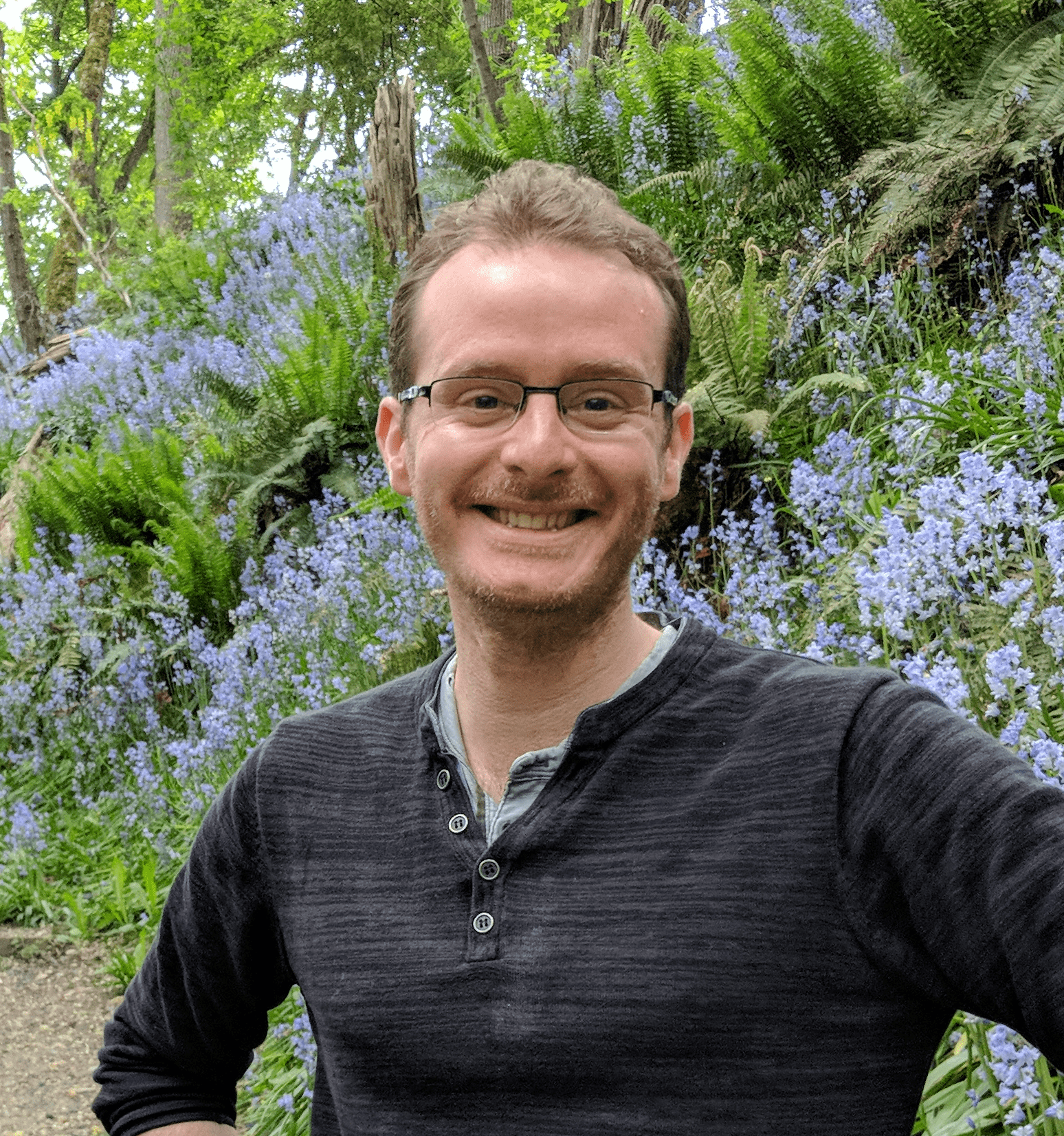
Joshua D. Kertzer is the John Zwaanstra Professor of International Studies and Government at Harvard University, where he also serves as Director of Graduate Studies. His research integrates international security, political psychology, and foreign policy analysis. His work examines public opinion formation, elite decision-making, and experimental approaches to international relations. Recent studies focus on how observers assess resolve in international conflicts, partisan influences on foreign policy attitudes, and the psychological foundations of reputation costs. Publications demonstrate methodological innovation in combining survey experiments with archival research, exploring topics from democratic credibility to signaling in crisis diplomacy. His award-winning research has been recognized by the International Studies Association and American Political Science Association.
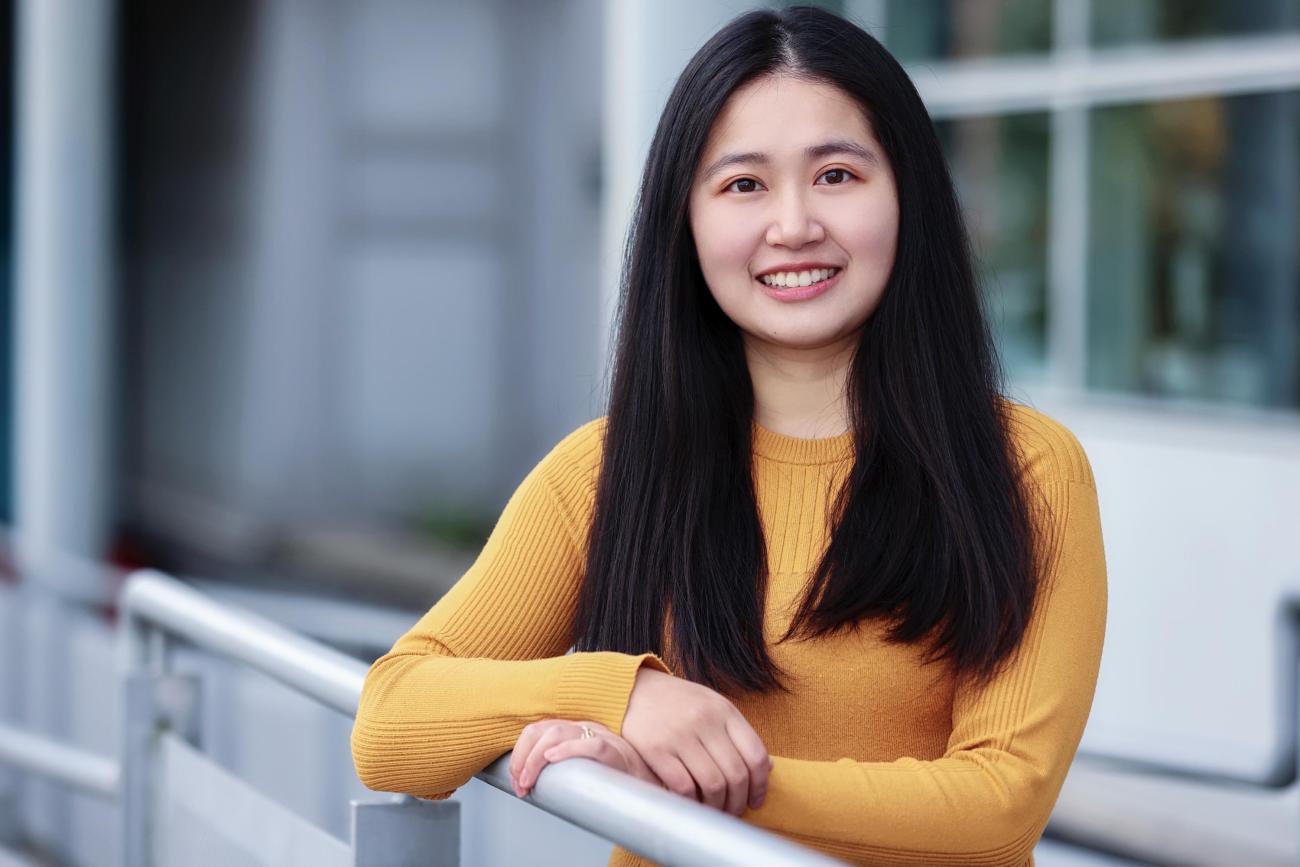
Dr. Joyoung Lee is an Associate Professor in the Department of Civil and Environmental Engineering at New Jersey Institute of Technology (NJIT). He previously served as Laboratory Manager at the Federal Highway Administration's Saxton Transportation Operations Laboratory. His research focuses on Connected Vehicle (CV) systems, including applications in traffic management, signal control optimization, and autonomous vehicle infrastructure integration. Dr. Lee holds a Ph.D. (2010) and M.S. (2007) in Transportation Engineering from the University of Virginia, and a B.S. (2000) in Transportation Engineering from Hanyang University. His work emphasizes CV-based solutions for real-time traffic systems, cooperative vehicle-infrastructure systems (CVIS), and autonomous vehicle integration. Notable achievements include the 2019 IEEE CAVS Best Paper Award and multiple best paper recognitions from PTV User Group Meetings. His research also addresses traffic safety through innovations like the Virtual Guide Dog system for visually impaired pedestrians and advanced traffic monitoring frameworks using LiDAR and computer vision. Education: Ph.D., Transportation Engineering, University of Virginia (2010) M.S., Transportation Engineering, University of Virginia (2007) B.S., Transportation Engineering, Hanyang University (2000) Dr. Lee's research interests span smart city infrastructure, edge computing for traffic systems, and sustainable transportation solutions. He has pioneered algorithms for cooperative intersection management, automated platooning systems, and federated learning-based traffic optimization. His work bridges theoretical models with real-world implementation through partnerships with FHWA and industry stakeholders. Key contributions include development of the Cumulative Travel-Time Responsive (CTR) traffic signal control system, smart arrival notification systems for paratransit services, and advanced microsimulation calibration techniques. His lab focuses on translating CV data into actionable strategies for safer, more efficient transportation networks. Awards: IEEE CAVS Best Paper Award (2019) ASCE Grand Challenge Innovation Contest Honorable Mention (2017) PTV VISSIM Best Paper Awards (2012, 2008) Excellence in Research Award (University of Virginia, 2011) Ongoing projects include semi-decentralized graph neural networks for traffic forecasting and low-cost LiDAR-based traffic monitoring systems. His work addresses critical challenges in autonomous vehicle integration, incident management, and infrastructure resilience through interdisciplinary collaborations.
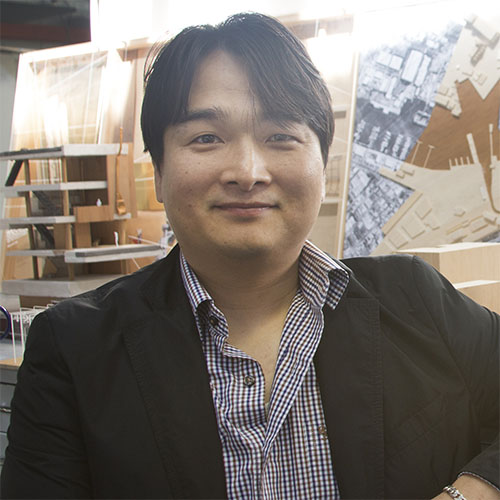
Jian Tang is an Assistant Professor at HEC Montréal and a core member of the Montreal Institute for Learning Algorithms (MILA). His research focuses on graph representation learning, generative models, and their applications in drug discovery and material science. Prior to this, he was a postdoctoral researcher at the University of Michigan and Carnegie Mellon University, and a researcher at Microsoft Research Asia (2014-2016). He has received several prestigious recognitions, including the Canada CIFAR Artificial Intelligence Chairs (CCAI Chair) and best paper nominations at WWW’16. His work on LINE (WWW’15) was recognized as the most cited paper in its year. Tang’s research spans theoretical foundations and practical systems, such as GraphVite for scalable graph embedding and TorchDrug for drug discovery. Key research interests include geometric deep learning for molecular structures, generative models for protein design, and neural-symbolic reasoning for knowledge graphs. He actively collaborates with leading biological labs and leverages industry partnerships for GPU resources. Recent publications emphasize molecular property prediction, 3D conformation generation, and algorithmic reasoning frameworks. He has secured grants from IBM/MILA, Amazon, and the National Research Council Canada, supporting projects like molecular pretraining and geometric representation learning. Tang teaches courses on graph representation learning and deep learning, and mentors a vibrant team of PhD and master’s students. His lab has developed impactful software tools like LINE, PTE, and LargeVis, widely used in the research community.
Joseph Salmon is a Senior Researcher at Inria (Team Iroko) in Montpellier, working with the Pl@nNet team. He previously served as a Full Professor at Université de Montpellier from 2018 to 2024 and was a Junior member of the Institut Universitaire de France (IUF) from 2021 to 2024. His research focuses on machine learning, optimization, and data science, with applications in citizen science and crowd-sourcing. He leads the doctoral program 'Statistics and Data Science' at Université de Montpellier. Education: Ph.D. in Statistics and Image Processing (2010) from Université Paris Diderot, under supervision of Dominique Picard and Erwan Le Pennec. Earlier roles include Assistant Professor at Telecom Paris (2012-2018), postdoctoral work at Duke University (2011-2012), and visiting positions at UW Statistics (2018) and the Simons Institute (2022). Research interests span isotonic regression, convex optimization algorithms (e.g., PAVA), statistical learning theory, and applications in environmental AI (Pl@ntNet). His work bridges theory and practice, emphasizing scalable algorithms for high-dimensional problems. Key contributions include advancements in PAVA convergence analysis, Slope penalty optimization, and peer-reviewed frameworks for crowdsourced data. Grants include ANR VITE (variable importance/explainability) and CaMeLOt (Cooperative Machine Learning Optimization). Labs/Teams: Active in Inria's Iroko team and collaborates with Pl@ntNet's AI development. Maintains the STATLEARN conference and ML-MTP initiative in Montpellier.
Eino Solje is an Associate Professor and Research Director at the University of Eastern Finland (UEF), affiliated with the Institute of Clinical Medicine within the School of Medicine at the Faculty of Health Sciences. He specializes in Neurology and serves as the Director of the UEF Brain Research Unit and the leader of the Frontotemporal Lobar Degeneration and Early Onset Dementia research group. His academic roles also include partnership in the national FinFTD research consortium and clinical practice as a Neurologist at Kuopio University Hospital. Dr. Solje holds a PhD and MD from UEF, along with Adjunct Professor (Docent) status. His research focuses on neurodegenerative diseases, particularly frontotemporal dementia (FTD), Alzheimer’s disease, and early-onset dementia. Key interests include biomarkers, genetics, ethical/legal issues in dementia care, and clinical management. He leads projects such as 'Synapsing Mental Disorders and Neurodegenerative Diseases' and 'Shadows in Paradise? Rights of People with Dementia in a Welfare State.' His research explores diagnostic challenges, biomarker development, and the intersection of medicine and law in dementia care. Publications emphasize neuroimaging, ethical guardianship, and clinical outcomes. He advises numerous PhD and medical students and collaborates internationally on FTD/ALS genetics and biomarkers. His work spans clinical trials, epidemiological studies, and interdisciplinary teams addressing dementia’s societal impact. Dr. Solje’s contributions include advancing FTD diagnostic criteria, investigating neurodegenerative biomarkers, and advocating for patient rights. His labs focus on clinical trials, neuroimaging analysis, and ethical/legal frameworks in healthcare.
Dr. Dongyun Nie is an Assistant Professor at Dublin City University's School of Computing. She holds a PhD in Computer Science with a specialization in Customer Relationship Management. Her core research explores customer lifetime value, forecasting, data mining, and record linkage. Her recent publications demonstrate interdisciplinary work spanning health informatics, sports analytics, and environmental data engineering. Research predominantly focuses on machine learning applications for real-world data challenges including eye-tracking systems, lifelog analytics, and public health data infrastructure. Teaching responsibilities include modules on Machine Learning (CA4109), Enterprise Systems Configuration (CA2049), and Web Design (CA106), integrating research expertise into computing education.
Dr. Chutima Boonthum-Denecke is a Professor in the Department of Computer Science at Hampton University's School of Science. She joined Hampton University in 2006 as an Assistant Professor and now serves as Director of the Information Assurance and Cyber Security Center (IAC@HU). She leads the NSF CyberCorps Scholarship for Service program and has contributed to NSF initiatives like ARTSI and STARS Alliances. Her educational background includes a Ph.D. in Computer Science from Old Dominion University (2007), an MS in Applied Computer Science from Illinois State University (2000), and a BS in Computer Science from Srinakharinwirot University (1997). Dr. Boonthum-Denecke's research integrates artificial intelligence, natural language processing, and cybersecurity. Key interests include: Developing intelligent tutoring systems and educational games Secure coding practices for software engineering NLP applications in information retrieval and assessment tools Cyber-physical security for IoT and robotics Her recent publications (2016-2021) focus on machine learning applications in cybersecurity, including sentiment analysis for threat detection, blockchain-enhanced IoT security, and vulnerability assessments of emerging technologies. Collaborative work with students frequently addresses privacy ethics in AI assistants, RFID implants, and cloud systems. She mentors students through the IAC@HU lab, resulting in award-winning conference presentations on cybersecurity topics. As Principal Investigator of NSF CyberCorps, she oversees scholarship programs that bridge academic research with national security needs.
Dr. Yar Muhammad is a Principal Lecturer in Computer Science at the University of Hertfordshire's School of Physics, Engineering & Computer Science. His research develops Brain-Computer Interface applications using AI/ML techniques for healthcare. He holds a PhD in ICT (Tallinn University of Technology) and dual master's degrees. Research Leadership: Supervised PhD students: Nimra Memon (fault-tolerance in web services), Dmytro Zabolotnii (agent behavior prediction), Mahir Gulzar (context-aware modeling) Accepts self-funded PhD candidates in BCI/AI applications Awards: Young Investigator Award (Springer/IFMBE, 2014) Best Paper Award Runner-up (26th ISSC 2015) Professional Recognition: Fellow of Higher Education Academy IEEE Senior Member Editorial board member for multiple journals
Can Firtina is a Lecturer at ETH Zurich's Department of Information Technology and Electrical Engineering and a Senior Researcher in the SAFARI Research Group. His research focuses on accelerating genome analysis through algorithm-architecture co-design, particularly leveraging hardware-software integration for bioinformatics workloads. He holds a PhD in Electrical and Computer Engineering from ETH Zurich and degrees from Bilkent University. As of Fall 2025, he will join the University of Maryland, College Park (UMD) as an Assistant Professor of Computer Science. Education: PhD in Electrical and Computer Engineering (D-ITET), ETH Zurich MSc in Computer Engineering, Bilkent University BSc in Computer Engineering, Bilkent University Research Interests: His work bridges bioinformatics and computer architecture, emphasizing real-time, accurate, and energy-efficient genome analysis. Key areas include raw nanopore signal processing (e.g., RawHash, Rawsamble), hardware-software co-design for bioinformatics, and scalable metagenomic analysis. His algorithms address noise mitigation and accelerate applications like assembly polishing (Apollo) and alignment remapping (AirLift). Labs & Collaborations: He leads research within the SAFARI Group, collaborating with institutions like NVIDIA, AMD, and Huawei. His contributions span tools like GenASM (approximate string matching) and BLEND (fuzzy seed matching). He also organizes workshops on bioinformatics acceleration and serves on review boards for venues like ISMB and RECOMB. Future Directions: Future work includes end-to-end raw signal analysis without basecalling, reference-free genome assembly, and leveraging emerging hardware for real-time field applications. He will expand these efforts at UMD, hiring students in Fall 2025.
Emine Ayaz is a Professor at Istanbul Technical University's Department of Electrical Engineering. Her research spans fault detection in electric motors, signal processing, and nuclear power plant monitoring, with recent work integrating deep learning (e.g., dual RNN architectures) and medical applications (e.g., parasitology, plant-based wound healing). Key Collaborations : International partnerships in motor diagnostics and nuclear engineering. Projects : Led grants on high-voltage training and predictive maintenance for TEİAŞ and industrial processes. Research Trends : Recent publications emphasize neural networks for motor fault classification, coherence analysis for insulation diagnostics, and interdisciplinary work in plant biotechnology and parasitology. Labs & Teams : Involved in projects analyzing vibration signals, wavelet transforms, and sensor fusion for industrial and nuclear systems.
Professor Michael Tonkin is a leading academic in the Department of Surgery at the Northern Clinical School of the University of Sydney. He specializes in pediatric hand surgery, congenital anomalies of the upper limb, and reconstructive microsurgery. His work focuses on classification systems for congenital hand defects (e.g., OMT classification) and surgical outcomes for conditions like thumb hypoplasia, polydactyly, and syndactyly. Professor Tonkin holds clinical roles with associated phone (+61 2 9926 7778) and fax (+61 2 9926 6311) contacts. Research interests include embryology of congenital defects, surgical techniques for thumb reconstruction, and functional assessment of hand anomalies. His 2013 grant explored rheumatoid synoviocyte biology. Over 50 peer-reviewed articles and book chapters since 2002 reflect his expertise in congenital anomaly management, tendon transfers, and pediatric surgical innovations. Key contributions include defining thumb opposition metrics, developing functional assessment scores for hypoplastic thumbs, and advancing pollicization techniques. He collaborates with international experts in hand surgery and has mentored multiple researchers evident through co-authorships.
Lorenzo Cavallaro is a Full Professor of Computer Science at University College London (UCL), specializing in Trustworthy AI for Systems Security. His research focuses on developing learning-based methods that are robust against adversaries by understanding the interplay between program analysis, representations, and machine learning models. His research interests span multiple critical areas in cybersecurity, including adversarial machine learning, malware detection, program analysis, and security evaluation. Cavallaro's work particularly emphasizes the challenges of concept drift in security systems and the development of robust defenses against evolving threats. His research has significant implications for Android security, binary analysis, and memory safety in embedded systems. Analysis of his recent publications (2024-2025) reveals a strong focus on addressing fundamental challenges in ML-based security systems. His work spans malware detection systems that maintain reliability under distribution shifts, adversarial attacks in the problem space, context-driven approaches using LLMs for security applications, and temporal invariance in malware detection. A recurring theme is the critical examination of whether ML-based security systems are truly robust and reliable in real-world scenarios. Cavallaro serves in significant editorial and advisory roles including the NDSS Steering Group (2023-2026), Associate Editor for Computer & Security and ACM TOPS, and Scientific Advisory Board for SERICS. He has been actively involved in program committees for top security conferences including IEEE S&P, USENIX Security, CCS, and NDSS from 2021-2025. He teaches Malware (COMP0060; 2022—ongoing), Research in Information Security (COMP0057; 2021—23), and Computer Security 2 (COMP0055; 2021—ongoing) at UCL, contributing to the next generation of security researchers and practitioners.
JuHyun Lee is an Associate Professor of Architecture and Computational Design in the School of Built Environment at the Faculty of Arts, Design and Architecture (ADA), University of New South Wales (UNSW) Sydney, where they also hold the prestigious title of Scientia Academic. With a professional background in architecture and construction (1998-2002), they have held academic positions across Australia including a five-year post-doctoral fellowship at the University of Newcastle (2012-2017) and a senior research fellowship at the University of South Australia (2018), following earlier research and teaching roles in South Korea (2003-2011). Lee specializes in architectural design computing, design cognition, and urban complexity, integrating computational methods, cognitive science, and architectural theory to advance architectural intelligence and human-centered design. Their research spans architectural visualization, analysis and design methods, algorithm/protocol design, and data visualization with computational approaches. They have established a strong research program examining the intersection of language, culture, and design cognition, particularly focusing on cross-cultural design communication between Australia and Korea. Lee's recent publications demonstrate a clear trajectory toward increasingly sophisticated integration of computational methods with architectural design theory, particularly in the areas of shape grammar, space syntax, and machine learning applications. Their work shows consistent focus on practical applications of computational design methods to real-world architectural problems, with growing emphasis on cross-cultural collaboration and intelligent design systems. The research portfolio reveals a deepening engagement with AI and machine learning techniques applied to architectural design assessment and generation. Scientia Academic at UNSW Sydney Associate Fellow of the Higher Education Academy (AFHEA, 2020) As an educator, Lee develops cutting-edge courses in computational design and Building Information Modeling (BIM), integrating experiential learning and industry engagement. They have secured over $11 million in research funding, including multiple ARC Discovery Projects and an Australia-Korea Foundation grant. Lee co-directs the Advanced Architectural Analytics Laboratory (A 3 LAB), leading interdisciplinary research on design automation, spatial analysis, and machine learning applications in architecture, while also leading cross-cultural initiatives like the Australia-Korea Architects' Network (AKAN). Lee supervises multiple HDR students working on culturally sustainable urban design, socio-spatial patterns in public housing, and computational layout generation. Their research has significant implications for improving design communication across cultural boundaries and developing more coherent, clear, and accessible built environments through computational design approaches.
Tom Coates is a Professor of Pure Mathematics in the Department of Mathematics at Imperial College London's Faculty of Natural Sciences. He holds affiliations with the Artificial Intelligence Network, the CNRS-Imperial Abraham de Moivre UMI, and the Pure Mathematics research group. His office is located in the Huxley Building (662) on the South Kensington Campus, London SW7 2AZ, and he can be contacted via email at t.coates@imperial.ac.uk or phone at +44 (0)207 594 3607. Professor Coates' research spans pure mathematics with emphasis on algebraic geometry, mirror symmetry, and Gromov-Witten theory. He investigates quantum cohomology and Fano variety classification to construct a 'Periodic Table for shapes' through computational algebra, data mining, and machine learning. His work integrates geometric methods with cluster-scale computing to identify structural patterns in algebraic varieties, focusing on quantum periods, toric degenerations, and Laurent polynomial applications. His recent publications (2021-2024) demonstrate a strong trend toward computational classification of Fano varieties and polytopes, leveraging machine learning for dimension prediction and database construction. Key themes include mirror symmetry via Laurent inversion, toric geometry applications, and connections between Gromov-Witten invariants and modular forms. These works often utilize custom tools like PCAS and Fanosearch for large-scale algebraic computations. While specific student names are not listed, Professor Coates mentors PhD and Master's students in algebraic geometry and computational mathematics. His research is supported by the Simons Foundation, member institutions, and contributors, enabling international collaborations through networks like the CNRS-Imperial Abraham de Moivre UMI. He leads a research team developing the Periodic Table for shapes framework, utilizing high-performance computing resources. The team maintains open-source tools including PCAS (Periodic Table for Algebraic Shapes) and Fanosearch for Fano variety exploration, with code repositories hosted on Bitbucket and quantum period databases published in Scientific Data.