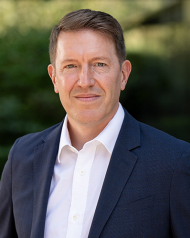
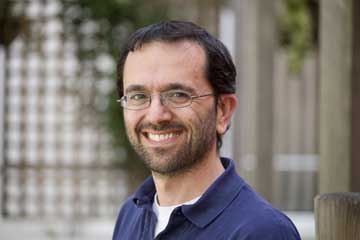
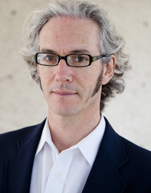
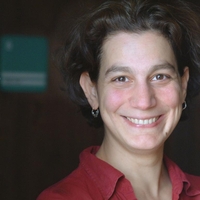
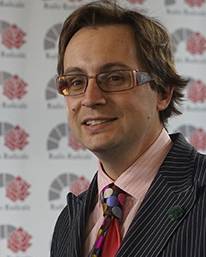
Steven Kelts is a Lecturer at Princeton University, affiliated with the School of Public and International Affairs (SPIA) and the Department of Computer Science . He leads the Integrated Ethics in CS program and has served as Director of the non-profit All Tech Is Human. Research Focus: Kelts examines ethical frameworks in technology innovation, historical political economies, and the intersection of democratic theory with corporate responsibility. His work spans Measuring ethics education in computing Evolving corporate structures for ethical action Locke's economic justice theories Machiavelli's republican ideals Madison's institutional designs Publications reveal trends in: Utilitarian logic in Agile teams Roman censorship models 17th-century English economic debates Mill's social value legislation Scientific Recognition: Recipient of Princeton's Council on Science and Technology grants for Agile Ethics program Google seed grant for corporate ethics frameworks University-wide award for GradFutures AI ethics leadership Advisory Roles: Includes ethics advisor to the Responsible A.I. Institute and institutional design mentor for political theory projects.
Kyoko Iwaki is a Senior Lecturer at the Department of Literature of the University of Antwerp, with a focus on Japanese theatre, performance studies, and post-catastrophe narratives. She actively engages in collaborative research and holds internal governance roles, including membership in the Departmental Council for Literature and the Education Committee for the Educational Master in Languages. Her research explores Japanese contemporary theatre's intersections with ethics, digital performance, and nuclear trauma. Key themes include collaborative methodologies, liminality, and the philosophical implications of post-Fukushima art. Her work spans classical adaptations, avant-garde practices, and interdisciplinary approaches to performance. Recent publications analyze experimental Japanese theatre (Okada Toshiki, Sankai Juku), post-disaster memory, and the politics of digital pandemic spaces. She contributes to global discourse through interviews with practitioners and critiques of institutional frameworks in theatre and academia.
Alvaro Pires serves as a Professor and Canada Research Chair in Legal Traditions and Penal Rationality at the University of Ottawa's School of Criminology. With an extensive publication record spanning over two decades, he has established himself as a leading scholar in historical criminology, penal rationality, and qualitative research methodology. His academic work bridges Enlightenment philosophy with contemporary criminological concerns, focusing particularly on the evolution of penal systems and legal traditions from the 18th century to modern risk societies. Dr. Pires' research interests encompass a broad spectrum of criminological inquiry, with particular emphasis on the historical development of penal rationality, qualitative research methodology, and philosophical foundations of criminal justice. His scholarly contributions demonstrate deep engagement with Enlightenment thinkers like Beccaria and Kant, examining how their philosophies shaped modern penal systems. His methodological expertise in qualitative research has positioned him as an important voice in methodological debates within social sciences, particularly regarding causal analysis and sampling techniques in qualitative studies. His publication record reveals a clear trajectory of intellectual development, beginning with methodological concerns in the 1980s and evolving toward increasingly sophisticated historical analyses of penal rationality. The progression shows how his early work on qualitative methodology laid the foundation for his later historical investigations into the philosophical underpinnings of criminal justice systems. His work consistently connects historical analysis with contemporary criminological challenges, demonstrating the enduring relevance of historical philosophical frameworks. As a Canada Research Chair, Dr. Pires has received significant recognition for his scholarly contributions. This prestigious appointment reflects his standing as a leading researcher whose work has substantially influenced criminological discourse in Canada and internationally. His research has been published in prominent French-language academic publications, indicating strong connections with Francophone scholarly communities. While specific details about his graduate supervision are not provided in the available materials, his extensive publication record and research leadership suggest active involvement in mentoring the next generation of criminologists. His methodological expertise, particularly in qualitative research, has likely shaped research approaches for numerous students and colleagues. His collaborative work with scholars like Christian Debuyst and Françoise Digneffe demonstrates his engagement with broader academic networks.
Roberto Veneziani is a Professor of Economics at the School of Economics and Finance, Queen Mary University of London. He holds a PhD in Economics from the London School of Economics and Political Science. His research focuses on distributive justice, axiomatic exploitation theory, macroeconomic growth models, and normative principles in economics. He also explores the history of economic thought and political economy through mathematical frameworks. Key areas of research include liberal egalitarian principles, sustainable development, and the distribution of resources between generations. He has published extensively in top-tier journals across economics, political science, and philosophy, including the Journal of Economic Theory , Economic Journal , and Theoretical Economics . Veneziani co-founded the Analytical Political Economy Workshop and sits on editorial boards of journals like the Review of Social Economy . His work bridges economics and philosophy, addressing topics such as sufficientarianism, unequal exchange in globalization, and the ethics of non-interference. Notable contributions include axiomatic analyses of exploitation and the critique of subjective probability models in decision-making under uncertainty. Veneziani collaborates with prominent scholars and has resigned from editorial roles in protest against publisher policies. His research emphasizes interdisciplinary approaches to economic justice and systemic inequality.
Prof. Dr. Norbert Paulo is the Endowed Professor for Philosophy and Ethics of Digitalization at the Catholic University of Eichstätt-Ingolstadt (KU), located within the School of Transformation and Sustainability. His work bridges classical philosophical inquiry and contemporary challenges posed by digital technologies and artificial intelligence. Research Interests: Philosophy and ethics of digitalization and AI Methodology of practical philosophy, especially empirically informed ethics Moral psychology and experimental philosophy Political philosophy, applied ethics, legal philosophy, and history of philosophy Prof. Paulo’s recent publications investigate how moral theory can guide the design and regulation of autonomous vehicles, explore foundational questions in empirical ethics, and bring historical philosophical texts into dialogue with modern ethical debates. Labs & Teams: While no specific laboratory is mentioned, his endowed professorship suggests institutional support for interdisciplinary research connecting philosophy, law, psychology, and technology studies.
David Phillips is Professor of Philosophy and Chair of the Department of Philosophy at the University of Houston within the College of Liberal Arts and Social Sciences. His research specializes in ethics with primary focus on the history of ethics and metaethics, particularly British moral philosophers including Henry Sidgwick and W.D. Ross. Dr. Phillips' educational background includes: Lincoln College, Oxford University (1983-1986): B.A. with first class honours in Philosophy, Politics and Economics Cornell University (1986-1993): M.A. in Philosophy (1989), Ph.D. in Philosophy (1993) His scholarly work centers on reconstructing historical ethical frameworks while engaging contemporary debates. Phillips has produced a trilogy of Oxford University Press monographs analyzing Sidgwick's philosophy, culminating in his 2022 guide to The Methods of Ethics . His research consistently bridges historical interpretation with metaethical inquiry, examining moral motivation, error theory, and the foundations of normative ethics through the lens of 18th-19th century British thought. Analysis of his publication record reveals sustained engagement with Sidgwick's dualism of practical reason, Rossian deontology, and Humean moral psychology. His work demonstrates methodological sophistication in connecting historical texts to current metaethical controversies, particularly regarding moral semantics, psychological internalism, and the viability of moral realism. Recurring thematic threads include the tension between egoism and altruism, the epistemology of moral intuitions, and the interpretation of classical utilitarianism.
Prof. Dr. Matthias Hoesch is a Professor of Practical Philosophy at the University of Trier since 2025. Previously, he held interim professorships at Trier University (2024) and served as Head of Project at the Cluster of Excellence 'Religion and Politics' at the University of Münster (2018-2022). His research focuses on Ethics of Migration , Political Philosophy , and Philosophy of History . Key Research Areas: Ethics of Migration Political Philosophy Normative Ethics Philosophy of History Digital Ethics Notable Academic Contributions: His recent publications examine refugee distribution ethics, integration obligations, and Kantian/Benthamite models. As convenor of the 2021-2024 Cooperation Group 'Normative Challenges of the European Asylum System' (ZiF), he advanced interdisciplinary migration policy analysis. He received the 2015 Society for Analytic Philosophy Prize for his essay on refugee admission quotas. Teaching: Offers courses on Introduction to Ethics , Philosophy of Digitalization , and Kant's Peace Treatise . His work bridges classical philosophical traditions with contemporary migration dilemmas, emphasizing secular reasoning and normative frameworks.
Professor Michael Hauskeller is a prominent philosopher specializing in ethics, transhumanism, and the philosophy of human enhancement. He holds a professorship at the University of Liverpool, where he teaches modules such as 'The Meaning of Life and Death' and 'Applied Ethics for Clinical Practice.' His research critically examines transhumanist philosophies, radical life extension, and the intersection of technology with human existence. Notable works include Better Humans? , Mythologies of Transhumanism , and Meaning in Life: A Subjectivist Account . He has organized major conferences, including the 6th International Conference on Philosophy and Meaning in Life (2024), and edits journals like Journal of Philosophy of Life . His recent focus on 'meaning in life' explores existential questions through dialogues and literary analysis, blending philosophical rigor with creative expression. Teaching responsibilities include coordinating undergraduate and graduate courses, reflecting his commitment to educating future thinkers on ethical dilemmas in biotechnology and healthcare. His edited volumes, such as Death and Meaning , highlight interdisciplinary approaches to mortality and existential significance. Hauskeller’s work challenges assumptions about human nature, advocating for a subjectivist perspective on life’s meaning while critiquing techno-utopian visions of posthuman futures.
Rex W. Mixon Jr. serves as an Adjunct Professor of Business Ethics at New York University's Leonard N. Stern School of Business since September 2005 and concurrently as an Adjunct Professor of Philosophy at St. Francis College. At NYU Stern, he teaches undergraduate courses including Law, Business and Society; Professional Responsibility and Leadership; and Business and Society. At St. Francis College, he instructs philosophy courses such as Moral Philosophy, Philosophy of Law, Theories of Human Nature, Happiness and Pleasure, Utilitarianism, and Greek Philosophy. His educational background spans multiple disciplines: B.A. from Davidson College M.A. in Philosophy from the University of Texas (specializing in ethics and Bentham's moral theory) M.B.A. with distinction from Cornell University Johnson Graduate School of Management J.D. from Cornell University School of Law Professor Mixon's research centers on business ethics through the lens of utilitarian philosophy, particularly Jeremy Bentham's theories. He applies New Institutional Economics frameworks to analyze law-business-society relationships, studies ancient economies for modern globalization insights, and examines Bentham's manuscripts on utility principles. His work bridges classical philosophy, economic history, and contemporary securities regulation, revealing how Epicurean thought influenced Bentham's utility theory and its applications to modern financial ethics. His scholarly output (2014-2024) demonstrates consistent focus on utilitarian theory across law, economics, and ethics, with recurring themes connecting historical philosophical concepts to current challenges like securities regulation, global poverty, and the rule of law. International presentations in London, Germany, France, Japan, and New York highlight his global academic engagement. Prior to academia, Mixon spent over 20 years as Vice President and Department Head in the NYSE Enforcement Division, managing a 30-attorney team that investigated securities law violations. This professional experience directly informs his academic focus on ethical issues in financial markets and regulatory frameworks. His leadership at the NYSE demonstrates significant team management capabilities, while his international conference participation reflects active involvement in scholarly communities examining the intersections of philosophy, law, and economic systems.
Dyala Hamzah is an Associate Professor in the Department of History within the Faculty of Arts and Sciences at the University of Montreal. She maintains a dual affiliation as a researcher at CÉRIUM (Centre d'études et de recherches internationales) and is also a member of CCÉAE (Centre canadien d'études allemandes et européennes). Her office is located in Pavillon Lionel-Groulx, room C6110. Her research focuses on the processes of reform and centralization in the Arab provinces of the Ottoman Empire throughout the 19th century from cultural and social perspectives. She examines the role of press and associations in the emergence of public space during the Arab Renaissance and explores education and citizenship issues in colonial and post-colonial periods. Additionally, she studies the professionalization of Islamic expertise in the 20th century, particularly the institutional development of mosque-universities like al-Azhar, Zaytuna, and Qarawiyyin from the 18th century until their nationalization in the 1960s. Her publications reveal a consistent focus on Arab intellectual history, public sphere formation, nationalism, and the interplay between Islamic thought and modern political developments. Her work spans from detailed historical studies of Ottoman Egypt to contemporary analyses of Palestinian intellectual production and Arab public discourse. She has edited significant volumes including The Making of the Arab Intellectual (1880-1960) and The World in World Wars . Her teaching portfolio includes courses such as HST2070 (Emergence of the Contemporary Arab World), HST2627 (Dominations and Resistances in the Arab World), HST3070 (State and Religion in the Arab World, 18th-19th centuries), and HST6648 (The Arab Renaissance, fin-de-siècle public space). She has supervised numerous graduate students on diverse topics related to Middle Eastern history, including Sudanese agricultural transformations under Egyptian colonization, French perspectives on concentration camps in Cyrenaica, and microhistories of North African soldiers in Indochina. As an expert commentator, she has contributed to media discussions on Middle Eastern affairs, particularly regarding the Syrian conflict and reconstruction challenges, as well as analyses of ISIS and the caliphate concept.
Dr. Alberto Mingardi is an Assistant Professor in the Department of History of Political Thought at IULM University of Milan. He serves as Director General of the free-market think tank Istituto Bruno Leoni and is an Adjunct Scholar at the Cato Institute in Washington DC. PhD in Political Science from the University of Pavia His research focuses on 19th-century classical liberalism , with particular emphasis on thinkers like Thomas Hodgskin, Herbert Spencer, and Vilfredo Pareto. He explores intersections between political theory, economic principles, and social justice frameworks. Recent publications reflect themes in libertarian philosophy , elite theory, and critical editions of foundational liberal texts. His work spans political economy, sociological theory, and historical analysis of economic systems. As Director General of Istituto Bruno Leoni, he leads efforts in promoting market-oriented policy analysis. He also contributes to educational initiatives through books and translations aimed at broadening understanding of liberal thought.
Timothy J. Madigan is Professor and Chair of the Department of Philosophy and Classical Studies at St. John Fisher College. He holds a Ph.D., M.A., and B.A. from the State University of New York at Buffalo. His research spans multiple ethical domains including medical, business, and computer ethics, with special focus on philosophy of religion and popular culture. Madigan's publications demonstrate broad philosophical engagement: Explorations of friendship theory across historical contexts Ethical analyses of sports culture and leadership Reappraisals of Bertrand Russell's philosophical legacy Critical examinations of literary-cultural phenomena His scholarly honors include the St. John Fisher College Trustees' Distinguished Scholars Award (2013). With extensive publications in peer-reviewed journals and edited volumes, Madigan maintains active research collaborations while mentoring emerging scholars in philosophical ethics and cultural criticism.
Holmer Steinfath is a full Professor of Practical Philosophy at Georg-August-Universität Göttingen since 2006. His academic journey includes professorships at RWTH Aachen (2002-2006) and Universität Regensburg (2002-2006), with earlier roles as a lecturer and assistant at Universität Konstanz (1994-2002). He holds a PhD (1988) and Habilitation (2000) in philosophy, focusing on Aristotle and Plato. Steinfath serves as a co-editor for two book series and advises on journal boards. Education Philosophy studies at Universität Hamburg and Freie Universität Berlin PhD (1988): Aristotle's Substance Theory Habilitation (2000): Practical Reasoning and Personhood Research interests span practical philosophy, ethics, and philosophical anthropology, with specializations in the good life , moral justification, metaethics, and normative ethics. He explores temporal dimensions in ethics (e.g., time sovereignty, existential coherence) and connects ancient philosophy (Plato, Aristotle) to modern moral frameworks. Recent publications focus on temporal ethics, medical philosophy, and moral theory. His 15 most recent works (2025-1996) analyze topics like time perception, autonomy in medicine, and ethical systems, blending classical and modern philosophical approaches. Notable collaborations include co-edited handbooks on medicine and temporality. Scientific roles include Member of the Lower Saxon Academy of Sciences (2010-present) Trust Professor of Studienstiftung (2021-present) Co-editor of Neue Studien zur Philosophie and Philosophische Abhandlungen book series Advisory board member for Jahrbuch für Wissenschaft und Ethik and Zeitschrift für Ethik und Moralphilosophie Grants & Projects Co-editor of key anthologies including Autonomie und Vertrauen (2016) Principal investigator for DFG-FOR 5022 project on medicine and the time structure of the good life (since 2021)
Sander Werkhoven is an Assistant Professor at the Ethics Institute within the Department of Philosophy and Religious Studies at Utrecht University's Faculty of Humanities. His academic work focuses on the philosophical foundations of medicine, psychiatry, and ethics, with particular attention to conceptual and normative issues in health, disease, and diagnostic classification. Dr. Werkhoven earned his PhD from the University of Warwick (UK) in 2015 with a dissertation titled 'A Dispositional Theory of Health.' His educational background has prepared him for interdisciplinary work at the intersection of philosophy, medicine, and psychology. His research interests span multiple interconnected domains including the philosophy of medicine and psychiatry, medical ethics, normative ethics, and meta-ethics. Dr. Werkhoven is particularly engaged with questions about diagnostic classification in psychiatry, the conceptual foundations of health and disease, and the ethical implications of diagnostic labels. His work often addresses practical concerns in clinical settings while maintaining philosophical rigor. He is involved with the Dynamics of Youth research theme at Utrecht University, focusing on 'Becoming Adults in a Changing World' and examining how labels affect children's development. Dr. Werkhoven's publication record demonstrates a consistent focus on conceptual clarity in medical and psychiatric practice. His recent work critically examines diagnostic classification systems (particularly DSM-5), questions the conceptual foundations of ADHD diagnosis, and explores alternative frameworks for understanding health and mental disorders. His scholarship bridges analytic philosophy with practical concerns in healthcare, making significant contributions to both academic discourse and clinical practice. As an educator, Dr. Werkhoven teaches (meta-)ethics and political philosophy at both Bachelor's and Master's levels in the Department of Philosophy. He serves as a core lecturer in the Medical Humanities Master's program and teaches medical ethics in various contexts. His courses include 'The Right Question: Biomedical Ethics and Medical Philosophy,' 'Tutorial Philosophy 1,' and 'Tutorial Philosophy 2.'
Surendra N. Singh serves as the AT&T Foundation Professor in the Department of Marketing and Business Law at the School of Business, University of Kansas. His academic career spans over three decades with research focusing on advertising effectiveness, consumer cognition, and digital marketing interfaces. His educational background includes: Ph.D. in Business from the University of Wisconsin, Madison M.S. in Marketing from the University of Wisconsin, Madison B.S. from Benaras Hindu University, India Singh's research investigates how exposure, emotional states, and design elements influence consumer responses. Key areas include mere exposure effects in advertising, multimedia ad effectiveness, program-induced emotion impacts on memory, bilingual advertising, web usability, and employee affective displays in service settings. His work bridges psychological theory with practical marketing applications, particularly in digital environments. Analysis of his publication history reveals consistent contributions to top-tier journals like the Journal of Marketing and Journal of Marketing Research. Recent work (2024-2019) examines online rating systems, payment method psychology in charitable giving, and emotional color effects in advertising. Earlier research (2017-1996) established foundational insights into web perception, accent bias in service encounters, and memory mechanisms in advertising. His scholarship demonstrates sustained focus on consumer cognition across traditional and digital marketing contexts.