Armando J. Pego Puigbó is a Professor at the Faculty of Philosophy , Universitat Ramon Llull (La Salle-URL), affiliated with the Department of Philosophy and Humanities and the Hall Research Group on Smart Society . His work intersects philosophy, cultural studies, and technology, particularly examining postmodern and postsecular paradigms. Key Projects : FILOCULTURA (2017–2021): Philosophy and culture in Catalonia Transformacions metadiscursives (2024): Metadiscursive interactions in philosophy and literature Research Trends : Recent articles explore intersections of religion and modernity (e.g., El estallido del cristianismo , 2024), existential themes in Qohelet (2024), and foundational philosophical concepts in postmodern contexts (2020). Publications span critical theory, literary analysis, and cultural philosophy. Contact : armandojesus.pego@url.edu
Inmaculada Delgado Jara is an Associate Professor of Greek Philology at the Facultad de Ciencias Humanas y Sociales, Universidad Pontificia de Salamanca, specializing in Biblical Studies and Patristics. Her academic profile shows extensive engagement with ancient Greek texts, particularly focusing on San Juan Crisóstomo, Erasmus of Rotterdam, and Septuagint studies. Her educational background includes a doctorate from Universidad Pontificia de Salamanca with the thesis "Sermones in Genesim de San Juan Crisóstomo estudio temático, estilístico y traducción" (1999), supervised by Dr. Alfonso Ortega Carmona. She is a member of the research groups "Humanismo, reformas y ciencia: del Medievo a la Ilustración" and "ICS. Innovación en Ciencias Sociales". Delgado Jara's research interests center on Greek Philology, Biblical Philology, Patristics, Septuagint Studies, Erasmus of Rotterdam studies, and San Juan Crisóstomo studies. Her scholarly work demonstrates deep expertise in ancient Greek language and literature, particularly as applied to biblical and patristic texts. She has made significant contributions to understanding the intersection of classical literature and early Christian thought. An analysis of her recent publications reveals a consistent focus on textual criticism, philological analysis of biblical and patristic works, and the reception history of classical texts in Christian contexts. Her work often bridges linguistic analysis with historical and theological interpretation, particularly examining how ancient Greek texts were transmitted, interpreted, and utilized in later periods. Her scholarly activity includes numerous books, edited volumes, and academic papers, with recent work focusing on Erasmus's biblical scholarship, San Juan Crisóstomo's homilies, and the Septuagint. Despite her extensive publication record, no specific scientific awards are mentioned in the available information. Delgado Jara is actively involved in academic supervision and research direction, as evidenced by her editorial work on major scholarly projects and her participation in academic conferences. Her work shows collaboration with numerous scholars across Spain and internationally, particularly in the fields of Biblical Studies and Renaissance Humanism.
Jordi Redondo Sánchez is a Professor in the Department of Classical Phil at the University of Valencia, where he is affiliated with the Faculty of Philology, Translation and Communication. His academic work centers on Greek Philology, with a strong emphasis on classical reception, ancient Greek literature, and translation studies, particularly in Catalan and Iberian contexts. His research interests include Hellenistic poetry, epigram, tragedy, rhetoric, linguistic analysis of classical texts, and the transmission of classical culture through medieval and modern literature. He is a member of two research groups: the GIRLC (Research Group on the Reception of Classical Literatures) and GIRHA (Resources Innovation Group in Ancient History), reflecting his interdisciplinary engagement with both literary and historical dimensions of the ancient world. The majority of his recent publications (2021–2024) are critical reviews and literary analyses focusing on Euripides, Sophocles, Theocritus, Bion, Pausanias, and Herodotus, as well as studies on biblical translations such as the Montserrat Bible and the Interconfessional Catalan Bible. His articles often explore narrative motifs, translation variants, linguistic features, and the interplay between myth and literature across cultures and periods, demonstrating a consistent scholarly focus on philological precision and cultural continuity. He earned his PhD from the University of Salamanca in 1986 with a thesis on the linguistic study of Antiphon’s speeches, supervised by Dr. Antonio López Eire. No scientific awards or student advisement information is mentioned in the provided texts. His active research and publication record suggest ongoing contributions to classical scholarship, particularly in the areas of textual criticism, reception studies, and Iberian engagement with the classical tradition.
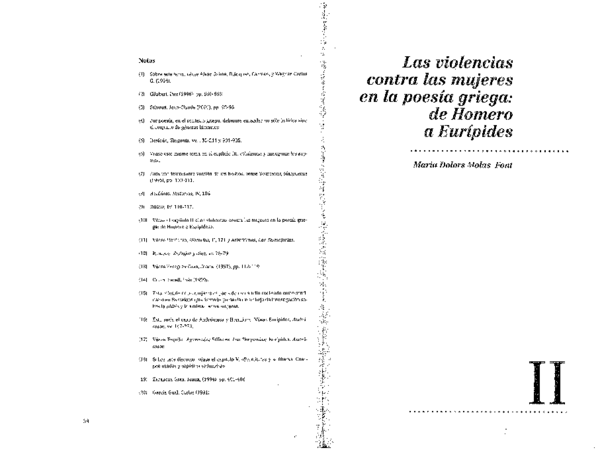
Maria Dolors Molas Font is an Associate Professor of Ancient History at the University of Barcelona and a researcher at the ADHUC-Research Center of Theory, Gender and Sexuality . She co-founded and coordinates the Tàcita Muta research group on women and gender in antiquity since 1998. Her work bridges Mediterranean protohistory and gender studies in antiquity. University of Barcelona (since 1998) ADHUC Research Center (since 2016) Her research spans various subfields, including: Archaeology of Childhood Feminist Archaeology Gender Dynamics in Antiquity Iberian World Studies Classical Reception of Women Violence in Ancient Societies Article themes reveal expertise in: Homeric and Euripidean textual analysis Roman Republican settlement archaeology Slavery and power structures in antiquity Transgressive practices in classical myth Perinatal archaeology in Iberian contexts Gendered interpretations of oratory
Israel Campos Méndez is a Professor in the Department of Historical Sciences at the University of Las Palmas de Gran Canaria's School of Arts and Humanities. Specializing in Ancient History with a focus on the socio-political-religious evolution of Eastern cults in the Roman Empire, he leads the GIR G9-History, Economy and Society research group. PhD Thesis: The god Mithras: analysis of the adaptation processes of his cult from ancient Iran to Rome (2005) Research Pillars: Mithraism, Roman provincial religion, Persian cultural influence, and classical archaeology Advising: Mentored 14 final degree projects and 5 master's theses on Greco-Roman history, religious practices, and heritage topics His scholarly work explores Mithraic cultic spaces, sensory experiences in Roman religions, and the historiography of Indo-Iranian-Roman religious connections. Publications span from 2010 to 2025, with a notable emphasis on architectural reuse and Persian-Roman cultural syncretism. Major contributions include studies on Mithraic terminology (2016), Achaemenid dance practices (2017), and systematic reviews of Mithraic cave symbolism (2023). His research bridges art history, linguistics, and archaeological analysis.
Mayte Penelas is a Senior Scientist (Científica Titular OPIs) at the Escuela de Estudios Árabes (EEA), part of the Spanish National Research Council (CSIC) in Granada, Spain. She has served as director of the EEA since 2017 and previously as vice-director from 2005 to 2007. Her academic career is deeply rooted in Arabic philology, codicology, and the historiography of al-Andalus, with a particular focus on Christian Arabic literature and the transmission of classical and biblical texts in Islamic Iberia. Bachelor of Semitic Philology (Arabic), Complutense University, 1993 PhD in Philology, Autonomous University of Madrid, 1998 Postdoctoral Fellow, The Warburg Institute, University of London, 1998–2000 Her research interests include Arabic manuscripts, codicology, the history and historiography of al-Andalus, Christian Arabic literature, and the reception of Latin and biblical traditions in the Islamic West. She has led major research projects such as Mediating Islam in the Digital Age (MIDA) (H2020) and Local contexts and global dynamics: al-Andalus and the Maghreb in the Islamic East , funded by national and European agencies. The analysis of her recent publications reveals a consistent focus on Arabic historiography, particularly the works of al-Maqrīzī, Ibn Ḥayyān, and Orosius, as well as the study of Andalusi manuscripts like MS Raqqada 2003/2. Her work bridges philology, history, and religious studies, examining how Christian and classical sources were transmitted, adapted, and interpreted in Arabic within the Islamic West. She frequently explores themes of cultural identity, textual transmission, and interreligious dialogue. Editorial and Professional Recognition: Director, Escuela de Estudios Árabes (EEA), CSIC (2017–present) Member, Editorial Board, Collectanea Christiana Orientalia (2004–present) Secretary, Al-Qanṭara (2013–2014) Member, Editorial Committee, Arabic-Hispanic Sources collection, CSIC (2006–2014) Member, Editorial Board, Al-Qanṭara (2010–2014) Member, Editorial Committee, Estudios Árabes e Islámicos , CSIC (2021–present) Secretary, Occupational Health and Safety Committee, Granada, Málaga, Almería (2020–present) Penelas has not supervised any named students but has collaborated extensively with scholars such as Luis Molina, Maribel Fierro, and María Isabel Fierro. She has received continuous research funding and participates in international academic networks. She is actively involved in digital humanities initiatives, including the digital archive of Arabic manuscripts at EEA. There is no indication of retirement or part-time status; she remains an active and influential researcher in the field of Arabic and Islamic studies.
M Teresa Ferrer Valls is a Professor of Spanish Literature at the Universitat de València, affiliated with the Department of Spanish Philology within the Faculty of Philology, Translation and Communication. She is a leading scholar in Spanish Golden Age theater, with a focus on Lope de Vega, courtly spectacle, and digital humanities applications in literary research. Her research interests span Spanish Golden Age theater, comedia nueva, early modern Spanish literature, neo-Latin literature, women dramatists of the 17th century, sacramental plays, and the cultural history of courtly performance. Her work often explores the interplay between literature, power, and historical context, particularly during the reigns of Philip III and IV. The most recent articles reflect a sustained engagement with digital tools for theater research, including databases like CATCOM and ASODAT, alongside critical editions and thematic studies on allegory, gender, and performance. Her publications demonstrate a consistent focus on archival discovery, digital methodology, and the reinterpretation of canonical and lesser-known works from the Spanish Golden Age. She has directed research projects funded by the Spanish Ministry of Education and Culture and has collaborated with institutions such as the Institució Valenciana d'Estudis i Investigació. Her academic work includes editing critical editions of plays and digital publications, contributing significantly to the preservation and accessibility of Spain’s theatrical heritage. Ferrer Valls leads the research group ELITE-PAC (Literary Writings: Heritage and Updates) and is instrumental in developing digital infrastructures for classical Spanish theater studies. Her projects, such as DICAT and ASODAT, aim to create comprehensive, federated databases that support scholarly research across institutions and disciplines.
Maria Consuelo de Frutos Martinez serves as a Professor in the Department of Classical, French and Italian Philology at the Faculty of Philology, University of Santiago de Compostela. Her academic specialization centers on Italian Philology, and she actively participates in the Italian Studies research group focusing on Italian literary traditions. She completed her Doctorate at the University of Santiago de Compostela in 1996 with a dissertation titled "Influence of the Italian poetics writers of the fifteenth century in López Pinciano's Philosophía antigua poética," supervised by Dra. Maria Isabel González Fernández. Her research spans Italian literature from medieval to contemporary periods, literary translation between Italian and Spanish, feminist theater analysis, and medieval literary adaptations. Key publications examine Dacia Maraini's feminist theater reception in Spain, Dante's Divine Comedy adaptations in Curros Enríquez's O divino sainete and Pardo Bazán's Mi romería, Galician Decameron translations, and Tristanian character adaptations in Italian literature. She has also contributed to lexicography through a Galician-Italian vocabulary project. Analysis of her 2006-2013 publications reveals consistent exploration of Italian-Spanish literary relations, with recurrent themes of feminist perspectives, classical work adaptations, and medieval-to-contemporary literary transmission. Her work demonstrates particular attention to paratextual elements in translations and cultural exchanges between Galicia and Italy. No scientific awards were documented in available sources. Information regarding graduate student supervision or research grants was not provided in the source materials. She maintains active affiliation with the Italian Studies research group within the Department of Classical, French and Italian Philology, focusing on Italian Philology through collaborative projects and publications.
Jorge Carrión Gálvez is a part-time lecturer at the UPF Barcelona School of Management and co-director of the Master in Literary Creation. He previously held academic roles including professor of Spanish at the University of Chicago, associate professor of Spanish Language and Literature at the Department of Humanities at Universitat Pompeu Fabra (UPF), visiting professor at the University of Los Andes (Colombia), and professor of the Master in Journalism Specializing in Culture at UPF-BSM. He also serves as Academic Director of UPF Barcelona School of Management and leads the Management, Law, Society & Humanities academic unit there. Dr. Carrión Gálvez holds a PhD in Humanities with a thesis on comparative literature focused on contemporary travel. His research interests include travel literature, non-fiction narratives, television seriality, virality, and cultural studies. He explores intersections between literature and media, urban cultural landscapes, and the evolution of narrative forms in digital and traditional contexts. His scholarly work spans literary criticism, cultural analysis, and media studies. Notable trends in his publications include analyses of cultural institutions (museums, libraries), adaptations of classic texts for television, and the interplay between urban spaces and narrative forms. His books and essays address topics ranging from Madrid and Barcelona’s literary histories to experimental writing techniques and the future of television. Carrión Gálvez has directed academic programs such as the Master in Literary Creation and collaborated on interdisciplinary research initiatives like the MOOC on television’s golden age. His work bridges academic scholarship with cultural production, emphasizing the role of media and spatial narratives in shaping contemporary cultural discourse.
Ferran Grau Codina is an Associate Professor in the Department of Classical Philology at the Faculty of Philology, Translation and Communication, University of Valencia. He is a member of the GIRHTC Research Group on Rhetoric, Humanism, and the Classical Tradition, and holds a PhD from the same university with a thesis on the rhetorical works of Pedro Juan Núñez. His research centers on Latin Philology, Renaissance Humanism, and the history of rhetorical theory, particularly in early modern Spain. He has published extensively on humanist educators such as Pedro Juan Núñez, Fadrique Furio Ceriol, Antonio Llull, and Juan Luis Vives, focusing on their pedagogical methods, rhetorical doctrines, and contributions to classical education. His work often involves critical editions and translations of Neo-Latin texts, reflecting his expertise in textual scholarship and philology. The most recent articles highlight a sustained engagement with 16th-century Iberian humanism, especially in the Valencian context. Key themes include the structure and sources of rhetorical manuals, the teaching of progymnasmata, the interplay between rhetoric and philosophy, and the editorial recovery of obscure humanist texts. His scholarship bridges classical studies, intellectual history, and linguistic analysis, demonstrating a deep commitment to the recovery and interpretation of Spain’s humanist heritage. Scientific Awards and Recognition: No scientific awards mentioned in the provided text. He has supervised doctoral theses, including his own on Pedro Juan Núñez, and has collaborated on editorial projects with scholars such as Jordi Pérez Durà and Josep Maria Estellés. While no current grants are listed, his consistent publication record suggests ongoing research activity. He is actively involved in the academic community through research groups and scholarly editions. Laboratories and Research Teams: Member of the GIRHTC (Research Group on Rhetoric, Humanism, and the Classical Tradition), University of Valencia.
Joan Ferrer Costa is a Full Professor in the Department of Philology and Communication at the University of Girona, where he holds a chair in Hebrew and Aramaic Studies. He is also a professor of Sacred Scripture at the Higher Institute of Religious Sciences of Girona and the Faculty of Theology of Catalonia. His academic affiliations include the Institute of Catalan Language and Culture and the Research Group in Language History and Normative Language. He has been President of the Biblical Association of Catalonia since 2017. Ph.D. in Semitic Philology, University of Barcelona, 1990 S.T.L. in Theology, Faculty of Theology of Barcelona, 1983 B.A. in Geography and History, University of Barcelona, 1982 Professor Ferrer Costa's research is at the intersection of Semitic and Romance philology. His primary interests include Hebrew and Aramaic philology , with a focus on Targumic literature and biblical translation, and Catalan historical philology , where he has made significant contributions to onomastics and the study of the language's literary formation. He is a leading expert on Yiddish and Syriac , and his work bridges biblical scholarship with the cultural history of Jewish and Catalan traditions. His recent publications show a consistent trend in producing bilingual and trilingual critical editions of foundational religious texts. His extensive publication record, including major Catalan Bible translations and scholarly editions, reflects a career dedicated to making ancient and religious texts accessible. His work on the Biblia Bilingüe series and numerous studies on Agnon and other figures in Hebrew literature demonstrates a deep engagement with both the linguistic and literary aspects of his fields. Full Academician of the Royal Academy of Fine Arts of Barcelona (2013) Corresponding Member of the Philological Section of the Institute for Catalan Studies (2021) Full Member of the Philological Section of the Institute for Catalan Studies (2023) Joan Ferrer Costa has been a principal investigator on several national research projects funded by the Spanish Ministry of Science and Education, focusing on the history of the Catalan language and Aramaic dialectology. He has supervised at least seven Ph.D. theses on diverse topics ranging from the work of Joan Coromines to Hebrew fragments in Catalan aljamiado and the theology of the New Testament. His mentorship reflects a broad influence across philology, theology, and cultural studies. He is a key member of the Research Group in Language History and Normative Language at the University of Girona and has been deeply involved in collaborative editorial projects with the Association of Biblical Studies of Catalonia, the Ateneu Universitari Sant Pacià, and the Faculty of Theology of Catalonia. His work often emerges from these collective scholarly teams.
Eduardo Alejandro Salas Romo serves as a University Professor in the Department of Mediterranean Languages and Cultures at the University of Jaén, Spain, specializing in Literary Theory and Comparative Literature within the broader humanities framework. His academic foundation includes a Doctorate from the University of Granada (1997), where he completed his dissertation "JM Castellet, literary theorist and critic" under the supervision of Dr. Antonio Chicharro Chamorro. Salas Romo's research centers on 20th-century Spanish literary criticism, with sustained scholarly engagement in José María Castellet's theoretical frameworks, Fernando Lázaro Carreter's contributions, and Antonio Machado's poetic legacy. His methodology integrates literary historiography, reception theory, and intercultural analysis to examine ideological dimensions in Spanish literary production, particularly focusing on historical realism, generational criticism, and Andalusian cultural representation. Analysis of his 2020-2023 publications reveals persistent investigation into theoretical structures of Spanish literary criticism, with emerging interests in archival studies (Biblioteca Colombina), sensory dimensions in poetry, and Renaissance political concepts. His work demonstrates chronological continuity in examining critical thought evolution while expanding into interdisciplinary connections between literature, music, and spatial studies. No scientific awards were documented in the source materials. Information regarding graduate student mentorship and research grants remains unavailable in the provided texts. Salas Romo actively participates in the Literary and Intercultural Studies research group, which facilitates collaborative projects in comparative literary analysis and cultural semiotics across Mediterranean contexts.
Elena Cano Turrión is an Assistant Professor at the Department of Spanish Philology, University of Córdoba, specializing in Spanish Literature of the Golden Age. She earned her PhD in 2019 with a thesis on Alberto Díez y Foncalda's Poesías varias (1653). Her research focuses on: Baroque and post-Baroque poetry Paratextual elements in early modern texts Literary academies and networks Mythological reinterpretation in Hispanic literature Authorial self-positioning in prologues Editorial practices and poetic canon formation Notable publication: Aunque entiendo poco griego... Fábulas mitológicas burlescas del Siglo de Oro (2019), analyzing comic mythological poetry. She has participated in 9 international congresses and organized 6 academic events, including the 2017 International Congress of Young Researchers. Her current projects include "Sujeto e Institución Literaria en la Edad Moderna" and "El Canon Poético Barroco en el Siglo XVIII."
Caterina Duraccio is a Professor at Universidad Pablo de Olavide's Department of Philology and Translation, specializing in Italian Philology. She holds a PhD from the University of Seville (2019) with the thesis Femminile plurale: la letteratura italiana tra identitá e confini geografici . Her research focuses on Translation Studies , Gender Studies , and Italian Literature , particularly women's roles in Renaissance and postcolonial contexts. Key Research Areas: Gender representation in Italian Renaissance texts Postcolonial Italian literature and diaspora narratives Translation pedagogy with gender perspective Notable Publications: 2023 article on Ludovico Domenichi's dedications 2022 analysis of Alessandro Piccolomini's Raffaella 2021 study of Christiana de Caldas Brito's works Journal Evaluations: Her works appear in journals indexed by Dialnet , Carhus Plus+ , Latindex , and MIAR .
Daniel Nisa Caceres is an Associate Professor in the Department of Philology and Translation at Pablo de Olavide University's Faculty of Humanities. He holds a PhD in English Literature from the University of Seville (2009) and is an active researcher in the HUM-857 Interlinguistic Communication and Intercultural Interpretation group and the WAÉIRE platform for Irish Studies in the West of Andalusia. His academic journey began with doctoral research on Dickens' reception in Pío Baroja's work under Dr. Miguel Juan Gronow Smith's supervision, establishing his enduring interest in literary reception and cross-cultural interpretation. Nisa Caceres' research centers on contemporary women writers' reinterpretations of classical mythology, with particular focus on how authors like Ursula K. Le Guin, Irene Vallejo, Pat Barker, and Madeline Miller subvert traditional narratives of gender and power. His scholarship consistently examines the intersection of mythological rewriting with feminist theory, exploring themes of consent, sexual violence, and gender fluidity through literary motifs like cross-dressing. His work bridges comparative literature, translation studies, and gender theory, with special attention to the aesthetics of the grotesque in both classical and contemporary contexts. His publication trajectory reveals a methodical evolution from early studies on Dickens and Baroja toward increasingly sophisticated analyses of how contemporary women authors reclaim classical narratives, with recent work demonstrating particular innovation in connecting mythological reception with critical discourse on consent culture. Rosa Regàs Award for curricular materials with co-educational value (2022/2023 academic year) As a mentor, Nisa Caceres has co-supervised multiple doctoral theses, including the award-winning "Feminism and Translation: The Reception of Margaret Atwood in Spain" (2024), and currently guides research on classical reception in contemporary Anglophone women's writing. His editorial projects, notably the 2023 volume "The Odyssey of Women Writers" and the 2025 Spanish edition of Virginia Woolf's "The Common Reader," demonstrate his commitment to reshaping literary canons through gender-inclusive frameworks. His work with the FECYT Project "FCT-21-17113" exemplifies his dedication to transforming educational approaches to literary history. Through his leadership in the Doctoral Program "Philological, Translation and Cultural Studies" at UPO/University of Poitiers, Nisa Caceres continues to influence emerging scholars in literary studies, translation theory, and gender-focused literary criticism.