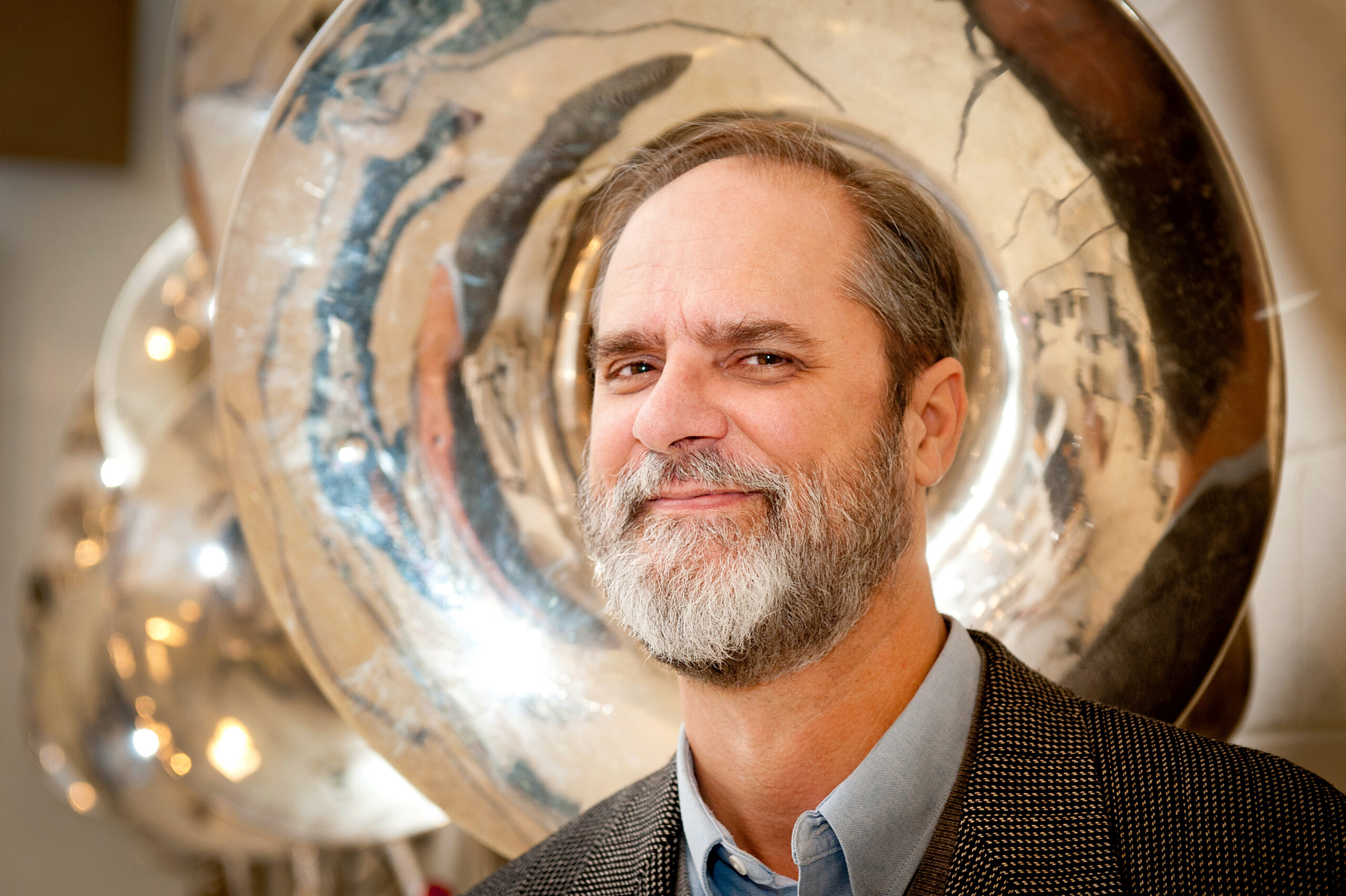
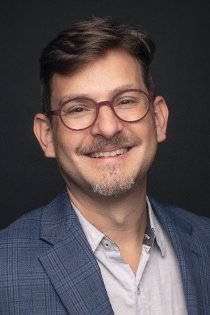
Noam D. Elkies is a Professor in the Department of Mathematics at Harvard University. He is also an accomplished composer and musician, blending mathematical rigor with musical creativity. Born in 1966 in New York, he moved to Israel before returning to the U.S., where he studied at Juilliard and Columbia University, earning degrees in Mathematics and Music. His dual expertise is reflected in his academic position and prolific musical career. Elkies' research interests span mathematics and music composition, with notable works including the Brandenburg Concerto No.7 , Rondo Concertante , and opera Yossele Solovey . His compositions have been performed globally by ensembles like the Metamorphosen Chamber Orchestra and Greater Boston Youth Symphony Orchestras. He has received multiple commissions and awards, including the BMI Award for Young Composers and performances at prestigious venues like Jordan Hall and Symphony Hall. Elkies' music often explores Baroque styles and counterpoint, with works ranging from choral pieces to orchestral fantasies. His academic contributions in mathematics complement his musical pursuits, showcasing interdisciplinary excellence.
Rodney Waschka II is a Professor and Director of Arts Studies at North Carolina State University's College of Humanities and Social Sciences. He also directs the Arts NOW Series, presenting contemporary arts events. His expertise spans music composition, algorithmic processes, and electronic music. Waschka's works are globally recognized, with recordings across international labels. His operas like Saint Ambrose and Sappho's Breath showcase interdisciplinary collaboration. Recent works include A Note for Joe Alexander (2024) and In Memoria di Linda Garzoli Cardosi (premiering 2025). His research explores genetic algorithms in music composition and dynamical systems as compositional tools. Education: Doctor of Musical Arts in Computer Music/Media from the University of North Texas. Awards and recognitions include features in Computer Music Journal , Musical Opinion , and international festivals. He actively commissions new works and has performed across Europe, North America, and Australia. The Arts NOW Series, under his leadership, connects contemporary art forms with academic disciplines like mathematics, politics, and climate science. Notable collaborations include the Aizuri Quartet and filmmaker projects like Boris Karloff: The Man Behind the Monster (2022).
Andrew Foote is an Associate Professor at the Conservatorium of Music, University of Western Australia. He holds roles as Chair of the Board of Studies (Design and Creative Arts), Chair of Vocal Studies, and Academic Integrity Officer (Music). Previously served as Director of the West Australian Symphony Orchestra Chorus (2019-2024) and Vocal Coach (2014-2018). Education: Doctor of Musical Arts (2020), University of Western Australia Research focuses on Schubert's Winterreise, historical performance practices in Baroque and Renaissance eras, and vocal pedagogy. Active in professional opera performances, including a Helpmann Award-winning role in Peter Grimes (2010). Specializes in German Lieder, crossover cabaret, and business leadership coaching. Recent performance projects include WA Opera's Pirates of Penzance (2025), Die Fledermaus with WASO (2025), and Beethoven's 9th Symphony (2024). Known for innovative choral direction and inter-disciplinary collaborations. Awards: UWA FABLE Teaching Award (2020), multiple student teaching accolades Leads vocal ensembles like Symphonic Chorus of UWA and Concordia Vocalis. External roles include ANCA National Councillor (2023-2024) and WA President of the Australian National Choral Association.
Associate Professor Josh Stenberg holds a PhD from Nanjing University and is affiliated with the University of Sydney's Faculty of Arts and Social Sciences. His research focuses on Chinese theatre, Sinophone literature, and Sino-Indonesian cultural dynamics. He has held prestigious fellowships including Fulbright Taiwan and SSHRC Postdoctoral support. Education: B.A. Harvard, M.A. UBC, PhD Nanjing University Affiliations: China Studies Centre, Sydney Southeast Asia Centre Research spans contemporary xiqu, Sino-Indonesian performance, and global reception of Chinese theatre. Recent projects explore Sinophone cinema in West Kalimantan and PRC soft power strategies. Over 50 peer-reviewed publications include monographs like Minority Stages and Liyuanxi . Current supervisions cover topics like Chinese Lion Dance in Chile and trauma narratives in Wang Xiaobo's fiction. Awards include the Henry Luce Poetry Translation Fellowship and Australian Academy of Humanities grants. Labs/Teams: Part of multi-institutional projects on Southeast Asian Chinese ethnicity and Chinese-Arabic literary translation.
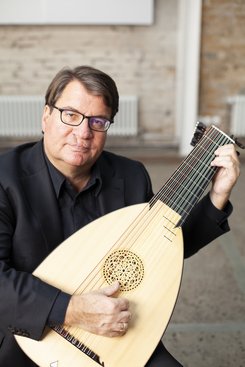
Joachim Held is a Professor of Historical Lute Instruments at the Bremen University of the Arts (Hochschule für Künste Bremen) since 2010. He also teaches at the Royal Conservatory in The Hague since September 2007. Born in Hamburg in 1963, Held received his musical training at the Schola Cantorum Basiliensis under Eugen Dombois and Hopkinson Smith, graduating in 1988 with a Diploma in Early Music. His educational background includes studies with Jürgen Hübscher at the Karlsruhe University of Music from 1988 to 1990, where he completed his artistic final examination. In 1990, he won second prize at the Concours Musica Antiqua of the Flanders Festival in Bruges, launching his international career. Joachim Held is renowned for his expertise in historical lute instruments and early music performance. His research interests span across: Historical Lute Performance Practice Baroque Music Repertoire Renaissance Music Historical Performance Techniques Early Music Instrumentology Lute Musicology Held has built an impressive discography of solo recordings focusing on lute music from various historical periods and regions. His recordings show a particular focus on German, Italian, French, Austrian, Polish, and English lute repertoire from the Renaissance and Baroque periods. His 2006 CD "Erfreuliche Lautenlust" with works by Austrian Baroque composers for Baroque lute earned him the prestigious Echo Klassik 2006 award for the best solo recording in the 17th/18th century category. His notable awards include: Echo Klassik 2006 for the best solo recording in the 17th/18th century category Second prize at the Concours Musica Antiqua of the Flanders Festival in Bruges (1990) As an active performer, Joachim Held has maintained a vibrant international career since the early 1990s. He has performed regularly under the direction of Nikolaus Harnoncourt since 1993 and with Il Giardino Armonico (Milan) since 1992. He has participated in productions of major operas including Francesco Cavalli's "La Calisto" and Monteverdi's "L'Incoronazione di Poppea." His concert activities span across Europe, Africa, Japan, and South America, with performances at major festivals and venues. Held is also involved in academic activities including symposia on early music topics, such as the symposium "John Dowland's Activities on the Continent" held at the HfK Bremen in April 2022. He is scheduled to participate in a Lute Symposium at the Bremen University of the Arts on September 22nd-23rd, 2025.
Ashley Thorpe is a Senior Lecturer in the Department of Drama, Theatre and Dance at Royal Holloway, University of London. He co-founded the Noh Training Project UK and is a core member of Theatre Nohgaku, with collaborations in Paris and Japan. Research Interests His work spans Chinese xiqu (especially jinju ), Japanese nō in global contexts, and material practices like ceramics and photography . He explores intercultural performance frameworks and feminist interpretations through experimental art forms. Recent Creative Outputs Encyclopaedia of Jingju (2026, in press) Portrayals of China in British Political Playwriting (2026, in preparation) English-language nō play Emily (2019) Interdisciplinary ceramic projects (2025) Intercultural performances in Japan and the UK (2025) Collaborative and Institutional Engagement Thorpe leads workshops and international projects funded by the Daiwa Anglo-Japanese Foundation and Great Britain Sasakawa Foundation . He serves as Advisor to the Center for Research and Translation of Chinese Opera (2021–present) and has held visiting professorships in China. Methodological and Thematic Focus His practice-based research integrates performance history , anthropological analysis , and material experimentation across theatre, photography, and pottery. Projects emphasize relational ontologies and demon meta-noh play as tools for cultural and artistic innovation.
Martin Robertson is a renowned saxophone professor at the Royal College of Music (RCM) and the Guildhall School of Music and Drama. He graduated from the RCM in 1984 with studies in saxophone and clarinet under Stephen Trier and John McCaw, winning the Boosey and Hawkes Music Prize. His career spans international solo performances with orchestras like the Berlin, Los Angeles, and London Philharmonics, collaborating with conductors such as Simon Rattle and Vladimir Jurowski. Robertson is celebrated for his fusion of classical, jazz, and world music, particularly through collaborations with composers Mark-Anthony Turnage and George Fenton. His work includes Turnage’s Blood on the Floor and Fenton’s orchestral scores for films like Earth and Planet Earth . Robertson’s academic roles include leading the Woodwind department at RCM since 1994 and teaching at Guildhall since 2012. His research interests emphasize cross-genre exploration, using instruments like the duduk and taragato to bridge cultural musical traditions. He has premiered works such as Turnage’s About Water (2007) and Anna Nicole (2011), an opera exploring tragic biography through modern musical language. His performances include high-profile events like the BBC Proms and collaborations with ensembles such as the Delta Saxophone Quartet, which he joined in 2009. Robertson’s film credits span major projects, including Shakespeare in Love , Billy Elliott , and King Arthur . Beyond the concert stage, he advocates for contemporary saxophone repertoire through academic and ensemble work, fostering innovation in woodwind performance. Robertson’s awards include the Boosey and Hawkes Prize (1984), and his recordings, such as Poirot Variants (2010) and Tony Banks’ Six (2012), highlight his versatility across genres. His teaching integrates jazz improvisation, classical technique, and contemporary experimentation, shaping a new generation of woodwind musicians.
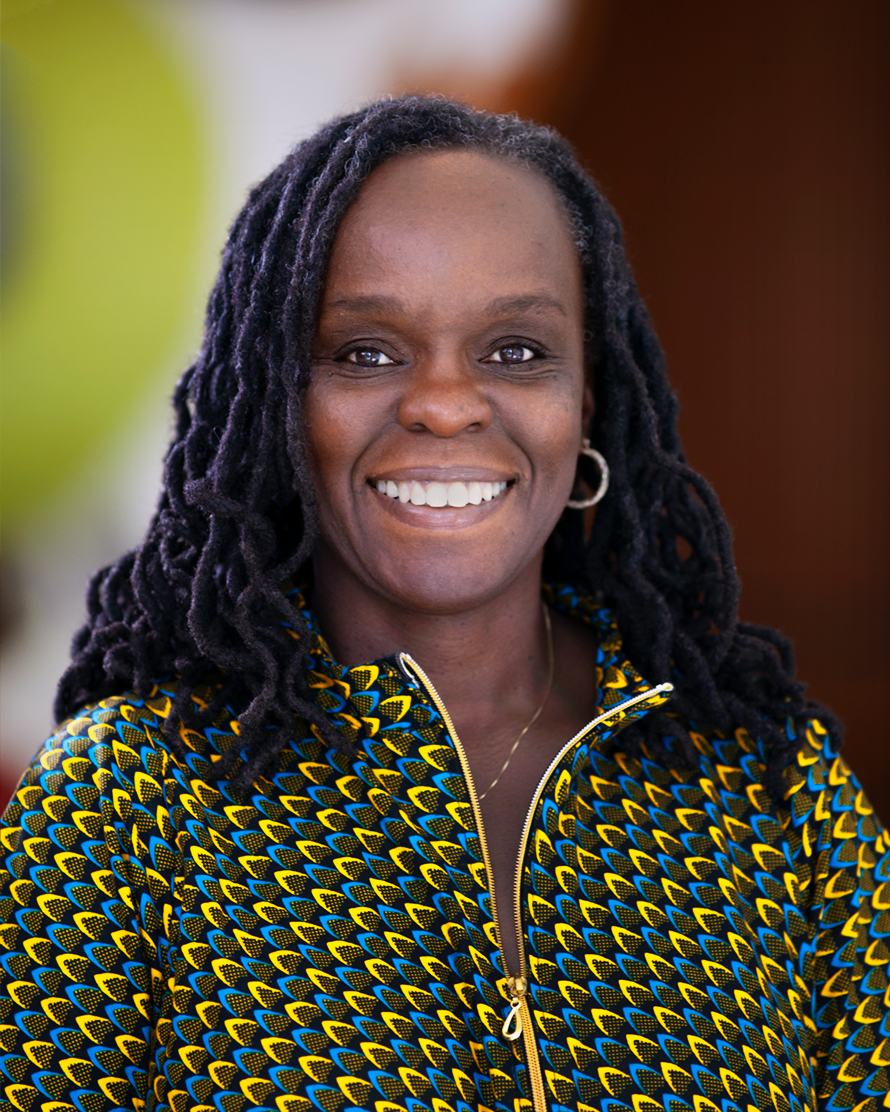
Stephanie Shonekan is Dean of the College of Arts and Humanities and Professor of Ethnomusicology at the University of Maryland. She previously served as Chair of Afro-American Studies at the University of Massachusetts (2018–2020) and Senior Associate Dean at the University of Missouri (2020). Her academic career includes roles at Columbia College Chicago (2003–2011) and the University of Missouri (2011–2018), where she developed programs like Citizenship@Mizzou and The Huddle to foster inclusion and support underrepresented faculty. Shonekan holds a Ph.D. in Ethnomusicology and Folklore from Indiana University (2003). Her research explores intersections of identity, history, and music, with focuses on Afrobeat, Nigerian and African American hip-hop, soul music, and country music. Notable publications include Black Resistance in the Americas (2018) and Black Lives Matter & Music (2018). Her award-winning short film Lioness of Lisabi (based on Fela Kuti's mother) highlights her interdisciplinary work. She actively bridges academic leadership with community engagement through initiatives addressing diversity in higher education.
Dr. hab. Agata Seweryn, holding the title of Professor at the John Paul II Catholic University of Lublin (KUL), serves in the Department of Enlightenment Literature, Romanticism and Art Criticism within the Institute of Literary Studies at the Faculty of Humanities. Her academic career spans decades of dedicated scholarship focused on Polish literary traditions from the Enlightenment through Romanticism, with particular emphasis on the intersections between literature and music. Professor Seweryn's research interests form a cohesive interdisciplinary framework examining Polish Enlightenment literature, Romanticism, literary criticism, and the complex relationship between music and literature. Her work demonstrates particular expertise in Norwid studies and Chopin's cultural reception, revealing how musical elements permeate literary works and vice versa. She has made significant contributions to understanding how Polish Romantic poets engaged with musical forms and how composers interpreted literary works. Her scholarly output reveals consistent thematic threads connecting musicology with literary analysis, particularly in examining how Polish Romantic writers incorporated musical structures into their poetry and prose. This interdisciplinary approach has yielded important insights into figures like Norwid and Chopin, while also exploring broader questions about artistic synthesis in 19th-century Polish culture. Medal of the National Education Commission Rector's Award, 1st degree Individual Award, 3rd degree Professor Seweryn actively supervises doctoral and master's theses while participating in numerous research projects funded by the Ministry of Education and Science, including the National Program for the Development of Humanities. She serves on juries for national literature and language olympiads and contributes to academic discourse through conference organization, including co-hosting the nationwide conference '(Po)między: borderlands, crossroads, undefined places.' Her service extends to editorial roles for scholarly publications and review work for academic journals. Her academic activities include regular lectures for secondary schools across Poland and specialized courses on voice production and spoken language culture at the Seminary of Friars Minor Capuchin in Lublin, demonstrating her commitment to both scholarly research and practical language education.
Zhaokun Xin serves as Lecturer in Chinese Cultural Studies at the University of Manchester since 2023, previously working at the University of British Columbia. His research investigates late imperial Chinese literature through interdisciplinary frameworks including affect theory, gender studies, and medical humanities, with current focus on 'negative' emotions in Ming-Qing literary landscapes. His educational credentials include: PhD in East Asian Languages and Civilizations (with Critical Theory Certificate), Arizona State University (2020) MA in Theory and Practice of Translation (Distinction), SOAS University of London (2013) BCom in Marketing (First-Class Honours), University of Hong Kong (2012) Xin's scholarship bridges literary analysis with ritual theory and visual culture studies, examining emotional expression in premodern Chinese texts. His teaching methodology integrates multimedia storytelling and immersive technologies across courses on Chinese literature, film, drama, and classical language instruction. Recent publications (2021-2024) demonstrate consistent interdisciplinary output, analyzing homoeroticism in Li Yu's fiction, Wang Jide's opera theory, and Sino-Japanese identity construction through Kokusen'ya Kassen adaptations, revealing methodological commitments to emotional and cross-cultural perspectives. Actively supervising PhD researchers in late imperial Chinese studies, Xin contributes to the Manchester China Institute as his primary research platform while developing innovative pedagogical approaches to classical Chinese education.
Ebru Gökdağ is a Professor at Anadolu University’s State Conservatory, Department of Stage Arts, since 2016. She earned her doctorate in Theatre from the University of Nebraska-Lincoln and has held academic positions at Anadolu University since 2002. Doctorate: University of Nebraska-Lincoln (1997-2002) Postgraduate: Texas A&M University-Commerce (1994-2000) Undergraduate: Anadolu University (1989-1993) Her research focuses on Theatre Studies , Gender Dynamics in Performing Arts , and Cultural Representation in Opera . She has explored Sexual Harassment Prevention in theatre environments and Traditional Rituals like Cem Ceremonies. Recent publications examine Opera Cross-Cultural Influence , Gender Equality in Turkish theatre, and Community-Based Performance techniques. She has also presented at conferences in Kazakhstan, Cyprus, and Slovenia. She has advised 8 theses on topics ranging from Augusto Boal’s Methods to Sexual Harassment in Performing Arts and Opera Analysis . She led projects like TÜBİTAK’s Cem Ceremonies Study and multiple Erasmus-funded initiatives. Her career spans roles as Head of Department (2017-2025) and board member in academic councils. She actively participates in international theatre festivals and conferences.
Tenor Bryan Hymel serves as Associate Professor of Music in Voice at Indiana University's Jacobs School of Music, where he bridges academic pedagogy with an internationally acclaimed operatic career. His performances span premier opera houses globally including the Metropolitan Opera, Royal Opera House, and Opéra National de Paris, specializing in dramatic French and Italian repertoire. His educational credentials include: Master of Music in Vocal Pedagogy from Westminster Choir College, Rider University (2023) Bachelor of Music in Voice Performance from Loyola University New Orleans (2003) Hymel's scholarly focus centers on historical performance practices of 19th-century French grand opera and vocal technique evolution. He is particularly renowned for interpretations of Énée in Berlioz's Les Troyens , Don José in Bizet's Carmen , and Arnold in Rossini's Guillaume Tell , with research emphasizing dramatic tenor roles and vocal characterization in historically significant works. His distinguished honors include: Metropolitan Opera’s Beverly Sills Artist Award (2012) Olivier Award for Outstanding Achievement in Opera (2013) Georges Thill Prize by Académie Nationale du Disque Lyrique ECHO Klassik Newcomer of the Year Award As a faculty mentor at Indiana University, Hymel trains emerging vocalists using insights from his active performance career, integrating stage experience into pedagogical practice. His Warner Classics recordings, particularly the album Héroïque which reached #3 on Billboard Classical charts, serve as scholarly resources for vocal interpretation and repertoire preservation.
David Gram serves as Associate Professor of Theatre at Oakland University's School of Music, Theatre and Dance, specializing in directing and acting. He teaches courses including Directing I & II, Advanced Directing Project, Dramaturgy, Acting: The Script, Company Class, and Professional Practices for the Performer. Education: MFA in Directing and Graduate Certificate in Arts Administration from Boston University BFA in Theatre (Acting emphasis) from Simon Fraser University Professor Gram's research focuses on classical and contemporary farce; Canadian theatre; Shakespeare and his contemporaries; and the genres of mystery, horror, and espionage onstage. His scholarly work culminated in the 2024 publication Contemporary Farce on the Global Stage: or, Serious Laughter with Routledge, which examines farce as a serious theatrical form across international contexts. With nearly 30 years of professional experience, Gram has directed approximately 80 productions across the United States and Canada. His recent directing credits at Oakland University include Young Frankenstein (Fall '24), ¡Farsa/Farce! (Fall '23), Pippin (Winter '22), and Macbeth (Winter '20). Professional Affiliations: Stage Directors and Choreographers Society (Full Member) Association for Theatre in Higher Education Shakespeare Association of America Theatre Communications Group Literary Managers and Dramaturgs of the Americas (LMDA) Gram co-founded Renaissance City Repertory Theatre in 2020, which produced its first show in summer 2022 and continues to present contemporary and classical work from the international canon. Previously, he served as Associate Artistic Director at Theatre Aspen and as Artistic Director for Boston Opera Collaborative, Shifting Point Theatre, and GhostLight Productions.
Catherine Mayes is an Associate Professor of Musicology at the University of Utah's School of Music, where she has taught since 2012 (promoted to Associate Professor in 2019). Previously, she held positions at Ithaca College, Cornell University, and the University of Notre Dame. Her academic journey includes a PhD from Cornell University, a BMus from McGill University, and an ARCT from the Royal Conservatory of Music. Her research centers on eighteenth- and nineteenth-century European music with groundbreaking work on Viennese engagement with Eastern Europe. Key interests include exoticism, nationalism, music-gender-class intersections, cross-cultural musical experiences, Hungarian Romani music, and historical dance. She examines how music functioned as both social practice and commodity, shaping identities and cultural boundaries through gendered and classed lenses. Mayes' publications reveal consistent exploration of music's role in cross-cultural encounters, particularly how Eastern European musical elements were commodified and transformed in Western contexts. Her work bridges historical musicology with cultural studies, emphasizing the social construction of musical meaning and the ideological frameworks behind national style concepts. She has received significant recognition: Westrup Prize from Music & Letters (2015) for her article on Eastern European national music University of Utah College of Fine Arts Faculty Excellence Award in Teaching (2018) Virgil C. Aldrich Internal Faculty Fellowship (2018) Research funding includes American Musicological Society subventions (2024), U.S. Department of Education grants, and university fellowships. As an educator, she mentors master's students and teaches courses ranging from Music History Survey to specialized seminars on exoticism and national identity. Her professional service includes leadership roles in the Society for Eighteenth-Century Music and American Musicological Society.
Maria Briggs is an Associate Professor of Voice in the Music Department at California State University, Fresno (Fresno State), part of the College of Arts and Humanities. She joined the university in August 2016 as an Assistant Professor and was promoted to Associate Professor in 2020. Dr. Briggs maintains an active performance career alongside her academic work, serving as artistic director of the "Marianna Ensemble" and creator/director of the Fresno State Art Song Festival. Dr. Briggs' educational background includes: Doctor of Musical Arts from Sydney Conservatorium of Music and Royal Northern College of Music, UK Masters in Music from Newcastle Conservatorium of Music Bachelor of Music from Sydney Conservatorium of Music As a Russian-born Australian soprano, Dr. Briggs specializes in vocal pedagogy, opera training, and performance. Her research focuses on the training and development of young opera singers, with particular expertise in Russian and Australian vocal repertoire. She has published extensively on opera industry trends, vocal pedagogy, and the impact of contemporary issues like the #MeToo movement and the COVID-19 pandemic on the performing arts. Dr. Briggs' scholarly work demonstrates a consistent focus on the evolving landscape of opera education and performance. Her recent publications address contemporary challenges facing opera singers, from pandemic adaptations to work-life balance issues for performers with families. She also maintains a strong interest in cultural aspects of vocal music, particularly Russian art song as evidenced by her 2022 album "Winter Evening." Dr. Briggs has received numerous accolades throughout her career: Australian finalist of the Covent Garden Young Artist scholarship Lady Fairfax NY scholarship finalist Australian National Aria award finalist Winner of Australian MIETTA recital award in 2008 1st Prize in the Doug Davis competition, 2023 As an educator, Dr. Briggs has directed multiple opera productions at Fresno State including Strauss' "Die Fledermaus" and Humperdinck's "Hansel and Gretel." She has performed major works with the Fresno State Symphony Orchestra, including Richard Strauss's Four Last Songs and Tchaikowsky's Tatiana in Eugene Onegin. Her teaching encompasses Applied Voice, Lyric Diction, Vocal Workshop, Opera, Music Theory, and Ear Training. Dr. Briggs serves as artistic director of the "Marianna Ensemble," a cross-disciplinary quartet that performs her original compositions, Jazz, and world music. The ensemble is featured on the Blue Pie Records label. She also founded and directs the Fresno State Art Song Festival, a cross-cultural event that includes performances, masterclasses, composition competitions, and student showcases.