Matthew Louis Mauriello is an Assistant Professor in the Department of Computer and Information Sciences at the University of Delaware , where he directs the Sensify Lab . He holds a PhD in Computer Science from the University of Maryland (2018) and completed postdoctoral work at Stanford University (School of Medicine, 2020; School of Public Policy & Environmental Engineering Department, 2019). Research interests span Human-Computer Interaction (HCI), Ubiquitous Computing, and User-Centered Design with applications in: Sustainability Human-Building Interaction Wearable Technology Personal Informatics Educational Game Design Mental Health Interventions Recent publications highlight trends in stress monitoring (skin-like biosensors, workplace wellbeing), energy auditing (thermography systems), and educational technology (block-based programming tools for teachers). His work appears in ACM CHI, ACM Human-Computer Interaction, and Building and Environment. Scientific awards include: Best Paper Honorable Mention, CHI 2016 Best Paper Honorable Mention, CHI 2015 Best of WebSci'18 Teaching at University of Delaware encompasses courses like Educational Game Design Operating Systems Advanced Web Technologies Computing for Social Good with a focus on project-based learning and systems thinking.
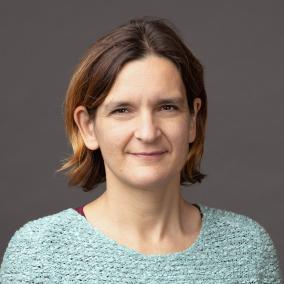
Esther Duflo is the Abdul Latif Jameel Professor of Poverty Alleviation and Development Economics in the Department of Economics at the Massachusetts Institute of Technology (MIT). She is also co-founder and co-director of the Abdul Latif Jameel Poverty Action Lab (J-PAL), holds the Chaire, Pauvreté et politiques publiques at the Collège de France, and serves as President of the Paris School of Economics. Her research focuses on understanding the economic lives of people living in poverty to help design and evaluate social policies. Her work spans multiple domains including: Development Economics Poverty Alleviation strategies Health interventions Educational programs Financial inclusion initiatives Environmental policy Governance improvements Duflo revolutionized developmental economics by pioneering the use of randomized controlled trials to test poverty reduction measures. Her empirical approach has challenged conventional opinions about development and has helped improve the efficient use of resources in poverty alleviation programs worldwide. She co-authored the influential books "Poor Economics" and "Good Economics for Hard Times" with Abhijit Banerjee, demonstrating through field experiments how specific interventions (like providing lentils to mothers for child immunization) can dramatically improve social outcomes. Her notable scientific achievements include: Sveriges Riksbank Prize in Economic Sciences in Memory of Alfred Nobel (2019) Princess of Asturias Award for Social Sciences (2015) Infosys Prize (2014) John Bates Clark Medal (2010) MacArthur "Genius Grant" Fellowship (2009) A.SK Social Science Award (2015) Duflo has established J-PAL as a global network of over a hundred affiliated professors who use scientific evidence to inform policy decisions in the fight against poverty. J-PAL has offices across Africa, Europe, Latin America and the Caribbean, North America, and South and Southeast Asia. Her work has demonstrated the crucial importance of information in policymaking, with numerous field experiments showing how carefully designed interventions can have significant impacts on social outcomes across multiple domains including health, education, and economic opportunity.
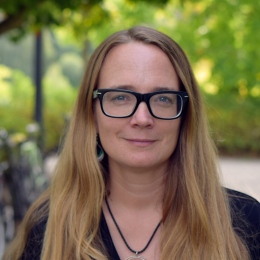
Andrea Voyer is a Professor of Sociology at Stockholm University , focusing on social norms, boundaries, and their role in shaping social inequality , particularly in the context of immigrant integration , class disparities, and ethnic inequality. She employs both qualitative and computational methods , including large-scale text analysis and cultural theory, to explore these themes. Her research has received funding from Riksbankens Jubileumsfond , the Swedish Research Council , the National Science Foundation (USA) , and the Russell Sage Foundation . Voyer serves as a program coordinator for master's programs in sociology and applied social research, and leads the department's research groups in qualitative methods , computational sociology , and cultural sociology . She is also an editorial board member for Sociological Theory and American Journal of Cultural Sociology , and contributes to public discourse on immigration, segregation, and social norms. Her recent publications highlight the use of computational techniques to analyze immigrant incorporation through shifts in mainstream discourse, the cultural processes of inequality during the COVID-19 pandemic , and the evolving role of class distinction-making in etiquette literature. These works bridge cultural theory with empirical analysis, offering actionable insights for addressing social inequality.
Jerrica Ty Rowlett serves as an Assistant Professor of Communication and Language Studies within the College of Arts and Sciences at Bryant University, where she examines digital communication's societal implications through research and teaching in digital culture and social media dynamics. Education Ph.D., Florida State University M.A., Clemson University B.A., Georgetown College Her research program investigates identity formation, civic engagement, and digital inequity through critical analysis of social media platforms. She explores how digital environments shape interpersonal relationships, political discourse, and community building while addressing power dynamics in online spaces, with particular attention to abusive contexts, gender representation, and emotional experiences. Analysis of her publication record (2015-2024) reveals a consistent trajectory examining social media's evolving societal impact. Early work focused on educational applications and youth culture, progressing to sophisticated analyses of political meme culture, relationship dissolution in abusive contexts, and emotional contagion online. Her scholarship demonstrates increasing attention to social justice dimensions within digital communication. Scientific Awards No awards documented in current sources Advising and Grants Student advising details and research grant information are not specified in available materials, though her extensive publication record indicates active scholarly mentorship and research productivity. Labs and Teams No dedicated research laboratories or formal collaborative teams are mentioned in the provided information.
Paul Gölz is an Assistant Professor at Cornell University's School of Operations Research and Information Engineering (ORIE), with affiliations in Computer Science. His research focuses on computational social choice, algorithmic fairness, and AI ethics, addressing topics like democratic innovation, fair resource allocation, and AI systems for diverse users. Education: Undergraduate studies at Saarland University (Germany), PhD in Computer Science from Carnegie Mellon University, followed by postdoctoral research at Harvard University, UC Berkeley, and the Simons Laufer Mathematical Sciences Institute. His work has been recognized with awards including the JPMorgan Chase AI Research Fellowship (2021) and honorable mentions for prestigious dissertation awards (Dantzig and ACM SIGecom). Research Highlights : Developed Panelot, a tool for selecting citizens' assemblies using state-of-the-art algorithms. His work on fair refugee resettlement and apportionment methods has been featured in Operations Research and Nature . Recent projects include AI alignment distortion analysis and generative social choice mechanisms. Teaching : Teaches Optimized Democracy (Spring 2025) and Mathematical Programming (Fall 2024). Supervises PhD students in ORIE, focusing on interdisciplinary applications of optimization and social choice. Awards & Grants : Received a $40K Structural Democracy Fellowship (Crankstart) and an OpenAI grant for Democratic Inputs to AI. Active in policy briefs (e.g., mini-public selection strategies). Labs/Tools : Co-developed Panelot.org , a nonprofit platform for fair citizen assembly selection. Active in open-source tool development for social choice applications.
Dr. Elaine T. Jurkowski serves as Professor in Social Work at Southern Illinois University's College of Health and Human Sciences, holding multiple leadership roles including Graduate Program Director (2021-present) and Program Director for Gerontology Programs (2020-present). She maintains cross-appointments as Adjunct Professor in the School of Medicine's Family Practice Residency Program and Professor in the Department of Health Education, demonstrating her interdisciplinary impact. B.S.W. (Industrial Social Work), University of Manitoba, Canada M.S.W. (Policy and Administration), University of Manitoba, Canada Ph.D., Public Health, University of Illinois at Chicago M.B.A., Southern Illinois University Carbondale (2022) Dr. Jurkowski's research program centers on health disparities, access to mental health services, aging, and disability issues, with particular focus on rural populations. Her work bridges public health, social work, and gerontology through innovative approaches to program evaluation, technology-enhanced teaching, and culture change in long-term care settings. She has developed expertise in international health planning and inter-professional collaboration across diverse cultural contexts. Her publication portfolio shows consistent thematic development across decades, with recent work focusing on medical tourism during the pandemic, rural-urban health disparities, and technology applications in gerontology education. These publications reflect her commitment to addressing healthcare access challenges for vulnerable populations through both scholarly inquiry and practical interventions. Great Cities Research Fellow in Health Provost Faculty Fellow (2018) Provost Assessment Fellow (2016) Student Hotspotting certification (2018-present) A.P.M. Assessment Academy certification (2016, 2017) Dr. Jurkowski has successfully secured over $1 million in research funding from agencies including Health Resources and Services Administration, The Hartford Foundation, and Administration on Aging. Her grant portfolio demonstrates sustained commitment to improving services for older adults and people with disabilities, particularly in rural settings. She has served as Graduate Program Director twice (2003-2014, 2021-present), mentoring numerous social work students through their academic and professional development. Her professional activities extend beyond campus through international consulting in West Africa, Hong Kong, India, China, Russia, and Egypt, and community engagement via the "Dare to Care" radio show and board service with Caring Counseling Ministries, Supporting People in Need, and UNA/USA Southern Illinois Chapter.
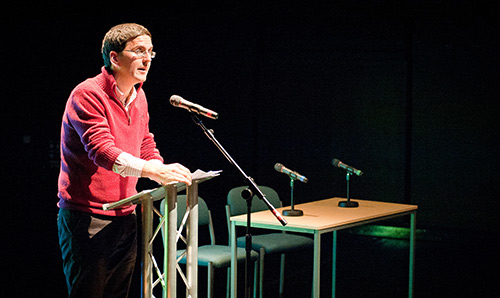
John McAuliffe is Professor of Poetry at The University of Manchester, where he joined in 2004 and currently directs the Creative Manchester research platform focused on Creative Industries, Creativity/Health/Well-being, and Creative Civic Futures. He founded and directed the internationally renowned Centre for New Writing (2007-2021). Additional roles include Associate Publisher at Carcanet Press, co-editor of PN Review, and trustee of Manchester's UNESCO City of Literature. His creative scholarship centers on contemporary poetry with emphases on Irish literary traditions, cross-cultural translation, and poetry's civic applications. Work spans lyric composition, editorial curation of emerging voices, and critical analysis of poetry's intersections with theatre, conflict studies, and social identity. His practice bridges academic scholarship and public literary engagement through institutional leadership. Recent publications reveal evolving thematic trajectories: 2024's National Theatre examines theatricality in modern verse, while Selected Poems (2021/2022) consolidates decades of work exploring Irish landscapes and personal memory. The Kabul Olympics (2020) and Stockholm Syndrome (2019) demonstrate sustained engagement with geopolitical conflict and psychological dimensions of displacement through poetic form. Major recognitions include: Observer Book of the Year (2021/2022) for Selected Poems Guardian Poetry Book of the Month (June 2020) for The Kabul Olympics TLS and Irish Times Book of the Year (2020) for The Kabul Olympics Poetry Book Society Winter Pamphlet Choice (2019) for Stockholm Syndrome McAuliffe served as Deputy Director of the Irish Arts Council (2013-2018), chairs strategic initiatives, contributes to AHRC peer review, and writes extensively for The Irish Times (2013-2020 column). He actively shapes literary policy through Manchester City Council's Events Commission and UNESCO City of Literature governance.
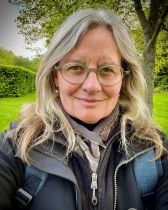
Laurie Shannon is the Franklyn Bliss Snyder Professor of English at Northwestern University, with a J.D. from Harvard Law School and a Ph.D. from the University of Chicago. She studies English literature and culture in the long sixteenth century, focusing on the history of ideas in language, stakeholdership, embodiment, and cross-species relations. She serves as convener of The Anne Lister Society and is collaborating with Oxford University Press on a scholarly edition of Anne Lister’s Journal. Education: J.D., Harvard Law School; Ph.D., University of Chicago Shannon’s research explores the political imagination in early modern literature, particularly through friendship (Sovereign Amity: Figures of Friendship in Shakespearean Contexts) and animal studies (The Accommodated Animal: Cosmopolity in Shakespearean Locales). Her current monograph, 'Frailty’s Name: Shakespeare and the Natural History of Human Being,' examines human negative exceptionalism in Renaissance thought and its implications for climate crisis ethics. Her publications span Shakespeare studies, queer theory, environmental humanities, and textual editing. Notable awards include the Elizabeth Dietz Memorial Award, Robert B. Cox Teaching Award, and Dean’s Award for Graduate Mentoring. She has held NEH, ACLS, and Guggenheim fellowships. Scientific Awards: Elizabeth Dietz Memorial Award, Robert B. Cox Distinguished Undergraduate Teaching Award, Dean's Award for Graduate Mentoring, NEH Fellowship, ACLS Fellowship, Guggenheim Fellowship Shannon contributes to the Anne Lister Diary Transcription Project and has served as English Department Chair at Northwestern. Her recent articles focus on Shakespeare’s engagement with natural history, queer cosmology, and animal sovereignty, reflecting her interdisciplinary approach.
Mu'izz Abdul Khalid is a Visiting Research Scholar and Fung Global Fellow (2024-25) affiliated with Princeton University. He concurrently serves as a Research Associate at the Global Awareness and Impact Alliance (GAIA), Brunei Darussalam's first non-governmental research organization, and an adjunct lecturer at Universiti Brunei Darussalam's Department of History and International Studies. His expertise lies in comparative politics and Southeast Asian history, with a focus on monarchical regimes and the interplay of colonial and indigenous governance structures. He holds a Ph.D. from the National University of Singapore (NUS) and a master's from University College London (UCL). Current research involves analyzing British colonial influences on Brunei's absolutist state formation. His recent articles explore civic subjecthood in Brunei and digital resilience against misinformation.
Elaine Chun is an Associate Professor in the Department of English Language and Literature at the McCausland College of Arts and Sciences, University of South Carolina. She holds a Ph.D. in Linguistics from the University of Texas at Austin (2007) and an A.B. in Linguistics from Stanford University (1995). Education: Ph.D. in Linguistics, University of Texas at Austin (2007); A.B. in Linguistics, Stanford University (1995). Research Interests Dr. Chun specializes in sociolinguistics and linguistic anthropology, with a focus on language, race, gender, and sexuality. Her work examines how language practices traverse racial and national boundaries, particularly in contexts like Asian American YouTube commentary, K-pop fandom, and U.S. public spaces. She investigates ideologies of race and gender, collaborative interpretation in social media, and anti-racist strategies. Publication Trends Her recent publications emphasize language in digital media, racial ideologies, and sociocultural identity. Topics include racism in public discourse, transnational social media analysis, racial parody, and the intersection of language with race and gender. Her work spans journals like American Speech , Language in Society , and Discourse & Society .
Professor Maarten Prak is a distinguished scholar of Economic and Social History at Utrecht University, where he has been a faculty member since 1992. He is affiliated with the Faculty of Humanities and the Department of History and Art History. Prak serves on the governing board of the Royal Netherlands Academy of Arts and Sciences (KNAW) and All European Academies (ALLEA), having previously chaired the Humanities Board of the Netherlands Organisation for Scientific Research (NWO) from 2014-2016. Prak's research spans social history, urban history, guild systems, citizenship, global history, and early modern European history, with particular focus on the Dutch Golden Age. His scholarly trajectory evolved from local Dutch social history to national history, then to comparative European history, and finally to global historical perspectives. His work demonstrates how urban citizenship, guild structures, and social organization shaped political development across Europe. His publication record reveals consistent engagement with long-term historical processes, particularly examining how citizenship evolved from urban contexts to national frameworks. His research connects economic structures with political institutions, showing how guilds, urban governance, and social hierarchies influenced the development of modern political systems across Europe. Member Royal Netherlands Academy of Arts and Sciences (2008) Teacher of the Year, Universiteit Utrecht (2014) Winner of the 2015 book award of the American Ceramic Circle Winner of the 2019 Prix Dix-Septième Siècle Prak has maintained an active teaching career alongside his research, earning recognition as Teacher of the Year in 2014. His academic governance responsibilities have included serving as research director for his department and faculty, chairing the Humanities Board of NWO (2014-2016), and participating in the governing boards of KNAW and ALLEA. He has organized numerous international workshops and conferences and has been a visiting scholar at prestigious institutions including the University of Cambridge, London School of Economics, and École des Hautes Études in Paris.
Walter W. Powell is the Jacks Family Professor of Education at Stanford University, with courtesy appointments in Sociology, Organizational Behavior, Management Science and Engineering, and Communication. He serves as Faculty Co-Director of the Stanford Center on Philanthropy and Civil Society (PACS), which he co-founded in 2006, and leads the Civic Life of Cities Lab examining civil society organizations across global metropolitan areas. Powell is also an External Faculty member at the Santa Fe Institute and co-directs the CASBS summer institute on Organizations with MIT's Bob Gibbons. His educational background includes a PhD in Sociology from SUNY-Stony Brook (1978), an MA in Sociology from the same institution (1975), and a BA from Florida State University (1971). Powell's research fundamentally explores how ideas and practices transfer across organizational boundaries, with particular emphasis on network structures that enable or constrain knowledge diffusion. His work spans organizational theory, institutional analysis, university-industry relations, economic sociology, and comparative analysis of nonprofit, public, and private institutional forms. Powell's publications reveal consistent focus on network dynamics and institutional evolution, particularly examining how organizations navigate between market, hierarchy, and network governance structures. His research demonstrates how knowledge spillovers operate within biotechnology clusters, how institutional isomorphism shapes organizational fields, and how civil society organizations adapt to technological and economic pressures across different urban contexts. Dean's Award for Excellence in Graduate Teaching (2018-19) Max Weber Award for "Neither Market Nor Hierarchy" Viviana Zelizer Prize for "Network Dynamics and Field Evolution" Administrative Science Quarterly Recognition Member of Swedish Royal Academy of Science Member of The British Academy Member of American Academy of Arts and Sciences Honorary Degrees from Uppsala University, Copenhagen Business School, and Aalto University Powell has made substantial contributions to graduate education, receiving Stanford's highest teaching honor. His leadership of PACS and SCANCOR (1999-2010) demonstrates sustained commitment to advancing organizational research through collaborative initiatives. He supervises postdoctoral fellows and runs annual PhD workshops in Europe, fostering the next generation of organizational scholars. His research has been supported by grants enabling comparative studies of university-industry relations and civil society across multiple national contexts. Through the Civic Life of Cities Lab at PACS, Powell directs comparative research on civil society organizations across seven global cities, examining how these organizations navigate technological change, economic pressures, and political environments. His work bridges theoretical organizational sociology with practical applications in philanthropy, civil society development, and knowledge transfer between academic and commercial sectors.
Daniela Iorio is an Associate Professor at the Department of Economics, University of Bologna, and holds a part-time professorship at the European University Institute’s School of Transnational Governance. She specializes in Political Economy, Health Economics, and Public Economics. Her work addresses topics like voting behavior, eating disorders, reproductive health, and parental investments. She earned a Ph.D. in Economics from the University of Pennsylvania and has held positions at institutions including USC, Universitat Autònoma de Barcelona, and the Barcelona Graduate School of Economics. Her research focuses on health policy, behavioral economics, and political institutions. Notable contributions include analyzing the link between eating disorders and addictive behaviors, evaluating IVF success disparities, and developing parenting measurement tools through digital interventions. She has been awarded the 2016 Oliver E. Williamson Prize and the Rita Levi Montalcini grant. Iorio teaches advanced courses on political economy and health economics at the PhD and master’s levels. She directs the Health Economics, Management and Policy master’s program at Bologna and has advised over a dozen graduate students. Her grants include a €758k MIUR project on child development and parental engagement. She serves as an Associate Editor for the European Economic Review and referees for top journals like the American Economic Review .
Yochai Benkler is the Berkman Professor of Entrepreneurial Legal Studies at Harvard Law School and faculty co-director of the Berkman Klein Center for Internet and Society at Harvard University. He specializes in Law and Political Economy, Technology Law and Policy, Communications Law, and Access to Knowledge. His work bridges academia and activism, focusing on the intersection of technology, collaboration, and societal structures. Benkler's research emphasizes decentralized collaboration, information commons, and the impact of technology on democracy. He has advised governments and international organizations on innovation policy and telecommunications. His notable works include The Wealth of Networks (2006), which explores social production in the digital age, and Reconstructing Class Analysis (2024), co-authored with Talha Syed, which rethinks class dynamics within capitalism. He has received numerous awards, including the Oxford Internet Institute Lifetime Achievement Award (2012), Ford Foundation Visionaries Award (2011), and Electronic Frontier Foundation Pioneer Award (2007). His work is publicly accessible at benkler.org . Benkler serves on the boards of the Open Society Foundations and the Freedombox Foundation. His research spans law, political economy, and technology, addressing issues like fake news, network propaganda, and the role of the internet in governance.
Leigh Oakes is Professor of French and Linguistics in the Department of Modern Languages and Cultures within the School of Languages, Linguistics and Film at Queen Mary University of London. He has held progressive academic positions at the institution since 2000, advancing from Lecturer to his current professorship. His international academic background includes a PhD from the University of Melbourne and research at Stockholm University's Centre for Research on Bilingualism. His educational qualifications include a PhD (2001) and BA (Hons) (1996), both from the University of Melbourne. Oakes specializes in language policy and planning, with particular focus on language and national identity in France, Quebec, and Sweden. His research has expanded into linguistic justice debates in political theory, advocating for normative and interdisciplinary approaches to language policy. Oakes' publication trends reveal a consistent focus on ethical dimensions of language policy, with increasing emphasis on pluricentric justice and linguistic integration since 2016. His work bridges sociolinguistics and political philosophy, demonstrating strong interdisciplinary connections between language attitudes, national identity construction, and policy implementation across Francophone contexts. The 2018 co-authored monograph 'Normative Language Policy' represents a significant theoretical contribution to the field. 2008 Pierre Savard Prize for 'Language, Citizenship and Identity in Quebec' Leverhulme Trust Research Project Grant for 'The Ethics of Linguistic Integration' project Co-editor-in-chief of Sociolinguistica: European Journal of Sociolinguistics Co-editor of Multilingual Matters book series Member of editorial boards for Language Policy and Modern Languages Open Oakes actively supervises PhD candidates in sociolinguistic topics, with current research focusing on linguistic integration in Quebec and adaptation among mobile French speakers. His major Leverhulme-funded project 'The Ethics of Linguistic Integration' examines moral implications of language requirements for immigrants across England, Quebec, and Wales. He serves on several international academic committees including the Association internationale des études québécoises and the British Association of Canadian Studies. He leads the interdisciplinary 'Ethics of Linguistic Integration' research team, which combines expertise from applied linguistics, sociolinguistics, and political theory to investigate language integration policies. His work connects with broader university initiatives through Queen Mary's research highways in social justice and global challenges.