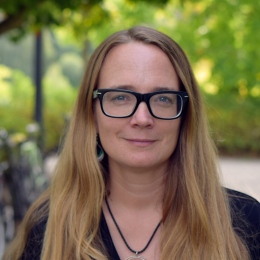
Andrea Voyer is a Professor of Sociology at Stockholm University , focusing on social norms, boundaries, and their role in shaping social inequality , particularly in the context of immigrant integration , class disparities, and ethnic inequality. She employs both qualitative and computational methods , including large-scale text analysis and cultural theory, to explore these themes. Her research has received funding from Riksbankens Jubileumsfond , the Swedish Research Council , the National Science Foundation (USA) , and the Russell Sage Foundation . Voyer serves as a program coordinator for master's programs in sociology and applied social research, and leads the department's research groups in qualitative methods , computational sociology , and cultural sociology . She is also an editorial board member for Sociological Theory and American Journal of Cultural Sociology , and contributes to public discourse on immigration, segregation, and social norms. Her recent publications highlight the use of computational techniques to analyze immigrant incorporation through shifts in mainstream discourse, the cultural processes of inequality during the COVID-19 pandemic , and the evolving role of class distinction-making in etiquette literature. These works bridge cultural theory with empirical analysis, offering actionable insights for addressing social inequality.
Mu'izz Abdul Khalid is a Visiting Research Scholar and Fung Global Fellow (2024-25) affiliated with Princeton University. He concurrently serves as a Research Associate at the Global Awareness and Impact Alliance (GAIA), Brunei Darussalam's first non-governmental research organization, and an adjunct lecturer at Universiti Brunei Darussalam's Department of History and International Studies. His expertise lies in comparative politics and Southeast Asian history, with a focus on monarchical regimes and the interplay of colonial and indigenous governance structures. He holds a Ph.D. from the National University of Singapore (NUS) and a master's from University College London (UCL). Current research involves analyzing British colonial influences on Brunei's absolutist state formation. His recent articles explore civic subjecthood in Brunei and digital resilience against misinformation.
Professor Tatsuhisa Tamura is affiliated with the Faculty of Law at Waseda University , specializing in Public Law . His academic career spans over two decades, with a focus on local government law, administrative law, and economic regulation. Research Interests include: Public Law : Constitutional frameworks and local governance structures. Disaster Relief Law : Legal systems for JSDF deployment in crises. Economic Regulation : Impacts of deregulation on administrative law. Civic Accountability : Judicial control mechanisms like resident litigation. Policy Reform : Decentralization and carbon-neutral governance. Recent Publications (2015–2020) address municipal financial systems, citizen litigation frameworks, and disaster response protocols. His work emphasizes balancing efficiency with democratic control in shrinking societies. Grants & Projects include: 2025–2029: Sustainable Public Official Law (JSPS Grant). 2019–2022: Civil Defense Systems in Large-Scale Disasters . 2017–2021: Legal Regulation of Local Government Enterprises . 2021–2025: Comparative Studies on Personnel Administration . Teaching involves courses like Local Government Law and Administrative Law at Waseda’s Graduate School of Law. He also contributes to public policy debates on carbon neutrality and judicial transparency.
Charles Rahal is an Associate Professor in Data Science and Informatics at the University of Oxford, with additional affiliations as an Associate Member of Nuffield College and Researcher at the Gradel Institute, New College. He serves as a Co-Investigator at the ESRC Centre for Care and sits on the Steering Group of Reproducible Research Oxford. His academic career includes previous roles as a Senior Departmental Research Lecturer at the Leverhulme Centre for Demographic Science and a British Academy Postdoctoral Fellow. Dr. Rahal completed his PhD in 2016 and has established himself as a prominent social science methodologist and applied social data scientist with expertise in high-dimensional econometrics. His research spans multiple domains, focusing particularly on unique Big Data origination processes and their relationship to social inequality, mobility, and stratification. He is deeply engaged in machine learning methods, civic technology, spatial and time series econometrics, model uncertainty, and scientometrics. His recent publications reveal a strong trend toward computational social science, with significant contributions to understanding prediction limits, pandemic impacts, healthcare systems, and environmental sustainability. The articles demonstrate his interdisciplinary approach, bridging traditional social science with cutting-edge computational methods, particularly in the analysis of large-scale datasets and development of novel metrics like the InterModel Vigorish for model comparison. Dr. Rahal is actively involved in teaching and mentoring, co-convening courses in Demographic Analysis, Life Course Research, and the Oxford Partner site of the Summer Institute in Computational Social Sciences. He has developed workshops on machine learning, command line interfaces, and LaTeX, reflecting his commitment to methodological training in social science. He leads the Metrics and Models lab and maintains several open-source projects including the GWAS Diversity Monitor and RobustiPy. His editorial roles include Associate Editor-in-Chief at the Journal of Social Computing and Associate Editor at ACM Transactions on Social Computing, highlighting his influence in shaping computational social science methodology.
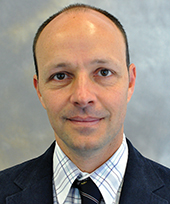
Ronald J. Colombo is Professor of Law and Associate Dean for Distance Education at Hofstra University's Maurice A. Deane School of Law. He teaches courses in Business Organizations, Securities Regulation, Contracts, and corporate law seminars. He has been on the faculty since 2006 and previously served as Associate Dean for Academic Affairs (2013–2015). Education: JD, New York University School of Law (magna cum laude, Order of the Coif), 1998 BS, Cornell University, 1994 Clerkship: Judge Jerry E. Smith, U.S. Court of Appeals for the Fifth Circuit Professor Colombo’s research focuses on corporate law, securities regulation, financial regulation, and the constitutional rights of corporations, especially First Amendment protections. His work explores the moral and philosophical underpinnings of corporate personhood, religious liberty in business, and the role of trust in financial systems. He is particularly known for bridging legal doctrine with ethical and theological perspectives. His recent scholarly publications reveal a strong thematic trend: the intersection of religion, corporate governance, and constitutional law. He has also contributed to legal education, especially in online teaching methodologies, and continues to publish on financial regulation and corporate ethics. Scientific Awards: Stessin Prize for Outstanding Scholarly Publication Lawrence A. Stessin Prize for Outstanding Scholarly Publication (2008) Professor Colombo has been actively involved in professional service, including serving on the editorial review board of the Review of Business and as an arbitrator for the Financial Industry Regulatory Authority (FINRA). He has not listed any formal research grants or PhD students, but his influence extends through media engagement—quoted in The New York Times , Wall Street Journal , and Bloomberg —and through his widely read op-eds in The Financial Times and Huffington Post . He has held leadership roles in academic administration and is a recognized expert in both practitioner and scholarly legal communities. His treatise Law of Corporate Officers and Directors is republished annually by Thomson Reuters, indicating sustained scholarly and practical impact.
Arthur Weststeijn is an Assistant Professor in Political History at Utrecht University, specializing in the history of the Dutch Republic and its colonial empire, the history and contemporary politics of Italy, and the history of Spain and Latin America. He is affiliated with the Department of History and Art History within the Humanities faculty and is part of the Research Institute for History and Art History, focusing on International and Political History. Dr. Weststeijn's educational background includes: PhD in History, European University Institute, Florence (2010) RMA in History, European University Institute, Florence (2006) MA in Philosophy, University of Amsterdam (2005) MA in History, University of Amsterdam (2004) Erasmus Exchange, Universidad de Sevilla (2000-2001) His research focuses on the intellectual history of power, particularly examining ideas that express and contest political authority through two main themes: colonialism (how ideas have shaped European colonialism and resistance against it) and republicanism (how resistance to autocratic rule has given rise to ideas of liberty, citizenship, and democracy). His work spans early-modern Dutch colonialism, anticolonial thought, the history of democracy, and connections between ancient and modern forms of settler colonialism. He has published extensively on early modern republicanism, the political uses of classical heritage, and the making of modern Italy. Weststeijn's scholarly output demonstrates a consistent focus on the intersections between political thought, colonial history, and republican theory. His work often examines how historical ideas continue to shape contemporary political discourse, particularly regarding democracy, citizenship, and colonial legacies. He frequently engages with both European and transatlantic intellectual traditions, showing particular expertise in Dutch and Italian political thought. His notable awards and fellowships include: Fellow, Huntington Library, San Marino, California (Summer 2022) Fellow, John Carter Brown Library, Providence, Rhode Island (Spring 2019) Director of Historical Studies, Royal Netherlands Institute in Rome (2011-2017) Dr. Weststeijn has served as a visiting researcher at prestigious institutions including the Cambridge Centre for Political Thought, University of Southern California, University of Wisconsin at Madison, and University of Padua. He frequently appears as an expert commentator on Italian culture and politics in Dutch media and maintains an active public intellectual presence. He is involved in multiple research initiatives including the IOS research themes on Contesting Governance, Futures of Democracy, and Longtermism and Institutional Change. His work often involves interdisciplinary collaboration with archaeologists, classicists, and scholars from various humanities disciplines.
Ricardo Sabates is a Professor of Education and International Development at the University of Cambridge, affiliated with the Faculty of Education and the Research for Equitable Access and Learning (REAL) Centre . He is a Fellow at Hughes Hall and serves as Deputy Director of Research at the Faculty of Education. His career spans institutions including the University of Sussex, Institute of Education London, and Hughes Hall, Cambridge. PhD in Development (University of Wisconsin-Madison, USA) MSc in Economics (University of Wisconsin-Madison, USA) BA Honours (ITAM, Mexico) Ricardo is a development economist with expertise in educational inequalities , particularly in low-income countries. His work focuses on quantitative methods , maternal education impacts , and equity in educational access and learning . He collaborates with international agencies such as the OECD , UNICEF , UNESCO UIS , DFID , and the World Bank . His recent research trends include large-scale educational reform in Ethiopia , community-school participation in India , disability and learning outcomes , and teacher effectiveness in Africa . Projects often involve experimental/quasi-experimental designs and policy evaluation in Ethiopia, Ghana, India, Pakistan, Rwanda, and Tanzania. Ricardo also supervises postgraduate doctoral and masters students and contributes to core research training courses at Cambridge. He is actively involved in multiproject collaborations funded by the DFID-ESRC , MasterCard Foundation , and CAMFED , addressing topics like girls' secondary education , teacher effectiveness , and equity in educational interventions .
Prof. Dr. Birgit Eickelmann is a Professor of School Pedagogy at the Institute of Educational Science within the Faculty of Arts and Humanities at Paderborn University. She has held this position since October 2012, initially as a W2 professor until January 2014, and then as a W3 professor (full professor) from February 2014 onward. Her research focuses on school and lesson development in the digital age, school pedagogy under digital transformation conditions, empirical school research, teacher education, and school leadership with emphasis on digital learning leadership. Her educational background includes a habilitation in Educational Science in May 2012, a PhD in Educational Science with summa cum laude in July 2009, and state examinations for teaching Mathematics and Physics in December 1996 and January 1999. Prof. Eickelmann's research centers on the digital transformation of educational systems, particularly examining how schools develop digital competencies among students and teachers. Her work emphasizes equitable access to digital learning opportunities, the role of school leadership in digital transformation, and the development of computational thinking skills. She investigates how schools can become resilient in the face of digital challenges, with special attention to organizational factors that support successful digital integration. Her publication record reveals a strong focus on international comparative studies, particularly the IEA's ICILS (International Computer and Information Literacy Study) across multiple cycles (2013, 2018, 2023). Her research spans digital literacy assessment, school-level factors influencing digital competence development, and policy implications for educational systems undergoing digital transformation. Prof. Eickelmann leads several major research initiatives including the National Research Center for the IEA Study ICILS 2023 (2021-2026), the German coordination of the Horizon-2020 project 'DigiGen' (2019-2022), and previous leadership of ICILS 2018 (2015-2021) and ICILS 2013 (2012-2015). She is actively involved in policy advising regarding digital education in Germany. She is a member of numerous scholarly organizations including the World Educational Research Association (since 2021), the Society for Empirical Educational Research (since 2016), and the German Society for Educational Science (since 2014), among others. Her work bridges academic research with practical implementation in schools through projects like 'Navigator Bildung Digitalisierung' and 'schultransformNEXT'.
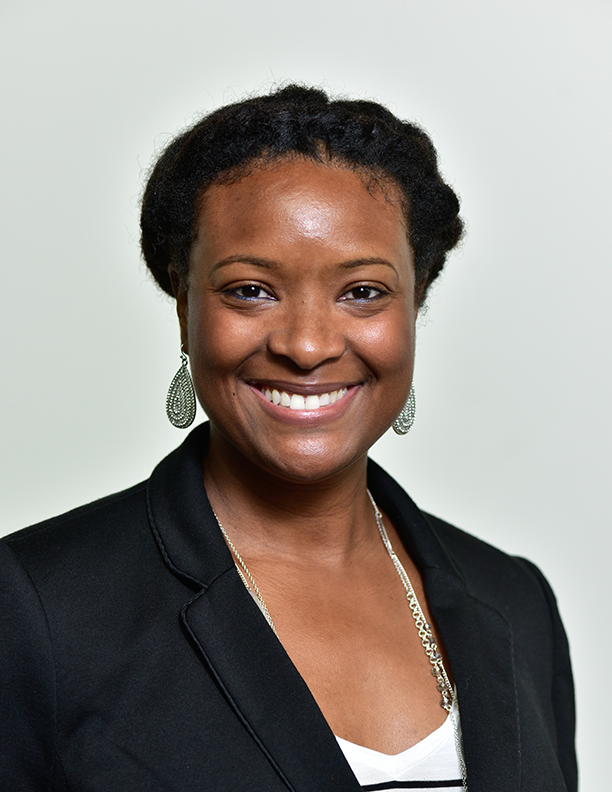
Tonya Sanders Thach, Ph.D., serves as Associate Professor in the Department of City and Regional Planning within Morgan State University's School of Architecture and Planning. A certified planner (AICP) with 17+ years of experience, she specializes in community engagement to address environmental, housing, transportation, and health disparities in marginalized communities through partnerships with faith-based organizations. Her academic credentials include: B.A. in Psychology from Truman State University (minor in Spanish) M.A. in Community Psychology and Social Change from The Pennsylvania State University Ph.D. in Urban Planning and Policy from the University of Illinois at Chicago Dr. Sanders Thach's research explores Faith-based Community Development, Curriculum Development, Health and Community Development, Community Engagement, and Climate Adaptation. She designs community engagement strategies and evaluates interventions for sustainability and equity, particularly in lower-income minority communities facing historic environmental injustice and housing disparities. Her work emphasizes dismantling structural barriers through faith-based partnerships while advancing public health and affordable housing solutions. Analysis of her 2014-2018 publications reveals consistent focus on power dynamics in faith-based cross-sector collaborations, climate adaptation in vulnerable urban settings, and community-driven historic preservation. Her work demonstrates how religious institutions can catalyze equitable development while navigating complex partnership challenges in marginalized communities. Her notable recognition includes: Civic Leadership Award, Proviso Action Committee (2011) Dr. Sanders Thach has secured significant grant funding including a $25 million Department of Energy grant for the Baltimore Social-Environmental Collaborative (2022-2027) as Co-PI, NIH-funded CBPR research on sanitation ($20,000), EPA green infrastructure projects ($60,000), and multiple community planning grants from local governments. Current initiatives involve partnerships with Enterprise Community Partners, Community Development Network of Maryland, and Southwest Partners to address housing, health, and climate resilience in Baltimore. She co-leads the Baltimore Social Environmental Collaboration (40+ researchers from 12 institutions), serves as Board Chair of Interfaith Partners for the Chesapeake, and contributes to national planning education through the Association of Collegiate Schools of Planning and American Planning Association.
Pedro Neves is a Full Professor in the Department of Management and Organizations at Nova School of Business and Economics (Nova SBE), Universidade Nova de Lisboa. His academic background includes a PhD in Industrial and Organizational Psychology/Organizational Behavior from ISCTE-IUL and post-doctoral research at the University of Delaware. He teaches courses in Organizational Behavior, Persuasion and Negotiation, and Entrepreneurship, and actively contributes to executive education programs. His research focuses on leadership processes , particularly the dark side of leadership , interpersonal relationships , organizational change management (especially resistance anticipation), occupational health (including stress perception), and entrepreneurial behavior . His work appears in leading journals such as the Journal of Applied Psychology , The Leadership Quarterly , and Human Resource Management . His recent publications show a consistent focus on leadership dynamics, organizational change, employee well-being, and ethical behavior, often using multi-level and cross-cultural frameworks. He has also edited key volumes such as the Handbook of Methods in Leadership Research and the Research Handbook on Destructive Leadership . He currently serves as Associate Editor of the Journal of Applied Behavioral Science and is on the Editorial Board of The Leadership Quarterly and other journals, reflecting his scholarly impact. Pedro Neves has collaborated with doctoral students and researchers globally and has contributed to both theoretical and applied aspects of organizational behavior. He has not received explicitly mentioned scientific awards in the text, but his editorial roles and publication record indicate significant recognition in the field. He is involved in the Leadership for Impact Knowledge Center and contributes to open and customized executive education programs at Nova SBE.
Mark Coeckelbergh is a Professor of Philosophy at the University of Vienna, specializing in the philosophy of technology, AI ethics, and robot ethics. He is affiliated with the Department of Philosophy and the Research Network Data Science at the University of Vienna. In addition to his academic position, Coeckelbergh has held significant roles including Former President of the Society for Philosophy and Technology (SPT) and Member of the European Commission's High-Level Expert Group on Artificial Intelligence (AI HLEG). His research focuses on the ethical, political, and philosophical implications of emerging technologies, particularly artificial intelligence and robotics. Coeckelbergh has published extensively in these areas, authoring influential books such as Robot Ethics (2022), The Political Philosophy of AI (2022), and Why AI Undermines Democracy and What To Do About It . His work explores how AI systems affect democratic processes, human agency, and social relationships. Recent publications demonstrate a strong focus on the relationship between AI, democracy, and ethical governance, examining how AI systems can both threaten and potentially enhance democratic processes through algorithmic transparency and participatory design approaches. Finalist of the World Technology Award 2017 Coeckelbergh teaches various courses including 'Introduction to Philosophy of LLMs,' 'LLMs and the Future of Writing,' 'Ethics and Robotics,' and 'Global Governance of AI.' He has supervised numerous students working on topics related to technology ethics and philosophy. He has been involved in several major research projects including H2020 PERSEO, WWTF Democracy Responsible Entrepreneurship, and FP7 DREAM (Development of Robot-Enhanced therapy for children with Autism spectrum disorders). Coeckelbergh has also announced upcoming guest professorships at the Institute of Philosophy of the Czech Academy of Sciences and Uppsala University, where he will work on environmental and technology ethics projects.
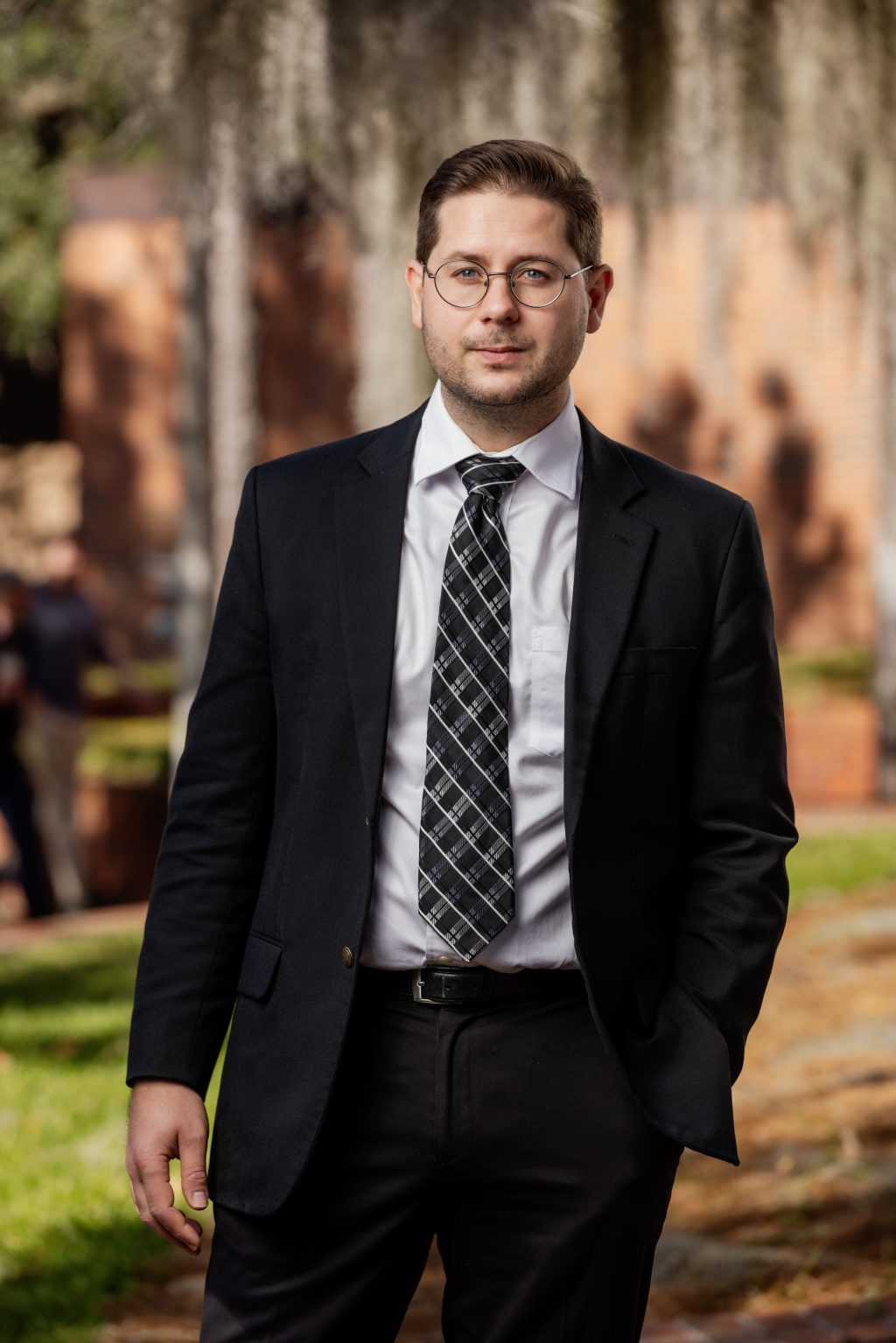
James Hooks is a Lecturer and Assistant Director at the Hamilton School of Classical and Civic Education, University of Florida. His roles include academic advising, course coordination, and overseeing operations for the School. He holds a D.Phil. in Theology and Religion from the University of Oxford (2023), an M.A. in Theological Studies from Regent College (2018), and a B.A. in Humanities from Athabasca University (2012). His research focuses on the intersection of religion and political thought after the Protestant Reformation, particularly examining how concepts like salvation and human nature shaped early modern European society. Central to his work is the study of Pierre Bayle’s justifications for religious toleration and their influence in 18th-century England. He also analyzes Bayle’s engagement with natural law and biblical scholarship, as well as the intellectual legacy of Mary Astell through her marginalia in the Pepys Library collection. His broader interests include secularism, Cartesian philosophy, and the history of toleration. James has taught courses such as The American Idea , (Un)Common Reads: The Case for Conscience , and Civil Discourse and the American Political Order across Canada, Japan, and the UK. Prior to his academic roles, he served as Finance Manager at the Canterbury Institute, managing operational budgets, administering the Barry Scholarship, and coordinating academic programming. He actively collaborates with faculty and students at Oxford and is involved in interdisciplinary projects at the Hamilton School. In his advising and grants work, James supports students through the Hamilton School’s programs and has experience administering scholarship funds. His current research on Astell’s engagement with French Cartesianism bridges early modern religious and philosophical thought.
Professor Mari Yoshihara is a bilingual scholar and writer affiliated with the University of Hawaii as a Core Faculty member. She serves as Editor of American Quarterly , the journal of the American Studies Association, and collaborates with international scholars. Her research focuses on U.S. cultural history, U.S.-Asian relations, Asian American studies, gender studies, and literary studies. She holds a BA from the University of Tokyo and a PhD from Brown University. Her work bridges academic and popular audiences, with notable publications including Embracing the East (2003), Musicians from a Different Shore (2007), and Dearest Lenny (2019). She also writes extensively in Japanese on topics ranging from graduate education to contemporary American culture. Her interdisciplinary approach combines historical analysis, ethnography, and personal narratives to explore cultural exchanges, identity, and music. Professor Yoshihara actively engages with classical music as an amateur pianist, participating in prestigious competitions like the Van Cliburn International Piano Competition. Her writings and fieldwork on music competitions highlight themes of civic engagement and cultural significance. Her blog and website further showcase her interests in U.S. affairs, classical music, and cross-cultural relationships.
Dacia Viejo-Rose is a Senior Lecturer in Cultural Heritage and the Politics of the Past at the Department of Archaeology, University of Cambridge , and serves as Deputy Director of the Cambridge Heritage Research Centre . Her research focuses on cultural heritage in contexts of armed conflict, examining its role in division, exclusion, and post-conflict reconciliation. She integrates perspectives from memory studies, political science, and transitional justice. PhD (2009) in Cultural Heritage from University of Cambridge British Academy Post-doctoral Fellow (2012–2014) Her work analyzes the symbolic and ethical dimensions of cultural heritage destruction and reconstruction, particularly in post-civil war Spain, Bosnia, and Syria. She advocates for reparations frameworks in international law and critiques the instrumentalization of heritage in global conflicts. Key publication themes include: Post-conflict justice and cultural property law Cultural violence and socio-legal approaches Memory politics and identity formation Heritage conservation and ethical interventions Scientific awards: British Academy Post-doctoral Fellowship Her exhibitions, such as the 2015 Gernika Peace Museum display , highlight the interplay between heritage and peacebuilding. She contributes to debates on democratic memorial practices and international involvement in post-conflict societies.
Olivia Khoo is Professor of Film and Screen Studies and Head of Film, Screen and Culture in the Faculty of Arts at Monash University. She is a leading scholar in Asian Australian and Asian cinema studies, with extensive contributions to media diversity, gender and sexuality in media, and streaming technologies. She is actively involved in national research leadership, including roles in the Australian Research Council College of Experts and the Screen Diversity and Inclusion Network. PhD in Cultural Studies – University of Melbourne LL.B. (Hons) – University of New South Wales B.A. (Hons) in English Literature – University of Western Australia Graduate Certificate in Higher Education – Monash University Her research centers on screen media diversity, streaming platforms, and transnational Asian and Asian Australian cinema. She explores how gender, sexuality, and race intersect in media representation, with a strong focus on diasporic identities and cultural citizenship. Her work bridges cultural studies, legal frameworks, and media industry practices to advocate for inclusive screen ecosystems. The recent publications reflect a sustained engagement with streaming technologies, racial representation, leadership in Asian Australian communities, and policy development for media diversity. Her work spans academic monographs, journal articles, and influential policy reports, demonstrating both theoretical depth and real-world impact in shaping equitable media landscapes. Special Commendation for the Dean’s Award for Postgraduate Research Supervision (2022) Three-time nominee, Monash Graduate Association Supervisor of the Year Award Founding Series Editor, Gender, Sexualities and Cultures in Asia (Springer) Founding Associate Editor, Studies in World Cinema: A Critical Journal (Brill) Olivia has supervised 18 PhD and MA students to completion and has led major research projects, including two ARC Discovery Projects. She is currently leading interdisciplinary collaborations across Law, Business, and Arts at Monash, particularly on the Incentivising Australian Screen Diversity report. She also co-founded the Asian Australian Studies Research Network and has held fellowships at the Asia Research Institute (NUS) and the University of California Humanities Research Institute. She leads the Film, Screen and Culture program at Monash and is central to initiatives like the Streaming Industries & Genres Network. Her collaborative projects involve national and international institutions, focusing on media flows between Australia and East Asia, and the transformation of cultural identity through digital platforms.