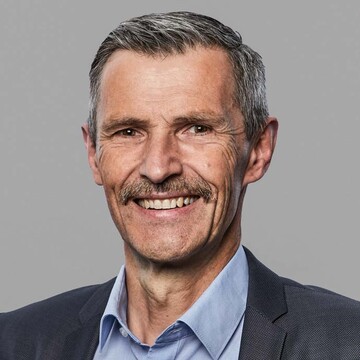
Ronald McGarvey is a Full Professor at IÉSEG School of Management since 2022, with prior roles including Associate Professor with Tenure at the University of Missouri (2013-2022) and Senior Operations Researcher at RAND Corporation (2002-2022). He holds a Ph.D. in Industrial Engineering and Operations Research from Pennsylvania State University and an H.D.R. in Industrial Engineering from the University of Paul Sabatier, France. Education : H.D.R. (2024), Industrial Engineering, University of Paul Sabatier Ph.D. (2002), Industrial Engineering and Operations Research, Pennsylvania State University His research focuses on Operations Research and Robust Optimization applied to diverse domains: Healthcare Logistics : Modeling access disparities in rural obstetric care for American Indian populations Environmental Sustainability : Analyzing biomass energy systems, forest carbon impacts, and waste management frameworks Network Design : Developing optimization models for supply chain resilience, military logistics, and urban transit safety Policy Analysis : Evaluating multi-state environmental collaborations and localized food systems His publications demonstrate strong interdisciplinary applications of mathematical programming and spatial optimization to real-world challenges in healthcare access, energy sustainability, and transportation systems. Key Collaborations : Working with researchers in public health (Thorsen, Noble), environmental science (Aguilar), and engineering (Mirzaee, Gutierrez-Lopez)
Meng Li is a Professor and the Endowed C. T. Bauer Chair of AI at the C. T. Bauer College of Business, University of Houston. He also serves as the founding Director of the Bauer Human-Centered AI Institute and the SCM PhD coordinator, highlighting his leadership in AI and operations research. His research centers on human-centered AI , managerial behavior , and human-algorithm interaction , with applications in supply chain management, operations, and strategic decision-making. His work explores cognitive biases, behavioral operations, and the integration of AI in business contexts. The 15 most recent publications demonstrate a consistent focus on behavioral aspects of operations management, particularly overconfidence, regret, and trust in AI systems. The research spans journals such as Management Science , Production and Operations Management , and Strategic Management Journal , indicating interdisciplinary impact across operations, strategy, and information systems. Scientific Awards and Honors: The President’s Circle Awards, University of Houston, 2025 Energy Transition Institute Award ($62.5K), 2024 John Aure Buesseler Distinguished Lectureship, Texas Tech, 2024 Shell Sustainability Research Grant ($100K), 2022 Management Science Distinguished Service Award, 2022 Rutgers Research Council Award, 2020 Finalist for INFORMS Best Service Science Paper Award, 2019 Meng Li advises PhD students as SCM PhD coordinator and leads major research initiatives through the Bauer Human-Centered AI Institute . His work is supported by grants from Shell, HPE, and NIST. He serves as Department Editor for Journal of Operations Management and Decision Sciences Journal , and Senior Editor for Production and Operations Management , and has guest-edited AI-focused special issues in top journals. He is actively building interdisciplinary teams at the intersection of AI, operations, and behavioral science, fostering collaborations across business, engineering, and health domains.
Remko Van Hoek serves as Professor of Practice in the Department of Supply Chain Management at the Sam M. Walton College of Business, University of Arkansas. He teaches Sourcing and Procurement courses across undergraduate, master's, and doctoral programs. Prior to joining the University of Arkansas, Dr. Van Hoek held academic positions in Europe and served as a visiting professor at Cranfield School of Management, complemented by extensive industry experience as a supply chain and procurement executive at global corporations including Nike, PwC, and The Walt Disney Company. He currently serves on the Council of Supply Chain Management Professionals (CSCMP) Board of Directors and acts as executive director of the CSCMP Supply Chain Hall of Fame hosted by the Walton College. Dr. Van Hoek's research centers on digital transformation in procurement and supply chain management, with particular focus on blockchain implementation, artificial intelligence applications, and sustainable sourcing practices. His work investigates how emerging technologies reshape procurement processes, supplier relationship management, and risk mitigation strategies. He explores innovative approaches to supplier diversity programs, ethical sourcing frameworks, and the strategic evolution of procurement from cost reduction to value creation. His research consistently bridges academic theory with industry practice through case studies from major corporations, developing actionable frameworks for practitioners facing digital disruption and sustainability challenges. Analysis of his 15 most recent publications (2023-2025) reveals dominant themes in AI-driven supply chain risk prevention, blockchain implementation for transparency, and sustainable supplier engagement. His work demonstrates consistent industry collaboration, drawing from case studies at Walmart, Moet Hennessy, and Bayer to address post-pandemic resilience challenges. A significant portion examines procurement's strategic evolution beyond transactional functions, with recurring emphasis on ethical considerations in digital transformation and the practical implementation barriers for emerging technologies in global supply networks. As a Professor of Practice, Dr. Van Hoek integrates executive-level industry experience into curriculum development and student mentorship. His industry-engaged teaching model includes guest lecturer programs connecting students with supply chain practitioners, as evidenced by his co-authored work on integrating industry insights into supply chain education. While specific grant funding details are not publicly documented, his leadership in the CSCMP Supply Chain Hall of Fame demonstrates commitment to professional development and industry-academia knowledge transfer. Dr. Van Hoek directs the CSCMP Supply Chain Hall of Fame initiative, which documents transformative contributions to supply chain management through interviews with industry pioneers and historical case studies. This platform serves as both an educational resource for Walton College students and a professional development tool for supply chain practitioners globally. The Hall of Fame preserves critical industry knowledge while highlighting contemporary innovations in supply chain strategy and technology implementation.
Prof. Dr. Evi Hartmann holds the Chair of Business Administration, especially Supply Chain Management at Friedrich-Alexander University Erlangen-Nuremberg (FAU) within the Department of Business, Economics, and Social Sciences. She is actively involved in multiple research focus areas including sustainability, energy markets and energy system analysis, and insurance and risk. Her academic leadership extends across interdisciplinary collaborations with engineering, mathematics, and industry partners. Dr. Hartmann studied industrial engineering at the University of Karlsruhe (TH), received her doctorate in 2002 from the Institute of Technology and Management at the Technical University of Berlin, and completed her habilitation in business administration in 2008. Prior to her academic career, she worked as a consultant at AT Kearney from 1998 to 2005, followed by a junior professorship for 'Purchasing and Supply Management' at the Supply Chain Management Institute at the European Business School. Her research program focuses on supply chain management, purchasing, and strategic foresight, with particular emphasis on application-oriented approaches that bridge theory and practice. Current research trajectories include supply chain resilience in crisis situations (including pandemic response), digital transformation through Industry 4.0 technologies, sustainable and low-carbon supply chains, and the integration of strategic foresight methodologies in logistics decision-making. Her work frequently employs Delphi studies, bibliometric analyses, and multi-tier case studies to examine complex supply chain phenomena. Analysis of her recent publications reveals a strong trend toward interdisciplinary research that combines supply chain management with digital transformation, sustainability, and crisis response. Her work increasingly examines the intersection of technology adoption (particularly Industry 4.0), organizational culture, and supply chain resilience across multiple industries including automotive, food, and maritime logistics. Prof. Hartmann is recognized as the author of two academic bestsellers in her field, though specific awards are not detailed in available materials. Her research has been published in top-tier journals including IEEE Transactions on Engineering Management, International Journal of Production Research, and Journal of Cleaner Production. Her research program demonstrates extensive industry collaboration, with numerous projects involving real-world implementations and close partnerships with companies. She leads research initiatives examining the practical implications of digital transformation, sustainability challenges, and resilience strategies in supply chain operations. Current projects include studies on digital ecosystems, physical internet applications, and the future of freight forwarding technologies. Prof. Hartmann participates in several research networks including the Energy Campus Nuremberg (EnCN) and collaborates with the Department of Mathematics on gas networks and markets research. She is also involved with the Nuremberg Energy Region (Energieregion Nürnberg eV) and contributes to interdisciplinary research centers focused on sustainable development and digital transformation in supply chains.
Associate Professor Bambang Trigunarsyah holds a position at RMIT University since 2018, affiliated with the School of Property, Construction and Project Management (PCPM). He earned his BSc in Civil Engineering from Colorado School of Mines, a Master's in Civil Engineering (Construction Management) from the University of Indonesia, and a PhD in Engineering Project Management from the University of Melbourne. His career spans industry roles, including project engineering in Indonesia's oil and gas sector, academic leadership at the University of Indonesia, and international teaching/research appointments at Queensland University of Technology (QUT) and King Fahd University of Petroleum and Minerals in Saudi Arabia. Research interests focus on post-disaster reconstruction, infrastructure project governance, constructability of infrastructure, and project management in developing countries. Notable projects include risk management frameworks using blockchain, circular economy in Saudi construction, and BIPV energy solutions. He actively supervises HDR students in areas like public-sector project success determinants and thermal environment studies. Bambang serves as Higher Degree Research Delegate Authority (HDR DA) for the School of PCPM and teaches postgraduate project management programs. Professional memberships include AIPM, PMI, and ASCE. His industry advisory roles include Indonesia's National Construction Service Development Board (2002-2007) and Australia-Indonesia Centre's Infrastructure Cluster (2016-2018). Recent research emphasizes BIM applications in infrastructure preservation, risk assessment methodologies, and climate-resilient construction. His work bridges theory and practice, addressing challenges in emerging economies and complex project environments.
Mazdak Nik-Bakht is an Associate Professor at Concordia University's School of Building, Civil, and Environmental Engineering. His work bridges construction engineering with digital innovation, focusing on smart infrastructure and sustainable development. PhD, Construction Engineering & Mgmt., University of Toronto PhD, Structural Engineering, Iran University of Science & Technology MASc & BASc, Structural and Civil Engineering, Iran University of Science & Technology His research integrates Artificial Intelligence and Social Network Analysis into construction management systems. Key areas include: Smart infrastructure and urban computing Deconstruction and circular economy principles Building Information Modeling (BIM) and digital twinning Process mining in Architecture, Engineering, and Construction (AEC) industry Decision models in construction project management Semantic computing and computational linguistics applications Recent publications show a focus on BIM analytics , urban resilience , and social media's role in infrastructure planning . Papers often combine AI and network theory to solve complex construction challenges. 2015 Outstanding paper award - Built Environment Project and Asset Management journal He teaches courses on: Big Data Analytics for Smart City Infrastructure Building Information Modeling (BIM) for Construction Building Economics Project Cost Estimating
Stefan Schaltegger is Professor for Sustainability Management at the Centre for Sustainability Management (CSM) at Leuphana University Lüneburg. With over two decades of research experience, he is a globally recognized scholar in sustainability management, corporate sustainability, and environmental accounting. His work bridges academic research with practical business applications, influencing sustainability practices across multiple industries. Professor for Sustainability Management at Leuphana University Lüneburg Director of the Centre for Sustainability Management (CSM) Extensive publication record in top sustainability journals Regular contributor to policy discussions on sustainability Professor Schaltegger's research focuses on sustainability management systems, corporate sustainability strategy, environmental accounting, sustainable business models, and sustainability transitions. His work examines how organizations can effectively integrate sustainability into core operations, emphasizing stakeholder engagement, sustainability performance measurement, and the development of compelling business cases for sustainability. He has pioneered research on sustainability management accounting, rebound effects in sustainability initiatives, and the role of change agents in corporate sustainability transformations. His research spans both theoretical development and practical application, making significant contributions to how businesses understand and implement sustainability. His recent publications reveal an evolving research trajectory with increasing focus on systemic sustainability challenges. Schaltegger has shifted from foundational work on sustainability management accounting toward more complex issues like environmental rebound effects, sustainability transformations, and regenerative business practices. His 2023-2025 publications show growing attention to climate change responses, biodiversity conservation, and the role of service innovation in sustainability transformations. The interdisciplinary nature of his work is evident in publications spanning business strategy, environmental science, accounting, and policy journals. Ranked among the world's top 2% scientists in the Stanford study (2020) Best Young Researcher of the Year at Leuphana University Lüneburg (2010) IFAC PAIB Committee Research award for "article of merit" (2003) Professor Schaltegger actively mentors doctoral students and early-career researchers, though specific student names aren't listed in the provided materials. His research is supported by numerous projects including "TrICo Subproject: Community Sustainable Production," "Account4GreenEco," and "Hochschulen in Gesellschaft – Realexperimente transformativer Lern- und Forschungsprozesse für eine Kultur der Nachhaltigkeit an Hochschulen." His work demonstrates strong industry engagement through collaborations with businesses implementing sustainability practices. The Centre for Sustainability Management (CSM), which Schaltegger leads, serves as a hub for interdisciplinary sustainability research, education, and practice. The CSM coordinates multiple research projects including the Innovation Network aiming at Sustainable Smartphones (INaS) and works closely with industry partners to develop practical sustainability solutions. The center's activities span research, education, and transfer, reflecting Schaltegger's commitment to bridging the gap between academic theory and business practice in sustainability.
Associate Professor Sam Kirshner is a faculty member at the University of New South Wales within the School of Information Systems and Technology Management . His research focuses on behavioral decision making , algorithmic impact on operations , and artificial intelligence applications in business contexts. PhD in Management Science from Queen’s University, Canada Teaching expertise in data visualization, predictive analytics, and AI ethics Co-author of Business Analytics: A Management Approach Member of the Ethical AI Advisory His research explores how psychological distance and construal level theory influence decisions in supply chains, technology management, and consumer behavior. Recent work examines ChatGPT's decision biases , algorithm aversion , and sustainable operations under financial constraints. Key publication trends show focus areas: AI ethics and human-AI collaboration Behavioral supply chain analysis Temporal/spatial psychological distance effects CO2 forecasting with sparse data Consumer behavior in digital platforms Virtual reality and cognitive processing Supervision roles include mentoring 2 PhD students and 6 honors students, contributing to the next generation of scholars in business analytics and technology management.
Miriam Wilhelm is a Full Professor of Sustainable Supply Chain Management at the Vienna University of Economics and Business (WU), where she contributes to Sustainability and Purchasing modules. She previously held a Full Professor position at the University of Groningen (2010-2022) and served as Academic Director for MSc programmes. Her research focuses on multi-tier supply chains, governance of sustainability, and human rights in global supply networks. She has published in top journals like Journal of Operations Management and Organization Science , and currently serves as Associate Editor at the Journal of Supply Chain Management . Her recent work explores forced labor mitigation via social intermediaries, plural sourcing for CSR, and mandatory due diligence legislation. She has received multiple Best Paper awards at Academy of Management Conferences (2016, 2018, 2020). Key Research Themes : Governance of supply chain sustainability Decent work and human rights Multi-tier supply chain complexity Education : Doctoral degree from Freie Universität Berlin; visiting researcher at University of Tokyo, Meiji University, and University of Melbourne. Activities : Regular speaker at Academy of Management Annual Meetings and other global conferences.
Ben Amor is a Full Professor in the Department of Civil Engineering at the Faculty of Engineering, Université de Sherbrooke, where he serves as Director and Founder of the CIRMIB (Integrated Research Center on Sustainable Materials, Infrastructure and Buildings) and Director of Sustainable Development for the Faculty of Engineering. Previously, he held associate professor positions at Université Laval and Université de Sherbrooke. His research focuses on Life Cycle Assessment (LCA) methodologies applied to sustainable construction, circular economy implementation in building sectors, and building decarbonization strategies. He has pioneered regionalized LCA approaches for Arctic regions and developed frameworks for carbon budgeting in building sectors. His work bridges environmental science with practical engineering solutions for sustainable infrastructure. His recent publications reveal strong trends in building decarbonization pathways, material circularity in construction, and the integration of biogenic carbon accounting. He emphasizes both technological solutions and behavioral change strategies for achieving net-zero emissions in the built environment. ACLCA 2018 Life Cycle Assessment Leadership Award Life Cycle Academy Awards 2019 (two awards) Quebec Public Administration Excellence Prize 2023 for Scientific Collaboration Multiple university teaching awards including the Jacques-Bazinet Merit Award Professor Amor leads significant research grants totaling over $20 million, including NSERC Alliance grants for sustainable building materials and a $2 million Research Chair on Net Zero Strategies and Life Cycle Assessment. He directs the CIRMIB research center and the LIRIDE (Interdisciplinary Research Laboratory in Sustainable Engineering and Eco-design), supervising multiple doctoral candidates. His work includes developing LCA tools for Quebec's construction industry and advising government bodies on sustainable procurement policies.
Ruhai Wu is a tenured Associate Professor of Marketing at McMaster University's DeGroote School of Business. He holds a B.Sc. and M.Sc. in Finance from Tsinghua University, and an M.A. and Ph.D. in Economics from the University of Texas at Austin. His research focuses on retail and industrial marketing strategies, including pricing, advertising, channel relationships, and platform management in digital ecosystems. He has been awarded grants from SSHRC and NSERC for projects analyzing sharing economies, mobile marketing, and social commerce. Dr. Wu's teaching portfolio includes courses on Digital Marketing, Marketing Management, and Marketing Research Methodology at both undergraduate and graduate levels. He actively supervises doctoral students and has published in top-tier journals such as the Journal of Retailing , Journal of Business Research , and Electronic Markets . His research explores platform governance, network effects, and online consumer behavior using game-theoretical models. Recent work examines live-stream shopping trends, cross-platform competition, and seller review manipulation. Dr. Wu has contributed to scholarly discussions on emerging digital marketing strategies and their societal impacts through media features and industry collaborations.
Dr. Bhavna Sharma is an Associate Professor and Director of the Chase L. Leavitt Master of Building Science Program at the USC School of Architecture. Her work focuses on decarbonization, bio-based materials innovation, and sustainable healthcare infrastructure. She leads the Keck USC Sustainable Healthcare Initiative (KUSHI) to advance environmentally conscious healthcare systems. Dr. Sharma holds a Ph.D. in Civil and Environmental Engineering from the University of Pittsburgh, with additional degrees in Art History and Architecture. Her research spans structural systems optimization from material harvesting to building-scale applications, emphasizing bio-composites like bamboo and timber. She co-chairs USC's Presidential Working Group on Sustainability, contributing to Assignment: Earth climate goals. Courses taught include seismic design, structural systems, and building science integration. Key research areas include lifecycle assessment in healthcare, seismic-resistant designs, and interdisciplinary standards for non-conventional materials. Her work bridges material science, architectural practice, and policy to address global sustainability challenges.
Professor Chee Yew Wong is a leading academic in supply chain management at Leeds University Business School (LUBS), where he holds the position of Professor and serves as Director for Research & Innovation in the Analytics, Technology and Operations department. He previously held a Chair in Logistics and Supply Chain Management at Hull University Business School and has served as a visiting professor in Thailand and China. His work bridges academia and industry, with over nine years of professional experience in operations and supply chain roles across multinational corporations and SMEs. His educational background includes a PhD in Supply Chain Management from Aalborg University, Denmark; an MSc in Manufacturing Management from Linköping University, Sweden; a BEng in Mechanical Engineering from the University of Technology, Malaysia; and a PG Certificate in Higher Education from Hull University, UK. Professor Wong's research centers on intelligent, responsible, and sustainable solutions for global supply chains. Key interests include digital supply chains, supply chain analytics, green logistics, human rights in supply chains, resilience, and circular economy models. He leverages technologies such as blockchain, machine learning, and IoT to enhance transparency, integration, and performance in complex supply networks. The analysis of his recent publications reveals a strong trend toward digital transformation, sustainability, and ethical governance in supply chains. His work increasingly emphasizes data-driven decision-making, environmental and social risk assessment, and the role of technology in enabling responsible global sourcing. Many projects focus on real-world applications in industries such as healthcare, fashion, retail, and manufacturing, often through Knowledge Transfer Partnerships with industry leaders. Best Reviewer Award, Operations and Supply Chain Management Division, Academy of Management Conference, Chicago, USA (2018) Prof. Xiande Zhao's Best Paper Award, International Conference on Operations and Supply Chain Management, Kaifeng, China (2017) Finalist for the Jack Meredith Best Paper Award, Academy of Management Conference, Anaheim, USA (2016) Emerald Best Paper Award, Supply Chain Management: an International Journal (2006) Professor Wong has successfully supervised 10 PhD students and 4 post-doctoral researchers, and has examined over 15 PhD dissertations internationally. He leads multiple research grants, including projects funded by Innovate UK, UKRI, ESRC, and the British Council, focusing on digital transformation, human rights, and green supply chain innovation. His collaborations span academia, government, and industry, demonstrating a strong commitment to impactful, applied research. He is actively involved in the Centre for Operations and Supply Chain Research, the Adaptation Information Management and Technology group, and the Centre for Decision Research at LUBS. These research groups support interdisciplinary work in analytics, digital technologies, and sustainable operations, fostering innovation and knowledge exchange across sectors.
Deodat Edward Mwesiumo is a Professor of Supply Chain Management at Molde University College (HiMolde), part of the Faculty of Logistics. He holds a PhD in logistics from the same institution and has extensive teaching and research experience since 2012. His roles include Head of the Supply Chain Management Research Group and member of the PhD committee. Previously, he directed the Bachelor program in Supply Chain Management and Logistics. His research focuses on supply chain resilience, digital business transformation, and tourism management. Key areas include procurement strategies, sustainability, circular economy models, and interorganizational relationships in tourism. He has published in high-impact journals like Production Planning and Control , Journal of Purchasing and Supply Management , and Annals of Tourism Research . Dr. Mwesiumo has led externally funded projects and contributed to over 50 peer-reviewed publications. He is affiliated with research groups such as MIIBS (Marketing, Innovation, International Business & Strategy) and the Transport Research Group (TRG). His teaching spans BSc and MSc levels, including courses on value chain analysis, digital business, and supply chain theory. Recent work emphasizes airport digital maturity, supply chain risk mitigation, and the impact of data-driven decision-making in public procurement. He has authored books like Making Value Chains Work and Fundamentals of Digital Business Management , underscoring his commitment to both academic and applied knowledge dissemination.
Henrik Haller is an Associate Professor at Mid Sweden University, affiliated with the Department of Natural Sciences, Design and Sustainable Development (NDH). His work integrates environmental science with practical applications in tropical regions, particularly focusing on land use, soil remediation, and sustainable food systems. Academic Title: Doctor of Philosophy Location: Östersund, Sweden Key Research Areas: Multifunctional land use, bioremediation, agroforestry, and sustainable development in the Global South Haller's research emphasizes transforming environmental challenges into opportunities. His work includes: Bioremediation of heavy-metal-contaminated soils using amaranth plants Urban agriculture potential in Swedish cities Life cycle assessments of cold-weather aquaponic systems Waste valorization strategies for contaminated lignocellulose sediments Universal design approaches to zero-waste communities Industrial symbiosis for local food systems He has ongoing projects in urban farming, wastewater resource recovery, and sustainable behavior transformation. His publications span topics from fungal metal tolerance to policy challenges in environmental governance.