Monica Marinescu is a Reader in the Department of Mechanical Engineering at Imperial College London's Faculty of Engineering. Her research focuses on understanding the physical and chemical processes influencing energy storage devices, particularly lithium-ion, lithium-sulfur batteries, and supercapacitors. She develops electrochemical and physical models to identify degradation mechanisms under real-world conditions, with applications in electric vehicles, space missions, and ultra-cold climates. Her affiliations include Electrochemical Science and Engineering, Energy Materials, and Mechanics of Materials. She collaborates with Prof. Alexei Kornyshev and has contributed to advancements like the Revolutionary Electric Vehicle Battery and UAV Zephyr projects. Her work emphasizes modeling solvent consumption in SEI layer growth, validation of Li-S battery models, and optimal cell design strategies. Publications highlight her focus on lithium-ion battery degradation, thermal management, and high-throughput computing methods. She is an editorial board member and has published extensively on topics such as cycle aging analysis, equivalent circuit networks, and degradation mode diagnostics. Her research bridges fundamental electrochemistry with practical engineering solutions for sustainable energy storage systems.
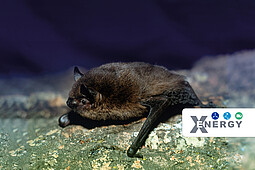
Prof. Veit Dominik Kunz is a Professor of Electrical Engineering and Renewable Energy at the Department of Process Engineering, Hamburg University of Applied Sciences. His academic role includes teaching and research in advanced electrical systems, power electronics, and renewable energy technologies. He is affiliated with the Faculty of Engineering and Computer Science and leads research projects such as FLEDERWIND (focusing on bat detection in wind parks) and Drones4Bats (wildlife impact assessment). His expertise spans semiconductor device design, nanotechnology, and strategic product development. Research interests include optimizing renewable energy systems, mitigating environmental impacts of wind energy, and advancing semiconductor technologies for high-performance electronics. His work bridges academic research with practical applications, particularly in energy management and sustainable technologies. Publications highlight contributions to vertical MOSFET design, renewable energy systems, and product development strategies. He is also involved in academic governance as head of the examination committee for his department.
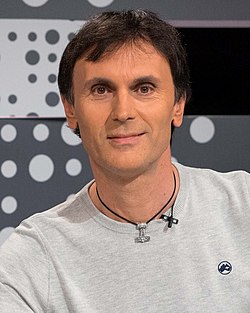
Profile Jorge Mira Pérez is a Professor of Electromagnetism at the University of Santiago de Compostela (USC), affiliated with the Department of Applied Physics and the Faculty of Physics. He holds roles at the Materials Institute (iMATUS) and the Strategic Grouping in Materials (AEMAT), leading the NanoMag research group on Magnetism and Nanotechnology. His research focuses on materials physics, nanotechnology, and social systems dynamics. Education PhD in Physics from USC (1995), thesis on magnetism of Gd2CuO4 particles under Dr. José Rivas Rey. Doctorate with Extraordinary Award from USC. Research Interests His work spans materials physics (multiferroic compounds, nanomaterials synthesis), nanotechnology (magnetic reactors, Fenton catalysts), and sociophysics (language dynamics, pandemic modeling). Notable collaborations include studies with Nobel laureate John B. Goodenough. Scientific Contributions Over 100 peer-reviewed articles across physics, materials science, and interdisciplinary topics. Key areas include magnetic properties of perovskites, daylight saving time policy analysis, and statistical modeling of social systems. Awards & Recognition Galicia Medal for Research (2022) for groundbreaking contributions across disciplines. Prismas Award (2017) and multiple national/divulgation prizes. Elected Corresponding Member of Royal Galician Academy (2016). Outreach Science communicator via TV (e.g., 'Ciencianosa'), radio, and print. Founded the ConCiencia Program featuring Nobel laureates, awarded the 2023 COSCE Diffusion Prize. Labs & Teams Leads the NanoMag Group at USC and collaborates with international institutions like the Max Planck Institute. Active in the Materials Institute (iMATUS) strategic network.
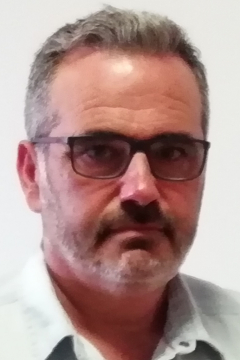
Germà Garcia-Belmonte, Full Professor of Applied Physics at the Universitat Jaume I's Institute of Advanced Materials (INAM), specializes in device physics and electrochemistry of perovskite materials. His research focuses on ion migration, charge transport mechanisms, and impedance spectroscopy in metal halide perovskite solar cells and X-ray detectors. Key research areas: Organic Electronics, Photovoltaics, Electrochemical Kinetics Awards: 2018 Highly Cited Researcher (Clarivate), Top 2% Scientist (2019-2024, Stanford) Recent work examines ionic space-charge zones, dynamic doping effects, and long-term stability mechanisms in perovskites. His group applies numerical simulations and operando electrochemical characterization to advance solar cell and radiation detection technologies. Notable techniques: Intensity Modulated Photocurrent Spectroscopy (IMPS), Light Modulated Impedance Spectroscopy (LIMIS) Applications: High-resolution X-ray imaging, Lithium battery electrodes
Fred K. Boadu is an Associate Professor at Duke University's Pratt School of Engineering , with additional appointments at the Duke Global Health Institute . His work bridges geophysics and civil/environmental engineering , focusing on non-invasive characterization of soil properties and sustainable infrastructure solutions in tropical environments. Education : PhD in Geophysics (Georgia Tech, 1994), M.S. in Geophysics (University of Calgary), Post-Graduate Diploma in Applied Geophysics (McGill University), B.S. in Geological Engineering (University of Science and Technology, Ghana) Research Interests center on petrophysical characterization of soils, geophysical methods for engineering applications, groundwater contamination studies in agricultural zones, and machine learning techniques for predicting geotechnical properties from electrical measurements. Selected Articles demonstrate trends in asphalt modification , fractal modeling of soil properties, and stress-dependent geophysical analysis for infrastructure applications in Ghana and tropical regions. Scientific Awards : Junior Faculty Enhancement Award - Applied Science Category (1997, University Oak Ridge Associated Universities) Seed Grant for 'Belonging While Black at Duke' (2021, Duke Office for Faculty Advancement) Grant History includes NASA and NSF funding for projects spanning electromagnetic earthquake signal analysis , groundwater sustainability in rural Ghana, and electrical-geotechnical correlation studies. As Director of Masters Studies (since 2024), he influences academic leadership and curriculum development in civil engineering education.
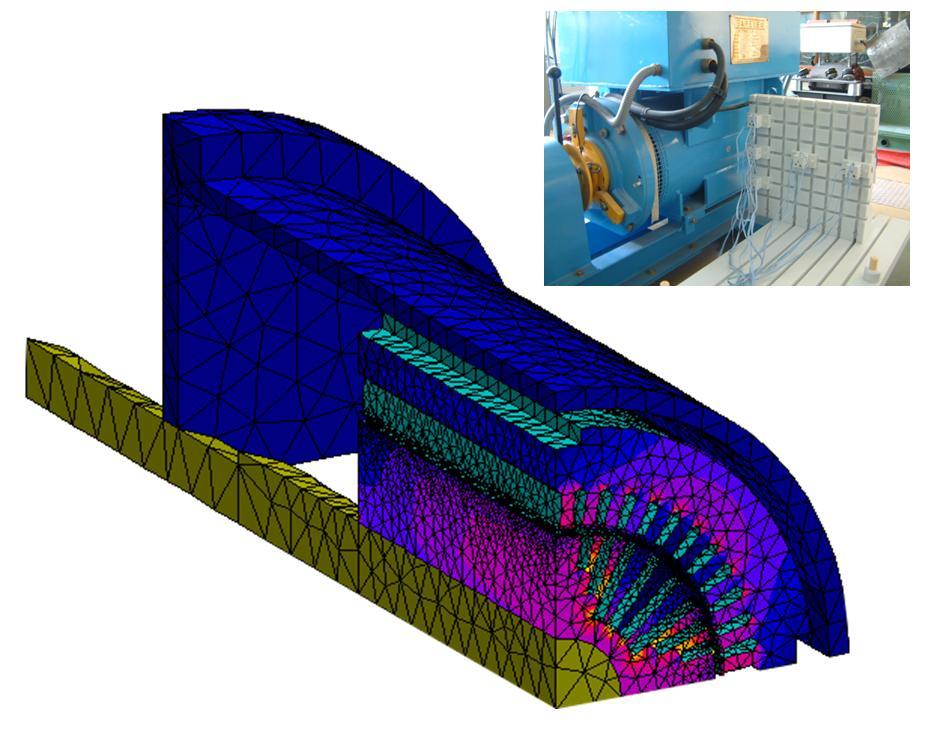
Olivier Chadebec is a CNRS Research Director at G2Elab, the power electrical engineering research department of Université Grenoble Alpes in France. He leads the 'Models, Methods and Methodologies Applied to Electrical Engineering' research team (MAGE group) and the ERT-CMF (Low Magnetic Fields Technological Research Group) at G2Elab. He was involved in creating the International Laboratory 'James Clerk Maxwell' in collaboration with the University of Lyon and Brazilian universities. Chadebec received his engineer and Ph.D. degrees in Electrical Engineering from the Grenoble Institute of Technology in 1997 and 2001. After a post-doctorate with Schneider Electric, he joined CNRS in 2003 as a Research Associate. He received his 'Habilitation à Diriger les Recherches' in 2011 and became a Research Director in 2015. He also spent a year in 2012 as a research associate at the Federal University of Santa Catarina in Brazil. His research focuses on computational electromagnetics applied to electrical energy conversion, developing numerical models, algorithms, and simulation tools for electromagnetic device analysis. His key research areas include finite element methods, integral methods, inverse problems, and low magnetic field metrology. He actively contributes to the development of the MIPSE platform commercialized by Altair Engineering via Flux software. His recent publications (2023-2025) show a strong focus on advanced computational methods for electromagnetic problems, including multiscale modeling, tensor compression techniques, FEM-BEM coupling for magnetoelectric effects, and optimization algorithms for electrical machine design and fuel cell diagnostics. His work demonstrates a consistent progression toward more efficient computational approaches for complex electromagnetic problems. Chadebec has supervised over 30 PhD students since 2006, with thesis topics spanning computational electromagnetics, inverse problems, fuel cell diagnostics, and submarine magnetic signature analysis. His research has significant applications in electrical machine design, fuel cell technology, submarine degaussing, and electromagnetic compatibility. He leads the MAGE research team and the ERT-CMF (Low Magnetic Fields Technological Research Group) at G2Elab, and has been instrumental in developing the MIPSE simulation platform used in industry through collaboration with Altair Engineering.
Chrysostomos Kasimis is a Lecturer in the Electronics and Computers Department at the University of Patras, affiliated with the School of Sciences. He holds a Master's Degree (2007) and a PhD (2013) in Electronics from the University of Patras. His primary roles include teaching laboratory courses such as Physics Laboratory IV/V, Computer Programming I/II, and Analog Electronics Laboratory. He is a member of the Laboratory Teaching Staff (EDIP) in the Electronics Laboratory. His research focuses on neural networks for control systems and analog VLSI integrated circuits , with contributions to adaptive filter design, low-power circuits, and bio-inspired neural network applications. His work spans hyperbolic function-based filters, zeroing neural networks for optimization, and companding techniques in biomedical signal processing. Publications highlight innovation in analog circuit design (e.g., sinh-domain filters, OTA-based systems) and interdisciplinary applications in finance through neural networks. His career demonstrates expertise in both theoretical and applied electronics, with a strong emphasis on practical laboratory instruction.
Dr. Kenneth W. Regan is a Professor in the Department of Computer Science and Engineering at the University at Buffalo, The State University of New York, where he is affiliated with the School of Engineering and Applied Sciences. He earned his BS in Mathematics from Princeton University in 1981 and his PhD in Mathematics from Oxford University in 1986. Dr. Regan's research spans theoretical computer science, mathematical logic, and computational complexity with a distinctive focus on chess analysis. His work bridges abstract theoretical concepts with practical applications, particularly through his "Fidelity" Chess Research project. He maintains the influential research blog "Gödel's Lost Letter and P=NP" which explores fundamental questions in theoretical computer science. His recent publications demonstrate a consistent focus on quantum computing algorithms, mathematical logic, and chess-based cognitive modeling, with significant contributions to quantum circuit simulation, complexity theory, and methods for analyzing human-computer differences in decision-making. His work has been featured in Chess Life, the New York Times, and NPR Weekend Edition. Developed innovative methods for analyzing chess games to measure cognitive tendencies Created mathematical frameworks for understanding human vs. computer decision-making patterns Contributed to quantum circuit complexity and simulation techniques As an educator, Dr. Regan teaches courses ranging from foundational theoretical computer science (CSE396) to specialized topics in quantum computing (CSE439/510) and cognitive analysis of chess data (CSE702). His teaching materials are known for their mathematical rigor and practical applications, with extensive lecture notes and resources developed over many years of instruction.
Phil Stewart is a Regents Professor in the Department of Chemical and Biological Engineering at Montana State University (MSU), affiliated with the Center for Biofilm Engineering and the Montana Nanotechnology Facility. He holds a Ph.D. in Chemical Engineering from Stanford University (1988) and has extensive experience in biofilm research, including postdoctoral work at the Institut Jacques Monod (Paris) and industry roles at Bechtel Environmental and Lonza AG. Research Focus: Stewart specializes in biofilm control strategies, transport phenomena, and antimicrobial agent development. His work addresses biofilm-related challenges in medical devices, chronic wounds, and industrial systems. Key areas include biofilm modeling, detachment mechanisms, and the interplay between biofilms and host immunity. Grants & Awards: Notable grants include leadership of the Montana Nanotechnology Facility (NSF-funded) and NASA projects on biofilm mitigation in space. Awards include MSU's highest faculty honor, Regents Professor (2019), and recognition as a NACOE Distinguished Professor (2018). Education: Ph.D. (1988), M.S. (1985) in Chemical Engineering from Stanford University; B.S. (1982) in Chemical Engineering from Rice University. Courses Taught: EBIO 216 (Elementary Principles of Biological Engineering) and EBIO 566 (Fundamentals of Biofilm Engineering). Key Contributions: Over 200 peer-reviewed publications, including seminal works on biofilm lifecycle models, antimicrobial tolerance, and neutrophil-biofilm interactions. His research impacts chronic wound treatment, infection control, and biofilm-resistant materials. Outreach: Active in global biofilm conferences, industry collaborations, and public education via the CBE's Bioglyphs Initiative.
Minjeong Kim is an Associate Professor and Interim Department Head in the Department of Computer Science at The University of North Carolina at Greensboro (UNCG), serving as a CAS Dean's Fellow. She holds a Ph.D. from Ewha Womans University, Korea, with postdoctoral research at the Biomedical Research Imaging Center (BRIC) at UNC Chapel Hill and the University of Pennsylvania. Her research focuses on biomedical image analysis, deep learning applications in neurodegenerative diseases, and computational neuroscience. Education includes a Ph.D., M.S., and B.S. in Computer Science and Engineering from Ewha Womans University. Professional experience includes roles as a Research Fellow at Ewha Womans University and visiting researcher at the University of Pennsylvania's Department of Radiology. Research interests emphasize graph neural networks for brain connectivity analysis, Alzheimer’s disease diagnosis via machine learning, and multimodal medical imaging techniques. Her work bridges computational methods with clinical applications, particularly in uncovering disease mechanisms through advanced imaging analysis. Her recent articles highlight innovations in graph representation learning, tau protein propagation modeling, and functional MRI analysis. She maintains a lab at Moore Building 301A and teaches graduate courses in software engineering and computer vision.
Dr. Chang-Hoon Choi is a researcher at the Institute of Neurosciences and Medicine (INM) , Forschungszentrum Jülich GmbH, Germany, with a focus on Medical Imaging Physics (INM-4) . His work bridges Magnetic Resonance Imaging (MRI) , PET-MRI hybrid systems , and RF coil instrumentation for neuroscience applications. Research Highlights: Development of double-tuned coils for 1H/X-nuclei imaging, ultra-high field MRI systems , and MR-PET hybrid technologies . Technical Expertise: Specializes in RF antenna arrays , signal optimization , and multinuclear MRI/MRS for brain studies. Key Article Trends : Over 15 recent publications emphasize coil design innovations (e.g., butterfly, dipole, and birdcage coils), hybrid MR-PET/SPECT systems , and neurochemical dynamics via tDCS-MRS integration and phosphorus/sodium imaging . Methodological advances include free water elimination in diffusion MRI , quantum filtering , and shielding techniques for UHF-MR systems . Applications : His work targets stroke , epilepsy , brain tumors , and neuroplasticity studies using preclinical animal models (rat, chick embryo) and translational hardware (e.g., 9.4T systems).
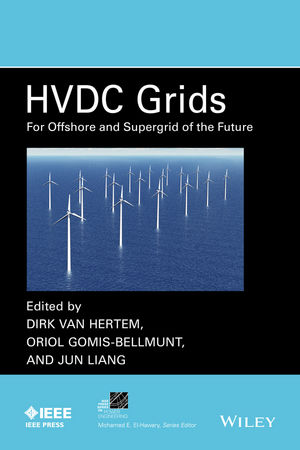
Professor Dirk Van Hertem is a faculty member at KU Leuven, Belgium, where he leads the Energy Transmission Competence Hub (ETCH) within the ELECTA division. He earned his M.Eng. (2001) from KHK Geel, M.Sc. (2003) and PhD (2009) from KU Leuven, and held a postdoctoral position at KTH Royal Institute of Technology (2010). His research focuses on power system planning, operation, and control, particularly for future transmission systems involving HVDC grids, offshore energy infrastructure, and supergrid concepts. Key research areas include: HVDC grid protection Underground power systems Cost-effective resilient energy supply Renewable energy integration Hybrid AC/DC system optimization He co-edited the seminal book HVDC GRIDS: For Offshore and Supergrid of the Future with researchers from UPC Barcelona and Cardiff University. His team includes 12 postdoctoral researchers and 24 PhD students working on topics ranging from grid restoration algorithms to cable fault localization and digital twin applications. Scientific distinctions: Fellow of the IEEE (PES, IAS) Active member of Cigré Principal investigator in multiple EU-funded projects Teaching responsibilities include advanced power system courses co-taught with senior professors. Regular PhD and postdoc vacancies are available through KU Leuven's job portal and the ETCH website.
Dr Alicia D'Souza is an Honorary Senior Research Fellow at the University of Manchester's Division of Cardiovascular Sciences. She holds a PhD in cardiac physiology from the University of Central Lancashire (2011). Her research focuses on cardiac ion channel regulation, arrhythmia mechanisms, microRNA control, and circadian rhythm impacts on heart function. Funded by the British Heart Foundation, her work explores pro-arrhythmic mechanisms in athletes and ageing populations. Education: PhD (2011, University of Central Lancashire) Research Themes: Cardiac ion channels, microRNA regulation, athletic-induced arrhythmias, circadian clocks in pacemaking Her team employs integrative approaches combining animal models, genomic technologies, and physiological studies to understand ion channel plasticity. Key projects include investigating microRNA inhibitors for sinus node dysfunction and circadian clock influences on cardiac conduction. She has secured grants from the BHF and collaborates internationally. Awards: 2019: International Society for Heart Research Richard J Bing finalist 2019: University of Manchester ‘Researcher in the Spotlight’ 2018: Inaugural Editorial Board Fellowship of Journal of Physiology Her work has been featured in media (e.g., BBC) and she actively engages in invited talks and editorial roles. Current projects include preclinical microRNA inhibitor development and studying arrhythmias in athletes.
Peter H. Aaen is a Reader in Microwave Semiconductor Device Modeling at the University of Surrey, with expertise in RF and microwave device modeling and characterization. His work focuses on developing advanced methodologies for high-power and high-frequency electronic devices, with applications in telecommunications and quantum technologies. Dr. Aaen received his B.A.Sc. in Engineering Science and M.A.Sc. in Electrical Engineering from the University of Toronto, Canada, and his Ph.D. in Electrical Engineering from Arizona State University, USA, in 1995, 1997, and 2005 respectively. Prior to joining the University of Surrey, he was the manager of the RF Modeling and Measurement Technology team at Freescale Semiconductor Inc (formerly Motorola Inc.), bringing significant industry experience to his academic work. Dr. Aaen's research spans several critical areas in microwave engineering, with a particular emphasis on developing multi-physics based modeling methodologies for high-power and high-frequency electronic devices. His expertise includes calibration techniques for microwave measurements, package modeling, development of compact models for microwave power transistors and RFICs, and efficient electromagnetic simulation methodologies for complex packaged environments. He has made significant contributions to understanding frequency dispersion in RF LDMOS transistors, electro-thermal modeling, and the development of measurement techniques for extreme impedance devices. His publication record demonstrates a clear progression from fundamental device modeling to advanced measurement techniques and applications in next-generation communications systems. Recent work has focused on multiphysics measurements, electro-optic field imaging, and the application of nanowire technologies to microwave switches, reflecting the evolving challenges in 5G and beyond communications infrastructure. Dr. Aaen is a Senior Member of the IEEE and active in several technical committees including the IEEE Technical Committee (MTT-1) on Computer-Aided Design, the technical program committee of the IEEE Conference on Electrical Performance of Electronic Packaging and Systems (EPEPS), and the executive committee of the Automatic RF Techniques Group (ARFTG). Dr. Aaen has supervised numerous PhD students whose research has advanced the field of microwave engineering, particularly in areas related to measurement uncertainty, multiphysics characterization of high-power transistors, and nanoscale device integration. His collaborative work spans multiple institutions and has resulted in significant advancements in understanding device behavior under complex operating conditions. His laboratory work focuses on developing novel measurement techniques that combine electro-optic systems with nonlinear vector network analyzers and load-pull measurement systems, enabling unprecedented visualization of electromagnetic field distributions within operating transistors. This work has led to breakthroughs in understanding oscillation mechanisms and thermal behavior in high-power devices.
Ceyhun Yildiz is a Doctor Lecturer at the Circuits and Systems Department within the Faculty of Engineering and Natural Sciences at Bandırma Onyedi Eylül Üniversitesi. Previously, he held academic positions at Kahramanmaraş İstiklal University and Kahramanmaraş Sütçü Imam University, serving as Department Head at Kahramanmaraş İstiklal University's Elbistan Vocational School. His academic career spans over a decade with roles including research assistant (2005-2008) and lecturer positions in Electrical Engineering. His research focuses on renewable energy systems, power electronics, and artificial intelligence applications in energy sectors. Key interests include wind energy optimization, machine learning-driven forecasting (e.g., wind power, solar output, electricity prices), and hybrid energy system integration. He has led projects on optimal turbine placement, energy storage solutions, and grid stability analysis. Yildiz has authored/co-authored over 40 publications, with recent works emphasizing deep learning models for electricity load forecasting and wind farm layout optimization. He teaches graduate courses on machine learning applications in engineering and has supervised master's theses on solar power estimation and hybrid energy systems. His work integrates theoretical and applied research, addressing challenges in renewable energy scalability and grid compatibility.