Professor Emma Widdis is a leading scholar at the Faculty of Modern and Medieval Languages and Linguistics at the University of Cambridge, specializing in the intersection of Soviet cinema, ideology, and cultural geography. Her work explores the reeducation of sensory perception through film, early Soviet urban spaces, and the construction of subjectivity via cinematic techniques. Teaches 20th-century Russian/Soviet literature, cinema, and film theory Focuses on sensory engagement, political avant-garde, and urban spatial representation Supervisor for MPhil and PhD students in Slavonic Studies Her recent book Socialist Senses (2017) examines how cinema shaped Soviet perceptions of reality. Her publications span topics like silence in sound film, set design materiality, and costume symbolism in early Soviet cinema. While no formal scientific awards are listed, her research has been supported through institutional grants and collaborations with centers like CRASSH and Cambridge Language Sciences.
Mary Bucholtz is a Professor in the Department of Linguistics at the University of California, Santa Barbara (UCSB). She holds affiliations with multiple departments including Anthropology, Feminist Studies, Spanish and Portuguese, the Gevirtz Graduate School of Education, Comparative Literature, and Latin American and Iberian Studies. Her research integrates sociocultural linguistics with anthropological, gender, and social justice frameworks. Education: PhD in Linguistics, University of California, Berkeley (1997) Bucholtz's work examines how language shapes and is shaped by social identities, particularly among youth, through dimensions like race, gender, and cultural practices. She emphasizes community-centered research , linguistic activism , and interdisciplinary methodologies to address systemic inequalities. Recent publications explore affective agency in Latinx youth, educational equity, and antiracist linguistics. Her collaborative projects often involve partnerships with educational institutions and youth communities in California, focusing on translanguaging , Black language justice , and raciolinguistic ideologies . Grants from the National Science Foundation, Spencer Foundation, and Wenner-Gren Foundation support her research. She co-edited the open-access volumes Decolonizing Linguistics and Inclusion in Linguistics (Oxford University Press, 2024), alongside authoring White Kids: Language, Race, and Styles of Youth Identity (Cambridge, 2011) and Talking College: Making Space for Black Language Practices in Higher Education (Teachers College Press, 2022).
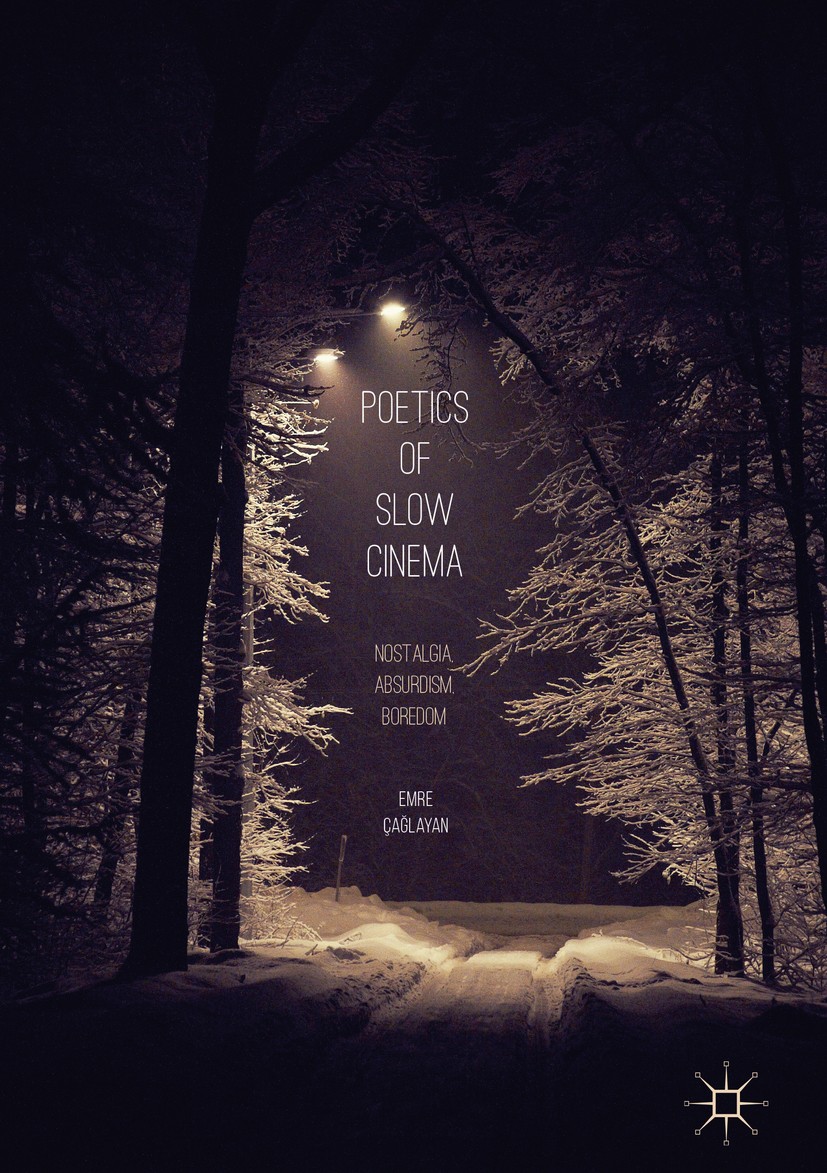
Emre Caglayan is an Assistant Professor and Program Coordinator for Film Studies at the American University of Paris (AUP). He holds a PhD in Film Studies from the University of Kent (2014) and an MA in Film and Television from Istanbul Bilgi University (2009). His research focuses on global art cinema, slow cinema aesthetics, and the intersection of cinematic form with embodied experiences like walking. Caglayan’s work explores how cinema shapes lived experiences through close analyses of film texts and their cultural contexts. Key research interests include the affective qualities of film sound, urban space representations, and ethical dimensions of political filmmaking. His monograph Poetics of Slow Cinema: Nostalgia, Absurdism, Boredom (Palgrave, 2018) is a seminal work in slow cinema studies. He currently investigates walking as an artistic practice linked to cinema, curating film seasons and designing participatory walking activities. Caglayan teaches courses on film theory, international cinema, and cinematic history at AUP. His work has been published in journals like Quarterly Review of Film and Video , Projections , and Jump Cut , with recent contributions on Turkish cinema and film/music intersections.
Nicholas Wiltsher is an Associate Professor at the Department of Philosophy; Aesthetics at Uppsala University since 2019. His research focuses on aesthetics, philosophy of mind, and race/gender studies, exploring topics like imagination's role in art, gender norms in aesthetics, and electronic dance music's philosophical dimensions. He holds a PhD from the University of Miami and has held academic roles at institutions including Antwerp, Auburn, Porto Alegre, and Leeds. Education: PhD in Philosophy from the University of Miami. Previous affiliations include universities in Antwerp, Auburn, Porto Alegre, and Leeds. Research interests include: the interplay between art and imagination, aesthetic norms and gender, expression theory, philosophy of race and gender, and electronic dance music aesthetics. He critiques traditional disciplinary boundaries in aesthetics and advocates for interdisciplinary approaches. His recent publications (2023–2025) emphasize imagination's epistemic role, the aesthetic constitution of gender identities, and critiques of additive imagination theories. Earlier work (2016–2019) addressed electronic dance music's cultural ontology and Collingwood's expression theory. Awards: No scientific awards explicitly listed. Grants and advising: No grants or student advisees explicitly mentioned in sources. Labs/Teams: No specific research groups or labs mentioned, though his work engages interdisciplinary collaborations in aesthetics and cultural philosophy.
Dr. Philip Kirby is a Senior Lecturer in the History of Education at King’s College London’s School of Education, Communication & Society. He joined in 2020 after roles at the University of Oxford, the Sutton Trust, and the University of Exeter. His research focuses on the historical and social dimensions of specific learning difficulties like dyslexia and dyspraxia, alongside children’s culture and education policy. His notable work includes Dyslexia: A History (2022, co-authored with Prof. Margaret J. Snowling) and entries in encyclopedias like Palgrave Encyclopedia of Disability . He also explores geopolitical themes in media, including film scores and video games. Recent projects include Delphi studies on dyslexia assessment and policy reform. His research spans education policy, private tuition dynamics, and the intersection of popular culture with disability ethics. He actively contributes to interdisciplinary initiatives like the Centre for Public Policy Research, addressing social justice in education and policy.
Professor Anna Marie Munster is a distinguished academic and artist at UNSW Art and Design (College of Fine Arts), where she has held a full-time tenured position since 2001. Her work bridges theoretical scholarship with creative practice, establishing her as a leading figure in digital media art and critical theory. University: University of New South Wales School: College of Fine Arts (UNSW Art and Design) Position: Professor Qualifications: PhD from UNSW (2002), BA (Class 1 Hons with University Medal) from University of Sydney (1984) Professor Munster's research explores the intersections of art, technology, and philosophy, with particular focus on statistical visuality, radical empiricism, the politics and aesthetics of machine learning, and more-than-human perception. Her work integrates process philosophy with contemporary media practices, examining how time, movement, and sonicity shape our experience of digital environments. She approaches these topics through both theoretical scholarship and creative practice, often collaborating with artist Michele Barker on multi-channel audiovisual installations. Her publications reveal a consistent trajectory exploring the relationship between embodiment and digital media, with recent work focusing on AI and machine learning in cultural contexts. Munster's creative output demonstrates sophisticated integration of technical innovation with philosophical inquiry, particularly in how her installations challenge conventional perceptions of time and space. ARC, UNSW Student Council Award for Excellence in Postgraduate Supervision (2017) Dean's Award for Excellence in Postgraduate Supervision (2015) Highly commended for Materializing New Media at Prix Ars Electronica (2008) Winner of National Digital Art Awards 'The Harries' (2006) University Press of New England Publishing Award (2005) Professor Munster has completed over 20 PhD and Masters supervisions at UNSW and been involved in another 10 secondary supervisions. She currently supervises five PhD candidates working on diverse topics including coding materialities, critical bio-textiles, schizophrenia and XR technologies, sound and resonance, and affective drawing. Her ARC-funded research projects demonstrate sustained commitment to interdisciplinary work, particularly at the intersection of art, science, and technology. Her creative practice with Michele Barker has resulted in numerous commissioned installations exploring perception, embodiment, and the relationship between humans and technology.
Dr. Dan White is a Senior Lecturer in Musicology at the Department of Media, Humanities and the Arts, School of Arts and Humanities, University of Huddersfield. His research focuses on fantasy worldbuilding through music in film, theme parks, and transmedia contexts. As a member of the Centre for Research in Music and its Technologies, he explores cinematic sound design and audience emotional engagement with musical motifs. Specializes in fantasy film music analysis Expert in diegetic/non-diegetic sound dynamics Investigates nostalgia through musical cues Recent publications examine Harry Potter's musical universe, Jurassic Park's sonic environments, and Amazon's Rings of Power TV adaptations. His work contributes to understanding how music shapes immersive fictional worlds across multiple media platforms.
Professor Karen E Lury is a distinguished academic at the University of Glasgow , serving as Head of School for the School of Culture & Creative Arts and as a Professor of Film & Television Studies within the Theatre, Film & Television Studies department. She is also the Editor of Screen journal and served as Dean of Research for the College of Arts from 2014 to 2017. Her research interests center on Children's film and media , Screen Performance , and Amateur film and media . These areas are reflected in her editorial projects and publications, which explore the intersection of childhood, authenticity, and media representation. The 10 most recent articles in her bibliography highlight trends in television and film studies, focusing on themes like the role of care in media consumption , postcolonial narratives in British television , amateur film practices , and children's subjectivity in reality TV . Her work bridges theoretical analysis with empirical studies , often incorporating interdisciplinary methodologies. Professor Lury has secured significant grants including a Leverhulme Trust grant (2015, £1.05M) and AHRC research funding (2010, £584k). She has supervised over 10 PhD students to completion, including Anderson, Jack (Bodies of Water and Geographies of Childhood in British Cinema) and Lu, Junwei (Taiwan Childhood Cinema). Her academic service includes membership on the AHRC advisory board since 2015 and editorial roles for journals and book series. She offers office hours by appointment and maintains an ORCID profile for her research outputs.
Paul D. Miller, known professionally as DJ Spooky, That Subliminal Kid, is a Professor of Music and Mediated Art at The European Graduate School (EGS). Based in New York City, he is an experimental electronic and hip-hop musician, conceptual artist, and writer whose work spans music production, film, multimedia installations, and critical theory. He has released over a dozen albums pioneering 'illbient' and trip hop genres, authored influential books including Rhythm Science and Sound Unbound , and exhibited internationally at venues like the Venice Biennale and Andy Warhol Museum. Education: Bowdoin College: Studied philosophy and French literature; thesis on Richard Wagner's Gesamtkunstwerk as precursor to new media. Research Interests: Miller's work centers on remix culture as a postmodern methodology, exploring intersections of sound, image, and technology. His theoretical framework positions the DJ as a 'post-subjective auteur' who creates meaning through layered connections across time, culture, and media. Key projects include Rebirth of a Nation (reworking D.W. Griffith's film to address racial history) and Terra Nova (Antarctica sound recordings addressing climate change), demonstrating his focus on historical reinterpretation and environmental crisis through digital media. Publications: His 14 scholarly articles (2001-2009) analyze remix as cultural practice across domains from album art history ( The Inner Sleeve ) to Baudrillard's philosophy ( Baudrillard: A Remembrance ). The corpus reveals consistent investigation into how sampling, digital layering, and media archaeology reshape narrative, memory, and cultural identity in the information age. Awards: No scientific awards or fellowships were documented in the source text. Advising and Grants: The source text provides no information regarding students supervised, academic advising, or research grants administered by Miller. Labs and Teams: Miller operates through project-based collaborations rather than fixed labs, forming temporary collectives with institutions like the American Museum of Natural History (for Terra Nova ) and artists including Yoko Ono, Ryuichi Sakamoto, and choreographer Francesca Harper. His 'Unfinished Stories' project with Pulitzer-winning critic Margo Jefferson exemplifies his interdisciplinary approach bridging dance, music, and social commentary.
Darshana Sreedhar Mini is an Assistant Professor in the Department of Communication Arts at the University of Wisconsin–Madison, where she teaches and conducts research at the intersection of feminist media, gender & sexuality studies, transnational media, migrant media, and South Asian screen cultures. She is also the Director for Media and Gender Justice at the 4W Initiative and holds affiliations with the Center for Southeast Asian Studies, Gender and Women’s Studies, Center for Visual Cultures, Center for South Asia, and the Havens Wright Center for Social Justice. Ph.D., Division of Cinema and Media Studies, University of Southern California M.Phil., Center for Studies in Social Sciences, Calcutta (CSSSC), India Dr. Mini’s research centers on Global Media Cultures, Transnational Cinemas and Migration, South Asian Cinema, and Feminist Media. Her work critically examines soft-porn cinema in India, media publics, censorship, labor in the entertainment sector, and migrant media practices. Her first book, Rated A: Soft-Porn Cinema and Mediations of Desire in India (UC Press, 2024), is a groundbreaking study that combines archival and ethnographic methods to explore the social and cultural impact of Malayalam soft-porn from the 1970s to the 2000s. Her second book project, Telegeographies of Indian Migration , investigates media flows between South Asia and Southeast Asia, focusing on colonial-era labor migration and its lasting effects on identity and community formation. Her recent publications span a diverse range of topics including South Asian pornographies, digital intimacy, anti-caste activism, #MeToo and intersectional feminism, transnational empathy in cinema, and media infrastructures. These works reflect a strong trend toward interdisciplinary, feminist, and decolonial scholarship that challenges dominant canons in film and media studies. Edward Cameron Dimock, Jr. Prize in the Indian Humanities, AIIS, 2024 Early Career Award, NCA, 2024 Race, Ethnicity and Indigeneity Fellow, IRH, UW-Madison, 2024 Byerly Award for Feminist Political Economy, ICA, 2023 First Book Award, The Center for Humanities, UW-Madison, 2022 SCMS Student Writing Award, 2017 Dr. Mini has been actively involved in academic service and leadership, including directing the Media and Gender Justice initiative, co-organizing seminars on migrant media, and contributing to feminist and anti-caste scholarship. Her research has been supported by prestigious grants from the Social Science Research Council (SSRC), American Institute of Indian Studies (AIIS), National Endowment for the Humanities (NEH), and the University of Wisconsin–Madison. She also leads a significant grant-funded project as Principal Investigator for the 'South Asian Film and Media Collection' at UW-Madison. She is a key member of several collaborative research environments, including the Center for Visual Cultures and Performance Studies (CVCPS), the Wisconsin Center for Film and Theatre Research (WCFTR), and the 4W Initiative, where she directs programming on media and gender justice. These affiliations reflect her commitment to interdisciplinary, socially engaged scholarship and the creation of inclusive academic communities.
Dr Nikki Ji-Yeon Lee is a Senior Lecturer in Asian Media at Nottingham Trent University's Department of Humanities, School of Social Sciences. With prior academic appointments at Yonsei University and Korea National University of Arts in Seoul, her career bridges UK and Korean academic spheres. She co-founded the London Korean Film Festival in 2001 and maintains active industry connections as a former independent documentary filmmaker and film event interpreter. Her educational background includes: BA and MA in Sociology from Yonsei University, Seoul MA in TV Documentary from Goldsmiths College, University of London PhD in Cultural Studies from Goldsmiths College, University of London Lee's research specializes in transnational East Asian cinema with emphases on Korean and Chinese film industries, film festival circuits, and cinematic soundscapes. Her work critically examines globalization's impact on film production, auteur branding, audience reception, and co-production models, particularly investigating how cultural specificity navigates global markets. Current projects explore Korean film sound design, China-Korea media collaborations, and East Asian television drama formats. Analysis of her 2018-2025 publications reveals evolving research trajectories: early work focused on film festival politics and auteur studies (e.g., Park Chan-wook), while recent scholarship increasingly engages with sound studies and occult genres in Korean cinema. Her output consistently bridges industrial analysis with cultural criticism, demonstrating expertise in both Korean cinematic traditions and transnational media flows. Lee has significantly contributed to academic discourse through editorial projects including co-editing The Korean Cinema Book (BFI/Palgrave Macmillan) and Japanese Cinema (Routledge). Her publications in Cinema Journal and Screen establish her as a key voice in East Asian film studies, with Korea Film Council (KOFIC) recognizing her expertise through commissioned research on UK distribution patterns.
Dr. Gan Sheuo Hui serves as Lecturer in Animation at LASALLE College of the Arts, Singapore, with extensive international engagement through visiting positions at National University of Singapore (NUS), Kyoto Seika University, and the Sainsbury Institute for the Study of Japanese Arts and Cultures. Her academic profile bridges Japanese animation scholarship with Southeast Asian cultural contexts through fieldwork-driven research. Her educational qualifications include: PhD in Human and Environmental Studies from Kyoto University, Japan Master of Communication (Screen Studies) from University of Science Malaysia Bachelor of Communication (Film Studies) from University of Science Malaysia Dr. Gan's research examines Japanese anime, manga, and popular culture through lenses of authorship, censorship, and cultural hybridity, with particular focus on transnational adaptations in Southeast Asia. She integrates theoretical frameworks with empirical fieldwork involving creators, curators, and fans across Asia and the West, emphasizing practical production aspects alongside critical analysis. Her interdisciplinary approach connects film studies, media theory, and cultural anthropology. Her scholarly trajectory reveals consistent exploration of animation aesthetics (especially limited/selective animation), historical evolution of Japanese animation, and hybrid cultural forms in Southeast Asia. Key thematic threads include re-evaluating animation techniques beyond Western paradigms, analyzing global anime circulation, and documenting local adaptations of manga in Malaysia. This body of work demonstrates strong methodological integration of archival research, industry analysis, and ethnographic observation. Scientific recognition includes: Two-year Japan Society for the Promotion of Science (JSPS) Grant for postdoctoral research on Japanese anime history Sainsbury Institute for the Study of Japanese Arts and Cultures Fellowship Dr. Gan has secured competitive research funding including the JSPS grant, and maintains active international collaboration through invited lectures at institutions like Sorbonne, Tokyo University, and Keio University across 20+ countries. Her teaching innovations include NUS modules incorporating Japan-based field studies, reflecting her commitment to experiential learning in Japanese visual culture. While specific student advising isn't detailed, her pedagogy emphasizes creator-fan industry ecosystems. Her research network spans the Archive Center for Anime Studies (Niigata University), Kyoto Seika University's Manga Department, and global symposia, facilitating cross-institutional knowledge exchange on animation history and contemporary media practices.
Serge CARDINAL is a Full Professor at the Department of Art History, Cinema, and Audiovisual Media at Université de Montréal. His research focuses on the intersections of sound, music, and cinema, blending philosophical inquiry with creative practice. He leads projects exploring musicality in film, interdisciplinary analysis methods, and the legacy of cinema through installations and exhibitions. Education: The text does not explicitly detail his formal education, but his extensive academic output and professorial role suggest advanced degrees in cinema studies and related fields. Research Interests : Musicality in film, research-creation, Deleuzean philosophy applied to cinema, actor studies, and interdisciplinary audiovisual practices. His work bridges theory and practice, using soundscapes, installations, and performances to analyze cinematic material. Recent Projects : Includes installations like Tombeau de Gilles Groulx (2019) and The Political Glenn Gould (2024), as well as collaborative research networks like the OICRM. He has explored digital tools for cinematic analysis (Numalyse, 2025) and sound transcription in intermedia contexts (Studio Glenn Gould, 2021). Grants & Funding : Recipient of grants from FRQSC and SSHRC for projects on sound in Quebec cinema, research-creation methodologies, and interdisciplinary music-cinema studies. Leads teams in strategic research programs and individual creation grants. Labs/Teams : Member of the Observatoire interdisciplinaire de création et de recherche en musique (OICRM) and the research-creation lab La création sonore: cinéma, arts médiatiques, arts du son .
Dr. Philippa Lovatt is a Lecturer in Film Studies at the University of St Andrews, specializing in artists’ moving image, sound studies, eco-criticism, and Southeast Asian independent film cultures. She leads a monograph project on sound politics in artists’ film and co-directs the oral history project Parallel Practices: Oral Histories of Southeast Asian Film and Video Cultures with Prof. Jasmine Nadua Trice (UCLA). Her research bridges ecological crises, audiovisual practices, and regional art histories. Her key awards include a 2020 Carnegie Research Incentive Grant for studying environmental responses in Hanoi and Chiang Mai. Research outputs include edited dossiers for Journal of Cinema and Media Studies and Screen , alongside publications in Southeast of Now and Antennae . Collaborative projects emphasize transnational Southeast Asian film networks and decolonial art methodologies. Her work interrogates intersections of ecology, sound, and regional identity through case studies like Nguyen Trinh Thi’s mycological film practices and Apichatpong Weerasethakul’s therapeutic narratives. Current projects explore material histories of extractivism and anthropocentric critiques in moving image art.
Ben Singer is Associate Professor in the Department of Communication Arts at University of Wisconsin-Madison, specializing in film history and melodrama studies. His research explores early cinema, sensory experiences in modernity, and genre evolution. Research Focus: Silent era cinema and cultural contexts Melodrama as cultural form Sensory dimensions of modernity Early film exhibition practices His publications demonstrate deep historical analysis of film culture, particularly examining relationships between technological change, sensory perception, and narrative conventions. Recent work focuses on D.W. Griffith's moral frameworks and 1910s American cinema. Education: PhD in Cinema Studies (NYU, 1996), BA (Harvard, 1985).