Tomasz Derda is a full Professor at the University of Warsaw, holding the Chair of Epigraphy and Papyrology. His research spans papyrology, Greco-Roman Egypt, administrative history, and Christian inscriptions in Egypt. Research Trends: Recent publications focus on late antique monastic economies, Byzantine urban transformation in the Mareotis region, and interdisciplinary analysis of papyri and archaeological evidence. His work bridges textual analysis with physical site excavations, particularly in the Fayum and Mareotis regions. Editorial Contributions: He has served as Editor of The Journal of Juristic Papyrology since 1995 and oversees its supplement series. He was Co-Editor of Nubica et Æthiopica (1997–2006). Grants: Directed multiple NCN-funded projects including studies on: Land lists in Upper Egypt (2000) Naqlun papyri (2007) Wine storage in Greco-Roman Egypt (2011) Gurna eremitic practices (2014) Wrocław University papyri (2015) 5th-century basilica construction in Marea (2017) Current NCN OPUS project on Marea/Philoxenite (2018–2021)
Jeffrey Turco is an Associate Professor at Purdue University in the School of Languages and Cultures , specializing in German, Religious Studies, Comparative Literature, and Medieval & Renaissance Studies. He previously taught at the Universities of Western Ontario and Alberta and served as Visiting Curator of the Fiske Icelandic Collection at Cornell University. His research focuses on religious conflict, conversion, and coexistence in Germanic and medieval Christian cultures, with editorial work on New Norse Studies . Education : Ph.D. from Cornell University Awards : Fulbright grants to Germany (1996, 2013) and Iceland (2007), Founding Fellow of Cornerstone Integrated Liberal Arts Turco's scholarship bridges Old Norse-Icelandic literature, medieval German texts, and modern interpretations of myth. His recent book The Sense of the Sagas reevaluates Icelandic prose aesthetics, while The Hidden Language of Grimms' Fairy Tales explores medievalism in folklore. His publications appear in journals like Deutsche Vierteljahrsschrift and Dante Studies , with ongoing research into skaldic poetry's narrative role.
Matthias Henze is the Isla Carroll and Percy E. Turner Professor of Biblical Studies and Founding Director of Rice University’s Program in Jewish Studies, where he has taught since 1997. His work bridges Hebrew Bible scholarship, early Jewish literature, and Syriac studies, focusing on texts outside the canonical Bible such as the Apocrypha, Pseudepigrapha, and Dead Sea Scrolls. Ph.D., Harvard University (1997) M.A., Harvard University (1996) Master of Divinity, University of Heidelberg (1992) Research Interests Dr. Henze’s research centers on the literary history of early Judaism, apocalyptic literature, biblical ethics, textual transmission, and the history of biblical interpretation. He emphasizes the interconnections between canonical and non-canonical texts from the Second Temple period (4th century BCE–2nd century CE). Key Academic Contributions He has authored and edited nine major works, including a critical commentary on 2 Baruch and a three-volume analysis of the textual history of the Deuterocanonical scriptures. His publications reflect a commitment to making ancient texts accessible to modern audiences while maintaining scholarly rigor. Awards & Recognition George R. Brown Award for Superior Teaching (2009, 2010, 2015) Phi Beta Kappa Teaching Prize (2003) Graduate Student Association Teaching and Mentoring Award (2015) John Freeman Faculty Teaching and Mentoring Award (2022) Faculty Award for Excellence in Research, Teaching, and Service (2019) Leadership & Innovation In 2009, he founded Rice’s Program in Jewish Studies, fostering interdisciplinary research on Jewish cultures from antiquity to the present. He co-founded the Joan and Stanford Alexander South Texas Jewish Archives in 2017 to preserve regional Jewish heritage and has led initiatives on antisemitism studies.
Prof. Carly L. Crouch is a Professor of Hebrew Bible/Old Testament and Ancient Judaism and Chair of the Department of Textual, Historical and Systematic Studies of Judaism and Christianity at Radboud University, the Netherlands. She also holds an affiliation as a Research Associate with the University of Pretoria, South Africa. Her research focuses on the historical and cultural contexts of ancient Israel and Judah, with particular expertise in migration studies, trauma theory, ethnic identity formation, and war ethics within biblical literature. Prof. Crouch specializes in examining how imperial forces shaped biblical traditions and how ancient communities responded to displacement and cultural transformation. Her scholarly work demonstrates a consistent pattern of interdisciplinary analysis, bridging textual criticism with historical, archaeological, and ethical considerations. She has made significant contributions to understanding the relationship between Deuteronomy and Assyrian treaty traditions, the formation of Israelite identity in the context of cultural diversity, and the ethical dimensions of warfare in biblical texts. Her approach often connects ancient contexts with contemporary ethical concerns, as seen in her work on biblical perspectives on gun culture. Prof. Crouch's scholarship has been recognized through numerous publications with prestigious academic presses including Cambridge University Press, Brill, and SBL. Her work spans monographs, edited volumes, and scholarly articles that have significantly advanced the field of biblical studies, particularly in the areas of Deuteronomistic literature, prophetic texts, and biblical ethics. She has edited important collections addressing the Bible's relevance to contemporary issues such as migration and gun culture, demonstrating her commitment to connecting ancient texts with modern ethical dilemmas. Her leadership as department chair reflects her standing within the academic community and her commitment to advancing interdisciplinary approaches to biblical and religious studies.
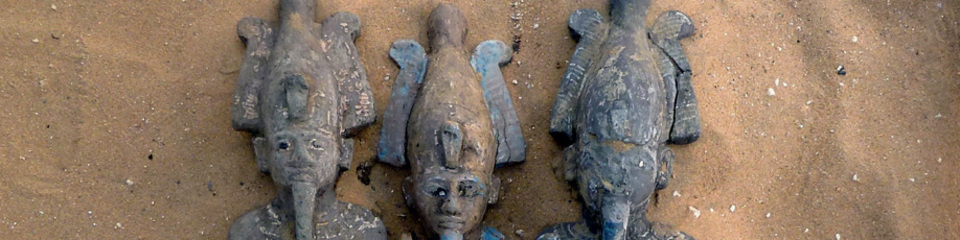
Dr. Andreas Effland is a Researcher at the Department of Egyptology and Coptic Studies at Georg-August-University Göttingen since 2020. He specializes in Archaeology, social/cultural history, religion, concepts of the afterlife, Egyptian language/writing, and research history. His work focuses on ancient Egyptian religious practices, particularly the Osiris cult in Abydos, and the Ptolemaic Temple of Edfu. Education: Master’s (1996) and PhD (2004) in Egyptology from the University of Hamburg. Extensive collaboration on major projects like the Edfu Project (since 1996) and the German Archaeological Institute's Osiris cult research (since 2003). Holds memberships including Corresponding Member of the German Archaeological Institute (2021) and Senior Member of the Göttingen Graduate School of Humanities (2021). Research interests center on ritual landscapes, sacred space, and the evolution of religious practices in Abydos. Key publications analyze Osiris cult artifacts, temple inscriptions, and Graeco-Roman influences. Recent work explores late antique pilgrimage traditions and Romanization effects on Egyptian cults. Publications span 30+ years, including co-authored books on Abydos and Edfu, journal articles on cult imagery, and contributions to archaeological methodologies. Active in fieldwork, excavating Umm el-Qaab/Abydos since 2003, uncovering ritual deposits and votive offerings dating from the Middle Kingdom to Late Antiquity.
Domenico Giuseppe Muscianisi is a Fixed-term Researcher in Glottology and Linguistics at the Department of Humanities, Social Sciences and Cultural Enterprises (DUSIC) at the University of Parma, where he has been employed since the 2021/22 academic year. He also serves as a Visiting Professor of Applied Linguistics at the Scuola Superiore per Mediatori Linguistici Bona Sforza di Bari since the 2023/24 academic year. His academic journey spans multiple prestigious institutions including Harvard University's Center for Hellenic Studies, Leiden University Centre for Linguistics, and collaborations with IULM University in Milan. His educational background includes: Classical high school diploma from the GB Impallomeni state classical high school in Milazzo (ME), 2007 Bachelor's degree in Literature (L-10), Classical Literature curriculum, major in Greek and Latin Linguistics, at the Catholic University of the Sacred Heart of Milan, 2010 Master's Degree in Ancient Sciences (LM-15), Linguistics major, at the Catholic University of the Sacred Heart of Milan, 2012 Joint PhD in Historical-Comparative Linguistics from the University of Macerata and the University of Cologne (Germany), 2017 Muscianisi's research interests focus on Historical Comparative Linguistics, particularly Indo-European languages, with specializations in Greek linguistics and epigraphy, Mycenaean studies, oral poetry and metrics, and word taboo studies. His work bridges linguistic theory with anthropological approaches, examining how language functions in cultural and ritual contexts. He has made significant contributions to understanding Delphic oracles through linguistic analysis, exploring the connections between meter, prosody, and oral composition in ancient Greek poetry. His research often intersects with performance studies, drawing from his background as a classical and Bharatanatyam dancer. His publications reveal a strong trend in interdisciplinary research that combines linguistic analysis with cultural anthropology, religious studies, and performance theory. He frequently examines how language functions in ritual contexts, particularly in ancient Greek religion and oracular practices. His work on word taboos across cultures demonstrates his interest in the intersection of language and cultural belief systems. The articles also show his expertise in both ancient and contemporary linguistic phenomena, moving seamlessly between Mycenaean Linear B inscriptions and modern linguistic theory. As an academic advisor and educator, Muscianisi has taught various courses including Indo-European Civilization, General Linguistics, Phonetics and Phonology, and Glottology at the University of Parma. He serves as a reference for Erasmus+ student mobility programs and as the Quality Assurance Responsible for the Interprete di Lingua dei Segni Italiana program. His teaching reflects his interdisciplinary approach, connecting linguistic theory with cultural and historical contexts. Muscianisi is also active in the Third Mission initiatives at the University of Parma, organizing lectures and seminars on topics ranging from Cimbrian and Mòcheno languages to ancient Greek poetry and performance. He combines his academic expertise with his background in dance, serving as a dance and theater journalist registered with the Order of Journalists of Sicily. His membership in the naMec research center (Asian Nomadic Cultures, Mobility and Environment Studies Center) demonstrates his commitment to interdisciplinary research that spans linguistic, anthropological, and cultural studies.
Bernard Doherty serves as Associate Head of School and Associate Professor at the School of Theology, Charles Sturt University, with an affiliation to St Mark's National Theological Centre in Canberra. His academic career spans religious studies with a particular focus on New Religious Movements, Patristics, and Australian religious history. Dr. Doherty earned his academic credentials from Macquarie University, completing a BA in Ancient History, an MA in Early Christian and Jewish Studies, and a PhD. He also holds a Bachelor of Theology (BTh) from St Mark's National Theological Centre. Following his PhD, he was a Postdoctoral Fellow at the Institute for Studies of Religion at Baylor University in the United States where he worked on projects related to New Religious Movements in Australia and applying social science methodologies to early Christianity. Doherty's research interests are wide-ranging and include New Religious Movements, Patristics, Australian religious history, Church and State issues, and religion and the media. His scholarly work demonstrates particular expertise in the study of Satanism, demonology, religious conspiracy theories, and minority religious movements in Australia. He has published extensively on topics related to Roman Catholic traditionalism, early Christianity, and contemporary religious controversies. His publication record shows a consistent pattern of scholarly output across multiple disciplines within religious studies. Recent works (2020-2024) demonstrate a particular focus on the intersections of religious history, cultural representation, and contemporary religious controversies. Doherty's research often examines how religious movements interact with broader cultural and political contexts, particularly in Australian settings. Dr. Doherty serves as Course Director for THL242 – New Religious Movements, Cults and Sects, reflecting his expertise in contemporary religious movements. His academic contributions have established him as a significant voice in the study of new and minority religious movements in Australia and beyond. With an h-index of 26 and 32 research outputs, his work bridges historical religious studies with contemporary religious phenomena, providing valuable insights into both ancient and modern religious movements.
Dr. George Bevan is an Associate Professor in the Department of Geography and Planning at Queen’s University, with cross-appointments in Classics, Geological Science and Engineering, and Art History/Art Conservation. His research focuses on Late Antiquity, Syriac Studies, Papyrology, Photogrammetry, and GIS applications in archaeology. He teaches courses on pre-modern geographical history and Digital Photogrammetry. Bevan holds a BA (Hons) in Classics from the University of British Columbia, and MA/PhD in Classics from the University of Toronto. His archaeological fieldwork spans Greece, Jordan, Bulgaria, and Macedonia, collaborating with the Balkan Heritage Field School to train students in heritage documentation and geomatics. He is a recipient of the Balkan Heritage Field School Alumni Award for Excellence in Teaching. Research interests include the intersection of digital technologies with classical archaeology, particularly Reflectance Transformation Imaging (RTI), UAV-based documentation, and quantitative analysis of ancient materials. His work integrates geospatial tools to study historical landscapes and cultural heritage preservation. Publications span topics from Byzantine coin metallurgy to astronomical inscriptions and petroglyph surveys. Key collaborations: Balkan Heritage Field School Field projects: Wadi Hafir petroglyph survey, Stobi archaeological site, Keskintos astronomical inscriptions Methodological expertise: Photogrammetry, RTI, XRF spectrometry, GIS mapping Teaching emphasizes hands-on training in geomatics applied to archaeological contexts, complementing his research agenda. His work bridges classical studies with cutting-edge digital methodologies, contributing to both disciplinary knowledge and practical heritage conservation practices.
Stefan Weninger is a University Professor and Head of the Department of Semitic Studies at the Center for Near and Middle Eastern Studies (CNMS) at Philipps University of Marburg. He has held a C4-Professorship for Semitistics in Marburg since 2001 and served as Managing Director of the CNMS from 2016-2020. His distinguished career includes leadership roles as 2nd Vice President (2015-2020) and subsequently 1st President (2021-2026) of the German Oriental Society, where he also serves as Speaker of the Semitistics Section. Weninger earned his doctorate in 1991 from Ludwig-Maximilians-Universität München with a dissertation on Qana'a in Arabic literature, followed by his habilitation in 1997 on the verbal system of Old Ethiopic. His academic journey includes research assistant positions at LMU from 1991-2001 before his appointment to Marburg. His scholarly work spans Semitic linguistics with particular expertise in Ethiopic languages, Classical Arabic, and Ancient South Arabian studies. Weninger's research interests focus on comparative Semitic grammar, historical linguistics, epigraphy, and lexicography. His work demonstrates exceptional depth in Ge'ez (Classical Ethiopic) studies, where he has produced foundational scholarship on its verbal system, grammar, and lexicon. His research extends to Arabic-Ethiopic language contact phenomena, Sabaean epigraphy, and the history of Orientalist scholarship. He has made significant contributions to understanding the linguistic relationships between Semitic languages and the historical development of writing systems in the Near East. Analysis of Weninger's recent publications reveals consistent focus on Ethiopic linguistics, particularly Ge'ez grammar and discourse structures, while also maintaining strong engagement with Classical Arabic studies and Ancient South Arabian epigraphy. His work shows a methodological blend of historical-comparative linguistics with textual criticism and philological analysis. The publications demonstrate increasing attention to the history of Orientalist scholarship alongside his core linguistic research, reflecting a mature scholarly perspective that bridges historical and linguistic approaches. 2nd Vice President of the German Oriental Society (2015-2020) 1st President of the German Oriental Society (2021-2026) Speaker of the Semitistics Section in the German Oriental Society (2017-present) As an academic leader, Weninger has supervised numerous doctoral students and research projects, including DFG-funded projects on Arabic and Ethiopic texts of the Testament of Abraham and Secundus Taciturnus. His editorial work includes serving on the advisory boards of Middle East - Topics & Arguments, Aethiopica, and Orientalistische Literaturzeitung, where he acts as section editor for Semitics. He has been instrumental in advancing Semitic studies through his leadership in academic societies and his comprehensive reference work, The Semitic Languages: An International Handbook.
Francesca DELL'ACQUA is an Associate Professor of History of Medieval and Byzantine Art at the University of Salerno, Department of Cultural Heritage Sciences (DISPAC). Her academic work bridges the fields of art history, religious studies, and medieval history, with a particular focus on the cultural and theological exchanges between Byzantium and the Latin West during the early medieval period. Based at the Fisciano Campus, she maintains an active research profile with numerous publications and international collaborations. Professor DELL'ACQUA's research interests primarily center on the iconography and theological significance of the Virgin Mary in early medieval art and literature, Byzantine Iconoclasm and its reception in Italy, cultural transmission between East and West, and early medieval monasticism. Her work demonstrates how religious concepts, particularly concerning Marian devotion, traveled across linguistic and political boundaries despite the growing divide between Greek and Latin cultures. She has made significant contributions to understanding how theological ideas were translated into visual forms during periods of religious controversy. Her publications reveal a consistent focus on the eighth and ninth centuries, examining how theological debates about sacred images influenced artistic production across Europe. A recurring theme is the transmission of Byzantine theological concepts into Western European contexts, particularly through monastic networks. Her research shows how early medieval artists and theologians creatively adapted Eastern traditions to local contexts, resulting in distinctive hybrid forms of religious expression that reflected both theological orthodoxy and regional identity. Professor DELL'ACQUA has led significant research projects including 'Iconophilia' (2015-2017), funded by the European Commission, which investigated the echoes of the Byzantine debate on sacred images in Rome and central-southern Italy. She is also principal investigator of 'At the Crossroads of Empires: The Longobard Church of S. Ambrogio, Montecorvino Rovella,' examining an early medieval church discovered in the 1970s that shows clear links to the material culture of secular courts and monasteries in southern Langobardia during the late eighth and ninth centuries. Her collaborative archaeological work at this site, funded by the British Academy, Gerda Henkel Stiftung, and universities of Salerno and Birmingham, has yielded important insights into Lombard-Byzantine cultural interactions. Her research methodology combines close analysis of visual materials with textual scholarship, revealing how theological concepts shaped artistic production and religious practice. She has demonstrated particular expertise in analyzing how early medieval communities used architectural space, liturgical practice, and material objects to express complex theological ideas related to the Incarnation, the nature of Christ, and the role of Mary in salvation history. Her work on pectoral crosses, ivory carvings, mural paintings, and liturgical textiles has illuminated the multisensory nature of early medieval religious experience.
Valentina Calzolari Bouvier is a Professor of Armenian Studies at the University of Geneva and Lecturer in the International Master in Armenian Studies (IMAS) . Her work focuses on Armenian cultural heritage, apocryphal Christian texts, manuscript traditions, and the transmission of Greek and Syriac intellectual traditions to Armenia. Key Expertise: Armenology, Early Christian Apocrypha, Digital Humanities, Medieval Armenian Philology, Hellenistic Thought in Armenian Context Research Highlights: She has published extensively on Armenian manuscript culture, including monographs like Liberal Arts and Sciences in Ancient and Medieval Armenia (2022) and The Apocryphal Acts of the Apostles in Armenian (2022). Her work bridges philology, art history, and post-Soviet literary analysis. Scientific Honors: Recognized as Foreign Correspondent of the Academy of Inscriptions and Belles Lettres and serving as President of the International Association of Armenian Studies. Public Engagement: Active in Armenian diaspora studies, post-genocide memory, and digital preservation of ancient texts. Regularly contributes to interdisciplinary conferences and edited volumes.
Jan Ragnar Hagland is a Professor at NTNU’s Department of Nordic Studies and Literature, specializing in Old Norse philology, runic studies, and the history of the Norwegian language. His research focuses on medieval legal texts, Icelandic sagas, and the intersection of literacy practices with socio-historical contexts. He has authored or co-authored numerous books and articles, including editions of medieval legal codes, translations of sagas, and studies on runic inscriptions. Affiliations: NTNU, Faculty of Humanities; Norwegian Academy of Science and Letters Key Projects: Trøndersk Språkhistorie (Trøndelag Language History Project), Runestone Analysis, Saga Translation Projects His work bridges textual analysis and historical context, examining how language and literature reflect cultural, legal, and social dynamics in medieval and early modern Scandinavia. Notably, he explores the role of literacy in shaping local identities and the transmission of legal and mythological knowledge.
Carsten L. Wilke is a Professor in the Department of Historical Studies at Central European University (CEU), where he teaches graduate and undergraduate courses on European and Mediterranean religious history, with a focus on Jewish history from the Middle Ages to the present. He is affiliated with multiple academic programs, including Jewish Studies, Cultural Heritage Studies, Eastern Mediterranean Studies, and Early Modern Studies. From 2016 to 2020, he served as director of the Center for Religious Studies at CEU, and in 2023–2024, he directed the Erasmus Mundus program History in the Public Sphere . He is currently on sabbatical during the 2024–2025 academic year. His academic training includes a PhD in Jewish Studies from the University of Cologne (1994, summa cum laude), a diploma in Religious Studies from the École Pratique des Hautes Études, Paris, and an MA from the University of Cologne. Before joining CEU in 2009, he held research positions in France, Germany, Mexico, and the USA. Wilke’s research centers on transcultural aspects of European Jewish history, with specializations in Sephardic and crypto-Jewish communities, Jewish-Christian relations, early modern Iberian Judaism, book and manuscript culture, and modernization processes in 19th-century Judaism. His publications include the monograph Farewell to Shulamith: Spatial and Social Diversity in the Song of Songs (2017) and edited volumes such as Modern Jewish Scholarship in Hungary (2016) and Isaac Orobio: The Jewish Argument with Dogma and Doubt (2018). His recent articles explore themes like clandestine Jewish networks, religious polemics, synagogue architecture, and intellectual exchanges between Jewish and Christian thinkers. His recent publications reveal a strong focus on early modern Jewish identity formation, particularly among Iberian exiles and crypto-Jews. He frequently examines the interplay between religious texts, political events, and cultural memory, with a methodological emphasis on manuscript studies, transnational networks, and cross-confessional dialogue. Wilke has received several honors, including the CEU Outstanding Research Award (2016) and the French Jewish Book Award (2008). He has been a research fellow at institutions such as the Israel Institute for Advanced Studies and Yeshiva University, and has held visiting professorships in Paris, Brussels, Tokyo, and Germany. He has supervised numerous doctoral and MA theses at CEU, including prize-winning works on topics such as interwar Jewish beauty pageants, Nigerian literary history, and Sephardic Purim festivities. His teaching includes both classroom courses and experiential learning, such as walking tours on Jewish commemorative landscapes in Budapest. Wilke is involved in several ongoing research projects, including Sephardic Manuscripts of the Early Modern Period , Jewish Cemetery Inscriptions in Europe , and The Alliance Israélite Universelle in Germany, 1860–1914 . He is also a member of the ÖAW Cluster of Excellence EurAsian Transformations .
Pietro Maria Liuzzo is a Senior Information Scientist at the Bibliotheca Hertziana – Max Planck Institute for Art History in Rome. His work bridges digital technologies with humanities research, focusing on epigraphy, manuscript traditions of Ethiopia and Eritrea, and open scholarly workflows. Doctoral background in Ancient Greek Historiography (FGrHist 104 digital edition) Former Networking Coordinator for Europeana Network of Ancient Greek and Latin Epigraphy (University of Heidelberg) Tech Lead for Beta maṣāḥǝft project (2016–2019) and TraCES project (2014–2019) at Universität Hamburg Liuzzo's research explores standards and formalisms (XML, IIIF, DTS, RDF) for digital asset management, emphasizing open data, collaborative editing, and visualization. He has contributed to modeling ancient documents and manuscripts through semantic web technologies and linked open data frameworks. His recent publications focus on API development for TEI data, manuscript linking strategies across Coptic/Ethiopian/Syriac domains, and data integration challenges. He advocates for open science and reusable digital infrastructures in humanities research.
Dr. John Vonder Bruegge is a Professor of Biblical and Theological Studies and Dean of the College of Arts and Humanities at Northwestern College. He also co-directs the Honors Program and leads summer study abroad trips to Greece. Education: Ph.D., Yale University Th.M., Harvard Divinity School M.Div., Covenant Theological Seminary B.S., University of Missouri Dr. Vonder Bruegge specializes in New Testament studies, archaeology, and critical geography, with a focus on Galilee in early Christian literature and Josephus. His research explores spatial theory and its implications for biblical interpretation. His publications and presentations emphasize the intersection of geography, theology, and ancient history, particularly in the Gospels and Josephus’ works. He was recognized as an official tour guide by the Greek Ministry of Culture in 2019. Scientific Awards and Grants: Northwestern Teaching Excellence Award (2009) Northwestern Scholarship Grant (2020) Portz Grant for Curriculum Development (2018) Global Education Exploratory Travel Grant (2013) He served as a research assistant at Harvard and Yale, led archaeological expeditions in Israel and Turkey, and is a member of the Society of Biblical Literature and American Academy of Religion.