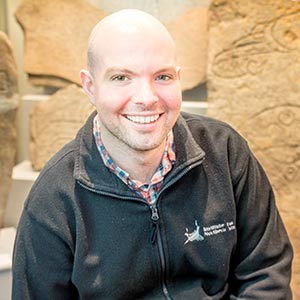
Dr. Oisín Plumb is a Lecturer at the Institute for Northern Studies , part of the University of the Highlands and Islands (UHI) , specializing in Early Medieval Northern Britain and Ireland. His research spans Pictish history, Dalriadic interactions, and medieval geographical perceptions. MA (Hons) in Medieval Celtic Studies MSc in Medieval History PhD on Early Medieval Ecclesiastical Migration (University of Edinburgh, 2016) His research interests include: the Picts, Dalriada, early medieval church dynamics, North Atlantic cultural exchange, and historical geography. He explores how identities formed through migration and how the medieval world conceptualized geography. Key scientific awards include Fellowships from the Society of Antiquaries of Scotland, the Royal Historical Society, and the Higher Education Academy. He contributes to academic discourse through edited volumes like What is North? and Alternative Facts and Plausible Fictions . Dr. Plumb organizes the INS Summer Course Programme , including modules on Scotland’s Celtic-Viking legacies, and co-leads interdisciplinary projects. His work bridges academia and public engagement, particularly through the Pictish Trail and museum seminars.
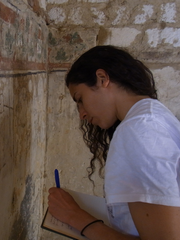
Dr. Leah Mascia is a researcher and spokesperson for the 'Inscribing Spaces' research field within the Cluster of Excellence 'Understanding Written Artefacts' (UWA) at the University of Hamburg. She leads project RFB14 investigating funerary artefacts in Roman and Late Antique Egypt. Her work focuses on Oxyrhynchus, exploring transitions from traditional cults to Christian beliefs through interdisciplinary methods. She specializes in material analysis, epigraphy, and multilingual documentation. Education & Research: Completed doctoral dissertation on religious transitions in Oxyrhynchus. Currently investigates material choices in artefacts, employing XRF, Raman spectroscopy, and CT scanning for non-invasive analysis. Research Interests: Multilingualism in Greco-Roman Egypt, funerary practices, material culture, and archaeological contextualization of texts. Her projects bridge archaeology, Egyptology, and cultural heritage preservation. Grants & Projects: Principal Investigator (2022–2025) of project RFB14 under UWA. Collaborates on material analysis of Egyptian artefacts and epigraphic studies. Organizes workshops on multilingualism and ancient Mediterranean studies. Labs/Teams: Affiliated with the Centre for the Study of Manuscript Cultures (CSMC) and the UWA Cluster, leading interdisciplinary teams in archaeological and textual analysis.
Dr. Jenny Körber is a Researcher at the University of Hamburg’s Department of European History and a member of the Cluster of Excellence "Cultural Foundations of Social Integration" (CSMC) in the research group RF B Inscribing Spaces. Her work focuses on the intersection of art, religion, and cultural history in the Early Modern period. She holds a PhD from Humboldt University of Berlin on the media practices of the Jesuit Order, and her habilitation project explores genealogy and heraldry in Early Modern media. Education: Bachelor’s degrees in Art History and German Studies (2010) from WWU Münster and Paris IV La Sorbonne Master’s degrees in Art History (2011) and Literary Studies (2012) from the University of Amsterdam Research Interests: Her interdisciplinary research spans Early Modern visual and religious cultures, including topics such as Jesuit media dispositifs, the interplay between music and visual art, and the role of genealogical and heraldic imagery in shaping social identity. She has curated exhibitions at the Staatliche Museen zu Berlin and contributed to international museum projects. Publications: Her work bridges art history and cultural studies, with recent articles examining Vittore Carpaccio’s religious paintings, symbolic representations of bees in sacred contexts, and the exoticization of global cultures in 18th-century Europe. Her monograph Inner Bilder – äußere Schau (2024) analyzes Jesuit meditative practices through material culture. Labs/Teams: Active in the CSMC’s Inscribing Spaces group, which investigates how spaces and inscriptions mediate cultural integration.
Ann Lauren Osthof is a doctoral researcher at the Centre for the Study of Manuscript Cultures (CSMC) within the University of Hamburg , working in the Cluster of Excellence 'Understanding Written Artefacts' (UWA) from 2019 to 2025. Her research focuses on virtual reality applications for manuscript analysis , spatial computing in archaeology , and cross-cultural artefact studies . Specializes in immersive tools for cultural heritage Develops spatial interaction techniques for written artefact exploration Contributes to urban archaeology through digital reconstructions Research Highlights: She has published extensively on VR-based manuscript analysis (2025 IEEE VRW), ancient urban spaces (2024 Porto conference), and semiotic frameworks for written artefacts (2023 De Gruyter). Her work bridges digital humanities with human-computer interaction , particularly in 3D interface design and cross-cultural documentation . Key Collaborations: Works with interdisciplinary teams including Prof. Dr. Frank Steinicke (HCI), Dr. Jenny Gabel (VR specialist), and Dr. Christian Berns (archaeology) on projects like 'Immersive City Scripts' (2019-2023) that combine digital preservation with spatial interaction techniques .
Danijel Dzino is a Senior Lecturer at the School of Humanities, Macquarie University , specializing in the archaeology and history of ancient and early medieval Illyricum, the Balkan peninsula, and Adriatic seafaring traditions. His research bridges Roman provincial studies, early medieval transitions, and cultural identity in Dalmatia, Pannonia, and the Adriatic region. PhD in Classics from the University of Adelaide ARC Postdoctoral Fellow (2010–2014) Partner-investigator for Croatian Science Foundation projects Research interests include: Roman military identity in Dalmatia, Liburnian shipbuilding, votive inscriptions in Illyricum, and post-Roman transformations in the Balkans. His work spans topics from Roman legionaries to medieval heresies and Slavic-Avar interactions. Recent publications focus on Late Antique fortifications (e.g., castellum Mogorjelo ), Adriatic maritime networks, and Medieval Latin epigraphy in Bosnia. He contributes to public engagement through podcasts like Ithaca Bound and Peopling the Past , and collaborates with institutions including the Croatian Academy of Sciences and Arts.
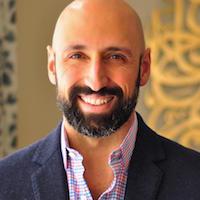
Elias I Muhanna is an Associate Professor of Comparative Literature and History at Brown University, where he also serves as the Director of Middle East Studies. He is affiliated with the Department of Comparative Literature and the Department of History within the School of Humanities. His scholarship bridges classical Arabic literature, medieval Islamic history, and digital humanities. PhD, Near Eastern Languages & Civilizations, Harvard University (2012) AM, University of Pennsylvania (2004) AB, Duke University (2000) Muhanna’s research centers on encyclopedic traditions in the Islamic world, with a focus on figures like al-Nuwayri and the cultural dynamics of the Mamluk Empire. His work explores the intersections of book history, intellectual history, linguistic development, and the vernacular in premodern Arabic literature. He is particularly interested in how knowledge was organized, transmitted, and transformed in classical and medieval Islamic contexts. His recent publications reflect a strong engagement with both academic and public audiences. The articles span topics from medieval information systems to contemporary cultural criticism, revealing a consistent thread of intellectual inquiry into how knowledge and culture are shaped across time. His work in digital humanities highlights the evolving nature of scholarship in the 21st century, especially in relation to Middle Eastern studies. John Nicholas Brown Prize (2021) Morris D. Forkosch Prize (2018) British-Kuwait Friendship Society Book Prize (runner-up, 2019) Margaret B. Sevcenko Prize (2008) Whiting Fellowship (2010–11) ACLS Fellowship (2015–16) Muhanna has advised graduate students in areas such as encyclopedism, Arabic literary theory, and the history of the Arabic language. His research has been supported by major grants from the Whiting Foundation and the American Council of Learned Societies. He is also active in public intellectual life, contributing essays to The New Yorker , The New York Times , and The Nation . He leads initiatives connecting digital tools with traditional scholarship in Islamic and Middle East studies. He is involved in academic and public-facing projects that promote the digital humanities, including editorial work on the intersection of technology and Middle Eastern scholarship. His teaching at Brown includes courses on the 1001 Nights, pre-Wikipedia knowledge systems, and Orientalism.
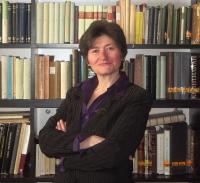
Prof. Dr. Ulrike Babusiaux is a full Professor at the Faculty of Law, University of Zurich, where she holds the Chair for Roman Law, Private Law, and Comparative Law. She is actively engaged in research and teaching, with a focus on Roman legal history, testamentary law, and epigraphy. Her office is located at Rämistrasse 74/41, Zurich, and she can be reached via email at lst.babusiaux@ius.uzh.ch . Her research centers on Roman testamentary law, particularly through the lens of Latin grave inscriptions. She leads a Swiss National Science Foundation (SNSF)-funded project (2021–2024) titled Duty to Remember? Latin Grave Inscriptions as a Source of Roman Testamentary Law , which investigates how funerary monuments reflect legal obligations and testamentary wishes. She collaborates with scholars such as Prof. Dr. Anne Kolb, Dr. Lorena Atzeri, and Prof. Dr. Wolfgang Kaiser. She is also on the advisory board of Prof. Dr. Maren Niehoff’s ERC Advanced Grant project Romana , exploring the Roman legal turn among Jews, Greeks, and Christians. Her recent publications analyze Roman inheritance practices, burial law, testamentary legacies, and the legal status of associations. Her work appears in leading journals like ZRG (Zeitschrift der Savigny-Stiftung für Rechtsgeschichte). Her publications show a strong trend in using epigraphic sources to reconstruct private legal practices in the Roman Empire, especially concerning wills, heirs, and commemorative obligations. She teaches seminars at the University of Zurich and co-organized a seminar for HS 2025 on Trials in Flavius Josephus: Jewish and Roman Legal Practice in the 1st Century AD with Prof. Dr. Maren Niehoff. She also supervises assistants and contributes to academic discourse through lectures and participation in conferences. Prof. Babusiaux is involved with the Nörr Library, the former library of Prof. Dieter Nörr, now housed at the Faculty of Law, which specializes in Roman law and ancient legal history. Her team includes scientific associates and assistants who support research and teaching activities.
Prof Campbell Macknight is a Professor at the School of Culture, History & Language, Australian National University. His research focuses on Southeast Asian history, archaeology, and colonial studies with particular emphasis on Sulawesi and Northern Australia. He has published extensively on topics including cultural inscriptions, historical expeditions, and pre-colonial material culture. Email: campbell.macknight@anu.edu.au Research interests include analyzing historical records through material culture, tracing colonial-era explorations like Alfred Russel Wallace's expeditions, and studying cultural preservation efforts in Sulawesi. Recent work involves collaborations on archaeological sites and symposiums dedicated to regional research. His publications span peer-reviewed articles and book chapters, often focusing on interdisciplinary approaches to Southeast Asian studies. He has contributed to memorializing prominent scholars like Christian Pelras and organized international academic events.
Professor Dr. Dilyana Vassileva Boteva, Dr.Sc., is a prominent scholar specializing in ancient history and Thracian studies at the Faculty of History, Sofia University "St. Kliment Ohridski" since 2014. She maintains active academic engagement with regular office hours (Wednesday 5:00-7:00 pm) and participates in numerous research projects and international collaborations. Her academic journey includes: PhD in History (1994) Study with a Herder Fellowship at Vienna University (1990-1991) MA in History (Specialty "Ancient and Medieval History") from Sofia University (1980-1985) Second degree in English Language from Sofia University Professor Boteva's research focuses on the history and culture of the ancient Thracians, Thracian religion, semiotics of Thracian votive reliefs, Thracian provinces of the Roman Empire, Roman history during the 1st-3rd century AD, history of ancient Greece, and Thracia post-Antiqua. Her interdisciplinary approach combines historical analysis with semiotic interpretation of ancient texts and artifacts, particularly examining the visual language of Thracian religious practices. Her extensive publication record demonstrates consistent scholarly output with particular emphasis on Thracian-Roman cultural interactions, the religious practices of the Thracian provinces, and iconographic analysis of votive reliefs. Her work often bridges historical analysis with archaeological evidence, creating a more comprehensive understanding of ancient Thracian society and its integration into the Roman imperial framework. Her scientific recognition includes: Annual award for a young researcher in Humanities from Sofia University (1989) Honorary member of the National Archaeological Institute with Museum of Bulgarian Academy of Sciences and Arts Member of the Executive Board of Humboldt Union in Bulgaria Member of the Bulgarian section of La Fédération Internationale des Associations d'Études Classiques Professor Boteva has successfully coordinated and participated in multiple research projects, including the bilateral Bulgaria-Austria project "The Scythica Vindobonensia and the Gothic raids of the mid-third century AD" (2017-2019), and currently contributes to the "Heritage BG" Center of Excellence. Her international collaborations include specialized research stays at Vienna University, Humboldt University in Berlin, and various institutions in Germany and Greece.
Stefano Riccioni is an Associate Professor of History of Medieval Art at Ca' Foscari University of Venice, affiliated with the Research Institute for Digital and Cultural Heritage. His academic journey includes an M.A. from the University of Florence, a Ph.D. from Sapienza University of Rome, and fellowships at institutions like the École Française de Rome and the Getty Foundation. He specializes in Medieval Art History , with a focus on epigraphy , iconography , and cultural exchange in the Mediterranean . Riccioni’s research explores the interplay between text and image, particularly in the context of the Gregorian Reforms and the Adriatic cultural landscape. Key projects include the OSCOP initiative on South Caucasus historical landscapes and the Shape of Water summer school on Venice’s lagoon ecosystems. He is also involved in Armenian and Eastern Christian art studies , co-editing volumes on Armenian cultural heritage. Riccioni’s work bridges traditional art history with digital humanities, emphasizing interdisciplinary approaches to cultural preservation. His publications span monographs on Venetian bestiaries, Roman mosaics, and medieval inscriptions, as well as curated volumes on signed artworks and cross-cultural exchanges. Riccioni currently serves as Dean’s delegate for Study in Venice and collaborates with international institutions like the Kunsthistorisches Institut in Florenz.
José Javier Martínez García is a Researcher at the University of Murcia specializing in Ancient History . With a multidisciplinary background in History, Anthropology, and Archaeology, he has conducted extensive fieldwork in Murcia, Egypt, and Menorca since 2004. Bachelor's in History (University of Murcia) Degree in Social and Cultural Anthropology (Catholic University of Murcia) Master's in Egyptology (Virtual Institute of Human Sciences) Doctoral research on Oxyrhynchus' Christian period (in progress) His research focuses on the transition to Christianity in the Iberian Peninsula and Egypt, with special attention to archaeological heritage management and advanced technologies for heritage dissemination . He co-directs excavation projects at Begastri and La Alberca, and participates in international missions at Oxyrhynchus and Heracleopolis Magna. Recent publications analyze figural graffiti , Christian epitaphs , and ritual fish deposits in Egyptian sites. He also contributes to Iberian archaeology through fieldwork at Los Villaricos and Coimbra del Barranco Ancho.
PD Dr. Georg Leube is a Senior Academic Councillor (Akademischer Oberrat) at the Chair of Islamic Studies within the Faculty of Linguistics and Literature at the University of Bayreuth. He completed his doctorate in Islamic Studies at the University of Bayreuth in 2014 and achieved his habilitation there in 2021. Since 2022, he has held his current position, following previous roles as an Academic Councillor (2016-2022), Deputy Chair of Islamic Studies (2018), and Acting Professor for Islamic Studies at the University of Hamburg (2020-2022). Dr. Leube's academic journey began with his doctorate in 2014, followed by postdoctoral work in the ANR/DFG-funded DYNTRAN project at the University of Marburg (2015-2016). His habilitation in 2021 qualified him for his current senior academic position. He has also held prestigious fellowships, including a 12-month membership at the Institute for Advanced Study in Princeton (2022-2023), supported by a Feodor Lynen Research Fellowship from the Alexander von Humboldt Foundation. Dr. Leube specializes in early Islamic history with particular focus on courtly representation in the 15th century. His research employs methodologically reflected approaches to pre-industrial Islamic cultural history, incorporating prosopography, iconography, epigraphy, textual criticism, material culture studies, and memory studies. He investigates Islamic and Islamicate historiography as a resonance chamber of polyphonic Muslim societies and examines transcultural interrelations in the post-antique extended Mediterranean region. His work often explores the interactions between Turkmen dynasties like the Aqquyunlu and various religious and ethnic communities, particularly Armenian populations in medieval Anatolia. Dr. Leube's scholarly output demonstrates a consistent focus on the political and cultural dynamics of medieval Islamic societies, particularly during the 15th century. His recent publications reveal a strong emphasis on the Aqquyunlu and Qaraquyunlu dynasties, their interactions with religious minorities, and the complex political landscape of Anatolia and surrounding regions. He combines traditional historical methods with innovative approaches from material culture studies and iconography to provide nuanced interpretations of historical sources. Among his notable achievements is the Feodor Lynen Research Fellowship from the Alexander von Humboldt Foundation, which supported his membership at the Institute for Advanced Study in Princeton. This prestigious fellowship recognizes his significant contributions to the field of Islamic studies and provides opportunities for advanced research in an international context. Dr. Leube has been actively involved in research projects throughout his career, including the ANR/DFG-funded DYNTRAN project on "Dynamics of Transmission: Families, Authority and Knowledge in the Early Modern Middle East." His current position as Senior Academic Councillor involves both teaching responsibilities and ongoing research. He has published extensively in leading journals and with major academic presses, establishing himself as a significant voice in the study of medieval Islamic history, particularly regarding Turkmen dynasties and their interactions with religious minorities. While specific laboratory or team information isn't prominently featured in his profile, Dr. Leube appears to collaborate with scholars across disciplines, as evidenced by his co-authored publications with researchers in linguistics, Semitic studies, and manuscript analysis. His work demonstrates engagement with international academic communities through publications in multiple languages and collaborations with scholars from various institutions.
Dr Emily Payne is an Associate Professor of Music at the School of Music, University of Leeds . She joined the institution as a Postdoctoral Research Assistant on the AHRC-funded project 'John Cage and Concert for Piano and Orchestra' before advancing to her current role. Her academic journey includes a DPhil in Music from the University of Oxford, an MMus in Advanced Musical Studies (Performance Studies) from Royal Holloway, and a BMus in Clarinet Performance from the Royal Welsh College of Music and Drama. Her research bridges musicology and music psychology , focusing on creative processes in contemporary and experimental music, ensemble dynamics, embodiment, and the materiality of notation. Key projects include analyses of John Cage’s works, Christian Wolff’s ensemble interactions, and interdisciplinary studies on performer-audience relationships and music-induced chills. She co-edited The Oxford Handbook of Time in Music (2021) and Material Cultures of Music Notation (2022), and led a special collection in Music & Science (2021) addressing global challenges in music psychology. Dr Payne actively supervises PhD researchers in music performance and psychology, and her work has been featured in journals like Contemporary Music Review , Music & Letters , and Musicae Scientiae . She serves on the editorial boards of Music & Science and Musicae Scientiae , and is a member of the European Society for the Cognitive Sciences of Music (ESCOM) and the Royal Musical Association.
Prof. Dr. Adam Łajtar holds the Chair of Epigraphy and Papyrology at the University of Warsaw, with a focus on Eastern Mediterranean inscriptions from Hellenistic to medieval periods. His research spans Graeco-Roman Egypt (particularly religious practices) and Christian Nubia, emphasizing textual analysis of wall inscriptions, papyri, and artifacts. Research Highlights: Greek epigraphy in Asia Minor, Palestine, and Nile Valley Religious dynamics in Graeco-Roman Egypt Medieval Nubian wall graffiti and literacy studies Christian Nubia's cultural and religious identity Grants: 2017-2019: Wall Inscriptions in Banganarti Churches (National Science Centre grant no. UMO-2016/21/B/HS3/00930) 2009-2015: Greek and Latin Papyri from Qasr Ibrim (National Science Centre project) Contact: a.lajtar@uw.edu.pl
Florence Jullien is a CNRS Research Director (DR2) at the Center for Research on the Iranian World (CeRMI) since 2024, focusing on the history of Syriac monasticism (4th–14th centuries). Her work spans Late Antique and medieval Christian traditions, intercultural exchanges, and critical editions of Syriac texts. Educational Qualifications: Doctorate in Religious Sciences (EPHE V, Paris, 2000) Qualification by the National Council of Universities (section 21, 2005, 2010) Accreditation to Direct Research (MMSH, Aix-en-Provence, 2007) Her research explores Syriac Christian monasticism, female monasticism, and intercultural transmissions between East and West. Current projects include critical editions of the Book of Monastic Founders , studies on the Persian monk Mar Giwargis, and collaborations with institutions like the University of Padua, Ghent, and the Bose Monastic Community. Scientific Awards: 2009 Prix Jean Bordin (Académie des Inscriptions et Belles Lettres) 2003 Prix Salomon Reinach (Académie des Inscriptions et Belles Lettres) Administrative & Editorial Roles: Co-responsible for Sourc-e-book (TransPerse ANR program) Editorial Secretary of Cahiers de Studia Iranica Member of committees for Res Orientales , Abstracta Iranica , and the Society for Syriac Studies