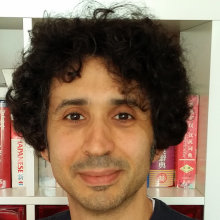
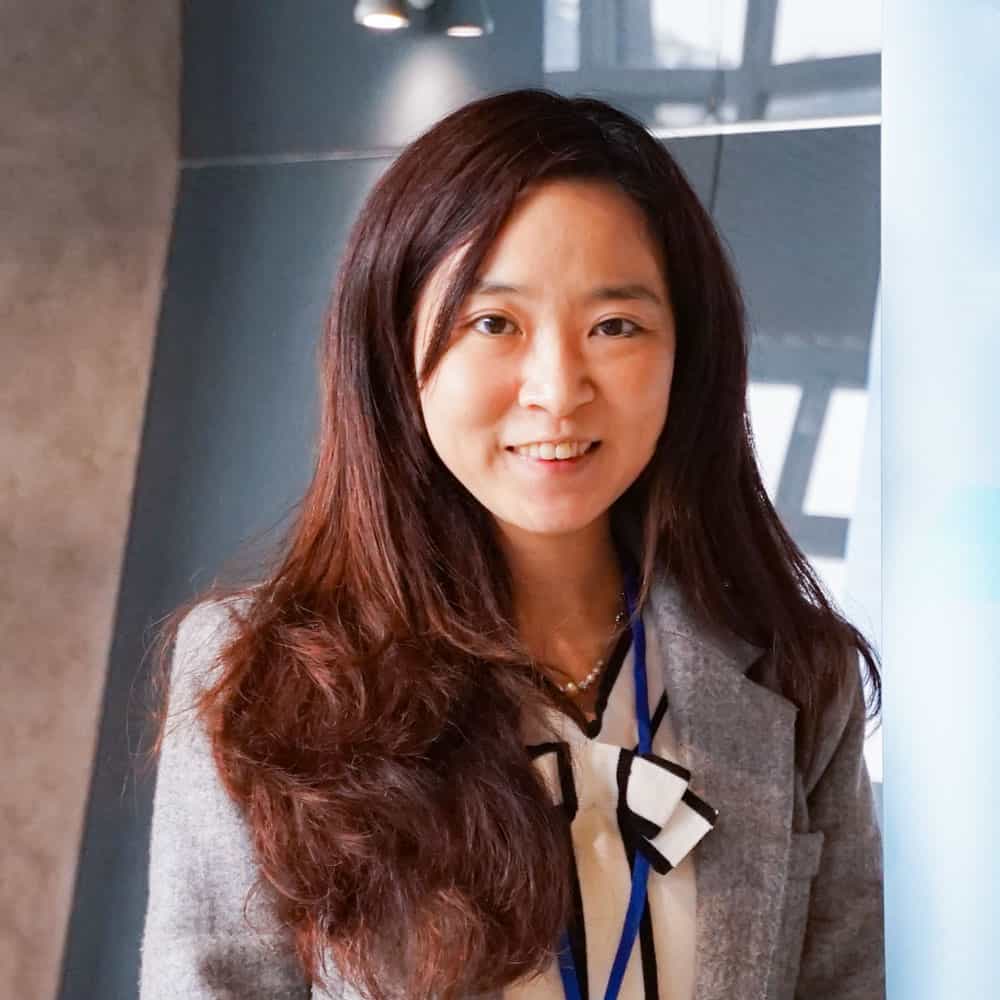
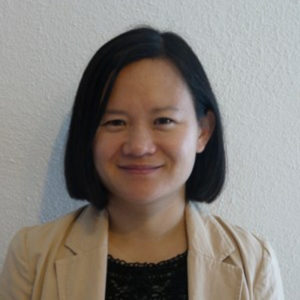
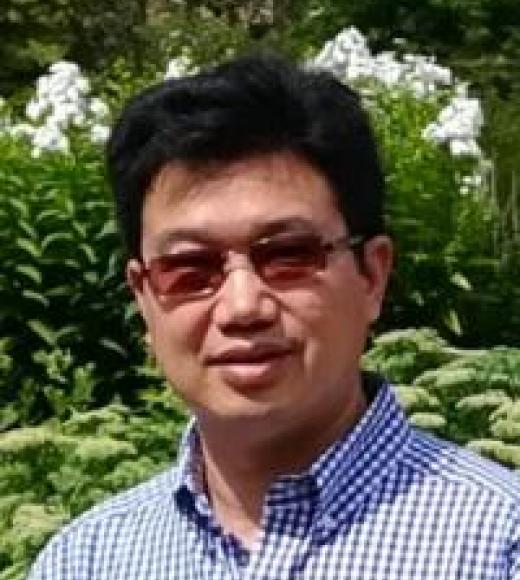
Michael Barlow is an Associate Professor in the Department of Applied Language Studies and Linguistics at the University of Auckland. His research focuses on corpus linguistics, cognitive linguistics, and computational tools for language analysis. He develops software like Collocate, MonoConc Pro, and ParaConc for linguistic research and teaching. His work spans areas including phrasal verbs, academic writing conventions, and individual language variation. Barlow regularly presents at international conferences such as AAAL and AILA and collaborates on projects like the Asia Pacific Corpus Linguistics Association (APCLA). Research Interests: Corpus Linguistics Language Variation & Usage-Based Models Translation and Contrastive Analysis Computational Linguistics Tools Recent Articles: His 2022 study on research article macrostructures and 2021 paper on L2 speech performance via gestures highlight his corpus-driven methods. Earlier work includes foundational studies on idiolects and parallel corpora. Advising: Supervises PhD students in areas like academic discourse analysis and metaphor in economic language. Notable advisees include Vaclav Brezina (now at Lancaster University) and Thi Ngoc Phuong Le (author of The Academic Discourse of Mechanical Engineering ). Labs/Projects: Leads CorpusLAB for discipline-specific writing guides and WordSkew software linking corpus data with discourse structure. Active in software development for language teaching and research.
Johan Bos is a Professor of Computational Semantics at the University of Groningen. His research focuses on formal semantics, natural language processing, and semantic parsing, with contributions to tools like Boxer and the C&C parser. He leads the Groningen Meaning Bank project, creating multilingual semantic annotations. His work bridges computational linguistics and AI, emphasizing structured meaning representations. Key contributions include foundational textbooks such as Representation and Inference for Natural Language and Learn Prolog Now! . His research spans semantic analysis, discourse representation theory, and cross-lingual meaning parsing. Collaborations include projects on annotated corpora and neural semantic parsing advancements. Publications address challenges in semantic parsing, discourse structures, and interdisciplinary applications like tombstone inscription analysis. He actively contributes to computational semantics conferences and workshops, driving semantic tagging and interlingual meaning representation initiatives.
Sophia A. Malamud is an Associate Professor in the Department of Computer Science at Brandeis University, where she directs the Meaning In Language Research Group (MILa) and is affiliated with the Language & Linguistics Program. Her research specializes in theoretical linguistics with a focus on formal semantics, formal pragmatics, discourse-syntax interactions, and semantics-pragmatics interface. Her educational background includes a Ph.D. in Linguistics with a dissertation on Semantics and pragmatics of arbitrariness and an M.A. in Mathematics exploring statistical decision theory in Entropy as relevance: maximizing entropy and minimizing loss . Malamud's research investigates discourse coherence, word order variations, indexicality, semantics of impersonals/plurals, speech acts, and utterance modifiers. She leads NSF-funded projects creating annotated corpora of spoken Russian (including the BiRCh Corpus), examining bilingual acquisition and heritage language phenomena. Her work employs corpus linguistics, experimental methods, and formal modeling. Her publications demonstrate consistent focus on pragmatic computation models, conversational dynamics, and cross-linguistic semantics, with frequent examination of Russian, Mandarin, and Greek data. Key themes include commitment avoidance strategies, conversational scoreboard modeling, and formal analyses of particles/pronouns. Awards include: NSF Grant BCS-1651083 for BiRCh Corpus development Mandel Foundation Faculty Grant for heritage language research Theodore and Jane Norman Award (2018) Multiple Brandeis Provost Research Grants Malamud has advised 8+ graduate/undergraduate theses on topics including heritage Russian pragmatics, utterance particles, reduplication, and distributivity. She collaborates internationally on corpus projects and directs research teams at Brandeis' Laboratory for Linguistics and Computation.
Alan Hezao Ke is an Assistant Professor in the Department of Linguistics at Michigan State University's College of Arts & Letters. His primary research focuses on syntax, semantics, and psycholinguistics, with particular emphasis on experimental and computational approaches to syntax, language acquisition, and sentence processing. He completed his Ph.D. in Linguistics at the University of Michigan in 2019. Research Interests : Syntax, Semantics, Psycholinguistics, Computational Linguistics Specializations : Experimental syntax, Parametric variation, Neural synchrony in language processing Publications demonstrate his expertise in: Syntactic theory and parametric variation Binding theory and null object resolution Computational modeling of language acquisition Neural mechanisms in syntactic processing Quantifier domains and distributive semantics Chinese-specific syntactic phenomena Contact: kehezao@msu.edu | Office: Wells Hall, Michigan State University
Dr. Micah Corum is an Assistant Professor in the Department of English at the University of North Georgia (UNG), part of the College of Arts & Letters. He holds a Ph.D. in Linguistics from the University of Hamburg (2013) and a Ph.D. in English from the University of Puerto Rico (2017), along with a B.A. in Spanish from Oklahoma State University (2005). His primary research focuses on sociolinguistics, construction grammar, and the study of pidgins and Creoles, particularly in the Caribbean and West African contexts. Dr. Corum advises UNG's linguistics minor program and serves on the editorial board of Odisseia , while also acting as an external reviewer for the Journal of African Languages and Linguistics since 2015. His teaching portfolio includes courses such as Standard English Grammar, Advanced English Grammar, and Introduction to English Linguistics, delivered both online and in-person. Dr. Corum's research explores themes like the historical development of pidgins and Creoles, discourse strategies in Caribbean Creoles, and typological analyses of contact languages. His recent work examines metaphorical frameworks in Creole lexicons and geopolitical metaphors in colonial discourse. Key contributions include his 2015 monograph on spatial semantics in West African Pidgincreoles and a 2021 analysis of Caribbean postcolonial linguistic discourses. Dr. Corum has presented at international conferences including the International Bakhtin Conference and the Society for Pidgin and Creole Linguistics, showcasing his expertise in cognitive linguistics applications to Creole studies.
Giorgio Francesco ARCODIA is a Full Professor in the Department of Asian and North African Studies at Ca' Foscari University of Venice, where he also serves as Director's Delegate for Interdepartmental Agreements and a member of the University Quality Assurance Office (PQA). His academic expertise lies in Chinese linguistics, linguistic typology, morphology, dialectology, and second language acquisition. He has held previous academic positions at the University of Milano-Bicocca, progressing from researcher to associate professor before joining Ca' Foscari as a full professor. His research is deeply interdisciplinary, focusing on Sinitic languages, grammaticalization, and cross-linguistic comparison. Education: PhD in Theoretical and Applied Linguistics, University of Pavia (2008) MA in Theoretical and Applied Linguistics, University of Pavia (2005) BA/MA in Foreign Languages, University of Bologna (2003) Language studies at Renmin University of China, Beijing (2005–2006) Advanced training in Chinese, Russian, Japanese, and linguistics across institutions in Italy, Germany, the Netherlands, and Taiwan His research interests include Chinese morphology, linguistic typology, dialectology, grammaticalization, and the acquisition of Chinese as a second language. He has conducted extensive research on reduplication, compounding, derivational morphology, object marking, tense, and aspect in Sinitic languages, as well as on contact phenomena in Macanese and Sino-Vietnamese. His work often combines corpus-based, experimental, and typological methodologies. The recent publications reflect a strong focus on morphosyntactic and typological features of Sinitic languages, with recurring themes such as nonconcatenative morphology, prosody, grammaticalization of tense and aspect, structural particles, and cross-dialectal convergence. His work increasingly bridges theoretical linguistics with pedagogical implications, especially in teaching Chinese to Italian speakers. Scientific Engagement: Section Editor, Open Linguistics (2024–present) Member, Scientific Board, Linguistic Typology at the Crossroads (2021–present) Member, Editorial Board, Cahiers de Linguistique Asie Orientale (2024–present) Peer reviewer for major journals including Linguistics , Morphology , Journal of Linguistics , and Language and Linguistics Project evaluator for Swiss National Science Foundation, ANR (France), and Research Grants Council of Hong Kong He actively supervises and collaborates with researchers, particularly on projects related to Chinese linguistics and second language acquisition. He has coordinated international research initiatives and double degree programs, notably with the Higher School of Economics in Saint Petersburg. His institutional service includes membership in PhD committees, research councils, quality assurance bodies, and departmental governance at Ca' Foscari. He is a member of leading academic associations including the International Association of Chinese Linguistics (IACL), European Association of Chinese Linguistics (EACL), and Società di Linguistica Italiana (SLI), and has held leadership roles in AILC, EACL, and CASLAR. He has organized major international conferences such as IACL-31 and EACL-10, and workshops on Chinese dialect grammar and prosodic grammar.
Margaret Lei is a Lecturer at the Department of Linguistics and Modern Languages at The Chinese University of Hong Kong . She holds a PhD in Linguistics and actively contributes to research in language acquisition, syntax, and the intersection of language and numerical cognition. Prior to her current position, she served as a Postdoctoral Fellow and Lab Manager at CUHK's Language Acquisition Laboratory and as a part-time lecturer at HKUST. BEng (Information Engineering) - CUHK PgDip (Psychology) - CUHK MA (Linguistics) - CUHK MPhil (Linguistics) - CUHK PhD (Linguistics) - CUHK Research Interests: Margaret specializes in first and second language acquisition , with particular focus on semantics and syntax in Chinese dialects. Her work explores: • Quantifier acquisition in Cantonese and Mandarin • Cardinal/ordinal number development in L1 Cantonese • Language's role in numerical cognition • Syntactic change in Hong Kong Cantonese • Early grammar in Shanghainese-speaking children • Quantifier scope and aspect interaction Scientific Contributions: Her publications demonstrate expertise in quantification theory , aspect interpretation , and tonal language acquisition . She has received special recognition through the Linguistic Society of Hong Kong's 2017 Outstanding PhD Thesis Award. 2017 : Linguistic Society of Hong Kong Outstanding PhD Thesis Award 2022 : CUHK Faculty of Arts Outstanding Teaching Award Teaching Portfolio: At CUHK, she teaches both postgraduate and undergraduate courses including: • Foundations in Language Acquisition (LING5103A/B/C) • Linguistic Argumentation (LING2007/2008) • Language Acquisition for Speech-Language-Pathology (SLPA5403) Her work extends to interdisciplinary collaboration with the Faculty of Medicine's Speech Therapy Division.
Prof. Dr. Mingya Liu is a W1-Professor for Empirical English Linguistics (EEL) at the Department of English and American Studies, Humboldt-Universität zu Berlin. Her research focuses on the intersection of lexicon, syntax, semantics, and pragmatics, with applications to language processing, acquisition, and sociolinguistic variation. Key projects include investigations into polarity sensitivity, modality, negation, and register effects in language use. Her work employs experimental, cross-linguistic, and socio- and psycholinguistic methods. Notable contributions include studies on modal concord (e.g., 'must certainly'), negative concord variation, and the social meanings of linguistic constructions in English, German, and Chinese. She is a core member of the CRC 1412 'Register: Language Users’ Knowledge of Situational-Functional Variation,' contributing to interdisciplinary research on language variation and cognitive modeling. Publications emphasize experimental findings on linguistic and social meaning correlations, register sensitivity in language use, and the role of interlocutor relations in formality perception. Collaborative efforts with institutions like HU Berlin and international scholars further highlight her commitment to advancing theoretical and experimental linguistics.
Dr. Yi-ching Josephine Su is an Associate Professor at the Graduate Institute of Linguistics, National Tsing Hua University, Taiwan. Her research focuses on cognitive science, language acquisition (first and second), psycholinguistics, neurolinguistics, developmental language disorders, and sentence processing. She leads the Acquisition/Psycholinguistics Lab, employing experimental methods like eye-tracking and ERP to study language processing in normal adults, children, and clinical populations. Education: Ph.D. in Linguistics, University of Maryland (2001) M.A. in Cognitive Science, Johns Hopkins University M.A. in Linguistics, National Tsing Hua University B.A. in Foreign Languages and Literature, National Taiwan University Research Interests: Dr. Su explores syntactic/semantic aspects of language acquisition and processing, including anaphora resolution, scope ambiguities, and cross-linguistic comparisons. Her work emphasizes child-adult parallels in comprehension mechanisms and the interplay between syntax, semantics, and pragmatics. Grants & Projects: 2021–2023: Online processing of reflexives in L2 English/Mandarin 2018–2021: Cross-linguistic L2 acquisition of pronoun resolution Longitudinal studies on child language development and cochlear implant outcomes Lab Activities: The lab collaborates with interdisciplinary teams to investigate neural correlates of language processing. Training includes experimental design, statistical analysis, and theoretical linguistics, preparing students for advanced research in acquisition and psycholinguistics.
Chengzhi Chu is an Associate Professor of Chinese and Senior Program Advisor (Chinese) at the University of California, Davis. He is affiliated with the Graduate Group in Linguistics and holds a Ph.D. from the University of Hawaii. His research focuses on Chinese linguistics, cognitive semantics, second language acquisition, and the application of technology in language instruction. He has authored/co-authored multiple textbooks, including the Chinese Breeze graded reader series, and developed the ChineseTA software for language teaching materials. His work integrates theoretical linguistics with practical pedagogy, emphasizing cognitive approaches to language structure and learning. Dr. Chu's research explores topics such as motion event semantics, figure-ground relationships in Chinese, and the design of effective language-teaching resources. He has published extensively on prepositions, reflexives, and mood particles in Mandarin, as well as the historical interplay between Chinese script and language. Notably, he co-developed the Corpus of Chinese Interlanguage (CCI 1.0), a foundational resource for studying learner language. His teaching spans advanced Chinese language courses, classical Chinese, and research methodologies. He has contributed to edited volumes on Chinese pedagogy and instructional materials. While no formal awards are listed, his impactful contributions to applied linguistics and language education are evident through his scholarly output and educational tools. As an advisor to graduate students, Dr. Chu supports research in linguistics and language education. His work bridges computational linguistics with traditional language studies, exemplified by software like ChineseTA and his corpus-based research. He is actively involved in the North American Conference on Chinese Linguistics and other academic networks.
Dr. Arnaud Arslangul is a researcher at INALCO (National Institute of Oriental Languages and Civilizations) and a statutory member of the CRLAO (Center for Linguistic Research on East Asia, CNRS-EHESS-INALCO). His work focuses on foreign language acquisition (particularly Mandarin Chinese) through functional linguistics and psycholinguistics , examining spatial event conceptualization and discourse-level spatial reference. Research Themes : Causality expression in Chinese L2, translinguistic cognitive models, open-access corpus creation. Projects : Collaborator in the LANGACROSS_2 project (CNRS & Max Planck Institute) studying spatial events in Chinese. Publications : Authored/edited Chinese pedagogical resources and monographs on spatial linguistics. Collective Roles : Master’s program coordinator for Chinese studies, language proficiency examiner, and curriculum advisor. Conferences : Presented at EACS XIX (2012) and CAPES-related events on Chinese acquisition and spatial grammar.
Walter Bisang (born February 2, 1959, in Zurich) is a Swiss linguist and Professor of General and Comparative Linguistics at Johannes Gutenberg University Mainz since 1992. His research focuses on language typology and theoretical linguistics, with extensive empirical work on East and Southeast Asian languages, Caucasian languages (especially Georgian), Austronesian languages, and Yoruba. His educational background includes: Major in General Linguistics with minors in Chinese and Georgian at the University of Zurich (1978-1986) Advanced studies in Thai, Khmer, and linguistics at the School of Oriental and African Studies, University of London (1986/1987) Doctorate in General Linguistics from the University of Zurich (1990) with a comparative thesis on East and Southeast Asian languages Bisang's research spans language typology , grammaticalization , areal typology , and language contact , investigating phenomena such as verb serialization, clause linking, finiteness, numeral classifiers, and argument structure. His work integrates formal and functional linguistic frameworks to analyze structural diversity and change across language families, emphasizing how contact situations reshape linguistic systems. He critically examines linguistic complexity metrics and their theoretical implications across different grammatical traditions. His publication record (1992-2009) reveals a sustained focus on comparative grammar of understudied language families, particularly highlighting typological patterns in East/Southeast Asia. His articles consistently bridge theoretical debates with empirical data, demonstrating how grammaticalization pathways diverge in areal contexts and how precategorial systems challenge traditional parts-of-speech classifications. His scientific recognition includes: Election to Academia Europaea (2016) Bisang has led major interdisciplinary projects including the EUROTYP initiative (1992-1995) and the German Research Foundation's Collaborative Research Center on 'Cultural and Linguistic Contacts' (1999-2008), where he coordinated teams spanning ancient history, ethnology, and linguistics. He currently serves on the DFG Review Board 104 evaluating typology and historical linguistics proposals, while co-editing the 'Trends in Linguistics' series and two journals ('Asian Linguistics' and 'Zeitschrift für Sprachwissenschaft'). His editorial work significantly shapes publication standards in cross-linguistic research.
Liang Tao is a Professor of Linguistics and the Chinese Coordinator at the College of Arts and Sciences, Ohio University. He is affiliated with the Department of Linguistics and contributes significantly to the fields of Chinese linguistics, discourse analysis, and psycholinguistics. Education: Ph.D. in Linguistics, University of Colorado, Boulder, 1993 Cognitive Science Certificate, Institute of Cognitive Science, University of Colorado, Boulder, 1993 Liang Tao’s research focuses on interactional linguistics and discourse analysis of Mandarin Chinese, with an emphasis on usage-based models of language and grammaticalization. His work explores second language learning, particularly the cognitive mechanisms of memory and their pedagogical implications. He investigates the grammar of Chinese and English, psycholinguistic processing, and the interplay between language, culture, and cognition. His recent publications highlight self-repair in conversation, tone perception, and metalinguistic awareness in language learners. The 15 most recent articles reflect a strong trend in discourse processing, particularly in Mandarin Chinese conversation, with subfields including self-repair, tone perception, usage-based change, and bilingual processing. Keywords span psycholinguistics, cognitive science, and language acquisition, indicating an interdisciplinary approach grounded in empirical and theoretical linguistics. Scientific Awards: Fellow, Psychonomic Society Liang Tao has been involved in research grants, including serving as Principal Investigator on the Ohio University 1804 Grant for improving pronunciation in Chinese learners using speech recognition strategies. He has collaborated extensively with researchers such as Chao-Yang Lee, Alice F. Healy, and Zinny Bond on projects related to speech perception and cognitive processing. Though a grant proposal to the US Department of Education was denied, his ongoing research activity is evident through regular presentations at national and international conferences. While no specific lab or research team is named, his frequent collaborations and focus on experimental psycholinguistics suggest an active research group or network, particularly in speech processing and second language acquisition at Ohio University.
Yunchuan Chen is an Assistant Professor of the Practice in both the Department of Asian and Middle Eastern Studies and the Department of Linguistics at Duke University. He is also a Faculty Network Member of the Duke Institute for Brain Sciences. His research focuses on experimental approaches to grammars, second language acquisition, and heritage languages, particularly examining languages such as Japanese, Chinese, Korean, Tibetan, Thai, and Nuosu Yi. He advocates for meaning-based approaches to language teaching and learning. Chen holds a Ph.D. (2019) and M.A. (2012) in Linguistics from the University of Hawaii, Manoa. His work has been recognized with awards including the 2025 SEATJ Teacher of the Year Award and the 2021 Hamako Ito Chaplin Memorial Award for Excellence in Japanese Teaching. His research trends emphasize experimental methods to analyze syntactic structures (e.g., quantifier scope, relative clauses) across languages, with a focus on heritage language speakers and L2 learners. Recent studies explore cross-linguistic influence and bilingual processing, reflecting his dual interest in theoretical linguistics and applied language education. Awards: 2025 SEATJ Teacher of the Year Award 2021 Hamako Ito Chaplin Memorial Award Chen teaches advanced language courses (e.g., Japanese, Korean, Chinese) and specializes in second language pedagogy. His courses include East Asian Languages as Second Languages and Japanese Language & Society , reflecting his commitment to both academic research and practical language instruction.
Barbara Meisterernst is an Honorary Professor at the Institute of Linguistics, National Tsing Hua University in Taiwan, specializing in Chinese historical syntax, morpho-syntax, syntax-semantic interfaces, and Buddhist Chinese linguistics. Her academic career spans prestigious institutions including Humboldt-University Berlin and the University of Ghent. Habilitation, University of Hamburg (2012) PhD in Chinese Studies, Münsterische Sinologische Mitteilungen (1998) MA in Chinese Studies, German and Linguistics (1992) Her research focuses on diachronic evolution of Chinese grammar, particularly tense-aspect-modality systems from Classical to Medieval Chinese. Key contributions include analyses of modal expressions, negation cycles, and syntactic changes in Buddhist Chinese texts. She employs formal syntactic frameworks to examine historical developments while integrating semantic and pragmatic dimensions. Her publications reveal strong trends in modality research (25% of output), diachronic syntax (30%), and Buddhist Chinese linguistics (15%). Recent work increasingly examines cross-linguistic comparisons with Vietnamese and Sogdian, reflecting broader typological interests. Methodologically, she combines corpus-based analysis with theoretical syntax to reconstruct historical grammatical systems. Meisterernst has presented at over 50 international conferences including IACL, EACL, and specialized workshops across Asia, Europe, and North America. Her extensive fieldwork includes collaborations with Academia Sinica, Tsing Hua University, and the International Dunhuang Project. She leads major research projects on pre-Tang Chinese verb phrase development and Silk Road linguistic interactions, securing continuous funding for collaborative work between European and Asian institutions since 2010.