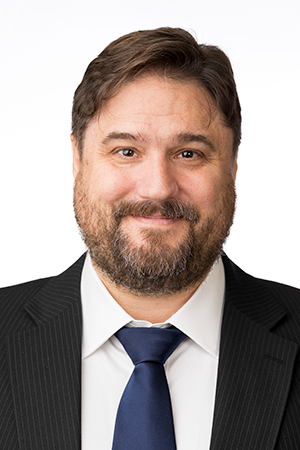
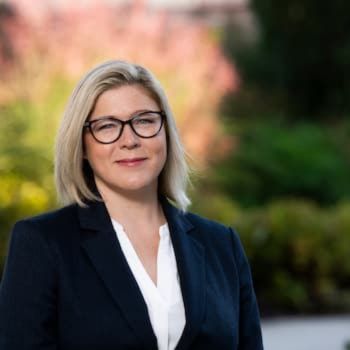
Sakari Melander is a Professor at the Faculty of Law , University of Helsinki, specializing in Criminal Law , with a focus on constitutionalization, Europeanization, and sentencing policies. His work bridges theoretical criminal law with practical legislative and policy challenges. Key research areas include EU criminal law, constitutional constraints on criminal legislation, and general doctrines of criminal law. He has extensive experience in parliamentary legal consultation, providing expert opinions to Finland’s Legislative Committees (e.g., on immigration control, anti-corruption directives, and digital evidence handling). Recent publications address topics like EU corporate sanction policies, constitutionalization of criminal law, and reforms in Finnish sentencing systems. His 2025 article in the New Journal of European Criminal Law explores balancing administrative and criminal sanctions in the EU. Scientific awards include: Hilkka ja Otto Brusiin Foundation Thesis Prize (2001) Magister Bonus – Good Teacher Award (2014) Primustohtori Award (2010) Year’s Teacher (2010) Year’s Opponent (2008) He leads research projects such as Criminal Law Under Pressure: Differentiation and Harmonization (2012-2015) and Assessment of Human Trafficking Sanction Practices (2021-2022), and supervises doctoral theses on criminal law topics.
Jeremy K Fox is Associate Professor of Psychology at Montclair State University's College of Humanities and Social Sciences, where he directs the RECAP (Research on Emotion, Coping and Anxiety in Pediatrics) laboratory. His research examines developmental pathways to childhood anxiety and depression. Education includes: PhD in Clinical Psychology, State University of New York at Albany MA in Psychology, State University of New York at Albany BA in Psychology, Johns Hopkins University Research focuses on temperament-environment interactions, emotion regulation deficits, and school-based interventions. Current work investigates parental influences on anxiety development and peer-supported treatment models for minority youth. Articles demonstrate consistent focus on improving mental health service accessibility. Leads graduate training in clinical psychology and mentors doctoral students in anxiety research. RECAP lab investigates affective mechanisms underlying adolescent distress and develops digital interventions for school settings.
Professor Valeska Ferrer Usó is a canon lawyer and theologian at Comillas Pontifical University, specializing in abuse prevention in ecclesiastical environments. She coordinates the UNIJES-funded Jordán research project (since 2021) and teaches subjects including 'Christianity and Social Ethics' and 'State Ecclesiastical Law' since 2022/23. Education: Doctorate in Canon Law (2022), Law Degree (2002), Ecclesiastical Studies (2012), Expert in Neuropsychology (2017), Specialist in Spiritual Exercises (2008). Her research focuses on canonical criminal law, restorative justice, and structural analysis of abuse mechanisms in religious institutions. Recent publications address procedural reforms, memory spaces for reconciliation, and interdisciplinary abuse prevention frameworks. She practices law at Madrid's Ecclesiastical Tribunal in marriage annulment cases and contributes to the Society of Jesus' Safe Environment System team (since 2024). Her work integrates theological, legal, and neuropsychological perspectives.
Lisa M. Jones is a Research Associate Professor of Psychology at the University of New Hampshire , affiliated with the Crimes Against Children Research Center (CCRC) and Family Research Lab . With over 20 years of experience, she specializes in child victimization, abuse, trafficking, and digital safety. Education: Ph.D. in Clinical Psychology – University of Rhode Island (1999) M.A. in Clinical Psychology – University of Rhode Island B.A. in Psychology – University of Virginia Research Focus: Dr. Jones's research spans child abuse and neglect , commercial sexual exploitation of children (CSEC) , human trafficking , youth internet victimization , and digital citizenship education . She leads multiple large-scale studies funded by the CDC, NIJ, WHO, and private foundations, focusing on prevention, intervention, and policy development. Current Projects: She is Principal Investigator on: A 5-year CDC-funded RCT evaluating youth-focused trafficking prevention education in Minnesota. An NIJ-funded quasi-experimental evaluation of Love 146’s services for trafficking victims. An NIJ-funded study on improving national surveillance of child sexual abuse in youth-serving organizations. Private RCTs evaluating digital citizenship programs like Common Sense Education and Google Be Internet Awesome. Publications & Impact: With over 100 publications, her work has shaped national and international discourse on child protection, digital safety, and trauma-informed practices. She regularly presents at national and international conferences. Contact: Email: lisa.jones@unh.edu Address: Crimes Against Children Research Center, 10 West Edge Dr., Suite 106, Durham, NH 03824, USA
Nancy Jones is a Professor in the Department of Psychology at Florida Atlantic University's Charles E. Schmidt College of Science. Her research focuses on infant emotional development, maternal mental health, and neurophysiological markers of temperament and resilience. Education: Ph.D. in Human Development (University of Maryland, College Park), M.A. in Human Development (University of Maryland, College Park), B.A. in Psychology (University of Wisconsin, Madison) Research Interests: Dr. Jones investigates how maternal depression and socio-emotional interactions shape infant brain development, with a focus on EEG activity, heart rate variability, and alternative therapies like kangaroo care and mindfulness meditation. Her work also explores autism-related emotional processing and frontal lobe maturation. Recent Publication Trends: Her articles emphasize psychophysiological methodologies (EEG, heart rate variability), maternal-infant neurohormonal interactions, autism spectrum disorder markers, and interventions like mindfulness meditation to improve child neurodevelopment and stress regulation. Service & Collaborations: She serves on the Departmental Executive Committee, chairs grant review panels for NIH and NSERC, and advises journals in developmental psychology and psychopathology. She leads the WAVES Lab and chairs the Palm Beach County Breastfeeding Coalition.
Rochelle F Hanson is a tenured Professor in the Department of Psychiatry and Behavioral Sciences at the Medical University of South Carolina (MUSC), affiliated with the National Crime Victims Research and Treatment Center (NCVC). She serves as Director of the NCVC Family and Child Program and holds roles in multiple interdisciplinary initiatives. Her research focuses on implementing trauma-focused evidence-based interventions, particularly in community settings, and improving provider fidelity to these practices. She also leads efforts to integrate mental health services into pediatric primary care. Dr. Hanson specializes in treating trauma in children, adolescents, and adults, with expertise in Trauma-Focused Cognitive Behavioral Therapy (TF-CBT). She has secured grants from NIMH, OVC, SAMHSA, and the Duke Endowment, including projects like Project BEST (Duke Endowment-funded initiative for child trauma care) and the National Mass Violence Victimization Resource Center. She supervises psychology interns and postdoctoral fellows and has been recognized for her mentorship with the 2010 MUSC Teaching Excellence Award. Her current work emphasizes sustaining implementation efforts through learning collaboratives and interprofessional partnerships. She also directs a VOCA-funded pediatric primary care behavioral health initiative.
Jonathan Santo is a Professor of Psychology at the University of Nebraska at Omaha (UNO), where he serves as Director of the Graduate Developmental Psychology Program and as a faculty member in the Office of Latino/Latin-American Studies. His research explores peer relations, cultural differences in self-esteem, and classroom-level influences on child and adolescent development, with a focus on improving school environments and fostering positive social interactions. ORCA Faculty Fellow His research spans broad areas including Developmental Psychology , Social Support Systems , and Cross-Cultural Peer Dynamics , with specific attention to peer victimization , self-continuity , school climate , and developmental trajectories in Brazilian and Colombian youth . Recent publications analyze topics like hikikomori experiences , friendship security , and HPA axis dysregulation in adolescents. Scientific awards include the ORCA Faculty Fellow recognition. His work often involves longitudinal assessments of peer relationships cross-cultural comparisons (Brazil, Colombia, China, Nigeria, Singapore, U.S.) policy-focused blog posts on family separations and school interventions
Prentice L. White is a Professor and the Associate Vice Chancellor for the Evening Division and Emerging Program at Southern University Law Center. A 1995 alumnus of SULC, he joined the faculty in 2001 after serving as an Assistant District Attorney and Senior Research Attorney, specializing in criminal appellate litigation. Education : B.A. from Xavier University of Louisiana (1991), MBA from University of New Orleans (2001), J.D. from Southern University Law Center (1995). Research interests span Criminal Law , Civil Procedure , Tort Law , and Legal Education , with a focus on Judicial Accountability , Domestic Violence Legislation , and Environmental Tort Law . His publications analyze legal reforms for domestic violence, judicial immunity, plea negotiations, and environmental liability. Notable trends in his articles include critiques of judicial discretion in criminal justice, advocacy for victim compensation in ecological disasters, and pedagogical approaches to legal education. His work bridges Legislative Analysis , Civil Rights , and Legal Ethics . Professional Background : He teaches courses such as Civil Law Property , Criminal Procedure , and Advanced Legal Writing , leveraging his experience in state and federal appellate courts.
Dr. Shanna Williams is an Assistant Professor in the Department of Educational and Counselling Psychology at McGill University's Faculty of Education. She holds clinical licensure in Quebec and Ontario, with expertise in forensic child psychology and maltreatment-related research. Her work focuses on child lie-telling, commercial sexual exploitation, moral development, and eyewitness testimony. Prior roles include a postdoctoral fellowship at the University of Southern California’s Gould School of Law and forensic law enforcement collaboration in Los Angeles. Education: Ph.D., McGill University: School/Applied Child Psychology M.A., McGill University: Educational Psychology B.A., McGill University: Psychology Postdoctoral Visiting Fellow, University of Southern California Research Interests: Lie-Telling Dynamics: Investigating how cognitive and social factors influence children's deception across contexts. Child Maltreatment: Developing trauma-informed forensic interview protocols and assessing maltreatment impacts on memory and disclosure. Legal Systems: Enhancing child-witness support through improved questioning techniques and cross-cultural legal practices. Publications Trends: Her recent work emphasizes pandemic-era challenges in child protection, digital exploitation, and legal system adaptations. Over 20 peer-reviewed articles address topics like forensic interviewing methods, maltreatment detection, and interdisciplinary collaboration. Awards: SSHRC Postdoctoral Fellowship (2016-2017) SSHRC Joseph-Armand Bombardier CGS Doctoral Fellowship (2010-2013) Advising & Grants: Supervises graduate students in child psychology and maltreatment studies. Research funded by SSHRC, NSF, and NIH grants focusing on forensic child development. Labs/Teams: Child Interviewing & Witness Lab Canadian Child Interviewing Research Team
Jennifer Lavoie is an Associate Professor at Wilfrid Laurier University's Faculty of Human and Social Sciences, affiliated with the Department of Psychology and Criminology. She specializes in mental health crisis response, policing strategies, de-escalation techniques, and scenario-based training. Wilfrid Laurier University: Faculty of Human and Social Sciences, Psychology and Criminology Departments Research Interests : Her work focuses on integrating virtual reality and scenario-based training to improve police de-escalation skills. She examines violence risk assessment , correctional systems , and housing first programs for homeless individuals with mental illness. Recent studies address big data governance , cyberstalking victimization , and community-driven policing approaches . Publication Trends : Her research spans mental health policy , police training efficacy , and technological integration in crisis management . She explores virtual reality applications and community co-designed interventions , alongside longitudinal studies on stress and coping mechanisms in correctional and psychiatric settings. Scientific Awards : No scientific awards listed in available data. Advising : Actively supervises students in psychology and criminology, with unlisted advisees. Her work bridges academic research and practical policing applications .
Pardis Emami-Naeini is an Assistant Professor of Computer Science at Duke University, with joint appointments in the Sanford School of Public Policy and the Department of Electrical and Computer Engineering. She serves as the Director of the Duke Interdisciplinary Security, Privacy, and Interaction Research (InSPIre) lab and is a Duke Science and Technology Scholar. Her interdisciplinary work bridges computer science, public policy, and electrical engineering, with a focus on developing usable privacy and security solutions that empower individuals from diverse sociodemographic backgrounds. Dr. Emami-Naeini earned her Ph.D. in Computer Science from Carnegie Mellon University in 2020, followed by postdoctoral research at the University of Washington (2020-2022). Her research sits at the intersection of security, privacy, and human-computer interaction, with particular expertise in IoT security, technology-enabled abuse, reproductive health privacy, and smart city security. She has published extensively at flagship venues including IEEE S&P, CHI, CSCW, and SOUPS, with her work covered by major media outlets such as Wired and The Wall Street Journal. Her recent publications reveal a clear trajectory toward examining the human dimensions of security and privacy in emerging technologies, from LLM chatbots for mental health to social robots and period-tracking apps in the post-Roe v. Wade landscape. Her work consistently emphasizes the need for privacy-aware design that accounts for diverse user needs and contexts, particularly for vulnerable populations. Google Systems and ML Research Gift Award (2025) Google AI Research Scholar Program Award (2024) Top 5% Instructor in Duke Trinity College (2024) ORAU Ralph E. Powe Junior Faculty Enhancement Award (2023) Duke Science and Technology Scholar (2022) IEEE S&P paper highlighted in IEEE Security and Privacy Magazine (2021) CyLab Presidential Fellowship (2019) Dr. Emami-Naeini actively mentors several Ph.D. students including Jabari Kwesi, Jessie Cao, and Hiba Laabadli, as well as undergraduate and master's students. Her research has influenced key organizations including the National Institute of Standards and Technology (NIST), Consumer Reports, and the World Economic Forum in creating usable security and privacy labels for smart devices. She serves on numerous program committees including USENIX Security and CHI, and has participated in NSF grant review panels, demonstrating her growing leadership in the security and privacy community. Her InSPIre lab conducts user-centered research to uncover security and privacy needs of diverse stakeholders, with a particular focus on marginalized communities. The lab's work spans multiple domains including intimate partner violence, reproductive health, virtual reality, and smart cities, always with a strong emphasis on translating research findings into practical tools and policy recommendations.
Christina Frances Tolbert, MD, serves as an Assistant Professor in the Department of Psychiatry and Behavioral Sciences at the Medical University of South Carolina (MUSC) College of Medicine. Her educational background includes: Bachelor of Arts in Psychology from Middlebury College (2005) Doctor of Medicine from Ross University School of Medicine (2013) Residency at Medical University of South Carolina College of Medicine (2016) Child and Adolescent Psychiatry Fellowship at Medical University of South Carolina College of Medicine (2018) Dr. Tolbert specializes in child and adolescent psychiatry with concentrated expertise in trauma exposure, PTSD, and addressing economic and racial diversity in youth populations. Her clinical work spans the MUSC telepsychiatry program for adult and child patients alongside specialized treatment for severe behavioral disturbances at the Children's Day Treatment Program in North Charleston. During her fellowship (2016-2018), she gained significant experience at the National Crime Victims Research & Treatment Center. Her professional recognition includes: American Academy of Child & Adolescent Psychiatry (AACAP) Pilot Research Award (supported by Pfizer, Inc.) Dr. Tolbert maintains active clinical engagement through telepsychiatry services and specialized day treatment programs, demonstrating commitment to accessible psychiatric care for diverse populations with complex behavioral health needs.
Dr. Hideko Hamada Bassett is an Assistant Professor at the School of Integrative Studies, George Mason University, specializing in child development, socialization, and interdisciplinary studies. Her research focuses on social-emotional development, emotion socialization, and school readiness in early childhood education. Education: Ph.D. in Applied Developmental Psychology, George Mason University M.S. in General Psychology, University of Memphis B.A. in English, Kansai Gaidai University Her research emphasizes the interplay between executive functioning, emotional competence, and classroom behavior, with a particular interest in cross-cultural comparisons and teacher-child interactions. Recent publications explore themes such as emotion knowledge, self-regulation, and social information processing in preschoolers. Dr. Bassett’s work includes the development of assessment tools like the BRACE Coding System and the Preschool Self-Regulation Assessment, aiming to improve social-emotional learning frameworks. She has contributed to studies examining gender differences, socioeconomic risk factors, and the role of maternal emotion teaching in shaping preschoolers' developmental outcomes. Contact: hhamada@gmu.edu | Office: Enterprise Hall
Dr Fiona Hum is a Senior Lecturer at Monash University's Faculty of Law, where she conducts research and teaches. Admitted as a solicitor and barrister of the Supreme Court of Victoria, she previously practiced commercial litigation, criminal law, and personal injury law while consulting for major insurers and the Victorian police force. Her doctorate from the University of Melbourne focused on Northern Territory euthanasia laws. Education: Doctorate in Law, University of Melbourne (thesis on euthanasia laws) Admitted Solicitor and Barrister, Supreme Court of Victoria Research Focus: Dr Hum's work centers on Evidence Law , Wrongful Convictions , and Gender/Race Relations in Law , with pioneering studies on compassion training for law students now expanding into climate change law. Her research directly supports UN Sustainable Development Goals for justice, equality, and well-being through interdisciplinary approaches connecting legal theory with psychological and social frameworks. Publication Trends: Recent work (2022-2025) analyzes high-profile cases like Kathleen Folbigg and Cardinal Pell while advancing evidence law pedagogy through her Cambridge University Press textbook. Earlier scholarship (2010) established foundational critiques of gender bias in evidentiary processes, particularly regarding women complainants and pregnant patients. Scientific Awards: Faculty Teaching Award for Teaching Excellence (2010) Certificate of Recognition for S1 Unit Performance (2015) Certificate of Recognition for S2 Unit Improvement (2016) Nominee: Inspiring Woman Award (2021) Nominee: Australian Legal Education Award (2023) Advising & Professional Impact: Accepting PhD students, Dr Hum actively shapes legal education through curriculum innovation and peer review for top journals ( University of New South Wales Law Journal , Sydney Law Review ). Her external collaborations include specialist lectures for Monash's Faculty of Medicine and keynotes at national conferences like the Women's Lawyers Conference on 'Justice for All'. Institutional Roles: Current member of the Australasian Law Academics Association (2025-2028) and former Honorary Fellow at the University of Melbourne (2019-2021), she bridges academic rigor with real-world legal practice through ongoing consultancy work.
Brett Laursen is a Professor of Psychology at Florida Atlantic University's Charles E. Schmidt College of Science, with additional Docent Professor appointments in Educational Psychology at the University of Helsinki and in Social Developmental Psychology at the University of Jyväskylä in Finland. His research focuses on developmental psychology, particularly adolescent development, peer relationships, and social dynamics. Dr. Laursen earned his Ph.D. and M.A. in Child Psychology from the Institute of Child Development at the University of Minnesota and his B.A. in Psychology from Nebraska Wesleyan University. He also holds an Honorary Ph.D. from Örebro University in Sweden. His research program examines influence within close relationships, with particular focus on peer relationships during childhood and adolescence. Current projects include longitudinal studies of elementary and middle school children in Florida, Lithuanian youth transitioning from middle to secondary school, and child characteristics affecting parent engagement in literacy activities. His work consistently explores how social dynamics shape development, with special attention to friendship formation, dissolution, and influence processes. Analysis of his recent publications reveals a strong focus on peer relationships, social status, and developmental transitions. His research employs sophisticated longitudinal and genetically informed designs to examine how social contexts shape development across childhood and adolescence, with particular emphasis on the mechanisms through which peer influence operates. Fellow, American Psychological Association (Division 7, Developmental; Division 8, Social) Fellow and Charter Member, Association for Psychological Science Fellow, International Society for the Study of Behavioural Development Distinguished Alumnus, College of Education and Human Development, University of Minnesota Florida Atlantic University Scholar of the Year (2023-24 and 2016-17) Dr. Laursen has mentored numerous doctoral and master's students who have gone on to successful careers in academia and research. His research has been supported by major funding sources including the US National Institute of Child Health and Human Development, the US National Institute of Mental Health, the US National Science Foundation, Trygfonden, the Jacobs Foundation, and the European Social Fund. As Editor-in-Chief of Merrill Palmer Quarterly and Founding Editor of Cambridge Elements in Research Methods for Developmental Science, he plays a significant role in shaping the field's scholarly discourse. The Laursen Lab operates as a collaborative research team involving current students, alumni, and international collaborators including Professors Goda Kaniušonytė and Rita Žukauskienė of Mykolas Romeris University in Lithuania. The lab regularly presents research at major conferences including the Society for Research on Child Development.