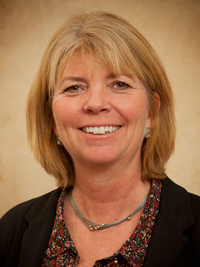
Marianne Nordli Hansen is a Professor at the Department of Sociology and Human Geography , University of Oslo. With a career spanning decades, her research focuses on social stratification , class and inequality , labor market conditions , economic inequality , and elites . She has taught courses like Sociological Theory (SOS4001), Theory Specialization in Sociology (SOS4011), and Inequality: Class, Gender and Ethnicity (SOS4100). Education: MA in Sociology (University of Oslo, 1984), Dr. philos in Sociology (University of Oslo, 1996) Positions: Associate Professor (ISS, UiO, 1996), Professor (ISS, UiO, 1999) Her research explores wealth accumulation , intergenerational mobility , social networks , and educational policy . Key collaborators include Professor Olav Korsnes and Associate Professor Johannes Hjellbrekke at the University of Bergen. Current projects focus on social inequality in Norway , with publications analyzing elite professions, wealth distribution, and class-based educational disparities. She has contributed to significant works on Nordic welfare models and public sector impacts on segregation and equality.
Michael Riegler is a Researcher at the AI Department, Simula Research Laboratory , focusing on interdisciplinary applications of Artificial Intelligence in healthcare, sports analytics, and multimedia systems. His work bridges Machine Learning , AI Alignment , and Applied AI across clinical and real-world domains. Key Affiliations: Simula Research Laboratory (AI Department Head) Research Themes: Explainable AI in medicine, multimodal data analysis, and AI-driven health monitoring Research Interests include: Developing AI/ML algorithms for medical imaging (e.g., polyp detection, embryo analysis) Addressing missing data challenges in healthcare through novel imputation techniques Creating multimodal virtual avatars for investigative interview training Designing edge AI systems for sports analytics and sustainable fishing Recent Publications highlight collaborations with institutions in Norway and globally, with a focus on: Medical Applications: Polyp segmentation, ECG analysis, and explainable models for disease detection Sports Analytics: Athlete performance prediction and soccer video processing Data Infrastructure: Lifelogging datasets (ScopeSense), semantic representation frameworks Labs & Teams include leadership in Simula’s AI Department and participation in projects like Medico Multimedia Task , ImageCLEF , and MediaEval workshops. His work emphasizes responsible AI innovation in public sectors and privacy-preserving systems for edge environments.
Western Norway University of Applied SciencesNorway
Professor Kjetil Grimastad Lundberg serves at the Institute for Welfare and Participation, Western Norway University of Applied Sciences (HVL), appointed Professor of Welfare Sociology in 2020 after joining HVL in 2018. A University of Bergen PhD graduate (2012), he previously worked as Researcher II at Uni Research Rokkansenteret (2011-2018). His academic credentials include: PhD in Sociology, University of Bergen, 2012 Master's in Sociology, University of Bergen, 2007 Lundberg's research critically examines intersections of welfare systems, poverty, and marginalization through institutional ethnography. He investigates street-level bureaucracy in NAV (Norwegian Labour and Welfare Administration), digitalization impacts, and child/family perspectives in low-income contexts, emphasizing stigma, power dynamics, and activation policies. His work bridges theoretical sociology with practical welfare challenges. His 15 most recent publications (2017-2024) reveal consistent focus on welfare-state dynamics, with recurring themes of work inclusion mechanisms, user experiences in complex interventions, and poverty's structural dimensions. Methodologically, he employs qualitative institutional ethnography across European Societies, European Journal of Social Work, and Social Policy and Society, demonstrating longitudinal analysis of policy evolution. Lundberg supervises multiple PhD candidates on work inclusion and poverty interventions while leading the NAV-funded project 'Barneperspektiv i Nav' (2023-2027) and participating in three additional studies addressing long-term poverty effects and cross-sectoral coordination. His grant portfolio spans NAV-FOU, Sparebankstiftelsen, and NFR funding. He contributes to HVL's 'Rights, Democracy and Welfare' research group, advancing critical welfare sociology through teaching in social science, sociology, and social work programs while examining urban poverty, bureaucratic practices, and marginalized family experiences.
Emilia Andersson-Bakken is an Associate Professor at Oslo Metropolitan University, affiliated with the Faculty of Education and International Studies and the Department of Primary and Secondary Teacher Education. She teaches and supervises student teachers at bachelor’s, master’s, and PhD levels, contributing significantly to initial teacher education. Her academic work is deeply rooted in classroom research, with a focus on critical thinking, creativity, and classroom discourse in primary education. Her research interests include classroom research , initial teacher education , critical thinking , creativity , and classroom discourse . These themes are reflected in her ongoing involvement in key research projects such as KriT (Critical Thinking in Primary Education), Beyond access: improving quality of early years reading instructions in Ethiopia , and Classroom activities for the six-year-olds – 20 years on (Klassprax_20) . These projects emphasize pedagogical innovation, teacher facilitation, and literacy development in early schooling. The trends in her recent publications reveal a strong commitment to advancing critical thinking through children’s literature, dialogic teaching, and teacher-led inquiry. Her work spans both theoretical and practical dimensions, with a recurring emphasis on how teachers can foster student agency and reflective thinking in primary classrooms. She frequently publishes in educational journals and contributes to edited volumes focused on pedagogy and literacy. She has received no explicitly mentioned scientific awards in the provided text. Emilia supervises students at multiple levels and is actively involved in research funding and dissemination efforts through national and international conferences. Her work is supported by collaborative research teams and institutional frameworks at OsloMet. While no specific grants are named, her participation in multi-year, interdisciplinary projects indicates substantial research support and academic leadership. She is part of the research group Classroom Research and contributes to Research and Development Work on the Lower Primary Level With a Focus on Initial Education . These groups focus on observational studies, curriculum evaluation, and teacher development in early education contexts.
Hilde Fiva Buzungu is an Associate Professor in the Department of Social Work, Child Welfare and Social Policy at Oslo Metropolitan University, Faculty of Social Sciences. Her work bridges social anthropology, applied linguistics, and public policy, with a strong focus on language and communication in welfare services for minority language speakers. Her research interests include: Language discordance and interpreter-mediated communication in social work and healthcare Multilingualism and migration Professional practices in child welfare and public administration Interpreter training and quality assurance Human rights and minority inclusion Intersectionality in social services Buzungu's recent publications (2020–2024) reveal a consistent focus on the challenges of language access in public institutions such as NAV, child welfare, and hospitals. Her work critically examines how language barriers affect service delivery, professional decision-making, and equity. She investigates systemic issues in interpreter availability, quality, and integration, particularly during crises like the Ukrainian refugee influx. Her research combines ethnographic methods with policy analysis, emphasizing the 'space between' where meaning is negotiated across languages and cultures. She has contributed extensively to both academic and public discourse, publishing in journals like Nordic Social Work Research and Kritisk juss , as well as producing key reports for governmental bodies like Integrerings- og mangfoldsdirektoratet and Oslo University Hospital. Her book Language Discordant Social Work in a Multilingual World: The Space Between (2023) synthesizes her core themes. Buzungu actively disseminates her findings through public lectures, media engagement, and policy forums, advocating for improved language services in the Norwegian public sector. She is affiliated with the research group on Professional Qualification and Professional Practices in Social Work and Child Protection.
Norwegian University of Science and TechnologyNorway
Terje Andreas Eikemo is a Professor at the Department of Sociology and Political Science , Norwegian University of Science and Technology (NTNU) , and Head of the CHAIN research center . His work focuses on the intersection of social inequality , public health , and global policy , emphasizing how socioeconomic factors like education , income , and welfare systems influence mortality , chronic diseases , and mental health . He combines theories from sociology , epidemiology , and medicine to address health disparities across diverse contexts, including pandemics , climate change , and migration . 2009: Prize for Young Researchers in the Humanities 2010: SINTEF Prize for Outstanding Research 2014: NTNU Star Program Eikemo has published extensively in top journals like The Lancet and BMJ Open , with research themes spanning social determinants of health , policy interventions , and global health equity . His work includes GBD studies , European Social Survey analyses , and refugee health assessments. He serves as Editor-in-Chief of the Scandinavian Journal of Public Health and collaborates with international bodies like WHO and UNESCO .
Elin Marie Frivold Kostøl is an Assistant Professor in the Department of Education at the University of Agder. Her research focuses on co-regulation in parent-child and teacher-child interactions, particularly in emotional situations. She examines how social and emotional conditions influence child development and learning, with methodological expertise in qualitative approaches like Stimulated Recall Interviews and video analysis. Key areas include special education, social-emotional learning, and inclusive education. Her work explores pedagogical strategies for emotional support in classrooms and the role of intersubjective understanding in bullying prevention. She is affiliated with the Special Education research group and has contributed to interdisciplinary projects addressing educational assessment and school staffing challenges. Elin’s research highlights teachers’ interpretations of emotional situations, emphasizing co-regulation as a pedagogical tool. She advocates for evidence-based practices to enhance children’s emotional and behavioral regulation in diverse classroom settings.
David Aly Redvaldsen is an Associate Professor at the University of Agder's Department of Sociology and Social Work. He specializes in historical studies focusing on eugenics, political movements, and education. His recent work includes A History of British Eugenics since 1865 (2024) and The Labour Party in Britain and Norway (2011). He holds a joint first prize in the 2014 Emile Lousse Prize for his article on British-Norwegian constitutional relations. Research Interests: Redvaldsen’s work bridges history, sociology, and political science. Key areas include the historical development of eugenics, Labour Party dynamics in Britain and Norway, social Darwinism, and the role of historical education in kindergartens. His interdisciplinary approach examines how scientific ideas intersect with political and social institutions. Publications: Over 30 peer-reviewed articles and two monographs. Recent topics include the teaching of history in Nordic kindergartens, the Labour Party’s engagement with social Darwinism during WWI, and comparative studies of Nordic eugenics movements. Awards: 2014 Emile Lousse Prize (joint winner) for 'Great Britain and the Norwegian Constitution of 1814'. Grants & Collaborations: Active in social studies didactics research groups. His work on Norwegian parliamentary history in textbooks (2021) highlights evolving national narratives. Current projects include studies on biotechnology ethics and the legacy of Herbert Brewer’s socialist eugenics advocacy. Labs/Teams: Member of the Social studies didactics and educational research group at UiA, focusing on curriculum development and interdisciplinary historical education.
Tine Kristin Jensen is a Professor of Clinical Psychology at the University of Oslo's Department of Psychology, with a part-time affiliation at the Norwegian Centre for Violence and Traumatic Stress Studies. She specializes in child trauma, PTSD treatment, and developmental psychology, focusing on interventions for youth exposed to violence, disasters, and terrorism. Dr. Jensen co-leads major trauma-focused cognitive behavioral therapy (TF-CBT) implementation projects across Europe and conducts research on unaccompanied refugee minors and digital mental health interventions for war-affected children. Education: Cand. psychol. (University of Oslo, 1986) Approved specialist in clinical psychology (Norwegian Psychological Association, 1996) Dr. Psychol. (PhD, University of Oslo, 2005; thesis: Suspicions of Child Sexual Abuse) Her research interests span trauma treatment efficacy, post-traumatic stress symptom dynamics, and cultural influences on psychological recovery. She has pioneered studies on parental experiences of terrorism (e.g., Utøya attack survivors) and developed digital tools like apps to complement TF-CBT for adolescents. Dr. Jensen also addresses systemic challenges in child mental health services, including therapist burnout and resource allocation. Recent work explores social media literacy's role in youth mental health and evaluates stepped-care models for trauma survivors. She collaborates internationally with institutions like Drexel University and Denver University, contributing to global PTSD treatment guidelines. Key projects include: Implementation of TF-CBT in Norwegian child mental health clinics Treatment outcomes for unaccompanied asylum-seeking minors Longitudinal studies on terror survivors' mental health Development of trauma-focused interventions for online abuse victims Dr. Jensen actively contributes to Nordic psychology policy as a journal editor and sits on scientific committees for organizations like ECOTS. Her work bridges clinical practice, research, and public health policy to improve care for traumatized children and families.
Haley De Korne is a Professor at the University of Oslo's Institute for Literature, Area Studies and European Languages within the Faculty of Humanities. Her academic work spans the intersections of linguistics, education, and anthropology, focusing on multilingual education contexts with particular attention to minoritized and indigenous languages. Dr. De Korne holds a PhD in Educational Linguistics from the University of Pennsylvania, an MA in Applied Linguistics from the University of Victoria, and a BA (Hons) in Combined Social Sciences from Durham University. Her academic journey reflects a strong foundation across multiple disciplines that inform her interdisciplinary approach to language research. PhD Educational Linguistics, University of Pennsylvania, USA MA Applied Linguistics, University of Victoria, Canada BA Hons Combined Social Sciences, Durham University, UK Her research interests focus on critical language awareness among teachers, social change imaginaries in multilingual regions, and pedagogies for language reclamation. She specializes in minoritized languages in education, multilingual education policy and pedagogy, language politics, indigenous language reclamation & revitalization, and language ideologies, with specific expertise in Isthmus Zapotec (Mexico) and Anishinaabemowin (US & Canada). Her methodological approach combines ethnography and interactional sociolinguistics within linguistic anthropology. Analysis of Dr. De Korne's recent publications reveals a consistent focus on language revitalization, particularly examining how educational contexts can support or hinder minoritized language maintenance. Her work increasingly addresses global North-South perspectives on language education, with attention to place-based pedagogy and critical language awareness. A significant thread throughout her research examines translanguaging practices and how they challenge traditional monolingual approaches to language education. Her scholarship demonstrates strong community engagement, particularly with Zapotec-speaking communities in Mexico. Dr. De Korne serves on the editorial board of Multilingua - Journal of Cross-cultural and Interlanguage Communication (2023-2025) and is an active member of the Norwegian Academy for Young Researchers (2021-2025). She also chairs the American Association of Applied Linguistics Committee for Online Education and Outreach Webinar subcommittee. Member, Norwegian Academy for Young Researchers (2021-2025) Editorial board member, Multilingua Journal (2023-2025) Chair, AAAL Committee for Online Education and Outreach (2023) Partner, Multilingualism in Transitions Research Project (2021-2025) Affiliated researcher, MultiNor Research Group At the University of Oslo, Dr. De Korne teaches courses including MULTI 4150 Project-based research in multilingualism, NOAS 4102 Additional language learning in socio-cognitive and sociocultural perspectives, and several linguistics courses on language acquisition, multilingualism, and research methods. She also leads PhD courses on communication in multilingual workplaces and revitalization of indigenous and minority languages. Her current research projects include FOSTERLANG (Indigenous language resilience), Language and culture maintenance in Wilamowice, and Linguistics and Sustainability.
Heidi Aarum Hansen is an Associate Professor at the Department of Welfare, Management and Organisation, Oslo Metropolitan University. She holds a PhD in Social Work with extensive practical experience in child welfare. Her research focuses on child welfare practices, digitalization challenges, children’s rights, and social media’s impact on social work. Education: PhD in Social Work. Research interests include competence development in child welfare, digital transformation of welfare services, and methods for teaching practical social work. Current projects explore how children's social media usage challenges traditional social work practices. Key research areas span child welfare policy analysis, family contact preservation strategies, and judicial decision-making processes involving children. Her work emphasizes ethical considerations in digital age practices and improving communication in high-conflict cases. Affiliated with the Social Work Research Group and Psychosocial Work Research Group. Active in publishing Nordic Social Work Research and Children and Youth Services Review. No awards explicitly listed, though her work demonstrates significant contributions to child welfare scholarship. Teaches courses related to child welfare practice and digitalization impacts. Advising activities not detailed here. Research focuses on developing practical frameworks for integrating digital tools while maintaining ethical standards in social work.
Haakon Sundbø is a Senior Lecturer at the Department of Information and Communication Technology, University of Agder. He teaches courses such as Computer Science (DAT100), Multimedia Design (DAT104), Web Publishing (DAT110), Visual Design (DAT222), Sound Engineering (DAT228), ICT and E-learning in Vocational Subjects (PED978), and Didactic Use of Digital Tools (MM903). His academic responsibilities also include guest lecturing and supervision in ICT Project (DAT215), Photography (DAT227), Video (DAT229), Bachelor's Project (DAT303), Web and Online Knowledge (MM901), Remote Operated Vehicles (MM202), Interaction Design (MM403), and Technology for Teachers (TEKPED60). Materials, Energy and Nanotechnology (BSc, University of Oslo) Multimedia Technology and Design (BSc, University of Agder) Multimedia and Educational Technology (MSc, University of Agder) Haakon's research focuses on lifelong learning, e-learning platforms, interaction design, user experience, artificial intelligence in education, augmented reality, virtual reality, and digital competence development. He has contributed to projects like Decentralized Competence Development (DEKOMP), UiA Consense, and drone technology research at University of Agder. His recent publications analyze AI integration in teaching, digital frameworks for schools, screen usage guidelines, and collaborative learning networks. He also leads a research group on Multimedia and E-learning, emphasizing flexible digital resources and practical technology adoption in educational contexts.
Inland Norway University of Applied SciencesNorway
Stian Sundell Torjussen is an Associate Professor at the University of Innlandet , affiliated with the Department of Social Sciences, Religion and Ethics within the Faculty of Education . His primary research interests focus on ancient Greek religion, contemporary Paganism, reception studies, and the role of religion in popular culture. He actively contributes to teacher education programs in religion, philosophy, and ethics. Dr. Torjussen leads the Research Group Formation, Values and Cultural Heritage and serves as the Subject Manager for "Classical religion" at the Great Norwegian Encyclopedia . His work bridges classical religious studies with modern cultural phenomena, such as analyzing ancient myths in video games (e.g., Dungeons & Dragons: Mythic Odysseys of Theros ) and exploring contemporary Hellenic polytheistic practices in North America. His publications span over 15 years, addressing topics like Orphic gold tablets, Etruscan tomb iconography, and the reception of classical motifs in modern media. Recent work includes studies on teacher education ethics and transnational research collaboration through the TRANSPEER project. Though no formal awards are listed, his extensive scholarly output underscores his academic influence in religious and classical studies. Dr. Torjussen’s advising and grants focus on fostering interdisciplinary research and pedagogical innovation. He collaborates internationally, evident in projects like EMERGE (a European university alliance). His academic presence extends to platforms like Cristin , Academia.edu , and ResearchGate .
Norwegian University of Science And TechnologyNorway
Aleksandra Raonic is an Associate Professor at the Norwegian University of Science and Technology (NTNU), affiliated with the Department of Architecture and Technology under the Faculty of Architecture and Design. She previously held an Associate Professorship at Xi'an Jiaotong-Liverpool University (XJTLU) in China from 2014 to 2020, where she led Year 3 architecture programs and collaborated with the University of Liverpool. Raonic is also the founder and principal architect of RAUM, an award-winning architectural studio known for research-driven design projects. Her work spans architectural education, urban design, and innovative residential/commercial projects, with a focus on sustainability and community engagement. Her research emphasizes experimental pedagogy and the integration of design practice with academic teaching. Notable projects include the Stubline Kindergarten (2017 S.ARCH Award) and the Central Greenmarket in Negotin (2019 DANS International Award). Raonic has received over 25 design and teaching awards, including the Jiangsu Province Tutor Award (2018) and the Suzhou Excellent Educator Award (2016). She has supervised numerous student projects recognized at national and international levels. Raonic’s teaching philosophy combines theoretical rigor with hands-on practice, evident in her co-authored publications like Framing Indeterminacy (2019). Her recent exhibitions, including Barnas Katedral (2023) and Work in Progress (2023), highlight her commitment to experimental design and public space innovation. She actively collaborates across institutions, such as the Threads of Innovation project with CEPT University in India (2021). Education Background: Professional journey began with early architectural competitions (e.g., 1998 student award for urban design in Pancevo). Formal training includes studies at the Städelschule in Frankfurt, influencing her experimental design ethos. Awards Overview: Over 25 awards spanning teaching excellence, design competitions, and architectural innovation, including Grand Prix (Leonardo 2005) and multiple jury-selected projects. Grants & Projects: Leads applied research initiatives like NTNU’s Threads of Innovation , focusing on space interventions and cross-cultural academic partnerships. Raonic’s architectural practice and academic roles are deeply intertwined, reflecting her belief in education as a platform for advancing architectural discourse and societal impact.
Elisabeth Anvik is an Associate Professor in the Department of Early Childhood Education at the Faculty of Education and International Studies, Oslo Metropolitan University (OsloMet). She also serves as Head of Studies – Area of Responsibility 4, contributing to academic leadership in teacher education. Her work is deeply rooted in music, cultural heritage, and arts-based pedagogy in early childhood contexts. Position: Associate Professor Institution: Oslo Metropolitan University School: Faculty of Education and International Studies Department: Department of Early Childhood Education Email: elisabeth.anvik@oslomet.no Office: Pilestredet 42, Q4041, Oslo Her research interests center on early childhood education, with a focus on music, immaterial cultural heritage, sustainability, play, aesthetics, and technology. She is actively involved in the research groups BLEST (sustainability, play, aesthetics and technology), KunstForsk (arts-based and artistic research), and Philosophy, Art and Culture. Her work emphasizes cultural diversity in teacher training and the role of music in preserving and renewing traditions within kindergarten settings. The recent publications and dissemination activities reveal a consistent engagement with transformative singing practices, digital tools in music education (e.g., the 'Trall' app), and the integration of artistic research in professional pedagogy. Themes across her work include cultural continuity, pedagogical innovation, and the expressive dimensions of early learning. Elisabeth Anvik is a key contributor to the ongoing research project Vibrant Connections , which investigates how music supports cultural heritage in Norwegian kindergartens and teacher education programs. She collaborates extensively with colleagues such as Liv Anna Hagen, Siri Haukenes, and Nina Engesnes. She has authored scientific publications, a textbook ( RAFFE RIFF. Sanger i sirkel ), and over 130 dissemination works, demonstrating a strong commitment to both academic and public engagement. While no formal scientific awards are listed, her extensive output and project leadership indicate significant recognition in her field. She advises on educational practices, contributes to curriculum development, and leads initiatives that bridge research, artistic practice, and early childhood pedagogy. Her work is supported through institutional research funding and collaborative projects rather than individual grants, as per available data. She is affiliated with multiple research groups: BLEST, KunstForsk, and Philosophy, Art and Culture—each contributing to interdisciplinary and arts-integrated approaches in education.