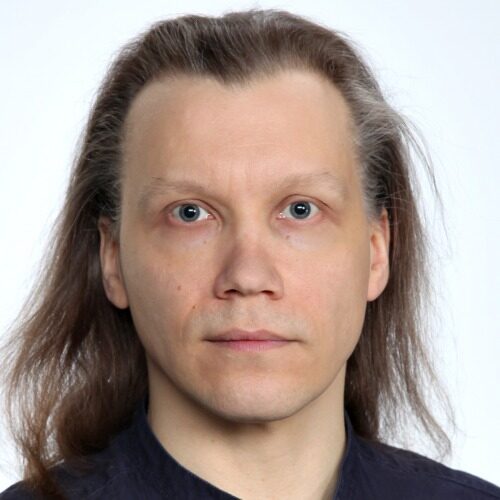
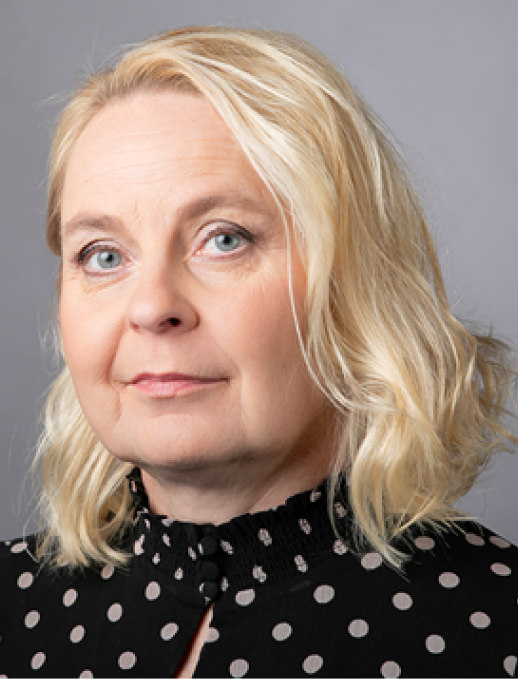
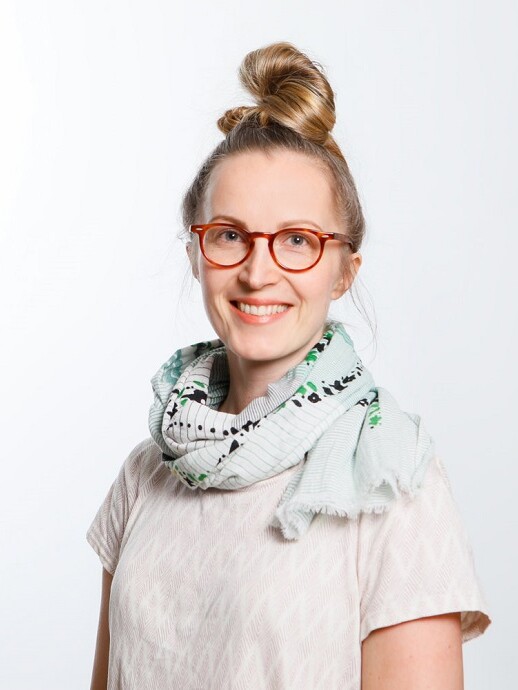
Sakari Melander is a Professor at the Faculty of Law , University of Helsinki, specializing in Criminal Law , with a focus on constitutionalization, Europeanization, and sentencing policies. His work bridges theoretical criminal law with practical legislative and policy challenges. Key research areas include EU criminal law, constitutional constraints on criminal legislation, and general doctrines of criminal law. He has extensive experience in parliamentary legal consultation, providing expert opinions to Finland’s Legislative Committees (e.g., on immigration control, anti-corruption directives, and digital evidence handling). Recent publications address topics like EU corporate sanction policies, constitutionalization of criminal law, and reforms in Finnish sentencing systems. His 2025 article in the New Journal of European Criminal Law explores balancing administrative and criminal sanctions in the EU. Scientific awards include: Hilkka ja Otto Brusiin Foundation Thesis Prize (2001) Magister Bonus – Good Teacher Award (2014) Primustohtori Award (2010) Year’s Teacher (2010) Year’s Opponent (2008) He leads research projects such as Criminal Law Under Pressure: Differentiation and Harmonization (2012-2015) and Assessment of Human Trafficking Sanction Practices (2021-2022), and supervises doctoral theses on criminal law topics.
Marketta Kyttä is a Professor of Land Use Planning at Aalto University's Department of Built Environment. She holds a PhD in Architecture from Helsinki University of Technology (2004) and leads the Spatial Planning and Transportation Engineering Master’s program. Research Interests: Child- and age-friendly urban environments SoftGIS methodology for participatory mapping Social sustainability and urban health Public participation in planning Activity space modeling Scientific Awards: Lea Pulkkinen award Tapio Nummenmaa award Geospatial World Forum's WebGIS Innovation Award (2010) Oskari Vilamo award (2020) Oppikirja-palkinto for urban planning literature Methodological Contributions: SoftGIS (PPGIS innovation) Commercialization as Maptionnaire software International Collaborations: Affiliated with universities in Italy, Australia, and the US. Her work spans 80+ countries through Maptionnaire’s global adoption.
Camilla Kronqvist is a Senior Lecturer in the Department of Culture, History and Philosophy at the Faculty of Humanities and Social Sciences, Åbo Akademi University. She received her doctorate in philosophy from Åbo Akademi in 2008 with the thesis What We Talk About when We Talk About Love , which examined philosophical questions about emotions, identity, morality, and meaning through different ways of discussing love. Since her doctorate, she has worked as both a researcher and teacher in philosophy, and to some extent in university pedagogy, at Åbo Akademi University. Dr. Kronqvist's research focuses on the philosophy of love, Wittgenstein studies, ethics of sexual relationships, moral psychology, philosophy of emotions, and ordinary language philosophy. Her work explores how conversations about emotions help us understand their meaning and roles in our lives, with particular attention to moral certainty in intimate relationships. She has led significant research projects including Ethical Explorations: Rethinking Our Sexual Relations (2023-2026), Speaking of Love, Thinking with Wittgenstein (2019-), and Explorative Inquiries: Analytical Tools for Reflecting on Oneself, Others and the World in Kindergarten (2017-). Analysis of her 64 publications reveals a consistent trajectory connecting Wittgensteinian philosophy with contemporary ethical concerns, particularly regarding love, moral certainty, and intimate relationships. Her most recent works demonstrate increasing engagement with feminist philosophy and gender studies while maintaining her foundational focus on language and moral psychology. The publications show strong connections between emotional language, moral reasoning, and existential concerns in everyday life. Dr. Kronqvist serves as supervisor for multiple students including a master's thesis in philosophy, a master's thesis within the master's program Social exclusion, and doctoral theses for Salla Aldrin Salskov, Evelina Salo, and Christoffer Steffansson. During the academic year 2021-2022, she taught four courses in the minor subject Ethics in a Globalized World , as well as Social exclusion in a philosophical perspective , and examined Philosophical Aspects on Social Exclusion within the master's program Social exclusion.
Mikko Kurimo is a Full Professor at Aalto University's Department of Information and Communications Engineering, School of Electrical Engineering. He earned his M.Sc., Lic.Tech., and D.Sc.(Tech.) from Helsinki University of Technology (1992, 1994, 1997) and pioneered neural networks for automatic speech recognition (ASR) in his PhD thesis. After research roles at IDIAP (Swiss AI center) and visiting positions at University of Colorado, Edinburgh, SRI, ICSI, and Nitech, he leads Aalto's ASR group since 2000. His work focuses on unsupervised subword modeling for morphologically complex languages (Finnish, Estonian, Turkish, Arabic) and large speech foundation models. PhD in Neural ASR (Helsinki University of Technology, 1997) Research Scientist at IDIAP (Switzerland) Visiting Fellow at University of Colorado, Edinburgh, SRI, ICSI, Nitech Head of Aalto ASR Group (2000-present) His research spans deep learning for ASR, spoken language modeling , and low-resource language solutions . Recent work explores continued pre-training of self-supervised models, multimodal emotion recognition, and pronunciation assessment using LLMs. He led the winning team in the 2017 Multi-Genre Broadcast challenge and secured competitive funding in Tekes Challenge Finland and EC's H2020-ICT-2017. Key article trends include: Advancements in children's speech recognition and dysarthric speech processing Integration of generative AI for language learning feedback Specialization in low-resource Uralic languages (Finnish, Northern Sámi) Development of robust ASR systems for complex phonetic environments Scientific Awards ACM Multimedia 2023 Computational Paralinguistics Challenge Prize First place in MGB3 2017 Arabic ASR Challenge ISCA Best Student Paper Award (2011) Professeur Invité at Université de Saint-Etienne (2005-2006) Royal Society International Short Visit Fellowship (2004) Professor Kurimo leads the Speech Recognition Group at Aalto, collaborating with COIN (Centre of Excellence in Computational Inference) and AIRC (Adaptive Informatics Research Centre). His projects like CaptainA mobile app demonstrate practical applications of ASR in language education. He has supervised numerous publications with co-authors in domains spanning bandwidth extension, stuttering detection, and speech sound disorder assessment.
Kristiina Kumpulainen is a Professor at the University of Helsinki's Faculty of Educational Sciences, leading the Learning, Culture & Interventions (LECI) research group. Currently on leave but actively engaged in research, she supervises doctoral students in both the Doctoral Program in Cognition, Learning, Teaching and Communication and the Doctoral Program in School, Education, Society and Culture. Her scholarly contributions include 270 research outputs and leadership of 27 research projects, with recent work focusing on children's digital experiences and early childhood education systems. Her research interests center on educational sciences with emphasis on early childhood education, digital literacy development, learning environments, and educational change processes. She examines how children interact with technology, develop ecological imagination, and build multiliteracy skills across different contexts. Her work bridges theoretical frameworks with practical educational interventions, particularly examining agency-structure dynamics in educational settings and the implementation of child-centric educational systems. Analysis of her recent publications reveals consistent focus on digital childhoods, educational interventions, and comparative early childhood education systems. Her work spans multiple methodologies including qualitative case studies, comparative analyses, and theoretical explorations of learning across contexts. The research demonstrates strong international collaboration, particularly within Nordic countries and global comparative studies. Member of the Finnish Academy of Science and Letters (2019) 2020 Editor's Choice Award from British Educational Research Association (2021) Nomination for Outstanding Publication Award from EARLI (2002) Nomination for best paper award at THE POWER OF MEDIA IN EDUCATION Conference (2007) Professor Kumpulainen has supervised numerous doctoral students and served on dissertation committees. Her research has been supported by significant grants including the Australian Research Council, Finnish Academy of Science, and Nordic research networks. She actively participates in academic service through editorial boards, peer review activities (over 90 manuscript reviews), and professional committees. She directs the Playful Learning Center research laboratory, which focuses on innovative approaches to children's learning through play and technology integration.
Matti Tedre is a Professor at the School of Computing, Faculty of Science, Forestry and Technology, University of Eastern Finland. His research focuses on computer science education, ICT4D, social studies of computer science, and the history and philosophy of computer science. He leads the Technologies for Learning and Development research group and is involved in the Generation AI project (2022–2028), exploring AI education for security mindset development. His work bridges theory and practice, emphasizing educational technology, AI literacy, and participatory design. Recent projects include developing low-cost AI kits for novice learners and co-designing ML-driven apps with children. He collaborates globally on topics like K-12 computing education, data agency, and ethical AI integration in classrooms. Key contributions include studies on scaffolding in ML education, children’s understanding of algorithmic biases, and the role of generative AI in creative learning. His research also addresses challenges in Tanzanian ICT adoption, including financial management systems for informal groups and timetabling software for higher education institutions. Tedre’s interdisciplinary approach spans computer science, education, and sociology, with a focus on democratizing AI access and fostering critical digital literacy among youth and educators.
Mia Hakovirta is a Professor in the Department of Social Work at the University of Turku, Finland. Her work is centered on family policy, child support, lone parenthood, child poverty, and financial social work. She holds a PhD from the University of Turku (2006) and an MA from the University of Tampere (1994). MA, University of Tampere (1994) PhD, University of Turku (2006) Her research focuses on the economic well-being of families after separation, particularly in shared care arrangements, and the impact of child support policies across welfare states. She has led major research projects including EconShared (Academy of Finland), TALSOS (Ministry of Social Affairs), and Children First (NordForsk). Her expertise extends to international comparative studies, with visiting scholar experience at SPRU (UK), Rutgers University, University of Wisconsin–Madison, and RMIT University. Her recent publications explore joint physical custody, child support systems, financial abuse of children, and cross-national comparisons between Finland and the US. These works reveal a strong trend toward analyzing the intersection of legal frameworks, economic support mechanisms, and child well-being in post-separation families. Although no specific scientific awards are listed, her leadership in externally funded research projects highlights her scholarly recognition. She has contributed significantly to policy-relevant research in Nordic and international contexts. Mia Hakovirta advises students and leads research teams focused on family economics and social policy. She has secured grants from the Academy of Finland, NordForsk, and the Finnish Ministry of Social Affairs. Her collaborative network spans multiple countries, reflecting her role in advancing comparative family policy research. She has also contributed to public discourse through blog posts and commentaries on the social impacts of the pandemic on children. She is actively involved in research groups and projects that examine financial social work, child support enforcement, and the economic integration of lone-parent families. Her work bridges academic research and practical social work interventions, particularly in supporting families with children facing economic hardship.
Sanni Kotimäki is a University Lecturer at the INVEST Research Flagship Centre, University of Turku, where she conducts research on life-course dynamics, socioeconomic health disparities, intergenerational effects, and the role of early-life experiences. Her work integrates quantitative methods and applied statistics to analyze complex social and health outcomes. Research Interests: Her research centers on understanding how parental resources, childhood environments, and socioeconomic conditions shape health and wellbeing across the lifespan. She investigates mechanisms behind health inequalities, including the influence of parental education, mental health, and family structure. A key focus is on intergenerational transmission of disadvantage and resilience, particularly through the lens of family policies such as parental leave. Publication Trends: Her recent publications (2020–2024) reflect a consistent focus on population health, using sibling fixed-effects models, administrative data, and mixed-methods approaches. Themes include fatherhood and workplace peer effects on parental leave, birth outcomes and NEET status, prenatal mental health disparities, and the long-term impacts of parental death. These works demonstrate methodological rigor and policy relevance. Scientific Awards: No awards mentioned in the provided text. Advising and Grants: There is no mention of students or advising roles in the available information. While no specific grants are listed, her affiliation with the INVEST Research Flagship Centre suggests involvement in large-scale, funded research initiatives focused on social and health disparities. Labs and Teams: Sanni is actively involved with the INVEST Research Flagship Centre, a multidisciplinary research environment at the University of Turku dedicated to understanding early-life determinants of health and wellbeing. She collaborates closely with researchers such as Satu Helske, Simon Chapman, and Juho Härkönen, contributing to both academic and public-facing outputs including blogs and policy reports.
Associate Professor Martina Björkander is a leading scholar in practical theology at Åbo Akademi University , Finland, within the Faculty of Humanities and Social Sciences, Theology and Religious Studies . She also serves as a postdoctoral researcher at the Polin Institute . Her work specializes in Pentecostal studies , with a focus on lived theology, ritual, and the socio-political dimensions of global Christianity. Education: Doctor of Theology, Lund University (2021) – Dissertation: A Rhythm that Connects my Heart with God: Worship, Ritual and Pentecostal Spirituality as Theology Docent of Practical Theology, especially Pentecostal Studies Research Interests: Martina Björkander’s research spans Pentecostal theology , ritual studies , lived religion , and African Christianity . Her current project examines the Rwandan genocide from a Pentecostal-theological perspective, exploring how theology intersects with trauma, justice, and reconciliation. Her earlier work delves into worship as a theological practice, the role of ritual in charismatic communities, and the socio-political implications of Pentecostal soteriology. Publications Overview: Her publications reflect a deep engagement with Pentecostal spirituality , ritual innovation , and theological ethnography . Notable works include a 488-page monograph on worship and theology (2024), and a 2025 article on lived theology. Her research consistently bridges theology with lived experience, particularly in African and Swedish contexts. Awards & Recognition: Stiftelsen Oscar II's stipendium (2023) – Awarded for outstanding doctoral research in theology Academic Service & Leadership: She is actively involved in academic service, including: Organizing conferences and workshops on empirical theology Serving as external examiner for doctoral dissertations Peer reviewing for journals such as Cogent Arts & Humanities Delivering invited lectures and public presentations Institutional & Collaborative Roles: She collaborates internationally, particularly in East Africa, and is affiliated with the Polin Institute at Åbo Akademi University, which supports interdisciplinary research in theology and religious studies.
Lasse Lipponen is a Professor in the Department of Educational Sciences at the University of Helsinki, where he leads research on cultural-historical approaches to children's learning and development. He serves as a supervisor in the Doctoral Program in Cognition, Learning, Teaching and Communication, as well as the Doctoral Program in School, Education, Society and Culture. His academic work spans over two decades with 198 research outputs documented from 1997-2025. Professor Lipponen's research primarily focuses on cultural-historical approaches to learning , with special emphasis on early childhood education contexts. His work explores collaborative care configurations, childhood grief processing within institutional settings, and digital play-based learning in marginalized communities. As director of the Learning, Culture & Interventions (LECI) research group, he examines how cultural practices shape children's developmental trajectories and learning experiences. His recent publications (2023-2025) demonstrate a clear thematic progression toward understanding emotional development in educational settings, particularly children's grief experiences, and the integration of digital technologies in early literacy development. The research shows strong interdisciplinary connections between educational psychology, cultural anthropology, and developmental science. His scientific contributions have been recognized with five major awards: HEI Schools awards (2018) - Best Product, Best Service, and Grand Prix of 2017 from Grafia Open Museo Project award (2013) - Museum Pedagogical Act of the Year Hyvä Opettaja - Magister Bonus award (2008) Professor Lipponen has supervised numerous doctoral candidates and serves extensively in academic service roles, including 15 thesis examinations, 15 peer reviews, and leadership positions in international committees. He currently leads the Academy of Finland-funded project 'Children's grief and grieve in institutional early childhood education' (2021-2025) and is a key participant in the Playful Learning Center initiative (2014-2026). His external engagements include board membership with Mandai Park Development LTD (2017-2019) and chairing roles with Singapore University of Social Sciences. His research ecosystem includes collaborations with international institutions and practical applications through HEI Schools, which he co-founded as an international education platform translating research into practice for early childhood educators worldwide.
Minna Autio is a Professor at the University of Helsinki's Faculty of Educational Sciences, Department of Education. She is affiliated with the Helsinki Institute of Sustainability Science and Teachers' Academy. Her research focuses on sustainability science, consumer behavior, home economics education, and ethical consumption. Key areas include sustainable fashion, wood-based bioeconomy, and youth financial literacy. She leads the BioColour consortium (2019-2025) developing bio-based dyes and pigments. Recent work explores consumer agency in sustainability practices, food systems, and material lifecycle management. Education: Not explicitly listed in provided texts. Research projects include 'Education for Everyday Sustainability' and 'Consumer-inclusive packaging systems'. She actively participates in international conferences and reviews academic journals like Scandinavian Journal of Educational Research and Journal of Cleaner Production . Her publications analyze topics such as clothing sustainability, youth financial independence, and consumer perceptions of natural vs synthetic materials. She collaborates with organizations like the Strategic Research Council and the European Commission-funded CONFIN-SKILLS project. Grants include funding from the Academy of Finland and the STN consortium.
Dr. Saila Poulter is a Senior University Lecturer at the Department of Educational Sciences, University of Helsinki, and a supervisor in the Doctoral Program in School, Education, Society and Culture. She co-leads the Learning, Culture & Interventions (LECI) and Humanities and Social Sciences Education (HuSoEd) research units. Docent, University of Jyväskylä (since 2018) Visiting Researcher, Aarhus University (2025–) Her research spans existential psychology in education, worldview diversity, and early childhood curriculum innovation. Recent projects focus on climate crisis pedagogy, citizenship education, and grief support for children. Key trends include narrative methods, intercultural dialogue, and ethical education frameworks. 2024: Työyhteisöteko award for collaborative projects 2015: Finnish Association of Science Education Research Doctoral Thesis Award 2014: Best Article of 2013, Kasvatus-lehti Poulter has advised doctoral researchers in projects like CiTe (2023–2027) and KUPERA (2018–2021), with 116 activities recorded across conferences, public talks, and media engagements. She actively participates in academic networks and has 109 publications, including book chapters and peer-reviewed articles.
Suvianna Hakalehto is a Professor of Law at the Law School, Faculty of Social Sciences and Business Studies, University of Eastern Finland. She holds a PhD in Law from the University of Helsinki (2008) with a focus on tort liability of public authorities. Since 2010, her research has centered on children's rights, particularly their legal status in family, school, and healthcare contexts, and the implementation of the UN Convention on the Rights of the Child in Finland. PhD in Law (2008), University of Helsinki Postdoctoral research on pupils' rights at school (2012) Her work spans education law, family law, and tort law, with recent publications addressing school discipline, inclusion, and supervision of education providers. She is currently writing a book on children's rights in early childhood education and care. She co-founded the Child Law Lawyers association and served as its chair from 2013–2020. Her research group affiliations include the Civil Law Research Group. Publications emphasize the interplay between constitutional rights, international human rights norms, and Finnish legislation, with a focus on equality, non-discrimination, and the right to privacy for children. She advocates for legal frameworks that balance parental authority with children's autonomy, particularly in religious education and healthcare decisions. She has trained legal and professional audiences on tort law and children's rights for over two decades, contributing to policy debates on state obligations to safeguard minors' rights in public and private spheres. Her expertise extends to legislative analysis, judicial commentary, and interdisciplinary studies in child welfare.
Aino Ahtinen is a University Lecturer in Computing Sciences at Tampere University's Faculty of Information Technology and Communication Sciences. Her work focuses on human-robot interaction, particularly in educational and healthcare contexts. She has extensive experience designing socially assistive robots, wellness technologies, and participatory design frameworks for diverse populations including older adults, children, and professionals. Her research emphasizes co-learning models involving social robots, accessibility in senior-robot interactions, and the integration of robotics into primary education and workplace well-being. Notable projects include the ROBOTOUR co-learning initiative for seniors and ROBOCAMP programs for youth. She has pioneered studies on robot literacy metrics and ethical design considerations in social robotics. Dr. Ahtinen has contributed to over 60 peer-reviewed publications since 2003, with recent work focusing on robot-assisted physical activity, privacy-aware robotic systems, and cross-generational technology education. Her research bridges human-computer interaction, gerontechnology, and educational technology, consistently prioritizing user-centered design principles.
Anu Kajamaa, PhD, is an Adjunct Professor and Principal Investigator in the Faculty of Educational Sciences at the University of Helsinki, Finland. She also holds positions as an Honorary Professor at the University of Exeter's College of Social Sciences and International Studies (UK) and as a Visiting Associate Professor at Aalto University in both the School of Business (Department of Management Studies) and the School of Arts, Design and Architecture (Department of Media). She serves as Co-Leader of the Learning, Culture and Interventions (LECI) expert group and Vice Director of the Doctoral Program of School, Education, Society and Culture (SEDUCE). Dr. Kajamaa's research focuses on collective learning, creativity, organization and management, continuous learning, and change through interprofessional working and formative interventions. She is an expert in sociocultural- and practice-based theories, qualitative research methods, and participatory intervention techniques, particularly cultural historical activity theory and the Change Laboratory method. Her work spans multiple contexts including primary schools, teacher education, prisons, health and social care, and entrepreneurship hubs. Her recent publications demonstrate a strong trend toward educational innovation through makerspaces and the integration of technology in learning environments. The research shows increasing focus on AI-mediated learning processes, relational expertise development, and collaborative innovation practices across educational settings. Her work consistently applies sociocultural theoretical frameworks to examine how learning occurs in complex, real-world contexts. 2023: The Royal Society of Medicine and Center for the Advancement of Interprofessional Education Practitioners Award, UK 2022: Early Career Award, American Educational Research Association (AERA) 2021: The Clinical Teacher Journal Impact Award 2020: Editor's Choice Award (BERA and BJET) 2015: The Adult Educator of the Year, University of Helsinki Dr. Kajamaa has secured significant research funding including an EU HORIZON 2020-MSCA-RISE project on collaborative working between correctional and mental health services, an Erasmus+ KA205 Strategic Partnerships project on media literacy, and an Academy of Finland-funded project on makerspaces. She coordinates the Nordic Research Network on Digitalising Childhoods and is a member of the Playful Learning Center ecosystem. As one of the founders of the European Centre of Excellence in Qualitative Study and Inquiry in Training and Education, she has established herself as a leader in qualitative educational research methodology. Her international research collaborations span institutions including University College London, McGill University, Columbia University, and the University of Oulu. She has been a visiting researcher at numerous institutions worldwide including UC Berkeley, ESSEC Business School, and the University of Exeter. Her work with the Playful Learning Center and the Nordic-Baltic ISCAR network demonstrates her commitment to advancing educational research through international collaboration.