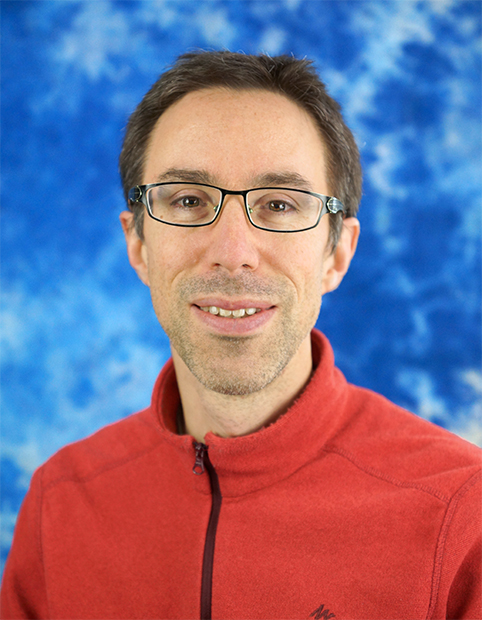
Diego Cauzمشاهده پروفایل
پژوهشگر
Diego Cauz is a tenured researcher in the Department of Mathematics, Computer Science and Physics at the University of Udine, where he also serves in the Faculty of Engineering. He has been actively involved in teaching General Physics, particularly Physics 1 and 2, for various engineering degree programs since the 2006–2007 academic year. His institutional roles include organizing and managing physics teaching laboratories for engineering and science students. His research focuses on experimental high-energy and astroparticle physics, with extensive participation in major international collaborations. He has contributed to the CDF experiment at Fermilab, the ATLAS experiment at CERN, the Muon g-2 experiment at Fermilab, and the Cherenkov Telescope Array (CTA) project in La Palma, Spain. His technical expertise lies in detector instrumentation, particularly in the development of calibration systems using lasers and silicon photomultipliers (SiPMs), as well as in managing complex data acquisition and monitoring setups. The most recent publications reflect his work on precision calibration systems for the Muon g-2 and CTA experiments, emphasizing his role in ensuring detector stability and measurement accuracy. These works highlight trends in high-precision particle physics and next-generation gamma-ray observatories. He has no listed scientific awards in the provided materials. His advisory and grant-related activities are not explicitly detailed, though he has coordinated significant technical components of large collaborations and led local teams in multi-institutional projects. He has also contributed to educational initiatives, including the design of modern physics laboratories and teacher training programs. Diego Cauz leads research activities in the Sensor Development Laboratory at the University of Udine, where work is conducted for the Muon g-2, CTA, and HERMES/PRID SenSiA experiments. The lab supports the construction and testing of calibration hardware, sensor characterization, and development of electronic systems for particle and astroparticle detection.