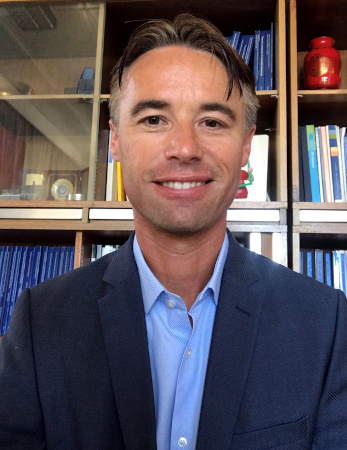
Ruben Snellings is a Professor at the KU Leuven , affiliated with the Institute for Sustainable Metals and Minerals and the Division of Geology . His research focuses on sustainable cementitious materials, mineral carbonation, and valorization of industrial by-products in construction. He actively contributes to RILEM technical committees, including TC 309-MCP and TC 267-TRM, establishing terminology and testing protocols for carbonation-based construction products. Research Highlights Advancing low-carbon binders through co-calcination of waste materials Investigating hydration kinetics and reactivity of supplementary cementitious materials (SCMs) Developing CO2 mineralization techniques for sustainable construction Technical Contributions Co-developing standardized R3 reactivity tests for SCMs Leading interlaboratory validation studies for binder performance Environmental Focus Reducing environmental leaching via carbonation of metallurgical slags Optimizing circular economy approaches for concrete recycling
Prof. Tom Van Gerven is a chemical engineering specialist at KU Leuven's Process Engineering for Sustainable Systems (ProcESS) group. His research focuses on process intensification using alternative energy forms (ultrasound, microwaves, light) for sustainable metallurgy, mineral carbonation, and solvent extraction applications. He leads innovations in low-grade ore processing and carbon capture technologies. Key Research Areas: Process intensification, green metallurgy, CO₂ utilization, and advanced crystallization techniques Recent Work: 2025 publications highlight reactor optimization, mineral carbonation of industrial residues, and acoustic/microwave-assisted separations Technical Expertise: CFD modeling, sonochemical reactors, ionic liquid extraction, and environmental impact analysis
Dr. Emanuele Marino is a Researcher in the Department of Physics and Chemistry at the University of Palermo , affiliated with the School of Basic and Applied Sciences . His work bridges quantum physics and nanotechnology, focusing on nanocrystal superparticles, photonic materials, and fluctuation-driven assembly processes. Current research areas include quantum dot lasing, Casimir effects, and 3D nanoparticle superlattices Teaches courses like Modern Physics Laboratory (2024, School of Basic and Applied Sciences) and Physics II (Polytechnic School) Recent publications highlight trends in: Tunable photonic properties via nanocrystal emulsion systems Quantum-excitonic coupling in heterostructures Critical Casimir forces for nanoparticle control Dynamic phase transformations in colloidal superlattices Microlaser fabrication and chirality engineering Based in the Emilio Segrè Physics and Chemistry Department , he conducts experimental and theoretical studies from nanoscale fabrication to quantum optical phenomena.
Scientia Professor David Waite is a leading academic at the University of New South Wales (UNSW) , affiliated with the School of Civil and Environmental Engineering . He serves as Executive Director and CEO of the UNSW Centre for Transformational Environmental Technologies (CTET) and leads the Biogeochemical Engineering, Management and Systems (BioGEMS) research group . With over 15 PhD students and 10 research fellows in his lab, he has supervised 37 PhD graduates. His research spans water quality engineering , environmental nanotechnology , and metal redox chemistry in aquatic systems , focusing on sustainable solutions for water treatment, contaminant degradation, and biogeochemical relationships. His work includes advanced oxidation processes , membrane technologies , and reactive oxygen species dynamics . Scientific awards include the Royal Australian Chemical Institute Environment Medal , Scientia Professorship , and multiple international visiting scholar recognitions. He has secured significant grants, including $720,000 from ARC Linkage and $360,000 from ARC Discovery programs. Professional affiliations encompass Fellowships in Royal Society of Chemistry and US National Academy of Engineering membership .
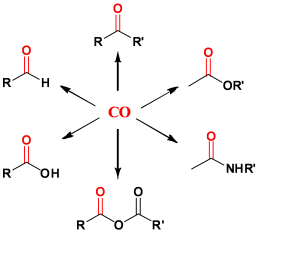
Mathieu Sauthier is a Professor at the University of Lille, affiliated with the National School of Chemistry of Lille and the Unit of Catalysis and Solid State Chemistry (UCCS). His research focuses on homogeneous catalysis for organic synthesis, emphasizing atom efficiency, greener chemistry, and polyol valorization. He specializes in carbon monoxide and 1,3-butadiene chemistry, including carbonylative Suzuki couplings, hydroformylation, alkoxycarbonylation, and domino reactions under one-pot conditions. His work targets catalyst improvements for activity (TOF), selectivity, and lifetime (TON) while minimizing synthetic steps. 2011–Present: Professor, University of Lille 2002–2011: Assistant Professor, University of Lille 2001–2002: Postdoctoral Researcher, University of Amsterdam 1998–2001: Ph.D. in Homogeneous Catalysis, University of Rennes 1997–1998: Master’s in Porphyrin Synthesis, University of Burgundy His research portfolio includes innovative approaches to domino carbonylative reactions for constructing complex molecules, selective 1,3-butadiene etherification, and nickel-catalyzed hydroalkoxylation for agro-based polyol valorization. He has contributed to nonconventional reaction media in catalysis, such as biphasic aqueous systems and ionic liquids, and has co-authored book chapters on carbohydrate chemistry and C-1 building blocks in organic synthesis. The trends in his publications highlight sustainable methodologies using nickel and palladium catalysts for bioresource conversion (e.g., lignin, sorbitol, glycerol), with a strong emphasis on atom economy and clean reaction conditions. His work spans catalyst design, mechanistic studies, and industrial applications. Professor Sauthier is based at the National School of Chemistry of Lille, Scientific City, Building C7, France. He is part of the UCCS unit, a collaborative research environment associated with CNRS (UMR 8181) and partners like Universiteit van Amsterdam. His laboratory, CASECO (Catalysis and Eco-Compatible Synthesis), drives innovations in greener chemistry.
Brooke Coley is an Assistant Professor in Engineering at The Polytechnic School of Arizona State University . She is also affiliated with the Engineering Education Systems and Design department and serves as an Affiliate Faculty Member in the Mary Lou Fulton College for Teaching and Learning Innovation . Ph.D., Bioengineering, University of Pittsburgh B.S., Chemical Engineering, University of Maryland Research Interests include Engineering Education , Social Justice in STEM , Educational Technology , and Biomechanics . Her work focuses on virtual reality for empathy development, hidden populations in engineering, and inclusive pedagogies . She co-leads NSF-funded studies on diversity in makerspaces and identity formation for underrepresented students. Recent Publications highlight themes of anti-Blackness in STEM , equity in engineering education , and inclusive pedagogical tools . Her 2025 articles explore collaborative innovation , advisor support systems , and intersectional leadership in STEM. Scientific Awards include the Apprentice Faculty Grant from ASEE and the AAAS Science and Technology Policy Fellowship . She advocates for inclusion in research, teaching, and service and mentors the National Society of Black Engineers at ASU. Lab and Teams include NSF-funded studies on makerspaces and community college pathways . She co-facilitates international workshops on inclusive maker pedagogies and collaborates with global institutions to redefine engineering cultures .
Prof. Dr.-Ing. Jörg Müssig serves as a Professor at Bremen University of Applied Sciences within Faculty 5 (Department 2), focusing on sustainable composite materials development. His research bridges engineering and environmental science through innovation in natural fiber applications for industrial use. His primary research domains encompass natural fiber composites, biobased materials, and sustainable material systems, with specialized expertise in flax, hemp, and nettle fiber reinforcement. He investigates mechanical properties, interfacial adhesion mechanisms, flame retardancy solutions, and processing techniques like injection molding and filament winding, emphasizing sustainability metrics and biomimetic design principles. Analysis of his 2024-2025 publications reveals dominant themes in natural fiber composite optimization, particularly regenerated cellulose systems and coupling agent-free interfaces. Emerging trends include consumer perception studies of biobased materials and integration of ecological parameters into industrial design processes, reflecting expanding interdisciplinary approaches. Prof. Müssig leads extensive grant-funded projects including edible mushroom mycelium composites (2024-2026), sulfur-based flame retardants (2024-2026), natural fiber sector market analysis across Europe (2024-2025), and marine durability studies (2024-2025), demonstrating sustained research leadership with significant industry and cross-institutional collaborations. His work operates within a robust research ecosystem at Bremen University of Applied Sciences, where his project portfolio indicates leadership of a specialized team focused on sustainable material innovation, though specific lab infrastructure details remain unmentioned in source materials.
Prof. Ing. Juraj Beniak, PhD is a leading academic at the Institute of Production Engineering and Production Quality (Faculty of Mechanical Engineering, Slovak University of Technology in Bratislava, STU). He serves as a Professor CSc., PhD and holds external collaborator roles at the Institute of Computer Engineering and Applied Informatics (FIIT) and the Institute of Manufacturing Technologies (MTF). His research bridges mechanical engineering and sustainable production. Office: U.V.I.P. SjF, Office 537 Contact: +421 2 57296 537 | +421 905 593 953 (mobile) Beniak's research focuses on additive manufacturing , biomass compaction , and smart production technologies . He investigates 3D printing parameter optimization, surface modification techniques, and composite material development from renewable sources. His work addresses both industrial applications and environmental sustainability through advanced manufacturing. Key projects include: OP R&I: Automation in freight railway vehicle production (2019–2023) APVV-18-0527: Additive manufacturing technology development (2019–2022) Recovery Plan: AI-driven waste management systems (2024–2026) As a KEGA grant guarantor and APVV co-investigator , he leads initiatives in CAx education, virtual laboratories, and biofuel production optimization. His contributions span from experimental equipment design to mathematical modeling of compaction processes.
Kerri A. Pratt is a Professor of Chemistry, Earth & Environmental Sciences, and Program in Applied Physics at the University of Michigan, where she is affiliated with the Department of Chemistry within the College of Literature, Science, and the Arts. Her research focuses on the chemical interactions between atmospheric trace gases, particles, clouds, and snow through field-based measurements in wintertime environments and the rapidly warming Arctic. Education: Postdoc, Chemistry, Purdue University Ph.D., Chemistry, University of California, San Diego B.S., Chemistry, Pennsylvania State University Professor Pratt's research centers on atmospheric and environmental chemistry, particularly in polar regions. Her work examines chemical mechanisms in the atmosphere and at the air-snow interface through innovative field measurements. The Pratt Lab employs custom-built, field-portable instruments including single-particle mass spectrometers and chemical ionization mass spectrometers to measure atmospheric composition in real-time. Her research has significant implications for understanding climate change and air quality in rapidly changing Arctic environments. Her publication record demonstrates a consistent focus on Arctic atmospheric chemistry, with particular attention to halogen chemistry, aerosol composition, and cryosphere-atmosphere interactions. Her work often involves interdisciplinary collaborations across atmospheric science, chemistry, and environmental science, with publications appearing in high-impact journals including Proceedings of the National Academy of Sciences and Nature Geoscience. Scientific Awards: Fulbright Scholar Award to Australia, 2025 National Brown Investigator Award, 2024 Blavatnik National Awards for Young Scientists - Chemistry Finalist, 2023 University of Michigan Faculty Recognition Award, 2022 American Geophysical Union Atmospheric Sciences Ascent Award, 2021 American Meteorological Society Henry G. Houghton Award, 2021 College of Literature, Science, and the Arts Class of 1923 Memorial Teaching Award, 2020 American Chemical Society James J. Morgan ES&T Early Career Award, 2018 Department of Energy Early Career Award, 2018 Professor Pratt has received substantial research funding from prestigious sources including the Department of Energy Early Career Award, Sloan Research Fellowship, and National Academy of Sciences Gulf Research Program Early Career Fellowship. Her laboratory actively mentors undergraduate and graduate students in atmospheric chemistry research, with a focus on developing novel instrumentation for field measurements. The Pratt Lab operates as a dynamic research group specializing in atmospheric measurements, with expertise in mass spectrometry, chromatography, and field instrumentation. The lab conducts research in challenging environments including the Arctic, where they study chemical processes in snow, clouds, and the atmosphere to understand climate change impacts.
Seraphine V. Wegner is a Full Professor at the Institute of Physiological Chemistry and Pathobiochemistry within the Medical Faculty of the University of Münster. She leads an active research group focused on the spatiotemporal control of cell-material and cell-cell interactions using visible light. Her work bridges synthetic biology, cell biology, and photochemistry to create innovative approaches for tissue engineering and minimal cellular systems. Dr. Wegner's educational background includes a PhD from the University of Chicago (2005-2010) and undergraduate studies at Middle East Technical University in Turkey (2002-2005). Her career path has taken her through prestigious institutions including the Max Planck Institutes in Mainz and Heidelberg, where she established her independent research before joining the University of Münster as a Full Professor in 2019. Her research spans several interconnected areas including light-controlled minimal cellular systems, photoswitchable cell-cell interactions for tissue engineering, light-controlled cell-material interactions, and engineering designer biofilms with light. These research themes share a common thread of using light as a non-invasive tool to precisely control biological processes with high spatial and temporal resolution. Dr. Wegner's publication record shows consistent high-impact output across leading journals in cell biology, synthetic biology, and materials science. Her recent work demonstrates increasing sophistication in multi-color light control systems and applications in both fundamental biological questions and potential therapeutic approaches. ERC Consolidator Grant (2024): LIGHTHOUSE - Light as a signal for nonchemical cell-to-cell communication ERC Starting Grant (2018): ARTIST - Artificial cell-cell interactions for light switchable cell organization and signaling Young Leaders in Science Program, Schering Foundation (2016) MaxSynBio Independent Group Leader, BMBF/MPG (2015) Her research group actively collaborates across disciplines, with projects spanning from fundamental biophysics of cell adhesion to potential medical applications in tissue engineering and bacterial therapeutics. Dr. Wegner has established herself as a leader in the emerging field of optogenetic control of multicellular systems.
Professor Doraiswami Ramkrishna is the Harry Creighton Peffer Distinguished Professor of Chemical Engineering at Purdue University's Davidson School of Chemical Engineering. His research focuses on applying mathematical methods to chemical and biochemical systems, including population balance modeling, stochastic processes, and cybernetic frameworks for metabolic networks. His work spans crystallization processes, cancer chemotherapy modeling, and personalized medicine. Education: B.S. from the University of Bombay (1960), Ph.D. from the University of Minnesota (1965). He joined Purdue in 1976 after faculty roles at Indian institutions. His awards include membership in the U.S. and Indian National Academies of Engineering, the AIChE Wilhelm and Thomas Baron Awards, and the 2021 William H. Walker Award for Chemical Engineering Literature. Research Interests: Cybernetic modeling of biological systems, population balances in particulate systems, stochastic modeling of rare events, and mathematical approaches to cancer treatment optimization. His group collaborates on projects involving metabolic networks, drug resistance mechanisms, and personalized hydroxyurea therapy for sickle cell disease. Awards: Over 30 honors including the 2021 Walker Award, NAE membership, and Platinum Award from Mumbai University. Advising: Mentored numerous graduate students and research associates, with notable work on lipid metabolism, chemotherapy-induced neuropathy, and crystallization dynamics. Labs/Teams: Leads the Ramkrishna Research Group, collaborating internationally on projects like cancer care engineering and metabolic engineering of bioethanol production.
Professor Natalie Wheeler is a Professorial Fellow-Research at the University of Southampton, affiliated with the Optoelectronics Research Centre (ORC). Her research focuses on advanced optical fiber technologies, particularly hollow-core fibers and their applications in photonics, gas sensing, and mid-infrared light transmission. She leads or co-leads multiple projects funded by the Royal Society and EPSRC, including initiatives like FASTNET and EVacuAted Optical Fibres. Key research projects include developing low-loss hollow-core photonic crystal fibers for mid-IR applications and exploring gas-induced optical properties in fibers. Her work integrates laser machining, gas dynamics modeling, and distributed sensing techniques. Recent publications highlight breakthroughs in gas-filled fiber fabrication, pressure dynamics, and Raman spectroscopy probes. Education: Details not explicitly stated in provided texts. Affiliations: Member of Hollow Core Fibre, Gas Photonics, Fibres and Communications, and Advanced Fibre Applications research groups. Publications span journals like Optics Express , ACS Photonics , and Journal of Lightwave Technology , emphasizing fiber design, gas dynamics, and optical transmission. Current grants include EPSRC funding for next-generation optical networks and UV-to-infrared fiber systems. Her work bridges fundamental fiber physics and practical applications in sensing, communications, and biomedical imaging, with a focus on hollow-core fiber innovations.
Enoch Yeung is an Associate Professor in the Department of Mechanical Engineering at the University of California, Santa Barbara (UCSB). His research focuses on systems biology, control systems, machine learning, and data mining, with a particular emphasis on understanding how mechanical forces in DNA regulate gene dynamics and cell fate. He leads projects on distributed biological computing, data-driven control architectures, and synthetic biological systems design, supported by funding from DARPA, NSF, and the U.S. Army. Yeung holds a PhD in Control and Dynamical Systems from the California Institute of Technology and a BS in Mathematics from Brigham Young University. His work integrates methods from DNA biophysics, synthetic biology, microfluidics, and control theory to study genome organization and cellular decision-making. Recent projects include the DARPA Living Foundries program, the NSF Molecular Programming Project, and the AFOSR Biological Research Initiative. He has received numerous awards, including the NSF Early CAREER Award and Young Investigator Award from the U.S. Army. His lab conducts interdisciplinary research, including a 2024 Summer Synthetic Biology Workshop for high school students. Key research themes include DNA supercoiling dynamics, biophysical feedback control in cells, and scalable Koopman operator methods for analyzing complex biological systems. Lab Focus: Biological Control Lab explores DNA mechanics, synthetic biology, and data-driven modeling. Grants & Collaborations: PI on multi-institutional programs involving PNNL, DARPA, and NSF. Advisory Roles: Served on panels for DARPA, NIST, and the National Defense University.
Harry Bruning is an Assistant Professor in Environmental Technology at Wageningen University & Research, specializing in advanced water treatment technologies. His research focuses on electrodialysis, desalination, ion exchange membranes, and fouling mitigation in environmental systems. He leads projects on chemical-free desalination, PFAS degradation using modified cathodes, and sodium-selective electrodialysis. Bruning collaborates extensively on biogas technologies and hydraulic optimization in anaerobic digesters. Key research interests include membrane-based separation processes, water reuse strategies, and sustainable wastewater management. He has pioneered studies on EDTA complexation for selective ion removal and developed novel electrochemical methods for organic pollutant degradation. Publications highlight innovations in electrodialysis metathesis, fouling prevention via BODAC filtration, and modeling ammonia concentrations in anaerobic digestion. His work bridges theoretical process engineering with practical applications in industrial water systems. Supervising 17 PhD projects, Bruning advises on topics like microbial fuel cells for ammonium recovery and cooling tower water treatment. He contributes to datasets analyzing constructed wetlands and nanofiltration systems for water reuse.
Kevin Van Geem is a full professor at Ghent University's Faculty of Engineering and Architecture, leading the Laboratory for Chemical Technology (LCT) and directing the Center of Sustainable Chemistry. His research focuses on thermochemical reaction engineering, transitioning fossil-based processes to renewable feedstocks, and integrating machine learning with chemical analysis. Director of Ghent University's pilot plants for steam cracking and chemical recycling Author of over 400 publications and founder of a spin-off company Specializes in kinetic modeling, process intensification, and sustainable chemistry His work spans chemical recycling, olefin production, and advanced analytical techniques for complex hydrocarbon mixtures. Recent articles highlight AI-driven catalysis, pyrolysis of polymers, and plasma-assisted CO2 utilization. Scientific awards include: Fulbright Research Scholar He bridges academia and industry through patented technologies and collaborative pilot-scale projects.