Matthew Roberts is Associate Professor in Modern British History at Sheffield Hallam University's College of Social Sciences and Arts, specializing in 19th-century protest movements and political culture. Research examines radical traditions including Chartism and Luddism, with emphasis on parliamentary reform processes and material culture approaches to political history. Recent publications analyze gendered dimensions of Chartism and memorialization practices. As co-editor for Labour History Review, he maintains active scholarly engagements. Teaching includes undergraduate courses on Atlantic revolutions and historical communication methodologies.
Rachel Rogers is a Lecturer in the Department of English at the University of Toulouse Jean Jaurès, affiliated with the Center for Anglophone Studies (CAS). Her research focuses on British history, particularly 18th and 19th-century political and social movements, radicalism, and transatlantic intellectual exchanges during the revolutionary era. She earned her doctorate in English in 2012 with a thesis titled Vectors of Revolution: The British Radical Community in Early Republican Paris, 1792-1794 . Her fields of interest include British history, political protest, popular and social history, Atlantic revolutions, and the historiography of radical movements. Her research often explores how British radicals interpreted and participated in revolutionary events in France, and how their experiences shaped political discourse in Britain. Rogers’s recent publications and conference presentations reveal a strong thematic focus on 19th-century British protest movements such as Chartism, Luddism, the Gordon Riots, and the Peterloo Massacre. She also examines the role of translation in radical politics and the conceptual evolution of terms like ‘the commons’. Her work frequently engages with E.P. Thompson’s legacy and the methodology of ‘history from below’. She serves as an elected member of the CAS laboratory council (2021–2026) and co-leads a research program on ‘Memory crises, rewriting the past’. She is a co-organizer of the Transatlantic Workshop on Intellectual and Political History (ATHIP) and the editorial manager for the ‘British Civilization’ section of the journal Miranda . Her scientific contributions include books, journal articles, book reviews, and blog posts. Notable works include Friends of the Revolution: The British Radical Community in Early Republican Paris, 1792-1794 (2021) and co-edited volumes on protest movements and the Peterloo Massacre. She has no listed scientific awards. Rogers advises on academic publications and collaborates with scholars such as Fabrice Bensimon and Alexandra Sippel. She is involved in organizing seminars and special journal issues, and her work is supported by institutional research programs. She maintains an active presence through academic blogging, including her ‘Reading the Riot Act’ series, which discusses key episodes of British protest history. She is affiliated with research teams and labs such as CAS and ATHIP, which foster transnational dialogue on Anglophone political and intellectual history.
Anthony Pennino is an Associate Professor at Stevens Institute of Technology's School of Humanities, Arts and Social Sciences. His research focuses on Modern & Contemporary British & Irish Drama, Irish Modernism, Post-WWII American Literature, and Shakespearean studies. He holds a PhD from the University of London (Theatre and Drama Studies) and MFA/MA/B.A. degrees from Columbia University in Playwriting and English Literature. His work bridges historical political contexts with dramatic arts, particularly exploring Thatcher-era British theatre and 20th-century European performances. He has received notable awards, including the Fulbright Scholarship (2008) and the Jess H. Davis Memorial Award for Research Excellence (2019). Pennino led a Carnegie Corporation grant (2018) to develop educational plays on nuclear security, emphasizing public engagement with complex societal issues. His professional service includes roles with PEN America and leadership in academic committees at Stevens. His publications critically analyze political theatre, historical narratives in drama, and modern media like Mad Men . His creative works include plays such as Howard Hopped The A Train (2005), reflecting his dual focus on academic research and artistic production.
Michael Sanders is a Senior Lecturer in 19th Century Writing at the Department of English and American Studies, The University of Manchester. His research focuses on the intersection of culture and politics in 19th-century working-class radicalism, particularly the Chartist movement. He has held academic positions at multiple institutions including Exeter University and Lancaster University before joining Manchester in 2006. His work examines Chartism’s literary expressions, religion’s role in radical movements, and working-class engagement with literature. Education: B.A. in English & American Literature (University of Kent, Canterbury), Ph.D. (Birkbeck College, University of London). Research interests include Chartism’s poetic legacy, Victorian hymnody, and the socio-political dimensions of working-class literature. He co-leads the AHRC-funded Piston, Pen & Press project exploring industrial working-class literary culture in Scotland and northern England. Key projects include co-editing Subaltern Medievalisms (2021) and authoring The Poetry of Chartism (2009). His recent publications analyze Chartism’s religious discourse, late-Victorian gender representations, and Victorian industrial narratives. He supervises postgraduate research on Victorian literature, radical movements, and working-class cultural practices. Labs/Teams: Co-investigator on Piston, Pen & Press (AHRC-funded), collaborating with interdisciplinary teams to explore historical literary access and participation.
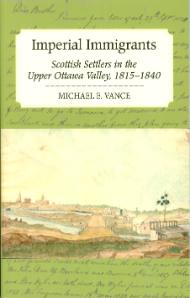
Michael Vance is a Professor in the Department of History at Saint Mary's University (SMU), where he has taught since 1990. His academic background includes a B.A. in History and Archaeology from Simon Fraser University, M.A. degrees from York University (UK) and McMaster University, and a Ph.D. in Migration History from the University of Guelph. Specializes in Scottish migration patterns to Canada, Australia, and South Africa Co-developer of the Graduate Program in History at SMU Teaches in the Irish Studies program His research examines transatlantic Scottish colonization, focusing on cultural memory, social dynamics, and colonial legacies. Recent publications analyze comic strip narratives, soldier resettlement in Nova Scotia, and Indigenous-settler interactions. Vance has secured competitive grants like the SSHRC Partnership Development Grant (2015) for Irish-Catholic Halifax studies and collaborates on historical source editions. Co-edited Reappraisals of British Colonization in Atlantic Canada (2020) Contributor to International Review of Scottish Studies and Acadiensis Recipient of SSHRC funding for 19th-century Halifax research
Anthony Daly is a Professor in the Department of History & Political Science at Massachusetts College of Liberal Arts (MCLA), teaching diverse European history courses from ancient civilizations to modern global perspectives with specialized focus on Britain, Ireland, and Russia. His academic background includes: Ph.D. in History from Boston College (2006) M.A. in History from Boston College (2002) B.A. in History from the University of Toronto (1998) Dr. Daly specializes in 19th-century European political transformations, particularly radical movements concerning land reform, religious dynamics, and nationalist ideologies in Britain and Ireland. His current research examines Chartism through the lens of William Sharman Crawford to illuminate transnational reform connections. His scholarly output reveals consistent focus on suffrage expansion and nationalist discourse in Victorian Britain and Ireland, with the 2024 Crawford study demonstrating how Irish-British reform networks challenged rigid state institutions, complementing his earlier analysis of English radical responses to Irish grievances. Actively engaged in experiential education, Dr. Daly has led five Ireland-focused travel courses (most recently spring 2024) and two France programs, integrating classroom learning with on-site historical exploration. Information regarding graduate student advising and research grants is not documented in available materials.
Professor Katrina Navickas is a historian of protest, social and political movements, and contested public spaces in England from the late 18th century to the present. She is a Professor of History at the University of Hertfordshire and director of the Heritage Hub. Her research focuses on protest geographies, modernist architecture, and landscape change, co-founding the Rural Modernism network. She holds degrees from the University of Oxford, including a DPhil and MA in Modern History. Education: DPhil, St John's College, University of Oxford (2005) MSt in Historical Research, University of Oxford (2002) BA (Hons) in Modern History, University of Oxford (2001) PGCert in Higher Education Teaching, University of Edinburgh (2009) Her research interests include the spatial dimensions of protest, 20th-century modernist architecture, and rural planning. Notable publications include Contested Commons (2025), Protest and the Politics of Space and Place (2015), and Loyalism and Radicalism in Lancashire (2009). She has held fellowships at the Museum of English Rural Life (2020–21) and a British Academy Mid-Career Fellowship (2018–19). Her work has been featured in BBC Radio programs and History Today . Professor Navickas has led projects such as 'Decommissioning the 20th Century: Energy Landscapes, Heritage and Community' and 'Planning Creativity: Participatory Heritage and Decision-Making.' Her writing extends to public engagement, including essays in Bins (2023) and collaborations with heritage institutions.
Ruth M. McAdams is an Associate Professor in the English Department at Skidmore College. She holds a B.A. summa cum laude from the University of Pennsylvania, an M.Phil. from the University of Edinburgh, and a Ph.D. from the University of Michigan. Her office is located in Palamountain Hall 331, and she can be reached at (518) 580-5174 or rmcadams@skidmore.edu. Her educational background includes: B.A., summa cum laude, University of Pennsylvania M.Phil., University of Edinburgh Ph.D., University of Michigan Professor McAdams specializes in Nineteenth-Century British literature, with research interests spanning labor activism, historical fiction in a global context, theory of the novel, life-writing, and composition. Her work critically engages with the representation of time, progress, and social movements in Victorian literature, often drawing parallels to contemporary issues like labor rights and secular discourse. Her recent publications demonstrate consistent focus on Victorian literary studies, with recurring themes of temporality, historical representation, and social justice. Key works examine Dickens's treatment of religious violence, Thackeray and Hardy's historical narratives, and pedagogical approaches to teaching literature. The 2024 monograph "Temporality and Progress in Victorian Literature" represents a significant scholarly contribution to understanding time perception in 19th-century fiction. Information regarding scientific awards is not provided in the available text. Details about her student advising activities and research grants are not specified in the given information, though her pedagogical publication suggests engagement with educational methodology. There is no mention of specific research labs or collaborative teams in the provided text, though her work-in-progress chapters indicate ongoing scholarly collaborations with Cambridge University Press projects.
Dr. Robert Saunders is a Senior Lecturer in Modern British History at Queen Mary University of London. His work focuses on the history of democracy, political and intellectual history of Thatcherism, Britain's relationship with the European Union, and religion's role in British political culture. He has authored four major books, including Yes to Europe! The 1975 Referendum and Seventies Britain , which won the American Historical Association's Morris D. Forkosch Prize in 2019. Research Interests: History of democracy, Thatcherism, Britain-EU relations, religion in politics. Supervision: PhD students in topics like post-colonial London and modernization of the British Left. Public Engagement: Regular media commentator on BBC, CNN, and Sky News, and advisor to BBC's The Victorian Slum . Scientific Awards: Morris D. Forkosch Prize (2019) for Yes to Europe!
Professor Peter Gurney specializes in modern British social history, consumer culture, and the co-operative movement at the University of Essex's School of Philosophical, Historical, and Interdisciplinary Studies. His research traces the intersections of class, consumption, and social movements from the 19th century to present. Gurney has extensively supervised doctoral research, guiding projects on disability in WWI, Fairtrade movements, Caribbean beauty contests, and the cultural history of apples. His current projects include historical perspectives on national service and the defeat of co-operative models in British political economy. His publications analyze how consumer culture shaped political identities and social relations, examining topics from Chartist economic discourse to postwar consumer organizations. His work connects popular politics, market development, and ideological formations.
Dr. David Kennerley is a Leverhulme Early Career Fellow in the School of History at Queen Mary University of London. He holds a PhD from the University of Oxford (2014) and previously held part-time lectureships at Worcester and Somerville Colleges, Oxford, alongside research roles including an ERC-funded project at King's College London. His current research focuses on 'A sonic history of Chartism: Music, sound and politics in Britain, c.1838-1848'. His expertise lies in the history of sound, musical performance, and their intersections with gender, politics, and cultural change in 18th- and 19th-century Britain. Key research themes include women’s voices in musical culture, the political uses of music, and the role of sound in social movements. Publications include the monograph Sounding Feminine (Oxford UP, 2020), peer-reviewed articles on gender and musical professionalism, and edited volumes on Charles Dibdin and late Georgian culture. His work bridges musicology, gender studies, and political history, emphasizing interdisciplinary approaches to aural and cultural analysis. He teaches courses on British political history, including Chartists, Rebels and Suffragettes: Democracy in Britain, 1830-1928 . His Leverhulme Fellowship supports innovative research on the sonic dimensions of Chartism, exploring how music and sound shaped political identity and collective action.
Paul Pickering is a Professor and Founding Director of the Australian Studies Institute at the Australian National University (ANU), concurrently serving in the School of Politics & International Relations within the Research School of Social Sciences. His career includes roles such as Dean of the College of Arts and Social Sciences (2014-16) and Director of the ANU Centre for European Studies (2010-12). He holds a BA (Hons) and PhD from La Trobe University and is a Fellow of the Royal Historical Society. His research spans British, Irish, and Australian social/political history, public memory, digital humanities, and industrial heritage. Notable works include Chartism and the Chartists in Manchester and Salford , The People's Bread: A History of the Anti-Corn Law League , and Historical Reenactment: From Realism to the Affective Turn . Current projects include studies on urban-industrial heritage and a book on British industrial landscapes (forthcoming 2025). Recent articles explore digital humanities, social media's role in extremism, and global political dynamics. He has held fellowships at institutions like the University of Edinburgh, Huntington Library, and New York University. Awards include ANU's Excellence in Graduate Supervision (2012). Advancing interdisciplinary collaboration, he directs the Australian Studies Institute and leads projects such as Heritage in the Limelight (magic lantern history) and Sounds of Liberty (music & 19th-century radicalism). His work bridges academic rigor with public engagement through podcasts like Democracy Sausage .
Neil Harrison is an Assistant Professor in Law and Solicitor at Northumbria University's School of Law. His research focuses on legal history with a particular emphasis on Tyneside and River Tyne governance during the 19th century. He examines the intersection of legal frameworks, institutional management, and economic development through case studies like the Tyne Improvement Commission. Prior to academia, he practiced commercial law for over 22 years, specializing in procurement disputes, contractual conflicts, and public law matters. Harrison holds a History degree from Jesus College, Cambridge, and is a Member of the Royal Historical Society and Fellow of the Higher Education Academy. Education: BA (Hons) History, Jesus College, Cambridge (1990) Law Diploma (1992), External Verified Law Award (1993), MA (Hons) History (1994) Solicitor qualification (1995), currently non-practicing Research Interests: Legal history, local legal history, law and society, procurement law, legal education, Chartism, trade networks, river management, and crime and punishment. His doctoral work explores the Tyne Improvement Commission's impact on Tyneside business through legal frameworks and individual agency. Professional Background: Former commercial disputes lawyer at Bond Dickinson LLP and Square One Law LLP, advising clients across private and public sectors including education, healthcare, and manufacturing. Specialized in procurement law, judicial review, and contractual disputes. Awards & Affiliations: Member of the Royal Historical Society (2021) Fellow of the Higher Education Academy (2017) Teaching & Supervision: Teaches legal history, commercial contracts, and supervises law dissertations involving historical archives. Leads the Student Law Office program. Research Activities: Organized conferences on legal history, participated in interdisciplinary forums (e.g., Social History Conference, Society of Legal Scholars), and engaged with archival institutions like Tyne & Wear Archives.
Dr Neil Pye is a Lecturer in the Department of Politics at the University of Liverpool , joining in September 2019. He teaches foundational courses including British Politics I , British Politics II , and British Political Ideologies , while also supervising the POLI401: Dissertation module. His academic journey began with a doctorate at the University of Huddersfield (2005–2011), focusing on the Home Office's role in suppressing Chartism. This work pioneered digital archival analysis of 19th-century British state mechanisms and center-local dynamics. Key research areas: Local governance, devolution, Chartist history, African politics (CSR in Great Lakes region, e-BRT sustainability), and UK policy analysis. Neil combines academia with active local politics. As a former West Lancashire borough councillor and planning committee member, he co-led the Findon and Firbeck Housing Revival Project , transforming decaying estates through resident-led initiatives. His recent academic work examines metro mayors, Levelling Up, and the Conservative government's handling of the pandemic. Collaborating with Dr Kevin Hickson and Dr Ben Williams, Neil contributed to publications on Labour's economic strategies and historical governance models. His current research focuses on a monograph about British politics and contemporary political history.
Dr. Margaret Loose is Associate Professor of English Literature at UC San Diego and Director of Undergraduate Studies. Her scholarship focuses on Victorian literature and culture, working-class writing, Chartism, gender studies, and poetic form. Loose holds a Ph.D. from University of Iowa and dual M.A. degrees in Victorian and Romantic literature. She authored The Chartist Imaginary: Literary Form in Working-Class Political Theory and Practice (2014), examining literary dimensions of British working-class movements. Her teaching spans narrative literature, women's studies, and classical civilizations.