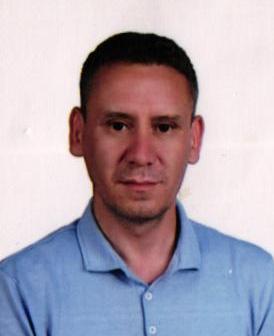
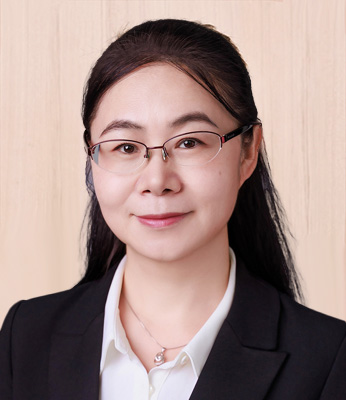
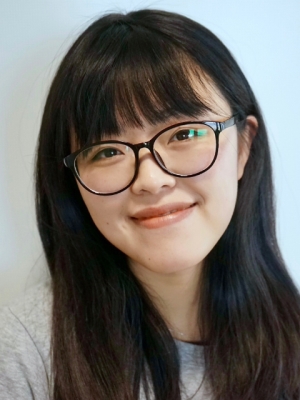
Kay Severin is a full professor at the Laboratory of Supramolecular Chemistry (LCS) within École Polytechnique Fédérale de Lausanne (EPFL) , Switzerland. His research focuses on the design and reactivity of metal-ligand assemblies, including coordination cages, metalloligands, and supramolecular receptors. He has pioneered the use of metalloligands for constructing heterometallic architectures and developed systems for anion extraction and stimuli-responsive hydrogels. Key funder: Swiss National Science Foundation (FNS) Collaborative work with Rosario Scopelliti and Farzaneh Fadaei Tirani Research Interests: Severin's work spans supramolecular chemistry, organometallic synthesis, and functional materials. Recent projects include: Dynamic palladium-based hydrogels with anion-responsive crosslinks Gold(I)-driven nano-onion structures via π-stacking Triazene-derived ligands for Sandmeyer-type reactions Metalloligand assembly of Fe/Pd/Au heterotrimetallic cages Publication Trends: Over 300 publications since 1994, with recent emphasis on: Coordination-driven self-assembly (2024: 6 articles) Triazene and diazoolefin reactivity (2025: 4 articles) Metal-ligand interactions in nanogels and vesicles (2024-2025: 3 articles) Environmental applications in anion extraction (2025: 1 article)
Dr Fiona Hum is a Senior Lecturer at Monash University's Faculty of Law, where she conducts research and teaches. Admitted as a solicitor and barrister of the Supreme Court of Victoria, she previously practiced commercial litigation, criminal law, and personal injury law while consulting for major insurers and the Victorian police force. Her doctorate from the University of Melbourne focused on Northern Territory euthanasia laws. Education: Doctorate in Law, University of Melbourne (thesis on euthanasia laws) Admitted Solicitor and Barrister, Supreme Court of Victoria Research Focus: Dr Hum's work centers on Evidence Law , Wrongful Convictions , and Gender/Race Relations in Law , with pioneering studies on compassion training for law students now expanding into climate change law. Her research directly supports UN Sustainable Development Goals for justice, equality, and well-being through interdisciplinary approaches connecting legal theory with psychological and social frameworks. Publication Trends: Recent work (2022-2025) analyzes high-profile cases like Kathleen Folbigg and Cardinal Pell while advancing evidence law pedagogy through her Cambridge University Press textbook. Earlier scholarship (2010) established foundational critiques of gender bias in evidentiary processes, particularly regarding women complainants and pregnant patients. Scientific Awards: Faculty Teaching Award for Teaching Excellence (2010) Certificate of Recognition for S1 Unit Performance (2015) Certificate of Recognition for S2 Unit Improvement (2016) Nominee: Inspiring Woman Award (2021) Nominee: Australian Legal Education Award (2023) Advising & Professional Impact: Accepting PhD students, Dr Hum actively shapes legal education through curriculum innovation and peer review for top journals ( University of New South Wales Law Journal , Sydney Law Review ). Her external collaborations include specialist lectures for Monash's Faculty of Medicine and keynotes at national conferences like the Women's Lawyers Conference on 'Justice for All'. Institutional Roles: Current member of the Australasian Law Academics Association (2025-2028) and former Honorary Fellow at the University of Melbourne (2019-2021), she bridges academic rigor with real-world legal practice through ongoing consultancy work.
Associate Professor Mustafa GulTekin serves at Gaziantep University in the Faculty of Arts and Sciences , affiliated with both the Department of Turkish Language and Literature and the Department of Turkish Folklore . He holds a Doctorate in Turkish Folklorics (2010) from Ege University and has been teaching since 2004. Education: PhD in Turkish Folklorics, Ege University (2004-2010) MA in Turkish Language and Literature, Gaziantep University (2002-2004) Bachelor in Turkish Language and Literature, Balikesir University (1997-2001) Research Focus: Specializes in Turkic world fairy tales, oral literature analysis, minstrelsy traditions, and intangible cultural heritage. His work intersects folklore methodology with performance studies and cultural anthropology. Projects: Led/managed national projects including TUBITAK-funded research on Diyarbakir Alevi ocaks (2013-2016), Uzbek cultural studies in Gaziantep (2012-2015), and applied Karagöz education programs (2009-2010). Administrative Roles: Head of Department (2014-2017, 2012-present) Deputy Head of Department (2017-present, 2011-2012) Director of Research and Application Center (2012-2016)
Jennifer L. West is the Dean of the University of Virginia School of Engineering and Applied Science and holds the Saunders Family Professorship in Engineering. She is a dual professor in Biomedical Engineering and Mechanical and Aerospace Engineering. Dean West has a 30-year record as a researcher, educator, inventor, and entrepreneur, focusing on biomaterials, nanotechnology, and tissue engineering to address unmet medical needs, particularly in cancer therapy. Her education includes a B.S. from MIT (1992) and a Ph.D. from the University of Texas at Austin (1996). Before UVA, she was at Duke University as the Fitzpatrick Family Distinguished Professor of Engineering and Associate Dean for Ph.D. Education. Research Interests: Biomaterials and biosynthesis Nanotechnology and tissue engineering Cancer therapy through engineered materials Scientific Awards: Member of the National Academy of Medicine (2023) Member of the National Academy of Engineering (2016) Over 20 patents, including foundational work for Nanospectra Biosciences’ clinical trials in cancer therapy Grants & Initiatives: Leading UVA Engineering’s focus on research, experiential learning, and entrepreneurship Recipient of a $900,000 grant for character-building education initiatives Labs & Teams: Developed hydrogel platforms for tissue integration, vascularization, and drug delivery Pioneered gold nanoshell-based photothermal cancer therapy
CHI Chunyan is an Associate Professor and Assistant Head (Graduate Programme) in the Department of Chemistry at the National University of Singapore (NUS), within the Faculty of Science. She holds a Ph.D. in Chemistry from the Max-Planck Institute for Polymer Research (2004) and completed a postdoctoral fellowship at the University of California, Santa Barbara (2007). Her research focuses on developing novel π-structured materials, particularly conjugated systems for organic electronics and sensors. She has pioneered studies on carbon nanobelts, aromaticity modulation, and diradicaloid molecules, with breakthroughs in synthesizing fully π-conjugated carbon nanobelts and exploring their electronic properties. Education: Ph.D., Max-Planck Institute for Polymer Research (2004) Postdoctoral Research, University of California, Santa Barbara (2007) Research Interests: Design and synthesis of π-conjugated molecules Organic electronics and sensor materials Aromaticity and diradical character in conjugated systems Novel carbon nanostructures (e.g., carbon nanobelts) Recent Research Highlights: Synthesized the first fully π-conjugated, pentagon-embedded non-alternant carbon nanobelts (2024) Explored global aromaticity in aza-superbenzene derivatives (2024) Developed covalent organic frameworks with radical sites for oxygen reduction reactions (2025) Awards & Recognition: SNIC-AsCA2019 Singapore Award for Distinguished Woman Chemist (2024) NUS Faculty Teaching Excellence Award (2023) Chemical Society of Japan Distinguished Lectureship Award (2017) Asian Core Program Lectureship Awards across multiple countries (2013–2023) Editorial Roles: Associate Editor, Organic Letters (2024–present) Editorial Board Member, Chemistry - A European Journal (2021–present) International Advisory Board Member, Journal of Materials Chemistry C (2017–present) Lab & Group: Laboratory of π-Conjugated Molecules and Materials Recruits postdocs, PhD/Master students, and visiting scholars in organic chemistry, macromolecular chemistry, and materials science Focus on translating molecular design into functional materials for electronics and energy applications
Suvi Saarikallio is a Professor of Music Education at the University of Jyväskylä, Finland , affiliated with the Faculty of Humanities and Social Sciences and the Department of Music, Art and Culture Studies . She leads interdisciplinary research bridging music psychology, education, and therapy, with a focus on youth development, emotion regulation, and well-being. Research Groups: Centre of Excellence in Music, Mind, Body and Brain (2022-2029), Musiconnect (2022-2027) Key Projects: Music and You, Stress & music listening, MPACT (Music and Sports), Music and Cross-modal Associations, SOSUS (Social Sustainability for Children) Research Trends: Her recent publications explore music's role in emotional regulation, cross-modal perception, health outcomes, and educational applications. Themes include AI's impact on music evaluation, rhythm's connection to cognitive skills, and music's influence on stress and social-emotional development. Contact: suvi.saarikallio@jyu.fi
Siyu Tang is an Assistant Professor in the Department of Computer Science at ETH Zürich, where she leads the Computer Vision and Learning Group (VLG) at the Institute of Visual Computing. Her research focuses on computational models for human perception and digitalization through computer vision and machine learning. Her educational background includes: PhD in Computer Science, Max Planck Institute for Informatics (2017), supervised by Prof. Bernt Schiele Master of Science in Media Informatics, RWTH Aachen University Bachelor of Science in Computer Science, Zhejiang University, China Dr. Tang specializes in human-centric computer vision, developing statistical models for motion analysis, pose estimation, and digital human creation. Her work integrates machine learning with optimization techniques to enable machines to interpret human activities from visual data, with applications spanning virtual reality, healthcare, and human-computer interaction. Key research thrusts include generative models for content creation, egocentric vision, and human motion synthesis. Her recent publications (2024-2025) demonstrate intense focus on 3D human modeling and neural rendering, with Gaussian splatting emerging as a dominant technique for efficient avatar creation and scene reconstruction. Significant themes include text-driven motion synthesis using diffusion models, relightable avatars, surgical training applications, and egocentric multimodal pretraining. This work bridges computer vision, graphics, and machine learning to advance human digitalization. No scientific awards were mentioned in the provided text. Dr. Tang leads the VLG research group at ETH Zürich, mentoring PhD and Master's students in human-centric AI. She previously secured an early career research grant from the Max Planck Institute for Intelligent Systems to establish her independent research program. Her group actively pursues funding for projects in human motion analysis, 3D reconstruction, and generative modeling, with strong industry and clinical collaborations. The Computer Vision and Learning Group (VLG) operates within ETH's Institute of Visual Computing, maintaining dedicated facilities for motion capture, 3D scanning, and high-performance computing. The team collaborates internationally with institutions like the Max Planck Society and focuses on scalable solutions for real-world human digitalization challenges, including surgical training systems and immersive virtual environments.
Dan McAdams is a distinguished Professor of Psychology and Human Development and Social Policy at Northwestern University . As the director of the Study of Lives Research Group , he leads interdisciplinary research on personality development and biographical analysis across the lifespan. Research Interests : McAdams specializes in narrative psychology , focusing on the life-story model of human identity , generativity , and the redemptive self . His work explores how themes of power, intimacy, and redemption shape personal narratives, particularly in political and cultural contexts. He investigates the interplay between autobiographical memory , psychological biography , and personality development . Selected Publications : Recent works include analyses of Joe Biden's leadership narratives , a comprehensive handbook of personality development , and studies on acceptance narratives in late life . His research bridges political psychology with developmental frameworks , examining how sociocultural forces shape individual identities. Scientific Awards : Charles Deering McCormick Professor of Teaching Excellence Leadership Roles : Director of Study of Lives Research Group Advising : Mentors doctoral candidates across multiple programs, including Personality, Development, and Health Psychology , Clinical Psychology , and Human Development and Social Policy . His research group also includes affiliates from institutions like Tufts University , Williams College , and Bilkent University .
Prof. Dr. Kirsten Meyer is a full professor for Practical Philosophy and Philosophy Education at the Institute of Philosophy, Faculty of Philosophy, Humboldt University of Berlin. She has held this position since the summer semester of 2011, after serving as a junior professor from 2008 to 2011. Her work bridges philosophical theory with educational practice, with a particular focus on ethics and intergenerational justice in the context of contemporary challenges like climate change. Dr. Meyer's interdisciplinary educational background reflects her unique scholarly perspective: Diploma in Biology (1999, University of Münster/Bielefeld/St. Andrews) State Examination in Philosophy (2000) Doctorate from Bielefeld University (2002) Kirsten Meyer's research program spans several interconnected domains of philosophical inquiry. Her primary focus is on intergenerational ethics, where she examines humanity's moral obligations to future generations, particularly regarding climate change and resource consumption. She has made significant theoretical contributions to educational philosophy, exploring how philosophical reasoning can be practically integrated into school curricula. Her work on educational justice addresses complex questions about talent development, equal opportunity, and the relationship between education and conceptions of the good life. Meyer also contributes to environmental ethics, analyzing the intrinsic value of nature and our responsibilities toward it, informed by her background in biology. Analysis of her recent publications reveals a consistent thematic trajectory focused on intergenerational justice and educational philosophy. Meyer frequently examines how abstract philosophical concepts can inform practical educational policy, particularly regarding talent development and educational equity. She has become a prominent voice in climate ethics, connecting theoretical debates about future generations to concrete policy proposals like using estate tax as a climate protection instrument. Her interdisciplinary approach, combining insights from biology, philosophy, and education, allows her to address complex ethical questions with both theoretical rigor and practical relevance. Professor Meyer is deeply engaged in public philosophical discourse, regularly contributing to media discussions on intergenerational justice, climate ethics, and educational policy. She has participated in numerous interviews with major German media outlets including Deutschlandfunk, BR, ZDF, and RBB, helping translate complex philosophical concepts for broader audiences. Her practical contributions extend to educational initiatives, including the development of teaching materials for philosophy education through philovernetzt on topics ranging from 'What should I become? Work and the good life' to 'Fake News' and 'Consent.'
Mia Consalvo is a Professor and Canada Research Chair in Game Studies & Design at Concordia University. She serves as Graduate Program Director in Communication Studies and directs the Concordia Centre for Technoculture, Art and Games. Her research focuses on game studies, qualitative methods, new media, and popular culture. Education: BA in Communications, Lyndon State College MA in Communications, University of Washington PhD in Mass Communications, University of Iowa Her recent work analyzes livestreaming platforms like Twitch, socio-economic class in gaming, feminist approaches to game studies, and the intersection of mental health with game environments. She has published extensively on game design, player culture, and digital labor. Scientific Awards: Canada Research Chair in Game Studies & Design She supervises thesis projects in Media Studies (MA) and Communication (PhD) programs, emphasizing collaborative research and critical analysis of games as cultural artifacts.
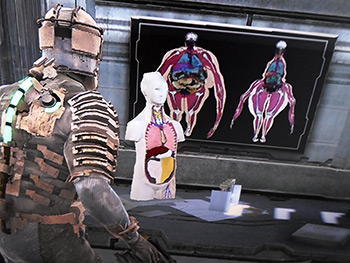
Diane Carr is a Professor of Media and Cultural Studies at the Institute of Education, University College London (UCL), where she serves as Director of the Digital Media MA Programme. Based in the Culture, Communication & Media department, Carr is an established scholar in game studies, media studies, and critical disability studies. Her work bridges academic research with practical applications in digital media education. Carr's research focuses on media studies and cultural studies perspectives on digital games and players, with particular emphasis on critical analysis, methodology, representation, and screen studies. During 2024-25, her research follows two key themes: developing ludic autoethnography to articulate real-world experiences of discrimination, and examining complicity with big tech, datafication, and AI in games and education. Her work consistently explores the intersection of disability studies with game studies, challenging normative representations of ability in digital spaces. Carr's publications reveal a sustained engagement with disability representation in games, particularly through analyses of titles like Dead Space and Deus Ex. Her research demonstrates how games function as cultural texts that both reflect and shape societal attitudes toward disability, ability, and bodily difference. She employs textual analysis and autoethnographic approaches to examine how games construct notions of normalcy and deviance. UCL Widening Participation community of practice awards (2022) ONE UCL Award for collegiality, 'Ways of Working/Working Together' (2021) UKLA Postgraduate Research Prize (2015) Carr has supervised numerous PhD students including Danielle Kleinerman (in progress), Angeliki Symeonidi (2020), Bruno de Paula (2019), and Angela Colvert (2015). Her research funding includes significant projects like 'Disability and Community: Dis/engagement, Dis/enfranchisement, Dis/parity and Dissent' (2016-2021) funded by the AHRC, 'Alternative Futures: Disability and Community' (2014-2015), and 'Digital Games: Representations of disability' (2013-2014). She has also led projects on AI education using science fiction and virtual worlds in higher education. As Director of the Digital Media MA Programme, Carr leads initiatives that connect game studies with critical media education. Her teaching includes research design and game studies on the MA Digital Media Critical Studies program. Notably, Carr is deaf, bringing lived experience to her critical disability studies work while actively contributing to academic discourse on accessibility and representation in digital spaces.
Emma Reay is a Lecturer in Media and Communication at the Cambridge School of Creative Industries, Anglia Ruskin University, where she teaches Critical Games Studies, Digital Media Theory, and Youth Culture modules. She also delivers Game Design and Art courses at the University of Southampton, with research bridging games studies, childhood studies, and education. Her academic credentials include: BA in English Literature from the University of Oxford MA in English Literature from the University of Oxford MPhil in Children’s Literature from the University of Cambridge PhD in Education from the University of Cambridge Dr. Reay’s research centers on child representation in digital media , with pioneering work on the silent child trope and toy studies in gaming. Her scholarship examines cuteness as a narrative device , social justice themes in children’s media, and the intersection of literary theory with game design , particularly in how games handle childhood vulnerability and agency. Her publication trajectory reveals a concentrated focus on children’s representation in contemporary video games (2018-2022), with increasing emphasis on ethical dimensions like violence against child characters and social justice applications. Key outlets include Game Studies and Journal of Gaming and Virtual Worlds , demonstrating methodological innovation through large-scale game analysis (e.g., surveying 500+ games for her PhD). Her accolades include: Jaqueline Wilson award Pigott award Vice-Chancellor's award Funded by the Arts and Humanities Research Council, Dr. Reay serves as Game Design consultant for higher education institutions and indie developers. She is a key collaborator on the University of Cambridge’s Good Death project exploring gaming and mortality, while maintaining active conference engagement through invited talks at IRSCL, ChLA, and DiGRA events. Her Twitter presence extends public discourse on games and media.
W. Gerrod Parrott is a Professor in the Department of Psychology at Georgetown University's College. His research focuses on the nature of human emotion, including social foundations of emotions like guilt, shame, envy, and jealousy, emotional self-regulation, and historical/philosophical perspectives on emotion. He has authored four influential books and served as Editor of Cognition and Emotion (1995–1999) and President of the International Society for Research on Emotion (2008–2013). Currently, he is Editor-in-Chief of Emotion Review . Education : Ph.D. in Psychology from the University of Pennsylvania B.A. in Psychology from the University of Virginia Research Interests : Parrott explores how emotions function socially, culturally, and biologically. His work bridges psychology, sociology, and philosophy, emphasizing the role of emotion in moral judgment, interpersonal dynamics, and cultural expression. Recent studies include cross-cultural comparisons of shame, the impact of digital media on infant development, and the role of emotions in risk perception. Publications Trends : His recent articles highlight themes like moral emotions (guilt/shame), the evolution of emotion concepts across history, and the interplay between technology and emotional engagement. He critically examines cultural differences in emotional expression and their implications for psychology and policy. Editorial & Leadership Roles : Editor-in-Chief, Emotion Review Former Editor, Cognition and Emotion President, International Society for Research on Emotion Contributions to Field : Parrott’s work integrates empirical research with theoretical innovation, shaping debates on emotion’s role in cognition, morality, and culture. He advocates for interdisciplinary approaches to understanding emotion’s societal and individual impacts.
Annette Finley-Croswhite is a Professor in the Department of History at Old Dominion University and serves as Director of the Center for Faculty Development. Her research focuses on France, Europe, and the intersections of political and religious violence, the Holocaust, and the history of medicine and disease. Ph.D. in History, Emory University (1991) B.A. in History, University of Richmond (1981) Her research explores early modern and modern European history, particularly political violence, gender dynamics, and medical historiography. She has contributed extensively to French history, analyzing topics such as Henry IV's military leadership, urban politics during the Catholic League, and gender roles in fascist movements. Finley-Croswhite's publications span medical history, political violence, and cultural studies. Her recent work includes analyses of the royal touch and scrofula, gender and fascism in 1930s France, and the Holocaust's impact on personal identity. Outstanding Faculty Award Finalist (2016, 2015, 2012, 2011) Provost's Award for Excellence in International Education (2015) Faculty Fellow in Residence, Auschwitz Jewish Center (2015) Senior Scholar, College of Arts and Letters (2012) She has secured significant grants, including National Endowment for the Humanities (NEH) funding for research and travel. Her leadership in faculty development and international education further underscores her academic contributions.
Daniel J. Field is Professor of Vertebrate Palaeontology in the Department of Earth Sciences and the Strickland Curator of Ornithology at the University of Cambridge Museum of Zoology. He is a Fellow of Christ's College, Cambridge, where Charles Darwin studied as an undergraduate, and serves as the founding director of the Darwin-Hamied Centre at Christ's College. Field also maintains research associate positions at the Denver Museum of Nature and Science and the Natural History Museum (London). Field is an evolutionary biologist and palaeontologist whose research focuses on deciphering the origins of modern avian biodiversity using fossil, anatomical, and molecular data. His work spans multiple themes including clarifying how birds survived and diversified following the mass extinction of non-avian dinosaurs, studying the evolutionary histories of major living bird groups, and understanding the evolutionary origins of distinctive biological features such as the modern bird skull. In 2020, his team announced the discovery of Asteriornis maastrichtensis (the 'Wonderchicken'), the oldest-known modern bird fossil and an early relative of the group that gave rise to living chickens and ducks. Field's publication record shows consistent research output across multiple areas of avian evolution, with recent work focusing on avian palate evolution, skeletal pneumaticity, developmental patterns in bird skulls, and the evolutionary relationships among major bird groups. His research integrates cutting-edge techniques including CT scanning, geometric morphometrics, and phylogenetic analysis to address fundamental questions about vertebrate evolution. Field leads an active research group comprising postdoctoral researchers, PhD students, and master's students from around the world. His lab has produced significant work on topics including the evolution of flightlessness in ratites, the developmental underpinnings of avian morphological diversity, and the phylogenetic relationships among major bird lineages. The lab maintains strong international collaborations and has been instrumental in training the next generation of evolutionary biologists and palaeontologists. Field is passionate about natural history and science outreach, and enjoys photographing Earth's vertebrate biodiversity in the field. His work bridges the gap between traditional palaeontology and modern evolutionary biology, contributing significantly to our understanding of how modern bird diversity arose from their dinosaurian ancestors.