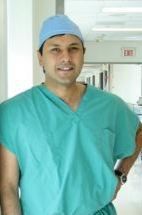
Jaideep K. Malhotra, M.D., is an Assistant Professor of Clinical Anesthesiology at Weill Cornell Medical College, Cornell University, and an Assistant Attending Anesthesiologist at NewYork-Presbyterian Hospital. His clinical expertise focuses on Thoracic Anesthesia. He has been affiliated with Weill Cornell since 2011. Dr. Malhotra earned his B.A. from the University of Vermont (1994) and his M.D. from the Medical College of Wisconsin (1999). His research interests span anesthesiology, pharmacology, and cardiology, with a focus on neuromuscular blocking agents, cardiopulmonary effects, and cardiac electrophysiology. His work includes studies on novel drugs like CW002, preclinical safety evaluations, and molecular mechanisms in atrial tissue. His publications emphasize drug efficacy, pharmacodynamics, and translational research across human and animal models. No external relationships or reported awards are noted in the provided texts.
Dr. Ashley Willis is a Senior Lecturer in Fluid Dynamics at the University of Sheffield's School of Mathematical and Physical Sciences. He holds roles including Admissions Head and Programme Leader for Study Abroad. His research focuses on fluid dynamics, turbulence, astrophysical flows, and magnetohydrodynamics, with applications in clean energy and planetary systems. Willis completed his Ph.D. in Applied Mathematics at Newcastle University (2002) and has held postdoctoral positions at the University of Bristol, Leeds, and a Marie Curie Fellowship at Ecole Polytechnique, Paris. He leads the Fluid Dynamics Group and is part of the cross-faculty Sheffield Fluid Mechanics Group. His research interests include transition to turbulence, nonlinear dynamics, and magnetic field generation in planetary interiors. He supervises PhD students like Shijun Chu and collaborates with industry on projects like turbulence suppression in pipe flows. Key contributions include the open-source Openpipeflow simulation code and studies on dynamo action in geophysical flows. Publications highlight work on turbulent transition mechanisms, optimal flow configurations, and dynamo theory. His teaching includes courses on mechanics, fluid dynamics, and mathematical modeling of natural systems.
Jan C. Fransoo is a Full Professor of Operations and Logistics Management at Tilburg University's School of Economics and Management, with visiting appointments at Eindhoven University of Technology and MIT. His research advances supply chain decision-making in retail, transport, and sustainable logistics. Education: PhD in Operations Management & Logistics (Eindhoven University of Technology) MSc in Industrial Engineering Research Focus: Fransoo's work addresses global supply chain challenges: Retail distribution in emerging megacities (nanostores) Intermodal container transport optimization Sustainability and social responsibility in supply chains Logistics for developing economies Methodologies combine empirical analysis, mathematical modeling, and field studies. Publication Trends: Recent research focuses on distribution channel strategies in emerging economies and sustainable logistics. Earlier work established foundational models for container logistics and supply chain resilience. Awards: Royal Netherlands Academy of Sciences Fellowship (post-PhD) Advising & Research Leadership: Supervises PhD candidates in logistics and supply chain management. Founded the MSc in Operations Management & Logistics at TU/e. Served as academic member of the Strategic Platform for Logistics setting national research agendas. Grants & Projects: Led the €3M ULTIMATE project (2010-2014) on efficient multimodal hinterland networks. Consultant to World Bank and national governments on logistics policy. Laboratories & Teams: Directs research on sustainable supply chains and global logistics systems. Collaborates with Tsinghua University, MIT, and industry partners worldwide.
Willem Jonker is a Full Professor at the Digital Society Institute, specializing in Semantics, Cybersecurity & Services. His research focuses on encryption schemes, access control, and privacy-preserving technologies. He has contributed to over 120 publications, with recent work addressing CVE-to-CWE mapping, anomaly detection in network traffic, and functional encryption systems. His expertise aligns with UN Sustainable Development Goals related to secure digital systems and privacy. Jonker has supervised 10 students and actively participates in academic conferences, presenting on topics like secure data management and cryptographic protocols. Research interests include cryptographic protocols, secure data management, and cybersecurity solutions. Notable projects involve developing methods for detecting covert channels, enhancing data privacy in healthcare, and improving secure search over encrypted data. He has also contributed to standards in digital rights management and forensic image recognition.
Sandhya Dwarkadas is the Walter N. Munster Professor and Chair of the Department of Computer Science at the University of Virginia. Her research focuses on the intersection of computer hardware and software, particularly in parallel computing, computer architecture, and compiler/runtime-architecture interaction. She holds dual roles as department chair and active researcher, balancing leadership with contributions to energy-efficient and reconfigurable computing systems. Education: B.Tech. in Electrical Engineering, Indian Institute of Technology (1986) M.S. and Ph.D. in Electrical and Computer Engineering, Rice University (1989, 1993) Research interests emphasize parallel and distributed computing architectures, with a focus on energy efficiency, cache coherence, and security in multicore systems. Recent work explores mitigating side-channel attacks via innovations like TimeCache and RollingCache. Her publications span 30+ years, addressing both foundational and applied challenges in computer systems. Awards highlight her impact: ACM and IEEE Fellowships (2018/2017), University of Rochester’s Hajim Award (2020), and AAAS Fellowship (2024). She actively mentors students through courses like CS 6190 and leads interdisciplinary projects like TriForce. Labs/Teams: Her work is anchored in the University of Virginia’s Computer Science Department, collaborating across academia and industry to advance next-generation computing systems.
Kim Rasmussen is the Challis Professor of Civil Engineering at the University of Sydney's School of Civil Engineering. He holds a MScEng from the Technical University of Denmark and PhD/DEng from the University of Sydney. His roles include former Head of School (2005–2016), Deputy Dean (2016–2022), and Interim Dean (2018). His research focuses on structural mechanics, particularly steel/cold-formed/stainless-steel structures, 3D-printed metals, and fracture mechanics. Major projects include: midrise cold-formed steel structures, reliability of 3D-printed metal frameworks, and fracture analysis of steel connections. He collaborates internationally with institutions like Imperial College London and Stanford University. Awards include the 2016 Shortridge Hardesty Award and 2020 Lynn Beedle Award. His work advances sustainable and efficient structural designs, with over 20 years of ARC funding. Current students research topics like additive manufacturing and structural reliability.
Albert Treytl is a Senior Researcher at the Danube University Krems , serving as Head of the Center for Distributed Systems and Sensor Networks and Deputy Head of the Department for Integrated Sensor Systems. He holds a Master’s degree in Electrical Engineering from the Vienna University of Technology (2001) and has over two decades of experience in communication technologies and security. Current roles: Head of Center, Deputy Head of Department Research focus: Security for embedded systems, IoT, digital twins, AI in energy optimization Involvement: IEEE, CEN TC 247 WG4, IEEE1588 standardization His work addresses distributed data management, smart grid security, and model predictive control strategies for energy efficiency in buildings and traffic systems. He leads multiple national and international projects funded by FFG and EU programs. Recent research projects include KI4HVACS (AI-driven HVAC optimization), Factories4Renewables (industrial renewable energy integration), and Dataskop (sensor-based data economy). He has authored over 100 peer-reviewed publications and serves as co-lecturer at the Vienna University of Technology.
Yannis Kevrekidis is a Professor at Princeton University with a distinguished career in computational mathematics and chemical engineering. He is currently a Hans Fischer Senior Fellow at the Technical University of Munich (TUM-IAS) and has held visiting positions at institutions like the Zuse Institute Berlin and Caltech. Education : National Technical University of Athens (Chemical Engineering) University of Minnesota (PhD in dynamical systems) Research Interests : Equation-Free and Variable-Free Modeling Complex Systems Dynamics Multiscale Computation Integration of Machine Learning with Scientific Computing Pattern Formation & Instability Analysis Key Article Trends : Advanced data-driven modeling of dynamical systems Manifold learning for reaction coordinates Projective integration methods Coarse-grained modeling across disciplines Applications in epidemiology, neuroscience, and fluid dynamics Scientific Awards : Guggenheim Fellowship Humboldt Research Award Computing in Chemical Engineering Award (AIChE) Bodossaki Academic Award Allan P. Colburn Award Collaborations : Extensive international collaborations with institutions in Germany, Austria, and the UK Key role in the Complex Systems Modeling and Computation focus group at TUM-IAS
Ueli Maurer is a Full Professor of Computer Science at ETH Zurich and heads the Information Security and Cryptography research group. He received his diploma and Ph.D. in Electrical Engineering from ETH Zurich in 1985 and 1990 respectively. After a fellowship at Princeton University, his research focuses on foundational aspects of cryptography and information security. Education Diploma in Electrical Engineering, ETH Zurich (1985) Ph.D. in Electrical Engineering, ETH Zurich (1990) DIMACS Research Fellow, Princeton University (1990-1991) His research spans information security, cryptographic protocols, discrete mathematics, and theoretical computer science. Key areas include provably secure systems design, digital signatures, public-key infrastructures, and trust management. His work bridges theoretical foundations with practical applications in digital security. His publications demonstrate a consistent focus on advancing cryptographic theory and security proofs. Recent works explore anamorphic encryption, blockchain security frameworks, and composable protocol design. Primary trends include privacy-preserving communication, adaptive security models, and information-theoretic approaches to cryptography. Awards & Honors IEEE Fellow ACM Fellow IACR Fellow Member, German Academy of Sciences (Leopoldina) Rademacher Lecturer (2000) Vodafone Innovation Award (2013) RSA Mathematics Award (2016) TCC Test-of-Time Award (2016) He advises doctoral students on cryptographic protocols and security proofs. His research group works on diverse projects including secure multi-party computation and blockchain technologies. He co-founded the Zurich Symposium on Privacy and Security and serves on editorial boards of major cryptography journals.
Konstantinos Nikitopoulos is a Professor at the University of Surrey , UK, specializing in Wireless Communications and Signal Processing . His research focuses on MIMO Systems , Open-RAN , and Non-Linear Processing for next-generation wireless networks. His recent work explores Analogue Processing for Tbps Wireless Systems and Neuromorphic Computing in MU-MIMO detection. He has developed frameworks like MIMO-SoftiPHY and SACCESS for software-based radio acceleration and power-efficient network design. Key Publications : Power-Efficient RIC, NL-COMM, NeuroMIMO Collaborators : Rahim Tafazolli, George Katsaros, Marcin Filo His research impacts 6G Network Development through innovations in Beamforming , Channel Estimation , and Software-Defined Radios .
Dušan Borovčanin is an Assistant Professor at the Faculty of Tourism and Hospitality Management at Singidunum University and the University of Strasbourg, EM Business School, France. He currently serves as CEO of EXPO 2027 Belgrade, having previously held roles such as Project Manager for Belgrade’s EXPO 2027 candidacy and CEO of the Serbia Convention Bureau. Fluent in English, French, and Italian, he has been recognized with the 'Meeting Star' award (2021-2022) and a National Scholarship (2018). Education: Doctoral studies in Postgraduate Studies Department, Singidunum University (2015-2020) Master’s in Postgraduate Studies, Singidunum University (2014-2015) Bachelor’s in Tourism and Hospitality Management, Singidunum University (2010-2014) High School: Third Belgrade Gymnasium (Bilingual French-Serbian, 2006-2010) Research interests focus on Tourism Economics, Events Management, Hotel Management, Revenue Management, and Sports Tourism. He contributes to the editorial boards of SCOPUS-indexed journals like Academica Turistica and International Journal of Business Events and Legacies . His work emphasizes sustainable development goals in sport tourism and technology integration in hospitality. Publications include co-authored books on sport tourism and over 20 peer-reviewed articles/conference papers analyzing topics like robotization in hospitality, post-pandemic tourism recovery, and competitive pricing strategies. Awards and recognitions highlight his leadership in the meetings industry and teaching excellence. Professional experience includes roles in top hotel management firms and strategic advisory for tourism organizations. He actively bridges academia with industry through applied research and executive leadership in major tourism initiatives like EXPO 2027 Belgrade.
Shimeng Yu is a full professor at the Georgia Institute of Technology's School of Electrical and Computer Engineering, holding the Dean’s Professorship. He earned his B.S. from Peking University (2009) and M.S./Ph.D. from Stanford University (2011/2013). His research focuses on semiconductor devices, non-volatile memories, 3D integration, and AI hardware accelerators. Yu leads SRC/DARPA JUMP 2.0 centers on memory/storage and 3D integration, with over 400 publications and 30,000+ citations (H-index 82). He serves on flagship conference committees (e.g., IEDM, VLSI) and editorial boards (IEEE EDL, JETCAS). Education: B.S., Microelectronics, Peking University (2009) M.S./Ph.D., Electrical Engineering, Stanford University (2011/2013) Research Themes: Emerging non-volatile memories for AI Monolithic 3D integration Energy-efficient computing systems His work spans device fabrication, circuit design, and system-level co-optimization. Recent projects are funded by NSF, DARPA, DOE, and industry partners (TSMC, Intel, Samsung), totaling >$17M. His lab, located at the Pettit Microelectronics Research Center, develops prototypes with cleanroom access. Awards: IEEE Fellow (2024) ACM/IEEE DAC Under-40 Innovators Award (2020) NSF CAREER Award (2016) Multiple editorship roles and distinguished lecturer appointments (IEEE EDS/CASS) Grants & Funding: Lead of two SRC/DARPA JUMP 2.0 centers Total research funding exceeds $17M
Dr. Brian Dzwonkowski is an Associate Professor at the University of South Alabama's Stokes School of Marine & Environmental Sciences and a Senior Marine Scientist at the Dauphin Island Sea Lab. He holds a Ph.D. (2009) and M.S. (2003) in Marine Studies from the University of Delaware, and a B.A. in Mathematics (1999) from The College of New Jersey. Education: Ph.D., Marine Studies (Physical Oceanography), University of Delaware M.S., Marine Studies (Oceanographic Remote Sensing), University of Delaware B.A., Mathematics, The College of New Jersey His research focuses on coastal physical oceanography, examining how tides, winds, and river discharge drive water movement and layering in coastal systems. He investigates interactions between physical processes and biogeochemical cycling, with emphasis on hypoxia, harmful algal blooms, and ecosystem vulnerability to climate change. His work integrates in situ data, satellite observations, and numerical models across spatiotemporal scales. Recent publications highlight his expertise in hurricane-ocean interactions (e.g., J. Phys. Oceanogr. , 2022), shelf hypoxia dynamics (e.g., J. Geophys. Res. Oceans , 2021), and estuarine-shelf exchange processes. Collaborative projects span topics like Vibrio ecology (2024), compound fluvial-marine flooding (2021), and coastal climate resilience. Dr. Dzwonkowski mentors graduate and undergraduate students, including former Ph.D. advisees Steve Dykstra and Jeff Coogan. He contributes to coastal monitoring initiatives via the MyMobileBay.com platform and leads interdisciplinary studies on estuarine restoration (e.g., West Fowl River project).
Adlen Ksentini is a Professor at EURECOM, a leading graduate school and research center in Sophia Antipolis, France, specializing in digital science and communication systems. His extensive research focuses on next-generation mobile networks (5G/6G), network management, and the integration of artificial intelligence with telecommunications infrastructure. Dr. Ksentini actively contributes to major EU research initiatives including 6G-BRICKS and AC3, serving as a key researcher and project leader in the development of future network architectures. Dr. Ksentini's research interests center around network slicing, intent-based networking, edge computing, and the application of machine learning to network management problems. His work bridges theoretical advancements with practical implementations in 5G/6G systems, with particular emphasis on zero-touch network management, energy efficiency optimization, quality of service assurance, and the integration of large language models with network operations. His research has significantly contributed to the development of O-RAN (Open Radio Access Network) frameworks and the evolution of network automation. His recent publication trends reveal a strategic shift toward AI-native network architectures, with increasing focus on integrating large language models (LLMs) with network management systems. His work demonstrates a clear progression from traditional network management approaches to more autonomous, AI-powered systems capable of intent-based configuration, self-optimization, and predictive maintenance. The publications show strong emphasis on practical implementations within the 6G research ecosystem, addressing critical challenges in network slicing, resource allocation, and energy efficiency. As a research supervisor, Dr. Ksentini mentors several PhD students including Abdelkader Mekrache, Karim Boutiba, Bouziane Brik, and Houda Hafi, who frequently appear as co-authors on his publications. His research is primarily funded through major EU research projects such as 6G-BRICKS (Building Reusable Testbed Infrastructures for Cloud-to-Device Breakthrough Technologies) and AC3 (which focuses on Cloud Edge Continuum). Dr. Ksentini is actively involved with the 6G-BRICKS project consortium and the AC3 project team, where he contributes to developing next-generation network architectures that integrate communication, computing, and sensing capabilities. His work within these projects focuses on creating reusable testbed infrastructures and addressing security and trust management challenges in the cloud-edge continuum.
Dr. Swati Chandna is a Senior Lecturer at the School of Computing and Mathematical Sciences, Birkbeck, University of London. She holds an honorary position as an Honorary Lecturer in Statistics at University College London (UCL) from January 2023 to January 2026. She earned her PhD in Statistics from Imperial College London in 2013. Her research focuses on statistical modeling, network analysis, and bioinformatics, with notable contributions to stochastic networks, single-cell genomic data analysis, and complex-valued signal processing. Teaching responsibilities include modules such as Bayesian Methods, Analysing Data, Statistical Analysis, and Project Applied Statistics. She serves as Admissions Tutor for Graduate Certificate and Diploma in Statistics for Data Science and as School Ethics Lead at Birkbeck. Her work bridges theoretical statistics with practical applications in genomics, environmental modeling, and biomedical research. Dr. Chandna’s recent research explores topics like covariate-driven network estimation, stochastic modeling of genomic data, and bootstrap techniques in source separation. Her publications reflect interdisciplinary collaboration across statistics, computer science, and life sciences.