

Prof. Iain Black is a Professor of Sustainable Consumption at the University of Strathclyde, Scotland, with a focus on Marketing. His work bridges sustainability, climate change, and consumer behavior, emphasizing systemic transformations, behavioral economics, and policy design. He is a Fellow of the Royal Scottish Geographical Society. Key Research Areas: Sustainable consumption, climate policy, brand communities, wellbeing economics, and behavioral interventions. Recent Trends: His 15 most recent publications highlight feedback loops, tipping points, climate emergency responses, and critiques of superficial wellbeing economics (e.g., 'Wellwashing'). Scientific Awards: Fellow of the Royal Scottish Geographical Society PhD Supervision: Accepts PhD students, focusing on sustainability and consumer behavior.
جستوجوی استاد و پژوهشگر
استاد راهنما، استاد دانشگاه یا پژوهشگر مناسب برای مسیر پژوهشیتان را پیدا کنید و با او ارتباط بگیرید.
نمایش ۴۶-۶۰ از ۳۰۱ استاد راهنما
اطلاعات این پروفایلها از صفحات عمومی دانشگاهها جمعآوری شده و ممکن است بهروز نباشد.
David Costa is a Full Professor in the Department of Mathematical Sciences at the University of Nevada, Las Vegas (UNLV), where he has been a faculty member since 1993. His research is centered on partial differential equations and variational methods, particularly elliptic type equations modeling steady-state phenomena. He is affiliated with the Center for Applied Math & Statistics at UNLV. Ph.D. in Mathematics, Brown University (1973) B.S. in Electrical Engineering, Universidade Federal de Pernambuco, Brazil (1967) David Costa's research focuses on the theoretical and applied aspects of nonlinear partial differential equations. He employs variational and topological methods from nonlinear analysis to study existence, multiplicity, and qualitative properties of solutions. His work often involves critical nonlinearities, semipositone problems, Hamiltonian systems, and inequalities in Sobolev spaces. He has made significant contributions to the understanding of logistic-type equations, Kirchhoff problems, and Schrodinger-type models. The recent publications highlight a strong trend in critical and subcritical elliptic problems in unbounded domains, particularly in R^N and exterior domains. His work frequently explores variational characterizations, Nehari manifolds, and maximum principles. Many papers involve collaborations with H. Tehrani, J. do O’, and others, focusing on symmetry, concentration phenomena, and nonstandard growth conditions. Notable scientific contributions include foundational work on Caffarelli-Kohn-Nirenberg inequalities, Hardy-Rellich inequalities, and Trudinger-Moser type embeddings. While no formal awards are listed, his sustained publication record in top journals and editorial contributions reflect high scholarly recognition. Costa has advised several students and collaborators, though specific names are not listed in the provided text. He has contributed to research grants and collaborative projects, particularly in nonlinear analysis and PDEs. His work on mathematical biology, including a forthcoming book, indicates interdisciplinary outreach. He has also held leadership roles in the Brazilian Mathematical Society and the CNPq advisory committee. David Costa is associated with the Center for Applied Math & Statistics at UNLV, where he participates in research seminars and collaborative programs. His work environment supports theoretical and applied mathematical research, especially in differential equations and variational methods.
Niko Soininen is Professor of Environmental Law at the University of Eastern Finland's Law School and a leading researcher at the Center for Climate Change, Energy and Environmental Law (CCEEL). His work focuses on the intersection of law, sustainability transitions, and complex systems, with specializations in water law, marine environmental law, and adaptive governance frameworks. Primary Affiliation: University of Eastern Finland, Law School Research Groups: CCEEL, Sustainability Law, Water and Marine Environmental Law Key Projects: RELIEF (2023-2026), SusHydro (2020-2024) His research synthesizes legal theory with practical governance challenges, particularly in: Sustainability law and transformation Hydropower and offshore wind regulation Marine spatial planning Legal interpretation in environmental contexts Resilience of legal systems His recent publications analyze the tension between renewable energy expansion and ecological protection in EU law, with a focus on hydropower's legal trade-offs (2024), adaptive governance models (2023), and water-security frameworks (2023). He has contributed extensively to journals like Environmental Innovation and Societal Transitions , Transnational Environmental Law , and Science of the Total Environment .
Philip Korman is a Professor in the Department of Mathematical Sciences at the University of Cincinnati, College of Arts and Sciences. He earned his Ph.D. from New York University in 1981 and has maintained an active research career for over four decades. His research focuses on differential equations , particularly nonlinear analysis , partial differential equations , boundary value problems , and bifurcation theory . Korman has made significant contributions to the understanding of solution curves, exact multiplicity of solutions, and resonance phenomena in nonlinear equations. His work often combines theoretical analysis with computational approaches, as evidenced by his numerous papers on numerical computation of solutions. Korman's scholarly output demonstrates consistent activity with publications spanning from 1981 to 2024. His research has evolved from foundational work in nonlinear boundary value problems to more specialized investigations of solution curves, multiplicity results, and computational methods for nonlinear equations. The most recent publications continue his focus on global solution curves, resonance problems, and exact multiplicity results. He has served on numerous editorial boards including Mathematica Slovaca , Communications on Applied Nonlinear Analysis , Electronic Journal of Differential Equations , and SIAM Review . Korman has also been an active peer reviewer for major mathematics journals such as Journal of Differential Equations , Nonlinear Analysis , and Mathematische Nachrichten . His departmental service includes roles as Colloquium Coordinator, committee member for PhD and master's examinations, and participation in departmental committees including RPT (Reappointment, Promotion, and Tenure), textbook selection, Math Bowl, and Calculus Contest. Korman has also served as a faculty sponsor and mentor, writing numerous recommendation letters for students and colleagues. Korman has taught a wide range of mathematics courses from undergraduate calculus to graduate-level partial differential equations and applied complex analysis. His teaching portfolio reflects his expertise in differential equations and mathematical analysis.
Clayton Souza Leiteمشاهده پروفایل
استاد مهمان
Clayton Souza Leite serves as a Visitor (Faculty) at Aalto University's Department of Information and Communications Engineering, specializing in Mobile Cloud Computing applications. His academic appointments reflect active engagement with the university's research community through multiple collaborative projects. His educational background includes a Doctor of Science in Technology (Electrical Engineering) awarded on January 30, 2023, and a Master's degree in Engineering and Technology from Universidade Federal de Pernambuco completed on March 16, 2016. Dr. Souza Leite's research expertise centers on Human Activity Recognition and Deep Learning methodologies, with significant contributions to Point Cloud Processing (40%) Deep Neural Networks (36%) Autonomous Driving systems (30%) Sliding Window techniques (30%) His work demonstrates strong interdisciplinary connections between computer vision, machine learning, and practical engineering applications. His recent publications (2023-2024) reveal a clear research trajectory focusing on wearable technology for healthcare applications and computer vision solutions for autonomous systems. The article portfolio shows increasing sophistication in applying deep learning to real-world problems, particularly in gesture recognition through smart gloves and traffic analysis systems. Dr. Souza Leite has been actively involved in multiple significant research projects including EMIL (European Media and Immersion Lab), VISTORE (Personalised Virtual Stroke Rehabilitation), and CEAMA (Cognitive Engine for Assembly and Maintenance Automation), demonstrating his capability to secure and contribute to substantial research funding initiatives. His collaborative network spans multiple institutions and projects, with particular emphasis on Extended Reality applications, Virtual Reality systems, and Mixed Reality environments as evidenced by his participation in projects like BF BalticWay and HI2OT Nordforsk.
Kyriaki Papageorgiou is a Senior Researcher and Marie Skłodowska-Curie Fellow at the Department of Interdisciplinary Studies of Culture, Faculty of Humanities, Norwegian University of Science and Technology (NTNU). She holds a PhD in Cultural Anthropology and investigates the intersection of education, innovation, and technological transformation, with a focus on robotics, AI, and systemic societal challenges. Her work employs ethnographic methods and anthropological theory to analyze innovation ecosystems and pedagogical futures. Research Interests include: AI and Robotics in Societal Contexts Future of Learning and Academic Work Social Innovation and Ecosystems Ethics of Co-Creation and Scaling Digital Transformation in Education Recent Publications (2020–2025) span AI ethics, educational reform, and social innovation, often bridging cultural anthropology with technology studies. Key trends include: Critical analysis of human-AI collaboration and trust Design of challenge-based and co-creative learning models Role of technology in pandemic response and daily life Evaluation of social innovation labs and ecosystems Scientific Awards include: Marie Skłodowska-Curie Fellowship Fulbright Scholarship She has secured grants from the US National Science Foundation (NSF), EU Framework Program (FP7, H2020), Wenner-Gren Foundation, and UNESCO, and has served as an independent expert for the European Commission and other governmental agencies. Kyriaki leads the Fusion Point collaborative research program in Barcelona.

József Garayمشاهده پروفایل
پژوهشگر
József Garay is a Senior Research Fellow at the ELTE-MTA Theoretical Biology and Evolutionary Ecology Research Group, part of the Department of Plant Systematics, Ecology and Theoretical Biology at Eötvös Loránd University in Budapest, Hungary. His research spans evolutionary biology, mathematical ecology, and game theory, with a particular focus on evolutionary stable strategies and their applications to biological systems. Dr. Garay received his M.Sc. in Biology from Eötvös University (1981-1986), followed by postgraduate studies in Mathematics (1985-1989). He completed his PhD at the Hungarian Academy of Science in 2004, after doctoral studies in the Department of Plant Taxonomy and Ecology (1990-1994) and a summer school on Evolutionary Models of Cooperation in Seewiesen, Germany (1994). Garay's research interests center on evolutionary game theory and its applications to biological systems. He has made significant contributions to understanding evolutionarily stable strategies (ESS) in sexual populations, the evolutionary roots of morality, and the mathematical foundations of population dynamics. His work bridges theoretical mathematics with practical ecological applications, particularly in areas like optimal foraging, habitat selection, and the evolution of cooperation. A key aspect of his research involves extending classical game theory concepts to more complex biological scenarios, including multi-species systems and time-constrained evolutionary processes. His work on the evolutionary stability of self-sacrificing behavior and the relationship between individual fitness and group survival has provided important insights into the evolution of altruism and social behavior. Analysis of Garay's recent publications reveals a consistent focus on evolutionary game theory applied to biological systems, with increasing sophistication in modeling approaches. His work has evolved from foundational studies on evolutionarily stable allele distributions (ESAD) to more complex applications in areas like cannibalism dynamics, predator-prey interactions, and kin selection. There's a clear trajectory toward more integrative models that combine mathematical rigor with biological realism, often addressing questions at the intersection of evolutionary theory, ecology, and behavior. Notably, his research increasingly incorporates mathematical modeling techniques to analyze complex ecological phenomena, demonstrating the power of theoretical approaches to address empirical biological questions. Dr. Garay has received several prestigious awards and fellowships throughout his career: Juhász-Nagy Pál junior fellowship at Collegium Budapest Institute for Advanced Study (1999-2000) NATO research fellowship at Wilfrid Laurier University, Waterloo, Canada (2002) Research fellowship at Konrad Lorenz Institute, Austria (2005) Bolyai János fellowship of the Hungarian Academy of Sciences (2006-2008) While specific information about his advising activities is limited in the provided materials, Garay's extensive publication record spanning over three decades suggests he has likely mentored numerous graduate students and early-career researchers. His collaborations with colleagues like Zoltán Varga, Manuel Gámez, and Tomás Cabello indicate a strong network of research partnerships. Garay has secured multiple research grants supporting his work, including the Bolyai fellowship and international research opportunities that have enabled him to extend his theoretical models to practical ecological applications. His work on ecological monitoring systems demonstrates how theoretical frameworks can be applied to real-world environmental challenges. Garay is a core member of the HAS Theoretical Biology Group at Eötvös Loránd University, where he contributes to a vibrant research environment focused on mathematical approaches to biological problems. His work intersects with several research teams studying evolutionary ecology, population dynamics, and mathematical biology, creating opportunities for interdisciplinary collaboration on complex biological questions that require both theoretical insight and empirical validation. The group's research has significant implications for understanding fundamental biological processes and developing more effective conservation and management strategies.
- Econometrics
- Statistics
- Income Distribution
- +۸ مورد دیگر
Christian Kleiber is a Professor of Econometrics and Statistics at the University of Basel (Faculty of Business and Economics) since 2006. Trained as a statistician in Germany and the UK, he obtained his PhD from the Technical University of Dortmund. Research Interests: Heavy-tailed phenomena, income distribution, inequality measurement, statistical distributions, stochastic orders, data science foundations, count data regression, time series analysis, econometric computing, and the history of statistics. Methodological Focus: Specializes in statistical modeling of economic data, reproducibility in research, and computational methods. Recent Publications span count data regression, structural change detection, reproducible research frameworks, and statistical distribution theory. Key contributions include software packages like countreg , strucchange , and plm for R programming.
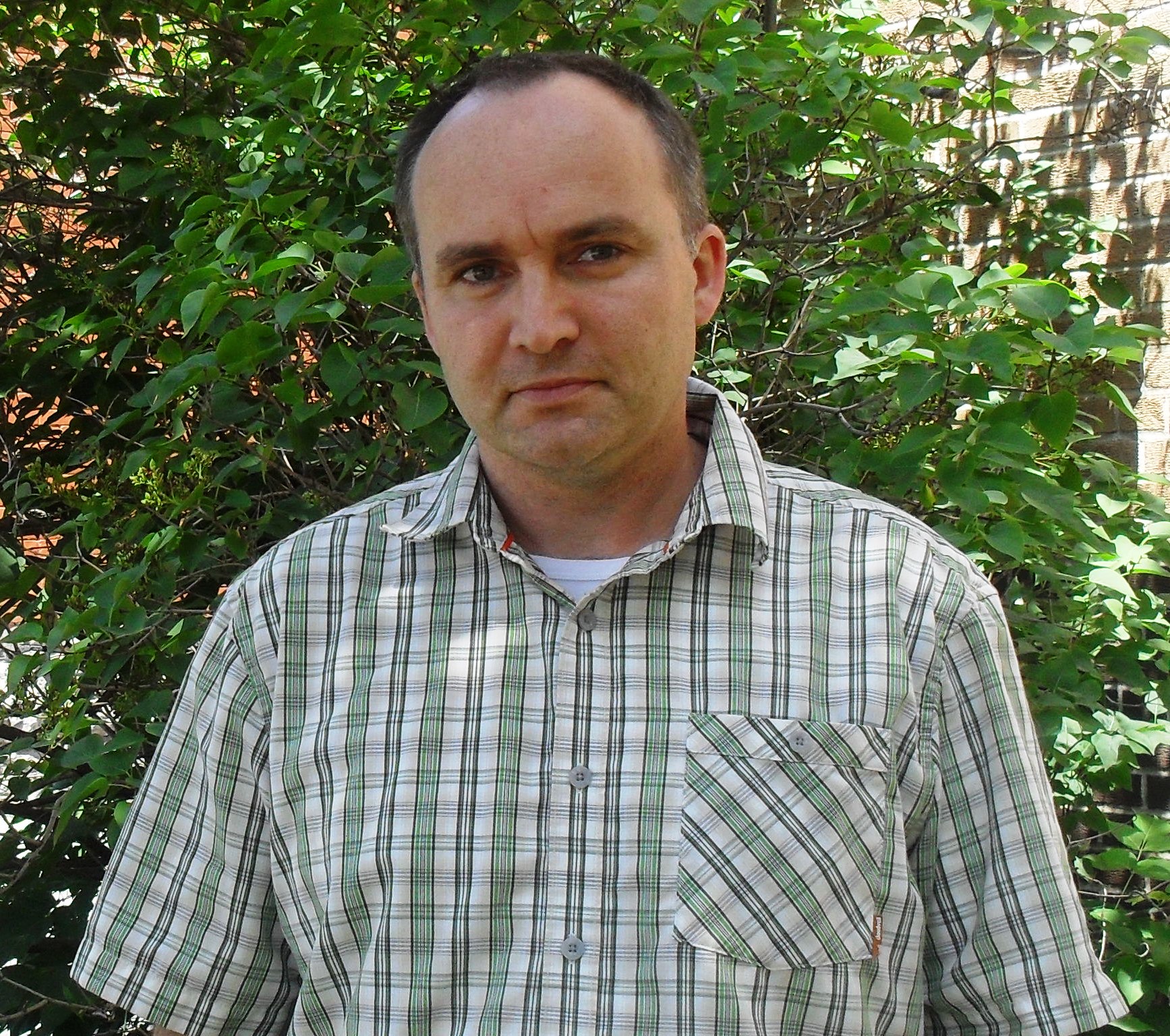
Rafal Kulik is a Full Professor in the Department of Mathematics and Statistics at the University of Ottawa (Faculty of Science). He holds a MSc from Ulm University (Germany) and a PhD from Wrocław University (Poland). Research Interests: Dr. Kulik specializes in Extreme Value Theory, Time Series Analysis (particularly long-range dependence and heavy-tailed processes), Data Privacy (including Differential Privacy), and Statistical Inference. His work bridges theory with applications in econometrics, financial mathematics, risk management, and privacy-preserving data analysis. Recent Contributions: Recent research focuses on clustering of extremes in stochastic processes, statistical foundations of differential privacy, and high-dimensional data analysis. Key methods include bootstrap techniques for tail processes, asymptotic expansions for block estimators, and analysis of regularly varying time series. Advising & Grants: Supervised over a dozen PhD/MSc students and postdocs. Current projects include NSERC grants on Extreme Value Theory and MITACS collaborations on privacy frameworks. Active in benchmarking large language models' privacy risks. Administration: Associate Editor for Extremes , Electronic Journal of Statistics , and others. Member of the University of Ottawa Board of Governors.
- Image Processing
- 3D Topographic and Built Environment Modelling
- Deformation Measurement and Analysis
- +۷ مورد دیگر
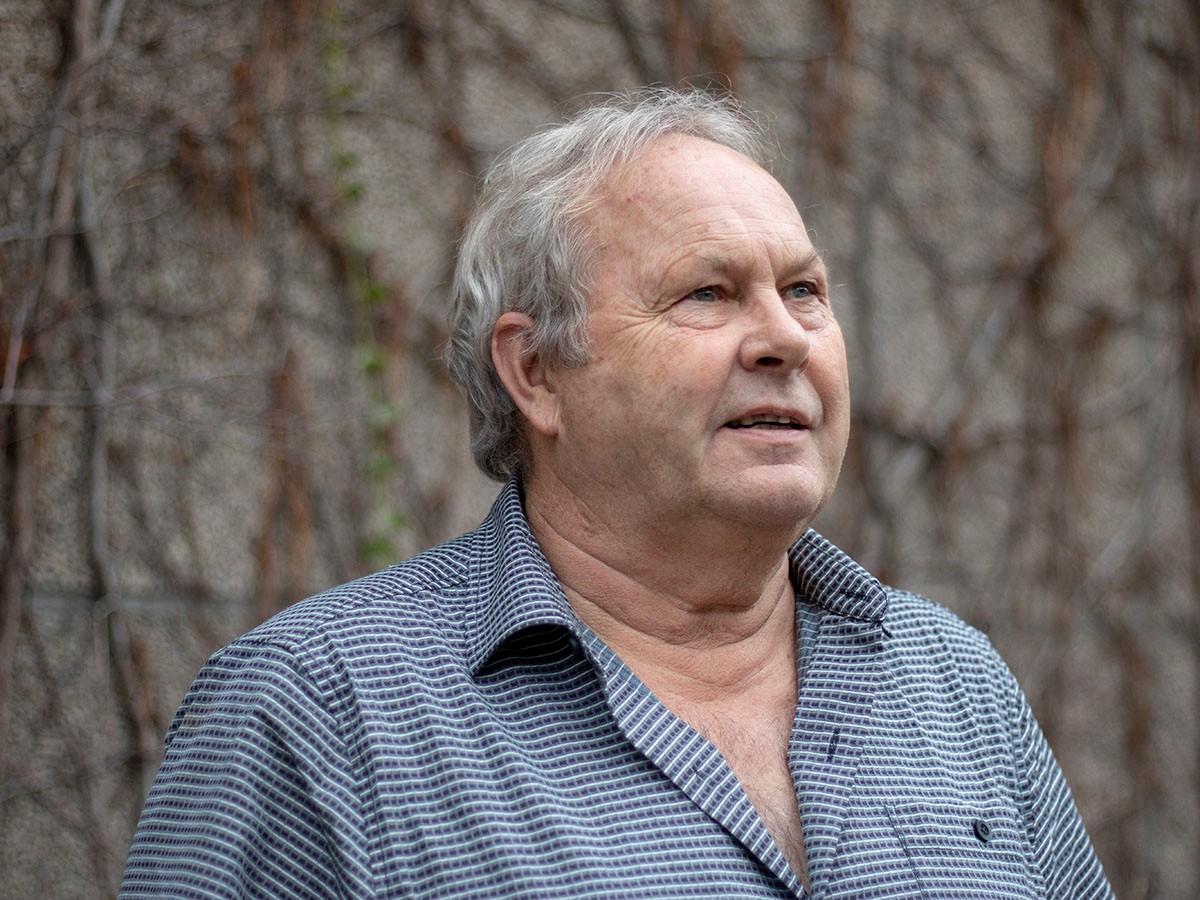
Dr. Michael A. Chapman serves as a Professor in the Department of Civil Engineering at Toronto Metropolitan University, specializing in image processing, deformation analysis, and sensor-integrated geospatial modeling for infrastructure applications. His work bridges civil engineering with advanced computational techniques for real-world problem solving. His academic credentials include a BT from Toronto Metropolitan University (1977), MSc from Ohio State University (1979), and PhD from Laval University (1989). BT: Toronto Metropolitan University (1977) MSc: Ohio State University (1979) PhD: Laval University (1989) Chapman's research centers on deformation monitoring of structures like the Rogers Centre roof, mobile mapping for road condition assessment, and sensor fusion for precision geospatial models. He pioneers applications in pavement deflection measurement using Doppler lasers and mobile laser scanning for infrastructure inspection, emphasizing practical engineering solutions derived from photogrammetry and image metrology. His methodology transforms mechanical observation into digital innovation for civil infrastructure management. His publication portfolio reveals a strong trajectory in merging deep learning with geospatial engineering, particularly in hyperspectral image classification and mobile mapping systems. These works consistently address civil infrastructure challenges through advanced computational approaches, demonstrating evolving sophistication from pavement crack extraction to sea ice mapping. His distinguished recognition includes: Wild Heerbrugg Photogrammetric Award - North America (1981) Chapman actively supervises graduate students and teaches core courses including CVL 207 (Graphics), CVL 352 (Geomatics Measurement Techniques), and CV8506 (Industrial Metrology). He emphasizes adaptive pedagogy to accommodate diverse learning styles, viewing teaching as both professional duty and personal passion. His industry-relevant research often involves partnerships with transportation authorities for real-time infrastructure assessment. His laboratory work focuses on mobile mapping systems and sensor integration platforms for deformation monitoring, particularly applied to large-scale structures and transportation networks. Current projects involve real-time pavement assessment technologies and 3D modeling of built environments using multi-sensor fusion approaches.
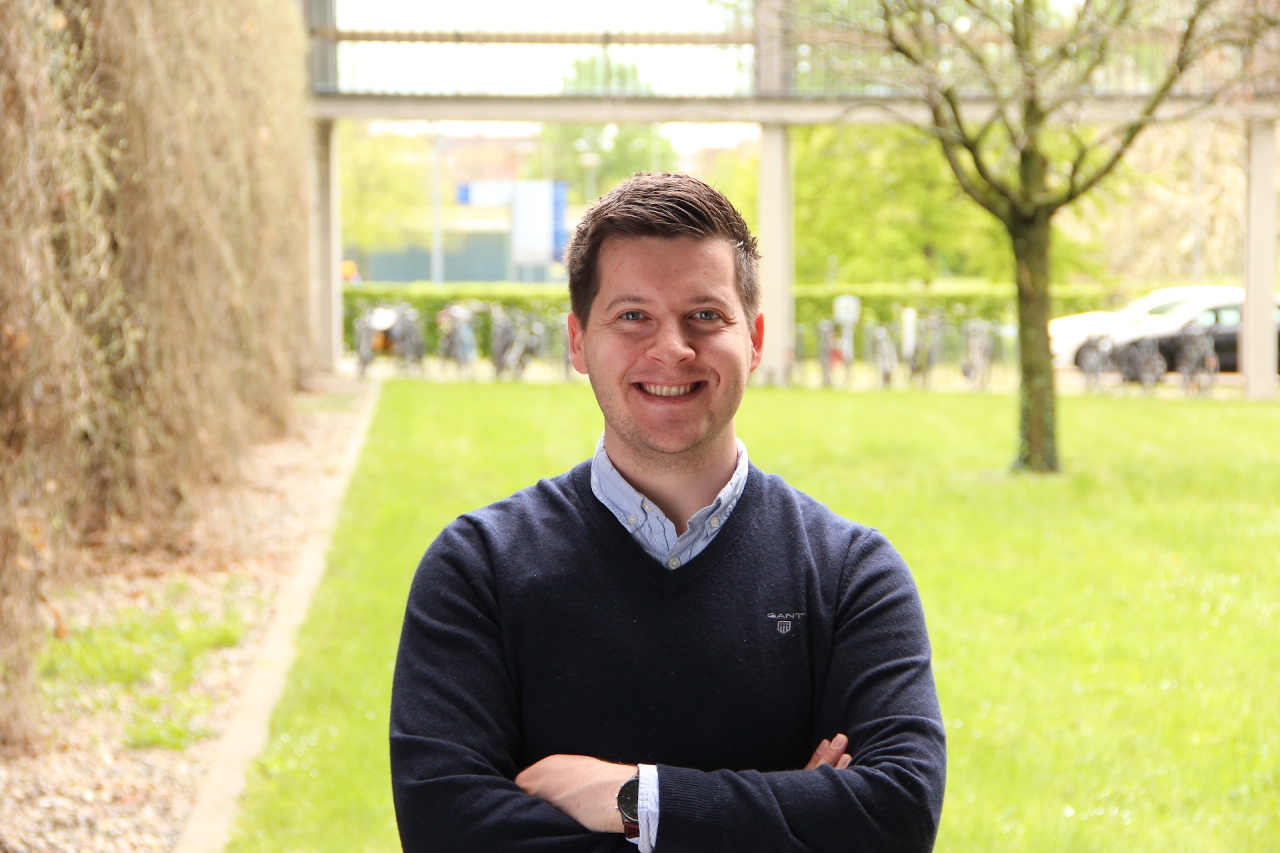
Dr. Armin Nurkanović is an interim professor at the Technical University of Braunschweig's Department of Mathematical Optimization, where he teaches courses on dynamic optimization and numerical methods. Previously, he completed his PhD at the University of Freiburg under Prof. Moritz Diehl, focusing on optimal control of nonsmooth dynamical systems. His research emphasizes numerical methods for hybrid systems, real-time optimization, and applications in robotics and renewable energy systems. He has received the IEEE Control Systems Letters Outstanding Paper Award (2022) and was a finalist for the 2024 European Systems & Control PhD Thesis Award. Education: Bachelor's in Electrical Engineering (University of Tuzla, 2015) Master's in Electrical Engineering and Information Technology (Technical University of Munich, 2018) PhD in Control (University of Freiburg, 2023) Research Interests: Optimal control of hybrid and nonsmooth systems (e.g., Filippov systems, switched systems) Real-time optimization for model predictive control (MPC) Robust control theory and stochastic optimization Applications in robotics and renewable energy systems Teaching & Software: Developed open-source tools nosnoc and nosnoc_py for optimal control Teaching courses on numerical optimization and optimal control at TU Braunschweig Collaborations & Students: Open to academic and industry collaborations Supervises Bachelor's/Master's theses in mathematics, engineering, and computer science
Paul Wuمشاهده پروفایل
دانشیار
Paul Wu is an Associate Professor in the School of Mathematical Sciences at Queensland University of Technology (QUT), Faculty of Science, where he also serves as an industry research fellow in the strategic partnership between the Centre for Data Science (CDS) and AIS/QAS. He leads the sports systems domain within CDS and applies statistical and machine learning models to complex systems across sports, marine science, and defence sectors. PhD, Queensland University of Technology Master of Engineering Science (Computer and Comm Engineering), Queensland University of Technology Bachelor of Engineering (Electrical and Computer Engineering), Queensland University of Technology His research focuses on Bayesian statistics, dynamic Bayesian networks, state space modelling, and simulation techniques. He works closely with domain experts to solve real-world problems in sports performance, ecological resilience, and human systems. His interdisciplinary work spans sports science , marine ecology , and defence applications . Paul’s recent publications demonstrate a strong trajectory in predictive analytics for elite sports and ecosystem modelling, particularly using Bayesian frameworks. His work on swimming performance prediction has informed national training strategies and contributed to competitive success. He has also advanced methods in clustering, model adaptation, and psychosocial risk assessment. His scientific contributions have been recognized through impactful collaborations with elite sports organizations including the Australian Institute of Sport, Swimming Australia, and the West Coast Eagles. Testimonials highlight his role in transforming data analytics in sports injury recovery and performance optimization. Applied Bayesian models in elite sports decision-making Developed predictive tools for marine ecosystem resilience Collaborated on over 30 industry and government projects Supervises research in complex sports data analytics Paul leads a dynamic research environment focused on translating statistical innovation into practical impact across diverse domains.
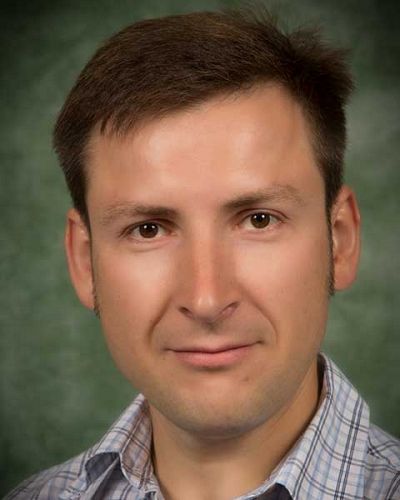
Aleksey Polunchenko is an Associate Professor in the Department of Mathematics and Statistics at Binghamton University . His research focuses on mathematical statistics , particularly sequential change-point detection with applications in financial surveillance, anomaly detection, and statistical process control. He has made significant contributions to the analysis of the Shiryaev-Roberts procedure and related methods, including their asymptotic properties, robustness, and performance evaluation. Education : PhD, University of Southern California His recent publications explore the quasi-stationary distributions , first exit times , and asymptotic optimality of change-point detection algorithms, with applications in real-time financial monitoring and cybersecurity. While no scientific awards are listed, his work has been cited in multi-sensor systems and distributed detection frameworks. Email : aleksey@binghamton.edu
Yuliana Yu. Linke is an Associate Professor at the Chair of Probability Theory and Mathematical Statistics of Novosibirsk State University and a Senior Researcher at the Laboratory of Applied Inverse Problems of the Sobolev Institute of Mathematics. She holds a Candidate of Science (Ph.D.) from the Sobolev Institute of Mathematics (2000) and a Doctor Habilitatus from Lomonosov Moscow State University (2024). Education: 1992-1998, Novosibirsk State University, Mathematical Department 1998-2000, Postgraduate Course, Chair of Probability Theory and Math. Statistics, NSU 2000, Candidate of Science (Ph.D.), Sobolev Institute of Mathematics 2024, Doctor Habilitatus (Dr.Habil), Lomonosov Moscow State University Her research focuses on regression analysis and the change-point problem. She has extensively contributed to nonparametric estimation techniques, particularly kernel methods and asymptotic statistics, addressing challenges in stochastic processes and heteroscedastic models. Her publications over the past 15 years highlight advancements in kernel-type estimators for regression models, emphasizing uniform consistency, insensitivity to design correlation, and asymptotic normality under non-identical distributions. These works span theoretical developments and applications to stochastic processes and random fields. Linke has also taught courses for the Department of Natural Sciences at Novosibirsk State University, with teaching materials available in Russian.
Huong Haمشاهده پروفایل
مدرس ارشد
Dr. Huong Ha is a tenured Senior Lecturer in Computer Science and Program Manager of the Bachelor of Computer Science at the School of Computing Technologies, RMIT University, Australia. Previously, she worked at the Applied Artificial Intelligence Institute (A2I2), Deakin University, Australia. She received her PhD from the University of Newcastle, Australia in May 2017. Her educational background includes: PhD in Computer Science from the University of Newcastle, Australia (2017) Dr. Ha's research focuses on the intersection of Machine Learning and Software Engineering, specializing in Automated Machine Learning (particularly Bayesian Optimization), Trustworthy Machine Learning, and Data-driven Software Engineering. Her work addresses critical challenges in intelligent incident management of software systems and quality prediction and optimization for software systems. She has made significant contributions to root cause analysis for microservice systems using causal inference and Bayesian optimization techniques. Her publication record shows a strong trend in applying advanced machine learning techniques to software engineering problems, particularly in microservices architecture. Her recent work demonstrates expertise in developing benchmarking frameworks (RCAEval) and optimization methods (MOCA-HESP) that bridge theoretical advancements with practical applications in software systems. Dr. Ha has received numerous awards and recognitions: Top High-volume Course at RMIT (Semester 1, 2025) Outstanding Reviewer of KDD 2025 Research Track Special Commendation for 2024 RMIT STEM College Learning and Teaching Award ACM SIGSOFT Best Artifact Award at FSE 2024 Top Reviewer of NeurIPS 2022-2023 As Program Manager of the Bachelor of Computer Science, Dr. Ha plays a key role in curriculum development and academic leadership. She actively supervises PhD students including Thuan (Solving Mathematical Problems with LLMs) and Thanh (Fraud Detection for Blockchain Networks), and has secured multiple research grants including the OpenAI Researcher Access Grant (10,000 USD) and several RMIT RACE Merit Allocation Scheme grants. Her academic service includes serving on program committees for major conferences in both machine learning (NeurIPS, ICML) and software engineering (ASE, ICSE).