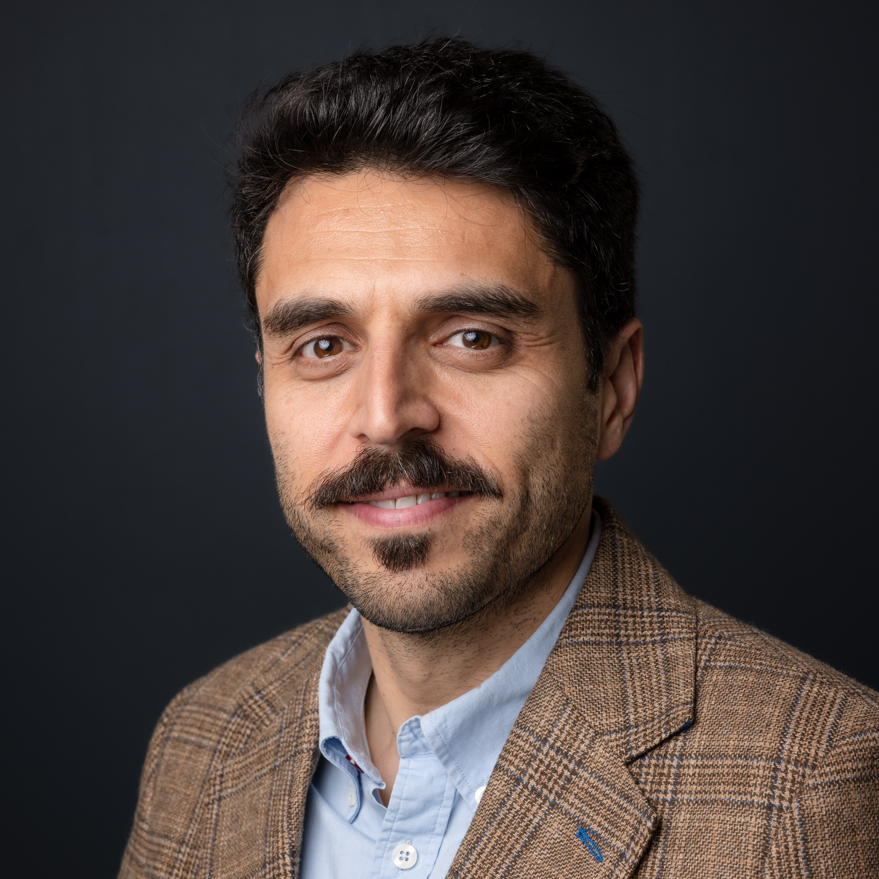
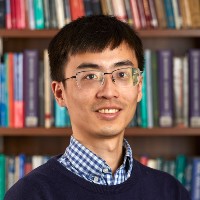
Subhransu Maji is an Associate Professor in the Manning College of Information and Computer Sciences at the University of Massachusetts Amherst, and the co-director of the Computer Vision Lab. He is also affiliated with the Center for Data Science and holds a part-time role as an Amazon Scholar. His research focuses on high-level visual recognition algorithms and interdisciplinary applications in ecology and astronomy. He has received prestigious awards including the NSF CAREER Award (2018), Best Paper at WACV 2015, and the Google Graduate Fellowship (2008). Education: PhD in Computer Science from UC Berkeley (2011), BTech from IIT Kanpur (2006). Prior roles include Research Assistant Professor at Toyota Technological Institute at Chicago (2012-2014). Research Interests: Computer Vision Machine Learning AI Applications in Ecology and Astronomy 3D Shape Understanding Climate Science Grants and Funding: Supported by NSF, NASA, Climate Change AI, and industry grants from Facebook, NVIDIA, Adobe, and Dolby. Current projects include satellite imagery analysis for ecology and material science applications using deep learning. Labs and Teams: Leads the Computer Vision Lab, collaborates with interdisciplinary teams on ecological monitoring (e.g., bird migration tracking via radar data) and material property prediction (e.g., zeolite adsorption modeling).
Rana Hanocka is an Assistant Professor of Computer Science at the University of Chicago, leading the 3DL research group focused on AI-driven 3D geometry processing. She earned her Ph.D. in 2021 from Tel Aviv University under Professors Daniel Cohen-Or and Raja Giryes. Her work explores neural networks for unstructured 3D data, including mesh convolutional networks and self-priors for shape reconstruction. Key research areas include geometric deep learning, human-AI collaboration in 3D modeling, and interpretable neural networks. Notable contributions include MeshCNN (SIGGRAPH 2019) and Point2Mesh (NeurIPS 2020), advancing mesh analysis and point cloud processing. Awards include the 2023 Pazy Research Award and 2020 Rising Star in EECS. Education : Ph.D. Computer Science, Tel Aviv University (2021) Labs/Groups : 3DL Group at UChicago Grants : NSF Grant for AI-driven 3D modeling tools (2023) Research directions emphasize creative human-AI partnerships, unsupervised learning from shape collections, and explainable 3D neural networks. Ongoing projects include style-aware 3D synthesis, interactive segmentation, and multimodal shape interfaces.
Hyunghoon Cho is an Assistant Professor at Yale School of Medicine in the Department of Biomedical Informatics & Data Science, with a secondary appointment in the Department of Computer Science. He received his PhD in Electrical Engineering and Computer Science from MIT (2019) and MS/BS in Computer Science from Stanford University (2013). His research focuses on computational challenges in biomedical data privacy, single-cell genomics, and network biology. Assistant Professor (Primary): Biomedical Informatics & Data Science Assistant Professor (Secondary): Computer Science Appointments: Yale School of Medicine | Broad Institute (Schmidt Fellow) Research Themes: Privacy-Enhancing Technologies for genomic and health data Scalable AI/ML tools for omics data analysis Structured biological modeling for system-level discovery His work includes secure GWAS, transcriptomic privacy assessment, and sfkit - a federated genomic analysis toolkit. He received the NIH Director's Early Independence Award and leads NSF-funded projects on confidential genome analytics. Awards: NIH Director's Early Independence Award Lab Members: Haris Smajlović (Postdoc), Vincent Angelo (CBB MS), Denis Loginov (Senior Software Engineer), Lucy Zheng (CBB PhD)
Chris Harrison is an Associate Professor at Carnegie Mellon University's School of Computer Science, directing the Future Interfaces Group . His research focuses on novel human-computer interaction technologies, including haptics, AR/VR/XR, and ubiquitous computing. Research Interests: Ubiquitous Computing, Human-Centered AI, Physical Interfaces (Sensing, Haptics, Fabrication), AR/VR/XR, Social Computing Advisees: Daehwa Kim, Nathan DeVrio, Vimal Mollyn, Vivian Shen Scientific Recognition: Forbes 30 Under 30 (Science), MIT Technology Review 35 Innovators Under 35, Smithsonian Innovator (2013), Google/Microsoft/Qualcomm Fellows Contact: chris.harrison@cs.cmu.edu His recent publications explore advanced haptic systems (Reel Feel, Fluid Reality), body-centric sensing (SkinTrack), and environment-embedded interfaces (Wall++). Current work integrates UWB/IMU fusion for pose estimation and synthetic jet haptics.
Subhashis Ghoshal is a Goodnight Distinguished Professor in the Department of Statistics at North Carolina State University (NCSU). He holds a Ph.D. in Statistics from the Indian Statistical Institute (1995). His research focuses on Bayesian nonparametrics, high-dimensional models, asymptotic theory, and functional data analysis. He has authored influential books like *Fundamentals of Nonparametric Bayesian Inference* (2017) and contributed to methodologies in image processing and statistical inference. Key awards include the Goodnight Distinguished Professorship (2021), Dr. Cavell Brownie Mentoring Award (2014-15), and the De Groot Prize (2019). He has held editorial roles in journals like *Statistical Science* and *Annals of Statistics*. His work bridges theory and applications, addressing challenges in modern statistical problems such as uncertainty quantification and causal inference. He advises on graduate programs and actively contributes to academic leadership at NCSU.
Roles & Affiliations: Daniel J. Jacob is the Vasco McCoy Family Professor of Atmospheric Chemistry and Environmental Engineering at Harvard University. He leads the Atmospheric Chemistry Modeling Group at the Harvard John A. Paulson School of Engineering and Applied Sciences, part of the Department of Earth and Planetary Sciences. He has held academic ranks including Gordon McKay Professor (1994-2004) and Associate/Assistant Professor (1991-1994), and was a postdoc at Harvard (1985-1987). Education: Ph.D. in Environmental Engineering Science from Caltech (1985), Ingenieur Chimiste from École Supérieure de Physique et Chimie Industrielles (1981), and earlier studies at Lycee du Parc (Lyon). Research Interests: Jacob's work focuses on atmospheric chemistry, climate modeling, and air quality. Key areas include methane emissions, tropospheric ozone, satellite remote sensing, and global biogeochemical cycles. His research integrates field campaigns (e.g., SEAC4RS, ARCTAS) and chemical transport models (GEOS-Chem) to address environmental challenges like pollution and climate change. Publications & Awards: Jacob has authored over 550 peer-reviewed publications, with an H-index of 145 (ISI) and 184 (Google Scholar). Notable awards include the Haagen-Smit Prize (2010), Macelwane Medal (1994), and recognition for teaching and climate science leadership. His work on methane emissions and air quality has been featured in Nature , Science , and AGU journals. Grants & Advising: Jacob advises numerous PhD students and postdocs, many of whom hold academic or research roles globally. He leads international initiatives like the Carbon Mapper project and chairs committees for NASA and the National Academies. His grants support studies on methane detection, aerosol chemistry, and climate policy. Labs & Collaborations: The Atmospheric Chemistry Modeling Group collaborates with NASA, NOAA, and institutions worldwide. Key projects include the GEOS-Chem model, TROPOMI satellite inversion analyses, and the Integrated Methane Inversion (IMI) tool for emissions monitoring.
Jason M. LaBelle is a Professor of Anthropology at Colorado State University (CSU), affiliated with the College of Liberal Arts. He serves as Director of the Center for Mountain and Plains Archaeology (CMPA) and Curator of the Archaeological Repository of CSU (AR-CSU). His research focuses on hunter-gatherer societies, particularly in the Intermountain West, emphasizing subsistence, mobility, and pre/post-contact Native American cultures. His work spans environments from the Great Plains to high alpine regions, with specialties in Clovis/Folsom cultures, communal hunting practices, and lithic technology. LaBelle teaches courses in archaeology, lithic technology, and public archaeology. He oversees CMPA projects funded by federal agencies like the National Park Service and the Bureau of Land Management, supporting student training in fieldwork, lab analysis (lithics, faunal studies), and report writing. His lab houses extensive collections from Colorado’s South Platte and Colorado River Basins, including alpine artifacts. He actively engages with tribal partners and the public through outreach, conferences, and NAGPRA coordination. LaBelle’s recent research includes studies on lithic quarries, ice patch archaeology, and Bayesian chronology modeling. His publications address prehistoric mobility, site chronology, and cultural resource management. He values interdisciplinary collaboration and student mentorship, aiming to bridge academic and applied archaeology.
Associate Professor Mohsen Kalantari is a Geospatial Engineering academic at the University of New South Wales (UNSW) School of Civil and Environmental Engineering , with concurrent roles as co-founder of the startup Faramoon . His career spans roles at the University of Melbourne's Department of Infrastructure Engineering and Victorian government's land administration initiatives through DELWP. Education : PhD in Geomatics Engineering (2008, University of Melbourne), Master of GIS Engineering (2004), Bachelor of Surveying Engineering (2001) His research bridges geospatial engineering with construction automation , focusing on 3D cadastre , BIM-GIS integration , and smart cities . Recent publications show trends in underground land administration , digital twins , and LADM standard implementations . Scientific Awards : National educational recognition (2019), Victorian educational grants (2018), and prestigious fellowships (2012) As a supervisor , he guides PhD candidates in topics ranging from BIM for waste management to underground cadastral systems . His industry engagement includes partnerships with the United Nations , Open Geospatial Consortium , and Singapore Land Authority .
Prof. Baker Mohammad serves as Professor and Director of the System on Chip Lab in the Department of Computer and Information Engineering at Khalifa University. With over 15 years of industrial experience at Intel and Qualcomm designing microprocessors and DSP chips, he bridges academic research with real-world engineering challenges in high-performance computing and low-power systems. His educational background includes: Ph.D. in Electrical and Computer Engineering, University of Texas at Austin (2008) M.S. in Electrical and Computer Engineering, Arizona State University B.S. in Electrical Engineering, University of New Mexico Dr. Mohammad's research spans cutting-edge domains where VLSI design converges with AI acceleration and emerging memory technologies . His work pioneers Memristor applications in environmental sensing (radiation, vacuum, glucose) and neuromorphic computing, while advancing energy harvesting systems for wearable electronics. The integration of in-memory computing with security primitives represents a paradigm shift in hardware design, moving beyond traditional CMOS limitations. His publication trajectory reveals accelerating focus on self-powered neuromorphic systems and RRAM-based architectures, with recent work (2021-2023) emphasizing hardware-software co-design for edge AI. Over 75% of his recent publications involve cross-disciplinary collaborations spanning materials science, chemistry, and biomedical engineering. Notable scientific recognition includes: IEEE TVLSI Best Paper Award 2016 IEEE MWSCAS Myrill B. Reed Best Paper Award Qualcomm Qstar Award for Performance Leadership KUSTAR IP Excellence Award Multiple SRC Techon Best Session Papers As a dedicated mentor, he has supervised over 15 graduate students while securing competitive funding from Khalifa University, ADEK, Qualcomm, Tii, and UAE space agencies. His grant portfolio demonstrates exceptional translational impact, converting fundamental research in memristive devices into drone flight computers and medical sensors. Current projects integrate academic rigor with industrial deployment timelines. The System on Chip Lab operates as a multidisciplinary hub where semiconductor physicists collaborate with AI researchers to develop RISC-V-based secure processors and piezoelectric nanogenerator systems. Recent expansions include partnerships with Tii for aerospace applications and medical device startups for glucose monitoring technology.
Alfred O. Hero, III is the John H. Holland Distinguished University Professor of Electrical Engineering and Computer Science and the R. Jamison and Betty Williams Professor of Engineering at the University of Michigan, Ann Arbor. He is currently on leave from the University of Michigan as a Program Director in the CISE Directorate at the National Science Foundation. His primary appointment is in the Department of Electrical Engineering and Computer Science (EECS), with secondary appointments in the Department of Biomedical Engineering and the Department of Statistics. He is also affiliated with the UM Center for Computational Medicine and Bioinformatics (CCMB), the UM Graduate Program in Applied and Interdisciplinary Mathematics (AIM), the UM Applied Physics Program, and the Michigan Institute for Data Science (MIDAS), which he co-founded from 2015-2018. Hero's research focuses on data science, developing theory and algorithms for multimodality data collection, fusion, analysis and visualization that use statistical machine learning and distributed optimization. His work has applications in wearable technologies for personalized health and predictive medicine, spatio-temporal networks in biology, climate, and social discourse, anomaly detection, and data analysis for international security. His recent research interests include high dimensional spatio-temporal data analysis, multimodal data integration, statistical signal processing, and machine learning, with particular emphasis on predictive mathematical models for biological and physical sciences, social networks, network security and forensics, and personalized health and disease. His recent publications demonstrate a strong focus on high-dimensional statistical methods, contrastive learning, neural network optimization, change detection in temporal graphs, and applications in microbiome analysis and epidemic modeling. The research spans theoretical foundations in information theory and statistical learning while addressing practical applications across multiple domains. Scientific Awards: IEEE Signal Processing Society Best Paper Award (1998) Best Original Paper Award from Journal of Flow Cytometry (2008) Best Magazine Paper Award from IEEE Signal Processing Society (2010) SPIE Best Student Paper Award (2011) IEEE ICASSP Best Student Paper Award (2011) IEEE Signal Processing Society Technical Achievement Award (2014) IEEE Signal Processing Society Society Award (2015) IEEE Fourier Award (2020) University of Michigan Distinguished Faculty Achievement Award (2011) Hero has advised over 60 PhD students and 30 postdocs in areas including modeling, computation, and inference for large scale time varying data in the biosciences. He has received significant research funding from the Department of Energy, Army Research Office, Air Force Office of Scientific Research, and National Science Foundation. He has held leadership positions including President of the IEEE Signal Processing Society (2006-2007), Director of Division IX (Signals and Applications) on the IEEE Board of Directors (2009-2011), and Chair of the Committee on Applied and Theoretical Statistics of the US National Academies (2018-2020).
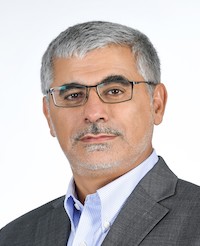
Vladimir Spokoiny is a Professor at the Departments of Mathematics and Economics of the Humboldt University of Berlin and Head of the Research Group "Stochastic Algorithms and Nonparametric Statistics" at the Weierstrass Institute for Applied Analysis and Stochastics (WIAS) in Berlin, Germany. His research spans multiple areas of statistics, machine learning, and financial mathematics, with significant contributions to nonparametric statistics, high-dimensional data analysis, and statistical methods in finance. Spokoiny received his M.Sc. in applied mathematics from the Moscow Institute of Railway Engineering in 1981 and his Ph.D. in mathematics from Lomonosov Moscow State University in 1988. He completed his Habilitation at Humboldt University in 1996. His academic career includes positions at the All-Union Institute of Railway Transport in Moscow, the Institute for Information Transmission Problems in Moscow, and the Institute for Applied Analysis and Statistics in Berlin before joining the Weierstrass Institute and Humboldt University where he has been a professor since 2002. Spokoiny's research focuses on adaptive nonparametric smoothing and hypothesis testing, high dimensional data analysis, statistical methods in finance, image analysis with applications to medicine, classification, and nonlinear time series. His work often addresses the challenges of nonstationarity in time series data and develops innovative methods for volatility estimation and risk management. He has made significant contributions to the development of adaptive weights smoothing procedures, which have applications in image processing, community detection, and manifold learning. His recent work has expanded into high-dimensional statistics, Bayesian inference, and optimization methods for machine learning, with publications demonstrating novel approaches to Gaussian approximation, Laplace methods, and statistical inference in non-Euclidean spaces. Spokoiny has supervised numerous PhD students including Oliver Reiss, Danilo Mercurio, Ying Chen, Elmar Diederichs, and Mstislav Elagin, whose research has focused on mathematical finance, time series analysis, and statistical methods. He serves as an Associate Editor for The Annals of Statistics (since 2004) and Statistics and Decisions (since 2002), and has previously served on the editorial board of the Journal of Statistical Planning and Inference. His professional activities include reviewing for major statistical journals including Annals of Statistics, Bernoulli, Econometrica, and Journal of American Statistical Association, as well as reviewing grant proposals for the National Science Foundation (USA), German Research Foundation, and Netherlands Organisation for Scientific Research. Spokoiny is a member of several professional societies including the International Statistical Institute, American Statistical Association, Institute of Mathematical Statistics, and Bernoulli Society. He is fluent in Russian (mother tongue), English, and German, and has good knowledge of French. His research group at WIAS focuses on developing novel statistical methodologies with applications across various scientific domains, particularly emphasizing adaptivity and robustness in complex data environments. The group's work has significant implications for financial risk management, medical imaging, and machine learning applications, with recent publications addressing fundamental questions in high-dimensional statistics and nonparametric inference.
Professor Paul Fearnhead is a leading academic in Statistics at Lancaster University 's School of Mathematical Sciences . His research focuses on Bayesian and Computational Statistics , with applications in Anomaly Detection , Continuous-time Markov Processes , and Changepoint Analysis . Department: Mathematics and Statistics Academic Rank: Professor Email: p.fearnhead@lancaster.ac.uk His work bridges theoretical statistics and computational efficiency, notably through pruning techniques for change detection and novel Monte Carlo methods. Current projects include AI Hub initiatives, probabilistic AI foundations, and real-time anomaly detection in streaming data. Research outputs span Bayesian Analysis , Time Series Modeling , and Scalable Statistical Algorithms , with applications in fields like astronomy and epidemiology. Recent publications emphasize simulation-based composite likelihoods and efficient distributed changepoint detection. Scientific contributions include leadership roles in the STOR-i Centre for Doctoral Training and Data Science Institute (DSI) projects such as CoSInES and Statscale. He supervises PhD students including Dylan Bahia, Yuntang Fan, and Ziyang Yang.
Masoud Asgharian is a Professor in the Department of Mathematics and Statistics at McGill University. His research focuses on survival analysis, changepoint problems, nonparametric Bayesian methods, and data envelopment analysis. He has contributed to influential studies on dementia survival rates, censored data methodologies, and statistical efficiency measures. His work bridges biostatistics and operations research, with applications in public health and medical sciences. Key contributions include methodologies for prevalent cohort survival analysis, input relaxation efficiency measures in stochastic DEA, and causal inference techniques. Asgharian has collaborated extensively with researchers in epidemiology and biomedical engineering, as evidenced by his co-authored publications on topics ranging from tooth enamel properties to low-precision neural network quantization. His research has been published in high-impact journals such as New England Journal of Medicine , Journal of the American Statistical Association , and Biometrics . Current affiliations include leadership roles in statistical research at McGill, with ongoing projects in computational statistics and healthcare analytics.
Tengyao Wang is a Professor in the Department of Statistics at the London School of Economics and Political Science (LSE), serving as the MSc Statistics (Financial Statistics) Programme Director. Prior to LSE, he held positions as a Lecturer at University College London and a Research Fellow at the Cantab Capital Institute for the Mathematics of Information, University of Cambridge. His research focuses on high-dimensional statistics, computational efficiency, and statistical limitations imposed by computational constraints. Education: PhD in Statistics under Prof Richard Samworth at the University of Cambridge, with earlier studies including a Part III Essay in Empirical Process Theory. Research interests include sparse signal detection, change-point analysis, dimension reduction, robust statistics, and applications in medical statistics, financial data analysis, and material discovery. Key contributions include methodologies for handling missing data, high-dimensional change-point detection algorithms, and statistical learning techniques. Publications span theoretical advancements and applied innovations, with recent work emphasizing deep learning with missing data, residual permutation tests, and semi-supervised learning via random projections. His work has been recognized with awards such as the Royal Statistical Society Research Prize (2019) and the Guy Medal in Bronze (2023). He is an Associate Editor of the Journal of the Royal Statistical Society, Series B (JRSS B), and actively contributes to open-source tools like the 'ocd' and 'MissInspect' R packages for changepoint detection and missing data analysis.
Maiken Mikkelsen is the James N. and Elizabeth H. Barton Associate Professor of Electrical and Computer Engineering at Duke University, promoted to Professor in 2025. She holds a secondary appointment as Associate Professor of Physics (2023–present) within Trinity College of Arts & Sciences. Her research bridges Nanophotonics , Quantum Materials , and Ultrafast Spectroscopy , focusing on plasmonic nanostructures and nonlinear metasurfaces for quantum optics and optoelectronic applications. Education: Ph.D. in Physics (University of California, Santa Barbara, 2009), B.S. in Physics (University of Copenhagen, 2004), postdoctoral work at University of California, Berkeley. Her work explores Plasmonics and Quantum Optics to engineer nanoscale light-matter interactions, enabling transformative technologies in Single-Photon Sources , Ultrafast Photodetectors , and Active Metasurfaces . Recent projects include real-time tunable lasing and polarization-controlled nanocavity systems. Her 2016–2025 publications highlight breakthroughs in plasmonic fluorescence enhancement, hot electron dynamics, and room-temperature quantum devices. Grants include Nano Solutions On-Chip (Triad National Security, LLC, 2025–2029) and Meta-Imaging (Air Force Office of Scientific Research, 2021–2026). Her lab, jointly based in Electrical & Computer Engineering and Physics, has graduated PhD students Eunso Shin and Hengming Li, and actively engages in STEM outreach initiatives.