
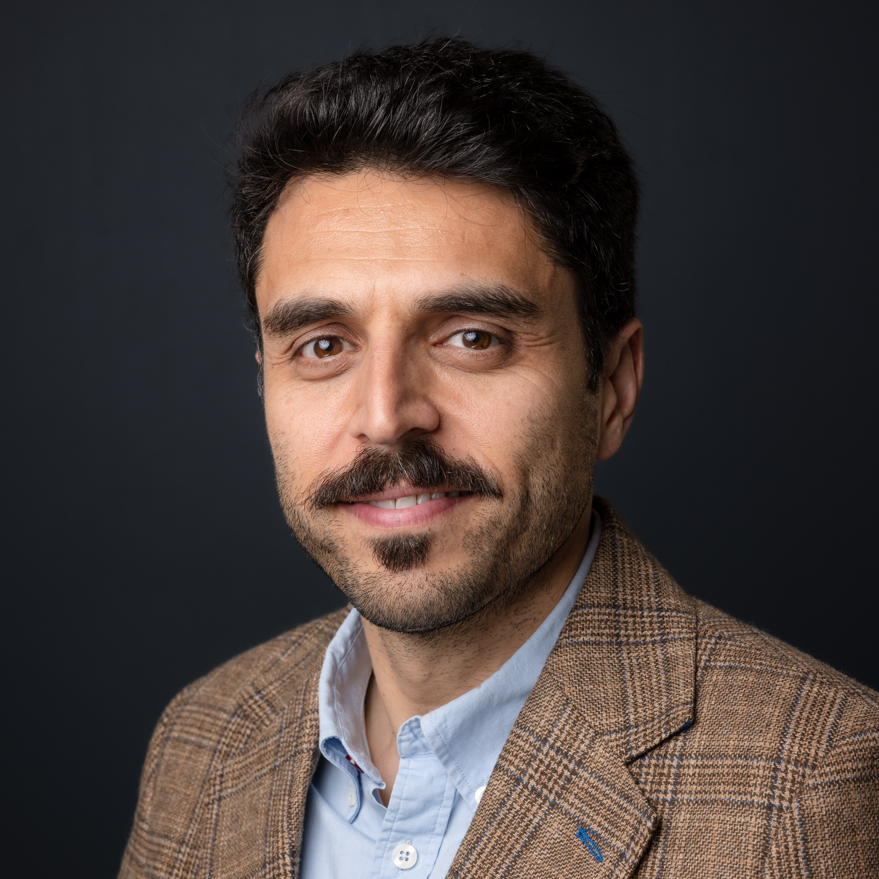
Associate Professor Mohsen Kalantari is a Geospatial Engineering academic at the University of New South Wales (UNSW) School of Civil and Environmental Engineering , with concurrent roles as co-founder of the startup Faramoon . His career spans roles at the University of Melbourne's Department of Infrastructure Engineering and Victorian government's land administration initiatives through DELWP. Education : PhD in Geomatics Engineering (2008, University of Melbourne), Master of GIS Engineering (2004), Bachelor of Surveying Engineering (2001) His research bridges geospatial engineering with construction automation , focusing on 3D cadastre , BIM-GIS integration , and smart cities . Recent publications show trends in underground land administration , digital twins , and LADM standard implementations . Scientific Awards : National educational recognition (2019), Victorian educational grants (2018), and prestigious fellowships (2012) As a supervisor , he guides PhD candidates in topics ranging from BIM for waste management to underground cadastral systems . His industry engagement includes partnerships with the United Nations , Open Geospatial Consortium , and Singapore Land Authority .
جستجوی استاد راهنمای دانشگاهی
برای مسیر پژوهشیتان، استاد راهنما، استاد دانشگاه و پژوهشگر مناسب را پیدا کنید و با آنها ارتباط بگیرید.
نمایش ۱-۱۵ از ۶۴ استاد راهنما
اطلاعات پروفایلها از صفحات عمومی دانشگاهها گرفته شده و ممکن است بهروز نباشد.
Feras Dayoubمشاهده پروفایل
مدرس ارشد
Dr. Feras Dayoub is a Senior Lecturer at the School of Computer and Mathematical Sciences (Faculty of Sciences, Engineering and Technology) at the University of Adelaide , specializing in Embodied AI and Robotic Vision within the Australian Institute for Machine Learning (AIML) . He co-directs the CROSSING French-Australian laboratory for human-autonomous agent teaming and holds an Adjunct position at the Queensland University of Technology (QUT) , serving as an Associate Investigator at its Centre for Robotics . Previously, he was a Chief Investigator at the ARC Centre of Excellence for Robotic Vision . His research focuses on advancing reliable deployment of computer vision and machine learning on mobile robots in real-world environments. Applied projects include agricultural automation , environmental conservation , and autonomous infrastructure monitoring . He has published extensively on topics like object detection , domain adaptation , 3D representation learning , and vision-language navigation , with a particular emphasis on robustness in dynamic and partially observed environments. Dr. Dayoub is also an educator specializing in programming , computer vision , and robotic perception . He contributes to open-source robotics research through tools like AARK (Autonomous Racing Toolkit) and has led teams developing solutions for precision agriculture (e.g., Deepfruits fruit detection system) and environmental monitoring (e.g., Crown-Of-Thorns starfish detection ). Key Collaborations : CROSSING Lab, QUT Centre for Robotics Research Themes : Embodied AI, Robust Perception, Domain Adaptation
- Computer Vision
- Machine Learning
- Robotics
- +۶ مورد دیگر
Professor Heiko Spallek is Head of School and Dean at the University of Sydney’s Sydney Dental School, leading the school’s integration with the Faculty of Medicine and Health. He also serves as Academic Lead for Digital Health and Health Service Informatics at the faculty level. His research focuses on advancing dental informatics, teledentistry, and evidence-based practice, while advocating for improved oral health policy and public health initiatives. He holds roles including director at Community Connections Australia and membership in the Charles Perkins Centre. Education: DMD, Dr. med. dent., MSBA(CIS), FACD, FAIDH Leadership: Oversees Sydney Dental School’s academic and clinical programs, emphasizing interprofessional education and digital health innovation. Research interests include leveraging big data and machine learning in dentistry, improving access to oral healthcare through teledentistry, and addressing systemic issues in dental education and policy. He has led projects on laser dentistry applications, dental caries prevention, and healthcare workforce regulation. Notable contributions include the OpenWide conference series, the BigMouth dental data repository, and advocacy for equitable dental funding in Australia. Grants include initiatives on oral hygiene in aged care and analysis of healthcare advertising perceptions. Media engagements highlight his role in public discourse on dental access and policy, including commentary on Australia’s dental crisis and aged care reforms. He actively promotes interdisciplinary collaboration through platforms like the Dental Informatics Online Community. Labs/Teams: Directs the Sydney Dental School’s research programs in informatics and public health, collaborating with national and international networks such as the National Dental PBRN.

Tao Zouمشاهده پروفایل
دانشیار
Tao Zou is an Associate Professor at the Research School of Finance, Actuarial Studies and Statistics, Australian National University. His research spans covariance regression modeling, network data analysis, and applications in financial and environmental statistics. He earned a Ph.D. in Statistics in 2016. Ph.D. in Statistics, 2016 Dr. Zou’s work pioneers covariance regression, where covariances are modeled as functions of covariiates. Key contributions include robust estimation techniques, spatio-temporal modeling, missing data imputation via semi-supervised learning, and distributed data aggregation. His methods address challenges in high-dimensional and non-Euclidean data analysis. Recent publications (2025–2023) explore quasi-score matching for spatial autoregressive models, regularization in network regression, functional principal component analysis for complex data, and environmental applications like PM2.5 pollution studies. These works emphasize robustness, scalability, and interdisciplinary relevance in economics, finance, and environmental science. Dr. Zou collaborates on projects like the 2023 Data Analysis App to Empower Assessment of Immunogenicity of Biologics (Co-Investigator). While his student supervision list isn’t explicitly provided, his methodological advancements influence big data and spatial statistics. He contributes to open-access software and continues expanding covariance regression for non-normal and functional data.

Huadong Moمشاهده پروفایل
مدرس ارشد
Dr. Huadong Mo is a Senior Lecturer at the School of Systems and Computing, University of New South Wales (UNSW) Canberra, Australia. He holds a B.E. degree in automation from the University of Science and Technology of China (2012) and a Ph.D. in systems engineering and engineering management from the City University of Hong Kong (2016). Prior to his current position, he was a research associate at ETH Zurich's Reliability and Risk Engineering Lab (2016-2019) and a Lecturer at UNSW Canberra (2019-2021). Dr. Mo's educational background includes a strong foundation in systems engineering with international experience across China, Switzerland, and Australia. His career trajectory demonstrates a progression from academic research to faculty positions with increasing responsibilities in teaching and research leadership. His research focuses on enhancing the resilience, performance, and security of complex systems using learning-based algorithms, primarily in power and energy systems, cyber-physical systems, and manufacturing systems. He applies data analytics to understand system evolution under uncertainties, with particular emphasis on prognostics and health management, sustainable transportation, robust operation of power systems under extreme events, and reinforcement learning-based asset management. His work bridges theoretical advances with practical applications in critical infrastructure. Analysis of Dr. Mo's recent publications reveals a strong focus on energy systems, particularly in the integration of machine learning with power grid management, battery storage systems, and resilience against cyber threats. His research shows a clear trajectory toward increasingly complex system integration, with growing emphasis on multi-vector energy communities, cross-domain prediction, and uncertainty-aware energy management. The interdisciplinary nature of his work spans electrical engineering, computer science, and operations research. 2024 IEEE SMC Early Career Award 2023 Visiting Research Fellowship (Jean d'Alembert Pour Fellowship) Gold Medal in 2024 China International College Student Innovation Competition (as supervisor) Arc PGC Supervisor Award (2021) IEEE SMC Outstanding Chapter Award (2021) Alumni Achievement Award from City University of Hong Kong (2019) Dr. Mo actively supervises numerous HDR students working on cutting-edge research topics including battery health monitoring, quantum control, reinforcement learning for power systems, and explainable AI for energy management. He leads multiple significant research grants totaling over 3 million AUD, including projects funded by ARC, Energy Innovation Fund, and international collaborations with institutions like ETH Zurich, Cambridge, and Tsinghua University. His research group maintains strong international connections, facilitating student exchanges and collaborative research. As Postgraduate Course Coordinator of Systems Engineering and Chair of IEEE SMC ACT Chapter, Dr. Mo plays a significant role in academic leadership and professional community building. His research team collaborates with industry partners on practical implementations of their theoretical work, particularly in the energy sector.
Chang Leiمشاهده پروفایل
پژوهشگر ارشد
Dr. Chang Lei is an ARC Discovery Early Career Researcher Award (DECRA) Fellow at the Department of Medical Sciences within the Faculty of Medicine and Health at The University of Sydney. She is also a member of The University of Sydney Nano Institute and the Charles Perkins Centre. With expertise in nanotechnology-based bioanalysis, mass spectrometry, lateral flow immunoassay, and tissue regeneration, Dr. Lei leads several innovative research projects focused on advancing healthcare through nanotechnology. Dr. Lei completed her PhD at the Australian Institute for Bioengineering and Nanotechnology (AIBN) at The University of Queensland (UQ). Her academic journey includes receiving the Queensland Government Advance Queensland Research Fellowship, the UQ Amplify Fellowship in 2021, and the prestigious ARC DECRA in 2024. Her research interests span across nanotechnology applications in healthcare, with particular focus on: Developing novel nanomaterials for single-cell metabolomics analysis Creating affordable and ultra-sensitive biomarker detection platforms Engineering silica bio-nanomaterials for stem cell differentiation and bone repair Advancing lateral flow immunoassay technologies using nanomaterials Applying nanotechnology to dental and craniofacial regeneration Dr. Lei's publication record demonstrates a strong focus on nanotechnology applications across multiple disciplines. Her recent work shows increasing emphasis on medical applications of nanomaterials, particularly in diagnostics, cancer therapy, and tissue regeneration. She has published in high-impact journals including Nature Science Review, Small, Biosensors and Bioelectronics, Angewandte Chemie, and Advanced Materials. Dr. Lei has received several notable awards and honors: 2024 ARC DECRA Fellow 2021 The University of Queensland Amplify Fellow 2020 GC Minimum Intervention Dentistry Research Award 2017 Advanced Queensland Research Fellow As a reviewer for scientific journals such as Science Advances, Journal of Nanobiotechnology, and Journal of Materials Chemistry B, and for ARC and NHMRC grants, Dr. Lei actively contributes to the scientific community. She also serves as an editor for Frontiers in Bioengineering and Biotechnology and Nano TransMed. Her current research projects are supported by grants including the ARC DECRA and the FMH Start-up Scheme. Dr. Lei is actively involved in several research groups and initiatives: Member of The University of Sydney Nano Institute Member of the Charles Perkins Centre Member of Australian and New Zealand Society for Mass Spectrometry Member of The Australian Materials Research Society Member of the Australian Nanotechnology Network
Bastien Lechatمشاهده پروفایل
پژوهشگر ارشد
Dr Bastien Lechat is a Research Fellow at Flinders Health and Medical Research Institute (FHMRI): Sleep Health, within the College of Medicine and Public Health at Flinders University. He is also a Full Member of the College of Science and Engineering and the Medical Device Research Institute. As an NHMRC Emerging Leadership Fellow, he leads innovative research at the intersection of sleep medicine, artificial intelligence, and wearable technology. Education: PhD in Sleep Health, Adelaide Institute for Sleep Health, Flinders University (2018–2021) Bachelor of Engineering in Engineering Science/Acoustics, Université du Maine, France (2014–2017) Dr Lechat’s research focuses on understanding the physiological mechanisms and consequences of obstructive sleep apnea (OSA), particularly night-to-night variability and patient subtypes. He develops AI-driven tools for efficient and accurate diagnosis using wearables and signal processing. His work aims to create a scalable, low-cost model of care for sleep-disordered breathing, addressing global diagnostic gaps. His recent publications reveal a strong trend in digital health innovation, with a focus on machine learning for OSA detection, circadian rhythm modeling, cardiovascular risk prediction, and climate impacts on sleep. His research has been published in top journals including Nature Communications , Journal of Sleep Research , and Sleep Medicine , demonstrating interdisciplinary reach. Scientific Awards and Recognition: NHMRC Emerging Leadership Fellow (2023) Helen Bearpark Memorial Scholarship (2022) Emerging Research Leader Award, Flinders University (2021) Multiple early-career awards from Sleep Down Under, Australasian Sleep Association, and Adelaide Sleep Retreat Ranked in the top 5% of international authors in sleep apnea by Expertscape Dr Lechat has secured over $2.5 million in competitive research funding and actively supervises and mentors junior researchers. He serves on the program committee of the American Thoracic Society meetings and contributes to clinical guidelines. He collaborates globally with industry and academic partners to translate research into clinical practice. Laboratories and Research Teams: He co-leads the 'Novel use of digital innovations & technology development' theme at FHMRI: Sleep Health, working closely with Professor Danny Eckert. His team integrates expertise in biomedical engineering, data science, and clinical sleep physiology to advance digital sleep medicine.

Feng Chenمشاهده پروفایل
دانشیار
Associate Professor Feng Chen is a faculty member at the School of Mathematics & Statistics, University of New South Wales, specializing in statistical methodology development and applications. His research bridges theoretical statistics and practical implementations across financial modeling, spatiotemporal processes, and public health analysis. PhD in Statistics from University of Hong Kong (2008) MSc in Applied Probability & Statistics from Lanzhou University (2004) BSc in Mathematics from Lanzhou University (2001) Research focuses include: Nonparametric and semiparametric statistical methods Point process modeling with emphasis on Hawkes processes Statistical computing and algorithm development Applications to financial data, earthquake analysis, and public health Recent publications demonstrate methodological advances in: Hawkes process estimation with complex data structures Renewal process applications in seismology GARCH modeling with missing data Spatiotemporal clustering analysis Scientific recognition includes: UNSW Science Staff Impact Award (2023) Professional roles: Director of Research Postgraduate Studies (2023--) Associate Editor for multiple journals Statistics Honours Coordinator (2013-2018) Active participant in statistical societies
Jason Chami is a Clinical Associate Lecturer at the Central Clinical School within the Faculty of Medicine and Health at the University of Sydney. His academic appointment focuses on clinical teaching and research in cardiology and medical informatics, with affiliations spanning the Sydney Medical School and Central Clinical School. His research interests center on cardiology, particularly congenital heart disease complexity stratification, registry systems, and medical coding accuracy. He also investigates ophthalmology (glaucoma devices), metabolism (cardiometabolic biomarkers), and neuroscience (pain pathways). His work integrates clinical data analysis with informatics approaches to improve diagnostic precision and patient outcomes. Analysis of his 2020-2025 publications reveals dominant themes in congenital heart disease research, including algorithmic risk stratification, registry optimization, and coding error reduction. Secondary streams include ophthalmology (PreserFlo MicroShunt safety studies), metabolism (Slc16a13 gene impacts), and neuroscience (neuroreceptor changes in pain models), demonstrating cross-disciplinary clinical research methodology.

Victor Cadarso Busto is an Associate Professor in the Department of Mechanical and Aerospace Engineering at Monash University, Australia, and a founding member of the Centre to Impact Antimicrobial Resistance (AMR). He holds leadership roles in strategic groups like Community Engagement and Industry. His expertise spans applied micro/nanotechnologies, photonics, microfluidics, and biosensors, with a focus on advancing life sciences and biomedical engineering. Dr. Cadarso earned his PhD in Physics from the Universitat Autònoma de Barcelona. He has held postdoctoral fellowships, including a Marie Curie Fellowship (2009–2012) and an Ambizione Fellowship at the Paul Scherrer Institute. Since 2016, he has led the Applied Micro and Nano-Technology Lab at Monash, developing scalable technologies for biological applications, antimicrobial surfaces, and climate change mitigation. His research addresses critical challenges such as antimicrobial resistance, sustainable regenerative medicine, and reducing methane emissions from livestock. He has pioneered novel devices like SU-8-based MOEMS, commercialized polymers, and founded two micro/nanotechnology startups. Key collaborators include institutions like the Australian Research Council and industry partners such as PolVax Pty Ltd. Recent projects include developing acoustic-based cell imaging systems, microfluidic biosensors for bacterial detection, and non-invasive embryo metabolic imaging. His work aligns with UN Sustainable Development Goals, particularly in health, clean energy, and innovation.

David Beltonمشاهده پروفایل
مدرس ارشد
Dr. David Belton is a Senior Lecturer in the School of Earth and Planetary Sciences at Curtin University, within the Faculty of Science and Engineering. He also holds a portfolio role in the Office of the Provost. His expertise lies in laser scanning (both terrestrial and mobile) and photogrammetry, with a focus on automated processing, feature extraction, and applications in mining, heritage conservation, and structural monitoring. Dr. Belton holds a BCSc, BSc (First Class Honours), and a PhD from Curtin University. His teaching responsibilities include coordinating and lecturing in Cartographical Statistics and Integrated Surveying, alongside previous roles in Mine Surveying and Mine Survey Project courses. He actively supervises PhD, MPhil, and Honours students, fostering research excellence in spatial sciences. His research emphasizes practical applications of geospatial technologies, including underwater photogrammetry, pipeline monitoring, and coral reef analysis. Key areas include robust statistical methods for point cloud processing, sensor calibration, and open-source device development for marine surveys. His work bridges theoretical advancements with real-world challenges in environmental monitoring, infrastructure assessment, and cultural heritage preservation. Publications span high-impact journals like Corall Reefs , ISPRS Journal of Photogrammetry , and IEEE Transactions , reflecting contributions to geomatics, remote sensing, and computer vision. His research often addresses interdisciplinary challenges, such as UAV-based ecological monitoring and automated 3D model reconstruction from laser scanning data. Dr. Belton collaborates widely, contributing to projects like the Sydney-Kormoran wreck analysis and heritage documentation of Pilbara rock art. His work underscores innovative solutions for spatial data challenges across environmental, engineering, and archaeological domains.
- Laser Scanning
- Photogrammetry
- Remote Sensing
- +۵ مورد دیگر
Professor Damien Higgins is a leading academic at the Sydney School of Veterinary Science within The University of Sydney , specializing in Pathobiology and Wildlife Health . His research integrates wildlife disease ecology , immunopathology , and conservation biology to address threats from habitat fragmentation and emerging infectious diseases in wildlife, particularly koalas. BVSc, M Vet Stud (Wild Animal Medicine & Husbandry), PhD Director of the Koala Health Hub (since 2014) Director of Veterinary Pathology Diagnostic Services Research Interests encompass disease ecology in fragmented habitats, koala immunogenetics , retroviral infections , and environmental toxicology of eucalyptus toxins. Key projects include Chlamydia pecorum dynamics, Koala Retrovirus (KoRV) impacts on immunity, and hookworm interactions in Australian sea lions. Scientific Awards : 2006 Barry Munday Recognition Award (Wildlife Disease Association) Teaching includes courses on general pathology , wildlife disease ecology , and threatened species management . He supervises PhD and Research Masters students and leads collaborations with 200+ stakeholders in government, academia, and conservation groups.
Eduardo Nebot is Emeritus Professor and former Patrick Chair in Automation and Logistics at the University of Sydney, where he founded the Australian Centre for Robotics. His research develops perception and navigation systems for autonomous vehicles, focusing on robust operation in complex environments. Nebot's work enables autonomous systems for mining, transportation, and field robotics applications. Research interests include sensor fusion, cooperative perception, probabilistic tracking, and validation methods for autonomous systems. Current projects investigate V2X-enabled cooperative driving, pedestrian trajectory prediction, and robust localization under environmental changes. Publication trends highlight multi-sensor perception systems, with recent work emphasizing domain adaptation for 3D detection, safety validation frameworks, and human-robot interaction in autonomous driving. Articles consistently address real-world deployment challenges in industrial and urban settings. Fellow of the Australian Academy of Technology and Engineering (2016) Fellow of the IEEE (2016) The Australian Centre for Robotics collaborates with industry partners on autonomous haulage systems and intelligent transportation. Nebot has supervised numerous PhD candidates in robotics and maintains research partnerships with mining and automotive sectors.
Andrew Whiteمشاهده پروفایل
دانشیار بالینی
Andrew White is a Clinical Associate Professor and clinician scientist ophthalmologist at the University of Sydney, affiliated with the Save Sight Institute and Westmead Institute for Medical Research. He specializes in glaucoma, holding roles as Head of the Department of Ophthalmology at Westmead Hospital and Director of the Community Eye Care Project (C-eye-C). His research focuses on neuroprotection in glaucoma, mechanisms of disease progression, and improving healthcare delivery through innovative techniques like smartphone-based diagnostics and low-cost surgeries. Education: B.Med.Sci (Hons) MBBS PhD from the University of Sydney (1995-2001), with postgraduate research at Max Planck Institute and SUNY. Clinical training included subspecialty glaucoma training at Sydney Eye Hospital, Westmead Hospital, and Addenbrooke’s Hospital (UK), where he was a Consultant Ophthalmologist and Senior Lecturer in Ophthalmology (2011). Research Interests: Neuroprotection strategies, glaucoma pathogenesis, SLT-associated corneal changes, and epidemiology of glaucoma in diverse populations. Active in clinical trials, including renin-angiotensin system modulation and genetic studies (ANZRAG). Key Awards: 2017 Western Sydney LHD Quality Award, Vision 2020 Rising Stars of Ophthalmology. Leadership roles include Co-chair of the Agency for Clinical Innovation’s Ophthalmology Governing Body, Board Member of Ophthalmic Research Institute of Australia, and advisory roles in global glaucoma organizations. Publications span neuroprotective agents, surgical innovations (e.g., Hydrus microstent), AI-driven glaucoma screening, and diabetic retinopathy screening programs. Collaborates internationally, notably with the University of Cambridge’s Centre for Brain Repair on neurodegenerative links.
- Glaucoma
- Neuroprotection
- Ophthalmology
- +۳ مورد دیگر
Huong Haمشاهده پروفایل
مدرس ارشد
Dr. Huong Ha is a Senior Lecturer in Computer Science at RMIT University's School of Computing Technologies, located at the City Campus in Australia. Her research focuses on trustworthy machine learning, automated machine learning, and data-driven software engineering. She holds an ORCID ID (0000-0003-2463-7770) and is actively involved in supervising Masters and PhD students. Prior to her academic role, she worked as a Data Scientist at Freelancer International Pty Limited in Sydney from 2017 to 2018. Her research interests emphasize practical applications of machine learning in software systems optimization, including root cause analysis for microservices, Bayesian optimization techniques, and performance prediction for configurable software. She has published extensively in top conferences such as ICSE, AAAI, and NeurIPS, addressing challenges in high-dimensional optimization, system monitoring, and algorithmic efficiency. Current supervision projects include topics like Explainable AI in Human-Agent Planning, Fraud Detection on Blockchain networks, and High-dimensional Bayesian Optimization via Evolutionary Computation. Her work bridges theoretical advancements with real-world software engineering problems, contributing to robust and scalable solutions in AI-driven systems.