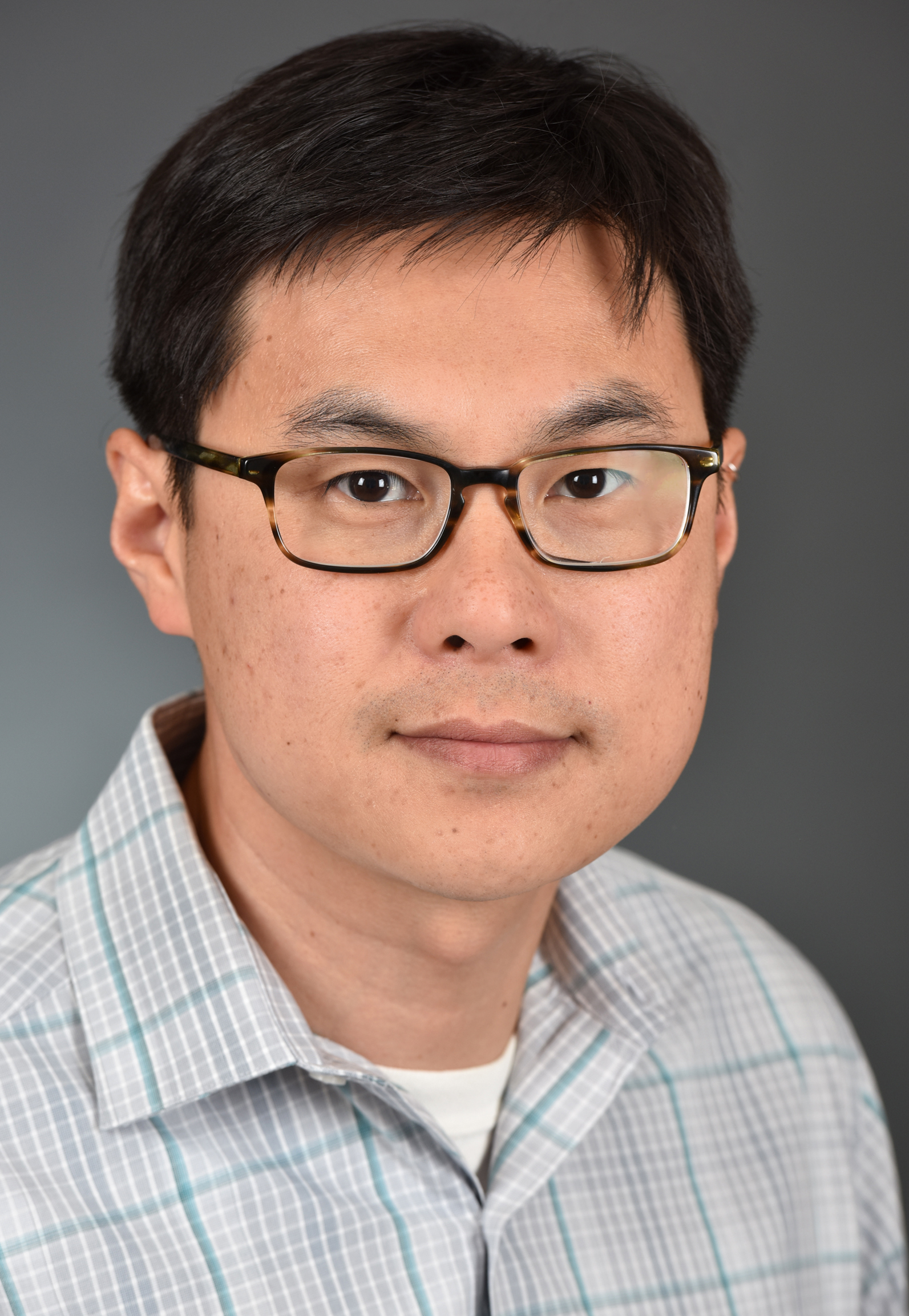
Philbert Tsai is an Associate Teaching Professor in the Department of Physics at the University of California, San Diego (UCSD). He has held roles as QBio Lab Coordinator/Project Scientist (2015–Present) and Associate Project Scientist (2011–2015), overseeing advanced laboratory setups and bio-imaging research projects. His work focuses on neurovascular systems, microscopy techniques, and cortical blood flow dynamics. Education: Ph.D., Physics, UC San Diego, 2004 Research Interests: Quantitative analysis of cortical microvascular networks Development of ultra-high-resolution imaging systems (e.g., STED, two-photon microscopy) Neurovascular coupling mechanisms and their impact on brain oxygen supply Biomedical engineering applications in neuroscience research Lab & Projects: QBio Lab: Advanced instrumentation including confocal microscopes, 3D printers, and wet-lab equipment Developed vectorized models of mouse brain vasculature and ultra-wide-field multiphoton imaging systems Grants & Awards: No specific awards listed in provided text Collaborations: Worked extensively with colleagues like Dr. David Kleinfeld and Dr. Berislav Zlokovic on neurovascular projects.
Paul Cisek is a Full Professor in the Department of Neuroscience at the Faculty of Medicine, University of Montreal. His research laboratory focuses on understanding how the brain controls behavior through the integration of decision-making and motor planning processes in the cerebral cortex. His work challenges traditional models that treat perception, decision-making, and action as separate serial processes. Dr. Cisek received his Baccalauréat in Computer Science from Rochester Institute of Technology (1991), followed by a Doctorat in Neurosciences and Physiologie from Boston University (1997). He completed postdoctoral training at both Université de Montréal and Queen's University (1996-2001). His research program centers on developing a theoretical framework describing how the brain interacts with the external world, with specific focus on how decision-making and motor planning processes are integrated in the primate cerebral cortex. Through his 'affordance competition hypothesis,' Cisek proposes that the brain operates through parallel processes where potential actions compete for selection rather than following a serial perception-decision-action model. His lab conducts behavioral, neurophysiological, and computational research, often using primate models to study neural mechanisms of real-time decision-making. The analysis of Dr. Cisek's recent publications reveals a strong focus on evolutionary perspectives in neuroscience, neural mechanisms of decision-making under time pressure, and the integration of biomechanical constraints in action selection. His work bridges cognitive neuroscience, motor control, and computational modeling to develop a more comprehensive understanding of how the brain selects and executes actions in dynamic environments. Dr. Cisek has been continuously funded by major Canadian research agencies including CIHR, NSERC, and FRQS since at least 2002 for his interdisciplinary studies of decision-making and motor planning. His current projects include 'Neural mechanisms of decision-making during natural interactive behavior' (2025-2031) and 'EthoLab: A platform for neurophysiological studies of natural behavior' (2025-2028). As an educator, Dr. Cisek has supervised numerous graduate students to completion of their degrees and currently teaches courses including NSC-3003 (Perception, action et neurocomputation), NSC-3084 (Neurosciences computationnelles), and NSC-6084 (Neurosciences computationnelles). His lab currently includes doctoral students, master's students, and postdoctoral fellows working on various aspects of decision neuroscience. Dr. Cisek is affiliated with several research groups including SNC (Groupe de recherche sur la signalisation neurale et la circuiterie), GRSV (Groupe de recherche en sciences de la vision), and CIRCA (Centre interdisciplinaire de recherche sur le cerveau et l'apprentissage). His laboratory develops sophisticated experimental platforms for studying neural mechanisms of decision-making, including virtual reality environments for neurophysiological studies of natural behavior.
Solomon L. Moshe is a Professor at the Albert Einstein College of Medicine and holds academic roles in the Saul R. Korey Department of Neurology, Department of Pediatrics, and Dominick P. Purpura Department of Neuroscience. He serves as the Charles Frost Chair in Neurosurgery and Neurology, Vice Chair of Neurology, and Director of Clinical Neurophysiology and Child Neurology divisions. His clinical focus is on epilepsy in children and adolescents. Education: MD from the University of Athens Medical School (1972), followed by post-doctoral training at the University of Maryland and UCLA. His research explores age/sex-related mechanisms of epilepsy using translational models, with emphasis on infantile spasms and post-traumatic epilepsy prevention. Research interests include subcortical circuits, antiepileptogenesis, and neurodevelopmental consequences of seizures. He leads interdisciplinary grants like the Center Without Walls and chairs international epilepsy societies. Awards: Jacob Javits Award (1995), Saul R. Korey Award (2012), Bernard Sachs Award (2017), ILAE Lifetime Achievement Award (2023). Grants: NIH-funded Center Without Walls, multicenter febrile seizures study. Labs/Teams: EpiBioS4Rx Group (traumatic brain injury studies), ILAE Task Force on Nosology. Publications span over 600 articles and 35 books, focusing on epilepsy mechanisms, classification, and treatment advancements.
Prof. Dr. Moritz Helias is a University Professor and leads the Theory of Multi-Scale Neuronal Networks group at the Institute for Advanced Simulation (IAS-6), Computational and Systems Neuroscience, Forschungszentrum Jülich. His research bridges biological and artificial neural networks, focusing on dynamics, information processing, and the physics of AI. The group is part of a larger interdisciplinary institute that integrates theory, simulation, and data analysis to understand the brain. Institution: Forschungszentrum Jülich School: Institute for Advanced Simulation Department: IAS-6, Computational and Systems Neuroscience Position: Professor and Group Leader Email: m.helias@fz-juelich.de His research interests lie at the intersection of statistical physics and neuroscience. He investigates how structure shapes dynamics in both biological and artificial networks, aiming to uncover general principles of information processing. Using methods from statistical physics, his work enables a unified framework for understanding collective phenomena, learning, and generalization. Key areas include spiking neural networks, renormalized field theory, and the theoretical foundations of AI. The recent publications reflect a strong trend toward multi-scale modeling of neural systems, integrating statistical physics with neuroscience. Topics include spiking network dynamics, mean-field theory, renormalization, and applications of machine learning in physics. The work spans biological realism and artificial intelligence, with implications for neuromorphic computing and brain-inspired AI architectures. While no scientific awards are listed in the provided texts, his group actively contributes to open science through tools like NEST and theoretical frameworks that influence both neuroscience and AI. Prof. Helias supervises a research group focused on theoretical and computational approaches, contributing to collaborative projects involving large-scale simulations and data analysis. His team works closely with experimentalists and theorists to validate models and advance understanding of brain function. The group is also involved in developing simulation technologies and theoretical tools that support reproducible neuroscience. The Theory of Multi-Scale Neuronal Networks group is embedded within a vibrant research environment at IAS-6, collaborating with teams in statistical neuroscience, computational neurophysics, and future simulation architectures. This fosters a loop between data, theory, and simulation, enabling cutting-edge research on brain function and artificial intelligence.
Michel J. Berg, M.D. is a Professor of Neurology (Part-Time) at the University of Rochester School of Medicine and Dentistry, where he has served since 1992. He is certified by the American Board of Psychiatry and Neurology with subspecialty boards in Clinical Neurophysiology and Epilepsy, and by the American Board of Internal Medicine. Dr. Berg served as Director and Chief of the University of Rochester Epilepsy Center from 2016 to 2023. He is a Fellow of both the American Academy of Neurology (FAAN) and the American Epilepsy Society (FAES). Dr. Berg's research interests span multiple areas within epilepsy and neurology, with particular focus on seizure prediction from EEG, medication adherence with smart medication dispensers, establishing equivalence of generic anti-epilepsy drugs, automating MRI analysis, and the genetics of cerebral cavernous malformations. His work combines clinical neurology with technological innovation to improve diagnosis and treatment of neurological conditions. His publications demonstrate significant contributions to understanding brain-responsive neurostimulation for focal epilepsy, bioequivalence of generic antiepileptic medications, and the genetic basis of cerebral cavernous malformations. Dr. Berg has been involved in numerous multicenter clinical trials and has contributed to advancing treatment protocols for medically intractable epilepsy. Scientific Awards and Recognition Epilepsy Pralid Frederick Wagner Lifetime Service Award (2020) Fellow of the American Academy of Neurology (2009) Multiple Neurology Faculty Teaching Awards (2009, 2000, 1994) Volunteer of the Year, Epilepsy Foundation of Rochester and Syracuse Regions (1999) Dr. Berg has demonstrated exceptional commitment to clinical education and patient care, particularly in the field of epilepsy. His work bridges clinical practice, research, and educational initiatives, contributing significantly to both local patient care and broader advancements in neurological science. He has been instrumental in developing protocols for epilepsy management and has contributed to numerous professional guidelines in the field.
Linda J. Richards serves as the Chair of the Department of Neuroscience and Edison Professor of Neuroscience at Washington University School of Medicine. Her career spans decades of groundbreaking research in brain development, particularly focusing on interhemispheric connections of the mammalian brain. She leads the Brain Development and Disorders Laboratory, which investigates both normal brain wiring and conditions where this wiring is altered. Professor Richards earned her Bachelor of Science (Honours) from The University of Melbourne in 1990, followed by her PhD from the same institution between 1991-1994. Her educational background laid the foundation for her pioneering work in developmental neurobiology. Her research interests center on the development, plasticity, and function of long-range connections in the cerebral cortex, with particular focus on the corpus callosum - the largest fiber tract connecting the brain's hemispheres. She investigates how cellular and molecular mechanisms regulate brain wiring during development and how these processes are altered in congenital corpus callosum dysgenesis (CCD), which occurs in approximately 1 in 4,000 people. Her work explores the underlying causes of CCD, the mechanisms of long-range axonal plasticity, and how structural changes in brain wiring impact cognition and behavior. Analysis of Professor Richards' recent publications reveals a consistent focus on corpus callosum development and disorders across multiple model systems. Her work spans from basic molecular mechanisms involving transcription factors like the Nuclear Factor I (NFI) family to human clinical studies of corpus callosum disorders. She employs diverse methodologies including genetic analysis, neuroimaging, behavioral assessments, and comparative studies across mammalian species. A notable trend is her increasing focus on translating basic science findings into understanding human conditions, particularly through genetic studies of CCD patients and their families. 2020: Cajal Club, Krieg Cortical Kudos Discoverer Award, Pinckney J Harman Memorial Lecture 2019: Appointed Officer (AO) of the Order of Australia for distinguished service to medical research and education in developmental neurobiology 2016: Elected Fellow of the Australian Academy of Health and Medical Sciences 2015: Elected Fellow of the Australian Academy of Science 2017-2018: President of the Australasian Neuroscience Society 2010: Nina Kondelos Prize from the Australasian Neuroscience Society 2004: Charles Judson Herrick Award from the American Association of Anatomists Professor Richards is deeply committed to neuroscience advocacy and mentorship. She has contributed significantly to establishing major international neuroscience initiatives including the International Brain Initiative, the Australian Brain Alliance, and the Australian Brain Bee Challenge. As a board member of the International Brain Bee and member of the Dana Alliance for Brain Initiatives, she actively promotes neuroscience education and public engagement. Her lab provides training opportunities for numerous graduate students, postdoctoral fellows, and research staff who contribute to her diverse research programs. Professor Richards leads the Brain Development and Disorders Laboratory, which focuses on three primary research areas: activity-dependent mechanisms of early brain wiring, cellular and molecular mechanisms of early brain wiring (particularly involving NFI transcription factors), and human corpus callosum disorders. Her lab employs innovative approaches including studies of the fat-tailed dunnart (a marsupial model with postnatal brain development), advanced imaging techniques, and partnerships with individuals who have corpus callosum disorders to understand how brain wiring impacts cognitive, social, and emotional function.
Emilia Favuzzi is an Assistant Professor in the Department of Neuroscience at Yale University, affiliated with the Wu Tsai Institute and multiple interdisciplinary programs. She holds appointments in Immunology and the Interdepartmental Neuroscience Program. Her research focuses on neuroimmune interactions, particularly how microglia and other glial cells influence brain wiring and function during development and in health/disease. Education: B.S. & M.S. in Biology/Neurobiology from Sapienza University of Rome; Ph.D. in Neuroscience from Miguel Hernández University (Spain). Postdoctoral training at Harvard Medical School and the Broad Institute. Research interests include microglial-synapse interactions, immune encoding in cortical circuits, and links between immune challenges and neuropsychiatric disorders (e.g., Long COVID). Techniques employed include spatial transcriptomics, in vivo imaging, chemogenetics, and viral tools. Awards include the Gruber Neuroscience Award (2023), BBRF Young Investigator Grant (2023), and multiple early career honors. Her lab investigates how immune signals are integrated into brain networks and their implications for neurodevelopmental and psychiatric conditions.
Solomon G. Diamond is an Associate Professor of Engineering at Dartmouth College's Thayer School of Engineering, serving as Co-Director of the Design Initiative at Dartmouth. He holds degrees from Dartmouth (AB 1997, BE 1998) and Harvard (SM 2001, PhD 2004). His research focuses on biomedical imaging, functional neuroimaging, and magnetic nanoparticle imaging, with emphasis on diagnostic technologies and medical device development. He has received awards including the 2023 Outstanding Service Award and the 2002 Derek Bok Teaching Award. Research projects include neurovascular coupling studies, clinical optical-electric probes, and magnetic nanoparticle imaging. He co-founded Lodestone Biomedical, a medtech company advancing nanoparticle-based biosensors. His work bridges engineering and medicine, with notable contributions to magnetic nanoparticle characterization and imaging array systems. He teaches courses like ENGS 90 (Engineering Design Methodology) and ENGS 29 (Computer-Aided Design & Kinematics). Recent work includes a 2024 study on salt concentration effects in magnetic nanoparticle biosensors with PhD candidate Gabby Moss. He holds patents for technologies like magnetic susceptibility tomography and in-bed exercise machines. His interdisciplinary collaborations span biomedical engineering, materials science, and clinical diagnostics.
Wei-Chung Allen Lee, PhD, is an Associate Professor of Neurology and Neurobiology at Harvard Medical School. His research focuses on understanding how neural circuits enable behavior through functional connectomics, combining advanced imaging, machine learning, and computational modeling. The Lee Lab develops tools like X-ray holographic nanotomography and GridTape for high-resolution neural structure analysis. Key interests include circuit principles in Drosophila, cerebellar interneurons, and synaptic wiring in decision-making regions. His work explores structural-functional relationships in networks, conservation across species, and developmental constraints on neural architecture. Recent studies highlight connectomic reconstructions in Drosophila, cerebellar disinhibition mechanisms, and blood-brain barrier heterogeneity. Methodological innovations in microscopy and image restoration underscore his lab’s interdisciplinary approach. The Lee Lab is located at 220 Longwood Avenue, Boston, MA, and collaborates on large-scale neuroimaging pipelines like the Open Connectome Project.
Dr. Xi Chen is an Assistant Professor in the Department of Integrative Neuroscience at Stony Brook University. He holds a Ph.D. from the University of Texas at Dallas (2019). His research focuses on cognitive aging, Alzheimer’s disease (AD) biomarkers, and the interplay between brain structure/function and cognitive decline. Dr. Chen employs multi-modal neuroimaging techniques (e.g., MRI, PET) to investigate neural mechanisms underlying age-related cognitive changes and AD progression. His work emphasizes early detection of AD pathology and resilience factors in aging populations. Education: Ph.D., University of Texas at Dallas, 2019 Research Interests: Dr. Chen explores individual differences in cognitive aging, AD biomarkers, and successful aging through multi-modal approaches. Key topics include amyloid and tau pathology’s impact on memory and brain function, socioeconomic disparities in cognitive health, and the role of prior knowledge in memory retention. His lab uses advanced imaging techniques to identify early biomarkers for interventions targeting neurodegenerative diseases. Publications Trends: Recent studies highlight the lab’s focus on tau pathology’s role in cognitive decline, functional MRI correlates of memory in aging populations, and the predictive value of biomarkers like plasma p-tau217 for AD progression. These works underscore the lab’s commitment to bridging basic neuroscience and clinical applications for early AD detection. Lab & Collaborations: Dr. Chen leads the Cognitive Health and Neurodegeneration Lab, which integrates quantitative modeling, neuroimaging, and clinical data to advance understanding of aging and AD. Collaborative efforts include studies on metacognition, cortical thickness, and tauopathy’s effects on cognition.
Prof. Dr. Andreas Stadlbauer is a medical physicist affiliated with the Clinical Institute for Diagnostic and Interventional Radiology at St. Pölten University Hospital and the Department of Neurosurgery at Friedrich-Alexander University Erlangen-Nuremberg. He holds an adjunct professorship at the University of Erlangen-Nuremberg and contributes to both clinical and academic research in biomedical imaging and AI applications in oncology. University: Friedrich-Alexander University Erlangen-Nuremberg Hospital Affiliation: St. Pölten University Hospital Department: Department of Neurosurgery Academic Rank: Adjunct Professor His research focuses on advanced MRI techniques, particularly physio-metabolic imaging of brain tumors, oxygen metabolism, and the integration of artificial intelligence in clinical diagnostics. He has led research on glioma classification, tumor microenvironment characterization, and deep learning models for radiomic analysis. The recent publications highlight a strong trend toward AI-driven diagnostic tools in neuro-oncology, particularly in differentiating glioblastomas from metastases and predicting genetic mutations using machine learning. His work emphasizes the clinical translation of complex imaging data into actionable insights. Artificial Intelligence in Oncology Medical Imaging and Radiomics Brain Tumor Metabolism Deep Learning for MRI Analysis Oxygen Metabolism Imaging Clinical Decision Support Systems Prof. Stadlbauer has been involved in seed-funded research projects developing deep learning algorithms for clinical integration. He collaborates extensively with neurosurgeons, radiologists, and oncologists across institutions, contributing to multidisciplinary tumor boards and translational research initiatives. He completed his doctorate in medical physics in 2004, habilitation in 2008, and an MBA in Health Management in 2010. His academic journey reflects a blend of technical expertise and leadership in healthcare innovation.
Dr. Brian Schmit is a Professor and Hammes Family Chair in the Joint Department of Biomedical Engineering at Marquette University and Medical College of Wisconsin (MCW). He serves as Associate Dean of Research for the department, Professor in the MCW Department of Physical Medicine & Rehabilitation, and Professor and Director of the MCW Clinical & Translational Science Institute. His work integrates engineering principles with clinical applications to advance neurorehabilitation. Dr. Schmit received his educational training at prestigious institutions: Ph.D. in Biomedical Engineering from Case Western Reserve University (1995) M.S. in Biomedical Engineering from Case Western Reserve University (1992) B.S. in Biomedical Engineering from Marquette University (1988) Dr. Schmit's research focuses on Spinal Cord Injury, Neurorehabilitation, Human Neurophysiology, and Biomechanics . His work explores neural control of movement, develops rehabilitation technologies, and examines biomechanical aspects of gait and balance in patients with spinal cord injury, stroke, and multiple sclerosis. He integrates advanced technologies such as virtual reality, neuroimaging, and electrophysiological techniques to develop innovative rehabilitation approaches. His laboratory environment fosters collaboration between engineers, clinicians, and scientists to translate research findings into clinical practice. Analysis of Dr. Schmit's recent publications reveals a strong emphasis on neurorehabilitation technologies , particularly virtual reality applications for hand dexterity recovery after cervical myelopathy surgery. His work prominently features balance and gait analysis in multiple sclerosis and spinal cord injury populations, with studies examining whole body angular momentum and reactive balance adaptations. Significant research efforts focus on stroke rehabilitation , investigating cortical activity during finger movements and muscle oxygenation in chronic stroke survivors. His scholarly output demonstrates a consistent trajectory toward developing evidence-based, technology-enhanced rehabilitation protocols with strong clinical translation potential. Dr. Schmit has secured substantial research funding: National Institutes of Health grant as Principal Investigator for "High-Intensity, dynamic-stability gait training in people with multiple sclerosis" (September 2022–June 2027) Advancing a Healthier Wisconsin Endowment grant as Principal Investigator for "Virtual reality training paradigm to rehabilitate hand dexterity in degenerative cervical myelopathy" (July 1, 2022–June 30, 2024) National Institutes of Health grant as Co-PI for "High-density surface EMG based CMAP scan for motor unit number estimation" (July 1, 2021—September 30, 2022) National Institutes of Health grant as Co-Investigator for "Locomotion Recovery and Compensation Post-Stroke" (June 2021–May 2026) Dr. Schmit directs the Integrative Neural Engineering & Rehabilitation Laboratory (INERL) , which focuses on understanding neural control of movement and developing engineering solutions for neurorehabilitation. He also serves as Co-Director of the Falk Center for Neurorehabilitation Engineering Research , where interdisciplinary teams work to advance rehabilitation technologies and protocols. His leadership extends to teaching courses such as BIEN 3300 Signals & Systems for Biomedical Engineering, BIEN 6610 Rehabilitative Biosystems, and BIEN 6931 Topics in Biomedical Engineering.
Najat Aourz is an unpaid guest professor in the Department of Pharmaceutical and Pharmacological Sciences , focusing on neuropharmacological research. Her work intersects epilepsy, Alzheimer's disease, and neurodegenerative mechanisms, often utilizing mouse models. Research interests include: Neuropharmacology of anticonvulsants Alzheimer's disease pathogenesis Neuronal excitation and DNA damage Neuropeptide interactions (e.g., cortistatin, ghrelin) Recent outputs highlight her work on: Alzheimer's disease models showing increased seizure vulnerability Role of amyloid-beta and tau in epileptogenesis DNA damage responses during early neurogenesis following irradiation
Prof. Dr. Wolfgang Taube is a leading academic at the University of Fribourg , affiliated with the Faculty of Science and Medicine and specializing in Motor Control and Neuroplasticity within the Movement and Sport Sciences department. His work bridges Neuroscience , Physiology , and Rehabilitation through rigorous experimental designs. Role: Professor Location: PER 21 bu. F429, Bd de Pérolles 90, 1700 Fribourg, Switzerland Contact: wolfgang.taube@unifr.ch ORCID: 0000-0002-8802-2065 His research explores neural mechanisms of motor learning , age-related adaptations , and interventions to enhance balance and sensorimotor function . Key areas include: Modulation of GABAergic inhibition through training fNIRS/fMRI studies on cortical activation patterns Biomechanical analysis in sports performance Neurorehabilitation strategies for chronic pain Recent publications demonstrate a focus on age-related neuroplasticity , external focus of attention , and technology-driven training interventions across sports like football and swimming. Methodologically, he integrates randomized trials , meta-analyses , and machine learning applications in motor control studies.
Dr. Brett M. Frye is an Assistant Professor of Biology at Emory & Henry College, specializing in aging biology and environmental influences on health. His research focuses on nonhuman primate models to study Alzheimer's-related neuropathology, diet effects on physiology, and social behavior impacts on aging. He holds a PhD from Clemson University and completed a postdoctoral fellowship at Wake Forest School of Medicine. Education: BS in Biology & Chemistry from Emory & Henry College MS in Biology from Winthrop University PhD in Biological Sciences from Clemson University Postdoctoral Research Fellowship at Wake Forest School of Medicine His research explores three core areas: 1) Environmental factors promoting Alzheimer's-like neuropathology, 2) Links between aging declines and Alzheimer's pathology in vervets, and 3) Sibling interactions' effects on primate health. He also studies canine aging mechanisms. His work integrates neuroimaging (PET), cognitive testing, and physiological measurements to uncover aging mechanisms. Recent studies emphasize Mediterranean/Western diet comparisons in primates, showing diet's impact on brain structure, inflammation, and social behavior. Professional activities include leadership roles in the American Society of Primatologists and Alzheimer's Association ISTAART. His research has advanced understanding of diet-stress interactions, ovarian function in midlife, and white matter pathology in primate models. Current efforts focus on translating nonhuman primate findings to human aging interventions.