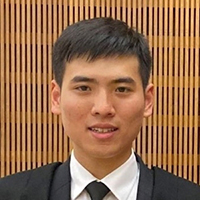
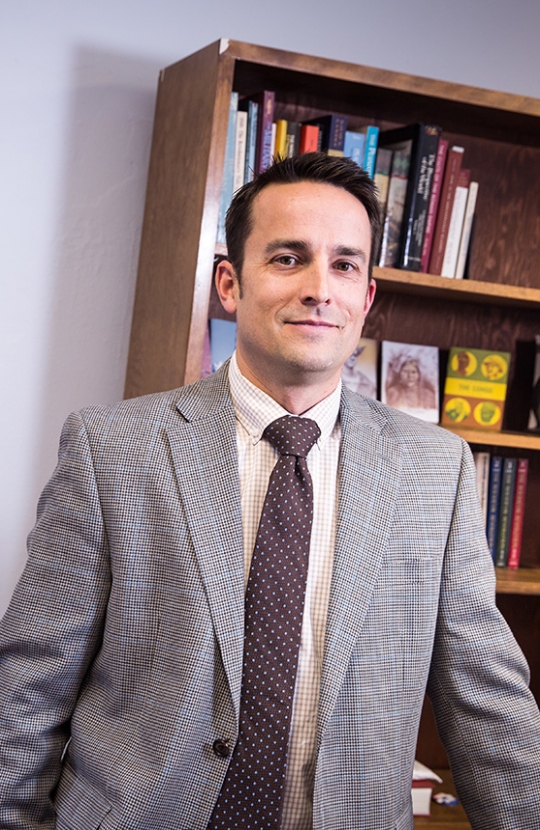
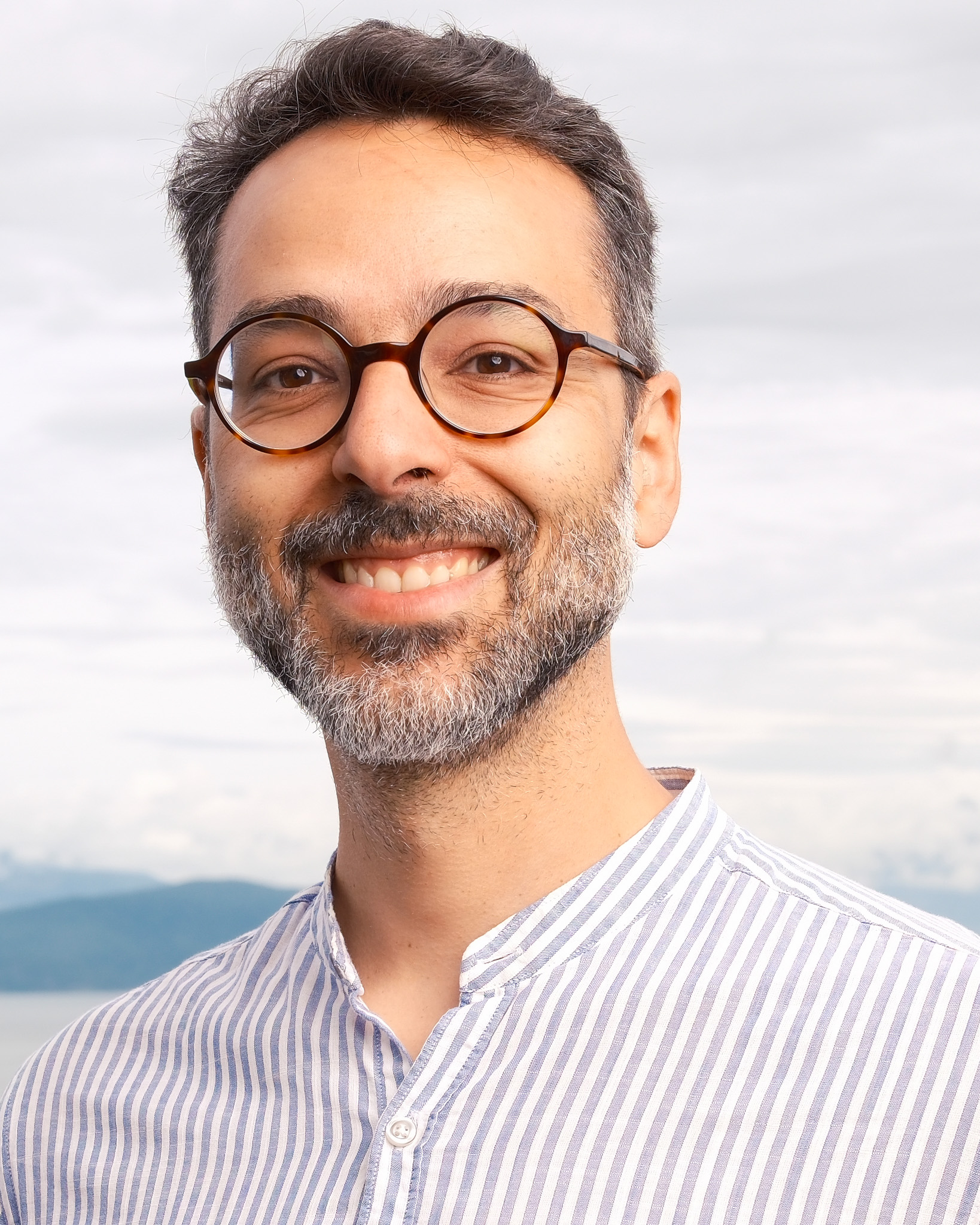
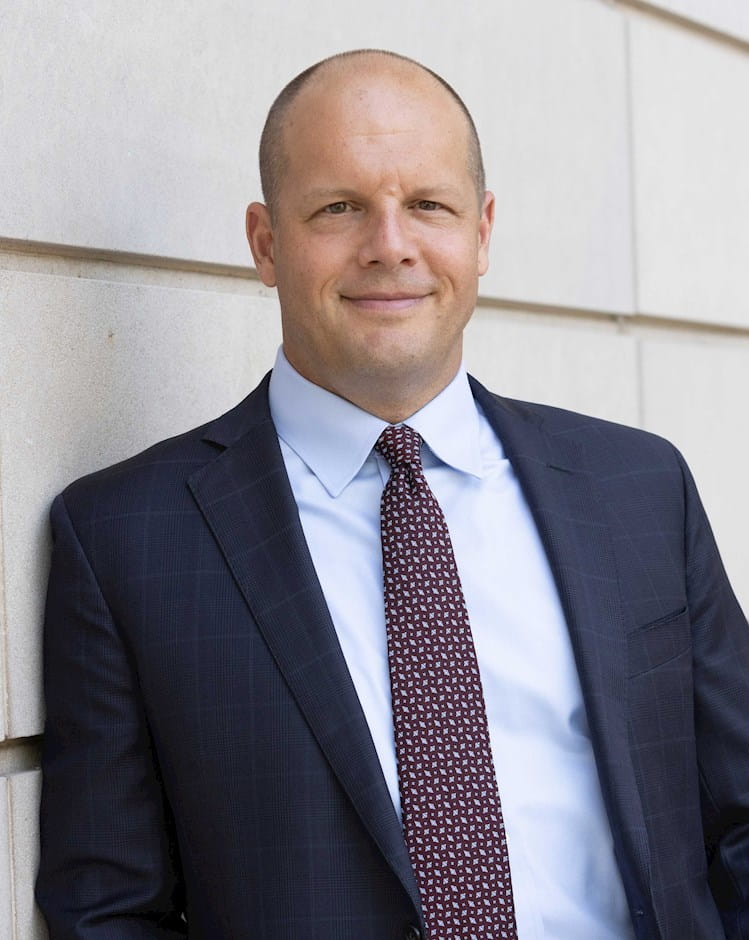
Ziming Zhu is an LSE Fellow in the Department of Economic History at the London School of Economics and Political Science. His research focuses on occupational mobility in Victorian and Edwardian England, utilizing linked census data to analyze intragenerational and intergenerational mobility patterns between 1851 and 1911. Education: BSc in Economic History, London School of Economics (2016–2019) MPhil in Economic and Social History, University of Cambridge (2019–2020) His research interests center on how occupational mobility unfolded across lifetimes (intragenerational) and between generations (intergenerational), with a focus on methodology to address measurement errors in mobility estimates. Key topics include regional differences in social mobility and the reliability of historical data. Research Contributions: Explored life-course mobility dynamics among Victorian men Challenged conventional mobility estimates by revealing biases in father-son socioeconomic status correlations Investigated regional variations in intergenerational mobility Affiliations & Projects: Research Assistant for the Families of England project Utilizes Integrated Census Microdata (I-CeM) for large-scale analyses
Isabella Di Lenardo is a Lecturer and Scientist at the Digital Humanities Institute (DHI) at École Polytechnique Fédérale de Lausanne (EPFL), where she also serves as the coordinator of the EPFL Time Machine Unit and the European Local Time Machines. She holds affiliations across multiple departments, including DHI-GE, SAR-ENS, SHS-ENS, and EDDH-ENS, reflecting her interdisciplinary role in teaching and research. Her educational background includes a PhD in Theories and Art History, with postdoctoral and faculty experience at institutions such as INHA (Paris), EPFL, and IUAV (Venice). Her research spans Digital Humanities, Art History, Urban History, and GIS , with a focus on digital urban reconstruction, historical cadastres, and AI applications in cultural heritage. She employs advanced computational methods including machine learning, 4D modeling, and semantic segmentation to analyze historical maps, cadastral records, and art archives. Her work bridges humanities scholarship with computer science, particularly in reconstructing urban evolution and analyzing visual patterns. The recent publications reveal a consistent trend in AI-powered historical data analysis , especially in processing non-standardized historical documents, reconstructing urban spaces, and developing open-source tools for digital heritage. Her work frequently involves large-scale datasets from Venice, Lausanne, Paris, and Jerusalem, demonstrating a transnational and interdisciplinary approach. She has contributed to significant collaborative projects such as the Venice Time Machine , Parcels of Venice , and Time Machine Organization , often acting as a principal investigator or project leader. Her role involves coordinating diverse teams of researchers, engineers, and cultural institutions. Scientific contributions include: Development of the Morphograph tool for visual pattern recognition in art archives Automatic vectorization and analysis of Napoleonic cadastres Creation of 4D models for historical cities AI-driven text and pattern extraction from historical maps Building discovery engines for digital art history She actively teaches ex cathedra courses in Digital Urban History and Art History at EPFL and internationally. Her work in grants and projects emphasizes open data, reproducibility, and interdisciplinary collaboration. She has led research funded by organizations supporting digital heritage innovation. She is a key member of the Digital Humanities Laboratory at EPFL and the Time Machine Organization , where she fosters collaboration between computer scientists, historians, and cultural institutions. Her work in the Replica Project and ARCHiVe center highlights her leadership in digitizing and making accessible large art historical archives.
Andreas Mastrosavvas is a Senior Research Fellow in Census Innovation at the Research Department of Epidemiology and Public Health at University College London (UCL). He works with the Centre for Longitudinal Study Information and User Support (CeLSIUS) to advance the use of UK Census data for public good research. PhD in Social Sciences, Cardiff University MSc in Data Science and Analytics, Cardiff University His research focuses on: Administrative data integration Spatial analysis methodologies Quasi-experimental designs for social research Neighbourhood effects and social networks Public policy evaluation Election dynamics Key projects include: Harmonisation of UK Census commuting data (1991-2011) Creation of Tolbert-Sizer commuting zones for England & Wales Development of stable local authority district classifications Methodological expertise spans: Directed and gross commuting flow analysis Resident workforce estimation Geospatial clustering techniques Boundary harmonisation across census years
Carolyn Liebler is a Professor in the Department of Sociology at the University of Minnesota (Twin Cities campus). Her research focuses on race and ethnicity, mixed-heritage populations, and demographic data analysis, particularly emphasizing racial identity formation, census methodology, and the social implications of data collection practices in the USA. Key projects include Racial Identities and Life Choices among Mixed-Heritage People in the USA (Russell Sage Foundation, 2018-2021) Expanding and Updating Race-bridging Methods Using Alternative Data Sources (NIH National Cancer Institute, 2022-2024) Her recent publications span topics from U.S. census racial categories to mixed-heritage identity assertion. She has received multiple awards including the Arthur "Red" Motley Exemplary Teaching Award (2016) and the Career Readiness Teaching Award (2019). 2025: Data impacts of changes in U.S. Census Bureau procedures for race and ethnicity data 2024: Review of "We Are Meant to Rise" (University of Minnesota Press) 2022: What Motivates Mixed Heritage People to Assert Their Ancestries?
Xuesheng You is a Lecturer at Cardiff Business School, Cardiff University, specializing in economic history of eighteenth- and nineteenth-century Britain. He joined Cardiff in July 2022 after serving as a lecturer in economics at Swansea University for two years and remains an affiliated researcher at the Cambridge Group for the History of Population and Social Structure. His educational background includes a Bachelor's degree from the University of Manchester, an MPhil from the University of Cambridge, and a PhD in Economic History from Cambridge as a Gates Scholar. Dr. You's research focuses on two interconnected domains: gendered labor markets and household economy during the British Industrial Revolution , examining women's employment patterns and familial labor organization; and transport infrastructure's role in industrialization , analyzing railways' impact on labor migration, resource allocation, and urban development. His recent work extends to transport and economic development in late imperial China. His 2019-2025 publications demonstrate consistent methodological rigor using census data and historical records, revealing how industrialization reshaped gender roles in domestic service and factory labor while highlighting transport networks as catalysts for regional economic divergence. Scientific recognition includes: Economic History Society Carnevali Research Grant (2024) Textile History Society Pasold Research Grant (2024) Gates Scholarship As principal investigator for a Victorian child labor project funded by the Textile History Society and Economic History Society, he actively supervises research students in economic history. He serves as PhD examiner for the London School of Economics and reviews for top journals including Nature: Communications and Economic History Review . He contributes to academic governance as a member of Cardiff University Senate (2024-present) and maintains collaborative ties with Cambridge's population history group.
Anders Albrechtslund is a Professor of Information Studies and Director of the Center for Surveillance Studies (CENSUS) at Aarhus University. He specializes in exploring the societal impact of surveillance technologies, particularly in healthcare contexts like dementia care. His research focuses on balancing safety, dignity, and privacy through ethical technology use. He leads major projects such as the Carlsberg Semper Ardens-funded 'Human Agency and Data-Intensive Surveillance' (2024–2029) and the Velux Foundation-supported 'LIVSTEGN' initiative (2019–2025). Albrechtslund teaches in Aarhus University’s Information Studies and Digital Design programs, supervising topics related to surveillance, data ethics, and digital media. He collaborates internationally with public and private sector partners on surveillance technology applications. His work emphasizes empirical ethics and participatory design, addressing dilemmas arising from emerging technologies in caregiving and family contexts. Grants & Projects Carlsberg Semper Ardens Grant: Human Agency in Data-Intensive Surveillance (2024–2029) Velux Foundation Grant: LIVSTEGN (2019–2025) Labs/Teams Directs the Center for Surveillance Studies (CENSUS), a hub for interdisciplinary research on surveillance technologies and societal implications.
Gerome Miklau is a Professor of Computer Science at the University of Massachusetts Amherst, affiliated with the Manning College of Information and Computer Sciences (CICS). He leads the DREAM Lab and focuses on privacy, security, and equitable data management, particularly in differential privacy and fair data analysis. His work includes designing algorithms for private data synthesis, privacy-preserving SQL engines, and auditing systems like AuditGuard. He co-founded Tumult Labs to commercialize privacy technology and advised the U.S. Census Bureau on privacy for the 2020 decennial census. Education: Ph.D. in Computer Science from the University of Washington (2005), B.S. in Mathematics and Rhetoric from UC Berkeley (1995). Research Interests: Differential privacy, secure data management, fairness in algorithms, privacy-preserving data synthesis, and forensic database analysis. His lab develops tools like Ektelo and PrivateSQL, addressing challenges in privacy-accurate tradeoffs and scalable private data processing. Awards: 2006 ACM SIGMOD Dissertation Award, 2007 NSF CAREER Award, 2013 ICDT Best Paper Award, and two ACM PODS Test-of-Time Awards (2020 and 2012). Grants & Service: Co-chair of OpenDP Advisory Board, steering committee member for TPDP workshops, and organizer of the 'Data, Responsibly' Dagstuhl workshop. His service includes program committees for SIGMOD, ICML, and FAT*. He teaches courses on databases, privacy, and programming. Labs/Teams: DREAM Lab (Data systems Research for Exploration, Analytics, and Modeling) and collaborations with the Center for Data Science and Cybersecurity Institute at UMass Amherst.
Gary Grewal is an Associate Professor at the School of Computer Science , University of Guelph. His research focuses on developing intelligent Computer-Aided Design (CAD) tools for Field Programmable Gate Arrays (FPGAs) , integrating classical optimization techniques with machine learning and deep learning to address challenges in placement and routing for heterogeneous devices. He has received the Michal Servit Award (2017, 2018) for outstanding FPGA research and the University of Guelph Faculty Association Distinguished Professor Award for Excellence in Teaching (2017) . Grewal has held NSERC Discovery Grants annually from 1999 to 2023. Co-founder of the Guelph FPGA CAD Group Key collaborator with institutions like Ryerson University , University of Toronto , and University of British Columbia His work extends to health technology through the IronTracker mobile app , developed with Andrew Hamilton-Wright and students (A. D'Angelo, J. Carter, F. Liu, R. Pattison) to manage Hereditary Hemochromatosis (HHC) . The app, available in four languages and adopted in 100+ countries, was recognized at Parliament Hill and the Ontario Legislature. Scientific Awards : Michal Servit Award (2018) Michal Servit Award (2017) Distinguished Professor Award for Teaching (2017) NSERC Discovery Grants (1999-2023) His recent publications highlight trends in machine learning for FPGA CAD , including reinforcement learning for partitioning, deep learning for congestion estimation, and adaptive algorithms for placement. Grewal remains active in teaching courses like Discrete Optimization (CIS*6070) and Digital Systems I (CIS*3120).
Einar Lie is a Professor of Economic History at the Department of Archaeology, Conservation and History, University of Oslo. He holds a cand.polit. in Economics (1991) and a dr.philos. in History (1996) from the University of Oslo. Lie has undertaken research stays at INSEE (Paris), Lancaster University, University of Oxford, and UC Berkeley. He served as Vice Dean for Research at the Faculty of Humanities, University of Oslo (2010-2014), and as Board Chairman of the Norwegian University Center in St. Petersburg (2011-2014) and Kultrans. Lie is a member of the Norwegian Academy of Science and Letters and has contributed to boards of institutions like the Nansen Fund and Rosendal Barony. Education: cand.polit. (Economics), University of Oslo (1991) dr.philos. (History), University of Oslo (1996) Einar Lie's research focuses on Norwegian economic and political history, particularly state-business relations in banking, manufacturing, and the oil sector. His work explores themes like economic policy, central banking, state ownership, and statistical methodologies. Lie's publications include analyses of Norway's postwar economic strategies, the origins of the Norwegian Oil Fund, and the interplay between technocrats and policymakers in historical contexts. His work often bridges economic theory and historical practice, emphasizing institutional and methodological developments. Lie's scholarly contributions span economic policy debates, banking crises (e.g., 1987-1992), and state interventions in industry. His recent articles address historical lessons for contemporary fiscal and energy policies, with a focus on Norway's unique economic model. Lie's interdisciplinary approach incorporates economic theory, statistical science, and political economy. Scientific Awards: Member of the Norwegian Academy of Science and Letters As a regular op-ed columnist for Aftenposten , Lie engages public discourse on topics like climate policy, economic inequality, and historical parallels in modern governance. He contributes to research groups on contemporary history and climate-environment-energy studies (KLIMER) at the University of Oslo.
Dr. Paul Brindley is a Senior Lecturer at the School of Architecture and Landscape , University of Sheffield, specializing in geospatial analysis of human-landscape interactions. His work combines GIS, statistics, and digital data to address urban greenspace equity, rural-urban classification, and health-environment linkages. Senior Lecturer in GIS and Spatial Analysis Key researcher in the NERC-funded Improving Wellbeing through Urban Nature (IWUN) project Co-author of official Rural-Urban Classification for England and Wales Research focuses on: Urban Greenspace Accessibility using GPS and social media data Health Inequality Mapping through epidemiological GIS studies Vague Geographic Objects modeling of subjective spatial boundaries Computational Neighborhood Mapping via web data mining Project leadership includes: 2016-2019: IWUN Work Package 1 (Sheffield health-green space analysis) 2013-2014: Rural-Urban Classification updates for 2011 Census 2015: Real-Time Bus Data Mapping system development Teaching modules: LSC119: The Changing Landscape LSC336: Landscape Planning Toolkits LSC5020: Rural Landscape Planning GIS Workshops Professional contributions: Co-developer of Crime Map Analyst toolkit for non-GIS experts Joint Director of Learning and Teaching Links Member of Creative Spatial Practices initiative
David Gerlach serves as Associate Professor and Chair of the History Department at Saint Peter's University, concurrently directing the Center for Holocaust and Genocide Studies. His scholarship centers on post-World War II transformations in Central and Eastern Europe, particularly examining economic dimensions of ethnic cleansing and forced migration. Dr. Gerlach earned his Ph.D. and M.A. in History from the University of Pittsburgh and his B.A. in History from Boston College. His research interrogates how property relations, memory politics, and identity formation intersected during population transfers in German-Czech borderlands after 1945. He analyzes economic motives behind Sudeten German expulsions and explores material culture of Jewish loss in post-Holocaust Central Europe, emphasizing how displacement reshaped regional societies through environmental, demographic, and social lenses. Gerlach's publications (2007-2019) reveal consistent focus on borderland transformations, with increasing attention to memory studies and material culture. His work bridges economic history with cultural analysis, examining how forced migration created enduring legacies in property rights, minority relations, and national narratives across Czechoslovakia and neighboring regions. His scholarly contributions have received significant recognition: Richard M. Hunt Fellowship for German Politics/Society/Culture (American Council on Germany, 2016-2017) Research Grant from Conference Group for Central European History (2010-2011) R. John Rath Prize for Best Article (Austrian History Yearbook, 2007) Best Dissertation in Austrian Studies (Austrian Cultural Forum, 2006-2007) As an educator, Gerlach teaches specialized courses including History of Russia (1613-1917), The Soviet Empire, History of Germany (1815-1945), and Bearing Witness to War and Genocide. His Richard M. Hunt Fellowship supported research on property-memory intersections in post-WWII Central Europe, reflecting his commitment to securing external funding for innovative historical inquiry. Through leadership of the Center for Holocaust and Genocide Studies, Gerlach fosters interdisciplinary research on genocide prevention, remembrance practices, and educational outreach programs addressing historical trauma and reconciliation processes.
Monika Kuffer is a Full Professor at the University of Twente's Faculty of Geo-Information Science and Earth Observation (ITC), holding additional roles as Associate Professor in the Department of Urban and Regional Planning and Geo-Information Management. She leads research in urban remote sensing, deprived area monitoring, and sustainable urban development. Her work integrates spatial statistics, machine learning, and citizen science to inform inclusive city planning. Education: PhD in Human Geography & GIS from the University of Twente MSc in Human Geography (TU Munich) MSc in Geographic Information Science (University of London) Research Interests: Urban Remote Sensing Slum and Deprivation Mapping Climate Adaptation Strategies Citizen Science for Urban Inequalities Earth Observation Policy Support Articles Trends: Recent work emphasizes multi-city climate adaptation analyses, thermal inequality assessments in African slums, and scalable deprivation modelling frameworks like IDEAMAPS. Projects like ONEKANA and NightWatch highlight fusion of EO data with community-driven methods. Awards: 2022 EO4all Prize for innovative Earth Observation applications Advising & Grants: Supervised 3 PhD/MSc projects. Active in global initiatives like the EU's Knowledge Centre on EO and the UN's SDG frameworks. Leads datasets on deprivation (e.g., IDeAMapSudan). Labs/Teams: Core member of ITC's Urban Remote Sensing and GeoAI teams. Collaborates with the Digital Society Institute for interdisciplinary urban research.
Munir Squires is an Assistant Professor at the Vancouver School of Economics , University of British Columbia. His research focuses on development economics and economic history , particularly kinship systems, cultural norms, and the socioeconomic effects of cousin marriage. Education: PhD from the London School of Economics Contact: Email: Munir.Squires@ubc.ca , Office: Iona Building 257 Research Interests: Dr. Squires examines how kinship structures influence economic outcomes, including taxation, growth, and cooperative behaviors. His work spans historical data analysis, cultural economics, and experimental studies in developing economies. Recent Publications: His research trends include analyzing kinship taxation in Kenyan microenterprises, health impacts of cousin marriage, and historical census data methodologies. He also explores the intersection of mobile money networks and traditional financial systems in Africa. Teaching: He instructs ECON 442 (Issues in Economic Development) , covering topics like global economic divergence, poverty, institutional impacts, and labor/credit market dynamics.
Brittany M. Bond is an Assistant Professor of Organizational Behavior at Cornell University's ILR School. Her research focuses on status recognition's role in labor markets, personnel management systems, and organizational performance. She holds a PhD from MIT Sloan's Economic Sociology Program (2020) and previously worked at the U.S. Commerce Department and Census Bureau. Her work has been published in Management Science , Organization Science , and Sociological Science , and recognized with top awards like the Academy of Management's William H. Newman Award. Education: PhD, Management, MIT Sloan School of Management (2020) MS, Public Policy & Management, Carnegie Mellon University (2010) BA, International Economic Relations, American University (2007) Research Interests: Bond investigates how performance evaluations, talent recruitment, and status recognition shape careers and organizational productivity. Her recent work highlights unintended consequences of forced ranking systems and the motivational effects of task inferiority for specialists. Awards & Honors: 2020 Academy of Management William H. Newman Award 2020 OMT Division Pondy Best Dissertation Paper 2019 INFORMS/Organization Science Dissertation Proposal Finalist Teaching & Service: Teaches courses on power dynamics, organizational behavior, and PhD research methods. Serves as a Faculty Fellow at Cornell's Center for Applied Research on Work and Workplace Inclusion & Diversity Education (WIDE).
Chad Syverson is the George C. Tiao Distinguished Service Professor of Economics at the University of Chicago Booth School of Business. His research focuses on the interactions between firm structure, market structure, and productivity, with publications appearing in top economics journals. He serves as a research associate at the National Bureau of Economic Research and has contributed to National Academies committees. Dr. Syverson earned bachelor's degrees in economics and mechanical engineering from the University of North Dakota in 1996, followed by a PhD in economics from the University of Maryland in 2001. Prior to joining Chicago Booth in 2008, he worked as a mechanical engineer for Loral Defense Systems and Unisys Corporation, an experience that informed his research interest in productivity measurement and analysis. His research spans industrial organization, productivity analysis, and microeconomics, with particular attention to how firms organize production, how market structure affects productivity, and measurement issues in economic analysis. His work often combines theoretical frameworks with detailed empirical analysis of firm-level data. He has co-authored the widely used intermediate microeconomics textbook with Austan Goolsbee and Steve Levitt. Analysis of his recent publications reveals a strong focus on productivity measurement across sectors including healthcare, construction, and retail. His work increasingly examines the relationship between market power and productivity, with several papers analyzing markups, monopsony power, and competitive dynamics. He frequently employs detailed microdata to investigate how firms respond to market conditions and regulatory changes. National Science Foundation Awards Syverson serves as chair of the Chicago Census Research Data Center Board and has contributed to policy discussions through National Academies committees. His research has been funded by multiple National Science Foundation awards, reflecting the significance of his contributions to understanding productivity dynamics and market structure. He has also collaborated extensively with leading economists including Austan Goolsbee, Steve Levitt, and Martin Gaynor.