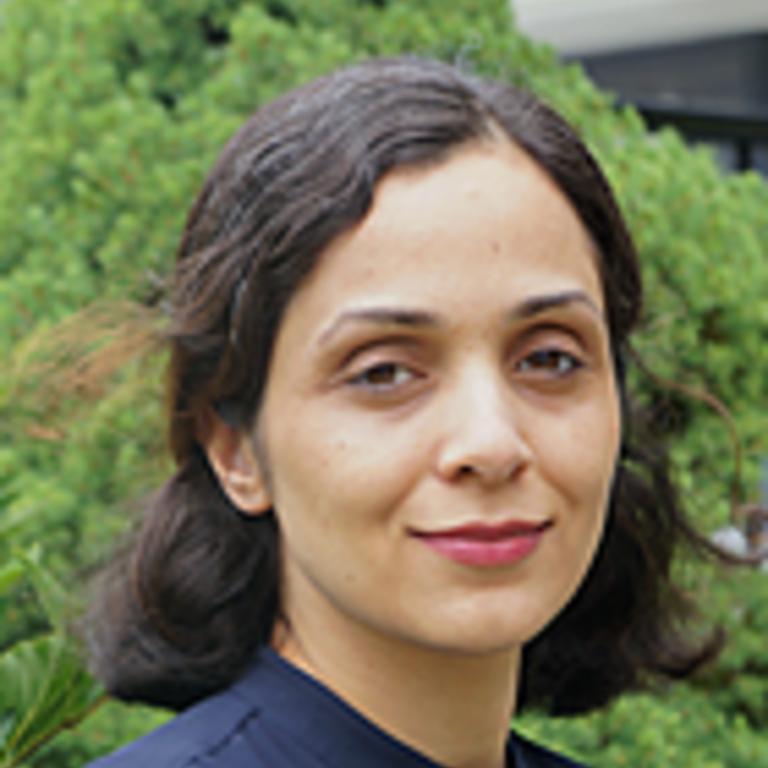
Zahra Aminzare is an Associate Professor of Mathematics at the University of Iowa. She is affiliated with the Department of Mathematics within the College of Liberal Arts and Sciences. Her research focuses on Mathematical Biology and Dynamical Systems, with emphasis on modeling biological systems such as cellular homeostasis, insect locomotion, and neural oscillators. She holds a PhD from Rutgers University. Her work explores topics including synchronization in nonlinear networks, stochastic processes in biological systems, and the application of contraction theory to stability analysis. Notable contributions include studies on ion transport dynamics, bacterial chemotaxis, and phase reduction in noisy oscillators. Her research bridges mathematical methodologies with biological phenomena, addressing questions related to system robustness and emergent behaviors. Aminzare’s publications span across journals and conferences, with recent work addressing rhythmicity in insect locomotion, spike-generation mechanisms in multi-timescale systems, and stochastic synchronization in networked systems. She maintains an active research lab focused on interdisciplinary applications of dynamical systems theory.
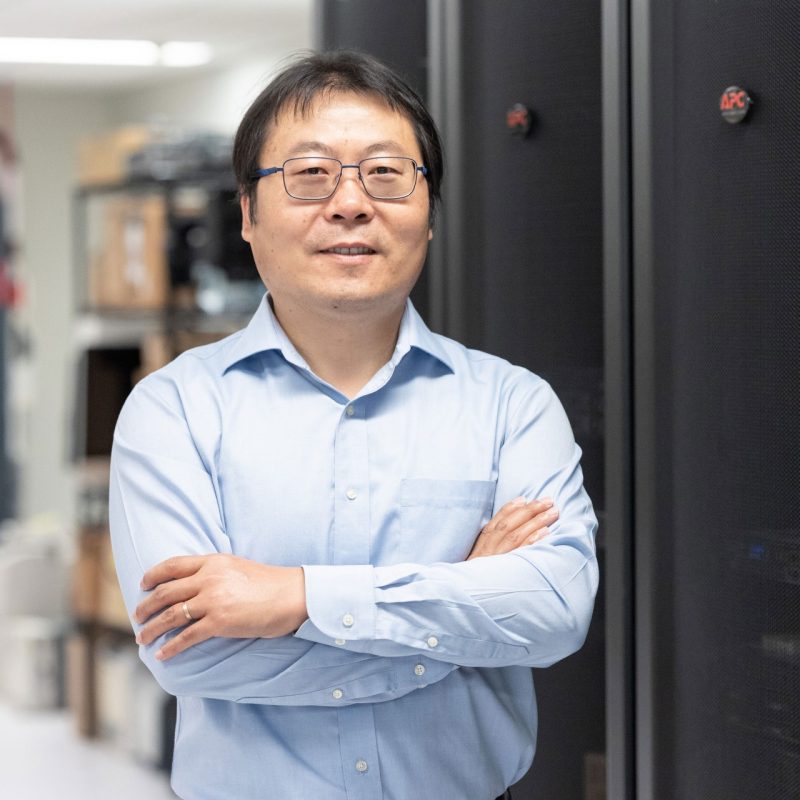
Guoqiang Yu is a Professor in the Bradley Department of Electrical and Computer Engineering at Virginia Tech. He holds a joint appointment at the Virginia Tech Research Center - Arlington. His research focuses on integrating machine learning, signal processing, and statistical methods to develop computational tools for analyzing multiplatform biomedical data. Key areas include neuroinformatics, bioinformatics, and systems biology, with applications in understanding human diseases through genomic, proteomic, and imaging data integration. Education: Ph.D. in Electrical Engineering, Virginia Tech (2011) Postdoctoral Fellowship at Stanford University (2012) M.S. Tsinghua University (2004) B.S. Shandong University (2001) Research Interests: Machine learning methodologies for biomedical data analysis, pattern recognition in complex datasets, optimization algorithms for high-dimensional data, stochastic signal processing, and their applications in neurodegenerative diseases (e.g., ALS, Alzheimer's), glial cell biology, and precision medicine. His work emphasizes developing open-source tools like ABDS, CAM3.0, and SynQuant for data normalization, deconvolution, and quantitative imaging analysis. Awards & Service: NSF Career Award (2018) Dean's Award for Excellence in Research (2022) Member of NIH BRAIN Initiative Consortium (2021–present) Associate Editor for BMC Bioinformatics (2017–present) Labs & Teams: Leads the Yu Lab at Virginia Tech, collaborating with multidisciplinary teams in neuroscience, bioengineering, and computational biology. Active in NIH-funded consortia focused on brain data science and large-scale neuroimaging initiatives.
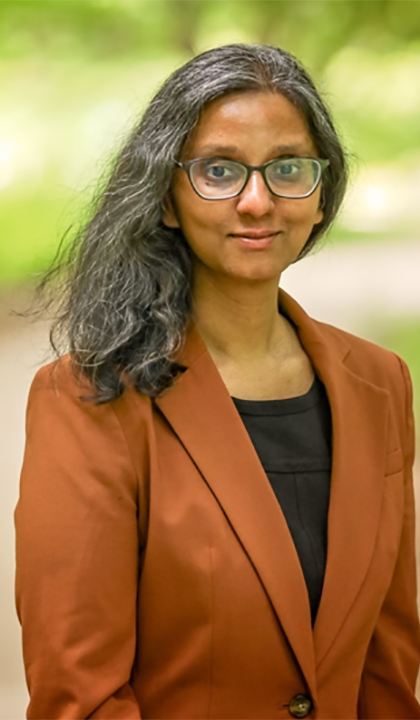
Premila P. Samuel Russell is an Assistant Professor of Chemistry at Saint Louis University (SLU), within the School of Science and Engineering. Her research focuses on computational modeling of human cell environments to study biomolecular dynamics and hidden states inaccessible via traditional experiments. She integrates in silico simulations with experimental assays for validation. Education: B.A. in Chemistry, Berea College, Kentucky, 2012 Ph.D. in Biochemistry, Rice University, Texas, 2017 Research Interests: Computational Chemistry: Developing atomistic models of cytoplasmic environments to simulate protein behavior. Biophysics: Exploring protein folding, misfolding, and interactions in cellular contexts. Protein Dynamics: Investigating enzyme choreography and metabolon formation through all-atom simulations. Drug Design: Analyzing hemoglobin structure for therapeutic applications like Voxelotor. Her recent work emphasizes 'cells-on-computers' simulations and high-throughput experimental assays, addressing limitations in spatial-temporal resolution of conventional methods. Awards: Cooley’s Anemia Foundation Research Fellowship (2023) D.E. Shaw Research Women’s Fellowship (2021) Rice University’s George J. Schroepfer Awards for Thesis and Research Excellence (2017–2018) Her lab (Premila Research Group) bridges computational and experimental approaches to advance understanding of biomolecular systems. Contact: premila.russell@slu.edu at Monsanto Hall, SLU.
Gabriela F. Ciocarlie is a Researcher at SRI International, focusing on advancing cybersecurity, IoT security, and formal verification techniques. Her work bridges theoretical computer science with practical applications in critical infrastructure protection and manufacturing systems. She has contributed to over 48 publications across conferences like CCS, NDSS, and IEEE venues. Her research interests span adversarial machine learning, secure manufacturing automation, and resilient biomanufacturing systems. Notable projects include developing frameworks for verifying manufacturing design integrity and creating end-to-end security solutions for cyber-physical systems. She has also pioneered work on deployable adversarial attacks against neural networks and automated attack investigation tools like autoMPI. Key collaborations include partnerships with institutions like Columbia University (former affiliation) and industry leaders. Her work often addresses real-world challenges such as pandemic-resilient biomanufacturing and securing critical infrastructure through cyber-physical integration.
Yuecheng Zhou is an Assistant Professor at the University of Illinois, affiliated with the departments of Materials Science and Engineering, Bioengineering, the Materials Research Lab, and the Beckman Institute for Advanced Science and Technology. His research focuses on polymer dynamics, liquid-liquid phase separation, and electrochromic materials for biomedical applications. Zhou’s work bridges fundamental polymer science with practical applications in biomedicine and material design. His research interests include studying single polymer dynamics under various flow conditions, developing optical recording techniques for bioelectric potentials using electrochromic materials, and investigating the rheological behavior of complex polymer solutions. He has contributed significantly to understanding the dynamics of ring-linear polymer blends and the role of molecular architecture in non-equilibrium systems. Zhou’s recent publications highlight advancements in label-free optical detection of cellular signals, liquid-liquid phase separation in synthetic biosystems, and theoretical insights into viscoelastic hysteresis using fluctuation theorems. These studies underscore his interdisciplinary approach, combining experimental and computational methods to address challenges in materials science and biophysics. His work is supported by affiliations with leading research institutes at the University of Illinois, enabling collaborative projects across engineering, physics, and biology. Zhou’s research has implications for developing novel materials for biomedical diagnostics, energy storage, and advanced sensor technologies.
William L. Kath is the Margaret B. Fuller Boos Professor of Engineering Sciences and Applied Mathematics at Northwestern University's McCormick School of Engineering. He holds affiliations as Deputy Director of the National Institute for Theory and Mathematics in Biology, courtesy faculty in Neurobiology, and member of the Northwestern Institute on Complex Systems. His research bridges quantitative biology, neuroscience, and optics, focusing on dynamical models of biological systems and high-speed optical communication systems. Key projects include the EMBEDR algorithm for single-cell omics analysis and computational models of temperature sensing in Drosophila. Research interests emphasize quantitative and computational biology, particularly circadian rhythms, neuronal circuit modeling, and single-cell genomics. Collaborations include the Gallio lab (Drosophila thermosensation), Daniel Dombeck's lab (hippocampal neuron behavior), and Nelson Spruston's group (hippocampal microcircuits). His work on optics includes nonlinear pulse propagation and rare event analysis in fiber optics. Scientific awards include Fellowships from the Society for Industrial and Applied Mathematics and the Optical Society of America. He advises over 20 graduate students and has developed courses like ESAM 472 (RNA sequencing analysis) and ESAM 370 (Computational Neuroscience). Current students include Richard Suhendra and Nan Ding (jointly advised). Labs/teams: Leads the National Institute for Theory and Mathematics in Biology, co-leads the Gallio lab collaboration on thermosensory circuits, and maintains active projects in computational neuroscience and optics at Northwestern.
Wilson W. Wong is a Professor in the Department of Biomedical Engineering at Boston University's College of Engineering. His research focuses on synthetic biology and engineering cellular therapies, particularly CAR T and CAR-NK cells for cancer, diabetes, and vaccine applications. He leads the Wilson Wong Lab, developing genetic circuits for precise control of cell functions through molecular, chemical, and optogenetic tools. Key achievements include FDA-approved drug-gated circuits, light-inducible recombinases, and saRNA platforms for reduced immunogenicity. Education: PhD in Chemical Engineering (UCLA), B.S. in Chemical Engineering (UC Berkeley). Awards include the Allen Distinguished Investigator Award (2022), NAE German-American Frontiers Invitee (2021), and NIH Director’s New Innovator Award (2013). He collaborates with institutions like MIT and Harvard on lung regeneration projects through the Allen Distinguished Investigators program. Research Highlights: Logic-gated CAR therapies, optogenetic cell patterning, and saRNA-based vaccines Lab Members: Supervises students including Cristina, Huishan, Josh, and Justin Letendre Grants: Allen Foundation, NSF CAREER Award, NIH funding His work bridges synthetic biology with clinical translation, emphasizing spatiotemporal control of cell functions for regenerative medicine and oncology. Recent breakthroughs include multiplex light-inducible circuits and saRNA modifications enhancing therapeutic efficacy.
André Longtin is a Full Professor in the Department of Physics at the University of Ottawa, affiliated with the Faculty of Science. He co-directs the Centre for Neural Dynamics & Artificial Intelligence and holds cross-appointments in Cellular and Molecular Medicine, Mathematics and Statistics. His research focuses on nonlinear dynamics, stochastic systems, and computational neuroscience, with applications to sensory processing, neural coding, and thermodynamic principles in biological systems. Education: B.Sc. (Honours Physics, Université de Montréal), M.Sc. (Physics, Université de Montréal), Ph.D. (Physics, McGill University, 1989). Postdoctoral training at Los Alamos National Laboratory. Research Interests: Theoretical biophysics, neural modeling, entropy production in biological systems, delayed dynamical systems, and interdisciplinary applications of nonlinear science. His group explores computations in hippocampus and zebrafish pallium, epilepsy mechanisms, neural coding in electrosensory systems, and autonomous stochastic rhythms. Recent Work: Articles highlight entropy dynamics in humans, myelin plasticity effects on neural networks, and reservoir computing with delayed loops. Awards include APS Fellowship (2003) and the NSERC Brockhouse Prize (2017). Editorial Roles: Biological Cybernetics, Frontiers in Computational Neuroscience, and others. Collaborations span systems neuroscience, clinical specialties, and engineering.
Ilja K. Voets is a Full Professor at Eindhoven University of Technology (TU/e) in the Department of Chemical Engineering and Chemistry, leading the Self-Organizing Soft Matter research group. She is also a Core member of the Institute for Complex Molecular Systems (ICMS). Her academic journey began at Wageningen University & Research where she earned her PhD cum laude in 2008, followed by postdoctoral research at the Aldolphe Merkle Institute in Switzerland. Since 2011, she has been at TU/e, becoming a full professor in 2018. Her educational background includes Molecular Sciences at Wageningen University & Research, with a PhD focusing on micellisation in dilute aqueous solutions of oppositely charged double hydrophilic block copolymers. She was supervised by dr. Arie de Keizer and prof. Martien A. Cohen Stuart. Professor Voets leads an interdisciplinary team of chemists, physicists, biologists, and engineers studying self-assembly processes in biological soft matter. Her research focuses on colloidal self-organization, polymer assembly and folding, and protein biophysics, with particular interest in ice-binding proteins that help organisms survive in extreme cold environments. She investigates how to control intra- and intermolecular copolymer assembly to develop novel functional soft materials, artificial enzymes, and strategies to enhance colloidal stability. A key challenge in her work involves orchestrating colloidal self-assembly with remote cues such as light and temperature. Her recent publications reveal a strong focus on antifreeze proteins, colloidal assembly, and nanoparticle technology, with significant contributions to understanding ice-binding mechanisms and developing novel soft materials. The research demonstrates consistent high-impact output across prestigious journals including PNAS, Angewandte Chemie, and Biomacromolecules. Ambizione Award (2010) : Recognizing early-career research excellence DMS Science and Technology Award (2009) : For significant contributions to materials science ERC Consolidator Grant (2021) : Supporting advanced research in ice-binding protein-polymers Ice-binding protein-polymers project (2016) : Focused on control over ice growth in soft materials Innovative peptide system award (2019) : For novel drug targeting approaches Professor Voets supervises numerous research projects and students, teaching courses including Biological Physics, Physical Chemistry, and Experimental Soft Matter. Her research group is affiliated with the Institute for Complex Molecular Systems, Eindhoven Polymer Laboratories, and the Gravity Program Functional Molecular Systems. Industry collaborations include DSM, Kemetyl, and Unilever, demonstrating the practical applications of her fundamental research. Her work contributes significantly to UN Sustainable Development Goals related to responsible consumption, climate action, and life below water.
Valentina Breschi is an Assistant Professor in the Control Systems Group at the Department of Electrical Engineering, Eindhoven University of Technology (TU/e). She holds a Ph.D. from IMT School for Advanced Studies Lucca, with postdoctoral and junior faculty experience at Politecnico di Milano. Her research focuses on data-driven control, jump model learning, meta-learning for system identification, and human-centered policy design for mobility systems. She contributes to UN Sustainable Development Goals related to sustainable infrastructure and innovation. Education: B.Sc. in Electronic and Telecommunication Engineering (University of Florence, 2011) M.Sc. in Electrical and Automation Engineering (University of Florence, 2014) Ph.D. in Control Systems (IMT School for Advanced Studies Lucca, 2018) Research Interests: Her work spans data-driven control methodologies, including LPV control, predictive control, and ethical frameworks for policy design. She explores applications in sustainable mobility, energy systems, and healthcare, emphasizing fairness and social impact. Labs/Teams: She is part of the Control Systems Group, collaborating on projects like the CONSIDER study and the design of fair-MPC frameworks. Her work integrates theoretical control principles with real-world applications in smart systems and social networks.
Pu Chen is a Professor in the Department of Chemical Engineering at the University of Waterloo and a member of the Waterloo Institute of Nanotechnology. He holds the Canada Research Chair in Biomanufacturing. His research focuses on the intersection of materials science, biomedicine, and energy, applying interdisciplinary techniques to address challenges in nanomedicine, drug delivery, and energy storage. Dr. Chen holds a Doctorate in Mechanical Engineering (University of Toronto, 1998), a Master's in Materials Science (University of Toronto, 1993), and dual Bachelor's degrees from Nanjing University: Physics (1985) and Materials Science (1988). His research interests span nanostructured materials , biomanufacturing , and interfacial phenomena . Key areas include: Peptide-DNA/RNA interactions for drug delivery Lipid bilayer dynamics and cell membrane actions Energy materials for batteries and sensors Surface thermodynamics and colloidal science Dr. Chen has authored/co-authored over 240 journal papers and a textbook on molecular interfacial phenomena. His research has led to a startup leveraging nano-peptide technology. Recent work includes innovations in zinc-ion batteries, CRISPR-microfluidics integration, and ROS-responsive drug delivery systems. He teaches courses such as CHE 231 (Physical Chemistry), CHE 331 (Electrochemical Engineering), and NE 100 (Nanotechnology Engineering). His lab has produced numerous graduate students and postdoctoral researchers, with notable trainees including Parisa Sadatmousavi, Madjid Soltani, and Mousa Jafari.
Antonios Pantazis is an Associate Professor and Docent at Linköping University, affiliated with the Department of Biomedical and Clinical Sciences (BKV) within the Faculty of Medicine and Health Sciences. He leads the Pantazis Laboratory of Cellular Excitability (PaLaCE), focusing on ion channel biophysics and their role in health and disease. His work integrates electrophysiological, optical, and computational methods to study ion channel structure-function relationships, particularly in cardiac and neuronal systems. Research interests include voltage-gated ion channels, cellular excitability, and the molecular mechanisms underlying arrhythmias and neurological disorders. Key contributions involve understanding mutations in genes like SCN5A and KCNA2, which are linked to epilepsy and cardiac arrhythmias. He has been awarded the Swedish Fernström Prize (2021) for his work on ion channels. Publications span topics such as ion channel regulation, molecular transitions in voltage-dependent processes, and drug targets for arrhythmia suppression. His laboratory also explores cutting-edge techniques like voltage-clamp fluorometry and optical methods to visualize protein dynamics. Collaborations include institutions like the Wallenberg Centre for Molecular Medicine (WCMM) at Linköping University, emphasizing translational research in medical technology and bioengineering.
William Edward Lowry is a Professor in both the Department of Molecular, Cell and Developmental Biology and the Department of Medicine at the University of California Los Angeles (UCLA), College of Letters and Science. His interdisciplinary research bridges stem cell biology, cancer biology, and regenerative medicine, with a particular focus on hair follicle stem cells and their metabolic regulation. Dr. Lowry's research interests center on stem cell biology, particularly hair follicle stem cells and their roles in regeneration and cancer. His work explores the metabolic regulation of stem cells, the cellular origins of squamous cell carcinoma, and the application of stem cell technologies for regenerative medicine. His research spans from basic mechanisms of stem cell quiescence and activation to translational applications for hair loss and neurological disorders. Analysis of Dr. Lowry's recent publications reveals a strong focus on the intersection of metabolism and stem cell biology, particularly how metabolic pathways regulate hair follicle stem cell function and transformation. His work demonstrates that metabolic processes like pyruvate oxidation play crucial roles in stem cell activation, hair cycling, and cancer development. His research also extends to neurological applications, with significant work on glial progenitors for treating white matter stroke and vascular dementia. Dr. Lowry has secured substantial research funding through multiple NIH grants, including R01 awards for iPS-Glial Restricted Progenitors in White Matter Repair for Stroke (R01NS103788), Metabolic Control of Hair Follicle Stem Cell Homeostasis and Tumorigenesis (R01AR070245), and Identification and characterization of cancer cells of origin in the epidermis (R01AR057409). These grants support his laboratory's work on stem cell metabolism, cancer biology, and regenerative medicine applications. His laboratory focuses on hair follicle stem cell biology and metabolism, with additional work on neural progenitors and glial cells for regenerative applications. Dr. Lowry's team employs advanced techniques including single-cell transcriptomics, metabolic profiling, and in vivo models to investigate stem cell behavior in health and disease.
Prof. Kristopher McNeill is a Full Professor at ETH Zurich's Department of Environmental Systems Science, where he heads the Institute of Biogeochemistry and Pollutant Dynamics. Born in 1970 in Tucson, Arizona, he earned his BA in Chemistry from Reed College (1992) and PhD from UC Berkeley (1997), followed by postdoctoral work at MIT. His academic career includes positions as Assistant and Associate Professor at the University of Minnesota and Visiting Professorship at Stanford. McNeill's research focuses on environmentally relevant chemical reactions, particularly catalytic and photocatalytic transformations in aquatic systems. Key areas include environmental fate of emerging contaminants, photochemistry in surface waters, and metal-mediated dehalogenation reactions. His group emphasizes mechanistic studies using modern spectroscopic techniques like NMR and time-resolved laser spectroscopy to understand degradation pathways of contaminants. His publication trends show consistent focus on photochemical processes in environmental systems, with recent work expanding into polymer degradation, DNA photochemistry, and atmospheric chemistry. The research demonstrates increasing interdisciplinary integration of analytical chemistry, materials science, and environmental modeling. McNeill teaches multiple courses including: Introduction to Environmental Organic Chemistry Organic Chemistry Term Paper seminars Human Health, Nutrition and Environment
Huaiying Zhang is an Assistant Professor in the Department of Biological Sciences at Carnegie Mellon University, part of the Mellon College of Science. His research focuses on the role of biomolecular condensates in cellular functions and cancer progression, particularly investigating phase transitions in telomere maintenance and cancer cell immortality. He holds a Ph.D. from McGill University and completed postdoctoral research at Dartmouth College, Princeton University, and the University of Pennsylvania. Research interests include engineering synthetic organelles, developing optogenetic tools to manipulate phase separation in live cells, and targeting phase transitions for cancer therapy. His work bridges biophysics, cell biology, and synthetic biology to address fundamental questions in nuclear organization and disease mechanisms. Education: Ph.D., McGill University Postdoctoral Fellowships: Dartmouth College, Princeton University, University of Pennsylvania Publications highlight advances in understanding telomere clustering in cancer cells, nuclear body formation, and applications of phase separation in therapeutic strategies. Collaborative projects emphasize interdisciplinary approaches, combining experimental and theoretical methods. Lab activities focus on biomolecular condensates' material properties, their roles in genomic processes, and translational applications in cancer treatment. The lab actively seeks students and researchers interested in cellular biophysics and disease biology.