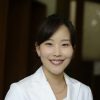
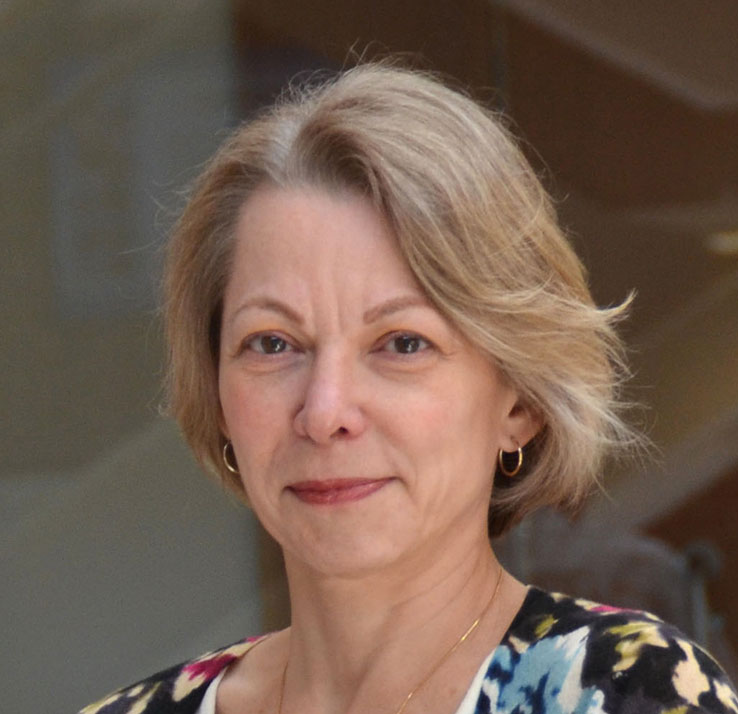
Julian Guttman is a Professor in the Department of Biological Sciences at Simon Fraser University (SFU), specializing in Cellular Microbiology. He serves as Editor-in-Chief of the journal Cytoskeleton . His research focuses on bacterial infections' molecular mechanisms, particularly how pathogens like Listeria monocytogenes , E. coli , and Salmonella manipulate host cell cytoskeletons (actin, microtubules) to invade, spread, and cause disease. Key areas include actin-based motility, pathogen-induced membrane protrusions, and therapeutic development. His lab actively recruits undergraduate, graduate students, and postdoctoral fellows. Education: BSc (University of Western Ontario), MSc and PhD (University of British Columbia). He has published extensively on host-pathogen interactions, with recent work on Listeria's caveolin-mediated spreading, KATNAL1-driven microtubule disassembly by Klebsiella, and cyclophilin A's role in Salmonella invasion. His work bridges microbiology, cell biology, and structural biology to combat infectious diseases.
Dr. Prerna Masih is an Assistant Professor in the Department of Biology at the University of West Florida's Hal Marcus College of Science and Engineering. She specializes in biochemistry and cell biology with research focusing on developing novel therapeutic agents including antibacterial, antifungal, anti-inflammatory, and anticancer compounds. Her interdisciplinary approach integrates microbiology, biochemistry, structural biology, pharmacology, cell biology, organic chemistry, and computational biology. Education: Postdoctoral Fellow, National Institutes of Health (NIH), Bethesda, MD Ph.D. in Cellular and Molecular Biology, Roswell Park Cancer Institute, SUNY at Buffalo M.S. Biotechnology, Indian Institute of Technology Bombay B.S. Chemistry, St. Stephens College, Delhi University Her research utilizes diverse tools to investigate the mode of action of therapeutic agents. Current courses include Biochemistry lectures and labs. Her publications appear in high-impact journals including Nucleic Acid Research and Pharmaceuticals.
Dr. Richard W. Gross is Professor of Medicine and Developmental Biology at Washington University School of Medicine and Professor of Chemistry. He holds a PhD from Washington University, MD from New York University Medical School, and BA from Columbia College. His research focuses on the chemical biology of membranes in health and disease, specializing in lipidomics, metabolomics, and membrane signaling. He pioneered shotgun lipidomics technology for direct identification and quantification of lipid molecular species in biological systems. Developed novel shotgun lipidomics technology combining intrasource separation, multidimensional MS, and array analysis Investigates phospholipase regulation and membrane signaling complexes Studies altered lipid metabolism in obesity, diabetes and cardiovascular disease
Dr. Sindy K.Y. Tang is an Associate Professor in the Department of Mechanical Engineering at Stanford University, with courtesy appointments in Bioengineering and Radiology. She leads the Micro-Nano-Bio Lab, focusing on developing micro/nano-scale devices for precision medicine and environmental sustainability. Her work bridges engineering, biology, and medicine through microfluidic platforms for single-cell analysis, cancer organoid models, and allergy diagnostics. Educational Background: PhD in Engineering Sciences (Harvard University, advised by Prof. George Whitesides) MS in Electrical Engineering (Stanford University) BS in Electrical Engineering (Caltech) Research Focus: Dr. Tang's lab explores innovative tools for understanding cellular wound repair, cancer immunotherapy modeling, and precision diagnostics. Key projects include: Microfluidic 'guillotine' for controlled cell dissection Basophil activation tests for food allergy diagnosis Automated micro-dissection systems for tumor organoids Awards & Recognition: NSF CAREER Award (2020) Kenneth & Barbara Oshman Faculty Scholar Invited Lecture at Nobel Symposium on Microfluidics (2019) Lab & Collaborations: The lab collaborates with institutions like UCSF, PNNL, and the Sean N. Parker Center for Allergy Research. Ongoing efforts include synthetic neuron construction (NSF-funded) and spatial proteomics for cancer biology. Recent publications span wound repair mechanisms, fomite transmission studies, and organoid-based cancer models.
Assistant Professor Low Jun Siong is affiliated with the Department of Microbiology and Immunology at the National University of Singapore (NUS), under the Yong Loo Lin School of Medicine. His research focuses on understanding T and B cell biology in the context of infection, cancer, and autoimmunity. He collaborates with clinical partners to characterize immune cell responses in patient cohorts and explores strategies to manipulate these cells for therapeutic purposes. Key areas of interest include antigen specificity, immune cell dysfunction, and immune-based disease interventions. Education: Holds a BSc and PhD (specific disciplines unspecified). Affiliated with the Cancer Science Institute (CSI) and A*STAR Infectious Diseases Labs. His work spans translational immunology, virology, and cancer immunotherapy. Recent projects include studies on SARS-CoV-2 immune responses, tumor microenvironment interactions, and tropical sponge microbiome evolution. He employs high-throughput approaches and machine learning for immune profiling. Research highlights include: Characterizing T/B cell responses against pathogens and cancers Engineering immune cells for enhanced functionality Investigating antibody mechanisms against coronaviruses Dissecting metabolic influences on T cell efficacy in tumors Exploring symbiotic microbiome evolution in marine environments No specific grants or advising roles are detailed in the provided text. He contributes to collaborative initiatives like the Department Safety and Health Programme (DSHP) and the Department Microbial Culture Collection (DMCC).
Professor Daniel Davis MBE FMedSci is the Head of the Department of Life Sciences and Professor of Immunology at Imperial College London. He holds affiliations with the Institute of Chemical Biology, the CDT in Chemical Biology: Innovation in Life Sciences (as a supervisor), and research groups in Immunology and Molecular Mechanisms of Disease. His academic journey includes a doctorate in Physics from Harvard University and prior roles as Director of Research at the Manchester Collaborative Centre for Inflammation Research (University of Manchester). His research focuses on nanoscale biology of immune cell interactions, employing advanced microscopy techniques to study immune synapse formation, cytotoxicity mechanisms, and immunological regulation. Notable contributions include elucidating how immune cells use adhesion, signaling, and structural reorganization to target pathogens and cancer cells. Professor Davis has authored four popular science books, including Self Defence: A Myth-Busting Guide to Immune Health (2025), The Beautiful Cure (2018), and The Compatibility Gene (2014), which bridge public understanding of immunology and biology. His work has been recognized with prestigious awards such as the Royal Society Science Book Prize and the Prose Award. His articles span topics like NK cell heterogeneity, gene therapy for neurological disorders, and super-resolution microscopy applications. Grants and collaborations include work on AAV-based gene therapies and immunomodulatory drug development. Davis actively engages in public science communication through festivals, media outlets (e.g., BBC, Guardian), and international speaking engagements. His research labs at Imperial College focus on interdisciplinary approaches, combining biophysics, genetics, and clinical applications to advance immunology and translational medicine.
Sangwoo Kim is a Tenure Track Assistant Professor at the Swiss Federal Institute of Technology Lausanne (EPFL) in the Institute of Mechanical Engineering. He leads the Mechanics of Soft and Biological Matter Laboratory (MESOBIO), focusing on the interplay between mechanics, physics, and biology in living systems. His research spans soft matter physics, developmental biology, and mechanical engineering. 2023–Present: Tenure Track Assistant Professor, EPFL School of Engineering Postdoctoral Fellow, UC Santa Barbara Mechanical Engineering Ph.D. in Theoretical and Applied Mechanics, University of Illinois at Urbana-Champaign Kim’s research investigates fundamental properties of biological and soft materials, including: Tissue morphogenesis and embryonic development Mechanical behavior of amorphous and active matter Non-equilibrium dynamics in cellular systems Phase transitions in biological tissues Stress and osmotic pressure quantification His recent publications reveal a focus on: Biological jamming and fluidization Zebrafish axis elongation mechanics Energy landscapes of cellular matter Active matter modeling Statistical mechanics of soft materials Developmental force transmission Kim supervises PhD students and teaches courses in structural mechanics at EPFL, emphasizing problem-solving in engineering design.
Francesco Stellacci is a Full Professor at École Polytechnique Fédérale de Lausanne (EPFL), where he holds the Alcan EP Chair and leads the Supramolecular Nanomaterials and Interfaces Laboratory (SUNMIL). He is affiliated with the School of Engineering (STI) and the Institute of Materials (IMX), with additional appointments in the Institute of Bioengineering (IBI-STI). Stellacci also serves on the EPFL Academic Strategic Committee and the Research Awards Commission, and is a committee member for the Doctoral Program in Materials Science and Engineering. Stellacci's research focuses on the complex interactions between supramolecular assemblies and their molecular surroundings, with particular emphasis on: Nanomaterials and Nanoparticles Soft Materials and Supramolecular Interactions Solid-Liquid Interfaces Nanomedicine and Antiviral Applications His recent work demonstrates a strong trend toward biomedical applications of nanomaterials, particularly in antiviral therapies, drug delivery systems, and diagnostic tools. Stellacci's laboratory has pioneered research on supramolecular interfaces with nanoscale domains, leading to innovative approaches in viral inhibition, protein delivery, and sustainable materials. His publications reveal a consistent focus on the physical and chemical properties of nanomaterials and their interactions with biological systems, with increasing emphasis on practical applications in healthcare and sustainability. Among his notable scientific achievements are: Technology Review TR35 "35 Innovators under 35" award (2005) Popular Science Magazine "Brilliant 10" award (2007) Packard Fellowship (2005) Stellacci has been instrumental in developing novel methodologies for nanoparticle characterization and application, with particular expertise in supramolecular nanostructures. His work bridges fundamental materials science with practical biomedical applications, as evidenced by numerous patents and translational research projects. He has supervised multiple doctoral students whose theses reflect the interdisciplinary nature of his research program, spanning from fundamental nanoscience to applied biomedical engineering. Stellacci's laboratory (SUNMIL) serves as a hub for interdisciplinary research, bringing together expertise from materials science, chemistry, biology, and engineering to address challenges in nanomedicine and sustainable technologies.
Prof. Henning Hintzsche is a Professor at the University of Bonn's Institute of Nutrition and Food Sciences. His research focuses on genotoxic effects of food-derived substances, employing methods such as DNA damage analysis and micronucleus assays. Key interests include understanding mechanisms of genotoxicity, developing protective strategies, and improving regulatory risk assessment frameworks. Notable work includes studies on micronucleus dynamics in cell models and toxin mixtures' effects in zebrafish and human cells. Research topics span synthetic dyes (e.g., Alizarin Red S), perfluoroalkyl substances (PFAS), and natural compounds like pyrrolizidine alkaloids. Findings have been published in journals like Archives of Toxicology and Scientific Reports . Collaborations emphasize translational applications in food safety and regulatory science. No awards or grants are explicitly listed, though his work contributes to EU policy frameworks. His lab's interdisciplinary approach bridges basic toxicology with real-world risk mitigation strategies.
Elliot Hui, Ph.D., is an Associate Professor in the Department of Biomedical Engineering at the University of California, Irvine (UCI), within the Samueli School of Engineering. His research focuses on biological microtechnology, including spatial cell biology, microscale tissue engineering, global health diagnostics, and microfluidic computing. He leads the Hui Lab, which develops tools for automating biochemical reactions, controlling cellular organization, and understanding tissue development dynamics. Key achievements include pioneering microfluidic logic systems for autonomous laboratory automation and creating novel cell culture platforms to study intercellular communication in tissues. His work bridges engineering and biology, addressing challenges in diagnostics and regenerative medicine. Notable contributions include the development of a programmable finite state machine for microfluidic control and a SLAS Fellowship awarded to his student Erik. Research Interests: Microfluidic devices, cell-cell interaction modeling, tissue engineering, and lab-on-a-chip systems. Labs/Teams: Hui Lab at UCI, specializing in microscale biological systems and automation. Publications span topics such as microfluidic computing architectures, tissue dissociation devices, and Bayesian experimental design. His work emphasizes applications in global health diagnostics and mechanistic studies of cellular processes.
Andrea Rocco is an Associate Professor in Physics and Mathematical Biology and Head of the Quantum Sciences Research Group at the University of Surrey. He holds affiliations with the School of Mathematics and Physics and the Centre for Mathematical and Computational Biology. Rocco earned his PhD in Physics from the University of North Texas (1998) and held postdoctoral positions at the University of Barcelona, University of Rome La Sapienza, CWI (Netherlands), and the University of Oxford. His research bridges theoretical physics (quantum mechanics, open systems, decoherence) and biological physics (stochastic dynamics in living systems, gene networks). Educations: BSc in Physics, University of Pisa (1994) PhD in Physics, University of North Texas (1998) Research Interests: His work explores quantum-classical transitions, quantum thermodynamics, and noise-induced phenomena in biological systems. Recent grants include a US$3M award for studying time and life. He is a Fellow of the Royal Society of Biology and the Higher Education Academy. Awards: Member of the Institute of Physics (MInstP) Fellow of the Higher Education Academy (FHEA) Fellow of the Royal Society of Biology (FRSB) Advising & Grants: Rocco leads the Quantum Sciences Group and has supervised postdoctoral researchers like Thomas Guff. His grants include major funding for interdisciplinary quantum-biological research. Labs/Teams: Head of the Quantum Sciences Research Group at Surrey, integrating theoretical physics and computational biology.
Naratip Santitissadeekorn is a Senior Lecturer in Data Assimilation at the School of Mathematics and Physics, University of Surrey, where he is affiliated with the Mathematics at the Interface Group. His work bridges mathematics, data science, and real-world applications in urban planning, crime analysis, and geophysical fluid dynamics. Dr. Santitissadeekorn received his PhD from Clarkson University in 2008, with a dissertation titled "Transport Analysis and Motion Estimation of Dynamical Systems of Time-Series data." His doctoral research was supervised by Professor Erik Bollt. Following his PhD, he completed two significant postdoctoral positions: from 2008-2011 at the University of New South Wales, Sydney, Australia, working with Professor Gary Froyland on numerical techniques for finite-time Lagrangian coherent set identification, with applications to delimiting the polar vortex and Agulhas rings; and from 2011-2014 at the University of North Carolina-Chapel Hill, working with Professor Chris Jones on data assimilation projects. Dr. Santitissadeekorn's research focuses on inverse problems and data assimilation in geophysical fluid dynamics, the applications of Lagrangian Coherent Structures (LCS), and computational ergodic theory. His work combines theoretical mathematics with practical applications, particularly in urban growth modeling and crime analysis. He has developed innovative methods for identifying coherent structures in fluid flows, estimating transition probabilities from spatiotemporal data, and creating data-driven frameworks for urban expansion scenarios. His research demonstrates how mathematical techniques can be applied to solve real-world problems in environmental science, urban planning, and public safety. An analysis of Dr. Santitissadeekorn's recent publications (2020-2023) reveals a strong focus on urban expansion modeling and network analysis. His work on urban growth has evolved from basic cellular automata models to sophisticated frameworks that manage uncertainty through parameter clustering and growth mode identification. His research on Hawkes processes has advanced ensemble-based filtering techniques for analyzing count data in large networks. These publications demonstrate a consistent pattern of applying mathematical rigor to complex spatiotemporal phenomena, with increasing emphasis on data-driven approaches and practical applications. Dr. Santitissadeekorn has made significant contributions to data assimilation methods, particularly through the development of the extended Poisson-Kalman filter (ExPKF) for urban crime modeling. His teaching includes courses in Algebra and Bayesian Statistics, reflecting his expertise in both theoretical and applied mathematics. While specific awards are not mentioned in the available information, his extensive publication record in high-impact journals demonstrates recognition within his field. Dr. Santitissadeekorn's research has practical implications for urban planning and law enforcement. His work on urban expansion models helps planners understand different growth trajectories, while his crime modeling research contributes to improved police patrolling strategies. His interdisciplinary approach, combining mathematics, computer science, and domain-specific knowledge, positions him at the forefront of applying data science to societal challenges.
Daniela Calvetti is the James Wood Williamson Professor in the Department of Mathematics, Applied Mathematics, and Statistics at Case Western Reserve University. Her research focuses on large-scale scientific computing, computational inverse problems, uncertainty quantification, and predictive modeling in neuroscience, metabolism, and cellular physiology. She holds a PhD from the University of North Carolina-Chapel Hill. Her work integrates advanced mathematical techniques with biomedical applications, including brain energy metabolism modeling, MEG/EEG source reconstruction, and computational methods for medical imaging. Notable contributions include Bayesian hierarchical algorithms for inverse problems and interdisciplinary collaborations bridging mathematics with neuroscience and physiology. Recent research highlights include developing sparsity-promoting Bayesian models for tomography, computational frameworks for neuromuscular control variability, and predictive models of disease dynamics like post-pandemic COVID-19 recurrence. Her methodologies emphasize statistically inspired preconditioning and adaptive meshing techniques to enhance computational efficiency in solving complex inverse problems. Dr. Calvetti has published extensively across computational science, inverse problems, and biomedical applications. She leads a research group advancing interdisciplinary computational methods with applications in neuroscience, virology, and metabolic systems.
Soojung Claire Hur is an Assistant Professor in the Department of Mechanical Engineering at Johns Hopkins University (JHU), with a secondary appointment in the Department of Oncology at the JHU School of Medicine. She is affiliated with the Hopkins Extreme Materials Institute and the Johns Hopkins Institute for NanoBioTechnology. Her research focuses on developing microfluidic platforms to study complex fluid dynamics and translate these insights into clinical applications, particularly in oncology and regenerative medicine. Education: Hur earned her B.S., M.S., and Ph.D. in Mechanical Engineering from UCLA (2005, 2007, 2011). She was a Rowland Fellow at Harvard University (2011–2016) and conducted clinical studies at Vortex Biosciences, Inc. before joining JHU's Whiting School of Engineering faculty in 2015. Research Interests: Her work spans inertial microfluidics, nonlinear fluid dynamics, cellular biophysics, and personalized medicine. She pioneers techniques like vortex-assisted electroporation and inertial focusing for high-throughput cell analysis, separation, and drug delivery. These methods aim to improve cancer diagnosis, immunotherapy, and gene therapy. Awards: Notable honors include the 2024 Johns Hopkins Discovery Awards, the 2023 Susan G. Komen Career Catalyst Award, and the 2018 Johnson & Johnson WiSTEM2D Scholars Award. Her research is funded by the Susan G. Komen Foundation, the Hartwell Foundation, and others. Advising & Grants: While no students are listed, her grants support projects like drug resistance monitoring and rare cell analysis. She holds three U.S. and two international patents for microfluidic technologies. Labs & Roles: The Hur Lab on Micro-Fluidic Biophysics develops clinical tools for cell mechanics analysis. Hur serves as an editor for Nature Scientific Reports , SLAS Technology , and Biomicrofluidics , and reviews for major journals and agencies like the NSF and NASA.
Anastasia Ivanova, PhD, is a Professor in the Department of Biostatistics at the University of North Carolina's Gillings School of Global Public Health. She specializes in clinical trial design, with over 20 years of experience in adaptive designs, dose-finding methods, and enrichment strategies. Her leadership roles include Principal Investigator of the NHLBI-funded PrecISE Network Data Center and co-PI of the BACPAC DAC. She holds a PhD in Statistics from the University of Maryland (1998) and a PhD in Mathematics from St. Petersburg State University (1998). Research focuses on innovative trial methodologies including adaptive trials for severe asthma, back pain consortia, and CAR-T cell therapies. Key publications span statistical methods in Biometrics , Statistics in Medicine , and Statistical Methods in Medical Research . Awards include the American Statistical Association Fellowship (2020) and the Stanley S. Schor Scholarship (2006-2007). Education: PhDs in Statistics (UNC, 1998) and Mathematics (St. Petersburg, 1992); MS in Mathematics (1988) Service: Associate Editor for Statistics in Medicine since 2006; North Carolina ASA leadership roles Key Projects: PrecISE Network (adaptive asthma trials), BACPAC (back pain research), CAR-T cell clinical trials Her work integrates statistical rigor with translational medicine, advancing precision interventions through multi-stage and biomarker-stratified designs.