Max Planck Institute for Plant Breeding ResearchGermany
Adam Runions is a researcher in the Department of Computer Science at the University of Calgary, leading the MPG Partner Group in computational analysis of leaf development through collaborative work with Miltos Tsiantis. His group is embedded in the Graphics Cluster, focusing on interdisciplinary problems at the intersection of computer science and developmental biology. University of Calgary - Department of Computer Science MPG Partner Group (2022) Graphics Cluster affiliation His research explores computational modeling and analysis of plant form and development across multiple scales, integrating geometric modeling, physically-based simulation, and computer-aided design. Key themes include plant morphogenesis, self-organization of natural forms, and cross-disciplinary applications in computer graphics and animation. Recent publications emphasize plant development (leaf shape, bark patterning), mathematical modeling (auxin-driven patterning), and geometric techniques (subdivision surfaces, PUPs). Collaborations span institutions like the Max Planck Institute for Plant Breeding Research. Scientific Awards Marie Sklodowska-Curie Fellowship Best Paper Award (International Conference on Cyberworlds 2015) Best Student Paper Award (Computer Graphics International 2011) The group actively recruits BSc, MSc, and PhD students with backgrounds in computer science and mathematics for projects on plant form simulation and digital content creation. Research integrates evolutionary biology, biomechanical modeling, and computational techniques.
Dr. Gregor Schuhknecht is a Researcher and incoming Max-Planck Research Group Leader at the Max Planck Institute for Brain Research in Frankfurt, Germany. Starting December 2025, he will lead the Brain Algorithms and Circuits Group, focusing on computational neuroscience and neuronal circuitry in larval zebrafish. His work bridges experimental and computational approaches to understand brain algorithms enabling flexible behaviors. Education PhD in Neuroscience (2014–2019), Institute for Neuroinformatics, University of Zurich and ETH Zurich MSc in Biology (Neuroscience) (2012–2019), ETH Zurich BSc in Biosciences (2009–2012), Heidelberg University His research investigates how synaptic circuitry implements computational algorithms for sensorimotor processing, evidence accumulation, and behavior. Experimental approaches include functional imaging, optogenetics, connectomics, and computational modeling. The group will explore neuronal circuits across scales, from synapse to behavior, with a focus on biophysical properties and dynamic environmental adaptation. Recent publications highlight correlative light/electron microscopy, developmental activity-free circuit formation, and neocortical synapse analysis. Scientific Awards Meselson Prize (2024) Aspirational Neuroscience Award (2023) Best Publication Award (2021) Swiss National Science Foundation Fellowships (2021, 2019, 2018) Gregor Schuhknecht's lab will welcome graduate and postdoctoral researchers starting December 2025, focusing on experimental and computational systems neuroscience. He previously collaborated with Harvard University's Department of Molecular and Cellular Biology and the Department of Moritz Helmstaedter for connectomic analyses.
Professor Matthias Mann is a world-leading scientist serving as Director of the Proteomics and Signal Transduction department at the Max Planck Institute of Biochemistry in Martinsried, Germany, and Director of the Proteomics department at the Novo Nordisk Foundation Center for Protein Research, Faculty of Health Sciences, University of Copenhagen, Denmark. With an h-index exceeding 277 and over 350,000 citations, he is recognized as the highest cited German researcher and one of the most influential scientists globally in proteomics. His educational background includes: Ph.D. in Chemical Engineering from Yale University (1988) Master's Degree in Physics from Georg August University Göttingen (1984) Bachelor's of Arts in Mathematics from Georg August University Göttingen (1982) Professor Mann's research focuses on advancing mass spectrometry-based proteomics to understand biological systems at the protein level. His work spans technological developments in mass spectrometry, bioinformatics and computational analysis, signal transduction and posttranslational modifications, and clinical proteomics applications for disease diagnosis and treatment. The Mann lab has pioneered groundbreaking methods like SILAC for quantitative proteomics and MaxQuant for proteome data analysis. Their vision is to translate proteomics knowledge into clinical practice for predictive, diagnostic, and preventive medicine, with recent work focusing on AI-guided platforms for analyzing proteomes from minimal tissue samples. Analysis of Professor Mann's recent publications reveals a strong trend toward clinical applications of proteomics, particularly in cancer research, metabolic diseases, and neurodegenerative disorders. His work increasingly integrates spatial proteomics, single-cell resolution techniques, and artificial intelligence approaches to uncover disease mechanisms and identify potential biomarkers, with a clear shift from basic technology development toward direct clinical applications and personalized medicine. Professor Mann has received numerous prestigious awards throughout his career: 2025: Elected member of the American National Academy of Sciences 2024: Dr. H.P. Heineken Award for Biochemistry and Biophysics 2023: Otto Warburg Medal 2019: Nominated member of the Bavarian Academy of Sciences 2013: Elected member of Leopoldina German National Academy of Sciences 2012: Körber European Science Award, Louis-Jeantet Foundation Prize for Medicine, Ernst Schering Prize, and Leibniz Prize Professor Mann leads a highly collaborative research team involved in multiple international networks including the Bill & Melinda Gates Foundation, Michael J. Fox Foundation for Parkinson's Research, CLINSPECT-M, and Munich Heart Alliance. His lab has mentored numerous successful researchers, with several former postdocs receiving prestigious ERC Starting Grants. The Mann group has developed innovative clinical proteomics pipelines for analyzing archived tissue specimens and body fluids, aiming to identify protein markers for early detection of diseases such as diabetes and cancer. The Mann lab operates across two major research centers with state-of-the-art mass spectrometry facilities. Their Clinical Knowledge Graph platform integrates multi-omics data with extensive metadata, creating an ecosystem for machine learning applications in proteomics. Current research focuses on developing highly sensitive methods that can profile thousands of proteins from minimal cell samples, enabling the identification of critical disease-related proteins and supporting the development of individualized therapies.
Rhenish Friedrich Wilhelm University of BonnGermany
Prof. Waldemar Kolanus leads the Molecular Immunology and Cell Biology department at the University of Bonn's Life & Medical Sciences Institute (LIMES) . His research bridges immunoregulation , stem cell dynamics , and metabolic stress responses in immune cells. Unit 2 member at LIMES Principal investigator in SFB 704 and ImmunoSensation Cluster Leads a multidisciplinary lab with postdocs, PhD students, and technical staff His work focuses on intracellular signaling pathways connecting immune activation to tissue homeostasis, particularly through: Cytohesin proteins in integrin-mediated adhesion and migration TRIM71 in stem cell regulation and congenital hydrocephalus High-salt environments affecting macrophage function Publication trends show expertise in immune cell migration , genetic models , and chemical inhibition , with frequent use of mice and zebrafish for in vivo studies. Key articles explore: TRIM71's dual role in auditory development and germ cell maintenance Cytohesin family's Golgi regulation and insulin signaling Ruxolitinib's off-target migration inhibition of dendritic cells Contact details: Address: LIMES Institute, Carl-Troll-Straße 31, Bonn Email: kolanus.sekretariat@uni-bonn.de Phone: +49 228 73-62788
Christine Selhuber-Unkel is a Full Professor (W3) for Molecular Systems Engineering at the Institute for Molecular Systems Engineering and Advanced Materials (IMSEAM) at Heidelberg University. She serves as co-chair of the Executive Board of the Flagship Initiative 'Engineering Molecular Systems' and is a spokesperson for the 'Cellular Biophysics' section of the German Biophysical Society. Additionally, she is a member of the executive board of the Cluster of Excellence '3D Matter Made to Order'. Education: Studied physics at Heidelberg University (2000-2002) M.Sc. degree in Physics from Uppsala University (2003) PhD in Physics from Heidelberg University (biological adhesion on nanopatterned substrates) Professor Selhuber-Unkel's research focuses on functional interfaces and their interactions with biological systems, including responsive interfaces, micro-/nanostructured interfaces (including 2-photon laser printing), and biofunctionalized hydrogels. Her work specifically targets controlling cellular properties such as parasite migration, with potential applications in soft robotics and biomaterials. She also experimentally studies biophysical properties of cells including mechanosensing, cellular force generation, adhesion forces, and statistical properties of intracellular motion and migration. Her research group is involved in multiple projects related to parasite physics, including studies on Giardia adhesion, Plasmodium infected erythrocytes, and Toxoplasma gondii. Her recent publications demonstrate a strong focus on hydrogel engineering, cellular mechanics, and microfluidic systems for studying cell behavior. The research spans from fundamental biomaterials development to applications in ophthalmology, tissue engineering, and parasite mechanics. Scientific Awards: European Research Council Consolidator Grant (PHOTOMECH) European Research Council Starting Grant (CELLINSPIRED) Feodor Lynen Fellow for research stay at Cornell University Emmy Noether postdoctoral fellowship Otto Hahn Medal from the Max Planck Society Professor Selhuber-Unkel has received significant research funding, including multiple ERC grants and DFG funding. She previously served as spokesperson for the DFG research training group 'Materials for Brain' at Kiel University (2017-2020). Her research group maintains strong collaborations across multiple institutions focused on biophysical approaches to understanding cellular and parasite mechanics. Her laboratory develops advanced techniques including traction force microscopy, atomic force microscopy (AFM), and microengineered systems for studying cellular mechanics in confined environments. The group's work bridges materials science, biophysics, and parasitology to develop novel approaches for understanding and controlling cellular behavior.
Konstantinos Anastassiadis is a Professor at the Center for Molecular and Cellular Bioengineering (CMCB) of Dresden University of Technology , leading the Stem Cell Engineering group at the Biotechnology Center (BIOTEC) . His research focuses on unraveling molecular pathways regulating stem cell self-renewal and lineage commitment, with a strong emphasis on genetic engineering tool development and epigenetic mechanisms during cellular reprogramming. The lab utilizes mouse and human embryonic stem cells, neural stem cells, mesenchymal stromal cells, and induced pluripotent stem cells (iPSCs) in their investigations. Core Research Areas: Molecular regulation of stem cell fate Epigenetic mechanisms (e.g., UTX/UTY histone demethylases) Genetic engineering tool development (Flp, Dre, Vika recombinases, CRISPR protocols) Conditional immortalization systems for rare cell expansion Publications highlight his contributions to understanding: Role of histone methyltransferases (MLL1, MLL2, Setd1b) in hematopoiesis and cancer Epigenetic regulation during mouse development and spermatogenesis Genetic tools for protein tagging, transposon-mediated BAC transgenesis Interactions between stem cells and niche microenvironments Transcriptional and mechanical markers during reprogramming Collaborations span immunology , developmental biology , and bioinformatics . The lab actively participates in teaching activities at CMCB and maintains a focus on translational applications of stem cell research.
Prof. Joachim Spatz is a Full Professor of Biophysical Chemistry at Heidelberg University and Director of the Max Planck Institute for Medical Research. His academic career includes roles as Director at MPI for Metals Research (2004–2015) and Founding Director of the Institute for Molecular Systems Engineering (IMSE). He holds a PhD from Ulm University and habilitation in Physics, with postdoctoral training at the Institut Curie, Paris. His research spans cellular biophysics, materials science, and synthetic biology, focusing on mechanotransduction, cell-material interactions, and engineered biological systems. Education: 1989–1994: Dipl. Phys. (Physics), Ulm University & Colorado State University 1994–1996: PhD (summa cum laude), Ulm University 2000: Habilitation in Physics, Ulm University Research Interests: Spatz’s work integrates biophysics, materials science, and engineering to study cellular mechanics, synthetic cells, and mechanosensing. Key projects include developing synthetic cell models using microfluidics and exploring how mechanical forces regulate cell behavior in health and disease. Awards: 2017 Gottfried Wilhelm Leibniz Prize 2012 ERC Advanced Grant (with Prof. B. Geiger) 2002 Alfried Krupp Research Award Labs & Collaborations: Leads the Cellular Biophysics Department at MPI for Medical Research and collaborates with institutions like the Weizmann Institute and Jackson Laboratory. Active in interdisciplinary initiatives such as the Max Planck School Matter to Life.
Prof. Dr. Stefan Luther is a Max Planck Research Group leader (W2, tenured since 2013) at the Max Planck Institute for Dynamics and Self-Organization, Göttingen, and an Honorarprofessor at the Faculty of Physics, University of Göttingen. He holds adjunct roles as Adjunct Associate Professor at Cornell University (2009–2012) and Northeastern University (2016–2018), and serves as DZHK-Professor at the Institute of Pharmacology and Toxicology, University Medical Center Göttingen. His research focuses on nonlinear spatiotemporal dynamics in excitable biological media, particularly cardiac arrhythmias. He pioneered 4D imaging of heart function and developed algorithms for optogenetic and electrical control of arrhythmias. Translational efforts span basic research to preclinical and clinical studies. Education includes a Diplom in Physics (1997) and PhD (2000) from Georg-August-University, Göttingen. Postdoctoral training followed at the University of Twente (2001–2004) and Cornell University’s LASSP (2004–2006). His lab, the Biomedical Physics group, explores electromechanical coupling in cardiac systems and develops novel therapeutic approaches. Collaborations include work on computational modeling, uncertainty quantification in dynamical systems, and fluid dynamics of multiphase flows.
Anna Levina is an Assistant Professor for Computational Neuroscience at the University of Tübingen , affiliated with the Department of Computer Science under the Faculty of Science. Her research focuses on the self-organization of neuronal activity, critical dynamics in neural networks, and the excitation/inhibition balance in cortical circuits. Current positions: Assistant Professor (since 2018), Group Leader (2017-2018), Equality Officer (Computer Science) Previous roles: IST Fellow (2015-2017), Associated Researcher (2011-2015), Postdoc/PI (2011-2015), Postdoc (2008-2011) Her research integrates mathematical modeling , statistical physics , and computational neuroscience to study criticality phenomena, neural avalanches, and adaptive network dynamics. Key interests include: Self-organized criticality in neural systems Excitation/Inhibition balance mechanisms Network topology and dynamics Timescale analysis in neural processing Stochastic modeling of neural activity Recent publications reveal trends in understanding critical dynamics across biological and artificial networks, with applications to memory systems, sensorimotor integration, and disease modeling. She has received recognition as an IST Fellow .
Prof. Andreas Bausch holds the Heinz Nixdorf Endowed Chair of Cell Biophysics at the Technical University of Munich (TUM) within the TUM School of Natural Sciences . His research focuses on cellular biophysics , particularly the mechanical properties of cytoskeletal networks and self-organization mechanisms in biological systems, with applications in biomimetic materials and organoid modeling. Research Areas : Cytoskeletal mechanics, active matter systems, organoid morphogenesis, integrin signaling, synthetic cell models Techniques : Microrheology, in vitro reconstitution, microfluidics, advanced imaging His work has produced over 100 publications in Nature, Science, PNAS , and Physical Review Letters , with recent emphasis on pancreatic cancer organoids and artificial cell membranes . Key findings include: Discovery of topological excitations governing endothelial cell ordering Elucidation of PIP2/PIP3 regulation in integrin phase separation Development of 3D patterned organoid systems for drug screening Major awards include: ERC Synergy Grant (2018) ERC Advanced Grant (2012) ERC Starting Grant (2011) Berlin-Brandenburg Academy of Sciences Prize (2014) He serves as founding director of the Center for Functional Protein Assemblies (CPA) since 2015 and teaches biomechanics , biophysics , and protein assemblies at TUM. His lab investigates both fundamental biophysical principles and their medical applications in cancer and cardiovascular systems.
Sarah Köster is a Full Professor at the University of Göttingen’s Institute for Cellular and Molecular Physiology of the Brain. She earned her PhD from the University of Göttingen under Prof. Stephan Herminghaus and completed postdoctoral research at Harvard University with Prof. David Weitz. Her career includes appointments as Junior Professor (2008-2011), Associate Professor (2011-2017), and Full Professor (since 2017). Research focuses on cellular biophysics, particularly cytoskeletal mechanics and intermediate filament dynamics. Key investigations include keratin plasticity, vimentin network mechanics, cytoskeletal crosstalk, and DNA organization during cell division. Her publications demonstrate expertise in nanoscale biomechanics, utilizing techniques like nanoindentation, X-ray diffraction, and advanced microscopy to probe cellular structures. Recent work emphasizes multiscale mechanical properties of cytoskeletal networks and their functional implications.
Dr. Thomas E. Winkler serves as Head of Junior Research Group at the Institute of Microtechnology within the Faculty of Mechanical Engineering at Technische Universität Braunschweig, with additional affiliation to the Center of Pharmaceutical Engineering (PVZ). His research bridges microtechnology and biomedical applications through innovative engineering solutions. Dr. Winkler earned his Dipl.-Ing. in Biophysics and Nanotechnology from Johannes Kepler University, Linz (2005-2011), followed by a Ph.D. in Bioengineering from the University of Maryland, College Park (2011-2017). After completing postdoctoral research at KTH Royal Institute of Technology, Stockholm (2017-2021), he established his independent research group at TU Braunschweig. His research program focuses on developing advanced microfluidic platforms for biomedical applications, with particular emphasis on creating Lab- and Organ-on-a-Chip systems, bioelectrochemical sensors, and iPSC-based cellular models for neuropsychiatric disorder research. This interdisciplinary work combines engineering precision with biological complexity to address pharmaceutical and medical challenges. Fulbright Foreign Student Fellow (2011-2017) Marie Skłodowska-Curie Actions – Individual Fellowship (2018-2020) Dr. Winkler leads the Biomicrosystems Integration research group, which maintains strong connections with the Center of Pharmaceutical Engineering. His laboratory work represents TU Braunschweig's strategic commitment to interdisciplinary research at the intersection of mechanical engineering and life sciences, with applications in drug development and personalized medicine.
Max Planck Institute for the History of ScienceGermany
Prof. Dr. Petra Schwille is a Director at the Max Planck Institute of Biochemistry and former C4 Professor of Biophysics at Dresden University of Technology . Her work spans molecular and cellular biophysics, synthetic biology, and single-molecule techniques. Academic disciplines: Natural sciences, biological sciences, physical sciences Key roles: Editorial Board member (Nature Methods, Biophysical Journal), Governing Council of Biophysical Society Research Focus includes membrane biophysics, protein interactions, and microfluidic systems. Her publications emphasize Fluorescence Correlation Spectroscopy (FCS) , receptor-ligand dynamics, and self-organization in bacterial cell division. Developed in vitro models for spatial regulation in cells Explored calmodulin availability and morphogen gradient formation Scientific Recognition includes prestigious awards like the Gottfried Wilhelm Leibniz Prize (2010) and the Biofuture grant (1998) . Max Planck Fellow (2005) Young Investigator Award (2003) Leadership & Service involves roles such as Dean of Studies for Nanobiophysics at TU Dresden and Vice Dean of the Dresden International Graduate School for Biomedicine and Bioengineering (DIGS-BB) . She also contributes to editorial and advisory boards in biophysics and science policy.
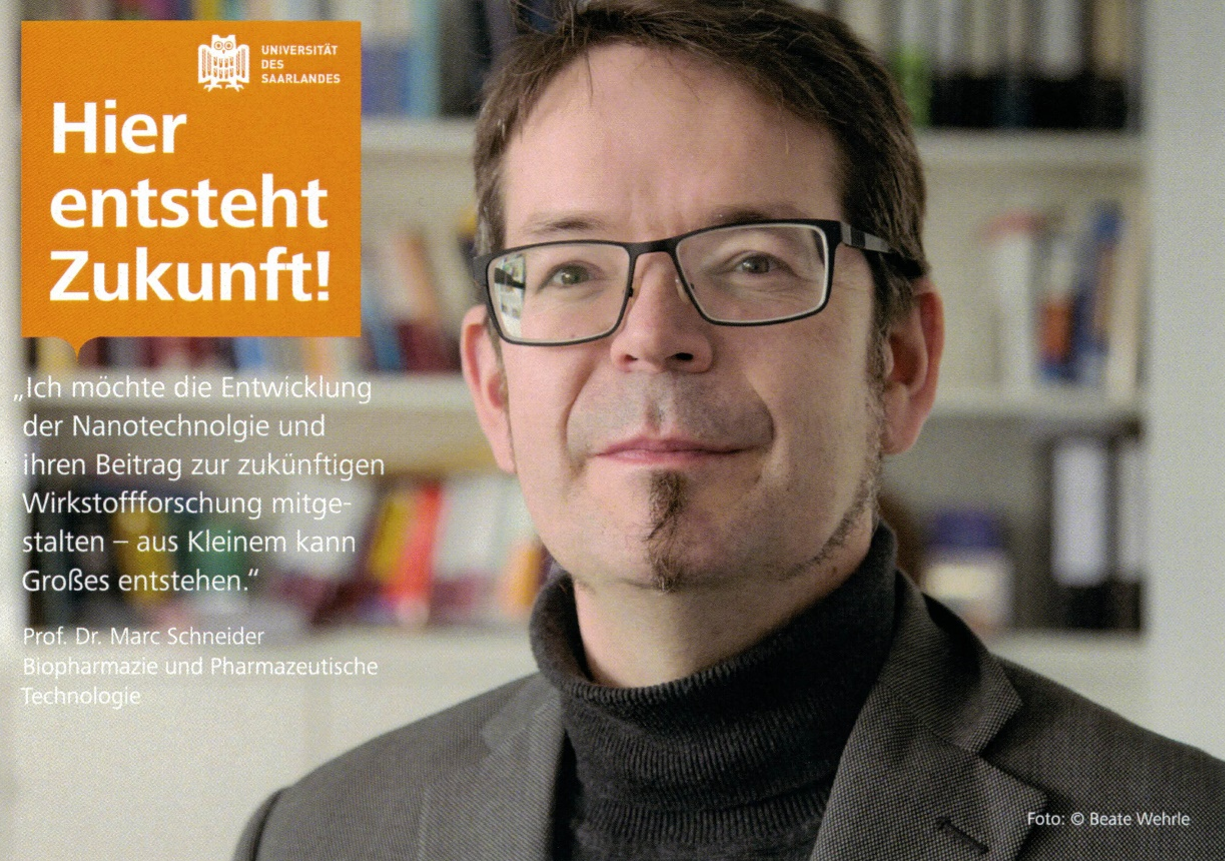
Prof. Dr. Marc Schneider holds a professorship in Biopharmaceutics and Pharmaceutical Technology at Saarland University's College of Pharmacy . His research focuses on colloidal drug delivery systems, particularly nanostructured and non-spherical particle engineering for overcoming biological barriers in pulmonary and transdermal applications. He leads an internationally recognized lab in Saarbrücken, collaborating with Helmholtz Institute for Pharmaceutical Research Saarland (HIPS) and trinational institutions. Research Highlights: Development of inhalable nano/microparticle systems Surface modification of gelatin nanoparticles Characterization of mucus-penetrating particles 3D printing for microneedle fabrication Atomic Force Microscopy (AFM) for nanoparticle analysis Selected Scientific Awards: European Journal of Pharmaceutics and Biopharmaceutics Best Paper Award (2018) for mucus-penetrating nanoparticles Recognized in 'Ausgezeichnete Orte im Land der Ideen' competition (2018) for 'Nano-Mais' drug delivery system Collaborative Networks: Co-editor for Advanced Drug Delivery Reviews special issue on biological barriers Key participant in trinational Master's program in Biomedicine with Strasbourg, Mainz, and Luxembourg Active in Controlled Release Society (CRS) conferences and local chapters
Prof. Dr. Nils Kröger serves as Chair for "Biomimetic Materials" at the Technical University of Dresden, Germany, where he leads the Kröger Group dedicated to studying diatoms and their remarkable biological capabilities. His research program investigates two extraordinary phenomena exhibited by these microalgae: silica biomineralization and underwater adhesion. Academic Background: Diploma in Chemistry, University of Regensburg, Germany (1991) PhD in Biochemistry, University of Regensburg, Germany (1995) Habilitation in Biochemistry, University of Regensburg, Germany (2001) Assistant Professor, Georgia Institute of Technology, Atlanta, USA (2005) Associate Professor, Georgia Institute of Technology, Atlanta, USA (2011) W3 Professor for Biomimetic Materials, TU Dresden, Germany (2012) Professor Kröger's research sits at the intersection of biology, materials science, and nanotechnology. His group employs biochemical, molecular genetic, and cell biological approaches to unravel how diatoms construct intricate silica structures and adhere to surfaces underwater. This work has significant implications for developing novel bio-inspired materials and understanding fundamental biological processes. Recent advancements in his laboratory have revealed molecular mechanisms behind diatom motility and the precise control of silica pattern formation. Analysis of Professor Kröger's publication record shows consistent focus on diatom biology with increasing interdisciplinary collaboration. His recent work demonstrates sophisticated integration of physics, engineering, and biology to understand the mechanical aspects of diatom movement and structure formation. The research shows progression from basic protein characterization to complex systems-level understanding of diatom motility and morphogenesis. Current Research Funding: Deutsche Forschungsgemeinschaft (DFG): PoL Nucleation grant with Prof. Stefan Diez (2022-2025) - Acto-myosin cooperativity and regulation underlying diatom gliding motility Deutsche Forschungsgemeinschaft (DFG) (2018-2022) - Molecular basis of diatom adhesion and motility Previous funding from Air Force Office of Scientific Research (AFOSR) (2010-2016) - Molecular Mechanism of Diatom Adhesion Professor Kröger actively mentors PhD students and maintains a vibrant research group comprising senior scientists, postdoctoral researchers, technicians, and graduate students. His laboratory serves as a hub for interdisciplinary collaboration, bridging traditional boundaries between biology, chemistry, physics, and materials science. The group maintains strong international connections and participates in numerous collaborative research initiatives focused on biomineralization and bio-inspired materials.