Ying Ge is a Professor at the University of Wisconsin–Madison, jointly appointed in the Department of Cell and Regenerative Biology and the Department of Chemistry. Her research integrates chemistry, biology, and medicine, focusing on advanced mass spectrometry-based proteomic and metabolomic technologies to address cardiovascular diseases. Education: B.S., Peking University (1997) Ph.D., Cornell University (2002) Ying Ge's work centers on developing ultra high-resolution mass spectrometry platforms for top-down proteomics and metabolomics, applied to systems biology studies of heart failure and regenerative medicine. Key projects include myofilament protein modification mapping, stem cell therapy evaluation, and biomarker discovery for cardiac conditions. The 15 most recent articles highlight her lab's methodological innovations (e.g., photocleavable surfactants, native mass spectrometry) and biological discoveries in AMPK structural heterogeneity, RBM20-mediated cardiotoxicity, and sarcomere-metabolism cross-talk during regeneration. These publications span proteomics, metabolomics, structural biology, and clinical applications.
Igor Jurisica is a Professor at the University of Toronto and a Senior Scientist at the Krembil Research Institute’s Data Science Discovery Centre for Chronic Diseases. He also serves as Visiting Scientist at IBM CAS, Scientific Director of the World Community Grid, and Chief Scientist at the Creative Destruction Lab (Rotman School of Management). His research focuses on integrative computational biology, data mining, and AI-driven models for cancer mechanisms, drug discovery, and chronic disease management. Key affiliations include the Osteoarthritis Research Program, Schroeder Arthritis Institute, and leadership roles in open science initiatives like the World Community Grid, a global distributed computing platform with 810,000+ volunteers. Jurisica’s work bridges computational tools (e.g., NAViGaTOR visualization platform, MirDIP databases) and clinical applications, emphasizing explainable AI in healthcare. Research interests span proteomics, microRNA regulation, systems vaccinology, and multi-omics integration for disease stratification. Notable contributions include identifying prognostic signatures in cancer and osteoarthritis, machine learning models for drug repurposing, and sportomics analyses of athletic biomarkers. He has been recognized as a Thomson Reuters Highly Cited Researcher (2014-2016) and ranked among the Top 100 AI Leaders in Oncology (2023). His labs develop open-access tools like PathDIP, OsteoDIP, and miRAnno to advance translational research.
Prof. Dr. Helma Wennemers serves as a Full Professor at ETH Zurich's Department of Chemistry and Applied Biosciences, leading the Laboratory for Organic Chemistry. Her research group operates from HCI H 313 at Vladimir Prelog Way 1-5/10 in Zurich, Switzerland, with active teaching responsibilities including Organic Chemistry I and Chemical Biology - Peptides for the Fall 2025 semester. Her research program centers on the intersection of organic chemistry and chemical biology , with particular emphasis on collagen triple helix engineering , peptide-catalyzed asymmetric synthesis , and development of chemical tools for tissue remodeling diagnostics . Key focus areas include designing hyperstable collagen heterotrimers for fibrosis monitoring, creating fluorophore-based probes for collagen cross-linking visualization, and pioneering organocatalytic methodologies for complex heterocycle synthesis. Her group actively explores how hydrophobic modifications and proline derivatives influence collagen stability and cellular uptake mechanisms. Analysis of her 15 most recent publications (2024-2025) reveals three dominant research trajectories: (1) collagen structural engineering for biomedical applications, (2) innovative peptide/organocatalysis enabling stereoselective transformations, and (3) chemical probe development targeting tissue remodeling processes. These works consistently integrate synthetic chemistry with biological validation, demonstrating translational potential in fibrosis diagnostics and regenerative medicine. While specific grant details aren't provided in available sources, her research program clearly supports advanced laboratory infrastructure including peptide synthesis facilities and photochemical reaction systems like the ETHos photoreactor. Her group maintains strong industry and clinical collaborations evident in applications targeting liver cancer cells and prostate cancer diagnostics. The Laboratory for Organic Chemistry functions as an interdisciplinary hub where synthetic organic chemists collaborate with biologists to develop collagen-based diagnostic platforms and catalytic systems. Current projects focus on lysyl oxidase-responsive probes for real-time tissue monitoring and engineered peptide catalysts for sustainable chemical synthesis under environmentally relevant conditions.
Lara A. Estroff is a Full Professor and the current Chair of the Department of Materials Science and Engineering at Cornell University's College of Engineering. She has been a faculty member since 2005 and served as Director of Graduate Studies from 2015 to 2019. Her academic leadership and research excellence position her at the forefront of bio-inspired materials and biomineralization research. Her educational background includes a B.A. in Chemistry from Swarthmore College (1997) and a Ph.D. in Chemistry from Yale University (2003), followed by an NIH-funded postdoctoral fellowship at Harvard University in the lab of Prof. George M. Whitesides. Dr. Estroff's research centers on the fundamental mechanisms of crystal growth, biomineralization, and pathological mineralization. She investigates how organisms control mineral formation and applies these principles to engineer synthetic materials with complex structures and functionalities. Her work spans biomaterials, tissue engineering, and energy materials—particularly hybrid organic-inorganic perovskites for photovoltaics. She employs advanced characterization techniques and has pioneered in situ methods to monitor crystallization dynamics. Her recent publications reveal a strong trend toward interdisciplinary research, integrating materials science with cancer biology, immunology, and machine learning. The articles emphasize bio-inspired synthesis, mineral-tissue interactions, and the development of functional crystalline materials for medical and energy applications. Faculty Early CAREER Award, National Science Foundation (2009) Fiona Ip Li '78 and Donald Li '75 Excellence in Teaching Award, Cornell College of Engineering (2007) Marilyn Emmons Williams Award, Cornell Undergraduate Research Board (2009) Keynote Speaker, Gordon Research Seminar on Biomineralization (2012) Lawrence Berkeley National Lab Affiliate (2013) Dr. Estroff leads a major DOE-funded project titled “Formulation Engineering of Energy Materials via Multiscale Learning Spirals,” a $3 million, three-year initiative using machine learning to optimize perovskite synthesis for solar cells. She has advised numerous graduate students and postdoctoral researchers, and her lab is known for fostering collaborative, cross-disciplinary research. She has also contributed to educational initiatives at Cornell, particularly in undergraduate research and materials education. Her research group operates at the intersection of chemistry, engineering, and biology, focusing on high-resolution characterization of biominerals, in situ crystal growth studies, and the design of in vitro models for cell-mineral interactions. The lab actively collaborates with institutions including Lawrence Livermore National Laboratory, National Renewable Energy Laboratory, and Johns Hopkins University.
Steven R. Caliari is an Associate Professor in the Department of Chemical Engineering with a secondary appointment in Biomedical Engineering at the University of Virginia’s School of Engineering and Applied Science. He serves as the ChE Graduate Program Director and is a SEAS Copenhaver Fellow (2023). His research focuses on designing biomaterials to study cell-microenvironment interactions, addressing challenges in disease and tissue engineering. He holds a B.S. (2007, University of Florida), M.S. (2010), and Ph.D. (2013) in Chemical Engineering from the University of Illinois, followed by an NIH postdoctoral fellowship at the University of Pennsylvania. His research interests include biomaterials, mechanobiology, musculoskeletal tissue engineering, and advanced manufacturing for biological applications. His lab has pioneered viscoelastic hydrogel platforms and conductive collagen scaffolds, supported by NIH, NSF, DoD, and industry grants. Notable awards include the NSF CAREER Award (2021) and NIH MIRA (2020). Grants: NIH (NIGMS), NSF CAREER, V Foundation, UVA-Coulter Partnership Courses: Tissue Engineering (BME/CHE 4417), Transport Processes I (CHE 3321) Labs: Caliari Lab focuses on biomaterial design and mechanobiological studies His work bridges fundamental science and translational applications, emphasizing dynamic material systems for regenerative medicine and disease modeling.
Sean J. Morrison is the founding Director of the Children’s Medical Center Research Institute at UT Southwestern (CRI) and a Howard Hughes Medical Institute Investigator. He holds the Mary McDermott Cook Chair in Pediatric Genetics and the Kathryne and Gene Bishop Distinguished Chair in Pediatric Research. Dr. Morrison earned his B.Sc. in Biology and Chemistry from Dalhousie University (1991), a Ph.D. in Immunology from Stanford University (1996), and completed a postdoctoral fellowship in Neurobiology at Caltech (1999). Education: B.Sc. - Dalhousie University (Biology & Chemistry, 1991) Ph.D. - Stanford University (Immunology, 1996) Postdoctoral Fellowship - Caltech (Neurobiology, 1999) Research Interests: Dr. Morrison’s laboratory investigates the mechanisms that maintain adult tissues and how cancer cells exploit these processes to form tumors. His team compares stem cell and cancer cell replication mechanisms to develop novel regenerative medicine and anticancer therapies. Key areas include: Stem cell self-renewal and aging Metabolic regulation of hematopoietic stem cells Leptin Receptor+ stromal cell function Cancer progression and metastasis Proteostasis and niche biology Mechanotransduction in stem cell niches Publications reveal trends in stem cell metabolism, tumor heterogeneity, and niche dynamics across Science , Nature , and Cell . His work on retrotransposons in stem cell activation (2024) and β-adrenergic receptor inhibition in hematopoietic regeneration (2024) highlights emerging therapeutic targets. Awards & Recognitions: Dr. Morrison is an elected member of the U.S. National Academy of Medicine (2018), National Academy of Sciences (2020), and EMBO (2023). He received the Presidential Early Career Award (2003), MERIT Award from NIA (2009), and UT Southwestern’s Excellence in Postdoctoral Mentoring Award (2020). Mentorship & Leadership: Dozens of graduate students and postdoctoral fellows from his lab have secured academic leadership roles or industry positions. He served as President of the International Society for Stem Cell Research (2015–2016) and actively engages in public policy debates about stem cell research, including Michigan’s constitutional protections for regenerative medicine.
Dr. Timur Alexander Yorgan is a prominent researcher at the Department of Osteology and Biomechanics at University Medical Center Hamburg-Eppendorf (UKE). Holding a Dr. rer. nat. degree, he has established himself as a leading figure in bone biology with over 60 publications spanning from 2013 to 2025. His research is deeply integrated with key institutional research areas including the Hamburg Center of Neuroscience and immunology research networks at UKE. Dr. Yorgan's research focuses on skeletal development, bone remodeling, and genetic bone disorders, with particular emphasis on Wnt signaling pathways and their role in bone homeostasis. His work spans multiple approaches from molecular genetics to translational studies, investigating osteoblast and osteocyte biology, genetic mechanisms underlying disorders like osteogenesis imperfecta, and the effects of various mutations on skeletal integrity. Recent research has expanded into the gut-bone axis, mechanobiology of bone cells, and neuro-immune interactions affecting bone metabolism. Analysis of Dr. Yorgan's publication record reveals a consistent trajectory of high-impact research in bone biology. His work increasingly explores interdisciplinary connections between bone metabolism and other physiological systems, with growing emphasis on translational approaches for therapeutic interventions. The research demonstrates sophisticated use of mouse models and molecular techniques to unravel complex bone disorders and identify potential treatment targets. Dr. Yorgan appears to be actively involved in collaborative research across multiple institutions, as evidenced by his extensive publication record with numerous co-authors from various departments and institutions. His work is frequently published in high-impact journals including Journal of Bone and Mineral Research, Nature Communications, and Bone Research. The Department of Osteology and Biomechanics at UKE, where Dr. Yorgan is based, is part of a vibrant research ecosystem that includes the Hamburg Center of Neuroscience and other key research networks focusing on immunology, oncology, and cardiovascular research. This collaborative environment enables interdisciplinary approaches to understanding skeletal disorders and developing novel therapeutic strategies.
Sudin Bhattacharya is an Associate Professor at the BioMolecular Science Gateway, Michigan State University, with affiliations in the Genetics & Genome Sciences Program and Cell & Molecular Biology Program. His research bridges computational biology and toxicology to understand complex biological systems. Email: sbhattac@msu.edu Research Interests Dr. Bhattacharya specializes in systems toxicology, focusing on computational modeling of gene regulatory networks, single-cell transcriptomics, and molecular dynamics in response to environmental toxicants. His work examines how chemical exposures disrupt cellular pathways and contribute to disease mechanisms. Article Trends His recent publications emphasize: Single-cell and single-nucleus RNA sequencing for toxicological profiling Computational models of circadian rhythms and intercellular communication Dose-dependent responses to environmental chemicals like TCDD and heavy metals Mechanistic studies of adipose tissue remodeling and hypertension Applications of machine learning in chemical risk assessment Integrative approaches to liver metabolism and disease modeling Scientific Contributions Dr. Bhattacharya has pioneered multiscale modeling of biological systems, particularly in hepatic and vascular contexts. His work on the aryl hydrocarbon receptor and PPARα signaling networks has advanced predictive toxicology frameworks.
Joshua J. Coon is a Professor at the University of Wisconsin-Madison with appointments in the Department of Biomolecular Chemistry and the Department of Chemistry. He leads the Coon Group, focusing on advancing mass spectrometry technologies for proteomics, metabolomics, and lipidomics. His research addresses fundamental questions in cell biology, including stem cell differentiation, epigenetic regulation, and cancer biomarker discovery. Affiliations : Director of the NIGMS National Center for Quantitative Biology of Complex Systems. Research Emphasis : Instrumentation development, data analysis software, ion chemistry, and biological applications of proteomics. Laboratory : Located in the Genome Center of Wisconsin with a dozen hybrid mass spectrometers, including Orbitrap systems. Collaborations : Long-term partnership with Thermo Fisher Scientific and the Wisconsin Alumni Research Foundation (WARF) for technology commercialization. Training : Mentored 27 Ph.D. students since 2009, emphasizing interdisciplinary research and professional development.
Vernita Gordon is an Associate Professor in the Department of Physics at the University of Texas at Austin (since 2018), previously serving as an Assistant Professor there from 2010 to 2018. She holds a Ph.D. in Physics from Harvard University (2003) and a B.Sc. in Physics and Mathematics from Vanderbilt University (1997). Her research focuses on understanding how physical characteristics like mechanics and spatial structure influence bacterial biofilms, particularly their interactions with the immune system and resistance to antibiotics. She has pioneered techniques such as laser trapping to manipulate biofilm structures and studies radiation effects on bacteria like Deinococcus radiodurans . Education: Ph.D. in Physics, Harvard University (2003) B.Sc. in Physics and Mathematics, Vanderbilt University (1997) Research Interests: Dr. Gordon’s work integrates biophysics, microbiology, and materials science to explore biofilm mechanics, bacterial mechanosensing, and radiation biology. Key areas include: How biofilm mechanics resist immune clearance and antibiotic treatment Role of surface stiffness and shear stress in biofilm initiation Radiation resistance mechanisms in Deinococcus radiodurans Development of tools like laser trapping to study biofilm structure Key Achievements: Recipient of the Elizabeth B. Gleeson Professorship (2023) and Texas Mindset Initiative Fellowship (2023) Provost’s Teaching Fellow (2020–2024) and multiple teaching awards Funded by NSF, NIH, and Cystic Fibrosis Foundation Published over 60 peer-reviewed articles, including in Nature , PNAS , and Biophysical Journal Advising & Outreach: She mentors graduate students in Physics, Microbiology, and Biomedical Engineering, emphasizing interdisciplinary training. Her group actively recruits undergraduates and collaborates with industry partners like Solvay and the College of Pharmacy. Outreach includes lesson plans for high school STEM education and community science initiatives. Labs & Collaborations: Her lab uses advanced microscopy, microrheology, and computational modeling. Key collaborations include work with the Contreras Lab (UT Austin Chemical Engineering) on radiation-resistant bacteria and the Raizen Lab (UT Austin Physics) on self-sterilizing surfaces.
Dr. Charlotte Kuperwasser is a distinguished Professor in the Department of Developmental, Molecular, and Chemical Biology at Tufts University School of Medicine . She directs the Tufts Convergence Laboratory and focuses on molecular mechanisms governing breast tissue development, cancer prevention, and organoid technologies. Her work integrates stem cell biology, epigenetics, and environmental influences such as endocrine disruptors. Education: Bachelor of Science (1997), University of Massachusetts Amherst PhD (2000), University of Massachusetts Amherst Jane Coffin Childs Postdoctoral Fellow (MIT/Whitehead Institute) Research Interests: Her lab develops 3D breast organoid models to study cancer initiation, microenvironmental interactions, and BRCA1-related mechanisms. Recent efforts include analyzing HPV-driven cancers via circulating tumor DNA and studying fibroblast signaling (e.g., DDR1) in tumor progression. Grants & Awards: Howard Hughes Fellowship, Merck Fellowship COG/Aventis Young Investigator Award Natalie V. Zucker Award NIH grants on V-ATPases and obesity-cancer links Professional Contributions: She chairs Tufts’ Sackler Convergence Laboratory and serves on AACR committees. Teaching includes courses on Molecular Cell Biology of Development and Cancer Genetics . Labs/Teams: Leads the Kuperwasser Lab, focusing on translational cancer research with cross-disciplinary collaborations in organoid engineering and clinical diagnostics.
Elina Vuorimaa-Laukkanen is a University Lecturer at Tampere University's Faculty of Engineering and Natural Sciences, Department of Materials Science and Environmental Engineering, and a Docent in Pharmaceutical Nanotechnology at the University of Helsinki's Faculty of Pharmacy. She leads the research team Supramolecular Chemistry of Bio- and Nanomaterials , focusing on light-driven studies of biological processes, solid-phase behavior, and drug release activation. Her work spans multidisciplinary collaboration with chemists, pharmacists, biologists, and physicists. Education : Doctor of Philosophy (Technology), Tampere University, 1994 Licentiate of Philosophy (Chemistry), University of Helsinki, 1993 Research Interests : Her expertise includes Photochemistry and Nanotechnology of self-assembling materials (phospholipids, polymers, proteins, oligo/polynucleotides), Time-resolved Spectroscopy , Fluorescence Lifetime Microscopy , and Langmuir-Blodgett Films . She develops methods to track drug nanocarriers interacting with living cells and investigates Extracellular Vesicles for theranostic platforms. Recent Publications highlight advancements in Chitosan-hyaluronate polyplexes for oligonucleotide delivery, Fluorescence Anisotropy for nanocarrier analysis, and Self-assembly of copoly(2-oxazoline)s for drug encapsulation. Collaborations : She works within Tampere University's Chemistry & Advanced Materials Research Cluster , PREIN Photonics Flagship, GeneCellNano, and the EVE Extracellular Vesicle Ecosystem projects. Teaching : Responsible for Physical Chemistry and Lab Safety courses in the chemistry curriculum.
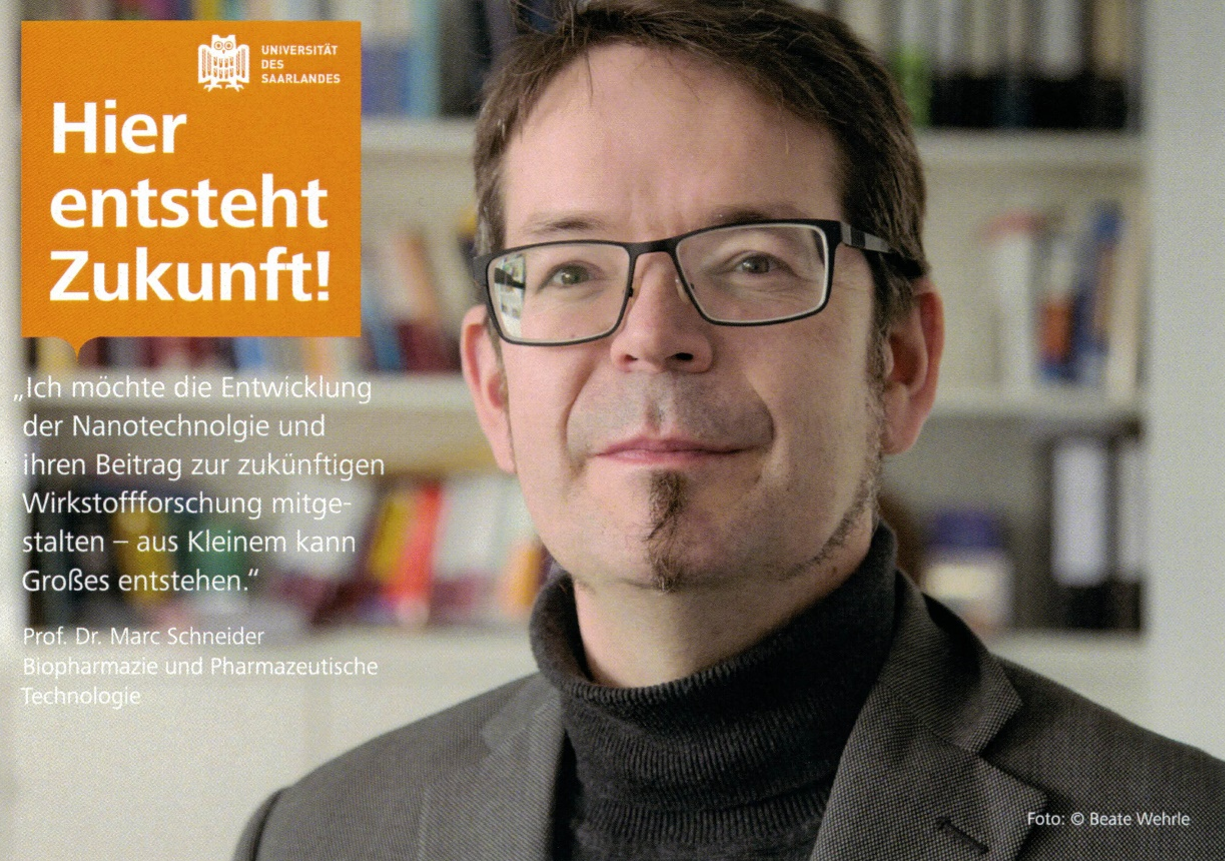
Prof. Dr. Marc Schneider holds a professorship in Biopharmaceutics and Pharmaceutical Technology at Saarland University's College of Pharmacy . His research focuses on colloidal drug delivery systems, particularly nanostructured and non-spherical particle engineering for overcoming biological barriers in pulmonary and transdermal applications. He leads an internationally recognized lab in Saarbrücken, collaborating with Helmholtz Institute for Pharmaceutical Research Saarland (HIPS) and trinational institutions. Research Highlights: Development of inhalable nano/microparticle systems Surface modification of gelatin nanoparticles Characterization of mucus-penetrating particles 3D printing for microneedle fabrication Atomic Force Microscopy (AFM) for nanoparticle analysis Selected Scientific Awards: European Journal of Pharmaceutics and Biopharmaceutics Best Paper Award (2018) for mucus-penetrating nanoparticles Recognized in 'Ausgezeichnete Orte im Land der Ideen' competition (2018) for 'Nano-Mais' drug delivery system Collaborative Networks: Co-editor for Advanced Drug Delivery Reviews special issue on biological barriers Key participant in trinational Master's program in Biomedicine with Strasbourg, Mainz, and Luxembourg Active in Controlled Release Society (CRS) conferences and local chapters
Erwin Schoof is an Associate Professor at the Department of Biotechnology and Biomedicine , Technical University of Denmark. He leads the Cell Diversity Lab and focuses on advancing proteomics and mass spectrometry technologies. Expertise in single-cell proteomics , stem cell niches , and bioinformatics . Active in myelofibrosis and leukemia research , with applications in UN Sustainable Development Goals . Research Trends from 2025–2024 include: Machine learning-driven peptide sequencing (InstaNovo, InstaNexus). Single-cell resolution tools for mapping hematopoietic stem cells and tumor microenvironments . Biomarker discovery in chronic diseases and respiratory conditions . Supervision : Mentors multiple PhD students on single-cell proteomics , omics data analysis , and biotherapeutic production . Labs & Collaborations : Collaborates with international teams on plasma proteomics , 3D bioengineering , and advanced mass spectrometry workflows .
Guizhen Zhao is an Assistant Professor at the University of Houston College of Pharmacy , Department of Pharmacological and Pharmaceutical Sciences. Her research focuses on epigenetic and molecular mechanisms in cardiovascular diseases (CVD), particularly aortic aneurysm, dissection, and atherosclerosis, with a goal to drive drug discovery innovations. Major research areas: Metaboloepigenetic properties of vascular cells, chromatin remodeling, vascular cell crosstalk Methodologies: bulk RNA-seq, single-cell RNA-seq, ChIP-seq, ATAC-seq, spatial transcriptomics, metabolomics Ongoing projects include studying BAF60c-dependent epigenetic modifications in smooth muscle cell biology, BAF60c-mediated iPSC differentiation, BAF60a in endothelial dysfunction, and vascular cell interactions in CVD development. Scientific contributions include 15+ publications on abdominal aortic aneurysm, atherosclerosis, and chromatin remodeling mechanisms, with recent work on adenosine kinase inhibition and KLF11 as therapeutic targets. 2023-25: Career Development Award, American Heart Association 2021-22: Postdoctoral Fellowship, American Heart Association 2019: Young Investigator Award, American Heart Association