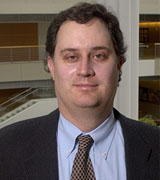
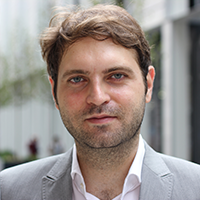
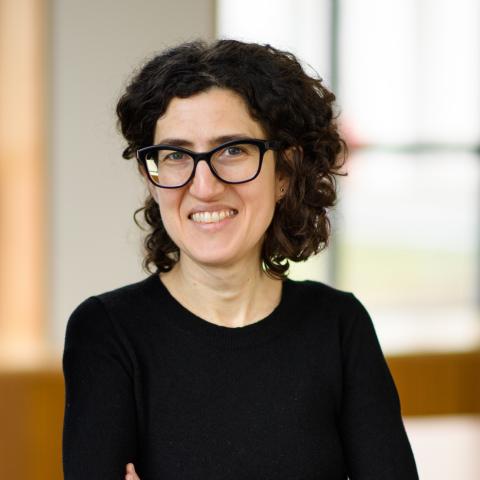
Tim Conley is Professor and Chair at the Department of Economics, University of Western Ontario. He holds a Ph.D. from the University of Chicago (1996). His research focuses on applied econometrics with emphasis on spatial dependence, cross-sectional analysis, and empirical industrial organization. His primary research interests include methodological development in econometrics, particularly around dependence modeling in cross-sectional data and spatial analysis techniques. He has made significant contributions to understanding technology adoption in developing economies and detection of collusion in market mechanisms. Professor Conley's publications demonstrate consistent focus on developing robust statistical methods for economic applications, with recent work emphasizing practical applications in policy evaluation and market analysis. His methodological innovations have been implemented in statistical software packages used by researchers worldwide.
Dr. Alyas Widita is an Assistant Professor in the Urban Design program at Monash University, Indonesia. He is actively involved in research and teaching, focusing on urban planning, transportation, and smart city technologies. He serves as the Program Coordinator for Urban Design and teaches courses such as Urban Design Studio: Smart City and Smart City Technologies. Education: Ph.D. in City and Regional Planning, Georgia Institute of Technology, United States Dr. Widita's research centers on the built environment, transportation systems, and urban analytics, with a strong emphasis on developing Asian cities. His work explores congestion impacts of mass transit, ride-hailing effects on vehicle ownership, rural-urban migration, walking behavior, and spatial patterns of MSMEs. He employs advanced data analytics and causal evaluation methods to inform urban policy. His recent publications span high-impact journals such as Transport Reviews , Journal of Planning Education and Research , and Travel Behaviour and Society . The research trend shows a consistent focus on data-driven urban policy, sustainable mobility, and equity in urban development across Indonesia and Southeast Asia. Scientific Awards and Recognition: No specific awards listed, but research widely cited and featured in media outlets. Dr. Widita has secured and contributed to multiple research projects funded by international and national agencies, including the World Bank, Korea Transport Institute (KOTI), Central Bank of Indonesia, and Georgia Department of Transportation. He is currently leading or co-leading projects on Jakarta’s subsidence, flood risk management using remote sensing, and the Citarum River revitalization. He collaborates extensively with researchers across disciplines and institutions. His work contributes to UN Sustainable Development Goals, particularly those related to sustainable cities and communities. He is accepting PhD students interested in the built environment, transportation, and urban analytics in developing Asia. He is involved in key labs and research teams including the Citarum Action Research Program (CARP), Intelligent and Dynamic Remote Sensing for Flood Risk, and interdisciplinary urban analytics initiatives at Monash Indonesia.
Dr. Florian Foos is an Associate Professor in Political Behaviour at the LSE's Department of Government, affiliated with the LSE Data Science Institute and Electoral Psychology Observatory. He holds a D.Phil from Nuffield College, Oxford. His research focuses on partisan election campaigns using randomized field experiments to study electoral mobilization, opinion change, and political activism. Key interests include social influence in political networks, media effects, and campaign strategies. He has published in top journals like the American Political Science Review and American Journal of Political Science. Current projects include the Register to Vote '21 initiative testing voter registration methods. He teaches experimental methods and political behavior, and co-organizes the European Workshop in Empirical Political Science (EuroWEPS). Research highlights include analyzing tabloid media's impact on Euroscepticism, the role of partisan cues in mobilization, and subnational representation effects. His work combines experimental designs with quasi-experimental methods, emphasizing causal inference. Collaborations span institutions like King's College London and German parliamentarians. He advises on policy experiments and serves on academic advisory boards.
Ninette Pilegaard is a Professor and serves as Deputy Head of Division and Head of Section for Transport Policy at the Department of Technology, Management and Economics, Technical University of Denmark (DTU). Her academic career spans multiple research domains with significant contributions to transportation policy and economics. Her research interests focus on transportation policy analysis with particular expertise in: Road charging systems and pricing mechanisms Bicycle infrastructure and safety analysis Commuting behavior and accessibility impacts Car ownership and usage patterns Relationship between transportation accessibility and labor market outcomes Dr. Pilegaard's scholarly work demonstrates a strong empirical approach combining transportation engineering with economic analysis. Her recent publications reveal a consistent focus on evidence-based policy evaluation, particularly in the Danish context. She frequently employs quasi-natural experimental methods to assess transportation policy impacts, with particular attention to road pricing, cycling infrastructure, and the economic implications of transportation systems. Her research has been supported by major funding bodies including Innovation Fund Denmark and Forskningsrådsfinansiering, and has resulted in publications in high-impact transportation journals such as Transportation Research Parts A and D, and Journal of Safety Research. As an academic supervisor, Dr. Pilegaard has served as Main Supervisor for PhD projects, including the 'Productivity and agglomeration' project. She has been actively involved in numerous research collaborations both within DTU and with external partners. Her laboratory work focuses on transportation data analysis, particularly utilizing Danish transportation datasets to examine policy impacts. She has developed expertise in analyzing hospital data for traffic safety research and has contributed to methodologies for assessing infrastructure effects on traffic accidents.
Dr. Koustuv Saha is an Assistant Professor of Computer Science at the University of Illinois Urbana-Champaign (UIUC), leading the OnCARE lab. He holds a PhD from Georgia Tech and a B.Tech from IIT Kharagpur. His research focuses on computational social science, social computing, and ethical AI applications in mental health and wellbeing. His work bridges computer science with psychology, sociology, and public policy to address societal challenges. Education: PhD in Computer Science (Georgia Tech, 2021), B.Tech in CSE (IIT Kharagpur, 2012). Previous roles include Senior Researcher at Microsoft Research Montreal (FATE group) and industry research experience in Silicon Valley. Research interests include wellbeing sensing technologies, algorithmic fairness, and large language models’ societal impacts. Recent work examines caregiver mental health, deceptive wellness apps, and AI ethics in content moderation. His studies combine causal inference, NLP, and multimodal data analysis. Publications span top venues like CHI, CSCW, ICWSM, and JMIR. Notable awards include Georgia Tech’s Outstanding Dissertation Award (2022) and Snap Research Fellowship (2020). He advises on AI governance and collaborates with policymakers, clinicians, and industry. OnCARE lab explores human-centered AI for societal good, with projects on mental health support systems, ethical tech design, and algorithmic transparency in health contexts. Current focus includes caregiver AI tools, LLM-based empathetic systems, and workplace wellbeing interventions.
Rocío Titiunik is a Professor of Politics at Princeton University and Director of the Data-Driven Social Science Initiative. She holds affiliations with the School of Public and International Affairs, the Department of Operations Research and Financial Engineering, the Center for Statistics and Machine Learning, the Program in Latin American Studies, the Center for the Study of Democratic Politics, and the Research Program in Political Economy. Her work bridges quantitative methodology, political economy, and statistical analysis, focusing on causal inference and program evaluation through regression discontinuity (RD) designs. She earned her undergraduate degree at the Universidad de Buenos Aires and a Ph.D. in Agricultural and Resource Economics from UC-Berkeley (2009). Before joining Princeton, she served as faculty at the University of Michigan’s Department of Political Science, where she was affiliated with the Center for Political Studies and the Michigan Institute for Data Science. Rocío’s research emphasizes the application of quasi-experimental methods to study political institutions, democratic accountability, and party systems in developing democracies. Her methodological contributions include advancements in RD designs, synthetic controls, and uncertainty quantification. Recent substantive work investigates charismatic leaders’ impact on democratic stability and the effects of voter registration reforms on public safety. Her scholarly achievements include the 2016 Emerging Scholar Award from the Society for Political Methodology and 2020 fellowship in the same society. She currently serves as an associate editor for Science Advances and a Board member for Science, while previously holding roles at the American Journal of Political Science and the NSF’s Social, Behavioral, and Economic Sciences Directorate. Rocío’s advising and grant activities include co-leading the EITM Summer Institute and securing federal research funding for projects on political methodology and democracy. She teaches advanced quantitative analysis courses and collaborates across disciplines to strengthen empirical research practices. Her work is anchored in collaborative initiatives like the Center for Statistics and Machine Learning, which integrates computational tools with social science inquiry, and the Program in Latin American Studies, reflecting her commitment to regional and methodological innovation.
Florian Zettelmeyer is the Nancy L. Ertle Professor of Marketing at Northwestern University's Kellogg School of Management and Faculty Director of the Program on Data Analytics at Kellogg. He also serves as a senior science leader at Amazon, leading the Advertising Economics organization. His research focuses on marketing analytics, digital advertising, and the economic implications of artificial intelligence in business. PhD in Management Science from MIT (1996) Vordiplom in Business Engineering from University of Karlsruhe (1992) MS in Economics from University of Warwick (1991) Professor Zettelmeyer specializes in analyzing how analytics and AI transform firms, with notable work on advertising measurement, pricing strategies, and consumer decision-making in automotive markets. His publications span journals like Marketing Science, Management Science, and American Economic Review, emphasizing empirical validation through field experiments. He has received prestigious awards including the John D.C. Little Award (twice), Sales SIG Excellence in Research Award, and multiple teaching honors such as the Sidney J. Levy Teaching Award and L. G. Lavengood Outstanding Professor of the Year Award. His research frequently appears in top-tier journals and working paper series.
Martin Huber is Professor of Applied Econometrics and Policy Evaluation at the University of Fribourg, Switzerland, within the Faculty of Management, Economics and Social Sciences, Department of Economics. He leads the Chair of Applied Econometrics and maintains an active research profile with numerous publications in top economics and statistics journals. His work bridges theoretical econometrics with practical policy applications across multiple domains including labor, health, and education economics. Professor Huber earned his Ph.D. in Economics and Finance in 2010 and served as Assistant Professor at the University of St. Gallen until 2014. He has conducted research stays at Harvard University (2011/2012) and the University of Sydney (2014 and 2019), establishing an international research network. His academic affiliations include the Committee for Econometrics of the Verein für Socialpolitik, Global Labor Organization, Soda Labs (Monash Business School), and Centre for European Economic Research (ZEW) Mannheim. Huber's research focuses on data-based causal analysis , machine learning applications in economics , and policy evaluation methods . He specializes in developing and applying statistical and econometric methods for measuring causal effects, with particular emphasis on semi- and nonparametric microeconometrics. His work spans labor economics (gender occupational segregation, maternal labor supply), health economics, education policy, and competition policy (bid-rigging cartels detection). His recent publications (2023-2025) demonstrate a clear trajectory toward integrating machine learning techniques with traditional econometric methods for causal inference. This includes developing frameworks for causal discovery, improving difference-in-differences methods with machine learning, and creating novel approaches for detecting collusion in markets. His 2023 book "Causal Analysis: Impact Evaluation and Causal Machine Learning with Applications in R" (MIT Press) has become a key reference in the field. As an active researcher, Professor Huber directs several research projects including experimental evaluations of gender occupational segregation in the Swiss apprenticeship market. His work combines theoretical rigor with practical policy relevance, often employing experimental and quasi-experimental methods to address questions of causal mechanisms in social and economic phenomena. Through his Chair of Applied Econometrics, Huber supervises Ph.D. students and maintains an active research group focused on advancing causal inference methodologies. His work has significant implications for evidence-based policymaking across multiple sectors, particularly in evaluating the effectiveness of social programs and economic policies.
Agnes Fauske is a Researcher at the Department of Sociology and Human Geography, University of Oslo (UiO), since August 2024. Previously, she was a PhD candidate at UiO (2020–2024) and a research assistant/adviser at the Norwegian Institute of Public Health (2019–2020). She holds an MA (2019) and BA (2016) in sociology from UiO. Her research focuses on family sociology, gender equality, demography, quantitative methods, and social science genetics. Key interests include fertility trends, policy impacts on family formation, and the interplay between genetics and societal factors. She teaches courses such as SOS1000 Introduction to Sociology and Quantitative Methods at UiO. Fauske contributes to projects like OPENFLUX and the Research Group on Social Inequalities and Population Dynamics. Her work bridges demographic analysis with policy evaluation, emphasizing causal methods. She collaborates widely, including with the Norwegian Demographic Society and the Norwegian Sociological Association.
Thomas S. Dee is the Barnett Family Professor at Stanford University's Graduate School of Education (GSE), a Research Associate at the National Bureau of Economic Research (NBER), a Senior Fellow at the Stanford Institute for Economic Policy Research (SIEPR), and a Senior Fellow (Joint) at the Hoover Institution. He serves as the Faculty Director of the John W. Gardner Center for Youth and Their Communities and holds multiple administrative appointments including Member of the Executive Committee of Stanford's Public Policy Program. Professor Dee's research focuses on the use of quantitative methods to inform contemporary issues of public policy and practice, with particular emphasis on education policy, economics of education, and program evaluation. His work spans critical areas including pandemic education effects, chronic absenteeism, school choice, educational equity, STEM education, and research methodology. He has made significant contributions to understanding how quantitative analysis can shape effective educational policy and practice. Dee's recent publications reveal a strong focus on pandemic-related educational disruptions, examining issues like chronic absenteeism, enrollment declines, and school reopening preferences. His research demonstrates expertise in quasi-experimental methods and has increasingly addressed questions of educational equity, particularly regarding underrepresented students in STEM fields. His 2025 work on Advanced Placement computer science shows how course design can broaden participation among female and minority students. Outstanding Public Communication of Education Research Award, American Educational Research Association (2024) Peter H. Rossi Award for Contributions to the Theory or Practice of Program Evaluation, Association for Public Policy Analysis and Management (2024) Research-Practice Partnership Award (co-recipient), California Educational Research Association (2023) Community Outcomes and Impact Award, International Association for Research on Service Learning and Community Engagement (2020) Raymond Vernon Memorial Award, Association for Public Policy Analysis and Management (2019) Raymond Vernon Memorial Award, Association for Public Policy Analysis and Management (2015) Professor Dee actively contributes to academic discourse through editorial roles on journals including the American Educational Research Journal and Education Finance and Policy. His teaching portfolio includes advanced courses in quantitative policy analysis and quasi-experimental research design, reflecting his methodological expertise. While specific grant information isn't detailed in the provided text, his extensive publication record and leadership roles suggest significant research funding support. As Faculty Director of the John W. Gardner Center for Youth and Their Communities, Dee leads initiatives connecting Stanford with community organizations to address youth development challenges. His work bridges academic research with practical community applications, emphasizing the importance of research-practice partnerships in creating meaningful educational change.
Damon Clark is an Associate Professor (with tenure) in the Department of Economics at the University of California, Irvine, within the School of Social Sciences. He is also affiliated with several prestigious research institutions, including the National Bureau of Economic Research (NBER), IZA Institute of Labor Economics, and the Institute for Fiscal Studies (IFS) in London. Research Interests: His primary research focuses on the economics of education, with additional expertise in labor economics and public economics. His work explores school choice, educational policy, the signaling value of credentials, and the long-term impacts of education on health and economic outcomes. He employs rigorous empirical methods, including field experiments and quasi-experimental designs, to evaluate educational reforms and policies. The most recent publications reflect a consistent focus on education policy evaluation, school effectiveness, peer effects, and human capital formation. His research often uses large-scale administrative datasets and natural experiments to identify causal effects, contributing significantly to debates on equity, accountability, and efficiency in education systems. Scientific Awards and Honors: UC Irvine Faculty Mentoring Award (2015–2016) Excellence in Refereeing Award, Journal of the European Economic Association (2003) Excellence in Refereeing Award, American Economic Review (2012) Excellence in Refereeing Award, Quarterly Journal of Economics (2011) National Academy of Education/Spencer Post-Doctoral Research Fellow (2007–2008) European Economic Association Young Economist Award (2005) Advising and Grants: While specific student names are not listed, his role as a tenured associate professor and principal investigator on multiple grants indicates active mentoring of graduate students. He has secured significant external funding from agencies such as the National Institutes of Health (NIH), the Institute of Education Sciences (IES), the WT Grant Foundation, and the Nuffield Foundation, supporting research on test-based retention, school access, and intergenerational education transmission. Labs and Research Teams: Clark collaborates extensively with researchers at institutions like NBER, IZA, IFS, and universities across the U.S. and Europe. His work is often conducted through collaborative research networks rather than a single lab, reflecting the interdisciplinary and policy-oriented nature of his scholarship.
Erin Strumpf is a Full Professor jointly appointed in the Department of Economics and the Department of Epidemiology, Biostatistics and Occupational Health at McGill University. She is a founding member of McGill’s Public Policy and Population Health Observatory (3PO) and holds the distinguished William Dawson Scholar title. Her work bridges economics and population health, focusing on evaluating health and social policies through rigorous causal inference methods. Education: PhD in Health Policy and Economics, Harvard University BA, Smith College Research Interests: Prof. Strumpf’s research agenda centers on the impacts of health policies on health care delivery, population health outcomes, and health inequalities. She employs quasi-experimental designs and large-scale administrative data to assess interventions such as cancer screening programs, primary care reforms, and paid family leave policies. Her work spans multiple jurisdictions, including Canada, the United States, and France, and actively informs policymakers at provincial and national levels. Her recent projects include evaluating the cost-effectiveness of population-based cancer screening guidelines, assessing the health system impacts of integrated primary care in Quebec, and exploring how paid family leave policies reduce infant respiratory infections and promote equity. She is also a key contributor to the Canadian Institutes of Health Research’s Drug Safety and Effectiveness Network. Scientific Awards & Honors: William Dawson Scholar, McGill University Chercheur-boursier Junior 1 & 2, Fonds de Recherche du Québec – Santé Collaborations & Funding: Prof. Strumpf collaborates extensively with ministries of health and finance across Canadian provinces and with international agencies. She leads multidisciplinary teams that leverage rich administrative health data to generate actionable evidence for decision-makers. Her research is primarily aligned with the Centre on Population Dynamics’ Social and Economic Determinants of Health axis, and intersects with the Aging axis. Affiliations & Labs: She is affiliated with McGill’s Department of Equity, Ethics, and Policy, Family Medicine Department, Department of Oncology, and the Centre on Population Dynamics. Previously (2019-2022), she was an affiliated researcher with the cancer unit at l’Institut national d’excellence en santé et en services sociaux (INESSS).
Jeffrey Smith holds the Paul T. Heyne Distinguished Chair in Economics and Richard Meese Chair in Applied Econometrics at the University of Wisconsin-Madison. Previously, he served as Professor of Economics and Public Policy at the University of Michigan, with prior faculty positions at the University of Western Ontario (1994-2001) and University of Maryland (2001-2005). Education includes: B.A. Economics & B.S. Computer Science, University of Washington (1985) M.A. Economics, University of Chicago (1987) Ph.D. Economics, University of Chicago (1996) Research focuses on experimental and non-experimental methods for evaluating social and educational interventions, labor market impacts of university quality, and statistical treatment rules for government programs. Primary domains include Labor Economics, Public Economics, Econometrics, and Program Evaluation, with emphasis on causal inference methodologies and policy applications. Publications demonstrate consistent focus on econometric innovations in program evaluation, particularly quasi-experimental designs, treatment effect heterogeneity, and labor policy efficacy. Recent work examines conditional cash transfers, matching estimators, and behavioral incentives in welfare programs. Awards: Royal Economic Society Prize (1999) for contributions to evaluation methodology Consulting engagements include governments of the United States, Canada, United Kingdom, and Australia on evaluation frameworks and policy design.
Dr. Paul Lohmann is a Postdoctoral Research Fellow at the El-Erian Institute of Behavioural Economics and Policy within Cambridge Judge Business School, University of Cambridge. His work bridges applied economics with behavioural and environmental policy, focusing on causal analysis of climate-related stressors and interventions. PhD in Behavioural Environmental Economics, University of Cambridge MPhil in Environmental Policy, University of Cambridge His research explores how human decision-making and well-being respond to climate change through interdisciplinary methods, including microeconometrics and randomised controlled trials. Key themes include sustainable food policy, air pollution impacts, and policy instrument evaluation. Recent publications highlight his expertise in field experiments, with studies on carbon footprint labelling, choice architecture in food delivery apps, and air pollution’s effects on health expenditures and social behaviour. His work often quantifies causal relationships between environmental stressors and human responses.
Dr. Stuart J. Turnbull-Dugarte is an Associate Professor in Quantitative Political Science at the Department of Politics & International Relations, University of Southampton. His research focuses on political sociology, LGBTQ+ politics, and comparative politics, with a particular emphasis on far-right party success, political identity dynamics, and LGBTQ+ political behavior. He actively supervises PhD students and teaches quantitative research methods, including causal inference, at undergraduate and postgraduate levels. Associate Editor: Public Opinion Quarterly, European Journal of Politics and Gender, Research & Politics Steering Group Member: Centre for Behavioural Experimental Action and Research (C-BEAR) His methodological expertise includes experimental and quasi-experimental designs, with applications in electoral campaigns and public policy analysis. Current projects include a Leverhulme Trust Fellowship for his book The Rainbow Vote and research on surrogacy reform, homonationalism, and far-right mobilization. Recent publications in American Political Science Review , British Journal of Political Science , and Journal of European Public Policy highlight his work on identity projection, religious stereotyping, and class perception in politics. He has received multiple accolades, including the ECPR Rising Star Award (2024) and Best Article Prizes from European Union Politics (2020, 2025).