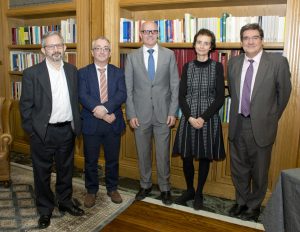
Prof. José Garcia Montalvo is a Full Professor at the Department of Economics and Business, Universitat Pompeu Fabra (UPF), Barcelona. He holds a PhD from Harvard University. His research focuses on housing policy, macroeconomics, political economy, and public policy, with recent emphasis on urban housing crises, inequality measurement, and fiscal responses to inflation. He has published widely in journals like the Review of Economic and Statistics and the Journal of Comparative Economics. Education: PhD in Economics, Harvard University. Key research areas include housing economics, public-private partnerships, and the socioeconomic impact of disasters. He has authored a handbook on housing economics and co-authored studies on rent controls and university competitiveness. Recent activities include organizing workshops on economic research using bank transactions data (June 2025), publishing in CEPR Discussion Papers (March 2025), and contributing to policy debates via op-eds in La Vanguardia and El Periódico. He frequently engages with media and policymakers on housing, inflation, and labor market dynamics. His work spans academic contributions, public policy analysis, and media commentary, emphasizing data-driven solutions to socioeconomic challenges.
Candice Odgers is a Professor of Psychological Science and Informatics at the University of California Irvine, and Co-Director of the Child & Brain Development Program at the Canadian Institute for Advanced Research (CIFAR). Her work focuses on how early life experiences, social inequalities, and digital technologies shape child and adolescent development. She has held prestigious roles such as William T. Grant Scholar and has received multiple early-career awards from organizations including the American Psychological Association and the Royal Society of Canada. Dr. Odgers earned her Ph.D. in Developmental and Quantitative Psychology from the University of Virginia. Her research integrates longitudinal studies and innovative methodologies to address critical societal issues like the impact of socioeconomic disadvantage, gentrification, and digital technology on mental health and educational outcomes. She has pioneered studies on smartphone use, social media dynamics, and intergenerational effects of family interventions. Her scientific contributions include groundbreaking analyses of the 'Great Rewiring' of childhood, linking technological shifts to rising mental health challenges among youth. She advocates for evidence-based policies, open science practices, and ethical considerations in AI and educational technology. Key themes in her work include loneliness, family cash transfers, and the epidemiological study of adolescent mental health. Dr. Odgers has published extensively on topics ranging from air pollution's psychopathological effects to the role of home environments in child outcomes. Her work bridges academic research with practical interventions, emphasizing equitable solutions for marginalized communities. She has been a leader in global research networks, emphasizing collaboration between academia and industry to improve youth mental health outcomes.
Professor Shyamal Chowdhury holds the Rajiv Gandhi Chair of South Asian Economics at the Arndt-Corden Department of Economics, part of the Crawford School of Public Policy at the Australian National University (ANU). He is also Director of the Australia South Asia Research Centre (ASARC). His research focuses on economic development, particularly seasonal migration, children's non-cognitive skills, microfinance, and technology adoption in South Asia and other developing regions. He has published in top journals like Econometrica and the Journal of Political Economy. Prior roles include positions at the World Bank and University of Sydney. Chowdhury is a Research Fellow at Germany’s IZA and Secretary of the Australasian Development Economics Association (ADEA). Education: BSc (Hons.) in Economics, Jahangirnagar University, Bangladesh MA in Economics, University of Kiel, Germany PhD in Agricultural Economics, University of Bonn, Germany Research Interests: His work interrogates how structural economic challenges in South Asia intersect with global development frameworks. Recent studies explore resilience of social programs during climate crises (2024), behavioral impacts of cash transfers (2023), and intergenerational preference dynamics (2022). He emphasizes policy-relevant findings for infrastructure, health access, and gender equity in rural contexts. Awards & Affiliations: Research Fellow, IZA Institute of Labor Economics Secretary, Australasian Development Economics Association (ADEA) Grants & Advising: Extensive experience with multilateral organizations including IFPRI and World Bank. Advises on South Asian economic policy frameworks. Active in guiding interdisciplinary teams across development economics clusters. Labs/Teams: Leads ASARC coordinating regional research initiatives on South Asian economic integration and development challenges.
Laura Wherry is an Associate Professor at NYU Wagner Graduate School of Public Service and a Research Associate at the National Bureau of Economic Research in the Economics of Health program. During the 2024-2025 academic year, she served as the Senior Economist for health care on the President's Council of Economic Advisers. Her academic journey includes previous positions as an assistant professor at the David Geffen School of Medicine at UCLA and a Robert Wood Johnson Foundation Health & Society Scholar at the University of Michigan. Dr. Wherry received her Ph.D. in Public Policy from the University of Chicago's Harris School and her B.A. from the College of William and Mary. Her educational background has prepared her for impactful research at the intersection of health economics and public policy. Dr. Wherry's research focuses on the role of public programs and policies on the health and economic well-being of individuals in the US, with a particular interest in policies affecting access to health care for women and children in lower income families. Her work spans several critical areas including health economics , public policy , Medicaid policy , and maternal and child health . She has made significant contributions to understanding how insurance coverage affects birth outcomes, the economic consequences of abortion access, and the long-term impacts of public health programs. Her recent research has examined state public coverage policies for pregnant undocumented immigrants, the labor market and health impacts of reducing cesarean deliveries, and public coverage of postpartum services for immigrants. Dr. Wherry's work often utilizes large-scale administrative data to provide rigorous evidence for policy decisions, with a focus on health disparities and economic inequality in health outcomes. Equity, Diversity, and Inclusion Research Prize Winner (2024) Dr. Wherry has received significant recognition for her work, with multiple papers cited in White House economic reports and featured in major media outlets including NPR, STAT, and PBS. Her research on immigrant postpartum health was highlighted on NPR's Academic Minute, and her work on state restrictions affecting postpartum immigrant health has been covered by major news outlets. Her research bridges academic scholarship and practical policy applications, making significant contributions to evidence-based health policy development.
Syon Bhanot is an Associate Professor of Economics at Swarthmore College , with additional appointments as an Adjunct Associate Professor at the Wharton School (University of Pennsylvania). He specializes in behavioral economics , public economics , and experimental economics , focusing on pro-social behavior , decision-making , and development economics . Academic Affiliate, Office of Evaluation Sciences Board Member, Busara Center for Behavioral Economics Senior Researcher, MIT Applied Cooperation Initiative Co-Founder, Philadelphia Behavioral Science Initiative Member, American Economic Association His research emphasizes field experiments using behavioral science concepts to influence decision-making, with applications in public policy , poverty reduction , and environmental sustainability . Recent publications explore topics like political messaging effects , administrative burden reduction , and social norm influences on conservation behavior. His work has appeared in journals like The New England Journal of Medicine , Journal of Development Economics , and Organizational Behavior and Human Decision Processes . He is a frequent media commentator in outlets including the New York Times , NPR , and The Philadelphia Inquirer , with notable contributions on quarantine compliance and vaccine hesitancy . His interdisciplinary approach bridges economics with environmental studies and public health .
Giacomo De Giorgi is Full Professor of Economics at the Institute of Economics and Econometrics, Geneva School of Economics and Management (GSEM), University of Geneva, and holds visiting appointments at UC Irvine. An alumnus of University College London (Ph.D.), he previously served as assistant professor at Stanford University (2006–2013), visiting professor at UC Berkeley and Columbia University, research professor at ICREA-MOVE/Barcelona GSE, and senior economist at the Federal Reserve Bank of New York (2014–2016). He is an associate editor of the Journal of the European Economic Association and a research fellow of CEPR and BREAD. Education Ph.D. in Economics, University College London Research Interests De Giorgi’s research integrates applied micro-econometrics with policy-relevant questions in development, labor, and household finance. His work explores how social networks shape economic decisions, the distributional impacts of cash and in-kind transfer programs, lifecycle inequality across racial and migrant groups, and the determinants of micro-enterprise formalization. Methodologically, he leverages large-scale randomized controlled trials, quasi-experimental designs, and cutting-edge network econometrics. Recent projects investigate: • Consumption and inequality : quantifying racial gaps in income and consumption dynamics over the lifecycle; • Financial inclusion : analyzing credit market imperfections, subprime borrowing, and the effects of business literacy interventions; • Migration and integration : comparing economic trajectories of migrants and natives in Denmark and the impact of refugee inflows on child poverty. Publications & Impact With more than 25 peer-reviewed articles in top journals—including the American Economic Review , Review of Economic Studies , Economic Journal , and Journal of Public Economics —De Giorgi’s scholarship has advanced understanding of social spillovers, program evaluation, and macro-financial linkages. His 2020 Review of Economic Studies paper on “Consumption Networks Effects” (with Frederiksen & Pistaferri) has become a benchmark for identifying neighborhood and family influences on household spending. Scientific Awards 2020 Banamex Prize for the best article published in American Economic Journal: Economic Policy Seminar & Grant Activity De Giorgi co-founded and co-organizes the Virtual Development Economics Seminar (VDEV), a joint initiative of BREAD, CEPR, and VDEV that hosts weekly online seminars reaching a global audience. He has delivered over 150 invited talks at institutions such as the World Bank, NBER, LACEA, and universities across five continents. His research has been supported by grants from the World Bank, CEPR, and private foundations. Teaching & Programs At Geneva, he teaches Development Economics, Labor Economics, and Advanced Econometrics at both graduate and executive levels. He co-founded the IEE Honors’ Program, an innovative selective track that immerses top undergraduate students in frontier research and policy engagement.
Professor Ingvild Almås is a leading academic at the Institute for Fiscal Studies, specializing in inequality, poverty, and social policy research. Her work bridges economics and public policy, focusing on household dynamics, cash transfer programs, and cost-of-living measurement. Key research areas: Poverty, Inequality, Social Policy, Development Economics Recent publications analyze power structures in households, CPI bias methodologies, and women's empowerment through targeted transfers Active in policy-relevant research, particularly in international development and fiscal equity Her 2024 report on inequality dimensions contributes to ongoing debates about economic disparities, while 2016-2018 studies in Macedonia and methodological critiques remain influential. Research combines empirical analysis with innovative identification strategies. Current affiliations include the Institute for Fiscal Studies, where she continues to shape economic policy discourse through rigorous scholarship and public engagement initiatives.
Paul Gertler is a Professor of Economic Analysis and Policy at the Haas School of Business, University of California, Berkeley, and a Network Member of the Early Childhood Interventions (ECI) network. His work bridges economics with human development to address critical policy challenges in low and middle-income countries, focusing on rigorous impact evaluation methodologies. Gertler's research spans development economics, health economics, and behavioral economics, with emphasis on early childhood interventions, public health systems, and financial inclusion. He employs randomized controlled trials and natural experiments to evaluate programs in nutrition, education, infrastructure, and healthcare delivery. Key contributions include longitudinal studies on early stimulation effects, analyses of pension impacts on well-being, and innovations in digital finance for the poor. His recent publications (2022-2024) demonstrate consistent focus on causal mechanisms in development contexts, including digital collateral systems, road infrastructure economics, water utility financing, and long-term nutritional impacts. A unifying thread is the application of experimental methods to generate policy-relevant evidence for improving lives in resource-constrained settings across Africa, Latin America, and Asia.
Jenny Aker is the Daniel G. Sisler Professor of Development Economics at Cornell University's Department of Global Development, affiliated with the College of Agriculture and Life Sciences and College of Arts and Sciences. Her research focuses on economic development in Africa, particularly the role of information technology in improving agricultural markets, financial inclusion, and adult education. She has conducted fieldwork across multiple African countries, including Benin, Burkina Faso, and Kenya, among others. Dr. Aker holds a Ph.D. in Agricultural Economics from the University of California-Berkeley. Before joining Cornell, she was a Professor of Development Economics at Tufts University’s Fletcher School, where she directed initiatives like the Fletcher Leadership Program for Financial Inclusion. She currently co-chairs J-PAL Africa's Digital Identification and Finance Initiative and is a Non-Resident Fellow at the Center for Global Development. Her research explores themes such as cash transfer impacts, mobile phone adoption, and the efficacy of development interventions. Key awards include the 2017 Fletcher School Research Prize and the 2015 Paddock Teaching Award. She has advised students like Kelsey A. Wright and collaborates with institutions globally to advance evidence-based policies. Notable contributions include studies on mobile phone effects on market efficiency, adult literacy programs, and cash transfer dynamics in rural Africa. Her work emphasizes bridging gaps between technology and socioeconomic outcomes in underserved regions.
Sarah Halpern-Meekin is the Vaughan Bascom Professor of Women, Family and Community, and Professor of Human Development & Family Studies at the University of Wisconsin–Madison’s School of Human Ecology. She holds affiliations with the La Follette School of Public Affairs, Department of Sociology, and multiple research centers including the Institute for Research on Poverty. Her research focuses on low-income families, romantic relationships, and government policies, with a particular emphasis on unconditional cash transfers and social poverty. Halpern-Meekin’s educational background includes a PhD in Sociology and Social Policy from Harvard University, a BA in Politics from Brandeis University, and a postdoctoral fellowship at Bowling Green State University. Her work bridges qualitative and quantitative methods, examining topics like labor force participation gaps among men, the impact of cash transfers on families, and the role of relationship instability in child well-being. Her research highlights themes such as the psychological and material effects of economic policies, the resilience of marginalized populations, and the interplay between individual agency and structural inequities. Notable projects include the Baby’s First Years Study, which investigates long-term impacts of cash transfers on child development. Halpern-Meekin has contributed to policy debates through media engagements, including discussions on pandemic-era poverty and the design of effective social safety nets. Her work underscores the importance of both financial and social resources in alleviating poverty and fostering family stability.
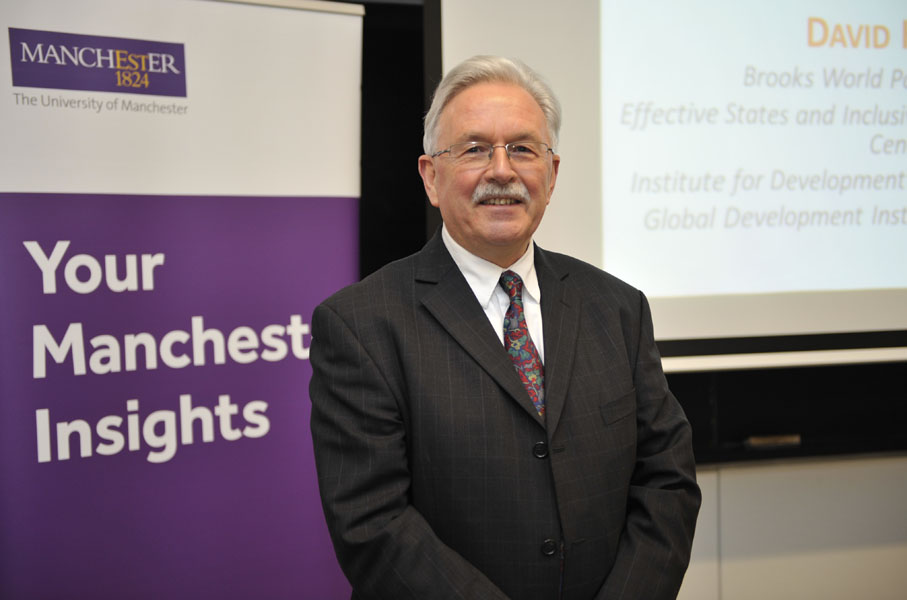
David Hulme is Professor of Development Studies and Executive Director of the Global Development Institute at the University of Manchester, with leadership roles in the Brooks World Poverty Institute (BWPI) and Effective States and Inclusive Development Research Centre (ESID). His career spans over 35 years at Manchester, including Directorship of the Institute for Development Policy and Management (IDPM). Research interests focus on poverty analysis , global governance , and international development , with specific expertise in state effectiveness, climate change impacts (particularly in Bangladesh), and microfinance systems. His work bridges academic theory and policy implementation through major DFID and ESRC-funded initiatives. Publications demonstrate consistent thematic focus on poverty reduction mechanisms and governance failures, evolving from chronic poverty frameworks (2000s) to contemporary critiques of global aid architecture. Key contributions include empirical analyses of cash transfer efficacy and institutional reform pathways. Major Awards: Academician of the Academy of Social Sciences (2013) Researcher of the Year, University of Manchester (2005) DFID Chronic Poverty Research Centre (£7.5m grant, 2000-2005) Leverhulme Research Professorship (£150k, 2006-2009) As CEO of ESID (£6.25m DFID consortium) and academic lead for BWPI (£1.3m Brooks Foundation partnership), Hulme directs multi-institutional teams across Africa, Asia, and Europe. Current work centers on post-2015 development frameworks and state effectiveness metrics in low-income contexts.
David Cordell is a Clinical Professor in the Department of Management at the Naveen Jindal School of Management, University of Texas at Dallas, where he also serves as Director of Finance Programs. He holds a Ph.D. in Financial Management and Investment Theory from the University of Texas at Austin and has over four decades of experience in academia and financial services. His educational background includes: Ph.D. in Financial Management and Investment Theory, University of Texas at Austin (1980) MBA in Finance, University of Texas at Austin (1976) B.A. in Plan II, University of Texas at Austin (1974) Dr. Cordell's research centers on personal financial planning, behavioral aspects of financial decision-making, retirement strategies, insurance planning, and investment management. His work bridges academic rigor with practical application for financial advisors. He has published extensively in leading practitioner and academic journals such as the Journal of Financial Planning and Journal of Business and Psychology . The recent publications reflect a strong focus on real-world financial challenges—assessing financial planner competence, understanding risk tolerance consistency, optimizing retirement strategies, and managing life insurance and health care savings accounts. His work emphasizes the integration of psychological factors, financial theory, and practical planning techniques. Dr. Cordell holds several prestigious professional certifications: Chartered Financial Analyst (CFA), 1984–present Certified Financial Planner® (CFP®), 1987–present Chartered Life Underwriter (CLU), 1992–present Registered Investment Adviser, 1991–1998 He has played significant roles in academic governance and professional service. At UT Dallas, he has served as Secretary of the Faculty Senate, member of the Academic Council, and Faculty Advisory Council representative to the UT System. He has chaired dissertation committees, advised numerous master’s papers, and contributed to curriculum development across institutions. His grant involvement includes the ING Alliance for Diversity in Financial Planning. He has also consulted with major financial firms including Merrill Lynch, Smith Barney, Vanguard, and State Farm. Dr. Cordell has been actively involved in professional organizations such as the American Finance Association, Financial Management Association, Academy of Financial Services, and Financial Planning Association. He has held leadership roles in the CFP Board of Examiners, served on award selection committees, and contributed to standard-setting for the CFA exams.
Dr. Steven Serels is a historian specializing in the environmental, economic, and social history of the Red Sea region, particularly the African littoral. He currently serves as a Research Fellow at the Leibniz Center for Modern Oriental Studies (ZMO) in Berlin, leading the DFG-funded project 'A New History of Infectious Diseases in the Southern Red Sea Region' (2019-2022). Previously, he held positions as an Associated Research Fellow at ZMO (2014-2017), Project Leader at Martin-Luther-Universität Halle-Wittenberg (2018-2019), and Visiting Fellow at Harvard University (2017-2019). His educational background includes: PhD in History, McGill University (2012), dissertation: 'Feasting on Famines: Food Insecurity and the Making of the Anglo-Egyptian Sudan, 1883-1956' (supervised by Gwyn Campbell and Elizabeth Elbourne) MA in History, McGill University (2007), thesis: 'Town Planning for Empire: British Colonial Planning and Re-Planning of Khartoum, the Sudan, 1898-1914' (supervised by Elizabeth Elbourne) BFA, The Cooper Union (2005) Dr. Serels' research investigates how environmental change, famine, slavery, and colonial economic policies shaped societies in the Red Sea and Indian Ocean worlds from the 17th to 20th centuries. His work bridges environmental determinism and political agency, examining how local populations navigated ecological crises amid imperial expansion. Key contributions include analyzing monetary transitions, salt trade networks, and the socioecological roots of food insecurity. His 15 most recent publications reveal consistent thematic threads: the interplay of climate, disease, and power in the African Red Sea region; the long-term impoverishment effects of colonial monetary systems; and the persistence of unfree labor structures. Articles span environmental history (e.g., Little Ice Age impacts), economic history (currency systems), and social history (slavery), demonstrating interdisciplinary rigor through archival work across German, British, and Canadian collections. His scholarly impact is recognized through major awards: DFG Individual Research Grant (2019-2021) PRIME Fellowship from DAAD (2018-2019) Gerda Henkel Stiftung Research Scholarship (2016-2018) Humboldt Postdoctoral Fellowship (2015-2016) VolkswagenStiftung Fellowship (2014-2015) While not listed as supervising students, Dr. Serels has secured extensive research funding through competitive grants, often collaborating with institutions like Harvard's Center for Middle Eastern Studies and McGill's Indian Ocean World Center. His consultancy reports for the Rift Valley Institute demonstrate applied scholarship on epidemics and environmental change in the Horn of Africa. Current work focuses on historical disease ecology through ZMO's 'State and Society' research program. He actively participates in ZMO's collaborative networks including 'Thinkers and Theorizing from the South' and 'De:link // Re:link,' contributing to transregional perspectives on the Red Sea region. His DFG project integrates environmental history with medical anthropology to trace infectious disease pathways in the Southern Red Sea littoral.
Pedro Adão is an Assistant Professor at the Department of Computer Science and Engineering (DEI) of the Instituto Superior Técnico (IST) , University of Lisbon . He is affiliated with the SQIG - Security and Quantum Information Group at the Institute of Telecommunications , formerly part of CLC - Logic and Computation Centre . His work bridges formal methods and computational cryptography , focusing on security protocols , software security , and quantum information security . PhD in Mathematics (2006, IST) with thesis "Formal Methods for the Analysis of Security Protocols" Graduated in Applied Mathematics and Computation (2002, IST) with thesis "Electronic Money" His research interests include verification of secure systems, composition of secure systems, mathematical foundations of cryptography, and physical/day-life security. His publications span topics like firewall configuration tools , smart contract verification , quantitative protocol analysis , and computationally sound symbolic cryptography . He has collaborated with institutions such as the University of Pennsylvania, Microsoft Research Cambridge, and INRIA-Microsoft Research Paris. Key teaching contributions include courses in Introduction to Algorithms and Data Structures , Computational Models in Security , and Software Security . He is a member of the SQIG research group and has organized the SQIG Information Security Seminar . Past teaching roles include lecturing at the Catholic University of Portugal and the Air Force Academy.
Francesco Cecchi is an Associate Professor in the Development Economics Group at Wageningen University & Research. His research focuses on development economics with a particular emphasis on behavioral and experimental approaches applied to microfinance, insurance, and risk mitigation in contexts of rural poverty. He has conducted fieldwork in Bolivia, Kenya, Ethiopia, Brazil, Liberia, Sierra Leone, Bangladesh, and Uganda. His expertise spans agricultural economics, development economics, behavioral economics, and experimental methods. Current projects address topics like cooperative roles in climate adaptation, microcredit effectiveness, and social capital's role in disaster risk reduction. Cecchi employs randomized controlled trials and lab-in-the-field experiments to evaluate interventions such as crop insurance innovations and digital financial tools in Kenya. Key research themes include understanding how contextual factors influence financial inclusion, insurance adoption, and gender disparities in earnings and resource allocation. His work bridges theoretical insights from behavioral economics with practical applications to enhance resilience among smallholder farmers and marginalized communities in developing regions.