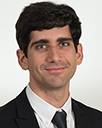
Jukka Alinikula is an Adjunct Professor at the University of Turku's Institute of Biomedicine, specifically within the Unit of Infection and Immunity. He also serves as a University Lecturer in immunology and drug development, and as the Education Director of the Immudocs program. His research focuses on somatic hypermutation mechanisms in B lymphocytes, exploring how antibody diversity is generated while avoiding oncogenic mutations. Alinikula completed his PhD at the University of Turku (Lassila Lab), followed by a postdoc at Yale University (Schatz Lab). Research Interests: Alinikula’s work investigates the targeting of somatic hypermutation to immunoglobulin genes versus proto-oncogenes. His lab uses modern techniques like reporter assays, CRISPR-based screens, and single-cell transcriptomics to dissect mutation enhancer functions. Key topics include genome stability, lymphoma etiology, and the interplay between antibody diversification and cancer risk. Teaching: He teaches immunology and immunopharmacology across bachelor’s, master’s, medical, and doctoral programs, emphasizing case-based learning and practical laboratory training. Supervised students include PhD candidates in immunology and drug development. Labs/Teams: Leads his own research group at the Institute of Biomedicine, collaborating extensively with international teams (e.g., Yale, Czech Academy of Sciences). Active in the InFLAMES Flagship initiative for immune system research.
Allison Bond, MD, MA, is an Assistant Clinical Professor in the Department of Medicine at the University of California, San Francisco (UCSF), School of Medicine. She practices as both an Infectious Disease and Hospital Medicine physician, attending on inpatient services and providing primary care for individuals living with HIV. Dr. Bond holds key educational leadership roles, directing the Department of Medicine Grand Rounds and the Cases & Conundrums learning conference at UCSF Health. Her academic interests center on clinical reasoning, medical education, and the management of infectious diseases by non-specialist clinicians. Her research spans antibiotic stewardship, transplant infectious diseases, public health, and patient care innovations for vulnerable populations, including those experiencing homelessness and with substance use disorders. Recent publications highlight her work in Delphi methodology for hospitalist metrics and the use of natural language processing in pharmacovigilance. Dr. Bond has been recognized with several prestigious awards, including the Academy of Medical Educators Excellence in Teaching Award (2024), Advisor of the Year (2024), and the Dean’s Apple Award for Teaching (2021). She is currently funded by the Internal Grant Program of the Division of Hospital Medicine at UCSF (2024–2026). Assistant Clinical Professor, Department of Medicine, UCSF School of Medicine Director, Department of Medicine Grand Rounds Director, Cases & Conundrums Conference Primary Care Provider for People Living with HIV Her advising and grant activities reflect her strong commitment to education and clinical research. While no formal lab or research team is named in the text, her multi-institutional collaborations, particularly in Delphi surveys and case series, suggest active engagement in collaborative research networks at UCSF and beyond.
Dana Vaux is an Associate Professor in the Department of Industrial Technology at the University of Nebraska at Kearney, within the College of Business & Technology. She specializes in Interior and Product Design, with a strong emphasis on interdisciplinary research connecting people and environments. Education: Ph.D., Interdisciplinary: Architecture, Design, Environmental History – Washington State University M.A., Interior Design – Washington State University B.A., Interior Design – Washington State University Her research focuses on the intersection of culture, history, and the built environment. Key areas include place theory , design pedagogy , and the cultural-historical meanings of interior spaces . Dr. Vaux explores how interiors shape human experience and identity, integrating environmental history and ethical considerations into design practice. The 15 most recent publications reflect a consistent trajectory in interdisciplinary design research , spanning ethics, pedagogy, sustainability, and cultural identity. Her work bridges architecture, interior design, and environmental psychology, often emphasizing qualitative and historical methodologies. Themes of human well-being , historical continuity , and educational innovation recur across her scholarship. Scientific Awards: 2022 Midwest Regional Best of Award for Scholarship of Teaching and Learning-Pedagogy (IDEC) 2021 Midwest Regional Best of Award for Scholarship of Design Research-History and Theory (IDEC) 2019 Best Paper in Family Studies/Human Development (AAFCS) 2021-2022 College of Business & Technology Outstanding Faculty Award: Scholarship Dr. Vaux is an active researcher and educator, contributing significantly to design scholarship and pedagogy. She has co-authored influential books used in classrooms and published in top journals. While specific grant details are not listed, her sustained output and recognition suggest successful funding and institutional support. She mentors future designers through curriculum development and research integration in teaching, emphasizing the importance of research for ethical and effective design. Though no formal lab or research team name is mentioned, her interdisciplinary approach suggests collaboration across departments, particularly in architecture, environmental studies, and family sciences. Her work continues to influence both academic and professional practices in interior design.
Jennifer Ouellet, MD is an Associate Professor of Medicine in the Department of Internal Medicine at Yale School of Medicine, specializing in Geriatrics. She serves as Co-Director of Internal Medicine Resident Education in Geriatric Medicine and Director of Interprofessional Education in Geriatric Medicine, and is affiliated with the Dorothy Adler Geriatric Assessment Center and Yale Medicine. Education: MHPE, University of Michigan (2019) Geriatric Medicine Fellow, Yale University School of Medicine (2017) Resident, Yale New Haven Hospital (2016) MD, University of Rochester (2015) BSc in Neuroscience, Brown University (2007) Dr. Ouellet is a dedicated geriatrician focused on optimizing care for older adults with multiple chronic conditions. Her research and clinical work emphasize patient priorities-aligned decision-making, aiming to align medical care with individual patient goals. She is passionate about medical education, teaching core geriatric principles to trainees and studying the impact of educational interventions. Her work bridges clinical practice, education, and research to improve outcomes for aging populations. Her recent publications highlight trends in geriatric care, patient priorities decision-making, and innovations in geriatric emergency and interprofessional care. These works reflect a strong thematic focus on person-centered care models, chronic disease management, and educational strategies in geriatrics. Scientific Awards: Edwin Cadman Teacher of the Year Award for Non-Core Faculty (Yale School of Medicine, 2020) UCSF Tideswell Emerging Leaders in Aging (2019) Frederick R. Shell Award (Yale School of Medicine, 2015) Frederick L. Sachs Award (Yale School of Medicine, 2015) UCSF Bechtel Summit Award in Geriatric Medicine (2014) Dr. Ouellet is actively involved in mentoring and educational leadership. She contributes to the training of medical residents and interprofessional teams, and her research is conducted in collaboration with prominent figures such as Dr. Mary Tinetti. She has no known grants listed, but her activities include ongoing research in patient-centered care models and educational innovation in geriatrics. Labs and Teams: Dorothy Adler Geriatric Assessment Center Geriatric Medicine, Department of Internal Medicine Patient Priorities Care initiative at Yale Collaborative research team with Mary Tinetti, Alexandra Hajduk, Cameron Gettel, and others
Sarita Soares, MD, is an Associate Professor of Internal Medicine at Yale School of Medicine and a key leader in medical education. She serves as Program Director and Associate Program Director of the Yale Primary Care Residency and chairs the Clinical Competency Committee. Her primary affiliations include the Department of Internal Medicine, the Program in Addiction Medicine, and the Global Health Scholars Program. Dr. Soares earned her MD from the University of Connecticut School of Medicine and completed her residency training in the Yale Primary Care Residency program, where she also served as Chief Resident. Her educational background includes a BS in Biology and Philosophy from the University of Scranton. Her research and scholarly interests center on medical education, with a focus on innovative teaching methods. Key areas include point-of-care ultrasound instruction, musculoskeletal examination training, diabetes pharmacotherapy education using animated videos, and tools for creating educational content. She emphasizes comprehensive physical exams, particularly of the neck and spine, and the development of clinical reasoning skills. The trends in her recent publications reflect a sustained commitment to enhancing clinical teaching and resident education. Her work spans the development of OSCE-based curricula, strategies for bedside ultrasound teaching, and insights into expert clinical reasoning, all contributing to evidence-based medical education. Francis Gilman Blake Award for Outstanding Teaching of the Medical Sciences (Yale School of Medicine, 2022) Early Career Physician Teaching Award (American College of Physicians, Connecticut Chapter, 2021) Fellow, American College of Physicians (2020) Rosenkrantz Award for Pedagogical Advancement Grant (Yale Learning and Teaching Center, 2019) Core Faculty Teacher of the Year (Yale Primary Care Residency, 2018) Dr. Soares is actively involved in mentoring and educational leadership. She serves on the Yale UME-GME Educational Leadership Committee and the Yale GME Resident and Fellow Wellbeing Committee. While no specific grants are listed, her Rosenkrantz Award supports pedagogical innovation. Her leadership roles in residency training and clinical competency underscore her significant impact on medical education at Yale. She is a dedicated educator and clinician in the Department of Internal Medicine, contributing to multiple programs including the Program in Addiction Medicine and the Global Health Scholars Program. Her work bridges clinical care, particularly in addiction medicine, with robust educational scholarship.
Giuseppe PAGNONI is an Associate Professor at the Department of Biomedical, Metabolic and Neurosciences of Università di Modena e Reggio Emilia . His research spans neuroscience , computational modeling , meditation , and brain network analysis . He teaches courses such as Neural Systems Modeling for Bioengineering students and Human Physiology and Pathophysiology in Medicine programs, with a focus on predictive coding , default mode network , and emotional valence processing . Pagnoni has contributed to ENIGMA-Meditation , a global initiative exploring meditation's neuroscientific basis, and developed sparse Bayesian models for analyzing brain network individual differences. His work on Alzheimer's disease investigates anosognosia mechanisms through resting-state fMRI, while other studies examine ghrelin's role in obesity-related reward processing and oxytocin's effects on social anxiety . He employs dynamic causal modeling and predictive processing frameworks to study cognitive effort, mind wandering, and neuromorphic learning. His methodological expertise includes functional MRI , independent component analysis , and computational simulations .
Alejandro Henao is a Researcher in Civil Engineering at the National Renewable Energy Laboratory (NREL), specializing in on-demand mobility systems. His work focuses on optimizing emerging transportation modes, curb management, and performance metrics for mobility and energy efficiency. He has presented extensively at national and international conferences. Current Research Areas: On-demand mobility, ride-sourcing, ride-hailing (e.g., Uber/Lyft), curb management, mobility optimization, energy efficiency metrics Geographic Focus: Texas (Houston, Arlington, Austin), Denver, Colorado Methodologies: Case studies, spatial-temporal modeling, behavioral analysis, policy frameworks His publications and presentations demonstrate a consistent focus on understanding transportation network companies' impacts on urban mobility, vehicle ownership, and energy consumption. Henao also explores sustainable public transport solutions using clean energy technologies. Recent research outputs (2023-2025) emphasize automated and electrified on-demand mobility, curb space allocation optimization, and energy productivity metrics for transit systems. Key trends include integration of renewable energy in transportation, resilience planning for mobility networks, and behavioral responses to shared mobility services. Henao's work combines empirical studies with analytical modeling to provide actionable insights for cities seeking to reduce auto dependence and improve mobility efficiency. His collaborations span academic institutions, municipal governments, and transportation agencies across the United States. At NREL, he leads technical reports and presentations on mobility innovation, focusing on sustainable infrastructure adaptation for evolving transportation needs. His research often involves multi-disciplinary approaches to transportation challenges.
Catia Pesquita is an Associate Professor in Computer Science at the Faculty of Sciences of the University of Lisbon , where she is also a Senior Researcher at LASIGE and leads the Health and Biomedical Informatics Research Line . With a multidisciplinary background in Biology and Computer Science, she focuses on Artificial Intelligence and Data Science applications in life and health sciences . Her research spans Semantic Web , Biomedical Ontologies , Knowledge Graphs , and Explainable AI , with significant contributions to ontology matching and semantic similarity . Education: PhD in Computer Science - Bioinformatics (2012) MSc in Bioinformatics (2008) Degree in Cell Biology and Biotechnology (2005) Current Projects: KATY (2021-2024): AI-Empowered Personalized Medicine for cancer treatments. BRAINTEASER (2021-2024): AI for ALS and MS disease progression models. Research Outputs: Developed tools like AgreementMakerLight (AML) , KGsim-benchmark , and the Epidemiology Ontology . Over 133 publications with significant citations (32,909 reads, 3,889 citations). Teaching: Lectures advanced topics in Databases , Data Integration , Bioinformatics , and Big Data . Advocacy: Vice-president of Biodata.pt , promoting biological data valorization in Portugal. Actively involved in initiatives to promote computer science careers to young women .
Professor Asif Gill is Head of Discipline for Software Engineering at the School of Computer Science, University of Technology Sydney (UTS), where he was promoted to Professor of Computer Science in January 2024. He also serves as Director of the DigiSAS Research and Innovation Lab and is actively involved in the Global Big Data Technologies Centre at UTS. As a founder of both the DigiSAS Lab and the Future Generation Enterprise Architecture Community of Practice (FGEA CoP), he has established integrated teaching-research-engagement frameworks that translate academic research into practical applications while enhancing graduate employment opportunities. Professor Gill's research interests span Adaptive Enterprise Architecture , Agile Software Development , and Design Science Research & Innovation , with a particular focus on architecting large-scale data-intensive enterprise software systems. His work addresses challenges across academia, industry, government, and society, with significant contributions to AI systems architecture, digital identity management, and enterprise knowledge graphs. His applied research has resulted in numerous collaborations with organizations including the Reserve Bank of Australia, Revenue NSW, Capsifi, Data Zoo, and the NSW Department of Planning, Industry and Environment. His publication record includes 3 books and over 190 articles in major academic journals such as IEEE Transactions on Professional Communication, Information and Management, and Information Systems. His recent work demonstrates a consistent focus on cutting-edge topics in enterprise architecture, AI systems, and digital identity, with multiple publications appearing in 2024-2025. His research trajectory shows a clear evolution from foundational work in agile software development toward more sophisticated integration of AI, enterprise architecture, and data governance. Fellow of the Australian Computer Society (ACS) Fellow of DSE (ESCP Center for Design Science in Entrepreneurship) Senior Member IEEE Associate Editor, IEEE Transactions on Technology & Society Associate Editor, Springer Nature Discover Data journals Member, Data Sharing Committee, IFIP Technical Committee 8.1 Member, Standards Australia Software and Systems Engineering Committee IT-015 Professor Gill has successfully secured numerous research grants from 2019-2026, totaling significant funding for projects related to digital identity, enterprise architecture, and AI systems. His approach emphasizes industry-academia collaboration, with many projects involving direct partnerships with government agencies and industry organizations. He has supervised multiple PhD and Master's students through industry-sponsored scholarships and maintains active collaborations with researchers across multiple institutions. Leading the DigiSAS Research and Innovation Lab, Professor Gill has created an environment that bridges theoretical research with practical implementation. The lab focuses on developing frameworks and tools for adaptive enterprise architecture, with particular emphasis on AI-enabled systems, data governance, and digital identity solutions. His work on the Data Satellite Architecture represents a significant contribution to combating data pollution in federated digital ecosystems.
Öznur Öncül Demir is an Assistant Professor at Abdullah Gül University, Faculty of Humanities and Social Sciences, Department of Psychology . Previously, she served as an Assistant Professor at Zonguldak Bulent Ecevit University (2015-2022) and Research Assistant at Middle East Technical University (2005-2014). Doctorate : Middle East Technical University (2014) Postgraduate : Middle East Technical University (2008) Undergraduate : Middle East Technical University (2005) Her research focuses on psychology of violence and emotional mechanisms of psychological disorders , particularly disgust in psychopathologies . She has conducted extensive interviews with prison inmates and collaborated with the University of Birmingham on sexual violence research. Recent publications examine self-disgust , traumatic stress in correctional officers , and anger management strategies . Conference contributions span topics like menopausal psychology , marital conflicts , and eating disorders , reflecting interdisciplinary interests in clinical and forensic psychology . METU Graduate School of Social Sciences Ph.D Thesis Award (2015) She has served as Deputy Head of Department at Abdullah Gül University (2024–) and organized peer reviews for journals like Journal of Religion and Health and Erciyes Akademi . Invited lectures cover anger control , workplace stress , and post-trauma resilience .
Elettra D'Amico is a Fixed-term Researcher at the Department of Management and Production Engineering (DIGEP) at Politecnico di Torino. Her academic work focuses on the intersection of Artificial Intelligence, innovation management, and entrepreneurial ecosystems, with particular emphasis on regional development and technology transfer. Academic Affiliation: Department of Management and Production Engineering (DIGEP), Politecnico di Torino Research Focus: AI startups, entrepreneurial ecosystems, knowledge spillovers, technology transfer Her research explores how universities contribute to AI startup creation, the impact of knowledge specialization on innovation, and the performance determinants of space economy startups. Publications demonstrate expertise in empirical analysis of regional AI adoption and startup ecosystem typologies. She actively contributes to teaching as a Course Collaborator in Management Engineering programs, specializing in Strategy and Organization courses and Challenge@PoliTo experiential learning projects across diverse engineering disciplines since 2019.
Rachel Branco is an Associate Teaching Professor in the Department of Biological Sciences at the University of Notre Dame, College of Science, where she has been a faculty member since 2018. She previously held the rank of Assistant Teaching Professor before her promotion in 2024. Her academic work bridges neuroscience research and science education, with a focus on neurotoxicology and behavioral models of neurodevelopmental disorders. Education: Ph.D. in Neuroscience, Emory University (2018) M.S. in Neuropsychology, University of Maastricht (2013) B.S. in Neuroscience, Baylor University (2012) Research Interests: Rachel Branco's research investigates the molecular and behavioral impacts of environmental neurotoxicants such as cadmium, chlorpyrifos, and pyrethroids. Her work spans neurodevelopmental disorders, vesicular monoamine transporters, fear behavior, and dopamine signaling. She also contributes to pedagogical innovation in neuroscience education, particularly through case-based teaching of protein-ligand interactions in Alzheimer's disease. Publication Trends: Her recent publications reflect a strong focus on environmental neurotoxicity, mouse models of neurodevelopmental and psychiatric conditions, and the molecular mechanisms of neurotransmitter regulation. A recurring theme is the impact of early-life exposure to toxins on long-term brain function and behavior. Scientific Awards: Emory Woodruff Fellowship (2013–2018) Fulbright Fellowship (2012–2013) Senior Outstanding Student in Neuroscience, Baylor University (2012) Advising and Grants: While no formal list of advisees is provided, her collaborative publications suggest active mentorship of graduate and undergraduate researchers. She has secured prestigious fellowships including the Fulbright and Emory Woodruff Fellowship, indicating strong research support and recognition. Labs and Teams: Dr. Branco collaborates extensively with research teams at Notre Dame and beyond, particularly in studies involving behavioral neuroscience, neurotoxicology, and molecular mechanisms of brain disorders. Her work often involves interdisciplinary teams focused on translational neuroscience and environmental health.
Jonathan Hersh is an Associate Professor at Chapman University's George L. Argyros College of Business and Economics, specializing in Economics and Management Science. His research bridges artificial intelligence, machine learning, and economics to address business, labor, and societal challenges through diverse data sources like satellite imagery and economic records. Education: University of Chicago (BA), University of Pennsylvania (MS), Boston University (PhD) Research focuses on AI's societal impact, including digital platform strategy, online piracy, and development economics. He has pioneered methods for poverty mapping using satellite data and war destruction analysis with AI. Recent publications explore AI skills gaps in financial institutions, API-driven economic growth, and satellite-based poverty estimation. His work has appeared in Management Science , MIS Quarterly , PNAS , and NeurIPS . Awards: BBVA Foundation Frontiers of Knowledge Award (2023) Previously worked as a data scientist for startups and the World Bank. Teaches AI, machine learning, and development economics to undergraduate and MBA students.
Prof. Dr. Dr. Eric Hilgendorf is a distinguished Professor of Criminal Law, Criminal Procedure Law, Legal Theory, Information Law, and Legal Informatics at the Julius-Maximilians-Universität Würzburg's Law Faculty . His work spans interdisciplinary research, combining law with ethics, digitalization, and robotics, while fostering international collaboration through initiatives like the Chinese-German Criminal Law Teachers Association and projects in Latin America and Mongolia. His research interests include media criminal law , legal philosophy , European criminal law , and the legal and ethical challenges of digitalization and AI . He founded the Competence Center Digitalization and Law (2018) and the Research Center for AI and Robot Law , focusing on practical legal issues for SMEs and the social impact of technological change. Recent projects, such as "Truth and Correctness in Criminal Law" (2019–2022), highlight his engagement with foundational legal concepts. He has organized international conferences, including "Criminal Law Scholarship in Germany, Latin America, and Spain" (2022), and curated educational tools like the "Interculturality, Ethics, and Law" course, preparing students for the state exam while promoting cultural competence. As a leader in legal education , he designed the "Advanced Criminal Law Practice" course, offering certification through case studies and exams. His publications, including commentaries and case collections, reflect his commitment to bridging theory and practice in criminal law.
Steven O. Kimbrough is a Professor of Operations, Information and Decisions at the Wharton School, University of Pennsylvania. His research spans artificial intelligence, computational rationality, and strategic optimization with applications to political science, economics, and service innovation. He teaches courses like Agents, Games, and Evolution and Thinking With Models , focusing on experimental approaches to bounded rationality and uncertainty in decision-making. Primary Email: kimbrough@wharton.upenn.edu Office: 3730 Walnut Street, 565 Jon M. Huntsman Hall, Philadelphia, PA 19104 His research interests include: Artificial intelligence and metaheuristics for constrained optimization Evolutionary computation in electoral redistricting Agent-based modeling of market dynamics Logic modeling for normative reasoning Text mining applications in event analysis Publications demonstrate expertise in computational economics, political modeling, and service analytics. Recent work focuses on: Empirical validation of electoral compactness Strategic learning in oligopolies Multi-objective matching algorithms Feasible-infeasible solution spaces Service network optimization Teaching emphasizes: Game-theoretic approaches to strategic behavior Modeling life-cycle for energy sustainability Computational experiments in social science