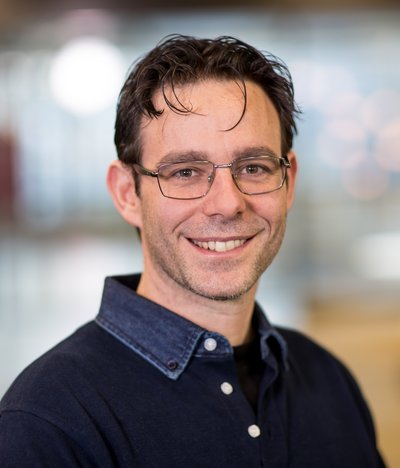
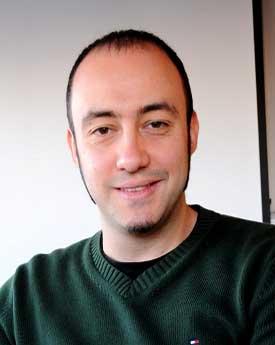
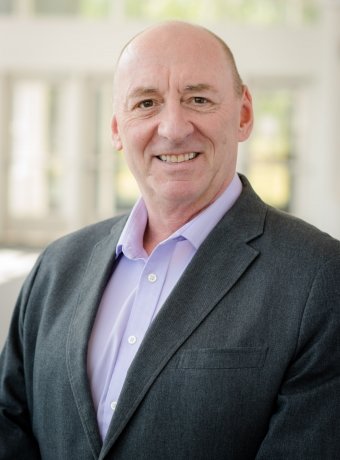
Massimo Mischi is a Full Professor at the Faculty of Electrical Engineering of the Eindhoven University of Technology (TU/e) and chairs the Signal Processing Systems (SPS) Division , the largest division at TU/e with over 250 researchers. He founded the Biomedical Diagnostics (BM/d) Lab in 2012, which now includes 180 researchers and clinical/industrial advisors, focusing on biomedical signal processing for diagnostics and monitoring.
Prof. Raimon Jané Campos is a leading figure in biomedical signal processing at the Universitat Politècnica de Catalunya (UPC) and Universitat de Barcelona (UB). As co-director of UPC's Biomedical Signal and System Group (CREB) and coordinator of the Biomedical Engineering PhD Programme, he bridges engineering and clinical applications. His work focuses on respiratory and sleep disorder diagnostics, with significant contributions to COPD and sleep apnea monitoring through wearable devices and machine learning. PhD in Biomedical Engineering (UPC, 1989) Visiting researcher at Université de Nice-Sophia Antipolis Vice-president of Spanish Society of Biomedical Engineering Research spans respiratory mechanics , sleep-disordered breathing , acoustic biomarkers , bioimpedance , and machine learning in biomedical contexts . His 2025 work on microcalorimetric pathogen classification and 2024 spiking neural networks for apnea detection demonstrate cutting-edge integration of computational methods with physiological monitoring. Articles from 2017-2024 reveal consistent focus on non-invasive diagnostics , cardiorespiratory synchronization , and smartphone-based health solutions . Awarded the Barcelona City Technology Research Award (2005) and serving on the International Advisory Board for Physiological Measurement since 2010, his career combines academic leadership with real-world clinical translation through IBEC's technology transfer initiatives.
Travis Gibbons is an Assistant Professor in the Department of Biological Sciences at Northern Arizona University. His research focuses on high-altitude physiology, cerebrovascular hemodynamics, and hemorheology. He has published extensively on topics such as respiratory acidosis, platelet loss during exercise at altitude, and CO 2 -mediated cerebral metabolism. Academic Rank: Assistant Professor Department: Biological Sciences University: Northern Arizona University His work combines physiological research with pharmacological interventions , particularly examining the effects of pentoxifylline on hemorheology and cerebral blood flow. Recent studies investigate: Neurovascular coupling during hypoxia Immunometabolic responses to fasting and exercise Platelet dynamics in high-altitude environments Hypercapnia's impact on cerebral oxidative metabolism The trends in his 2024-2025 publications emphasize altitude acclimatization , vascular reactivity , and exercise-induced physiological changes . His cerebrovascular research often employs Doppler imaging and metabolic profiling . As of 2025, no scientific awards are mentioned in the provided data.
Jack L. Feldman is a Professor of Neurobiology at the University of California, Los Angeles (UCLA), holding the David Geffen School of Medicine Chair in Neuroscience. His research focuses on the neural mechanisms controlling breathing, particularly the role of the preBötzinger Complex in respiratory rhythm generation. Dr. Feldman's research interests span multiple areas of respiratory neuroscience: Neural control of breathing rhythm and pattern PreBötzinger Complex function and organization Respiratory network dynamics and synchronization Effects of opioids and nicotine on breathing Interactions between breathing and emotional states Neural mechanisms of sighing and other breathing patterns Analysis of Dr. Feldman's recent publications reveals a strong focus on understanding the microcircuit organization of the preBötzinger Complex, how network synchronization generates breathing rhythms, and how various neuromodulators affect respiratory patterns. His work increasingly integrates computational approaches with experimental neuroscience to understand emergent properties of respiratory networks. Dr. Feldman has received numerous prestigious awards for his contributions to respiratory neuroscience: David Geffen School of Medicine Chair in Neuroscience, UCLA (2022) NIH MERIT AWARD (1991-2001) NIH Outstanding Investigator Award (2017-2023) Hodgkin Huxley Katz Prize from THE PHYSIOLOGICAL SOCIETY (2016) Faculty Research Lecture at UCLA (2018) Throughout his career, Dr. Feldman has mentored numerous graduate students and postdoctoral researchers who have gone on to make significant contributions to neuroscience. His laboratory has been consistently supported by major NIH funding mechanisms, reflecting the importance and impact of his research program. Dr. Feldman has also contributed to collaborative efforts addressing clinical aspects of breathing disorders, including sleep apnea and breathing abnormalities in heart failure patients. Dr. Feldman leads a vibrant research laboratory at UCLA focused on respiratory neuroscience. His team employs a multidisciplinary approach combining electrophysiology, optogenetics, neuroanatomical tracing, and computational modeling to unravel the complexities of breathing control. The laboratory has made landmark contributions to identifying the preBötzinger Complex as a critical rhythm-generating center for breathing and continues to advance our understanding of how neural networks produce complex physiological outputs.
Dr. Tomislav Stankovski is a Visiting Researcher in the Department of Physics at Lancaster University. His research spans interdisciplinary domains, focusing on dynamical systems, neuroscience, and biomedical engineering. Key areas include neural cross-frequency coupling, cardiorespiratory interactions, and synchronization mechanisms in complex networks. Recent publications highlight his work on cortico-muscular connectivity in Parkinson’s disease, time-varying interactions in coupled systems, and applications of Bayesian inference in physiological dynamics. His research integrates physics and computational methods to analyze biological and medical data, particularly in neurophysiology and cardiovascular systems. Neuroscience Biomedical Engineering Dynamical Systems Signal Processing Physics Computational Biology His scientific contributions emphasize understanding synchronization, cross-frequency coupling, and emergent behaviors across physical, biological, and medical contexts. No specific awards or student advisement details are provided in the available texts.
Andrew S. Blum is a Professor of Neurology at Brown University, affiliated with Rhode Island Hospital (RIH) since 2000 as Director of the EEG Laboratory, Adult Epilepsy Division, and Co-Director of the Comprehensive Epilepsy Program. He previously held clinical roles at Beth Israel Deaconess Medical Center (BIDMC) from 1994–2000. Education: MD (1989) and PhD (1988) from Cornell University and The Rockefeller University, BA in Chemistry (Magna Cum Laude) from Yale University Dr. Blum’s research spans clinical epilepsy, focusing on psychiatric aspects of epilepsy, non-epileptic seizure diagnosis, anticonvulsant therapeutic development, and EEG/fMRI integration for seizure localization. His work bridges cognitive neuropsychology, neuropharmacology, and advanced neuroimaging. Key publications include studies on cognitive impairment in older epilepsy patients, spatiotemporal seizure dynamics via EEG-fMRI, and hormonal interactions with antiepileptic drugs. His research also addresses clinical challenges like oxygen desaturation during seizures and neurostimulation techniques. Howard Hughes Medical Institute Research Assistant (1980–81) MSTP Award (1982–89) Brown Dean’s Awards for Teaching Excellence (2002, 2005, 2006) Dr. Blum has contributed to epilepsy literature through book chapters, reviews, and foundational studies on neural development. He teaches pharmacology and neuroscience, directs epilepsy programs, and collaborates across neurology, psychiatry, and engineering disciplines.
Josep Oriol Martínez Ferrer is an Associate Professor at the Department of Physical Activity and Sport Sciences and Sports Management, Faculty of Psychology, Educational Sciences and Sports, Blanquerna Health, Physical Activity and Sports. His research focuses on physical activity, adapted sports, and health promotion for individuals with disabilities and older adults. University: Blanquerna Health, Physical Activity and Sports School: Faculty of Psychology, Educational Sciences and Sports Department: Physical Activity and Sport Sciences Dr. Martínez Ferrer's research interests span Adapted Sports for athletes with intellectual disabilities (e.g., judo programs), Sports Science in disability inclusion, Health Promotion in aging populations, and Social Inclusion through physical activity. His work addresses behavioral medicine, pandemic impacts on physical activity, and policy development for athletes with disabilities. Recent publications highlight collaborations on the JOIN4JOY program for older adults, Synchronize+ for fibromyalgia patients, and SITLESS trials for community-dwelling seniors. Keywords across his work include Physical Activity , Intellectual Disability , Behavioral Interventions , and Healthy Aging . He participates in the SAFE research group, focusing on Health, Physical Activity, and Sports. Projects like JUDODI and IDEA Study examine sports programs for adolescents with disabilities and cardiovascular effects of exercise in older adults. He has no listed scientific awards.
Bolette Daniels Beck is an Associate Professor at the Department of Communication and Psychology, Aalborg University, affiliated with The Faculty of Social Sciences and Humanities. She is a core member of the CEDOMUS Center for Documentation and Research in Music Therapy and involved in the Green Societies and Time, Existence and Natural Relatedness research clusters. Her work bridges music therapy, psychotraumatology, and environmental humanities. Research interests focus on music therapy applications for trauma care (PTSD/Complex PTSD), healthcare innovation in intensive care units, and nature-based therapeutic practices. Key projects include the Bedre Liv Med Traumer initiative (2023-2025), music therapy interventions for refugees, and studies on vaccination environment optimization. She co-leads the 11th Nordic Music Therapy Conference (2024) and collaborates internationally on psychedelic-assisted therapies and environmental resonance projects. Her methodological expertise includes guided imagery and music (GIM), randomized controlled trials, and qualitative phenomenological analysis. Beck has supervised 3 PhD students and contributed to 66 publications since 2007. Media engagements include discussions on workplace stress management, music's impact on preemies, and cultural aspects of lullabies. Professional activities span conference organization, editorial roles, and training programs for music therapists.
Dr. William H. Cooke is a Professor in the Department of Kinesiology and Integrative Physiology at Michigan Technological University , where he investigates autonomic cardiovascular control mechanisms under extreme conditions. PhD in Kinesiology/Exercise Physiology from Texas A&M University MA and BS in Health and Human Performance from University of Houston Research Focus: His work spans autonomic regulation during orthostatic stress, traumatic injury diagnostics, and device development for circulatory monitoring. Key contributions include studies on fasting-induced hypovolemia tolerance, respiratory-autonomic coupling, and nicotine vapor effects on blood pressure. Publication Trends: Over the last decade, his research has emphasized human autonomic responses to simulated hemorrhage ( 2011-2024 ), spaceflight analogs ( 2013-2016 ), and metabolic-cardiovascular interactions ( 2015-2022 ). Labs & Teams: Leads the Integrative Physiology Lab in H-STEM Building #134, collaborating with military researchers on hemorrhage tolerance metrics and clinical physiologists on autonomic dysfunction.
Brett BuSha is a Professor of Biomedical Engineering and Chair of the Department of Biomedical Engineering at The College of New Jersey (TCNJ). His work focuses on physiological modeling, medical device development, and respiratory mechanics, with a strong emphasis on integrating stochastic processes into biological systems analysis. PhD in Biomedical Engineering from Rutgers University and UMDNJ (1998) BSE in Biomedical Engineering from Boston University (1994) Dr. BuSha’s research interests span: Exoskeleton and assistive device design for hand rehabilitation Cardiorespiratory variability and fractal scaling analysis Gender-specific physiological modeling Wavelet-based signal processing in biomedical contexts His publications highlight collaborations with students and researchers on projects like hand exoskeletons, neonatal incubators, and epilepsy monitoring systems. Dr. BuSha has received recognition including the TCNJ Support of Scholarly Activities (SOSA) Award and IEEE Senior Member status. Certificate of Outstanding Contribution in Reviewing, Biomedical Signal Processing and Control Certificates of Appreciation from IEEE and ASME He has served on numerous TCNJ committees including the Institutional Review Board and Curriculum Committee, with ongoing roles in academic governance and safety protocols.
Aicko Yves Schumann is a Postdoctoral Researcher at the Canadian Centre for Behavioural Neuroscience, University of Lethbridge, and an affiliated Visitor with the Complexity Science Group at the University of Calgary. His research focuses on Big Data Analysis, particularly in neuroscience, cardiology, and geophysics, emphasizing statistical physics, time series analysis, and extreme value statistics. Education: Ph.D. (summa cum laude) in Physics from Martin-Luther University Halle-Wittenberg (2010), with prior studies in Physics and Geoecology at the University of Potsdam. Awards include the Martin-Luther Award and Logos Verlag Publication Award. Research interests span interdisciplinary applications of statistical methods in medicine, neurosciences, geophysics, and finance. He collaborates widely, developing novel multivariate analysis techniques for sleep physiology, cardiology, and climate modeling. Notable projects include mentoring 6 students through DAAD-funded programs in 2011–2012, focusing on portable recording devices, extreme value statistics, and functional networks. His work bridges disciplines, adapting methodologies from geophysics to human physiology. Key labs/teams: Polaris Group for Brain Dynamics (McNaughton) and Optical Brain Imaging Group (Mohajerani). Research emphasizes hippocampal memory processes, optogenetics, and voltage-sensitive dye imaging in rodents.
Martin Dahl is a Research Scientist at the Max Planck Institute for Human Development, Center for Lifespan Psychology, and leads the Lifespan Neuromodulation of Cognition (LINE) group since October 2022. He holds faculty positions at IMPRS COMP2PSYCH and focuses on multi-modal brain imaging techniques to investigate age-related cognitive changes. B.Sc. in Psychology (2011), Justus Liebig University Gießen M.Sc. in Psychology (2014), University of Konstanz PhD in Psychology (Dr. rer. nat., 2020), Freie Universität Berlin His research centers on neuromodulatory systems, particularly dopaminergic and noradrenergic pathways, examining their role in age-related cognitive decline, Alzheimer's disease, and neural synchronization mechanisms. Current projects include non-invasive brain imaging protocols and biomarker development for neurodegenerative disorders. Recent publications analyze locus coeruleus integrity, neurotransmitter interactions, and dietary influences on cognitive health. His work spans neuroimaging methodology, clinical applications, and theoretical frameworks for aging research. Scientific Awards Margret and Paul Baltes Award (Developmental Psychology Section, DGPs) Otto Hahn Medal (Max Planck Society) Young Investigator Award for "Advancement of Clinical and Cognitive Neuropsychology" (GNP e.V.)
Dr. Teodor Buchner is a faculty member at the Faculty of Physics, Warsaw University of Technology. He received his doctoral degree on April 25, 2002, with a dissertation titled "Symbolic dynamics and local ordering measures of selected dynamical systems" under the supervision of Prof. Dr. hab. Jan Jacek Żebrowski. His research focuses on nonlinear dynamics, symbolic dynamics, heart rate variability analysis, electrocardiography, and biomedical physics. Dr. Buchner has made significant contributions to understanding the complex dynamics of physiological systems, particularly focusing on cardiac signals and their relationship with respiratory patterns. His work bridges physics, mathematics, and medical applications, developing novel analytical methods for physiological time series. Analysis of Dr. Buchner's recent publications reveals a strong interdisciplinary focus on applying advanced mathematical and computational techniques to cardiac electrophysiology. His research spans from fundamental theoretical investigations of signal propagation to practical clinical applications, including studies on the effects of SARS-CoV-2 on heart function and the development of deep learning models for ECG analysis. A notable trend is his persistent questioning of conventional assumptions, such as his groundbreaking work on the finite velocity of ECG signal propagation. Dr. Buchner has contributed to educational initiatives at Warsaw University of Technology, including quantum engineering education programs. His work extends beyond traditional physics research into areas such as cryptography and network security, demonstrating the breadth of his expertise and ability to apply physical principles across diverse domains. His research methodology combines theoretical modeling, experimental investigation, and advanced computational techniques to address complex problems in biomedical physics and beyond.
Christian Vater is an Assistant Professor at the Institute of Sports Science, University of Bern, leading the Peripheral Vision Group. His research focuses on visual perception, decision-making in sports, and attention mechanisms. Academic Rank: Assistant Professor Institution: University of Bern Research Areas: Visual perception, sports decision-making, attention allocation Vater's recent work examines how peripheral vision influences soccer players' reactions, referees' judgment accuracy, and basketball defensive strategies. His studies span cognitive psychology, sports neuroscience, and human factors in athletic performance. He serves as a reviewer for journals like Nature - Scientific Reports and organizations such as the German Research Foundation (DFG). Vater also contributes to the Advanced Studies of Sport Psychology (DAS) continuing education program and delivers guest lectures at the University of Basel.
Prof. Adrian Evans serves as Deputy Head of Department in the Department of Electronic & Electrical Engineering at the University of Bath, where he leads research within the Electronics Materials, Circuits & Systems Research Unit (EMaCS) and The Foundry: Centre for Digital, Manufacturing & Design. His academic profile demonstrates active engagement in doctoral supervision and cutting-edge research across multiple domains of image processing and biometrics. His primary research focuses on biometrics—particularly 3D face recognition techniques resilient to facial expressions—and advanced colour/multispectral image processing. He has pioneered methods for colour edge detection, nonlinear filtering, and scale-space sieve-based segmentation. His motion estimation work specializes in analyzing non-rigid bodies like clouds and glaciers, while his nonlinear image processing research centers on mathematical morphological sieves and granulometric texture analysis. Recent publication trends (2021-2025) reveal a strategic shift toward computer vision applications in transportation (multi-camera vehicle tracking systems) and healthcare (non-contact cardiorespiratory monitoring). His work increasingly integrates radar technology with computer vision for vital sign detection while maintaining foundational contributions to mathematical morphology and image enhancement techniques. No major scientific awards are documented in the provided materials. His supervisory record includes 11 doctoral students, with current openness to new PhD candidates. Research funding spans UK government and industry collaborations including EPSRC projects like High Speed 4K Video Transmission (2016-2018) and multiple KTP partnerships with Seiche Measurements Limited and Navtech Radar Limited. He operates within Bath's EMaCS research unit and The Foundry center, leveraging these interdisciplinary environments for digital manufacturing and design innovation. His work directly supports UN Sustainable Development Goals through applications in smart transportation systems and healthcare technology development.