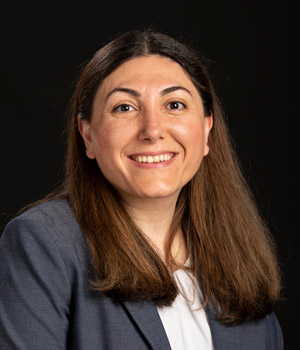
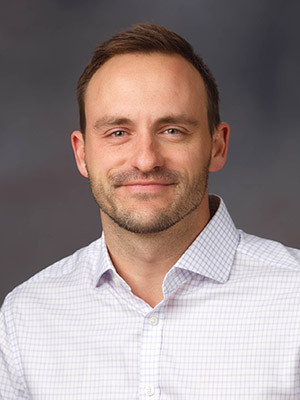
Dr Natalie Dodd is a Senior Lecturer in Paramedicine at the University of the Sunshine Coast's School of Health. Her research portfolio ($350,000+ funding) focuses on interprofessional education, paramedic wellbeing, and health communication. She coordinates courses including PAR211 Cardiac and Respiratory Emergencies and PAR222 Legal and Ethical Practice in EMS. Practice Innovation: Member of Sunshine Coast Health Institute's Interprofessional Leads Working Group developing collaborative education modules. Leverages 16 years of clinical experience as an emergency paramedic. Research Impact: Investigates healthcare communication optimization, cancer screening behaviors, and coping mechanisms for paramedics. Awarded the Hunter Cancer Research Alliance Implementation Science Award (2017).
Chrisina Jayne is a Professor and Dean of the School of Computing & Digital Technologies at Teesside University, also serving as Director of the Teesside University London Campus since 2023. She holds a PhD in Applied Mathematics from Sofia University, Bulgaria, and advanced degrees in Computing Science and Management from the University of London. Her research focuses on artificial neural networks, machine learning, and AI applications in engineering, healthcare, and education. She has authored over 70 peer-reviewed publications and serves in leadership roles with the International Neural Network Society (INNS), including President-Elect and conference chair roles. Education: PhD in Applied Mathematics, Sofia University, Bulgaria MSc in Mathematics and Informatics, Sofia University MSc in Computing Science, Birkbeck College, University of London Postgraduate Diploma in Management, Birkbeck College Research interests include developing novel machine learning methods for healthcare diagnostics (e.g., diabetic retinopathy screening), sentiment analysis, and adaptive educational tools. Her work spans interdisciplinary projects like digitization platforms for engineering drawings and AI-driven feedback systems for students. She is an editorial board member for Neural Computing and Applications and associate editor for IEEE Transactions on Neural Networks and Learning Systems . Awards: UK National Teaching Fellowship (2009) Leadership roles include past Headships at Oxford Brookes University, Robert Gordon University, and Coventry University. Her external activities include organizing major conferences like IJCNN and serving as Technical Co-Chair for WCCI 2020. Labs/Teams: Leads the Centre for Digital Innovation and collaborates on projects like AI-based educational platforms and healthcare analytics systems.
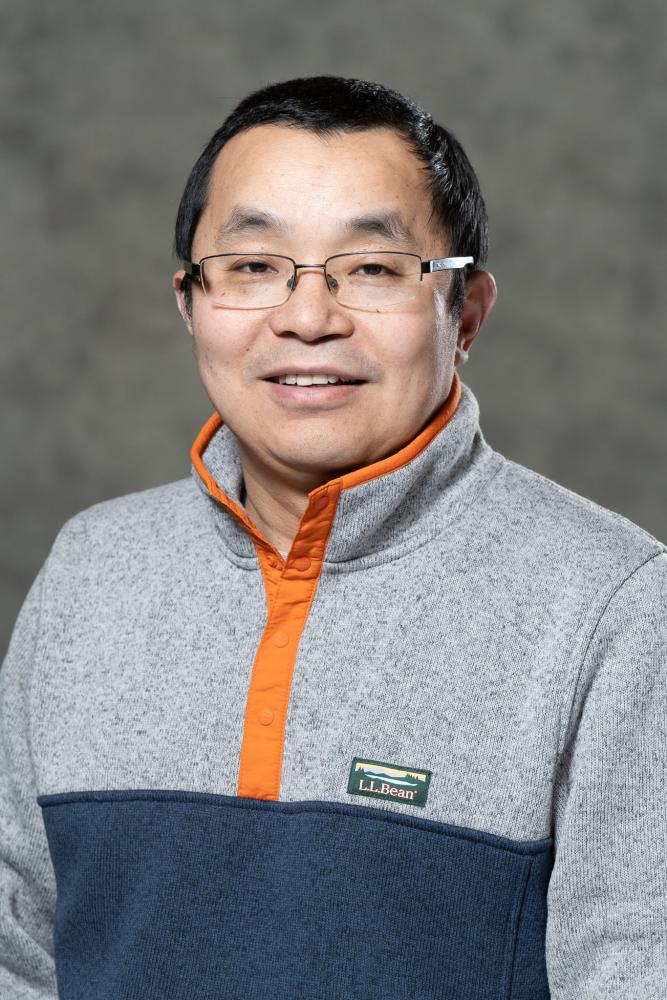
Mingwu Jin is a Professor in the Department of Physics at the University of Texas at Arlington (UTA), where he has held faculty positions since 2011, progressing from Research Assistant Professor to his current rank. He holds a B.S. in Space Physics (1997) and M.E. in Communication and Information System (2001) from Peking University, and a Ph.D. in Electrical Engineering (2007) from Illinois Institute of Technology. His postdoctoral training (2007-2009) was at the University of Colorado Denver. His research focuses on image science, machine learning applications in medical and space physics, and mathematical modeling of physical systems. Key areas include medical imaging (SPECT/MRI/CT), spatiotemporal data reconstruction, and deep learning for low-dose imaging. He leads federally funded projects totaling over $10M, including NIH grants for PET/CBCT advancements and NSF awards for ionospheric modeling. Dr. Jin has authored 5 books/chapters and over 100 peer-reviewed publications. Awards include the NIH Best Student Paper (2006), ISSI Science Team membership (2020), and TACC Computational Fellowship (2022). He advises 30+ graduate students and postdocs, teaching courses in computational physics and medical imaging. Professional roles include service on NIH review panels and editorial boards for Medical Physics and PLOS ONE .
Dr. Mahsa Dabagh is an Assistant Professor in both the Department of Biomedical Engineering and Department of Computer Science at the University of Wisconsin–Milwaukee (UWM). She leads the Mechanobiology and Vascular Biomechanics Lab , focused on developing computational models to understand disease mechanisms in cancer and vascular pathologies. Her work integrates multiscale modeling with experimental data to study mechanotransduction, tumor microenvironment dynamics, and clinical device design. Dr. Dabagh holds a PhD from Lappeenranta University of Technology (Finland) and completed postdoctoral research at Duke University and Lappeenranta University of Technology. She has expertise in computational fluid dynamics (CFD), biomaterials, and high-performance computing applications in biomedical systems. Research Interests: Mechanobiology of cancer progression Vascular biomechanics in cardiovascular/cerebrovascular diseases Computational models of tumor-stromal interactions Medical device design for vascular interventions High-performance computing for biomedical systems Recent work analyzes hemodynamic factors in aneurysm growth, cancer cell-endothelium interactions, and wound healing mechanisms. Her group has developed novel strategies for predicting ischemic injury zones and optimizing stent designs using patient-specific models. Dr. Dabagh has been recognized as an Associate Editor for the International Journal of Biosensors & Bioelectronics, and Topic Board Editor for Applied Sciences. She received multiple awards for teaching and mentoring, including student research awards in undergraduate poster competitions.
Fernando Marmolejo-Ramos is an Adjunct Research Associate at the University of South Australia (UniSA) and a Research Fellow at Flinders University, affiliated with the College of Education, Psychology, and Social Work. He holds a PhD in Psychology from the University of Adelaide (2011) and prior postdoctoral and visiting research roles at institutions like Stockholm University and the University of Adelaide. His research focuses on cognitive psychology, embodied cognition, and statistical methodologies, with a particular interest in language comprehension, cross-modal perception, and reaction time analysis. He actively collaborates with international researchers in areas like autism spectrum disorder detection through electroretinography and AI-driven educational interventions. Research Interests: Language and emotion embodiment, statistical cognition, reaction time analysis, and the application of advanced statistical methods in psychology. He has contributed to frameworks addressing statistics anxiety and innovative AI applications in healthcare and education. Key Collaborations: Works with institutions globally, including the University of Toronto, the Catholic University of Murcia, and the University of Connecticut, focusing on interdisciplinary projects in cognitive science, education, and biomedical informatics. Professional Contributions: Serves as a Research Degree Supervisor, advocating for evidence-based statistical practices. His work bridges cognitive theory with practical applications, such as improving diagnostic tools via ERG analysis and enhancing educational strategies through embodied learning theories.
Leo Wan is a Professor of Biomedical Engineering at Rensselaer Polytechnic Institute (RPI), where he has served since 2011 after completing his Ph.D. at Columbia University. His research program focuses on developing innovative tissue regeneration strategies and organ-on-a-chip platforms for disease modeling and drug screening, operating at the intersection of engineering and life sciences. His educational background includes: Ph.D. in Biomedical Engineering, Columbia University (2007) M.Eng. in Fluid Mechanics, University of Science and Technology of China (2001) B.S. in Theoretical and Applied Mechanics, University of Science and Technology of China (1998) Dr. Wan's research centers on tissue engineering and morphogenesis , with particular emphasis on cell chirality —a fundamental property governing left-right asymmetry in biological systems. His laboratory develops organ-on-a-chip devices using micro-/nanofabrication techniques to model cardiac development and disease, while investigating how biomechanical forces influence stem cell differentiation and tissue formation. Current projects explore chiral morphogenesis in vascular systems and its implications for congenital heart defects. Analysis of his recent publications (2022-2025) reveals a consistent focus on cellular chirality mechanisms in cardiovascular development, with increasing emphasis on biomechanical modeling and organ-on-a-chip translation . His work bridges fundamental biophysics with clinical applications, particularly in cardiac tissue engineering and cancer metastasis modeling. Major recognitions include: Fellow of the American Heart Association (2021) NIH Director's New Innovator Award (2014) Pew Scholar in Biomedical Sciences (2013) National Science Foundation CAREER Award (2013) Basil O'Connor Starter Scholar Award (March of Dimes, 2014) Dr. Wan has secured substantial research funding from NIH, NSF, and the American Heart Association to support his work on tissue regeneration and disease modeling. As principal investigator of the Wan Lab, he directs interdisciplinary research involving graduate students and postdoctoral fellows, with recent projects focusing on helical vasculogenesis and chiral cytotoxicity assays. His laboratory maintains active collaborations with the Center for Biotechnology and Interdisciplinary Studies (CBIS) and Center for Modeling, Simulation and Imaging in Medicine (CEMSIM) at RPI. The Wan Lab operates within RPI's Center for Biotechnology and Interdisciplinary Studies, utilizing advanced microfabrication facilities and stem cell culture resources. Current research teams are developing next-generation organ-on-a-chip platforms that integrate patient-derived cells for personalized drug testing, with particular focus on cardiac applications and tumor-vascular interactions.
Enrico Gherlone is the Magnificent Rector of Vita-Salute San Raffaele University and Full Professor of Dental Clinic in the Faculty of Medicine and Surgery. He holds leadership roles including Vice President of the University Board, Director of the Department of Dentistry at San Raffaele Hospital, and National University Council member. His academic journey began with a Medicine degree from the University of Genoa (1983) and specialization in Odontostomatology (1986). He has held international academic roles, including Professorships in Spain and Italy, and led major research initiatives in bone physiology and implantology. Education: Medicine & Surgery (Genoa, 1983), Odontostomatology (Genoa, 1986) Leadership: Rector (2018–present), Past roles include Pro-Rector for Institutional Relations (2017–2018) Research focuses on dental prosthetics, biomaterials, and bone physiology, with over 295 publications. He co-directed the Bone Physiopathology Program (2009–2014) and led projects like the “Overland for Smile” initiative for global dental care. Awards include the William Laney Award (2016) and the Bonifacio VII Prize (2022). His articles emphasize implantology, prosthetic techniques, and biomaterials, with recent studies on microbiome alterations in orthodontic patients and CAD/CAM resin composites. He advises the Italian Ministry of Health and chairs national dental societies.
Lukasz Szatkowski is an Assistant Professor of Chemistry - Educator at the University of Cincinnati, within the College of Arts and Sciences. He holds a M.Sc. (2007) and Ph.D. (2012) in Physical and Computational Chemistry from Lodz University of Technology, Poland, and a Graduate Certificate in Data Science (2024) from the University of Missouri. His research focuses on computational chemistry, molecular dynamics, enzymatic dehalogenation mechanisms, and drug discovery. He has extensive postdoctoral experience at institutions like Texas A&M University, University of Arizona, and University of Cincinnati, exploring topics such as microtubule mechanics and computational drug screening. Key research areas include: Mechanical stability of microtubules under crowded conditions Enzymatic degradation pathways of chlorophenols Computational modeling of transition metal complexes Development of force fields for molecular simulations He has secured grants as PI, including a University-funded study on PEG interactions with enzymes. Notable awards include the 2009 Ministry of Health award for his publications. Szatkowski has presented at major conferences like the Biophysical Society meetings and organized the ISOTOPES 2013 conference. His teaching innovations include integrating data science tools like Python into physical chemistry labs. Recent work emphasizes interdisciplinary approaches, combining computational methods with experimental validation to address challenges in biophysics and drug development.
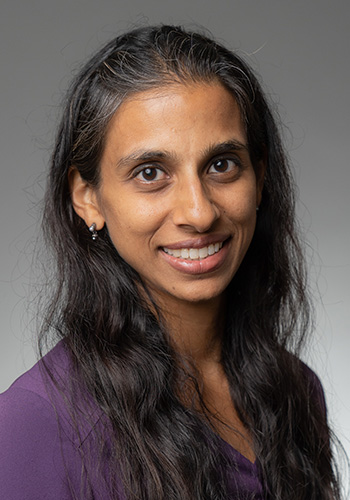
Deepa Ramachandran is an Instructional Assistant Professor in the Department of Electrical and Computer Engineering at the University of Houston's Cullen College of Engineering. Her research focuses on computational modeling of biological systems, with notable contributions to cardiovascular modeling and MEMS-enabled RF circuit design. She holds a Ph.D. in Electrical and Computer Engineering from Rice University. Education: Ph.D., Electrical and Computer Engineering, Rice University Research Interests: Dr. Ramachandran specializes in interdisciplinary biomedical engineering, developing computational models to study ventricular mechanics in heart disease and treatment interactions. Her work also extends to reconfigurable RF circuits using MEMS technology for applications in spectrum sensing and wireless communication. Publications Overview: Her research spans 2003–2011, with key contributions in cardiovascular modeling (e.g., cardiac tamponade characterization, rotary blood pump interactions) and MEMS-based RF systems (e.g., frequency-hopping filters, low-power VCO designs). These studies bridge biomedical and electrical engineering domains, emphasizing clinical applications and adaptive electronics. Affiliations & Contact: Office: KAB1 307E Email: dpr2@uh.edu
Katie Knaus serves as an Assistant Professor in the Department of Mechanical Engineering at the Colorado School of Mines, where she directs the MyoEngineering Lab. Her research integrates mechanical engineering principles with myology to solve critical problems in human mobility, health, and performance through computational and experimental approaches. Her educational background includes: BS in Mechanical Engineering and Physics, University of Virginia PhD in Biomedical Engineering, University of Virginia Postdoctoral Fellowship, University of California San Diego (Wu Tsai Human Performance Alliance) Dr. Knaus specializes in multiscale biomechanics of muscle-tendon systems , employing advanced finite element modeling to simulate 3D muscle and connective tissue structures. Her work investigates how musculoskeletal properties influence mobility across diverse populations, with particular focus on age, sex, exercise, and injury-related variations. Key methodologies include computational simulations of complex muscle-tendon mechanics and experimental measurements of human biomechanics and physiology. Analysis of her 15 most recent publications (2020-2024) reveals dominant themes in lower limb biomechanics, ocular mechanics, and muscle adaptation. Her research consistently applies computational modeling to address clinical challenges in presbyopia, athletic performance, and injury rehabilitation, with emerging work on cellular mechanotransduction and high-dimensional phenotyping of muscle morphology. Scientific Awards: None reported in available materials. As director of the MyoEngineering Lab, Dr. Knaus mentors students in biomechanics research and teaches courses including Introduction to Finite Element Analysis and Musculoskeletal Biomechanics. While specific grant details are unavailable, her work aligns with NIH/NSF priorities in rehabilitation engineering and human performance. Professional affiliations include the American Society of Biomechanics, American College of Sports Medicine, ASME Bioengineering Division, and International Women in Biomechanics. The MyoEngineering Lab operates at the intersection of mechanical engineering and physiology, utilizing computational models and experimental techniques to advance understanding of muscle structure-function relationships for clinical and performance applications.
Dr. Kevin Labus is an Assistant Research Professor in the Department of Mechanical Engineering at Colorado State University (CSU). His research focuses on applying engineering mechanics principles to biological systems, with a particular emphasis on biomedical applications such as temporomandibular joint (TMJ) mechanics, bone healing, and biomaterials development. He is affiliated with the Orthopaedic Biomechanics Research Laboratory (OBRL) and holds expertise in experimental biomechanics, computational modeling, and medical device innovation. Dr. Labus earned his Ph.D. in Bioengineering from CSU (2016) with a dissertation on brain white matter mechanics and a B.S. in Mechanical Engineering from the University of Notre Dame (2011). His research interests include: TMJ disc replacement using hydrogels and additive manufacturing Bone healing mechanisms and fracture non-union prediction Biomechanical characterization of soft tissues (intervertebral discs, cartilage, cardiovascular tissues) Development of novel diagnostic tools for orthopedic applications His recent work demonstrates advancements in 3D-printed biomedical scaffolds, nanofiber technologies for tendon repair, and electromagnetic-based fracture monitoring systems. His contributions span both experimental and computational domains, with translational potential for clinical applications. Key innovations include: Electromagnetic coupling for non-invasive implant monitoring Patient-specific finite element models for fracture risk assessment Biocompatible PVA hydrogels for TMJ disc replacement His research has been applied in canine, ovine, and rabbit models to validate new medical technologies before clinical translation.
Elisa Marenzi is an Assistant Professor at the University of Pavia's Department of Industrial and Information Engineering. She holds a PhD in Bioengineering and Bioinformatics (2014) and master's/bachelor's degrees in Biomedical Engineering from the same institution. Her research focuses on High Performance Computing (HPC), embedded systems for biomedical monitoring, signal processing in rehabilitation/automotive fields, and cerebellar neural circuit modeling. Education: PhD in Bioengineering (2014): Thesis on pressure ulcer monitoring systems Master's in Biomedical Engineering (2010): Thesis on capacitive sensor systems Bachelor's in Biomedical Engineering (2007): Thesis on medical guideline formalization Research Highlights: Her work spans HPC optimization for hyperspectral imaging, wearable medical devices, and neurocomputational modeling of cerebellar circuits. Notable contributions include: STRATUM project: AI-driven 3D decision support tools for neurosurgery HBP (Human Brain Project) simulations of hippocampal dynamics Hyperspectral imaging applications in skin cancer diagnosis FPGA-based real-time medical signal processing systems Awards: ETIC Award (2014) for PhD thesis Lifebility Award (2012) for social tech innovation NVIDIA GPU Research Center accreditation (2016) Professional Activities: She has held roles including Systems Administrator (2020-2023) and post-doctoral research in neurocomputation (2017-2019). Active in editorial roles for Microprocessors and Microsystems and Frontiers in Computational Neuroscience. Co-chair for ASHWPA special session at Euromicro DSD 2024. Labs/Teams: Key affiliations include the Neurocomputation Laboratory (DBBS) and collaboration with NVIDIA GPU Research Center.
Associate Professor Bardia Konh at the University of Hawaii at Manoa's Department of Mechanical Engineering focuses on smart materials, surgical robotics, and medical instrument design. He earned his PhD from Temple University in 2016 and has contributed to over 20 peer-reviewed publications. His research integrates finite element analysis, material characterization, and biomedical applications, with notable contributions to active needle design and SMA actuation systems. Awards include the 2013 Best Student Paper Award and 2014 Best Oral Presentation Award. Education: PhD in Mechanical Engineering, Temple University (2016) Research interests center on smart material modeling, medical device innovation, and surgical robotics. His work bridges mechanical engineering with clinical needs, emphasizing translational research for minimally invasive procedures. Recent publications highlight advancements in shape memory alloy (SMA) actuation systems, robust active needle design, and catheter-based medical tools. He has been invited to present at top-tier conferences and contributes to the AMMI Lab for advanced mechatronics and medical innovation. Awards: Best Student Paper Award (2013), Best Oral Presentation (2014), Top Ten Paper Selection (2017)
Amir A. Amini is a Professor and Endowed Chair of Bio-Imaging at the University of Louisville's Department of Electrical and Computer Engineering. He holds a B.S. from the University of Massachusetts Amherst and a Ph.D. from the University of Michigan's Artificial Intelligence Laboratory. His research focuses on biomedical imaging, particularly MRI methods for cardiovascular analysis and lung cancer detection using AI/deep learning. He has held leadership roles in major conferences like IEEE ISBI and serves as Editor-in-Chief of the IEEE Transactions on Biomedical Engineering. His work includes developing datasets like NLSTx and attention-based networks for lung nodule classification. Education: B.S., Electrical Engineering, University of Massachusetts Amherst (1983) M.S.E., Electrical Engineering, University of Michigan (1984) Ph.D., Electrical Engineering, University of Michigan (1990) Research Interests: Development of MRI methods for motion/flow measurement, AI-driven image analysis for cardiovascular imaging, lung cancer diagnosis via CT scans, and radiation therapy optimization. His lab emphasizes parameter-efficient neural networks and longitudinal data analysis. Publications: Over 150+ articles, including seminal work on lung nodule classification and 4D flow MRI. Recent efforts focus on Siamese networks, graph neural networks, and physics-informed models. Awards: UMASS Distinguished Alumni Award (2020), IEEE Fellow (2007), and multiple fellowships from AIME, SPIE, AIAA, and IAMBE. Labs/Teams: Leads a multidisciplinary team at the University of Louisville, collaborating with radiologists and biomedical engineers to advance AI in medical imaging. Active in developing open-source tools for lung nodule analysis.
John Clemmer, PhD, is an Assistant Professor in the Department of Physiology and Biophysics at the University of Mississippi Medical Center, School of Medicine. His research employs mathematical modeling to investigate integrative physiology, focusing on hypertension, chronic kidney disease, and heart failure with preserved ejection fraction. Dr. Clemmer develops and utilizes the HumMod model to simulate pharmacological and device-based therapies, creating virtual populations to predict clinical trial outcomes. His research interests span: Cardiovascular and renal physiology Physiological modeling of salt sensitivity and antihypertensive therapies Racial disparities in hypertension and heart failure Renoprotective mechanisms of SGLT2 inhibitors Baroreflex activation therapy for obesity-induced hypertension Dr. Clemmer has received numerous prestigious awards including the Arthur C. Guyton Award (2023) and multiple American Heart Association Fellowships. His publications demonstrate consistent focus on cardiorenal interactions, health disparities, and computational physiology approaches to disease modeling. Laboratory activities include research training in integrative physiology with opportunities for postdoctoral fellows. Current grants support investigations into the impact of renal dysfunction in Black Americans with HFpEF and modeling of SGLT2 inhibition in hypertensive kidney disease.