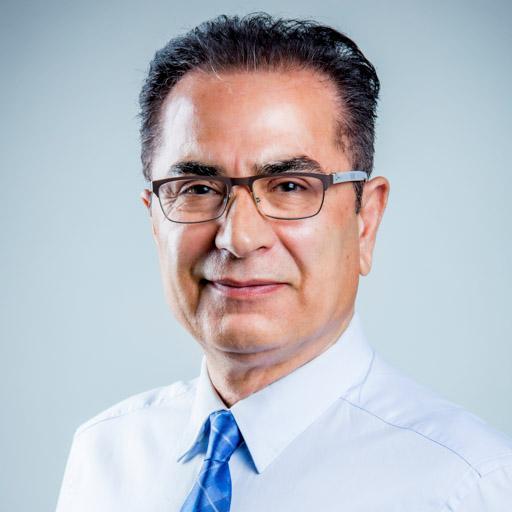
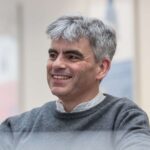
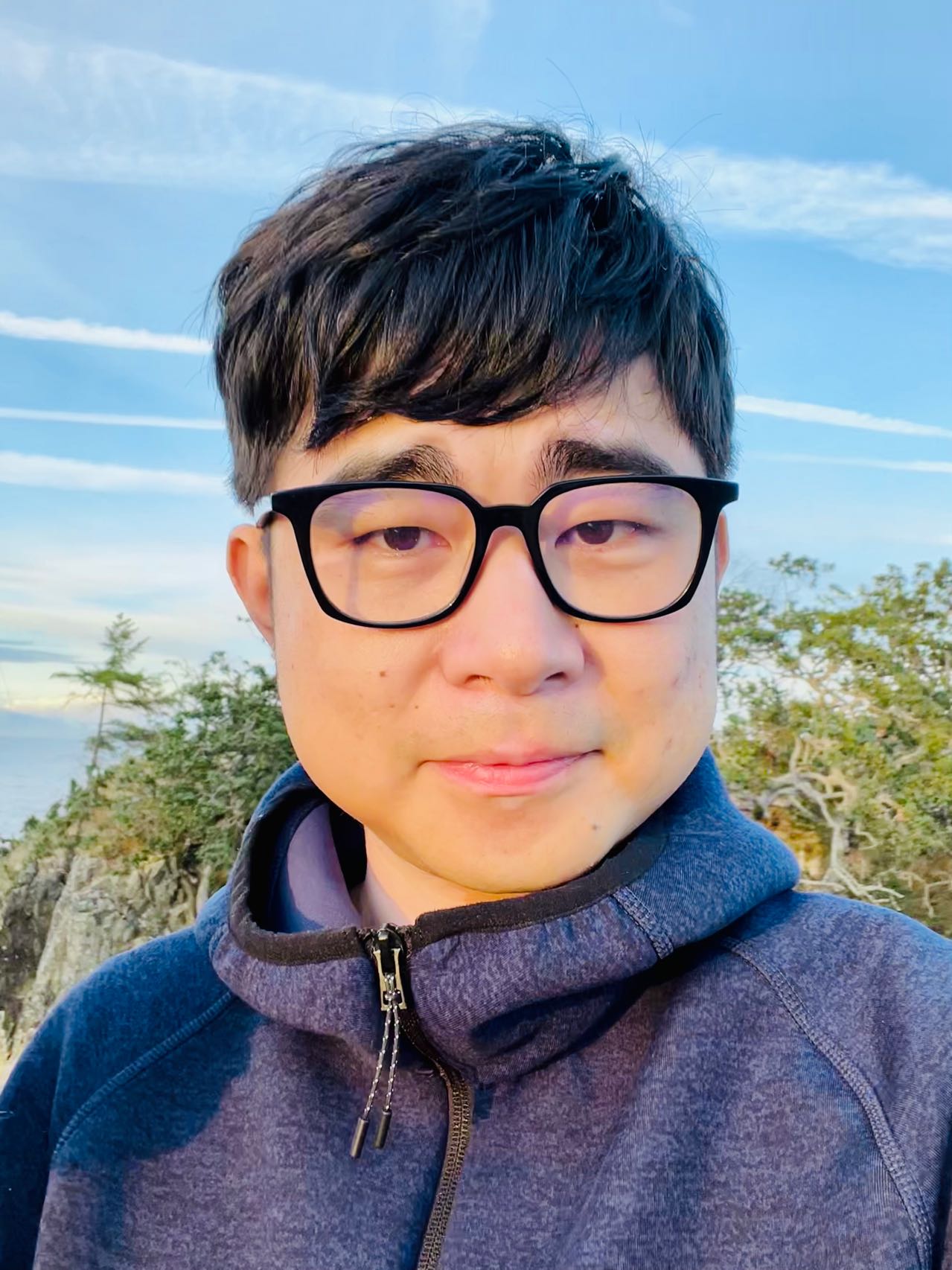
Javad Dargahi is a Professor of Mechanical, Industrial and Aerospace Engineering at Concordia University, Montreal. His research focuses on haptic sensors, robotic systems for minimally invasive surgery, and smart sensor fabrication using micromachining and piezoelectric polymers. He leads projects in teletaction, embedded force sensing for soft robots, and medical device innovation. Research interests include tactile sensor design for robots and endoscopes, nonlinear impedance matching in surgical robotics, and deep learning-driven force estimation for catheters. His work bridges mechanical engineering with biomedical applications, emphasizing safety and precision in interventional surgeries. Recent publications explore multitask neural architectures for intracardiac catheters, real-time force control algorithms, and biomimetic soft robotics. His lab develops miniature optical sensors and stiffness-adaptive systems for surgical tools, with applications in cardiac ablation and vascular navigation.
Prof. Abbas Samani is a Professor at the Department of Electrical and Computer Engineering and holds a joint appointment in the Department of Medical Biophysics at Western University . He is a core faculty member of the Biomedical Engineering Graduate Program and an Associate Scientist at Imaging Research Laboratories of Robarts Research Institute . His academic journey includes a Ph.D. from the University of Waterloo, an M.Sc. from the University of Tehran, and a B.Sc. from Amirkabir University of Technology. His research focuses on biological tissue computational modeling and its applications in medical imaging, intervention, and image analysis . He develops computer/image-assisted tools for minimally invasive disease diagnosis and therapy , targeting heart disease, cancer, and lung disease . Key projects include myocardium biomechanical modeling , handheld medical devices for breast cancer screening , and lung disease diagnostics via CT image segmentation . His recent publications emphasize ultrasound elastography , finite element modeling , and inverse problems in biomechanics , primarily in journals like IEEE Transactions on Computational Imaging and Translational Oncology . His work spans both computational modeling and medical device development . Selected Graduate Supervision : Ph.D. Candidates : Seyed Hassan Haddad, Elham Karami, Seyed Mohammad Hesabgar Graduated Ph.D. Students : Ali Sadeghi Naini, Seyed Reza Mousavi M.Sc. Students : Cristian Linte, Patrick Courtis, Joseph O'Hagan, Hatef Mehrabian, Hirad Karimi, Hosein Amooshahi, Seyed Mohammad Hesabgar, Nastaran Ghadarghadr, Shadi Shavakh, Ehsan Salamati, Ehsan Omidi Teaching Contributions : Graduate: BME9519B/CAMI9519B/ECE9202B/ECE9022B - Advanced Image Processing and Analysis , MBP9530A - Human Biomechanics and Biomedical Applications Undergraduate: ECE4438B - Advanced Image Processing and Analysis , ES1050 - Introductory Engineering Design and Innovation Studio , MBP3330F - Human Biomechanics and Biomedical Applications Research Affiliations : Robarts Research Institute - Associate Scientist at Imaging Research Laboratories Western University - Core Faculty, Biomedical Engineering Graduate Program
Una-May O'Reilly is a Principal Research Scientist at MIT's Computer Science and Artificial Intelligence Laboratory (CSAIL), leading the ALFA group. She holds a PhD in Computer Science from Carleton University (1995), with prior roles including a postdoctoral appointment at MIT's Artificial Intelligence Laboratory. Her research focuses on cybersecurity, adversarial AI, software security, and disinformation dynamics, applying evolutionary algorithms and machine learning to address arms races in cyber defense and societal challenges like climate change communication. Education: B.Sc., University of Calgary M.C.S., Carleton University Ph.D., Carleton University (1995) Research Interests: Adversarial machine learning for secure systems Coevolutionary algorithms in cybersecurity and healthcare Program comprehension via neuroscience and AI Climate disinformation mitigation on social media Large language model applications in code synthesis and threat hunting Key Projects: Adversarial Cyber Security : Modeling cyber attack-defense arms races GIGABEATS : AI-driven medical sensor data analysis for critical care MOOC Learner Project : Data science for online education insights Awards: EvoStar Award (2013) for contributions to evolutionary computation Fellow of ACM Sig-EVO Leadership & Service: Co-founder and Vice-Chair of ACM Sig-EVO Former Chair of GECCO (2005), major evolutionary computation conference Editorial roles in Evolutionary Computation and Genetic Programming and Evolvable Machines Labs & Groups: Leads the AnyScale Learning for All (ALFA) group at CSAIL, focusing on scalable AI for cybersecurity, healthcare, and education.
Prof. Dr. Tobias Gemmeke is a University Professor at RWTH Aachen University's Faculty of Electrical Engineering and Information Technology, leading the Chair of Integrated Digital Systems and Circuit Design. His work focuses on neuromorphic computing, hardware accelerators, and energy-efficient electronics. He has pioneered advancements in FPGA-based computational neuroscience simulators, neuromorphic processor architectures, and sensor integration for industrial and medical applications. Research interests include time-domain computing, ReRAM reliability, and co-optimization of neural networks with hardware. Notable contributions include the neuroAIx framework for accelerated neuroscience simulations and energy-efficient ASIC designs for post-quantum cryptography. He actively explores memristive devices and domain generalization techniques for edge computing. Recent publications highlight innovations in spiking neural networks, sensor systems for plain bearings, and time-domain compute-in-memory engines. His work bridges theoretical neuroscience with practical hardware implementations, emphasizing scalability and real-time performance.
Behnaam Aazhang is the J.S. Abercrombie Professor of Electrical and Computer Engineering at Rice University and Director of the Rice Neuroengineering Initiative (NEI). He holds a B.S., M.S., and Ph.D. from the University of Illinois at Urbana-Champaign. His roles include leading the multi-university Rice Neuroengineering Initiative and directing the Center for Neuroengineering. He has held an Academy of Finland Distinguished Visiting Professorship (FiDiPro) at the University of Oulu (2006-2014) and received an Honorary Doctorate from the University of Oulu in 2017. Education: Ph.D. in Electrical Engineering, University of Illinois at Urbana-Champaign (1986) M.S. in Electrical Engineering, University of Illinois at Urbana-Champaign (1983) B.S. in Electrical Engineering, University of Illinois at Urbana-Champaign (1981) Research Interests: Dr. Aazhang’s work focuses on signal/data processing, information theory, and neuroengineering applications. Key areas include: Neuronal circuit connectivity and learning impacts Real-time closed-loop neuromodulation for neurological disorders (epilepsy, Parkinson’s, depression) Patient-specific cardiac pacing systems Cybersecurity in cloud computing Awards & Honors: 2022 Rice Outstanding Doctoral Thesis Advisor Award 2019 SIGMOBILE Test of Time Award 2017 Honorary Doctorate (University of Oulu) 2013 IEEE Communication Society Advances in Communication Award AAAS and IEEE Fellowships (2012 and 1999) Grants & Advising: His research is supported by multi-university collaborations and grants. He has advised numerous graduate students in electrical engineering and neuroengineering, though specific names are not listed here. Labs & Teams: Leads the Aazhang Lab and the Rice Neuroengineering Initiative, focusing on translational technologies for neurological and cardiac disorders, including non-invasive neuromodulation and cloud security systems.
Marita Dale is a Senior Lecturer in the Discipline of Physiotherapy at the University of Sydney and an Early Career Researcher affiliated with the Charles Perkins Centre. She specializes in cardiorespiratory physiotherapy, focusing on exercise interventions for chronic respiratory and cardiac diseases, particularly asbestos-related and dust-related conditions. Her work emphasizes improving accessibility to pulmonary rehabilitation services and leveraging mHealth technologies for patient care. Education: PhD in Physiotherapy (2016, University of Sydney). Her research interests include optimizing pulmonary rehabilitation through mobile health platforms, such as the m-PR™ app, and investigating pediatric burn injury rehabilitation, including orthosis use and scar prevention. She also explores multimorbidity management and simulation-based learning in healthcare education. Recent studies have highlighted her contributions to COPD care protocols, telehealth implementation during the pandemic, and qualitative analyses of patient experiences. Major awards: Sydney School of Health Sciences Teaching Citation (2022), Ashurst Prize for Outstanding Oral Presentation (2015), Helga Pettitt FHS Postgraduate Study Award (2010). Marita supervises Honours, Masters, and PhD students, including Mitchell Taylor on airway clearance in bronchiectasis. Her teaching spans undergraduate and postgraduate programs in cardiopulmonary and musculoskeletal physiotherapy. She collaborates on projects like the Lung Support Service, a nationwide text message program for chronic respiratory patients during the pandemic, and contributed to the commercialization of the Perx-R app for pulmonary rehab. Labs/teams: Active member of the Charles Perkins Centre, focusing on interdisciplinary chronic disease research and healthcare innovation.
Prof. Andreas Bausch holds the Heinz Nixdorf Endowed Chair of Cell Biophysics at the Technical University of Munich (TUM) within the TUM School of Natural Sciences . His research focuses on cellular biophysics , particularly the mechanical properties of cytoskeletal networks and self-organization mechanisms in biological systems, with applications in biomimetic materials and organoid modeling. Research Areas : Cytoskeletal mechanics, active matter systems, organoid morphogenesis, integrin signaling, synthetic cell models Techniques : Microrheology, in vitro reconstitution, microfluidics, advanced imaging His work has produced over 100 publications in Nature, Science, PNAS , and Physical Review Letters , with recent emphasis on pancreatic cancer organoids and artificial cell membranes . Key findings include: Discovery of topological excitations governing endothelial cell ordering Elucidation of PIP2/PIP3 regulation in integrin phase separation Development of 3D patterned organoid systems for drug screening Major awards include: ERC Synergy Grant (2018) ERC Advanced Grant (2012) ERC Starting Grant (2011) Berlin-Brandenburg Academy of Sciences Prize (2014) He serves as founding director of the Center for Functional Protein Assemblies (CPA) since 2015 and teaches biomechanics , biophysics , and protein assemblies at TUM. His lab investigates both fundamental biophysical principles and their medical applications in cancer and cardiovascular systems.
Dr. Guangyao Li is a Research Fellow in the Department of Applied Mathematics and Theoretical Physics (DAMTP) at the University of Cambridge, affiliated with the Quantum Fluids research group. His work focuses on theoretical and computational studies of quantum fluids, particularly exciton-polaritons in semiconductor microcavities and their interactions with electrons and photons. His research bridges condensed matter physics, quantum optics, and nanotechnology. Dr. Li's interdisciplinary interests also extend to pharmacology and clinical medicine, evidenced by collaborative studies on drug efficacy, drug-related problems in hospital settings, and guidelines for off-label drug use in ophthalmology. These studies address topics such as glucocorticoid therapy complications, proton pump inhibitor utilization, and anti-vascular endothelial growth factor treatments for ocular diseases. His quantum physics publications explore polariton scattering, Bose-Einstein condensates, and chiral edge states in quantum fluids. Recent medical studies analyze drug safety, self-monitoring in diabetes, and inappropriate medication use in elderly cardiac patients. These works highlight his dual contribution to fundamental physics research and applied clinical pharmacology. No academic awards or grants are explicitly stated in available records. He advises no known students but collaborates across disciplines in Cambridge and Chinese medical institutions. His research is conducted within the Quantum Fluids group at DAMTP, leveraging advanced theoretical models and computational simulations.
Professor Patricia Connolly serves in the Department of Biomedical Engineering within the Faculty of Engineering at the University of Strathclyde, United Kingdom. Her research directly contributes to UN Sustainable Development Goals through biomedical innovation. Her research spans wound monitoring systems , engineered biomaterials (particularly silk-based surgical solutions), and digital health technologies . Key focus areas include: Non-invasive physiological monitoring devices Iontophoresis and transdermal drug delivery Surgical wound healing biomaterials mHealth interventions for cardiac conditions Digital twin applications in surgery Her recent publications reveal strong trends in merging real-time physiological data with surgical decision support systems , particularly through digital twin technology and biomaterial innovation for wound care. Award highlights: Real-time Digital Twin Assisted Surgery (DTAS) award (2023) Professor Connolly actively supervises postgraduate research (8 students documented) and secures major grants including Wellcome Trust and Medical Research Scotland funding. Her current projects span wound monitoring systems, engineered silks for surgical applications, and collaborative research cultures. She operates within Strathclyde's Biomedical Engineering facilities, utilizing advanced equipment including the Metrohm Autolab PGSTAT302N Potentiostat for electrochemical analysis in wound monitoring research.
Dr. Xin Zhou is an Oxford-Bristol Myers Squibb Fellow at the Department of Computer Science, University of Oxford. Her research integrates computational modeling, clinical data, and experimental findings to investigate cardiac disease mechanisms and develop human-based simulations for drug evaluation. BSc and MSc in Life Sciences, Beijing Normal University DPhil in Computational Biology, University of Oxford Her work focuses on multi-scale cardiac modeling , particularly in ischemic heart disease and heart failure, exploring ionic currents, tissue conduction, and organ-level dynamics. She develops electromechanical simulations to study cardiac alternans and arrhythmic risks, translating these into clinical applications for patient stratification and pharmaceutical testing. Recent publications emphasize in silico clinical trials , sex-specific cardiometabolic analysis, and Purkinje network modeling. Collaborative efforts with clinicians and pharmaceutical partners highlight her translational approach to regulatory science. Model of the Year 2024, BioModels EPSRC Impact Acceleration Account Microsoft Research Project Award Recognition Award, University of Oxford She supervises PhD and MSc students in computational cardiology, while serving on the editorial board of Frontiers in Physiology . Her current projects involve digital twinning and predictive cardiac safety models to reduce animal testing reliance.
Karthik Menon serves as an Assistant Professor with a joint appointment in the Woodruff School at Georgia Institute of Technology and the Coulter Department of Biomedical Engineering. His research integrates fluid mechanics, computational modeling, and data-driven methodologies to address critical challenges in healthcare, renewable energy, and bio-inspired engineering systems. His academic credentials include: Ph.D. in Mechanical Engineering, Johns Hopkins University (2021) M.S. in Mechanical Engineering, Johns Hopkins University (2019) B.E. in Mechanical Engineering, Birla Institute of Technology and Science, Pilani, India (2015) Menon's research program centers on three interconnected domains: cardiovascular flows for personalized treatment of heart disease, fluid-structure interactions in biological systems like heart valves and bio-mimetic robots, and vortex-dominated flows for renewable energy applications. His approach combines high-fidelity computational modeling with machine learning to uncover fundamental physics and develop clinical solutions, such as cardiovascular digital twins for non-invasive risk assessment. Current projects focus on patient-specific hemodynamics using CT imaging and uncertainty quantification to improve surgical planning. Analysis of his 15 most recent publications (2023-2025) reveals a dominant focus on advancing multi-fidelity computational frameworks for cardiovascular applications. Key trends include Bayesian uncertainty quantification, zero-dimensional solver development, and integration of clinical imaging data to create predictive digital twins. His work bridges fluid dynamics with clinical cardiology, targeting improved outcomes in coronary artery disease and Kawasaki-related complications through physics-informed machine learning. Menon's scholarly contributions have been recognized through competitive awards: WCCM-PANACM 2024 Travel Award, U.S. Association for Computational Mechanics (2024) Future Faculty Symposium Travel Award, Society of Engineering Science Conference (2023) Mark O. Robbins Prize in High-performance Computing, Johns Hopkins University (2021) Corrsin-Kovasznay Outstanding Paper Award, Johns Hopkins University (2020) Prosperetti Travel Award, Johns Hopkins University (2017) Mechanical Engineering Departmental Fellowship, Johns Hopkins University (2016) As principal investigator of the ComBiNE Fluid Dynamics Lab, Menon mentors graduate students in developing computational tools for fluid-structure interaction problems. His collaborative projects with cardiologists at Stanford and Emory hospitals translate engineering principles into clinical applications for cardiovascular disease management. Current grant activities focus on NSF and NIH-funded initiatives for uncertainty-aware cardiovascular modeling and bio-inspired flow energy harvesting. The ComBiNE Fluid Dynamics Lab operates as an interdisciplinary hub where engineers, clinicians, and data scientists collaborate on fluid mechanics challenges. Current lab initiatives include developing real-time hemodynamic simulators for surgical planning, creating reduced-order models for cardiac device optimization, and investigating vortex dynamics in fish schooling for underwater vehicle design. The lab maintains strong partnerships with Children's Healthcare of Atlanta and the Parker H. Petit Institute for Bioengineering and Bioscience.
Dr. Thanh Nho Do is a Scientia Senior Lecturer at the Graduate School of Biomedical Engineering (GSBmE), UNSW Sydney, and Director of the UNSW Medical Robotics Lab. He holds a PhD in Mechanical Engineering (Surgical Robotics) from Nanyang Technological University (NTU), Singapore, and a B.Eng. in Manufacturing Engineering from Ho Chi Minh City University of Technology, Vietnam. His research focuses on soft robotics, wearable technologies, and biomedical devices, including flexible surgical systems, soft actuators, and haptic interfaces. Education PhD in Mechanical Engineering (Surgical Robotics), NTU Singapore, 2015 B.Eng. in Manufacturing Engineering, Ho Chi Minh City University of Technology, Vietnam Research Interests Soft robotics for medical applications (e.g., NOTES systems, wearable haptics) Functional materials for biomedical devices Cardiovascular engineering and assistive devices Advanced control algorithms for medical robotics Key Contributions His work spans bioprinting, motor-free robotic systems, and soft wearable technologies. Recent studies include self-deploying cardiac compression devices and bioinspired artificial muscles. Awards 2025: CINSW Career Development Fellow 2024: NSW Young Tall Poppy Science Award 2023: Best Poster Awards at EMBC and ICRA Grants & Funding Includes NHMRC Ideas Grant (Lead CI), Cancer Institute NSW Fellowship, and UNSW Scientia Grant. Active projects address cardiovascular interventions and wearable robotics. Labs & Teams Leads the UNSW Medical Robotics Lab, collaborating on devices like soft robotic catheters and textile-driven exosuits.
Joe Pitt-Francis is Associate Professor of Computer Science and Tutorial Fellow in Computer Science at St Edmund Hall, University of Oxford . Since 1999 he has tutored Oxford computer-science students and formally became a Tutorial Fellow of St Edmund Hall in 2024. His research lies at the intersection of computational biology and mathematical biology . Using sophisticated numerical techniques he constructs and analyses models of the heart , cancer and blood flow . A central strand of his work is software development for biological simulation; he is an active contributor to Chaste ( Cancer, Heart and Soft-Tissue Environment ), a large-scale C++ library that supports multiscale computational models in physiology and medicine. Across more than 60 peer-reviewed publications since 1998, his work has progressively advanced from foundational software-engineering papers describing Chaste’s architecture to highly-cited studies on cardiac electrophysiology , tumour-induced angiogenesis , microvascular haemodynamics and cell-cycle dynamics under hypoxia . The 2024-2025 corpus shows strong emphasis on multiscale frameworks , open benchmarking , and radiotherapy-induced vascular remodelling , positioning his group at the forefront of translational in-silico oncology. Contact: Email: Joe.Pitt-Francis@seh.ox.ac.uk
Molly Maleckar is a Research Professor at the Computational Physiology Department of Simula Research Laboratory , Oslo, Norway. Her work bridges computational modeling, cardiac electrophysiology, and biomedical applications, with a focus on arrhythmia mechanisms, fibrosis modeling, and machine learning integration in cardiac risk prediction. Research Interests include: Computational Cardiology Ion Channel Dynamics Machine Learning in Medicine Excitable Tissue Modeling Cardiac Fibrosis Analysis Biomedical Simulation Scientific Contributions span 15+ publications (2018-2024) addressing atrial fibrillation, calcium handling, and AI-driven ECG analysis. Key collaborative projects involve patient-specific ventricular modeling and educational initiatives like the Simula Summer School in Computational Physiology .
Bo Zhu is an Assistant Professor in the School of Interactive Computing at Georgia Institute of Technology. His research focuses on computational approaches for complex physical systems, including fluid dynamics, topology optimization, and robotics control. He holds a Ph.D. from Stanford University and completed postdoctoral research at MIT CSAIL. He has been recognized with the NSF Career Award (2022) and multiple best paper awards at SIGGRAPH conferences. Education: B.E.-M.S., Software Engineering, Shanghai Jiao Tong University Ph.D., Computer Science, Stanford University Postdoc, EECS, MIT Research Interests: Develops numerical algorithms and machine learning techniques to simulate fluidic systems, soft materials, and multi-scale phenomena. His work emphasizes vorticity preservation, real-time simulation, and physics-based AI integration. Key Contributions: Pioneered Particle Flow Map (PFM) methods for fluid simulation, developed open-source libraries like SimpleX and PFM Hub, and contributed to projects like Genesis physics engine. Over 50 peer-reviewed publications in top venues (SIGGRAPH, NeurIPS, IEEE TVCG). Awards: NSF Career Award (2022) Best Paper Honorable Mention (SIGGRAPH 2025) Best Paper Award (SIGGRAPH Asia 2024) Grants & Projects: Leads NSF-funded research on Physical AI Design, collaborating with Sandia National Labs on real-time CFD solvers. Active in open-source software development for computational physics and graphics.