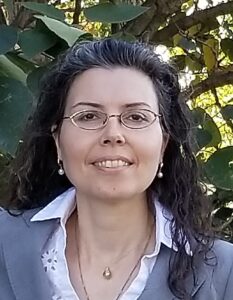
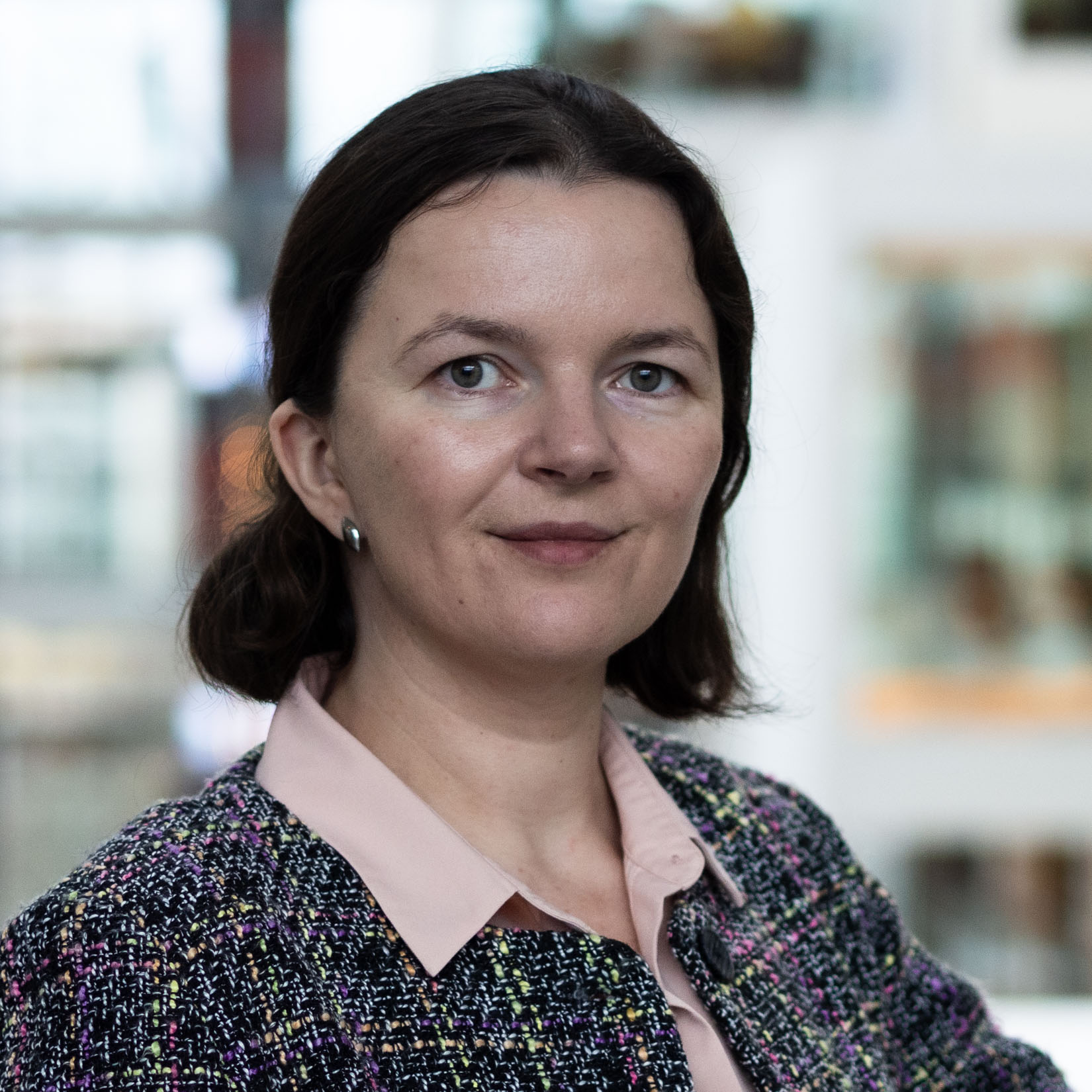
Thilo Stadelmann is the Founding Director of the Centre for Artificial Intelligence at the Zurich University of Applied Sciences (ZHAW) . A computer scientist by training, he earned his Doctor of Science degree from Marburg University, Germany, and has held engineering and leadership roles in the automotive industry before transitioning to academia. His research interests lie at the intersection of representation learning and the societal implications of artificial intelligence . He is particularly focused on understanding how AI systems can be designed to enhance human capabilities while addressing ethical concerns and societal challenges. Stadelmann is a prolific speaker and educator, delivering TEDx talks and lectures on topics such as "How Not to Fear AI" , "AI vs Human: Understanding the Fundamental Differences" , and "Decoding AI Fear: The Philosophy Behind It" . His work emphasizes the importance of demystifying AI and fostering a balanced perspective on its potential and limitations. His recent publications span a wide range of AI applications, from safety-critical network infrastructures and medical imaging to industrial process control and AI governance . Notable works include studies on AI risk assessment for public policy, document recognition, and the societal impact of AI technologies. Beyond his academic role, Stadelmann is actively involved in the digital ecosystem as a (co-)founder and senior leader in several organizations, bridging the gap between research and practical implementation in the AI space.
Marie-Christine Daniel serves as an Associate Professor in the Department of Chemistry & Biochemistry at the University of Maryland, Baltimore County (UMBC). Her research laboratory focuses on the preparation of multifunctional colloidal inorganic nanoparticles for medical, materials, and environmental applications. She maintains an active research program with laboratory space in the Meyerhoff Chemistry/Biochemistry Building. Daniel earned her Ph.D. from the University of Bordeaux 1 (France) in 2003, followed by postdoctoral training at Tokyo University (Japan) and Indiana University (IN) in 2004. Her educational background provides a strong foundation in both European and American research traditions. Her primary research interests include the development of nanoparticle-based drug delivery systems for cancer chemotherapy, particularly using dendronized gold nanoparticles capable of carrying payloads of up to 1400 dendrons per nanoparticle. She also investigates plasmon-exciton coupling using gold nanoparticles and quantum dots for quantum computing applications, and develops microfluidic sensors for lead detection in tap water. Her work bridges chemistry, materials science, and biomedical engineering. Analysis of her publication record reveals consistent research output across three main thrusts: 1) Cancer nanomedicine with emphasis on prostate cancer treatment, 2) Quantum phenomena in nanoparticle assemblies, and 3) Environmental sensing applications. Her most recent work (2025) continues to advance quantum dot transfer techniques, while her highly cited 2004 Chemical Reviews article on gold nanoparticles remains influential in the field. Daniel leads multiple funded research projects including NSF-funded work on hyperthermia for enhanced nanoparticle delivery to tumors, development of HIFU (High-intensity focused ultrasound) energized functionalized nanoparticles for tumor ablation, controlled assembly of inorganic nanoparticles for hybrid nanomaterials, and gold nanoparticle-based microfluidic devices for lead sensing in tap water. Her laboratory collaborates extensively with researchers across disciplines including physics, oncology, and engineering. The Daniel Lab maintains active collaborations with the Pelton research group in Physics at UMBC for nanoparticle optical properties research, and works with medical researchers on cancer treatment applications. Current projects include optimizing dendronized gold nanoparticles for prostate cancer treatment, developing gold nanorattles for combination chemotherapy and photothermal therapy, and creating user-friendly lead detection devices for home water testing.
Thien Huu Nguyen is an Associate Professor in the Department of Computer Science at the University of Oregon, part of the College of Arts and Sciences. His research focuses on advancing natural language processing through deep learning approaches, with particular emphasis on multilingual capabilities and information extraction systems. Dr. Nguyen earned his B.S. in Computer Science from Hanoi University of Science and Technology, followed by M.S. and Ph.D. degrees in Computer Science from New York University, where he worked with Professors Ralph Grishman and Kyunghyun Cho. He completed postdoctoral research at the University of Montréal with Professor Yoshua Bengio at the Montreal Institute for Learning Algorithms. His research explores mechanisms to understand human languages for computers so that they can perform cognitive language-related tasks. He is especially interested in distilling structured information and mining useful knowledge from massive and multilingual human-written text across various domains. His lab employs and designs effective learning algorithms for information extraction and text mining, with current focus on deep learning approaches. They are among the first groups to develop deep learning models demonstrating effectiveness for information extraction, while also targeting other language-related problems including reading comprehension, machine translation, natural language generation, chatbots, and language grounding. Dr. Nguyen's research has resulted in significant contributions to multilingual NLP, including the development of Vistral (a state-of-the-art conversational LLM for Vietnamese), CulturaX (a massive multilingual dataset with 6.3 trillion tokens in 167 languages), and the Okapi framework for evaluating multilingual LLMs in 26 languages. His work has been adopted by major organizations including Stability AI for training their state-of-the-art multilingual language models. NSF CAREER Award (2023) AI 2000 Most Influential Scholar Honorable Mention in NLP (2022) EACL 2021 Best Demo Paper Award EACL 2021 Outstanding Demo Paper Award IBM Ph.D. Fellowship (2016) Dr. Nguyen actively mentors students, currently supervising four PhD students (Minh Nguyen, Nghia Ngo, Hieu Man, and Chien Nguyen) and has successfully guided numerous alumni to positions at leading tech companies and academic institutions. His research has been supported by multiple grants including funding from NSF, IARPA, and Adobe Research. He leads the UO-NLP research group which has developed influential software including FourIE (a neural information extraction system), Trankit (a multilingual NLP toolkit), and FAMIE (a multilingual active learning framework).
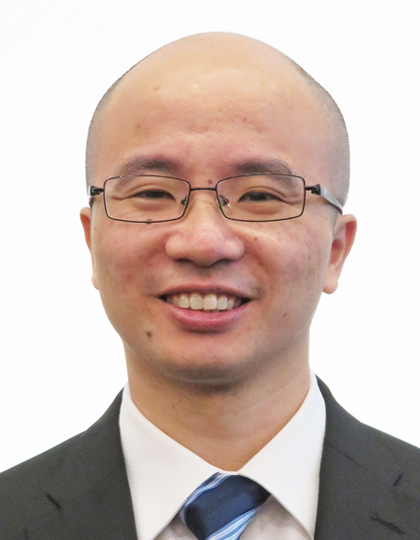
Professor David Xu is a distinguished faculty member in the Department of Information Systems at City University of Hong Kong, where he has served as Professor since 2023 after progressing from Associate Professor (2017-2023). Prior to joining CityU, he held academic positions at Wichita State University from 2011-2017, culminating in the Bomhoff Endowed Professor of Business title in 2017. His educational background includes a PhD in Management Information Systems from the University of British Columbia (2011), an MPhil in Information Systems from City University of Hong Kong, and a First-class honors BBA in Business Administration from Lingnan University. As Programme Leader for both BBA Information Management and Bachelor's Degree in Information Systems programs since 2018, he plays a significant administrative role in curriculum development. Professor Xu's research spans human-computer interaction, artificial intelligence applications, and technology adoption across diverse domains. With over 90 publications including 40+ journal papers in top-tier venues like MIS Quarterly and Information Systems Research, his work demonstrates exceptional scholarly impact. His Google Scholar metrics (3,300+ citations, h-index of 22) reflect substantial influence in the field. His recent publications reveal a strategic focus on AI ethics, information cocoon mitigation in social media, healthcare applications of AI, and digital transformation effects on business. The work spans theoretical contributions and practical implementations, with increasing emphasis on societal impacts of technology. AIS Early Career Award (2018) AIS Distinguished Member – Cum Laude (2020) Multiple teaching excellence awards (2021, 2024, 2025) ICIS and ISR Best Associate Editor Awards (2020-2021) Numerous paper award nominations across major conferences Professor Xu has secured significant research funding including NSFC, RGC GRF, and CityU Strategic Research Grants totaling millions in funding. His current projects address critical issues like AI beauty filters, depression treatment systems, and information cocoon mitigation. As Senior Editor for Information Systems Journal and Associate Editor for Information Systems Research, he shapes the field's scholarly discourse while supervising DBA and PhD students across multiple programs.
Dr. Puren Ouyang serves as an Associate Professor in the Department of Aerospace Engineering at Toronto Metropolitan University, where he holds a Professional Engineering license (PEng). His academic foundation includes a BASc from Huazhong University of Science and Technology (1985), followed by MSc and PhD degrees from the University of Saskatchewan (2002, 2005). He teaches core courses including AER 509 Control Systems, AER 520 Stress Analysis, and AE 8141 Advanced Aerospace Manufacturing. His educational credentials: PhD in Engineering, University of Saskatchewan (2005) MSc in Engineering, University of Saskatchewan (2002) BASc in Engineering, Huazhong University of Science and Technology (1985) Ouyang pioneered position domain control methodology, replacing traditional time/frequency references with position-based systems to enhance robotic precision in contour tracking. His research directly addresses industrial manufacturing challenges where 24/7 machine reliability determines product accuracy. Key focus areas include robotic control systems, mechatronics integration, hybrid system dynamics, and synchronized multi-DOF manipulation for CNC applications. His 2013-2016 publications reveal consistent innovation in position-domain robotics control, with emphasis on contour tracking algorithms, multi-axis synchronization, and adaptive learning techniques. These works bridge theoretical control frameworks with industrial manufacturing applications, frequently targeting CNC machine optimization where 80% of North American factories rely on automated systems. Key recognitions: Best Conference Paper in Integration Award at IEEE ICIA 2011 NSERC Postdoctoral Fellowship (2005-2007) As an active supervisor, Ouyang mentors graduate students in robotics and control systems through the ISRMM Laboratory. His NSERC fellowship demonstrates sustained research capability, while his industry-focused publications suggest ongoing grant activity in advanced manufacturing automation. Current supervision availability indicates active research program development. The Intelligent Systems & Robotics / Micro Manufacturing (ISRMM) Laboratory serves as his primary research hub, driving innovations in robotic precision manufacturing, micro-scale production systems, and real-time control architectures for industrial applications.
Dominik Huber is a Ph.D. candidate and researcher at the Technical University of Munich , affiliated with the Chair of Computer Architecture & Parallel Systems . His work focuses on Dynamic Resource Management in High-Performance Computing (HPC) , with expertise in Parallel & Distributed Programming Models and Hardware-aware programming . He has actively contributed to teaching courses like Parallel Programming Systems and Advanced Computer Architecture . His research emphasizes adaptive resource allocation in hybrid HPC clusters, leveraging technologies such as MPI Sessions , PMIx , and frameworks like LAIK and XBraid . Recent projects include the DynRes software suite for dynamic resource management and collaborations on quantum-HPC integration. Huber has advised students on topics ranging from Dynamic Resource Management in Charm++ to CI Systems for HPC Software , and his publications address challenges in malleability, scheduling, and power-constrained environments. Current affiliations include participation in the SEANERGYS (EuroHPC) and PlasmaPEPS projects.
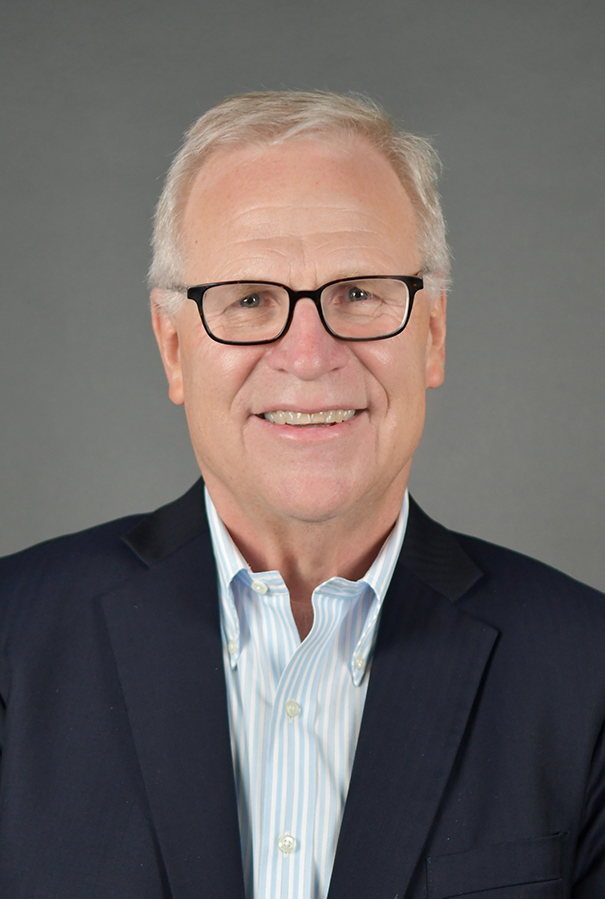
Jay Barney is the Presidential Professor of Strategic Management and Pierre Lassonde Chair of Social Entrepreneurship in the Department of Entrepreneurship & Strategy at the University of Utah's David Eccles School of Business. Previously holding the Chase Chair for Excellence in Corporate Strategy at Ohio State University, he is a foundational scholar in strategic management renowned for developing the resource-based view of the firm. Education: Doctor of Philosophy, Yale University Master of Arts, Yale University Bachelor of Science, Brigham Young University Barney's research revolutionized strategic management through his seminal work on how costly-to-copy firm resources create sustained competitive advantage, establishing the VRIN (Valuable, Rare, Inimitable, Non-substitutable) framework. His scholarship bridges strategic management and entrepreneurship, examining opportunity formation processes, social entrepreneurship for poverty alleviation, and the philosophical foundations of entrepreneurial research. Current work increasingly focuses on integrating social impact with strategic advantage, particularly through industrialization solutions to poverty and stakeholder engagement under uncertainty. Analysis of his 2012-2016 publications reveals three dominant research streams: (1) theoretical extensions of resource-based theory into human capital, IT capabilities, and multinational contexts; (2) philosophical and methodological foundations of entrepreneurship research; and (3) social entrepreneurship applications addressing poverty and public interest. These works consistently appear in top-tier journals including Strategic Management Journal and Academy of Management Review, demonstrating rigorous theoretical development coupled with practical implications for organizational strategy. Scientific Awards: SMS Fellow Fellow of the Academy of Management Honorary Doctorate from University of Lund Honorary Doctorate from Copenhagen Business School Honorary Doctorate from Universidad Pontificia Comillas As a dedicated educator, Barney teaches doctoral seminars and strategy courses while mentoring PhD students in strategic management and entrepreneurship. His professional impact extends through executive training programs across North America and Europe, and strategic consulting engagements focused on organizational transformation. He has significantly shaped the field through editorial leadership as associate editor of Journal of Management, senior editor of Organization Science, and co-editor of Strategic Entrepreneurship Journal, while serving in officer roles for both the Strategic Management Society and Academy of Management's Business Policy and Strategy Division. Barney's research activities are closely integrated with the Lassonde Entrepreneur Institute at the University of Utah, where his social entrepreneurship chair supports initiatives connecting strategic management principles with poverty alleviation efforts and opportunity creation in resource-constrained environments.
Steve Oney is an Associate Professor at the University of Michigan School of Information and Computer Science and Engineering (by courtesy). His research focuses on enabling and encouraging more people to write and customize computer programs by creating new programming tools and exploring usability issues in programming environments. With a strong background in Human-Computer Interaction, he bridges the gap between theoretical research and practical applications in programming education, accessibility, and developer tool design. Dr. Oney completed his Ph.D in Human-Computer Interaction at Carnegie Mellon University's Human-Computer Interaction Institute under Professor Brad Myers and Dr. Joel Brandt. He also earned an M.Eng in Computer Science and SB degrees in Computer Science and Mathematics from MIT. His research spans multiple interconnected areas with a unifying theme of making programming more accessible and understandable. Key focus areas include programming education tools that help instructors understand student code at scale, web automation systems that simplify repetitive tasks, accessibility research addressing challenges faced by visually impaired programmers, and innovative VR programming environments. His work consistently emphasizes the human aspects of programming, exploring how tools can better support diverse programming needs and contexts. Dr. Oney's research output shows a strong trajectory toward increasingly sophisticated tools that integrate AI capabilities while maintaining a focus on human-centered design principles. Recent publications demonstrate growing emphasis on inclusive design, educational applications, and the integration of generative AI in programming environments. L@S 2024 Best Paper Award for CFlow CHI 2023 Honorable Mention for VizProg UIST 2024 Best Short Paper (EdCode) VL/HCC 2019 Best Short Paper Recognition for Contribution to Diversity and Inclusion (CSCW 2021) UMSI Excellence in Instruction Award (2021) University of Michigan President's Postdoctoral Fellowship (2015) As a mentor, Oney advises multiple Ph.D. students and postdoctoral researchers, with several successful graduates including Dr. Lei Zhang (June 2024). His research has secured over $1 million in funding from the National Science Foundation, Google, and Adobe, supporting projects that address critical challenges in programming education, accessibility, and developer tool design. He leads the Programming Tools Lab at the University of Michigan, where his team develops innovative tools that help programmers work more effectively. Current projects focus on AI-enhanced programming education, web automation, accessibility for diverse user groups, and next-generation programming environments for virtual and augmented reality.
Dr. Sönke Knoch is a researcher affiliated with the Ubiquitous Media Technology Lab (UMTL) at the Saarland Informatics Campus and the German Research Center for Artificial Intelligence (DFKI) GmbH . His work focuses on Human-Computer Interaction , Activity Recognition , Process Mining , and Industry 4.0 technologies. Current Affiliation: DFKI GmbH (Saarland Informatics Campus) Academic Role: Researcher Research Interests span digital twins, augmented reality in manufacturing, and safety-critical systems. He leads projects like RZzKI (AI and Digital Transformation) and BaSySafe (risk assessment via management shells). His work addresses zero-defect manufacturing and cognitive support for impaired workers . Recent Publications focus on digital twins for industrial safety, AR-based task adaptation , and AI quality management in smart factories. Key themes include human-centric AI , real-time process conformance , and context-aware systems . Leadership includes contributing to the WALL-ET project for autonomous logistics and co-developing the PARTAS system for cognitively impaired workers.
Dr. Thomas Combrink serves as a Research Fellow in the Department of Linguistics, Clinical Linguistics, Text Technology and Computational Linguistics at the Faculty of Linguistics and Literary Studies, University of Bielefeld. His research focuses on the intersection of linguistics and computer science, particularly in computational approaches to language analysis and processing. His work contributes to Bielefeld University's strategic research area of the Socio-Technical World, which examines capabilities and mechanisms enabling agents like humans, robots, and AI systems to act and communicate in complex environments. This research aligns with the Center for Cognitive Interaction Technology (CITEC), where linguists collaborate with computer scientists, psychologists, and engineers. Dr. Combrink's expertise in text technology and computational linguistics supports interdisciplinary projects that bridge theoretical linguistics with practical applications in natural language processing and human-computer interaction systems.
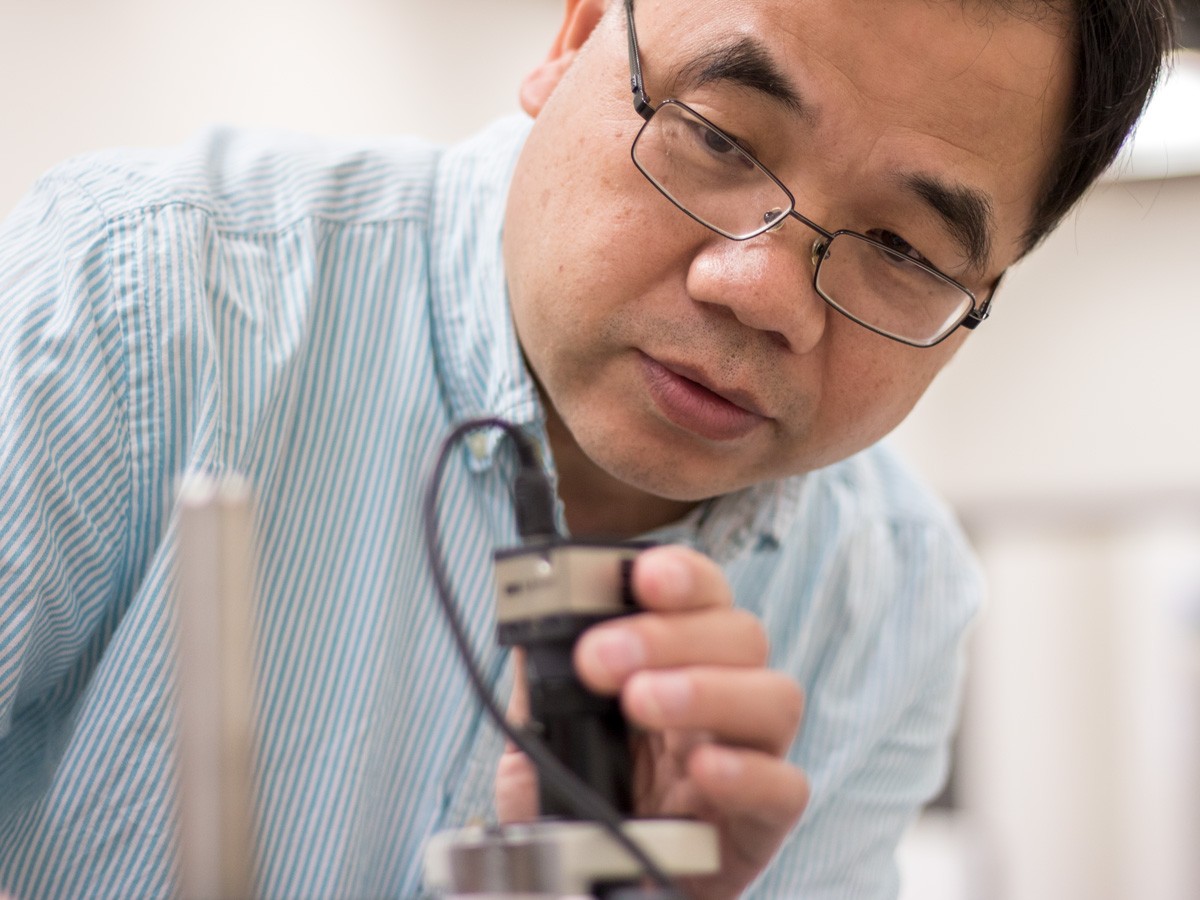
Matthew J Comstock is an Associate Professor in the Department of Physics & Astronomy at Michigan State University, where he has led a research program since August 2012 focused on single-molecule biophysics. His work pioneers high-resolution optical tweezers and fluorescence techniques to observe biomolecular processes at angstrom-scale resolution. Education 2008: Ph.D., Physics, University of California, Berkeley 2000: B.S., Physics, University of Chicago Research Focus Dr. Comstock investigates molecular motors and nucleic acid-processing enzymes through real-time single-molecule observation. His lab develops cutting-edge instrumentation combining optical trapping with fluorescence detection to study enzyme kinetics, DNA replication mechanics, and protein folding dynamics. Technical innovations include ultrahigh-resolution optical traps capable of single-fluorophore sensitivity and novel force transducers using engineered DNA. Publication Trends Analysis of his 15 most recent publications (2016-2020) reveals three dominant themes: 1) Telomerase and helicase mechanisms using optical tweezers, 2) Instrumentation advances merging force spectroscopy with fluorescence, and 3) Fundamental studies of nucleic acid mechanics. His work consistently bridges physics and biology to uncover molecular-scale mechanisms in enzymatic catalysis. Scientific Recognition Jerry Cowen Chair of Physics (awarded upon faculty appointment) Mentorship and Resources As faculty at MSU, Dr. Comstock mentors graduate students in biophysics research though specific advisees aren't listed in source materials. His laboratory operations suggest active grant funding from agencies like NIH or NSF, supported by technical innovations in single-molecule instrumentation. Research Facilities His group operates two laboratories in MSU's Biomedical Physical Sciences Building: Room B149 (517-884-5491) specializing in optical trap development, and Room B238 (517-884-5705) focused on fluorescence integration and biomolecular assays.
Bradley Hayes is an Associate Professor of Computer Science and Director of the Collaborative AI and Robotics (CAIRO) Laboratory at the University of Colorado Boulder. His work focuses on enabling autonomous agents and robots to collaborate safely and effectively with humans through techniques in human-robot interaction, explainable AI, and learning from demonstration. PhD in Computer Science, Yale University (2015) Postdoctoral Associate, MIT Interactive Robotics Group Research interests span collaborative robotics, dependable AI systems, and imitation learning for human-robot teaming, with applications in manufacturing, healthcare, and autonomous vehicles. His lab develops methods for task planning, motion prediction, and trust calibration in human-machine partnerships. Recent publications emphasize explainable sequential decision-making, neuromorphic learning architectures, and augmented reality interfaces for robotic training. Awards include Sustainability Recognition (2025) for motion planning efficiency Best Student Paper Runner-up (AAMAS 2022) Best Technical Paper Runner-up (HRI 2019) As lab director, he has mentored 12 PhD/Master students to completion, including Matthew Luebbers, Aaquib Tabrez, and Christine Chang. Funding sources include NSF grants and industry partnerships like Circadence, where he serves as Chief Technology Officer.
Jan Kemper serves as an Honorary Professor of Business Administration and Entrepreneurship at RWTH Aachen University, appointed in July 2022 after a decade of continuous academic engagement. His primary academic affiliation is with the Innovation and Entrepreneurship Group (WIN), where he integrates scholarly research with extensive industry experience. Concurrently, Kemper maintains an active business career spanning investment banking at Goldman Sachs, Credit Suisse, and Morgan Stanley across Germany, the UK, and Saudi Arabia, followed by executive roles at Groupon, Zalando, ProsiebenSat.1, Omio, and N26. He is a serial entrepreneur with ventures including the triathlon brand Ryzon, the event venue "Der Kemper Hof", and Green-Tech firm Greenair, while also serving as a business angel and non-executive director for companies like Flink and Hedosophia. His academic credentials include: Business Administration studies at WHU Vallendar, ICADE (Madrid), and Bordeaux Business School Doctoral degree (Dr. rer. pol.) from RWTH Aachen University Kemper's research critically examines entrepreneurship through multiple interconnected lenses. His core focus areas encompass general entrepreneurship dynamics, corporate entrepreneurship strategies, and innovation processes. He further investigates entrepreneurial finance mechanisms, venture capital ecosystems, marketing approaches specific to new ventures, and operational challenges in startup environments. This research program is uniquely informed by his dual expertise in academic theory and real-world business execution, creating practical frameworks for entrepreneurial success. Analysis of his 12 publications (2010-2022) reveals a dominant focus on consumer behavior within digital marketplaces, particularly e-commerce contexts. Recurring themes address sustainable consumption practices (e.g., eco-label effectiveness), retail strategy (private label dynamics and fast fashion), payment system innovations, customer review impacts on loyalty, and product return logistics. His methodological approach consistently employs empirical field experiments and cross-cultural comparisons, reflecting both academic rigor and practical relevance derived from his global business exposure across multiple continents. While specific student supervision details are absent from source materials, Kemper's decade-long teaching role suggests mentorship of entrepreneurship students through RWTH Aachen's programs. His extensive industry network—including corporate board memberships and startup investments—implies strong potential for industry-academia research partnerships and applied grant funding, though explicit grant details remain undocumented in available texts. The Innovation and Entrepreneurship Group (WIN) serves as Kemper's primary research hub at RWTH Aachen, functioning as the operational nexus where his academic investigations into venture creation and innovation processes directly intersect with his practical business experience across finance, digital platforms, and sustainable enterprises.
Anna Rogers is a tenured Associate Professor at the IT University of Copenhagen , where she leads research in the Data Science Section . Her work bridges NLP , large language models (LLMs) , and sociotechnical impacts of AI , with a focus on interpretability, robustness, and ethical frameworks. She serves as co-editor-in-chief of ACL Rolling Review and is a Villum Young Investigator and ELLIS fellow . Education: PhD in Computational Linguistics (University of Tokyo), Postdocs in Machine Learning for NLP (University of Massachusetts, Lowell) and Social Data Science (University of Copenhagen) Her research explores how LLMs can be designed for transparency and fairness, with recent grants like the Villum Synergy and Inge Lehmann supporting interdisciplinary collaborations. She organizes workshops (e.g., Dagstuhl seminar 24052) and co-leads projects like CAISA (National Centre for Artificial Intelligence in Society). Key themes include: Interpretability in NLP Robustness against synthetic content Data governance and ethical use Peer review systems and academic publishing Her lab has hosted researchers such as Max Müller-Eberstein (funded by DFF) and is actively recruiting for projects on generalization benchmarks and data attribution. She emphasizes collaboration across academia, industry, and policy, shaping Denmark's data science future through roles like the Danish Data Science Academy committee. Recent articles highlight trends in corpus analysis , temporal annotation , and LLM governance .
Dr. Kevin M. Crosby is a Professor of Physics, Astronomy, and Computer Science at Carthage College, where he also holds the Hedberg Distinguished Professor of Entrepreneurial Studies title. He serves as Director of the Wisconsin Space Grant Consortium and leads the Carthage Space Sciences program. Dr. Crosby has chaired both the Physics and Astronomy Department and the Computer Science Department, and previously served as Division Chair for Natural Sciences for 10 years and Dean of the Division of Natural and Social Sciences for one year. Dr. Crosby earned his position at Carthage College in 1998, coming from the University of Northern Colorado where he was a visiting assistant professor of physics. His academic journey has positioned him as a leader in space science education and research. Dr. Crosby's research focuses on space science and microgravity fluid dynamics, with particular expertise in propellant gauging technologies for spacecraft. His work bridges theoretical physics with practical space applications, emphasizing undergraduate research opportunities. He has developed innovative approaches to measuring liquid propellant in microgravity environments, which has significant implications for long-duration space missions and in-orbit refueling capabilities. His research program actively involves undergraduate students in meaningful space science projects. Analysis of Dr. Crosby's publication record reveals a strong focus on propellant management in microgravity environments, with particular emphasis on modal propellant gauging techniques. His research spans experimental work on parabolic flights, suborbital payloads, and CubeSat missions, demonstrating a commitment to hands-on space research with undergraduate students. Recent work shows increasing integration of AI and advanced sensor technologies into space applications. Hedberg Distinguished Professor of Entrepreneurial Studies Director of the NASA Wisconsin Space Grant Consortium Dr. Crosby actively mentors undergraduate students in space science research, with notable projects including suborbital payload experiments, parabolic flight experiments, and CubeSat development. His Carthage Space Sciences program has secured significant NASA funding through the Space Grant Consortium. Students like Celestine Ananda '20 have participated in high-profile research that has been featured in media outlets including Wisconsin Public Radio and the Milwaukee Independent. Dr. Crosby leads the Modal Propellant Gauging research team that collaborates with NASA Kennedy and Johnson Space Centers. His Carthage Space Sciences program functions as an active research hub where students participate in real NASA-related projects, including the Blue Origin New Shepard flights that have successfully demonstrated propellant gauging technologies in microgravity.