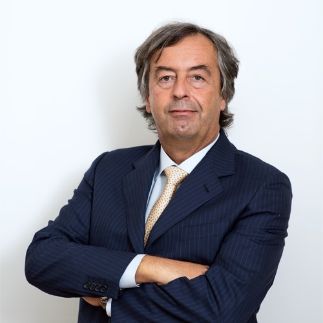
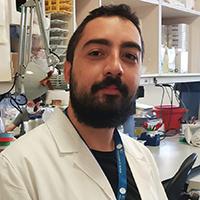
Simona Candiani is a Full Professor at the Department of Earth, Environmental, and Life Sciences (DISTAV) at the University of Genoa. She teaches courses such as Developmental Biology, Forensic Cytology and Histology, and Evolution of Marine Vertebrates. Her research focuses on comparative anatomy, cell biology, and developmental biology, with a strong emphasis on marine organisms and ecotoxicology. Member of the Scientific Council of the University Service Center (SIMAV) Member of the Library Board for the School of Mathematical, Physical and Natural Sciences Member of the Joint Teacher-Student Commission for the School of Mathematical, Physical and Natural Sciences Member of the Department Board of DISTAV Her recent research explores lipid metabolism in neurodegenerative diseases, NK cell dynamics in cancer, and gene expression in evolutionary models. She collaborates on omics approaches and neurodevelopmental studies. Her contact information includes the email simona.candiani@unige.it and phone number (+39) 010 353 8051.
Irene Appolloni is a Researcher at the Department of Experimental Medicine (DIMES) within the University of Genoa , affiliated with the School of Medical and Pharmaceutical Sciences . Her work bridges molecular biology and neuro-oncology, focusing on tumor biology and genetic mechanisms. Email: irene.appolloni@unige.it Phone: +39 010 555 8404 Research Interests: Dr. Appolloni investigates molecular pathways in brain tumors, including chemokine-driven meningioma progression, glioblastoma clonal dynamics, and oncolytic virus therapies. Her studies also explore microRNA regulation in cortical development and TRIM8-mediated chromosomal stability. Teaching Roles: She contributes to advanced molecular biology and biotechnology courses, including laboratory modules for both undergraduate and master's students.
Roberto Burioni serves as Full Professor of Microbiology and Virology at Vita-Salute San Raffaele University's Faculty of Medicine and Surgery in Milan, a position he has held since 2004 after joining as Associate Professor. Previously, he was Senior Researcher at Rome's Catholic University Gemelli Polyclinic (1995-1999) and Chair of Virology at University of Ancona's Faculty of Science (2000-2004). His academic credentials include: Classical studies high school diploma from Urbino's "Raffaello" Liceo (1981) Medical degree from Catholic University of Sacred Heart, Rome (1987) PhD in Microbiological and Virological Sciences, University of Genoa Burioni's research centers on pathogen immune responses, with specialization in developing recombinant human monoclonal antibody therapeutics and molecular diagnostic tools for infectious diseases. His work bridges fundamental virology, clinical immunology, and antimicrobial resistance, particularly addressing emerging viral threats and diagnostic innovation in microbiology. Analysis of his 2021-2024 publications reveals dominant themes in SARS-CoV-2 variant evolution, antimicrobial resistance surveillance (especially Neisseria gonorrhoeae), and structural immunology for universal vaccine design. His work demonstrates consistent focus on clinical translation, from herpes virus reactivation modeling to optimizing doxycycline protocols for sexually transmitted infections. As former Director of Microbiology and Virology Specialization School (2010-2017) and current President of Dental Hygiene Degree Course, Burioni mentors next-generation clinicians while leading research initiatives. His laboratory maintains active international collaborations and patent portfolios in immunological drug development. His immunological research laboratory drives three core initiatives: pathogen immune response characterization, recombinant monoclonal antibody drug development, and molecular diagnostic tools for early infectious disease detection, with ongoing projects in viral evolution and antimicrobial resistance mechanisms.
Giuseppe Sancataldo is a Researcher (PHYS-06/A) in the Physics and Chemistry - Emilio Segrè Department at the University of Palermo, specializing in advanced optical techniques for biomedical and materials research. His work bridges physics, chemistry, and biology with a focus on developing and applying cutting-edge microscopy methods. His research interests center on fluorescence microscopy techniques (particularly light-sheet and FLIM-phasor analysis), amyloid fibril dynamics , liquid-liquid phase separation , and nanomaterial-biological interactions . He develops novel imaging approaches to study water structuring, membrane biophysics, and photocatalytic materials. His instrumentation work includes acousto-optic deflectors for neuroscience applications and low-cost educational tools like smartphone polarimeters. Analyzing his recent publications (2023-2025), key trends emerge: 1) Dominance of light-sheet microscopy for 3D biological imaging (embryos, brain tissues, zebrafish), 2) Pioneering use of FLIM-phasor analysis for amyloid maturation and membrane studies, 3) Strong focus on sustainable materials (cellulose composites, gold nanoparticle hybrids), and 4) Interdisciplinary applications spanning neurodegenerative disease modeling, environmental photocatalysis, and cultural heritage conservation. Sancataldo teaches Error Theory with Laboratory for Physical Sciences students and maintains active research collaborations across biophysics and nanotechnology domains. His office hours are Fridays 3:00-5:00 PM at Building 18, Viale delle Scienze.
Dr. Francesco Strati is an Assistant Professor in General Pathology at the Department of Biotechnology and Biosciences, University of Milano-Bicocca. His research focuses on host-microbe interactions and the molecular mechanisms underlying the evolution and adaptation of the human gut microbiota in health and disease. Dr. Strati's primary research interests include: Gut microbiome Mucosal immunology Metagenomics Host-microbe immune crosstalk iNKT cell biology Employing an interdisciplinary approach that combines meta'omics, immunology, in vivo models, and computational biology, Dr. Strati investigates how the gut microbiome shapes immune cell functions. His research has demonstrated the critical role of the gut microbiome in modulating iNKT cell functionality, revealing an IL-10-mediated immunoregulatory mechanism where mucosal iNKT cells control pro-inflammatory T-helper cells to maintain intestinal immune homeostasis. His current work extends these findings to explore the pathogenic potential of iNKT cells in colorectal cancer. Dr. Strati's publication record shows consistent contributions to high-impact journals in microbiome research, with a focus on the relationship between gut microbiota dysbiosis and inflammatory conditions. His work spans fundamental mechanisms of host-microbe interactions to potential clinical applications for inflammatory bowel diseases. Dr. Strati maintains active research collaborations with: Prof. Giandomenica Iezzi, Department of Surgery, Ente Ospedaliero Cantonale (EOC), Università Svizzera italiana (USI) Prof. Antonio Calabrò, Department of Biomedical, Experimental and Clinical Sciences, University of Florence Prof. Flavio Caprioli, Department of Medical-Surgical Pathophysiology and Transplants, University of Milan Prof. Yvan Torrente, Department of Medical-Surgical Pathophysiology and Transplants, University of Milan Leading the #StratiLab_BtBs, Dr. Strati's research program aims to translate fundamental discoveries about host-microbe interactions into potential therapeutic approaches for currently unmet medical needs in gastrointestinal and immune-mediated disorders.
Francesco Costa serves as Associate Professor of Practice at SDA Bocconi School of Management (Bocconi University), where he leads the Government, Health and Not for Profit Division and coordinates CeRGAS' Observatory on Pharmaceuticals and Pharmaceutical Policies (OSFAR). His 12-year collaboration with SDA Bocconi began in 2012, evolving from Drug Observatory research to broader expertise in health economics and market access. His academic credentials include: PhD in Morphological Sciences (University of Milan) MSc in Medical Biotechnology (University of Milan) MSc in Healthcare Management (SDA Bocconi) Costa's research program centers on pharmaceutical policy , health economics , and market access with three pillars: economic evaluation methodologies, pharmaceutical market analysis, and patient access strategies. His work uniquely combines biomedical expertise with business administration insights, focusing on Italian healthcare system dynamics while addressing universal challenges in drug pricing and technology adoption. Recent publications reveal consistent thematic focus on Italian healthcare financing mechanisms, with significant contributions to vaccine policy analysis, oncology treatment valuation, and pharmaceutical reimbursement frameworks. Costa's research demonstrates strong industry-academia integration through sponsored studies and policy-oriented outputs like the OASI Report. Costa actively shapes healthcare leadership through executive education, directing specialized training programs for pharmaceutical industry professionals and teaching core courses in SDA Bocconi's MiMS program. His pre-academic industry experience in Market Access provides practical grounding for academic instruction. The CeRGAS Drug Observatory operates as Costa's primary research hub, functioning as Italy's leading institution for pharmaceutical policy analysis and producing the influential OASI Report that guides national healthcare decision-making.
Claudio Isella serves as an Associate Professor in the Department of Oncology at the University of Torino's School of Medicine. His research focuses on molecular oncology, cancer genomics, and precision medicine approaches to gastrointestinal cancers. Department of Oncology, University of Torino Member of Department Council Member of Commissione per la Ricerca PhD program involvement in Complex Systems for Quantitative Biomedicine Dr. Isella's research interests center on cancer genomics, molecular oncology, and precision medicine with particular emphasis on colorectal cancer, patient-derived xenografts (PDX), and transcriptomics. His work integrates computational biology approaches with experimental models to understand cancer biology and identify therapeutic vulnerabilities. He has made significant contributions to understanding tumor evolution, drug resistance mechanisms, and biomarker discovery for precision oncology applications. Analysis of Dr. Isella's recent publications reveals a strong focus on patient-derived xenograft models for cancer research, molecular subtyping of gastrointestinal malignancies, and identification of therapeutic targets through genomic and transcriptomic approaches. His work spans colorectal cancer, gastric cancer, and other solid tumors with emphasis on translating molecular findings into clinically relevant insights for precision medicine applications. Dr. Isella teaches courses including Histology (INT0652), Multi-omics and Data Science for Precision Medicine (ONC0260), and Artificial Intelligence for Biomedicine and Healthcare. His teaching integrates molecular biology with computational approaches reflecting his research expertise.