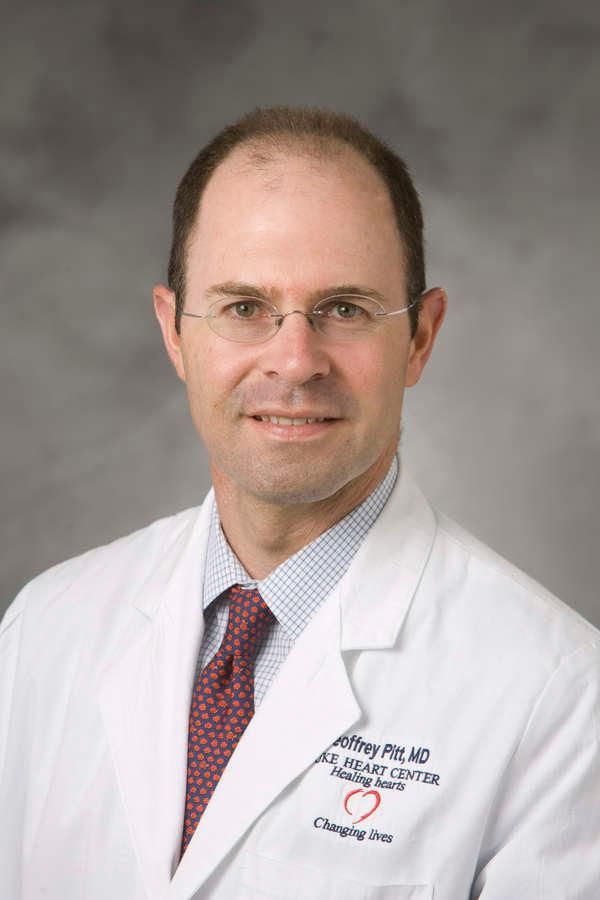
Geoffrey Stuart Pittمشاهده پروفایل
استاد مدعو
Geoffrey Stuart Pitt is an Adjunct Professor in the Department of Medicine at Duke University School of Medicine and a Faculty Network Member of the Duke Institute for Brain Sciences. His research focuses on intracellular calcium signaling and its regulation of membrane excitability in excitable cells, with particular emphasis on voltage-gated calcium channels and their role in cardiac and neuronal function. Dr. Pitt received his M.D. from Johns Hopkins University in 1993, followed by medical residency and fellowship in Cardiovascular Medicine at Stanford University (1993-1999). His educational background has provided a strong foundation for his translational research bridging basic science and clinical applications. His primary research interests include: Calcium signaling in excitable cells Ion channel physiology and regulation Cardiac electrophysiology and arrhythmias Neuroscience and neuronal excitability Molecular mechanisms of channelopathies Calcium channel regulation in non-cardiac tissues Dr. Pitt's research program has evolved to examine how intracellular Ca 2+ regulates membrane excitability and the consequent function of excitable cells. His work has entailed structure-function analyses of ion channels and their regulatory subunits and studies of mutations that lead to inherited channelopathies such as cardiac arrhythmias and epilepsy. Recent publications show an expansion of his research into metabolic disorders, stem cell biology, and the cardiac complications of viral infections. His scientific contributions have been recognized with numerous awards: Harrington Discovery Institute Scholar-Innovator (2015) Elected member, The Association of American Physicians (2013) Established Investigator, American Heart Association (2007) Elected member, The American Society for Clinical Investigation (2007) Distinguished Young Scholars in Medical Research Program, W.M. Keck Foundation (2005) Dr. Pitt has been principal investigator on multiple research grants supporting his work on calcium regulation of cardiac ion channels, fibroblast growth factor homologous factors, and related topics. His laboratory has made significant contributions to understanding the molecular mechanisms of ion channel regulation and their implications for human disease. His research team has investigated the role of proteins like FGF13, Rad, and calmodulin in regulating cardiac and neuronal excitability, with implications for understanding and treating conditions ranging from Timothy Syndrome to epilepsy and cardiac arrhythmias.