Kathy Trundle is a Professor at the Emma Eccles Jones College of Education and Human Services at Utah State University, affiliated with the School of Teacher Education & Leadership . Her work focuses on early childhood science education and curriculum development. Principal Investigator for STARS! GEAR UP 4 Research emphasizes integrating STEM into preschool environments Her recent publications highlight sustainable gardening projects, technology integration (e.g., drones, trail cameras), and the longitudinal impact of preschool science curricula. She explores parental roles in early science learning and uses bioacoustics, composting, and weather stations as pedagogical tools. Her research trends show a strong focus on experiential learning, environmental stewardship, and bridging science with everyday practices in early education.
Jan Valouch is an Assistant Professor at Tomas Bata University in Zlín, affiliated with the Faculty of Applied Informatics and Institute of Safety Engineering. He specializes in electromagnetic compatibility and security futurology, with extensive experience in telecommunications from his 16-year military career (1993-2009). Holding a Ph.D. from the University of Defence (2007), his research focuses on shielding design, alarm systems, and security evaluation methodologies. Doctorate: University of Defence (2007) Military Academy in Brno (1994) His publications (40+ titles) analyze EMC of IoT devices, security cameras, and critical infrastructure. Key collaborations include Milan Adámek, Stanislav Kovář, and Hana Urbančoková. Valouch supervises both bachelor's and master's students in security engineering topics. Recent research trends include: 3D digital twin reconstruction EMC testing of Raspberry Pi and Arduino platforms Security evaluation algorithms Wireless relay susceptibility Shielding effectiveness calculation
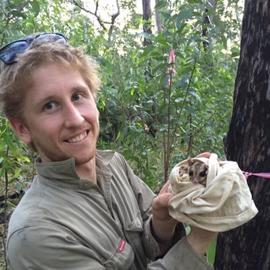
Dr. Hugh Davies is a Senior Research Fellow at the University of New England's School of Environmental and Rural Science. His research focuses on biodiversity conservation, feral animal management, and fire ecology in Australian ecosystems. He holds a PhD from the University of Melbourne and a Bachelor of Environmental Science (First Class Honours) from Monash University. His research interests include: Biodiversity conservation in northern Australian savannas Impacts of feral cats and foxes on native mammals Fire regime optimization for ecosystem health Indigenous engagement in land management He leads major grants including: ARC Linkage Grant: 'Cat management guided by Country' ($578,317) ARC Discovery Grant: 'Is dispersal the key to maximising threatened species conservation under contemporary fire regimes?' ($417,000) Resilient Landscapes NESP Hub: 'Best practice fox control in Booderee National Park' ($691,600) His publications primarily focus on conservation biology, fire ecology, and invasive species management, utilizing field studies, genetic analysis, and simulation modeling to address mammal declines in northern Australia. He currently supervises 4 PhD students.
Ilya Tyapin is an Associate Professor at the Department of Engineering Sciences , University of Agder. His work focuses on mechatronics, robotics, and autonomous systems with applications in battery recycling, flexible manipulators, and industrial automation. Research Interests: Tyapin investigates motion control for robotic systems, dynamic modeling of flexible manipulators, and sensor fusion techniques. His research enables technologies for energy storage applications and sustainable manufacturing. Notable Projects: RESTORE: Automated sorting and pre-processing of end-of-life batteries for high-purity material reuse Robotic disassembly systems for electric vehicle battery packs Flexible manipulator control with redundancy resolution Key Collaborations: Tyapin works with researchers from Norwegian University of Science and Technology, ABB, and Luleå University of Technology on offshore robotics and mechatronic design optimization. Teaching: He teaches courses in hydraulics, industrial robots, electric drives, and product development at both undergraduate and graduate levels.
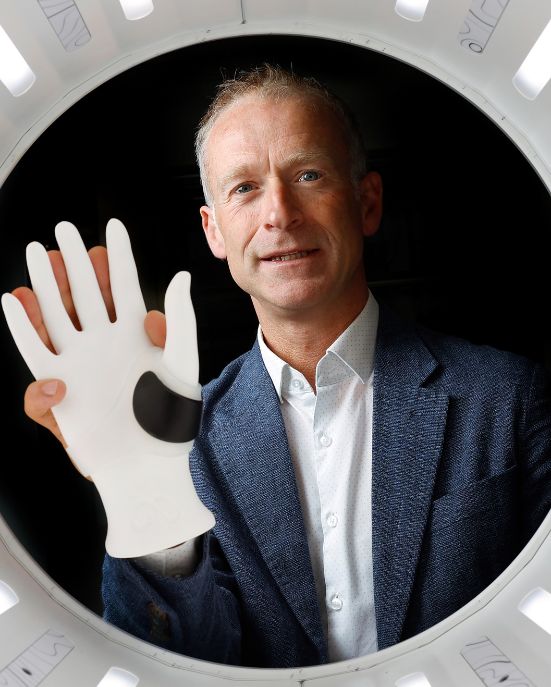
Gerald Kraan serves as a Professor at Delft University of Technology's Faculty of Industrial Design Engineering, where he specializes in Human Factors research with a strong clinical connection. He simultaneously maintains an active role as an orthopedic surgeon and chairs the 'From Helping Hand to Working Hand' initiative, demonstrating his unique bridge between engineering and medical practice. His institutional affiliations extend beyond academia to include Reinier de Graaf Hospital and the Reinier Haga Orthopedic Center (RHOC), creating a robust clinical-engineering research ecosystem. Dr. Kraan's research focuses on biomechanical analysis of hand function, particularly examining finger joint movements and range of motion. His work integrates engineering methodologies with clinical orthopedic applications, developing innovative measurement techniques that combine computer vision, motion tracking, and dynamic assessment approaches. This interdisciplinary focus positions him at the intersection of human factors engineering, medical device development, and rehabilitation science. His publication record from 2020-2024 reveals a consistent trajectory in hand biomechanics research, with increasing sophistication in measurement techniques. Early work established foundational approaches using Statistical Shape Modeling for anatomical assessment, while recent publications demonstrate advanced integration of computer vision technologies like ArUco markers with accessible hardware (action cameras) for dynamic motion analysis. This progression shows his commitment to developing practical, clinically applicable measurement tools that maintain scientific rigor. As chair of 'From Helping Hand to Working Hand,' Kraan leads initiatives that translate engineering insights into clinical orthopedic applications, particularly focusing on restoring functional hand capabilities. His collaborative approach is evident in his publication patterns, frequently working with colleagues like Richard Goossens (Professor of Physical Ergonomics) and clinical researchers across the TU Delft-Reinier de Graaf partnership.
Torben Gregersen serves as a Temporary Lecturer in the Department of Electrical and Computer Engineering at Aarhus University. His academic role centers on applying engineering principles to agricultural challenges, specifically developing monitoring systems for pigs and sows to enhance animal welfare and farm efficiency through technological innovation. His research spans precision livestock farming, computer vision, sensor networks, RFID technology, and animal behavior monitoring. He designs systems using wireless sensors, depth cameras, and RFID for real-time health assessment and behavioral tracking of livestock, enabling early disease detection and performance optimization at the individual animal level. This work bridges engineering and agricultural sciences to create practical solutions for modern farming operations. Analysis of his 2013 publications reveals a cohesive focus on pig monitoring systems, with consistent integration of computer vision for behavioral analysis, RFID for feeding pattern tracking, and wireless sensor networks for physiological parameter monitoring. These interdisciplinary efforts demonstrate a systematic approach to solving livestock management challenges through technological synergy between hardware and software systems. Scientific awards: No awards or honors were mentioned in the provided information. Advising and grants: The available documentation contains no details regarding graduate student supervision or research funding sources. Labs and teams: Research activities appear to be conducted within the Department of Electrical and Computer Engineering infrastructure at Aarhus University, likely involving collaboration with agricultural science researchers. Specific laboratory facilities or dedicated research teams were not detailed in the source material.
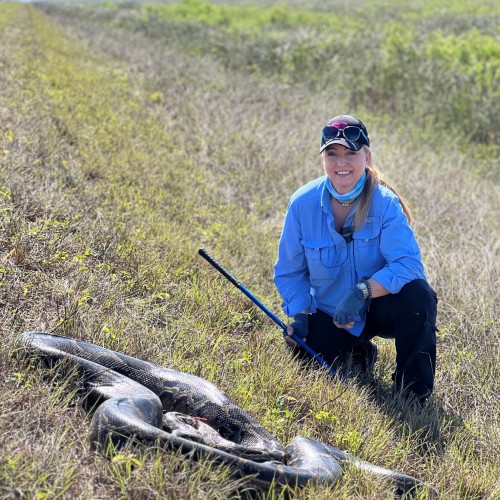
Dr. Melissa Miller is a Research Assistant Scientist and Invasive Species Research Coordinator at the University of Florida's Fort Lauderdale Research and Education Center. She is also an Affiliate Faculty member in the Department of Wildlife Ecology and Conservation at the University of Florida. Her work focuses on understanding the ecological impacts of invasive species, particularly large reptiles in the Greater Everglades Ecosystem, and developing science-based management strategies to address these challenges. Dr. Miller received her educational training from: Ph.D. from Auburn University (2017) M.S. from Sam Houston State University (2009) B.S. from Northern Kentucky University (2005) Dr. Miller specializes in invasion ecology with a focus on identifying mechanisms through which biological invasions cause environmental and economic harm. Her research examines the impact of emerging parasites and pathogens co-introduced with invasive species, links invasive species ecology with removal efforts, explores innovative tools and technologies to increase effectiveness of control efforts, and conducts statistical assessment of invasive species management strategies. Through applied and basic research of large invasive reptiles like Burmese pythons, Argentine black and white tegus, Nile monitors, iguanas, and spectacled caimans in the Greater Everglades Ecosystem, she addresses ecological and evolutionary questions to further our understanding of invasions and aid natural resource managers in invasive species control efforts. Analysis of Dr. Miller's recent publications reveals a strong focus on invasive reptile ecology and management in Florida. Her work spans multiple dimensions including species identification guides, ecological impact assessments, disease transmission studies, and innovative detection methods. A notable trend is the increasing integration of molecular techniques, community science approaches, and statistical modeling in invasive species management. Her research consistently emphasizes practical applications for conservation managers while advancing fundamental ecological understanding of invasion processes. Dr. Miller has received support for her research through collaborations with multiple agencies: South Florida Water Management District (funding for the large constrictor training program) Federal, state, and local government agencies Non-governmental organizations Tribes and other stakeholders Dr. Miller coordinates and oversees the invasive species research program for the UF Croc Docs laboratory. This collaborative research group works closely with government agencies and conservation organizations to provide science-based information for invasive species management and Everglades restoration efforts. The team employs diverse methodologies including field surveys, molecular analysis, camera trapping, and community science initiatives to address the complex challenges posed by invasive species in Florida's unique ecosystems.
Martin Newth serves as Programme Director of Fine Art at Chelsea College of Arts, University of the Arts London. He leads international studio programs with a critical creative stance and experimental approach to multimedia and analog techniques in film and photography. Newth's artistic practice centers on photographic, video and sculptural installations that explore the processes and apparatus of production. He employs techniques including very long exposures and purpose-built camera obscuras to investigate the material nature of photography, tracing historical roots while questioning contemporary aesthetics. His work deliberately avoids technological precision, instead embracing chance and accident to reveal production processes. The tension between old and new technologies forms a core aspect of his practice, examining how photographic images are made to explore conditions that inform how we experience images today. His recent solo exhibitions include Rezension – Skulptur, Objekt, Apparat at MEWO Kunsthalle, Germany; Re-view at Photofusion, London; Material Matters at the Gerald Moore Gallery; Sentinel (South) at The Arts University College Bournemouth; Ausblick at Axel Lapp Projects, Berlin; and Slow Burn at Focal Point Gallery, Southend. Group exhibitions include In Place of Architecture at the Bonington Gallery; Troubled Waters at The Kuandu Museum of Fine Arts, Taipei; Andmoreagain at the Open Eye Gallery, Liverpool; and Menschen und Orte at The Kunstverein Konstanz, Germany. In 2019, Newth led the International Studio program titled 'Looking and re-looking: Hybrid Processes and the Nature of the Encounter' at an Academy of Fine Arts, working with nine students to create the exhibition 'Heading South.' This project explored the relationship between body, landscape, and memory in post-industrial Silesia, emphasizing physical engagement with artworks rather than screen-based viewing experiences.
Laura Gastaldi is a Full Professor at the Department of Mechanical and Aerospace Engineering (DIMEAS) of the Polytechnic University of Turin . She is a member of the PolitoBIOMed Lab and the Master's and Continuing Education School . Her academic roles include teaching in doctoral programs since 2013 and serving as course lecturer/collaborator for topics like Mechanics Applied to Biomedical Systems and Automation of Mechanical Systems . Research Interests : Biomechanics Human Body Modeling Human-Machine Interaction Wearable Robotics Parasports Motion Analysis Her 15 most recent publications focus on wearable inertial sensors, exoskeletons, human-robot collaboration, and mobility assistance devices, spanning Biomechanics , Robotics , and Biomedical Engineering . She leads research projects like EMPATHY (2024-2026) and Promobilia (2023-2024), emphasizing accessibility and industrial sustainability. Laura supervises PhD students Claudia Barattini , Michele Polito , and Mattia Antonelli , and holds patents for Directional propulsion assist devices and Active joints for exoskeletons .
Mirae Harford is a Postdoctoral Clinical Research Fellow and Specialty Registrar in Intensive Care Medicine at the University of Oxford's Nuffield Department of Clinical Neuroscience. Affiliated with the Critical Care Research Group since 2014, she bridges clinical medicine and biomedical engineering through innovative non-contact monitoring technologies. Her academic credentials include: BM BCh (University of Cambridge) MA (University of Cambridge) Postgraduate Diploma DPhil (University of Oxford) MRCP (Membership of the Royal College of Physicians) FFICM (Fellowship of the Faculty of Intensive Care Medicine) Harford's research pioneers non-contact physiological monitoring using video and image-based sensors for critical care applications. She specializes in camera-based skin perfusion assessment to estimate cardiovascular function, with strong emphasis on interdisciplinary collaboration between clinicians and engineers. Her work addresses real-world implementation challenges of non-invasive monitoring in intensive care units. Publication analysis reveals three dominant research thrusts: (1) Development and validation of video-based vital sign monitoring techniques, particularly for skin perfusion and hemodynamic assessment; (2) Systematic evaluation of non-contact monitoring technologies across clinical settings; (3) Investigation of circadian rhythm patterns in critically ill patients using routinely collected physiological data. Her methodological approach combines engineering innovation with rigorous clinical validation. She actively contributes to the Oxford Biomedical Signal Processing Group and Critical Care Research Group, focusing on translational projects that convert engineering solutions into practical clinical tools for intensive care environments.
Tiffany M Wolf is an Assistant Professor in the Veterinary Population Medicine department at the University of Minnesota's College of Veterinary Medicine, with affiliations to the Minnesota Invasive Terrestrial Plants and Pests Center . Her research focuses on wildlife disease ecology, particularly Chronic Wasting Disease (CWD) and prion protein dynamics in ecosystems. Wolf's recent publications (2023-2025) span CWD prion detection in deer feeders , soil contamination , venison processing safety , and RT-QuIC diagnostic validation for elk and white-tailed deer. Her work addresses environmental prion persistence , tribal land disease management , and suburban deer ecology through fieldwork and laboratory comparisons. Current projects include optimizing CWD surveillance on tribal lands (USDA-funded, 2024-2026), analyzing white-tailed deer movement in suburban areas (2024-2027), and investigating HPAIV dynamics in Minnesota wildlife (2025-2027). Her research integrates syndromic surveillance models and environmental health metrics, supported by legislative-commission grants and collaborations with agencies like USDA APHIS.
Dr. Lecturer Yasin ÖZTÜRK serves at Süleyman Demirel University's Faculty of Communication , specifically within the Department of Visual Communication Design . Holding the academic title of Lecturer, his work bridges mechanical engineering principles with creative visual communication practices. Educational Background: BSc in Mechanical Engineering (2009) MSc in Mechanical Engineering (2015) PhD in Mechanical Engineering (2022) Research Focus: Specializing in Camera Stabilization Systems and Documentary Film Production , Dr. Öztürk integrates technical engineering solutions with cinematic storytelling. His recent work explores AI applications in virtual production workflows, reflecting his interdisciplinary approach. Publication Trends: Over the past decade, his academic output has concentrated on mechanical stabilization systems (2014-2017) and AI-driven virtual production technologies (2024). These works demonstrate a clear trajectory from technical engineering foundations to modern digital media applications. Teaching Portfolio: Camera and Lighting Techniques in Cinema and Television Production Management in Television Advanced Photography Techniques Postproduction I Digital Photography Video Shooting Applications Editing Applications
Professor Udo Frese is a faculty member at the University of Bremen, holding the position of Professor of Multisensory Interactive Systems since March 2014. He is associated with the German Research Center for Artificial Intelligence (DFKI) in the Cyber-Physical Systems department and is a member of the research focus 'Minds, Media, Machines'. University of Paderborn (1993-1997): Computer Science Friedrich-Alexander University Erlangen-Nuremberg (2004): Doctorate Professor Frese's research focuses on computer vision, sensor fusion through probabilistic modeling, and algorithms for safety functions with applications in robotics and interaction. His work spans multiple domains including assistive robotics for people with mobility limitations, SLAM (Simultaneous Localization and Mapping) techniques, and human-robot interaction systems. His research group collaborates with DFKI to operate the robot soccer team B-Human, which has achieved remarkable success with multiple world championships. His recent publications demonstrate a strong focus on assistive robotics, with particular emphasis on adaptive control systems for users with limited mobility. His work integrates computer vision, machine learning, and human-centered design principles to develop practical assistive technologies. The research spans from theoretical foundations in probabilistic modeling to practical implementations in real-world assistive applications. Best Technical Paper award at PETRA '24 for 'Probabilistic Combination of Heuristic Behaviors for Shared Assistive Robot Control' Best paper award at EICS 2024 for 'AdaptiX – A Transitional XR Framework for Development and Evaluation of Shared Control Applications in Assistive Robotics' Multiple world championships with robot soccer team B-Human Professor Frese advises several doctoral and master's students including Felix Goldau, Max Pascher, and Moritz Schneider, who contribute significantly to his research in assistive robotics and computer vision. His research is supported through collaborations with DFKI and various projects focused on assistive technologies and robotics. His laboratory at the University of Bremen collaborates closely with DFKI's Cyber-Physical Systems department, operating the successful robot soccer team B-Human. The research group maintains strong connections with both academic and industry partners to advance research in robotics and human-computer interaction.
Dr. Qi Hao is an Associate Professor and Deputy Director of the Department of Computer Science and Engineering at Southern University of Science and Technology (SUSTech) in Shenzhen, China. He also serves as Executive Director of the SUSTech & Haylion Intelligent Transportation Center and Head of the SUSTech & FengXiangBiao ICV Education Joint Laboratory. Prior to joining SUSTech in 2014, he was an Assistant Professor at the University of Alabama (2007-2014) following postdoctoral training at the University of Kentucky. Dr. Hao received his PhD in Electrical and Computer Engineering from Duke University in 2006, with Master's and Bachelor's degrees from Shanghai Jiaotong University (1997 and 1994). His academic journey includes research positions at Singapore's Data Storage Institute (1998-2001) and engineering experience at Shanghai Electric Tool Research Institute (1997-1998). As an expert in intelligent sensing and unmanned autonomous systems, Dr. Hao's research spans bionic intelligent sensor design, machine learning applications, and autonomous vehicle technologies. His work demonstrates a strong integration of theoretical frameworks with practical implementations, particularly in pyroelectric infrared sensing, UAV systems, and distributed sensor networks. His research has evolved to address increasingly complex challenges in autonomous navigation, multi-robot coordination, and edge computing for intelligent transportation systems. Dr. Hao's publication trend reveals a strategic shift toward integrated autonomous systems, with recent work emphasizing robotics, machine learning, and wireless communication. His research bridges computer vision, sensor fusion, and deep learning to solve practical challenges in autonomous vehicle perception, wireless energy transfer, and human activity recognition. The interdisciplinary nature of his work connects electrical engineering principles with cutting-edge AI techniques. US National Science Foundation Research Awards (2009, 2011) Multiple IEEE conference best paper awards and finalists (2012-2021) Shenzhen Overseas High-level Talents Peacock Plan Category C (2017) Advanced Educators in Shenzhen (2017) Outstanding Teacher of Guangdong Province (2021) SUSTech Outstanding Research and Service Awards (2017-2021) Dr. Hao has secured significant research funding as Principal Investigator for projects from NSFC, Shenzhen Nanshan District, and industry partners including Huawei, Intel, and Haylion Technology. His current projects focus on intelligent binary sensing, next-generation camera systems, autonomous driving safety frameworks, and federated learning for vehicle perception. He has also contributed to educational initiatives through Guangdong Province and Shenzhen City education reform projects. Leading the SUSTech & Haylion Intelligent Transportation Center and the SUSTech & FengXiangBiao ICV Education Joint Laboratory, Dr. Hao oversees research teams developing solutions for intelligent transportation challenges. His labs integrate expertise across computer science, electrical engineering, and mechanical engineering to advance autonomous vehicle technologies, sensor networks, and robotics applications for real-world implementation.
Prof. David Mendlovic is a Full Professor of electro-optics at the School of Electrical Engineering, The Iby and Aladar Fleischman Faculty of Engineering, Tel Aviv University. With a career spanning decades, he has established himself as a leading figure in optical engineering and signal processing, holding significant leadership positions including head of TAU Innovation Labs and board member of the Israel Innovation Authority (IIA). His academic journey began and continued at Tel Aviv University where he earned both B.Sc. and Ph.D. degrees in Electrical Engineering. His professional trajectory includes serving as Chief Scientist of the Israeli Ministry of Science (2008-2010), Co-Chair of the German Israeli Foundation for 6 years, and Vice Dean for Research of the Faculty of Engineering for a decade. Prof. Mendlovic's research spans computational photography for miniature imaging systems, advanced 3-D sensing, AI-based image processing, authentication systems, optical bio-sensing, and deep-fake detection. His work has produced worldwide breakthroughs including hollow fibers for IR transmission, extended depth of field imaging, multi-aperture camera systems, and innovations in the fractional Fourier transform. His recent publications demonstrate continued innovation with emphasis on thermal imaging applications for precision agriculture, dynamic identity authentication, light field photography, and advanced image processing leveraging deep learning approaches across computer vision, optical engineering, and thermal imaging domains. 1998 winner of ICO International Prize in Optics Ernst Abbe Medal by Carl Zeiss Fellow of The Optical Society of America Prof. Mendlovic has successfully translated research into commercial applications through multiple startups including Civcom (acquired by Padtec S/A of Brazil) and Eyesquad (acquired by Tessera Inc, later acquired by Samsung). He has mentored numerous graduate students with thesis topics spanning optical signal processing, diffractive optical elements, and imaging systems. His laboratory work bridges theoretical developments with practical implementations across security, healthcare, agriculture, and consumer electronics applications.